
The official website for the composer and
Highbridge Music, which publishes his works.
 Highbridge Music Ltd.
Studio 6, 18 Kensington Court Place, London W8 5BJ, UK
Email: howard@howardblake.com
Featured Recordings
*FLUTE QUINTET op.493 (September 1996)
Concert work in 4 movements for flute and string quartet
Published by: Highbridge Music LtdCommissioned by: English Serenata with financial assistance from West Midland Arts
Duration: 18 mins
Sheet Music Available
Full score for saleStudy score for sale
Instrumental parts for sale
Full score for hire
Study score for hire
Recordings Available
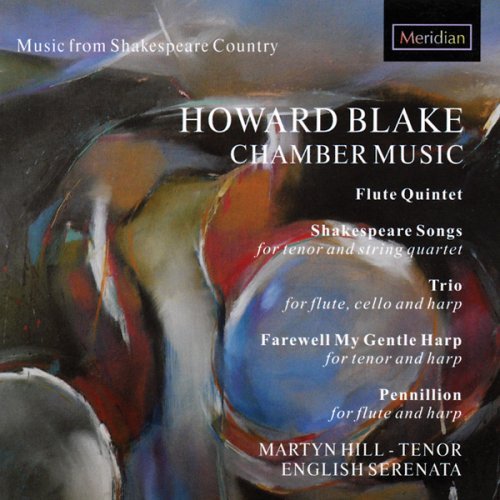
Released: 2005
Recorded: 30th October 2005
Artists: Martyn Hill (tenor) with the English Serenata: Gabrielle Byam-Grounds (flute), Stephen Bingham and Anne Bradley (violins), Brenda Stewart (viola), Joseph Spooner (cello), Rowena Bass (harp)
Available from: Amazon UK Meridian
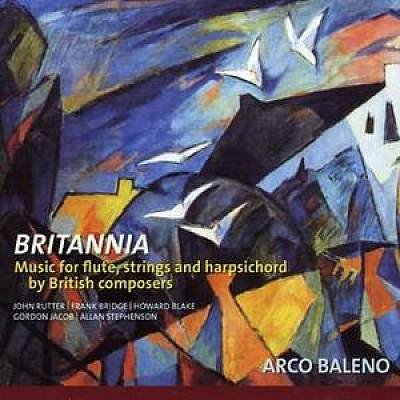
Recorded: April 2008
Artists: An album of English music by Howard Blake, John Rutter, Frank Bridge, Gordon Jacob and Allan Stephenson
1. HOWARD BLAKE: CHAMBER MUSIC (2006). GABRIELLE BYAM-GROUNDS (flute) and THE ENGLISH SERENATA Recorded at Mickleton Church, Gloucestershire on September 21st 2005. Released 2006 on MERIDIAN CDE 84553. Available from Meridian and Amazon
2. BRITANNIA Arco Baleno Ensemble with Peter Verhoyen solo flute, (Etcetera-records 1372) released July 2008: music for flute, strings and harpsichord by British composers - Rutter, Bridge, Blake, Jacob, Stephenson
Movements
-
1:
Allegro Cantando
3 minutes
40 seconds
The first movement is quite simply a long-drawn-out melody which the flute 'sings' and then elaborates expressively.
-
2:
Scherzo con Spirito
3 minutes
30 seconds
A rapid, syncopated movement with a 'floating' middle section.
-
3:
Andante Espressivo
4 minutes
25 seconds
A slow theme and a variation, culminating in a short cadenza, which leads to the fourth movement.
-
4:
Marcia Giocoso
6 minutes
A mischievous 'whistling' march. However, the bustle and gaiety of this lively movement is interrupted by a second cadenza from which re-emerges a shimmering version of the theme from the first movement that now accelerates with a crescendo into a short and energetic Coda.
(H.B.)
Notes
Composer's note: I played the flute at school and always held a special affinity for the instrument, often composing prominent solos for it within the context of my orchestral music, but never completing a concerto. The flautist Gay Byam-Grounds had been the soloist and leader of the English Serenata who had formed the ensemble which helped me develop the full-length stage show of 'The Snowman' from 1993 onwards. In 1996 as an enthusiastic performer of my music she summoned up the courage to commission a concerto and I accepted. As often with my music the main theme had been in my mind for some years and I now committed it to paper.
Performances
| 12th April 2020 | At 18.00 in Catalunya on Easter Sunday 12 April 2020 Ars Aurea Sonora Channel broadcast the film of the oratorio 'The Passion of Mary'. It was originally recorded in Manresa Cathedral on 8th December 2015 in a concert conducted by the composer with principal parts taken by Patricia Rozario (soprano), Richard Edgar Wilson (tenor) and David van Asch (Bass), with the choir and orchestra of Tarragona University. The Liverpool Quartet and Jaume Comas were also featured in a performance of 'The Snowman'. See coverage below., Manresa Basilica. |
| 3rd January 2019 - 7th January 2019 |
Ana Puche lyric soprano,The Liverpool String Quartet with Nelia Sanxiz flute , Joan Segui organ. Concert produced by Ars Aurea Sonora (director Jordi Borras) with the support of 'Generalitat de Catalunya - Departament de Cultura,
Three concerts on 3, 4 and 6 January 2019 with music by Howard Blake in the vicinity of Tarragona: Les Borges, La Selva and Montblanc. Programme including a new song 'La Meva Terra' for soprano, flute, string quartet and organ, Ana Puche soprano and The Liverpool String Quartet with Nelia Sanxis (flute) who will also play the solo part in performances of the Flute Quintet. Also featuring The Snowman narrated by Jaume Comas', 'A Month in the Country' for string quartet and a virtuoso solo organ piece originally composed for the great organist Dame Gillian Weir - 'The Rise of the House of Usher'. played in La Selva by young Catalan organist Joan Segui |
| 4th November 2016 - 6th November 2016 |
The Philadelphia Chamber Ensemble,Philadelphia USA - Jennifer Haas vn, William Polk vn, Burchard Tang va, John Koen vc. David Cramer flute,
Program Wolfgang Amadeus Mozart (1756–1791)Trio in E-flat major, K. 498, for clarinet, viola, and pianoAndanteMenuettoRondeaux: Allegretto
Paul Pierné (1874–1952)Variations on “Clair de Lune,” for flute, violin, viola, cello and harpHoward Blake (1938–)Quintet, op. 493, for flute and string quartetAllegro cantandoScherzo con spiritoAndante espressivoMarcia giocoso
Robert Schumann (1810–1856)Quintet in E-flat major, op. 44, for piano and string quartetHoward Blake Quintet for flute and stringsThere were no professional musicians in the Blake family of Brighton, but teachers quickly recognized Howard’s talent and eventually steered him into the Royal College of Music. He became active as a pianist, composer, and conductor in the commercial music world in London, composing a great deal for television (notably for the 1960s cult spy drama “The Avengers”) and film. Blake’s best-known score is “The Snowman,” originally for a short 1982 animated movie, later reworked into a concert piece and several stage versions. As his career developed further he began to concentrate on classical concert music. His catalog of works runs to nearly 700 opus numbers and he continues to add to it as well as to perform.Blake’s melodic material is usually simple and attractive, though it may be worked out with considerable artistry. His style seems familiar without evoking any particular idiom from the past. An example of his slightly out-of-the-box approach comes at the beginning of this quintet, where the flute plays against a background of strings playing tremolando—a shimmering effect more typical of orchestral music than chamber music, but extremely effective here.Blake composed this quintet in September 1996. He says, “the first movement is quite simply a long-drawn-out melody which the flute ‘sings’ and then elaborates expressively.” There follows “a rapid, syncopated movement with a ‘floating’ middle section.” Then comes “a slow theme and a variation, culminating in a short cadenza, which leads to…a mischevous ‘whistling’ march…interrupted by a second cadenza from which re-emerges a shimmering version of the theme from the first movement that now accelerates with a crescendo into a short and energetic coda.” |
| 7th December 2015 - 8th December 2015 |
The Liverpool String Quartet with Jaume Comas as narrator of The Snowman. Concerts produced by Ars Aurea Sonora (director Jordi Borras) with the support of 'Generalitat de Catalunya - Departament de Cultura, 7th December Reial Monestir de Santa Maria de Poblet. 8th December Manresa Cathedral |
| 20th August 2014 | Susan Milan flute, Richard Deakin violin, Yuko Inoue viola, Pierre Doumange cell, British Isles Music Festival, Ardingly College West Sussex, |
| 20th June 2010 | Anthony Robb, Primavera Ensemble, Baron's Hall, Penshurst Place, Sussex |
| 22nd November 2008 - 29th December 2008 |
English Serenata, A tour of music including The Snowman and the Flute Qunintet with Jeffery Dench and English Serenata: Bidford-on-Avon (Nov 22), Bishop's Stortford (Nov 30), Norwich (Dec 13), Wavendon (Dec 14), Buxton Opera House (Dec 29) |
Reviews
This is a delightful disc, high in opus numbers but also high in quality too. The Flute Quintet dates from 1996 and is cast in four movements. Warm lyricism and avian calls are the index for this, with the flute singing its verdant morning song in the opening Allegro Cantando. After a vibrant Scherzo there’s a lyrically textured slow movement and a light-hearted march finale with some strummed accompanying figures to vary textures.
A rather earlier work is the Shakespeare Songs for tenor and string quartet. Blake takes well known songs from As You Like It and Twelfth Night, as well as single songs from Cymbeline, The Tempest and Love’s Labours Lost. The result is a cycle that confounds expectations. None sounds very much like anyone else’s settings. The bucolic old-time settings of, for example, When Icicles hang by the wall is not replicated in Blake’s own setting, nor are there Finzi-esque moments either. Blake paints his words with discreet delicacy, not playing up the ‘freeze’ in Blow, blow thou winter wind, though he certainly does push the tenor very high in Full fathom five, the more to accentuate its eerie sense of loss. He does so again in Come, away death with the same result - Blake sees things differently from the more baritonal consolations that other have wrought here. If there is an influence, I would sense Britten, especially in When Icicles.
The Trio for flute, cello and harp is an arrangement of a 1962 work for flute, clarinet and piano. It survives the transition delightfully. French in orientation, cleanly and clearly lyric, generous in its melodic grace, it is a work of perfectly poised charm. Farewell My Gentle Harp is another vehicle for Martyn Hill, a Gaelic lament and truly lovely. Meanwhile Penillion for flute and harp – other versions exist – is inspired by Welsh music, though gently. I’ve heard it in its incarnation for violin and piano, and it’s perhaps not too surprising that this flute and harp version sounds far less ‘Carpathian’ in one or two of the variations, and rather more sweetly emollient.
It ends a beautifully performed and enticing disc. Full praise, then, to Hill, always a most articulate singer, and to the players of the English Serenata for their mellifluous and sensitive playing, to the fine recording and to the booklet with its full texts.
Jonathan Woolf
Read more: http://www.musicweb-international.com/classrev/2010/Jan10/Blake_quintet_CDE84553.htm#ixzz1dMpn6vNk
Jonathan Woolf, Musicweb-international, 10/1/2010
'One of the most attractive new pieces one could wish---memorable tunes and deft scoring combine to make this a work which will enchant audiences.'
Christopher Morley, Birmingham Post, 1/5/1996
Related Works
'FLUTE CONCERTO'
op.493A
(October 1996)
(Audio Sample Available)
A transcription from the original work for flute and string quartet.
A transcription from the original work for flute and string quartet.
'CONCERTO FOR FLUTE ARRANGED FOR FLUTE AND PIANO'
op.500
(June 1997)
An arrangement of the flute quintet, opus 493.
An arrangement of the flute quintet, opus 493.