
The official website for the composer and
Highbridge Music, which publishes his works.
 Highbridge Music Ltd.
Studio 6, 18 Kensington Court Place, London W8 5BJ, UK
Email: howard@howardblake.com
Featured Recordings
*AUTOBIOGRAPHY op.428 (December 2017)
TITLE: 'WALKING IN THE AIR CAN BE DANGEROUS'
Published by: Highbridge Music LtdNote on Lyrics: Copyright Howard Blake - bound version available by order
Contents
- Howard Blake born Enfield, London (1938)
- Cuffley and the Blitz (1941)
- Move to Brighton (1944)
- Choirboy (1945)
- Preston School of Music and my first music certificate (1946)
- MARCH IN D (1949)
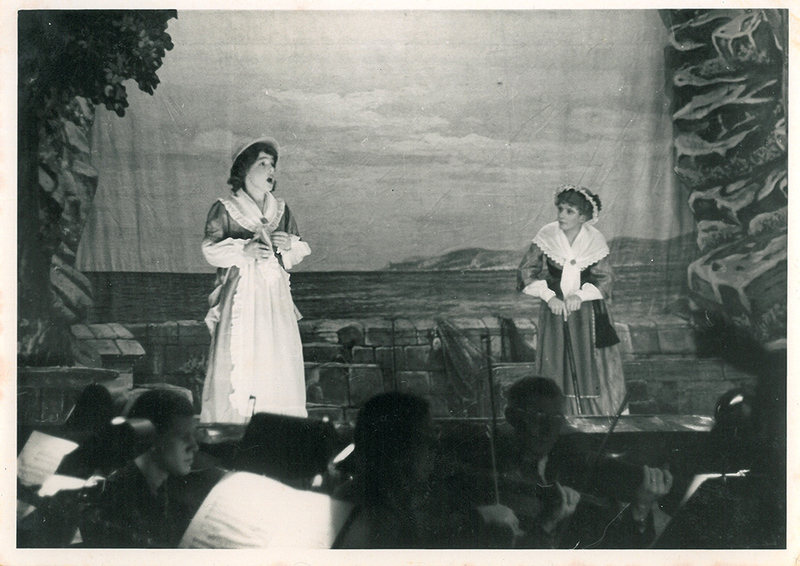
- Solo soprano in Gilbert and Sullivan's 'Ruddigore' - as ROSE MAYBUD (1950)
- Solo soprano in Edward German's 'Merrie England' - as BESSIE THROCKMORTON (1951)
- Solo soprano in G&S's HMS Pinafore as JOSEPHINE THE CAPTAIN'S DAUGHTER (1952)
- Solo contralto in G&S's 'Yeomen of the Guard' - as DAME CARRUTHERS (1953)
- 'IT WAS A LOVER AND HIS LASS' (1954)
- PIANO FANTASY (1955)
- PARTY PIECES, PIANO TRIO NO.1, BURLESCA FOR VIOLIN AND PIANO (1956)
- EARTH AND AIR AND RAIN, FAREWELL MY NANCY (1957)
- VARIATIONS ON A THEME OF BARTOK, JAMES JOYCE SONGS,TWILIGHT WALK,AUBADE (1958)
- PRELUDE, SARABANDE AND GIGUE (1959)
- REMEMBRANCE MARCH, BLUE SEA AND EVENING SKY (1960)
- FOUR MINIATURES, SYMPHONIC EXTRACT (1961)
- 'A FEW DAYS' - 16mm. film with script, music and direction by Howard Blake. (1962)
- PRELUDE IN B MINOR (1963)
- PIANO TRIO NUMBER 2, LATIN MOON (1964)
- 'HAMMOND IN PERCUSSION' EMI album, 'THE SHARK' (1965)
- Recording with 'THE SCAFFOLD' and PAUL McCARTNEY (1966)
- THEME MUSIC, PETER COLLINSON,'RED, WHITE AND ZERO' (1967)
- THE LOST CONTINENT, A TWISTED NERVE (1968)
- SOME WILL SOME WON'T, AN ELEPHANT CALLED SLOWLY (1969)
- film: 'ALL THE WAY UP!' (Live bbc tv) 'MUSIC NOW' (1970)
- Move to the Sussex countryside (1971)
- tv: 'THE UP-AND-DOWN-MAN' (1972)
- THREE SUSSEX SONGS, DIVERSIONS FOR CELLO AND PIANO, THE ROTHSTEIN VIOLIN SONATA (1973)
- PIANO QUARTET, SONATA FOR VIOLIN AND PIANO ballet:REFLECTIONS (1974)
- THE SONG OF SAINT FRANCIS, STRING TRIO, THE STATION (1975)
- DANCES FOR TWO PIANOS, TOCCATA - A CELEBRATION OF THE ORCHESTRA (1976)
- films: 'THE DUELLISTS', 'STRONGER THAN THE SUN' (1977)
- baritone & harpsichord: 'TOCCATA OF GALUPPI'S', FLUTE CONCERTINO (1978)
- Ballet:THE ANNUNCIATION. choral: 'FROM THE CRADLE TO THE GRAVE' (1979)
- 'BENEDICTUS' A DRAMATIC ORATORIO (World premiere,Worth Abbey) (1980)
- SINFONIETTA FOR 10 BRASS, ELEGY FOR SAXAPHONE QUARTET (1981)
- THE SNOWMAN - a 26-minute animated film where the script is the music (1982)
- 'BENEDICTUS' IN AUSTRALIA. SNOWMAN CD ON CBS MASTERWORKS (1983)
- CLARINET CONCERTO, NURSERY RHYME OVERTURE, 'WRECK OF THE JULIE PLANTE' (1984)
- 'DIVERSIONS' FOR CELLO AND ORCHESTRA , 'FUSIONS' FOR BRASS (1985)
- 'GRANPA',Prix Jeunesse:'Honeybee and the Thistle' for Prince Andrew & Fergie (1986)
- Three Choirs Festival commission, 8-part FESTIVAL MASS a cappella. (1987)
- Overture: 'THE CONQUEST OF SPACE' - to launch the European Astra satellite (1988)
- Concert premiere: 'GRANPA' with The Philharmonia and London Voices (1989)
- CHRISTMAS LULLABY for 2 sopranos and ensemble. JUBILATE DEO for choir and organ (1990)
- PHILHARMONIA ORCHESTRA - HRH PRINCESS DIANA'S BIRTHDAY COMMISSION (1991)
- VIOLIN CONCERTO (1992)
- 'THE LAND OF COUNTERPANE' (1993)
- ALL GOD'S CREATURES, LA BELLE DAME SANS MERCI, LE GISANT (1994)
- 'CHARTER FOR PEACE', 50 years of The United Nations in the presence of The Queen (1995)
- EVA - A BALLET ABOUT WOMAN, film: 'MIDSUMMER NIGHT'S DREAM' (1996)
- THE BEAR - 'SOMEWHERE A STAR SHINES FOR EVERYONE' - CHARLOTTE CHURCH (1997)
- 'IF' - RUDYARD KIPLING'S POEM WITH MASS CHOIR,ORCHESTRA,BAND OF THE GHURKAS (1998)
- 'MY LIFE SO FAR' - (1999)
- 'JACK FROST AND THE ICE-PRINCESS', Snowman Stage Show triumphs with new Act 2 (2000)
- STABAT MATER (later renamed 'The Passion of Mary') (2001)
- 'THE RISE OF THE HOUSE OF USHER', a mighty organ piece for Dame Gillian Weir (2002)
- 75th birthday concert in the Wigmore Hall (2003)
- 'SONGS OF TRUTH AND GLORY' for Three Choirs Festival, 'Benedictus' in Stockholm (2004)
- HRH Sultan Idris of Selangor, Kuala Lumpur and SULTAN'S SONG (2005)
- oratorio 'THE PASSION OF MARY', soprano 'ODE TO SLEEP', piano 'HAIKU' (2006)
- MADELEINE MITCHELL (VIOLIN) AND HOWARD BLAKE (PIANO) RECORD AN ALBUM FOR NAXOS (2007)
- 'SPIELTRIEB' A STRING QUARTET IN FOUR MOVEMENTS (2008)
- 'SPEECH AFTER LONG SILENCE' (2009)
- 'DIVERSIONS' FOR CELLO AND PIANO (2010)
- 'SPEECH AFTER LONG SILENCE' (2011)
- 'JAMES JOYCE SONGS' - tenor Richard-Edgar Wilson (2012)
- 'ELEGIA STRAVAGANTE' (PIANO TRIO NO.3) (2013)
- THE LAND OF COUNTERPANE - an animated film (2014)
- 'PASSION OF MARY' IN SALISBURY CATHEDRAL (2015)
- WOMAN WITHOUT A NAME - a full evening ballet in two Rheinland opera houses (2016)
- 'SLEEPWALKING' WITH KATHERINE JENKINS (2017)
- COBLENZ FESTIVAL CELEBRATES HOWARD'S MUSIC (2018)
- WALKING IN THE AIR FOR SOLO VOICE AND A CAPPELLA CHORUS (2019)
- SOLILOQUY FOR SOLO CELLO (2020)
- SCHERZO IN JAZZ, THE RISE OF THE HOUSE OF USHER (2021)
- CONCERT WITH LANA TROTOVSEK (2022)
- Sinfonietta for brass, The Avengers, The Duellists, Chamber Music (2023)
- Index
Howard Blake born Enfield, London (1938)
PREFACE: written in 1991 by musicologist, orchestrator, author and critic, Christopher Palmer OBE (1945 -1995), a great friend and insightful supporter to whose memory this autobiography is affectionately dedicated.
'Most composers, like other people, have to earn their own living once their training is completed and, from the 1920's on, many such professionally-trained composers welcomed the opportunity to write for radio, film, television and other media outlets. One of two things generally happened to these composers: either they gave up composing their 'own' music altogether, or - more often- the one career ran parallel to the other. What was almost unheard of was for a composer deliberately to abandon a flourishing career in media-music, in mid-course, in order to devote himself exclusively to his 'own' or 'real' music. Yet this is what Howard Blake did. What is even more unusual is that far from disowning his alter ego, the kind of musician he was and the kind of music he produced for the first ten years of his professional life, he found in them the mainspring of a remarkable personal renaissance. Much of the raw material of his most significant works -the Toccata for Orchestra and the Piano Concerto- derive from this source, but so refined, processed, enhanced, sublimated, as to be scarcely recognisable. The end product has a deceptive simplicity not unlike that of Mozart. I mention Mozart advisedly since the classical qualities implicit in scores like 'The Snowman' and the 'Diversions for Cello' are on full frontal display in the 'Piano Concerto' . There is a child-like exuberance and spirit of delight...but a shrewd supervisory intelligence plots every move...and never allows the plain, ordinary, even commonplace musical language it speaks ever to sound plain, ordinary or commonplace. Much of this is due to a strong feeling for line, and not just melody. Counterpoint is far more the essence of Blake's music than harmony. To cast a full-scale concert work in a simple diatonic style with no sense of deja vu is a considerable achievement.'
WALKING IN THE AIR CAN BE DANGEROUS
AN AUTOBIOGRAPHY WRITTEN BY COMPOSER HOWARD BLAKE,OBE,FRAM.
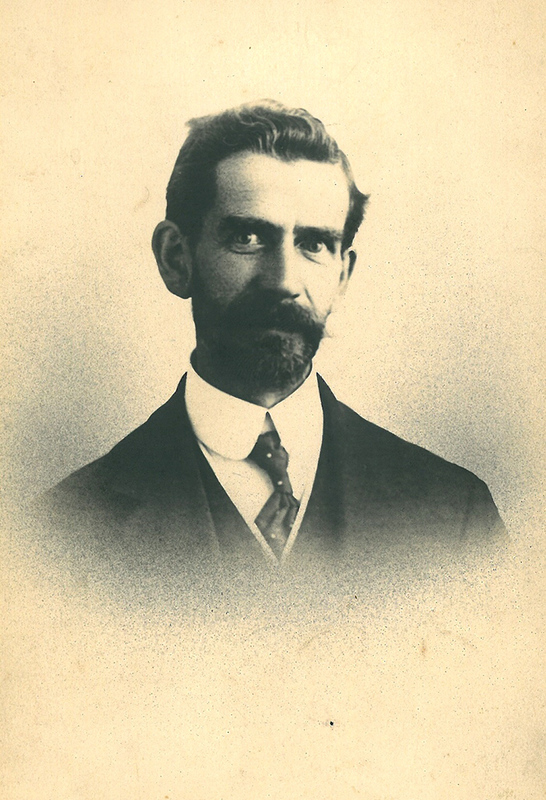
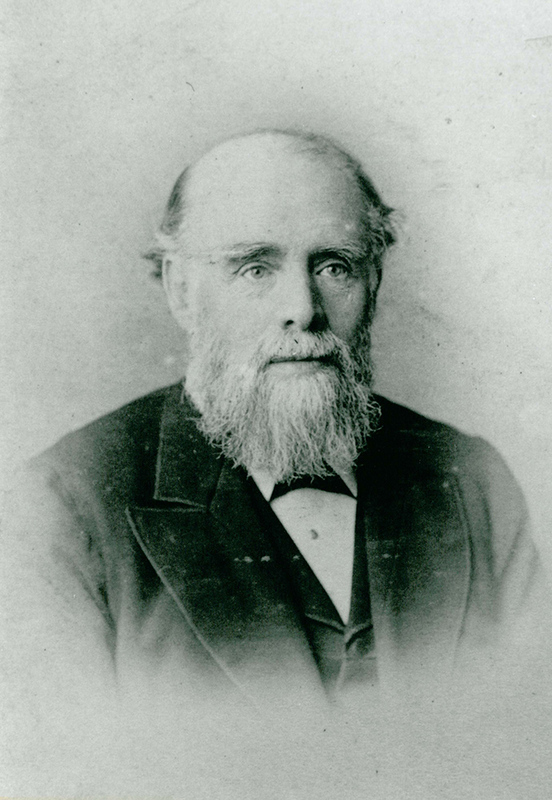
My great-grandfather on my mother's side was Henry Andrews, born in 1832, who began life as a journalist but became a notable non-conformist preacher, pastor of the Quay Congregational Church in Woodbridge, Suffolk from 1870 to 1887. His wife Harriet Augusta (nee Thurston) was musical and played the organ. Their second daughter, born in 1866, the high-spirited Leisa Lovely, was my grandmother, and she inherited the musical gene, singing and playing violin and piano.
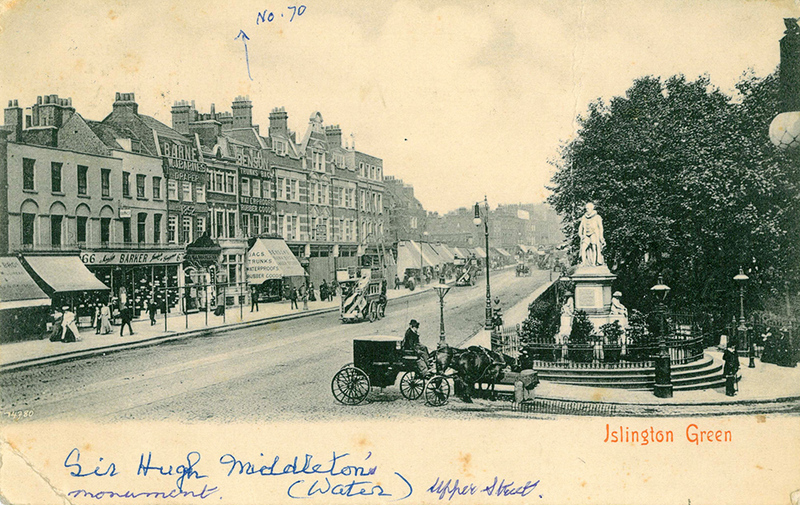
She married Leader, son of Funston Benson, the owner of a family firm purveying high-class leather goods at establishments around London. Leader ran one at 70 Upper Street,Islington, the large silver BENSON sign remaining until late in the twentieth century. He was a gentle soul who played the flute, a talent passed on to his son, my uncle Alec. Alec's two older sisters, Gladys and Dolly, played the piano a little, but real talent was inherited by my mother, their younger sister Grace, both as pianist and violinist. Unfortunately, where her mother abounded in self-confidence, Grace was timid and self-deprecating. In early 1914 at the age of 17 she was invited to join the prestigious Queen's Hall Orchestra as a violinist, but was too shy to accept. With the outbreak of war the boys whom she had grown up with were prime officer material and eager to join up. Many left for the trenches and some didn't return.
At fifty Leader died of a heart attack whilst cranking a car by the Hugh Middleton statue at Islington Green and my unpredictable and most inconsiderate grandmother sold the business, acquired a new husband and went to live in the South of France. Grace was left to fend for herself and the disintegration of her home was a loss and a shock. She would recall her early life in Islington with deep affection: the Agricultural Hall where she could hear lions roaring when the circus came; Collins Music Hall echoing with the sound of laughter and applause; The Biograph on the corner showing silent films with piano; walking in column to Union Chapel on Sundays, her father in a silk top hat, arm in arm with her mother, the four children marching behind, a maid and errand-boy bringing up the rear.
Her cousin Dora Rowse was a pianist and music teacher whose husband played the organ at the Alexandra Palace: another cousin, Mary Holder, was an actress in the Frank Benson Shakespeare Company in Stratford-on-Avon, once playing Celia to Tallulah Bankhead's Rosalind in 'As you like it'. She married Jack Bligh, an actor and film stunt-man and a great friend of Charlie Chaplin. She wrote novels and, when they moved to South Africa in the Thirties, founded a theatre company in Johannesburg and broadcast talks on radio. Her cousin Ivan Andrews in Muswell Hill gained a PhD at 22 and pioneered diesel technology. But he too had the musical gene, playing excellent Bach on the piano and visiting Bruges to play carillon in church steeples as a holiday pastime.
Grace got a civil service job in the Accountant General's office of the GPO where she was befriended by office superintendent Constance White and her sister Elsie, committed members of the Plymouth Brethren. She took lodgings near them in Ealing, went to meetings and became immersed in this very narrow religion. Constance and Elsie loved 'little Gracie' and they took her everywhere with them. The shock of her family's sudden disintegration and the behaviour of her mother no doubt assisted her descent into this change of belief pattern. She had lost her family but found another with the Brethren.
Plymouth Brethren hold the strictest of puritanical outlooks; one should only pursue that which is 'profitable in the sight of God'; one's 'yea' should be 'yea' and one's 'nay' should be 'nay'; 'to lie to anyone is to lie to God and He will punish you'. They don't believe in unprofitable pastimes like the cinema, or romantic novels, or the theatre, or dancing, or love songs or the playing of music - unless it is the simplest of hymns, sung purely to the glory of God, hymns sentimental and (to my mind) vulgar, such as those of Sankey. For my mother to have to play and sing this sort of material after an upbringing in classical music must have been hard, but she took it, and by the time she was introduced to a devout young Brethren preacher, she seemed to have lost any rational defence system that might have given her second thoughts.
Horace Claude Blake, my father, also worked in the Post Office and also attended the White sisters Brethren meetings, often preaching. He met Grace there and also had lodgings in Ealing, waiting at the underground station to travel in to work with her and one day proposing on the platform at Ealing Broadway. He explained that he had ceaselessly prayed for God to give him guidance and God had told him that he should marry her. My mother felt she had no choice. How could she go against God? I am inclined to think that she didn't love Horace, in fact maybe she didn't much like him either, and no doubt thought that her well-spoken family would probably not like him much either.
She was right and, once they'd married, her family started to drift away from her. I was never to meet Dora Rowse or her husband who played in the Alexandra Palace. I met her cousin, Dr.Ivan Andrews PhD., only by chance more than 50 years later, just before he died. His cousin Sybil, whom I'd never even heard of, approached me after the premiere of 'Benedictus' in St. Alban's Cathedral in 1998 and asked if I had a grandmother called Andrews. She was amazed to learn that I was a musician and composer 'despite my background'. My father had been regarded by much of Grace's family as 'beyond the pale' and Grace had to learn to manage without their support.
Horace had grown up in Broadstairs, his father devoting his life solely to God by being the leader of a sect of the Brethren, gaining a meagre living by acting as companion to an old Brethren member. Bible reading began at breakfast when after grace each family member must read a passage from the Bible, passed solemnly around. One also had to invent prayers, which I experienced once or twice and found unbearably embarrassing. His mother, my grandmother, had given him six children whilst also running their home as a boarding-house. A wealthy PB member seems to have provided funds to educate the oldest son, my uncle Harry, who was sent to Simon Langton's in Canterbury, deserted the brethren, studied medicine and became Doctor H.E.Blake MD, a succesful Harley Street surgeon, later marrying as his second wife - Lady Valerie French, grand-daughter of Field Marshall Sir John French, Baron Ypres.
But Horace as the second-eldest son received no assistance and had only seven years of school, from six to twelve. He made the most of it, at the end of his life being still able to quote the funeral oration from Julius Caesar, adept at multiplication and division and able to sight-sing or play hymn tunes using the tonic-solfa method. At twelve he started working as a telegraph boy earning one farthing per telegram delivered yet giving one-third of the proceeds to the family. Like all Brethren he was respectful and hard-working and with the help of evening classes took City and Guild exams and gained a position at the local telegraph office where he also learnt the Morse-Code.
On outbreak of the First World War he was conscripted by the army but refused to fight. Summonsed to appear in court he explained to the judge that whilst loyal to King and Country his religion forbade him to kill people under any pretext. The judge asked if he would be prepared to work as a non-combatant in the front line but forfeit the protection of carrying a gun. He agreed and was sent off to Ypres in Belgium as a private in the Sappers, detailed to lay cables at the front line. As shells and bullets whistled around him he continually prayed to God to protect him (which He obviously did!) since he emerged from the war without a scratch. However, the period in the front line had not lasted too long because, when it was discovered that he was a brilliant operator of the Morse-Code, he was moved to the interception of enemy messages and proved invaluable by intercepting them.
After the war he was taken on by the Central Telegraph Office in London. His spare time was taken up by preaching and Grace was the first woman to whom he proposed. They married in 1927 when they were both thirty, considered quite old to start a family, although it wasn't immediately clear that they wanted to. Horace was monumentally energetic in his work, his self-advancement and his evangelism. They moved to Enfield, where I believe my maternal grandmother helped them finance the building of a house at 223 Southbury Road. Horace commuted to Central London, worked a five and a half day week, took endless evening classes and, in whatever spare time there was, ran 'The Brigadier Hall' assisted by Grace - a Christian charity centre for poor London children. They taught them the Bible, fed them tea and buns, organised swimming galas and took them on holidays to Southend and Clacton in the summers.
Brethren thinking did not permit Grace to keep her job, once she had married and had children. She kept house for the family. There was an upright Godfrey piano used for nothing but Sankey-type hymns, and her violin which was locked away because she was forbidden to play it. Her brother and sisters did sometimes visit but on the whole her life revolved around the Brethren. She was gentle, quiet and very shy and had no idea how to stand up to her husband.
It is possible that I might never have been born at all if it had not been for the intervention of my rumbustious grandmother, then living in Nice. She suggested to a friend there, a Mademoiselle Peters, that she might like to visit England and stay with her daughter and son-in-law in Enfield in order that she might learn English. The two women got on famously and my mother followed her suggestion of seeking medical advice. Attention to her Fallopian tubes followed and resulted in the birth of my brother Philip one year later. She was thirty-eight years old.
My father was thrilled with his first-born and innumerable photos show joy in a face ever-previously solemn, while Philip smiles and laughs and chortles with glee, giving no clue to future worries.
Three years later I became the third male Scorpio in the house. Quite a few happy early photos exist of me, but the happiness on Philip's face has faded. He is a bystander. He had had three years of total individual adulation and attention, and suddenly it had changed. Where Philip took after his father, I took after my mother. The opposing natures of the parents were written large in their sons. Where Philip was clever, rational and serious, I was instinctive, irrational and cheerful. I was adored by my mother, Philip was adored by his father. But he was so much like his father that this caused tremendous tension, Horace seeing his own strengths and failures and, not wishing to be shown them, trying to correct them. On a visit to Palm Springs in 1994 I was introduced to a Mexican woman with psychic gifts, a companion of John Wayne's. She knew nothing about me at all but after a long time in silence said: 'Your whole life has been shadowed, affected and in some ways determined by sibling rivalry'. How could she possibly know that? It's true that I fought and rowed with Philip, but with my mother was never anything but happy and I have no memory of ever once falling out with her. She was so musical, so gentle, so humorous.
-
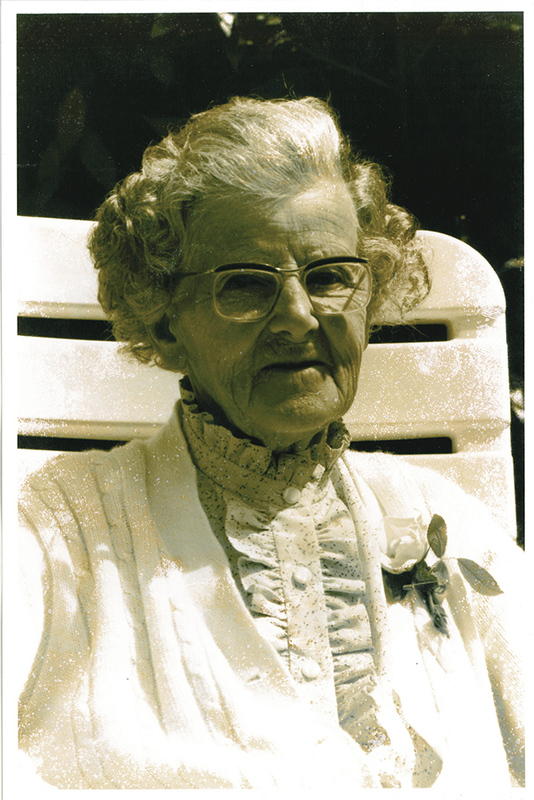
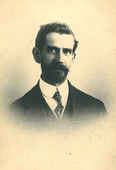 Grandfather Leader Funston Benson
 -
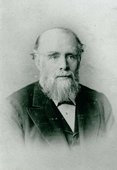 Great grandfather Pastor Andrews of Quay Chapel Woodbridge
 -
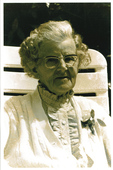 Mother Grace Blake at 90 in the garden at Knoyle Road,Preston Park,Brighton
 -
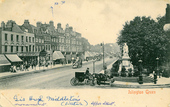 Bensons Leather Goods, 70 Upper Street Islington, London, 1923
 -
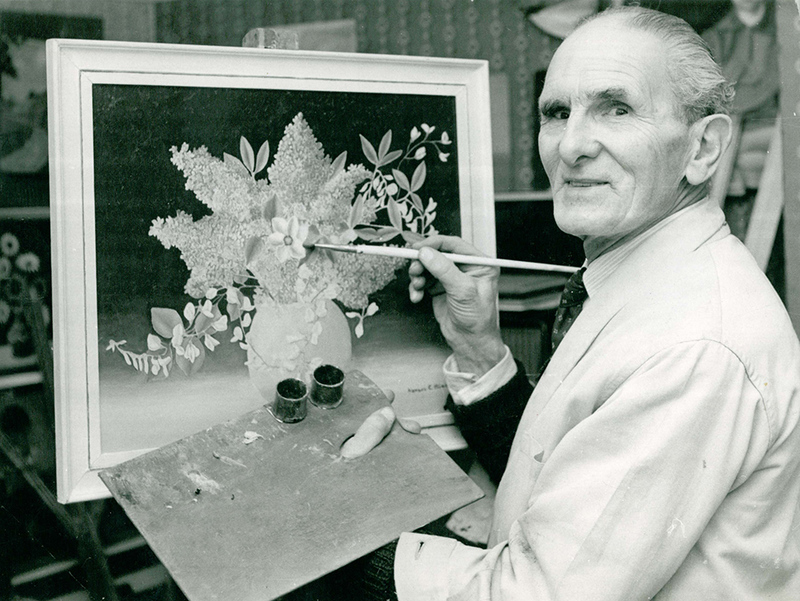
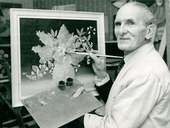 Father Horace Claude Blake at 80 with one of his oil paintings
 -
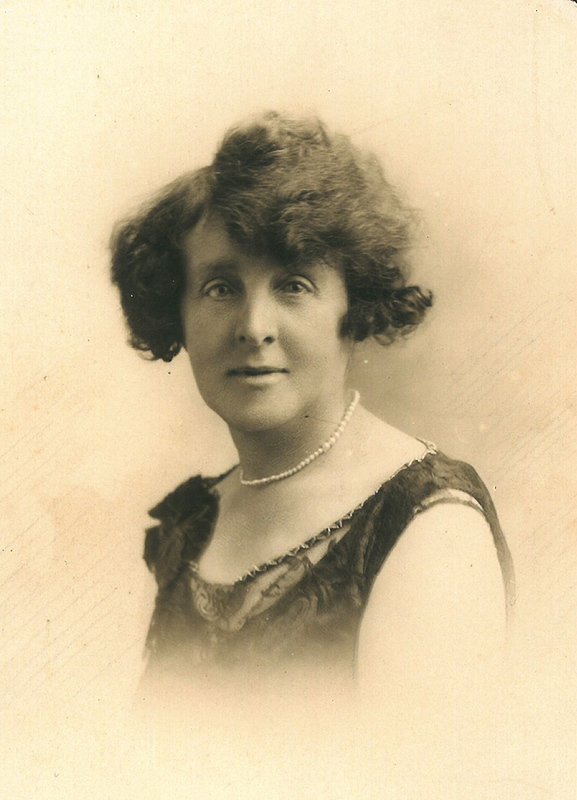
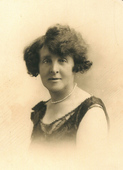 Grandmother Leisa Lovely Benson (nee Andrews)
 -
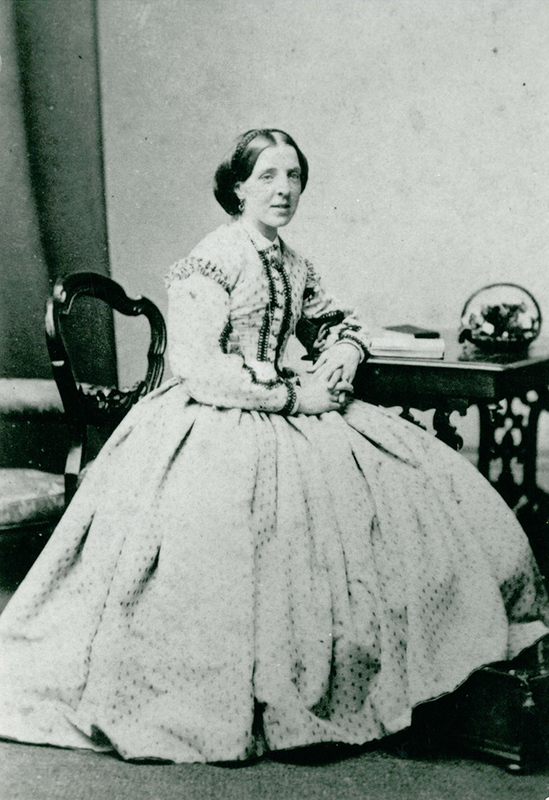
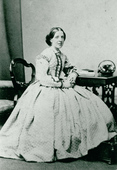 Great grandmother Andrews of Ipswich and Woodbridge
Cuffley and the Blitz (1941)
A LION CALLED WINSTON
The second world war broke out before my first birthday and it occurred to my father that living next to the armaments factory in Enfield might not be the safest place. He decided to move his young family a little out of London to Cuffley in Hertfordshire for the duration of the war, thinking it wouldn't attract Hitler's bombs. In fact it did attract a few since the Lufwaffe tended to drop leftovers once they had crossed London and wanted to get home fast. We lived at first in a bungalow off the village high street, where in the next door garden a man kept a lion called Winston! My father could not see that having two babies next to a full-grown lion was in any way dangerous. He was more disturbed when we woke up one morning to find that the fish-and-chip shop opposite had been hit by an incendiary bomb and burnt to the ground.
THE MINISTRY OF INFORMATION
Much to everybody's surprise, my father, who had once seemed somewhat unsupportive of War, King and Country, was suddenly and unexpectedly appointed as head of telephonic communications in the Ministry of Information, the hub of wartime espionage, roguery and trickery. He worked high secret at Senate House, commandeered from this London University building for the duration, where served a host of eminent men such as Sir Winston Churchill, Lord Duff Cooper, General Mark Clark and Baron Sir Leslie Hore-Belisha MP. An amusing highlight of Horace's career was his oft-related story of a summons to the office of General Mark Clark:
Clark: 'There's a war on Blake and all I've got is one goddam phone on my desk. What the hell's going on?'
Horace: 'The reason you only have one phone is precisely because there is a war going on!'
He was never one to argue with.
Another story was of the notorious lady's man, Lord Duff Cooper, graciously opening a door for a very pretty young girl typist, who ignored and swept past him without a word.
'Oh, oh, she cuts me!' he cried.
CUFFLEY, HERTS.
We moved to Cuffley, a village in Hertfordshire where my father rented a detached house at 82 Tolmers Road, whose owners had left the country for the duration of the war. It had a garden with a pond, a little apple orchard and a nice view across a cabbage field to a railway embankment. Leisa Lovely Cotching, my grandmother as she was now named, came to live with us, her second husband having died and curiously left her penniless. I wondered why? A multitude of expensive trunks and cases went up into the loft, their sides plastered with labels saying Hotel Splendide, Cunard Line, Biarritz and so on - which might have had something to do with it. My father was less than pleased to see her, but I adored her at first sight, with her absurdly youthful brown wig, her cheeks rendered glowing with cochineal, her foxhead-wrap that bit its tail with a silver clasp, and her innumerable stories.
'Why do you have a crooked nose Grandma?'
'I came out of the Negresco Hotel one morning, the door of the limousine was opened for me but the chauffeur closed it a little too rapidly and my nose was trapped in the door. I was on my way to a party given by the Admiral in his battleship harboured in Villefranche. We decided to play song-charades - acting out titles of well-known parlour songs for people to guess. I took three coconuts from the dining-room and laid them on the centre of the state-room carpet. Absolutely nobody could guess!'
'What was it, Grandma?'
'Where my caravan has rested!'
She would sit at the piano and play and sing:
'...but the clock (rapping on the piano lid) - stopped (rap)- never to go again when the old man died'
..and we would join in:
Fifty years and never stopping, tick-tock, tick-tock Fifty years and never stopping, tick-tock, tick, but the Clock (rap) - stopped (rap)- never to go again when the old man died.
I sat in front of the fire with her and cut out cartoons of Hitler from newspapers, pasting them into a scrap-book:
A parrot is sitting in its cage and a cat lying on the floor says:
'I don't mind you purring, but I don't like it when you stop.'
We would listen at night to the purring of buzz-bombs (V2 rockets) and think the same and one night the purring did stop. The almighty explosion blew out all our windows, cracked the ceilings and made a crater which looked 100-feet deep. In the morning we walked through the cabbage-field to see it and all the village were there. It had landed just beyond the embankment, which had saved us from the blast. My father had obviously been praying again.
I have another clear memory of my mother pushing me in a pram down the hill to the village and encountering the most glorious smell of bacon wafting across the countryside. We arrived at the grocer shop to find it burnt to a cinder by an incendiary bomb and all the food merrily cooking in the ashes. In the garden we would pick up silver paper streamers and flak from overhead gun battles. We slept under the stairs and presumed that having wars was the normal way that life was lived. Hitler was demonized and we thought he was the Devil. For a long while I believed germs and Germans were the same thing. I had a little flick-book of Hitler with a demon's tail standing on top of the world and as one flicked the world rolled over and crushed him.
A VISIT TO BEDNALL FARM, STAFFORDSHIRE.
My uncle Alec Benson played the flute and lived in a tiny village called Bednall near Cannock Chase in Staffordshire with his wife Cissy and his son, my cousin Peter. At the height of the blitz Philip and I were sent there to keep out of harm's way. From my point of view this was not entirely true. The first thing my brother did was push me into a field full of stallions, which frightened the life out of me, although fortunately they didn't attack. Next he locked me into a pigsty on the nearby James's farm, with sows four times my size. I was rescued in the nick of time by Doris James, the farmer's wife. Back in Cuffley he threw all my toys onto the fire, causing a chimney alarm and calling out the fire brigade. One day we all went for a picnic in Epping Forest where Philip left his favourite toy, a white terrier called Jock, sitting in a tree. In the middle of the night he began to scream and scream for it until at four o'clock in the morning my father had no option but to go back and retrieve it. Philip also started to suffer from nettle rash - so severe and persistent that sometimes he had to have a nurse. Invited across the road one day to play with some neighbour's children we sat on a big swing-chair by a pond. He gave it an almighty push and I fell in, running home dripping wet, contracting double pneumonia and gaining a propensity for chest problems which stayed with me for some years. It seemed he did not much like having a brother and was doing his best to say so.
A CHANGE OF RELIGION
Moving to a village affected my father in a most surprising way. He changed his religion. I suppose that for one thing the Plymouth Brethren could no longer get to him so easily. Petrol was heavily rationed and journeys were only supposed to be undertaken if vital to the war effort. When at the age of four I nearly died of bronchial pneumonia there was a great stir in the village when my uncle Harry drove up in a magnificent white Riley 12. Surely he shouldn't be driving? But Uncle Harry, my father's brother, was in fact a distinguished Harley Street doctor and one of the few people perfectly entitled to drive in war time. This fact might well have saved my life! He attended to me and I recovered.
In fact I think Horace was pleased to get away from the brethren. The acquisition of a wireless (which had been outlawed when he was with the Brethren) had affected him and he started to want to sing like the tenor Richard Tauber, or go to see a West End show, or do some amateur dramatics. There was a small, black tin church near us which was pretty 'low'. He enquired about beliefs and was presented with a copy of 'The 39 Articles of the Christian Faith' which he told us were 'sound' and on Sunday afternoon July 4th 1943 we were all obliged to get baptised into the Church of England one after the other. I remember feeling that I was too big for it. Getting baptised was for babies and this was embarrassing. Whether my mother had any say in the matter I don't know; after all she had given her whole way of life up to commit herself to the Brethren because Horace was a shining light in it and that's why she'd married him. He was moving the goalposts. Later this was to bother my brother a great deal, but for the moment it produced what I personally could only see as a tremendous improvement!
A wind-up HMV gramaphone appeared with 'You are my heart's delight' and 'This is my lovely day'. We could play 'The Teddy Bears Picnic', 'The March of the Tin Soldiers','The Rose of Tralee' and all sorts of nursery rhymes. My mother began to play Chopin and Beethoven after we'd gone to bed and then one day we went to the cinema in London to see the sumptuous story of composer Johann Strauss: 'The Great Waltz' starring Luise Rainer. If ever a film could persuade one that being a composer was glamourous it would have been 'The Great Waltz' and perhaps somewhere this thought entered into my head?
Sixty years later in London a tiny little lady dressed from head to foot in white was introduced to me by ballet-critic Nicholas Dromgoole. 'I am Luise Rainer and I have come to meet you dressed as 'The Snowman!' she said. She was still acting at the age of 95 having been the only actress in history to win the Oscar for Best Actress two years running. ('The Good Earth 1937 and 'The Great Waltz' 1938.)
Childrens' books with pretty covers appeared alongside the Bible and my mother joined a well-stocked lending library. Horace was trying to make up for a lost life, but despite outwardly accepting a more conventional faith he remained Plymouth Brethren at heart. He was opposed to financial gain, business, mixing with wordly people, success, fame, being clever, showing off, freemasons, astrology, spiritualism, magic, gambling, the stock market, sexual intercourse other than for procreation, intimacy, physical contact between members of the family - all convictions which can make life somewhat difficult in the real world!
There was a Kindergarten near our house called 'Poltimore' and my mother took me there to enrol. I was not too co-operative. The headmistress was a Miss Monkton, an old lady with pince-nez glasses. She took them off and handed them to me.
'Take these glasses to that lady over there'
'I won't'
'We know what to do with little boys like that!'
A man came with a puppet theatre and performed 'Jack and the Beanstalk'. The clouds rolled down and Jack appeared to climb up into the sky. I was entranced by the magic of theatre and would remain so.
-
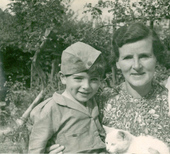 Grace with Howard in RAF outfit, Cuffley garden 1943
 -
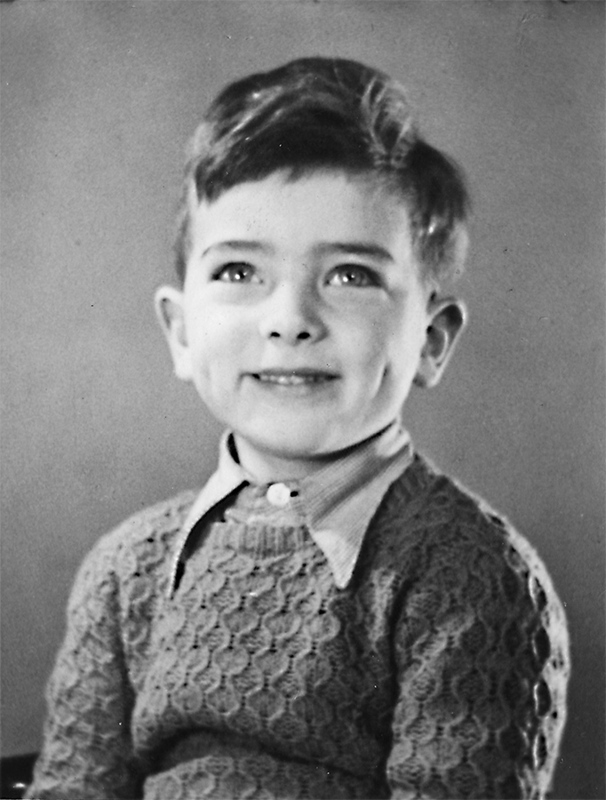
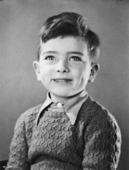 Howard in Cuffley aged 5
 -
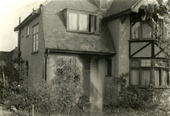 82 Tolmer's Road Cuffley,Herts.


Move to Brighton (1944)
Downs County Primary School
Although my father had moved away from the Brethren, perhaps he felt he had not moved far enough. As the war neared its end he decided we should move to Brighton, where he had no friends or contacts whatever. We would live 'twixt sea and downs' and he would commute every day on the excellent train service to Victoria. Prices were at rock-bottom and he purchased a run-down terraced house with some bomb damage at 113 Preston Road, of which we would occupy the top two floors. We did not at first have access to the tiny walled backyard but across the road was the beautiful Preston Park which he said would 'make up for it'. There was a somewhat dangerous flat roof with a delapidated railing, opening from the stairs on the third floor, where one could hang out washing. The house was very noisy, being on the main road to London, backing on to a furniture depository with six lorries and beyond them the railway shunting yards, but as he explained, 'very convenient', since he could walk to the station. My brother and I were enrolled in Ditchling Road Primary School at the top of Stanford Avenue (which later changed its name to The Downs Primary School) and the choir at Saint Augustine's Church a short way up.
At Primary School we were taught folk songs. My girl-friend was Susan Sheen. We would stand up in front of the class and she would sing:
'Oh soldier, soldier, won't you marry me, with your musket, fife and drum'
and I would sing the bitter ending
'Oh no sweet maid I cannot marry thee for I have a wife of my own'.
A song about deception, betrayal and bigamy if one comes to think about it, yet teaching us something about life in such a quiet, gentle and humourous way that it stays in the recesses of the mind. In the sixties such folk songs became a no-go area and much wisdom lost in the process. English folk songs were often 'modal', in the minor with flattened sevenths and major sixths, whereas the scales taught at The Preston School of Music, to which I was soon to go, insisted on flattened sixths and sharpened sevenths, the European system. The English music of the first half of the Twentieth Century cultivated and revelled in this modalism, which permeates the music of Vaughan Williams, Warlock, Finzi, Holst, Delius, Ireland, Moeran and many others. I have never forgotten this and am still an unreformed modal person, not always noticeably, but very strongly if asked to indulge - for instance the film score for 'A Month in the Country'where the period setting of the early twenties and a country church made it irresistible!
-
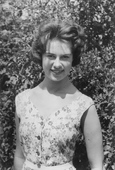 My childhood sweetheart Susan Sheen many years later
 -
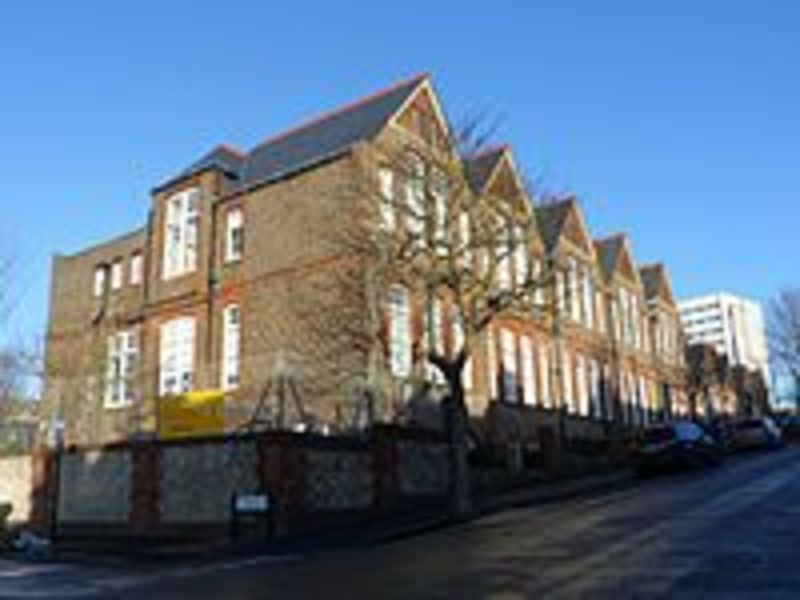
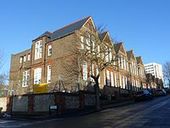 Downs Junior School, Rugby Road, Brighton
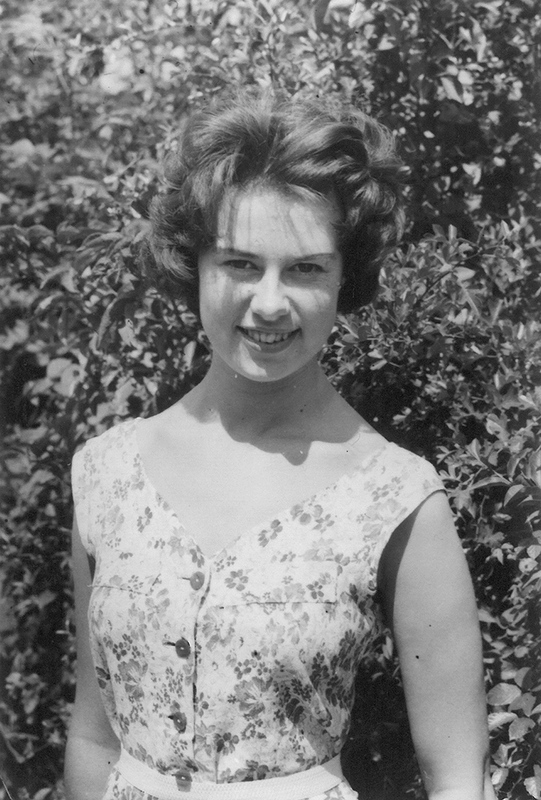
Choirboy (1945)
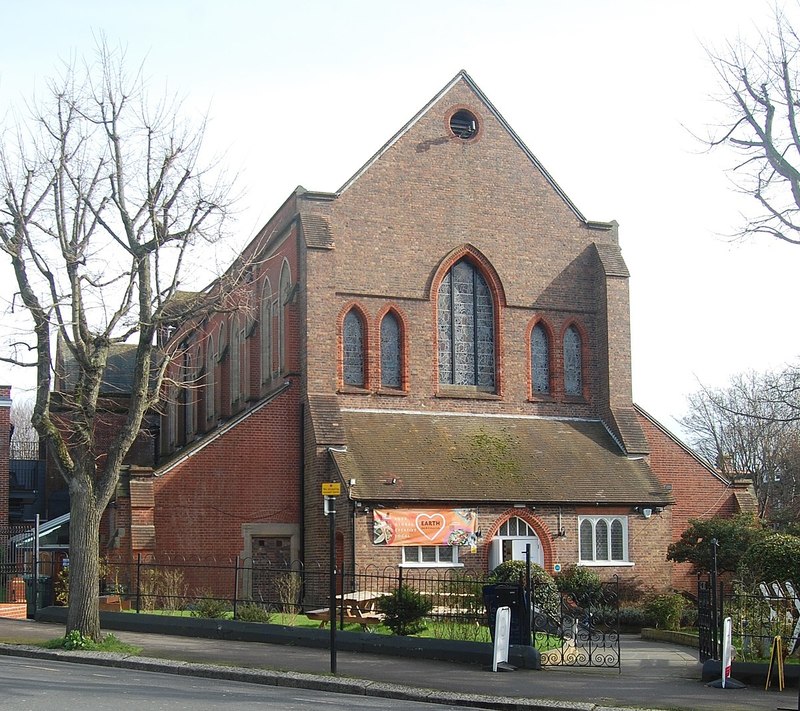
St.Augustine's Church, Brighton
Bartholomew Hales ARCO had just taken on the post of organist and choirmaster at Saint Augustine's Church. He was only about five-feet tall but dignified, brusque and serious. Choirboys practised on Wednesday evenings from 6 to 7, and again on Fridays from 7.15 with contraltos, joined at 8.00 by tenors and basses. My father joined it as a tenor and my brother and I joined it as trebles. We sang everything: Victorian anthems, Elizabethan motets, Purcell, Wesley, Noble in B minor, Stanford in C, Bach, Mendelssohn duets, Bach chorales, Haydn, Morley, Gibbons, Tallis, Stainer, J.B.Dykes (slightly frowned upon), MacPherson, Parry - Mr. Hales introduced us to the whole range of Anglican music just as if we were singing in one of the great English cathedrals. He had retired from 'the City' we were told, had been an assistant organist to the prestigious George Thalben-Ball at the Temple Church and had even on occasion conducted some light opera at the Scala Theatre. He would never have told us this himself. He gave no encouragement, no praise, nor indeed censure beyond the occasional mild correction. He instructed and rehearsed the choir as necessary, chose the music, played the organ with minimum ostentation, and was in every way reliable, correct and utterly impenetrable.
One day he told my brother and I that we were to come to his home on Monday evenings at 7 o'clock for singing lessons. No money was involved. We arrived at his large detached house in leafy Surrenden Avenue, were ushered into the music room by his young wife Kathy and there put through a great variety of vocal exercises and gymnastics: 'Come let us see the sun rise up' (on a rising scale) and 'Now let us see the moon go down' (on a falling scale). We sang scales to 'Naw,naw' and 'Nah, nah' and 'Nee,nee'. We were taught breath control by taking in a huge breath and attempting to sing a whole verse of 'Crimond' (the 23rd psalm) in one breath. I became so expert at this that later I could sing two whole verses in one breath and when at 14 I was entered for the long plunge event at the Grammar School swimming gala, I floated miraculously for 3 minutes under water hitting the other end of the pool and becoming the all-time winner of the event- the only notable sporting achievement of my life! After the exercises we were taught arias such as Handel's 'Art thou troubled', Bach's 'Let the bright seraphim' and Mendelssohn's exquisite duet 'I waited for the Lord', which I adored. We became the leaders of the choir (Cantoris and Decani) often performing at weddings on Saturdays for a shilling, or two and sixpence if we sang a solo. My favourite solo was 'Love one another with a pure heart fervently' by Samuel Wesley.
The organ at St Augustine's was unusually fine. It had only just been built and installed at a cost of £32,000 - a 3-manual Morgan and Smith with 60 speaking stops, a simulated 32' pedal stop which made us shake in our shoes, tab stops, manual and pedal pistons with couplers, a solo tromba of resplendent power, and a Choir Organ 'Salicional' of exquisite delicacy. I was in awe of this great machine operated with such deadpan disinterest by the diminutive maestro. At the age of about 12 I summoned up courage to ask if I could try to play it:
'After choir practise on Friday'.
No surprise, no reaction, no expression.
He taught me the organ. Again no money was involved. Left hand with right hand together; left hand and right foot together; right hand, right and left foot together; all together. We set about the works of J.S. Bach, the organ sonatas of Mendelssohn, and the chorales of Cesar Franck. I worked and worked at his magnificent 'Chorale in A minor' in the hope of causing a reaction. I was amazed at my own temerity for daring to take on such a bravura work and thought at the least I would be reprimanded for overstepping my years. We got to the mighty ending with the pedals in octaves and full organ lifting the roof off, leaving the extreme silence one experience after extreme loudness. A slightly longer pause than usual.
'What else have you been working at?'
I never knew if he thought I was any good or not, but I became his assistant and was allowed to play first of all for funerals, then weddings, then communion services and finally for all the services when he was on holiday. He died at the age of ninety-six, nearly thirty years later, still playing the organ, but now at St John's Church in Knoyle Road. His wife phoned me to ask if I would make the funeral oration which he had requested.
'He thought the world of you, you know'.
I felt bewildered and ashamed, for I had hardly ever seen or spoken to him in all those years; just sometimes we would have a few words when he passed my parents' house, and one day he'd given me his own ancient,treasured copy of Stainer and Barrett's 'Dictionary of Musical Terms'. I prepared my oration for the funeral and arrived to find the big church full to overflowing with dark-suited, impressive-looking business men, none of whom I knew. Where had they all come from for a retired man of ninety-six? I mounted the pulpit, stared at the sea of faces and told them that Mr.Hales had taught me everything about singing and everything about organ-playing and sacred music. He had never requested or taken payment or thanks. I was deeply indebted to him and yet I regretted to say that I had never had the remotest idea what he thought or felt about anything. I recalled the most profound tragedy that he had suffered, when his twelve-year old daughter, Daphne, so delicate and pretty, was taken ill and died suddenly. I'd tried to find a moment to express my grief - yet I could not find a way of doing it. As everything else, he brushed it aside. Choir practises continued as normal, anthems announced, hymns listed. The little man remained dignified and impassive. As I left the church one of the tall, dark-suited ones addressed me.
'We are very grateful to you for your address- you gave a perfect description of a mason of the highest degree.' For so he was.
In 2006, a school-friend wrote: 'Brightonians may not realise that there is a Brighton link whenever they hear 'Walking in the Air', the much-loved song from the animated film, 'The Snowman' which is so often screened at Christmas. Howard Blake, the composer, attended Brighton, Hove & Sussex Grammar School in the 1950s, as I did myself, and I was fortunate enough to hear his already accomplished piano-playing whenever I visited his house or his organ-playing when I visited the nearby St Augustine's Church. Accordingly his music invariably brings a host of additional memories, even though the piece was written many years later.' [Brian Dungate]
-
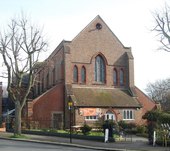 St.Augustine's Church Brighton
 -
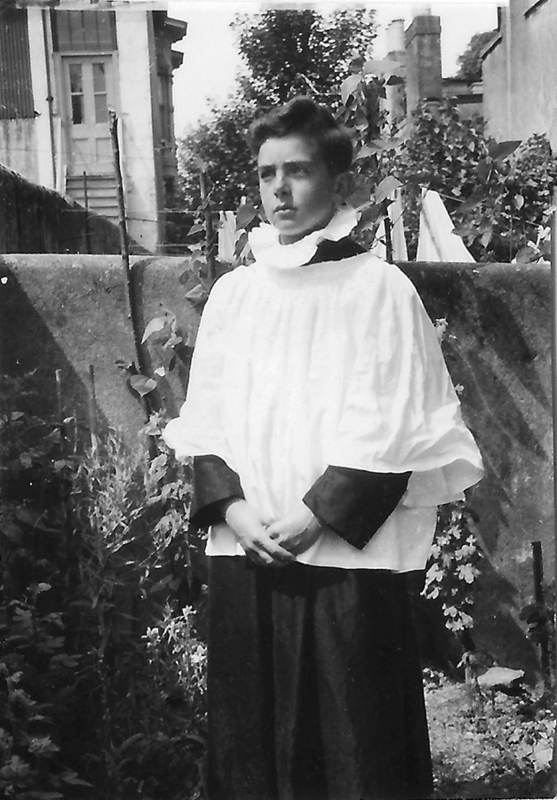
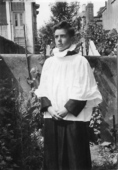 Choirboy
Preston School of Music and my first music certificate (1946)
113 Preston Road, Brighton
My bedroom in 113 Preston Road was about 3ft.6ins. wide and should have been the kitchen. It was separated from the living room by an asbestos partition-wall on the other side of which was our upright piano. After I had gone to bed, my mother, with an enthusiasm enhanced by her twenty years of denial, would delve into her repertoire of piano music learnt in the early years of the century. My ear was next to the sound board and the volume was non-adjustable and loud. It was 1945 and I was 7 years old. I listened to Beethoven's first Sonata in F minor, to 'The Moonlight' in C-sharp minor and the 'Appassionata' in F minor; to Rachmaninov's C sharp minor Prelude, Tchaikovsky's 'Chants sans paroles', Rubinstein's 'Melody in F', Cecile Chaminade's 'Automne', Christian Sinding's 'The Rustle of Spring' and many of the Chopin Waltzes. The one I loved most was the A minor with the tune in the left hand. I was six and I wanted to play it more than anything in the world. Amongst ageing volumes of sheet music in the piano stool I found 'Ezra Read's Piano Tutor' with a diagram of a keyboard and all the notes labelled. I tried at first to play it by ear but couldn't find the right pitch. It struck me that if I could write the note names onto the piano with indelible pencil and then write them into the Chopin waltz, it ought to enable me to play it. It did, although the indelible pencil markings on the piano keys were not exactly welcomed by my parents! However, from the beginning I began to play music both by ear and by sight-reading and from the beginning I realised that it was possible to write down notes that turned into music.
I asked if I could have lessons, but my father initially resisted, so I was essentially self-taught - however a year later my mother took me four doors along the road to a house with an enormous ancient sign spelling out 'Preston School of Music' in faded gilt lettering where I met a Mr.Bonney Churcher in wing-collar, cravat with gold pin and waistcoat with watch and chain, a character straight out of Dickens. I was one of a stream of children and young adults exhorted to play scales with the correct fingering, to keep strict time and to work as hard as possible for the next exam. Lessons were 1s 3d for half an hour or 2s 6d for an hour and although I enjoyed them I never got to like the scales. In fact neither of us seemed to enjoy the piano practise side of things very much and I later realised that Mr.Bonney Churcher was more an organist than a pianist. Perhaps because of this my piano playing got off to a fairly slow start from a technical point of view.
'If only you would practise, you could end up playing the organ in Saint Paul's Cathedral' he would say to me, this being the highest form of musical attainment he could think of. He was wonderfully cheery and kind-hearted and really meant this, but I exasperated him terribly because from the beginning he would put a new piece in front of me and I would tend to read it straight away, so that when I came for the next lesson he couldn't tell whether I had practised it or not!
I loved to sight-read music and I loved to improvise, mostly in the key of D major or minor and I started to write down short songs and piano pieces, first on birthday or Christmas cards for the family and then for myself to play.
-
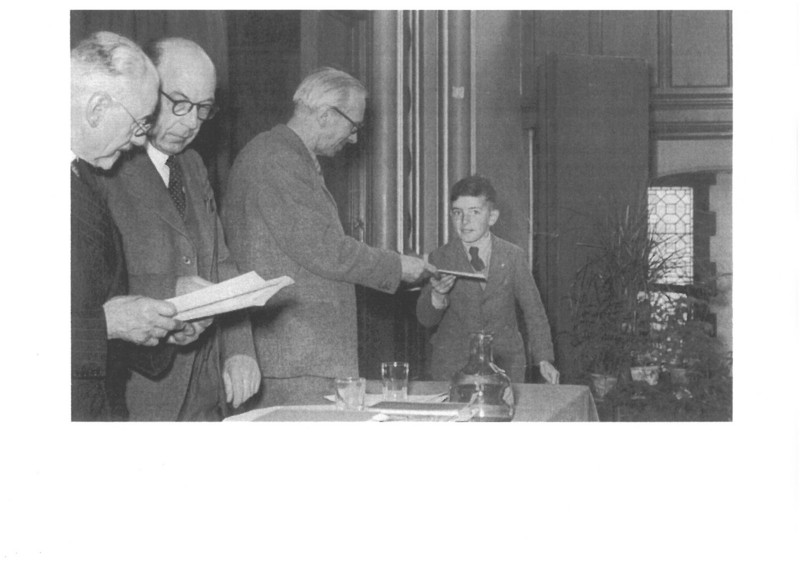
 Alec Rowley hands me my first music certificate - Hove Town Hall
 -
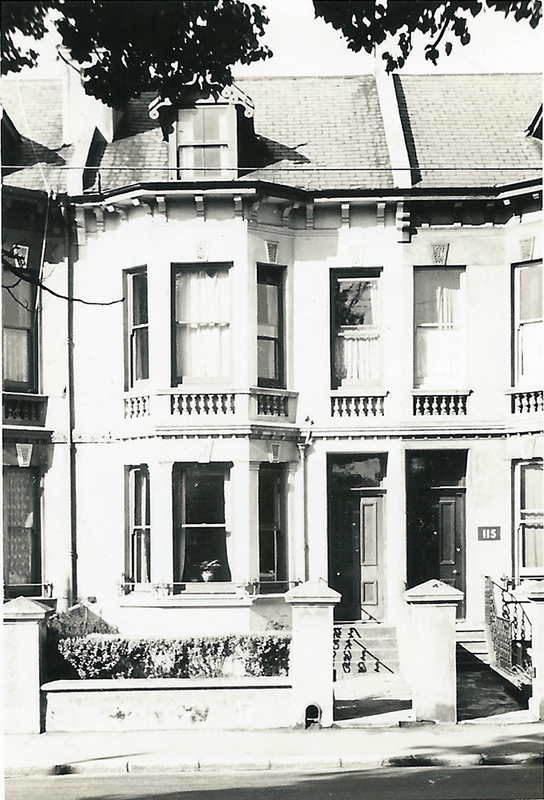
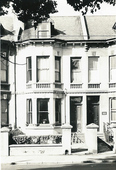 Our house in Preston Road Brighton
MARCH IN D (1949)
Scholarship to Brighton Grammar School.
The teacher in my fourth year at Downs junior school was the stunningly charismatic figure of Richard D. Webb ('Dickie' Webb) - pedagogue extraordinary, sometime playwright, Shakespearian actor, RAF hero, centre-forward for Southampton, poet, raconteur and form-teacher. In a grey and depressed post-war Britain of rationing, pre-fabs and dowdy clothes he would appear in brilliant Fairisle sweaters, loud check suits, yellow waistcoats and deafeningly-loud ties. He wrote us a play in Iambic pentameters, explaining blank verse and why the Bard had used it. The play was about The Globe Theatre. My life-long friend Christopher Geer was playwright William Shakespeare and I was principal actor Richard Burbage, singing a version of 'Greensleeves' to lyrics of Mr. Webb's own making:
'The masque is o'er, the play is done...'
All had parts suiting their own characters and this little production caused some attention, gaining a Sussex youth-theatre award. Dickie Webb gave us football trials and coached us as if professional, winning us the trophy for Best Brighton Junior School Team (in which I always played Inside Right); he divided us into groups and we built puppet theatres, writing our own plays for them; he divided us into further groups and we created newspapers; we were asked to invent languages and invent new vocabulary; we were encouraged to speak up for ourselves; to sign our names with a flourish; to write elegant letters; develop good manners; to reach out in every way. Dickie Webb believed in self-expression, creativity and freedom. My mother asked him if I was doing all right and he said:'The sky's the limit!' in a voice that would have kept Sir Donald Wolfit in obscurity. There was not one of us who would not have laid down his or her life for him had he but twitched one well-manicured finger.
One hour every week we sat in a radio room and listened to 'Adventures in Music' from the BBC, presented with the sound of a symphony orchestra, listened to attentively, perhaps for the first time? We were given glossy booklets with pictures of living composers: Richard Strauss who'd composed 'Till Eulenspiegel and his merry pranks' and was shortly coming to London to conduct it; Sibelius who lived in isolation in the forests of Finland and had written seven great symphonies; and Benjamin Britten who had just written an opera called 'The Little Sweep' which Norman del Mar was coming to Brighton's Theatre Royal to conduct and we were to be taken to see - for nothing! 'By courtesy of the Welfare State'. Dickie Webb arrived one morning laden with government-supplied music scores and taught us the songs so that we could join in and be part of it. It was something new and quirky with funny crushed notes and extra beats. We were living in a wonderful welfare-state of Free Song and Dance, Imagination and Inspiration - a great year to be alive, and a great country to be alive in!!
FIRST COMPOSITION
Since we were being asked to invent our own languages, to create newspapapers, to build theatres and in every way try to be creative, it is perhaps not surprising that I wrote my first complete composition around this time. I was aged about ten and for no reason that I remember wrote 'March in D Major', on manuscript music paper, and in ink. It had a minor secondary subject, an elaborate recapitulation and a triumphant finale with a running bass line in octaves. I cautiously took the manuscript along to a piano lesson to show and play to Mr. Bonney Churcher and he got very red in the face and puffed a lot and asked me if I had really written it:
'You mustn't lie to me sonny. It's very wrong to lie!'
At this moment an adult lady pupil arrived, whereupon he took the manuscript away from me and demanded that I play the march again to both of them from memory.
Which I did! And he was most surprised!
'Well, well sonny! You obviously did write it! Well, we're going to have to teach you harmony and correct progressions of the parts, and counterpoint and then perhaps even fugue! It's most unusual! I don't usually start to teach music theory to my pupils until they are at least 15 or so!'
Suddenly he was excited about teaching me and I was thrilled at the thought of learning. He ordered a textbook, Percy Buck's 'Practical Harmony', and my mother somehow managed to persuade my father to send off for it. Bonney was as good as his word. We worked through 6/4 chords, suspensions, plagal and interrupted cadences, the Neapolitan sixth, the diminished seventh, the grammar of classical music. Later he produced his own morocco-bound counterpoint textbook which he'd used as a student, probably as far back as the 1890s, and we worked through that as well- 1st species, 2nd species, 3rd, 4th and 5th, then canon and free, three-part counterpoint, moving finally to fugue and its complexities of subject and countersubject, augmentation and diminution, pedal and stretto. It is to Bonney Churcher that I owe my knowledge of harmony and counterpoint, instilled somewhere between the age of 10 and the age of 15.
I was 15 in 1953 when one day he asked me to visit. He had something to give to me. I arrived to find he was suddenly thin and pale and very grey. He presented me with his much-cherished album of Bach's 48 Preludes and Fugues - his most prize possession.
'Please, please work at it sonny and you'll end up playing at St. Paul's.'
But in mid-sentence he was seized by some appalling inner pain and couldn't continue. I left clutching the big book, which I still keep beside my piano - not realising that I would never see him again.
The bronchial pneumonia I'd sufferred since my ducking at the age of four still caused me trouble and I was often ill and confined to bed, sometimes missing important steps in my education. At home I would make imaginary towns amongst the bed-clothes, model plasticine and draw and paint. Fifty years later memories of this jogged back into mind when I read Robert Louis Stevenson's 'A Child's Garden of Verses', the result being both a song-cycle and an animated film.'The Land of Counterpane'.
The school had a visit one day from a talent-spotter from Brighton Art College and I was picked out for a scholarship - surprisingly not for acting or music but for painting. I went once on a Saturday morning and made an oil painting of whales and whalers but was suddenly taken ill and it was decided by my parents that I was doing too much and shouldn't return. Perhaps if I had I would have become an artist rather than a musician!
Many years later,in 2002, I applied for membership of The Chelsea Arts Club citing as qualifications my OBE for services to music, 600 musical works and Groves Dictionary's remark that I had succeeded as composer, conductor and pianist.
'But you are not an artist.'
'Isn't a musician an artist?'
'No, you have to prove that you can draw.'
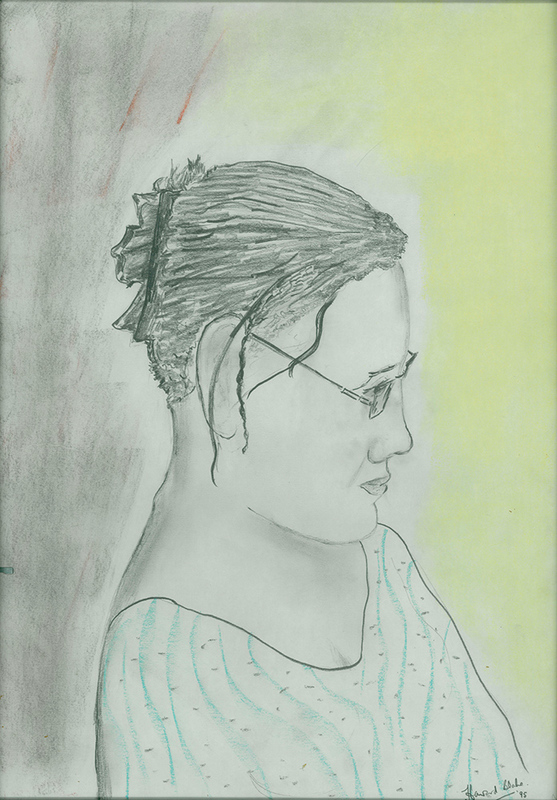
I took along a pencil drawing I had made of my girl-friend Diahann Joseph and membership was instantly granted!
-
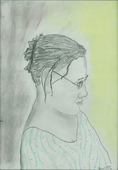 Drawing of Diahann Joseph by Howard Blake
 -
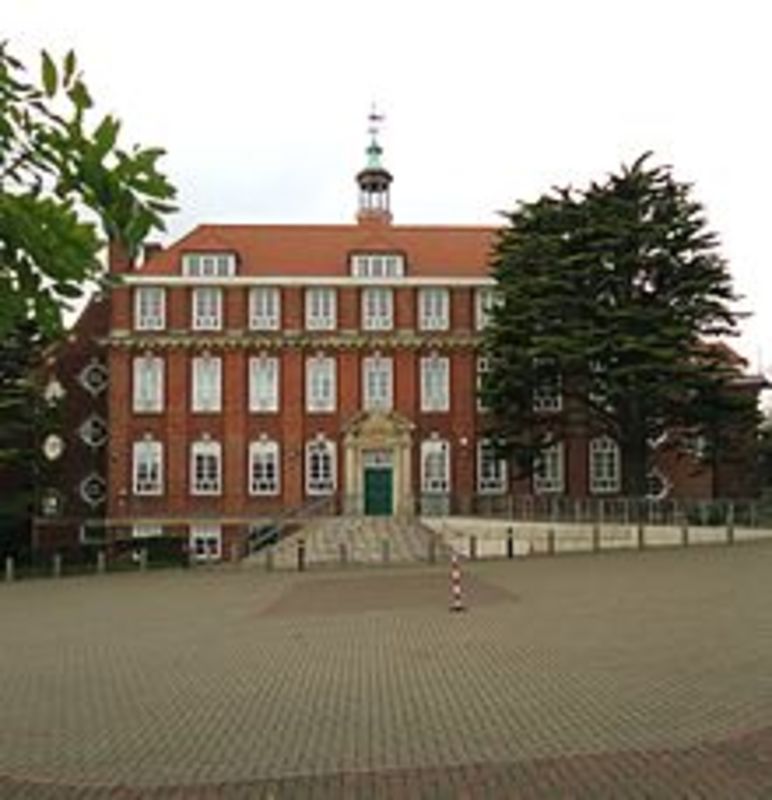
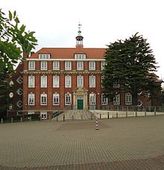 Brighton, Hove_&_Sussex Grammar School
Solo soprano in Gilbert and Sullivan's 'Ruddigore' - as ROSE MAYBUD (1950)
The idyllic year of 1949 came to an end with the 11-plus scholarship exam. Many of our A-stream passed it, as I did, but because our house was on the west side of the London Road, I was sent to Brighton Hove and Sussex Grammar School for boys, up the hill on the Dyke Road, whilst most of my friends, including Chris Geer, went to Varndean, up the hill on the other side. My brother Philip had already attended the Grammar School for 3 years and was outstandingly succesful academically, coming top of the A-stream in all academic subjects and having to suffer shouts of 'swot' every morning. (It was even rumoured that he did not make a single mistake in Latin for four years!) BGS was considered to be a very good school, having only recently stopped being a private-school when Attlee's socialist government had nationalised it.
The somewhat forbidding-looking black-gowned masters of BGS knew nothing of glorious Dickie Webb and his boundless enthusiasm for the individual soul. They believed more in tradition, discipline, law and order, the armed services and above all in games of the team variety. The much-admired motto of the school was: 'Absque labore nihil' (Without work nothing). They had no school orchestra and a single, not terribly inspiring music master, Albert Chapman. He did however present a twenty-minute gramaphone recital of popular classics every Monday morning after prayers, an annual inter-house music competition and once a visit by professional musicians - The McNaghten String Quartet playing Debussy and Kodaly - a luscious introduction to the string quartet that instantly hooked me for life.
However, on my first Wednesday at BGS Albert Chapman took us for class music and asked if any of us sang in a choir. He explained that there was a well-established tradition of a yearly performance of a Gilbert and Sullivan opera, this year's being 'Ruddigore', for which we were to audition.
(The Misses Guille, two ladies from Guernsey who had occupied the ground floor of our house in Preston Road for the duration of the war had now finally returned home and this had meant that I had been moved to a big attic room of my own. Taking advantage of the fact that no one could hear me up there, I had started to sing scales just for fun, trying to go higher and higher every night. It amused me to see just how high I could go.)
So when my turn came to sing a scale for the opera audition I first sang a scale from middle C, then D, then E, F, G.
'Can you go higher?'
'Yes'.
A flat, A natural, B flat and finally a scale up to the top C, as in the famous 'Allegri Miserere'.
'Have you had singing lessons?'
'Yes'.
'Have you done any acting?'
'Yes'
'Would you like to audition for the lead role in the opera this term?'
'Yes'.
THE DIVA
The opera was 'Ruddigore', and the following evening I attended the first opera rehearsal amongst boys who seemed to be twice as big as me. I was 4 feet 9 inches tall. I sight-read the songs and got the part. Never, in all the musical achievements of my life, have I been so elated as that evening of my first week in senior school. For seven years I was to walk to school up and down Dyke Road Drive - a dark, steep hill alone alongside the railway, with small terraced houses on one side and a massive forbidding concrete wall on the other. It was extremely ugly, but, on the night I became an operatic soprano, Dyke Road Drive Brighton was a place of wonder and delight as I sang and ran my way home.
I had no idea that I was replacing anyone else - no idea that an older boy was mortified and immediately moved away to a private school by furious parents. I had no inkling at all of how much being talented can hurt people. I played the part of Rose Maybud whilst Robin Oakapple was played by Johnnie Lee, rumoured to be the son of the famous entertainer Vernon Lee, whose picture hung in the National Portrait Gallery. The show attracted the attention of the press:
'As Rose Maybud, 11-year old H.D.Blake gave a remarkable performance for a boy of his age. He started with the natural advantage of a sweet soprano voice, but the fun he extracted from the maiden's etiquette book was delightful. The droll effect of the duets between Robin Oakapple and May Rosebud were heightened by a difference of more than a head and shoulders between them.'
AN INTRODUCTION TO CHAMBER MUSIC
Walking home after my operatic debut as the lead soprano in 'Ruddigore' aged 11 I was caught up by one of the orchestra, a violinist called Jack Millard, who happened to share some of the same walk home. When I told him that I played the piano and could sight-read he asked if I'd like to play trios one day - his friend John was lead-cellist in the Sadler's Wells Opera Orchestra, he said. I was most impressed by this and couldn't wait to try it. My mother agreed to my going over and I arrived at his parents' big old house in Clermont Road. We embarked on some Hummel trios and the sound of violin, cello and piano was just marvellous to me. It was my first experience of chamber music and I found that I could hold my own with two grown-up professionals, which to me was quite revelatory.
Suddenly into the room swept an imposing middle-aged lady dressed all in black who stopped us in our tracks:
'What on earth are you doing playing MY trios with a small boy?!'
'He plays very well Mother, just listen.'
'I have no intention of listening to a small boy usurping MY position in The Millard Piano Trio!'
My discovery of the joy of chamber music had thus been very short-lived since I was not permitted to play with them again. Yet the sound of it had entered my soul for ever. I struggled to sketch out a piano trio of my own with a first movement (Allegro), a slow movement (Andante) and a scherzo (Presto). Some years later Philip Pfaff of Chappells published the first movement under the title Fantasy-allegro for piano trio at the same time publishing Burlesca for violin and piano which I had written to be played in the house music competition by a boy called Richard Annells, and 'Party Pieces' for piano, which I had composed as a birthday present for a girl-friend, variously called Doreen or Frances!
Philip Pfaff was in fact also interested in the slow movement but felt that it needed more work. He returned it to me with some written observations, along with the scherzo fragment. This turned out to be fortuitous because in 1964 Chappell's' Music of Bond Street burnt down and most of the manuscripts were lost. In 2014 I rather extraordinarily received an inquiry for the 'Fantasy-Allegro'. This caused me to dig out the ancient sketches and, after this immense gap of nearly 60 years I set about extending the first movement (Allegro), rewriting the second movement (Andante con moto) and reconstructing the third (Scherzando), giving the completed work the name Fantasy-Trio - Piano Trio number 1
DAVID SHAW
There had been a third contender for my role in 'Ruddigore':
'Shaw's Mad Margaret was another succesful example of casting. There was an Ophelia-like poignancy about the mad girl scenes followed by the extraordinary contrast of diverting comedy with Sir Despard Murgatroyd'
David Shaw was NOT removed from the school by his family for failing to gain the lead part, but on the contrary became a friend and a great musical influence on me. He was a year older and very tall and thin. 'How long is Shaw?' boys would quip. Shaw could play the organ really well and improvise fluently on the piano. He had been brought up with the idea of theatre and opera, his father being a passionate performer of Gilbert and Sullivan and president of the Brighton and Hove Gilbert and Sullivan Society devoted to it. The family owned 'Shaw's Stores' a large department store in Hove and they lived in a fine detached house off the Dyke Road with a TV, radiogram and grand piano. Shaw was 'musical' and was 'going to be a musician'.
I was in awe at the enormity of such an ambition having recently seen the film 'Prelude to Fame' with Jeremy Spencer, about an uneducated 9-year old Italian peasant boy destined to be a great conductor - one day he somehow wanders from the farmyard into the garden of a palatial house and hears orchestral music for the first time, the first movement of Beethoven's 5th that is playing on a gramaphone. In a trance he walks up to the glistening Steinway, sits down and with just the hint of a frown reaches out instinctively and plays the whole thing back by ear.I left the cinema realising that however much I might like music I'd never be THAT good and when eventually I became a professional musician it was to my own considerable surprise. 'The camera never lies' they used to say in those innocent days.
Music was just my hobby, but I started spending a lot of my free time on it, playing piano duets with Shaw every Saturday. First, things like Arthur Benjamin's 'Jamaican Rhumba' or Walton's 'Popular Song' from 'Facade'; then arrangements of orchestral works like Elgar's 'Enigma Variations' and overtures and symphonies by Haydn, Mozart and Beethoven. A year or two later Shaw's grandmother died, bequeathing a larger house and another piano, which opened up further possibilities. Shaw acquired a two-piano version of Brahms' 2nd Symphony, Rachmaninov's gorgeous Suite opus 17, works by Ravel and Faure, Mahler and Stravinsky. He also bought records and played them to me to guess the composer. I was quite good at this because I listened endlessly to BBC radio, but I remember that it was he that introduced me to Delius's 'On hearing the first cuckoo in Spring', a music of the sort of Englishness that gives one an eternal yearning for trees and water and the countryside. Bartholomew Hales took me to hear none other than Sir Thomas Beecham in the Dome, sitting down to conduct it and audibly swearing at the orchestra, who seemed to love it - and him. I was so smitten with the piece that I transcribed the score for piano and some twenty years later it would influence me to buy a fabulously picturesque water mill, where I would constantly suffer from colds and bronchitis, a problem that would never occur to one when listening to such ineffable music.
We were spoilt by the quality of artists visiting our town. Shaw's father was also a member of the Brighton Philharmonic Society and his card permitted us to creep into Herbert Menges' Sunday morning rehearsals in the Dome to see soloists like Solomon, Shura Cherkassky, Myra Hess or Clifford Curzon, singers like Elizabeth Schwarzkopf, or cellists like Paul Tortelier, whilst the marvellously-informed Shaw would keep up a running commentary with endless ironic asides that would keep me spellbound by their effrontery. Once, via the school, we were allowed into a rehearsal of 'The Marriage of Figaro' at Glyndebourne which was to hook Shaw on serious opera for life. After Oxford he was taken on by Covent Garden Opera and groomed as repetiteur and assistant conductor, once directing a performance of 'Clemenza di Tito' there before leaving to live in Germany and work in Ulm and Bayreuth. I was never attracted to opera in the way he was, and gradually our tastes and opinions on music diverged. To me the most profound music of the great composers is found in their string quartets and chamber and instrumental music, in their symphonies and choral-orchestral works. When one writes for theatre, the music serves a different master, getting characters on and off the stage, whipping up the excitements of marriage and betrothal, victory and war, betrayal and violence, politics and death - nearer the extrovert world of Hollywood and glamour than the inner world of the spirit.
-
 'Ruddigore' - Robin Oakapple (Johnny Lee) and Rose Maybud (Howard Blake)
 -
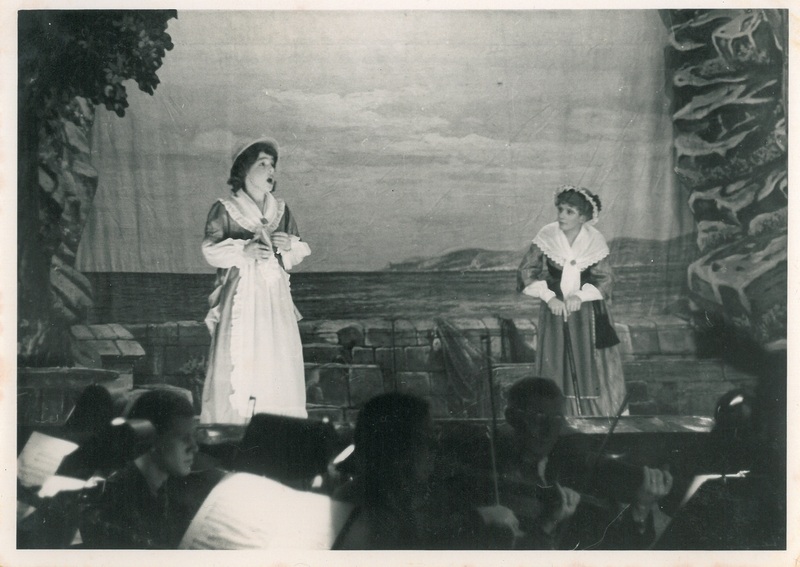
 'Ruddigore' - Rose Maybud (Howard Blake) and Dame Hannah (D. Webster)

Solo soprano in Edward German's 'Merrie England' - as BESSIE THROCKMORTON (1951)
1951 was the year of The Festival of Britain and to celebrate this the school put on Edward German's mock-Tudor operetta 'Merrie England', which contains a showy coloratura part for soprano - Bessie Throckmorton. Apart from several top B flats it contains a cadenza covering a range from G below middle C to high F in alt, two octaves and a minor seventh higher. On auditioning for the part, and probably due to my endless high-note practising in the attic, I found I could do this cadenza. At the first performance the somewhat conservative Head of Junior School, Milton, asked what note I was singing and when I told him declared it 'unnatural' and got quite upset:
'Boys do not sing up to that pitch. It's unheard of!'
But there it was, and at a time when a singer called Amy Camus called herself Yma Sumac and had a popular success with 'Hymn to the Sun God' which extended over four octaves, I was unabashed. Perhaps Mr. Milton did have a point because on the third night performance the top E flat for some reason didn't sound and I was left alone at centre stage in total silence wondering what I should do. Had my voice suddenly broken because of strain? The conductor, Albert Chapman thought not and started the orchestra off again from the top. This time all the notes came out - to rapturous applause!
Synchronicity is Jung's word for the occasion of coincidence where the chance of that coincidence occurring is higher than the reasonable odds. A lady named Violet Whitley, well-bred but of what used to be called 'reduced circumstances', had rented our basement flat and had realised that I had an insatiable thirst for music (it would have been difficult not to since the piano now stood directly over her head!) One day she called me down to the basement.
'I have some old books you might like'.
A large pile of heavy but beautifully-bound volumes were stacked just inside the door. The first one contained the complete works of Chopin in different editions, bound together. The next contained a Leipzig edition of all the Beethoven sonatas, the third Greig and Debussy, the fourth Bach - and so on. My mother and I speculated that she might have studied piano in Germany some time before the war. The books appeared to have come from Leipzig and were signed by a Violet Beaumont, which we felt must have been her maiden name, but she was unforthcoming about her history. A chance remark about Clement Attlee intensified the mystery.
'He went to Harrow. He's my cousin'.
What was a person with such elevated connections doing in our basement?
I welcomed these books with open arms and began to consume them from cover to cover. For me it was a miraculous gift, a treasure trove, since there would have been no way that I could have afforded such a marvellous library, or have even persuaded anybody for my need to have one.
The town of Brighton was bursting with music for all to hear. Military bands played at the band-stands on the promenade; trios of violin, cello and piano played in palm-court lounges and pier tearooms - 'Chanson de Matin' and 'Salut d'Amour' of Elgar, 'The Wedding of the Painted Doll', 'Valse Triste' by Sibelius, 'In the Shadows' by Herrmann Finck - the standard repertoire of light music, often written by the greatest of composers; a wonderful ancient harp and violin duo echoed through The Lanes; in cinemas there were Wurlitzer organs that came up on lifts between feature films played by men in pink dinner jackets; at the Regent Dance-Hall was Syd Dean's All-Star Dance Band; Sadler's Wells Royal Ballet would come to the Hippodrome every year and the Carl Rosa Opera would come to the Essoldo.
Some evenings my mother played second violin in the scratch Kingscliffe Light Orchestra, which David Shaw and I sometimes attended and found hilarious. Mr Whitcombe, the ageing conductor, would lose concentration at times and lose his place, whereupon the leader, Madame Pordes, would become furious and stamp her foot. Clem Rosling, the clowning percussionist, would add unwanted motor horn 'parps' to wake him up and in difficult string passages the volume of sound would curiously diminish as the less confident players made sure their bows didn't touch the strings. George Moore would play the Trumpet Voluntary and go a brilliant shade of scarlet and Major Keen would triumph over his huge handlebar moustache and play an oboe solo. Sometimes I had to control my merriment on being asked to sing a solo: Handel's 'Art thou troubled?' or Bach's 'Let the bright seraphim' or perhaps something lighter like Johnson Oatman's 'Count your blessings one by one.'
-
 Rose Maybud
 -
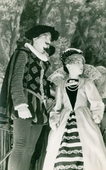 Sir Walter Raleigh (Cedric Warren) and Bessie Throckmorton (Howard Blake)Brighton Hove and Sussex Grammar School production of 'Merrie England' 1951

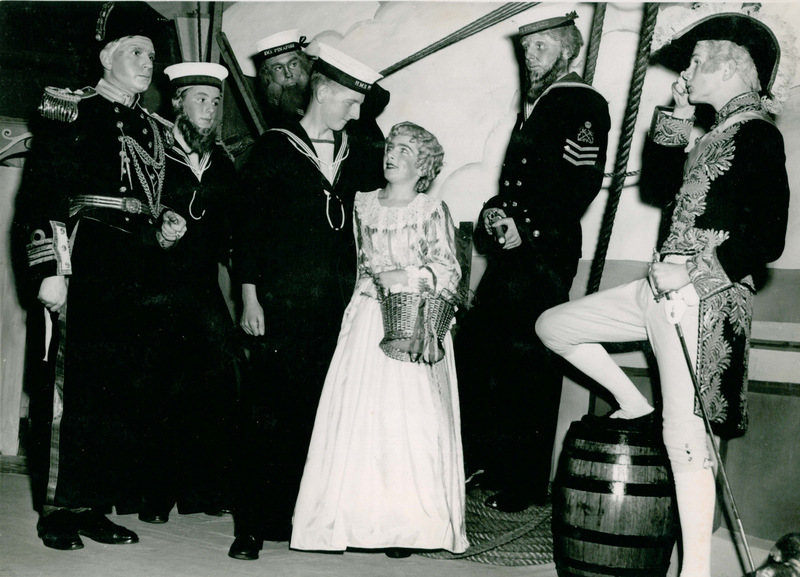
Solo soprano in G&S's HMS Pinafore as JOSEPHINE THE CAPTAIN'S DAUGHTER (1952)
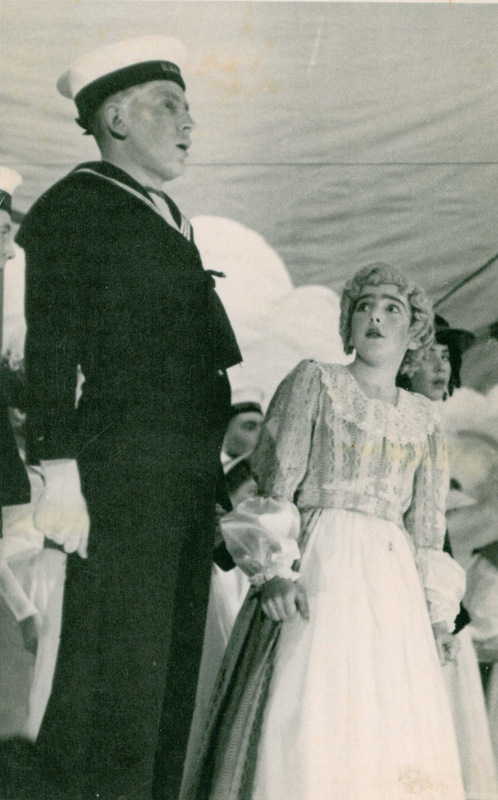
The third soprano role of my short singing career was also the most fun - Josephine the captain's daughter in 'HMS Pinafore'- with David Shaw as Buttercup and a marvellous singing discovery for Ralph Rackstraw in the person of John Mason, later changing his name to Ralph Mason and becoming principal tenor of the D'Oyly Carte Opera, Freddie in 'My Fair Lady' at Drury Lane and a star of The Welsh National Opera. Although we were the same age in 1952, his voice had broken and mine hadn't.
INVESTIGATING LITERATURE
'Jolly' Jack Smithies was our third-year form master and English teacher. He was strongly dismissive of Gilbert and Sullivan and attempted to move us sharply forwards, extolling the excellence and originality of T.S.Eliot and Alfred J.Prufrock:
'Let us go then you and I When the evening is spread out against the sky Like a patient aetherized upon a table'
But I found this funny and somehow shocking, not reverent enough, as Robert Graves warns in 'The White Goddess':
'Skilful parody of a poem upsets its dignity,sometimes permanently as in the case of the school-anthology poems parodied by Lewis Carroll in Alice in Wonderland.'
I was prepared to believe Eliot to be a great poet on one line of surpassing beauty:
'Sweet Thames run softly till I end my song.'
But then I found this to have been by Spenser and thought it to be an outrageous plagiarism on Eliot's part. All his poetry pokes fun at other poets, rather as jazz musicians quote and trivialise snippets of the classics - out of something between admiration and envy.
In music I felt rather the same about Britten, that he satirised the melodies of others rather than achieve his own. Even at that age I believed that the defining merit of a composer lay in his ability to compose great melodies. Jack Smithies was smitten by Britten and once invited me to accompany him to the first London performance of 'Noye's Fludde' in Southwark Cathedral, conducted by the composer. I was thrilled by the arrangement of the Victorian hymn-tune 'Eternal Father strong to save' but the rest left little impression on me.
Jack Smithies also introduced me to Proust in English translation which I thought quite wonderful and I attempted an essay in the same style. The wonderful BBC Third Programme at that time broadcast the whole of 'A la recherche du temps perdu', dramatised with the greatest living actors and this made a huge impression on me. I toyed with the idea of becoming a writer and rather ambitiously attempted a short story in the Proustian style. Mr. Pascoe, my English teacher at that time commented: 'somewhat recondite!'
-
 Ralph Rackstraw (John Mason) and Josephine (Howard Blake)Brighton Hove and Sussex Grammar School production of 'HMS Pinafore' 1952
 -
 Josephine aghast - Howard in 'HMS Pinafore'
Solo contralto in G&S's 'Yeomen of the Guard' - as DAME CARRUTHERS (1953)
..and a family disaster
My dear brother Philip was three years older than me and brilliant in many ways. He mastered the skills of Meccano and somehow acquired an enormous second-hand assembly of every existing manufactured Meccano item. When shown a Bren gun in the school cadet force he came home and created a prototype that he claimed could fire more bullets per minute than the real thing! When we played Monopoly he created his own game called 'Managing Director' with dice, instructions, stocks and shares and boards, in all innocence sending it off to a leading games manufacturer who later were to manufacture it as their own invention. When introduced to model-making he created an extraordinary 'Flying Wing' which we watched him fly in the park. When I had an interest in puppet theatres he made one out of Meccano, writing a perfectly-construed verse play about National Savings Certificates for us to perform. When we visited London he decided that the traffic was badly-organised and drew up a comprehensive road reconstruction plan. He had a tremendous gift for languages, the Latin master making the astonishing claim that he had not made a single error until the 4th year. He naturally gained a first class A-level in it as well as in French and German, later adding Italian, Spanish and other languages including Arabic and Hebrew which he read at Oxford. He enjoyed scouting and cadets, was a good runner, a good swimmer, and an excellent fast bowler though never being asked to join a team. For some reason he was always alone and I don't remember friends coming to the house to play with him. Something was wrong. His relationship with our father deteriorated and at sixteen there were frequent word-fights at Sunday lunch-time ending in screams, tears and locked doors.
His problems were about belief. He believed in Christianity, as he had been instructed, and he believed that he should 'honour his father' - but unfortunately found that he didn't agree with him. If anything he believed in what his father had believed when he was born - the tenets of the Plymouth Brethren, which belief system was still pretty well in operation in the person of our mother. Honouring her husband she had accepted his professed new Church of England outlooks but without believing in them. She attended Saint Augustine's as we all did, but, as she told me years later, there were many ideas she found hard to accept, going to war certainly being one of them, and this conflict of belief in his mother and father had started to affect their elder son.
He was about to start his last year at school when he announced to our father that he was a conscientious objector. Three days later he imparted this information to our BGS headmaster, Harry Brogden, as well. It would mean that he would cease to belong to the Combined Cadet Force in which he had been made a sergeant, and that he would oppose doing National Service, which was still in operation. Harry Brogden saw this as a black mark for the school and himself - letting the side down.
So my father and his eldest son argued, the headmaster argued and pressure was put on Philip from all sides.
The worst happened and he collapsed into a nervous breakdown, falling into a state of catyleptic trance for three days. His eyes were open but he did not speak or move, although I learnt later that he could hear everything we said. Our doctor came to look at him, then a psychiatrist or two, then a Mr.Combridge who ran The Crusaders, then the vicar and a curate and two school-teachers. It was decided that he must be moved to a psychiatric hospital for treatment and my father signed a form giving his permission. Mother and I did not agree. We said that his father had been bullying him for days on end and that he should just be left alone and would recover. But nobody listened or took any notice of us.
Philip was sent first to the general hospital in Brighton and then to Hurstwood Park, a specialised mental hospital out in the countryside. Once away from my father he recovered rapidly, but they wouldn't let him leave. On 5th October he decided he had had enough, discharged himself and headed up the road towards London, but he was picked up by police and taken back, and to make sure he didn't 'escape' again, locked in a cell. He was effectively 're-imprisoned'. It got worse. They decided to give him electric shock treatment. How could they know about Philip and his brilliant mind, or the lethal cocktail of charm and fanaticism that fuelled my father's brain? Nobody inquired. A year later the director of the hospital played chess with Philip. He told us that as far as he could see there was nothing at all the matter with him and remarked on his high level of intelligence.
'He shouldn't have come here at all' he said, but by then it was far too late. Everything changed. Not rapidly but bit by bit, like water dripping on stone. You don't notice you've changed but you have. Philip was never the same. He had always been a loner, but then a lot of this was because of being so clever, which cut him off from people or made them foolishly envy him. I determined not to be clever, or if I was, to conceal it. He never really came back home. The psychiatrists advised him not to. I lost my only brother and the house felt empty without him. He seemed to blame me to some extent for his collapse and this made me sadder than anything else, since I couldn't understand why he should think it. For a while he stayed with Dickie Webb and his wife who were very kind, but staggeringly was then called up for National Service. A year after the authorities had had him declared unstable they were putting him into uniform as an A1 specimen of young manhood. My confidence in these authorities dropped below zero. The effect on me was a total loss of belief in institutions: the church; doctors and hospitals; teachers, schools and universities; Freudian psychiatrists; families and relatives and so-called friends. I had seen them in action when there was a crisis and they had notably failed.
Mother was constantly visiting my brother in hospital and finding it difficult to look after Grandma as well. I sat with her quite a lot which I liked, but Horace had found an excuse for her to go and on 17th October he persuaded mother to put her into a nursing home. Sometimes she managed to visit us after that, but she died the following year. I wasn't invited to the funeral, because my father thought 'children shouldn't go to funerals'. I wish I had been there to pay my respects, I had been so fond of her. One effect of this was that somehow I no longer wanted to sing or play the organ, because I no longer wanted to go to church.
My brother was brilliant in many ways. He mastered the skills of Meccano and when shown a Bren gun in the school cadet force came home and created a prototype that he claimed could fire more bullets per minute. When we played Monopoly he created his own game called 'Managing Director' with dice, instructions, stocks and shares and boards, in all innocence sending it off to a leading games manufacturer who manufactured it as their own invention. When introduced to model-making he created an extraordinary 'Flying Wing' which we watched him fly in the park. When I had an interest in puppet theatres he made one out of Meccano, writing a perfectly-construed verse play about National Savings Certificates for us to perform. When we visited London he decided that the traffic was badly-organised and drew up a comprehensive road reconstruction plan. He had a tremendous gift for languages, the Latin master making the astonishing claim that he had not made a single error until the 4th year. He naturally gained a first class A-level in it as well as in French and German, later adding Italian, Spanish and other languages including Arabic and Hebrew which he read at Oxford. He enjoyed scouting and cadets, was a good runner, a good swimmer, and an excellent fast bowler though never being asked to join a team. For some reason he was always alone and I don't remember any friend ever coming to the house to play with him. I don't remember a girl friend of any sort either, although I know he would have liked one, at one point taking a course of dance classes at Arthur Murray's in the hope that this would improve his chances. On the day that I first set off for the Grammar School I asked if he would walk with me. I was really nervous about going there, but he refused, and for seven years I walked up and down the hill alone.
Something was wrong, either with him or with the school. Although for a while we sang together in the choir and he would sometimes help me with my homework, we never went on holiday together and rarely played together. The relationship with our father deteriorated and at 16 there was a regular fight-fixture every Sunday lunch-time ending in screams, tears and locked doors. He accused my father of betraying his beliefs and I suppose he was right. My father, though professing to be Church of England was still steeped in Brethren ideology. He hadn't counted on his children entering into the spirit of England to the extent of inventing machine guns and capitalist-inspired board-games. He didn't believe in any of that.
'So why do you pretend to be Church of England if you don't believe it?' my brother would ask him, and this would drive him to a fury. The answer really was that he now preferred normal life, loved singing anthems in the choir, loved painting and amateur dramatics and loved having joined the mass of society after 42 years of being thought odd.
In the way of so many of us he was convinced that whatever he believed at any given moment was right, and he could always back up his current attitudes with biblical verses to support them. His knowledge of the Bible was encyclopaedic. He would say of our mother:
'Who can find a virtuous woman? For her price is far above rubies' (Proverbs 31.10),
and Philip would say
'Well why don't you ever buy her a birthday present?'
And a row would start, always with...
'Honour thy father and mother..' coming in somewhere.
It is true my father never did buy her anything and all her clothes were hand-me-downs from her sisters. It wasn't that he couldn't afford things since he had a well-paid job, but all smooth things were 'vanity'.
'Vanity, vanity, all is vanity' he would proclaim and go and buy himself a new set of paints.
Philip's problems were about belief. He believed in Christianity and believed that he should 'honour his father' - but unfortunately found that he didn't agree with him. If anything he believed in what his father had believed in when he was born, and this belief system was still in full operation in the person of our mother. Honouring her husband she had accepted his professed new outlooks without believing in them. She attended Saint Augustine's as we all did, but, as she told me years later, there were many ideas she found hard to accept, going to war certainly being one of them. She said:
'I think God will be pleased that I worship Him even if I'm in the wrong place.' A typically gentle view tinged with humour.
She'd leave out the bits of the creed she couldn't quite believe in and omit occasional lines from Hymns Ancient and Modern such as '..they die forgotten as a dream dies at the opening day..'
'No, I don't believe that. I leave it out.'
Horace had 'fled to the fleshpots of Gomorrah' (Brighton that is) to escape the PB, but it hadn't entirely succeeded. Constance White had insisted on coming down from Ealing ever since we moved. She enrolled Philip and I as members of the Scripture Union, whose bible-reading booklets arrived by post like clockwork every month and we had little SU badges shaped like shields that we were supposed to wear. Grace read to us separately every night without fail, the choice of verses undoubtedly guiding us toward the Brethren view. Of Horace's sisters, Edie was 'closed' PB and she would visit armed with tracts. She would write:
'I arrive at ten o'clock on Thursday d.v.'(God willing).
Bess on the other hand had converted to The Church of Christ Scientist. With extraordinarily bad timing she made her only visit when I had succumbed to another bout of bronchial pneumonia with complications. I had a temperature of 106F and I could only see her 'as through a glass darkly'.
'Get up! There is no such thing as illness, it is all in the mind'.
I got out of bed and promptly passed out and when I came to: 'Lo she had departed from thence'.
Bess's twin sister Daisy now lived dangerously within striking distance of us in Worthing and without exactly leaving the PB was incorporating within her soul an amalgam of Church of Elim, Seventh-Day Adventism, Pentecostalism, Speaking with Tongues and other things 'of which we know not'. She worshipped at 'the tabernacle', loved talking more than anything in the world and started to find an avid listener in her nephew, because Philip had 'put away childish things' and his whole life had become suddenly empassioned by a search for religious meaning. He desperately needed to talk and find answers to theological questions. He had started quite correctly by talking to our own Vicar, but as I discovered later, talking about theology is not really what the Church of England does - more about playing a straight bat and taking cold showers. The vicar had found him pretty heavy going and passed him on to the Bishop of Brighton. From there I believe he had made contact with a curate who introduced him to the Jewish-Christian Movement. I may have inadvertently contributed to this interest, in that, being already a great book-reader, I had noticed the publication of 'The Bible as History' by Hugh Schofield and bought it for Philip as a birthday-present. He had swallowed it whole and started to develop the view that the first Christians were the only true Christians, although this presented all sorts of problems - Jesus had preached Christianity as a religion for Gentiles and had been crucified for it - to name but one.
In early 1953 he started a Scripture Union group in the school and exhorted me to join it. Since he'd never asked me to join him in anything at all before I felt it was the least I could do and I put on my SU badge and walked around trying to look serious. Nobody commented on this since I suppose it was so intensely embarassing - well it certainly was to me.
Whereas up to that time inhouse word-fights had been largely restricted to Sunday lunch, they now started to invade weekdays. An ominous development was the locked door with Philip and my father on the inside. There was no escape and their voices got louder and angrier, and more extreme. The subects were eschatology and chiliasm, the Second Coming and The Book of Revelation, a compilation of overheated mysticism that over centuries has been the breaking-point for so many people of fervent conviction.
To be fair to my father he was going through a bad time at work. He was 56 and assistant manager of Shaftesbury Avenue telephone exchange. He had worked extremely hard all his life and wanted to be the manager, but he had started at a considerable disadvantage without an education and it had taken him too long. He was being passed over and the job was looking as if it would go to a keen young chap from a public school. This did not please him.
Philip was about to start his last year at school when he announced to his father that he was a Conscientious Objector. Three days later he imparted this information to the headmaster, Mr. Harry Brogden, as well. It would mean that he would cease to belong to our Combined Cadet Force, in which he had been a thoroughly efficient sergeant, and that he would oppose doing National Service, which was still in operation. Mr. Brogden would have seen it as a black mark for the school and himself - 'letting the side down'.
My father and his eldest son argued and pressure was put on Philip from all sides because on 12th September he saw Mr.Brogden again to say that he had changed his mind. On the morning of 13th he took a Sunday School class at Saint Augustine's but a walk that he had organised for that afternoon was taken over by my father and his Scripture Union class planned for Monday 14th at the school was cancelled. On Tuesday 15th all seemed quiet. I came home from school about 5 and was doing some homework. Philip was in his room and mother was preparing for Horace's return from London by setting out his normal evening meal. He returned at 6.45 as usual and asked where Philip was. We said he was in his room but it turned out that he wasn't, so I went looking for him. He was just outside the door on the flat roof leaning against the house wall and I said Dad was looking for him. He didn't reply and I said it again, with the same result. That made me a bit worried and I went downstairs. My father went up to see if he was all right and came down after a few minutes asking if we would help 'bring him in'. We asked why and he said Philip was acting very strangely and refused to move. We didn't understand this but we did know that the flat roof was a dangerous place with a sheer 30-foot drop down onto concrete steps. Mother and I followed my father back up there and he said:
'You must come in Philip'.
He said nothing and we stood there. So my father took hold of him to move him and he resisted.
'Help me' he said - and so my mother and I did. He was like a dead weight and I suppose my father was thinking he was going to jump off, though I'm sure he wasn't. He had had enough and wanted to be left alone. But how were we to know? Somehow we manhandled him into the house and down one flight to his bedroom, my heart beating with terrible misgivings. When we got there he collapsed onto the bed as if unconscious.
He remained in a state of catyleptic trance for three days. His eyes were open but he did not speak or move, although I learnt later that he could hear everything we said. The doctor came to look at him, then a psychiatrist or two, then a Mr.Combridge who ran a Christian group called 'The Crusaders', then the vicar and the curate and one or two school-teachers. I suppose they found it rather exciting. The diagnosis was that he was in a catyleptic trance and must be moved to a psychiatric hospital for treatment. My father must sign a form giving his permission, which he did, in effect declaring him insane. Mother and I did not agree. We said that his father had been bullying him for days on end and that he should just be left alone and he would recover, but nobody listened or took any notice of us at all.
The day after it happened mother asked me if I would tell the headmaster what had happened and after prayers I nervously knocked on his study door. I did my best to explain but collapsed sobbing, which made him furious. It wasn't much of a job to have to do and I would have rather been anywhere else in the world than in front of this unfeeling person who told me to 'pull myself together'. He became my enemy. After all it was he who had caused my brother's nervous breakdown by pressuring him to join the army. Did he know that Philip was actually following in his father's footsteps? Did it occur to him that arguments in justification of armed conflict might have been achieved by persuasion?
On the 18th Philip was up and well enough to go for a five-mile walk with both parents, but it was too late - the psychiatrists had put him on their books, and later that day he was taken away in an ambulance. He was sent first to the general hospital in Brighton and later to Hurstwood Park, part of Saint Francis Hospital, Haywards Heath, a mental hospital. Once away from my father he recovered rapidly, but they wouldn't let him leave the hospital.
On 26th September my father's eminent Harley-Street surgeon brother Dr. Harry Blake came down and had lunch with my father, but who knows what he told him. It didn't set Philip free.
On 5th October Philip made his own bid for freedom and headed for London on foot, but he was picked up on the road by police and taken back, and to make sure he didn't 'escape' again, locked in a padded cell. He was effectively imprisoned and still there was nothing that mother and I could do. It got worse. They decided to give him electric shock treatment- jolt his brain back to normal - as if there is such a thing. How could they know about Philip and his brilliant mind, or the lethal cocktail of charm and fanaticism that fuelled my father's brain? They did not inquire.
Electric shock therapy of this sort is now discredited, but 1953 was the vogue time for it, with the cold war warming up and the MK-Ultra project in full swing.
A year later the director of this funny-farm played chess with Philip, who soundly beat him. He told us that as far as he could see there was nothing at all the matter with him and remarked on his high level of intelligence.
'He shouldn't have come here at all' he said, but by then it was far too late.
Everything changed. Not rapidly but bit by bit, like water dripping on stone. You don't notice you've changed but you have.
Philip was never the same. He had always been a loner, but then a lot of this was because of being so clever, which cut him off from people or made them foolishly envy him.
I determined not to be clever, or if I was, to conceal it.
He never really came back home. The funny-farm advised him not to. I lost my only brother and the house felt empty without him. He seemed to blame me to some extent for his collapse and this made me sadder than anything else, since I couldn't understand why he should think it. For a while he stayed with Dickie Webb and his wife, who were very kind to him, but staggeringly he was then called up for National Service. A year after the authorities had had him declared insane they were putting him into uniform as an A1 specimen of young manhood. My confidence in these authorities dropped below zero, and so did Philip's. He passed the officer training exam with more than top marks. He was given a rating of 'genius' but asked one or two questions:
'What are your politics?'
'Communist'
'What are your views on war?'
'Pacifist.'
We had been brought up to tell the truth and he spent two years peeling potatoes on Salisbury Plain. I determined to try and say what was expected and keep my own truths to myself. I had seen that neither my mother or my brother could stand up to my father, because he always convinced you he was right. I was the younger brother and had seen that my father in fact was wrong. I held an advantage therefore which Philip had not possessed and I learnt to defeat my father by turning his dogmas round on him.
'God will punish you'
'Not as much as he'll punish you'
This tended to throw him off-balance and gradually he stopped victimising me with this sort of Calvinist rhetoric.
I think the worst effect for me was a total loss of belief in institutions: the church; doctors and hospitals; teachers, schools and universities; Freudian psychiatrists; families and relatives and so-called friends. I had seen them in action when there was a crisis and they had failed miserably.
Mother was constantly visiting Philip in the hospital and finding it difficult to look after Grandma as well. I sat with her quite a lot which I liked, but Horace had found an excuse for her to go and on 17th October he persuaded mother to take her into a nursing home. Sometimes she managed to visit us after that, but they'd taken away her nice brown wig and her make-up and she didn't like to be seen without them. She died on November 8th the following year and I wasn't invited to the funeral, because my father thought 'children shouldn't go to funerals'.
I wish I had been there to pay my respects, I had been so fond of her.
Philip came home at Christmas and went to a midnight mass with mother and father. I didn't want to go and stayed at home trying to write a chorale prelude on 'Greensleeves' for organ. I hadn't lost interest in the organ or music but I no longer really wanted to go to church.
As if all this sadness was not enough, my voice broke and my wonderful high soprano voice descended in pitch. The opera chosen for 1953 was 'The Yeoman of the Guard' and instead of taking the lead I was given the contralto part of Dame Carruthers. I learned the part but my heart wasn't in it, and curiously I was never to find a good voice within me again thereafter. It was as if, as a treble, I had poured all my time and energy and delight into a most wonderful musical instrument that I had been miraculously given - and that this instrument had suddenly been taken away.
-
 HB as Dame Carruthers in 'Yeoman of the Guard'
 -
 Howard as Dame Carruthers
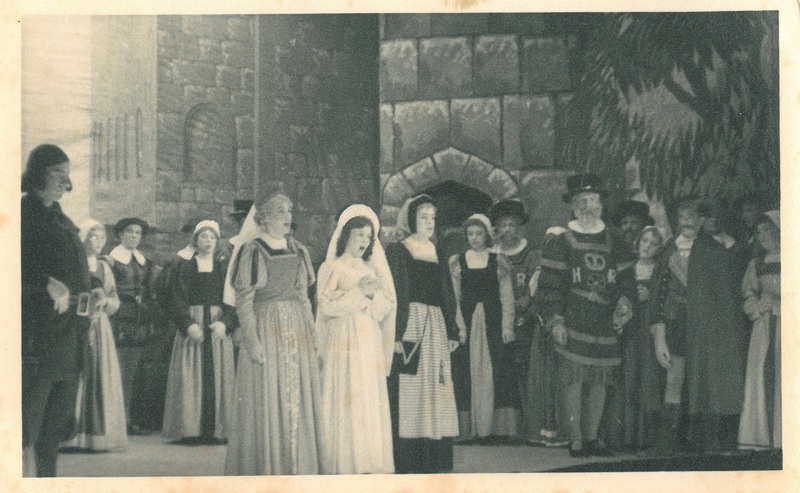
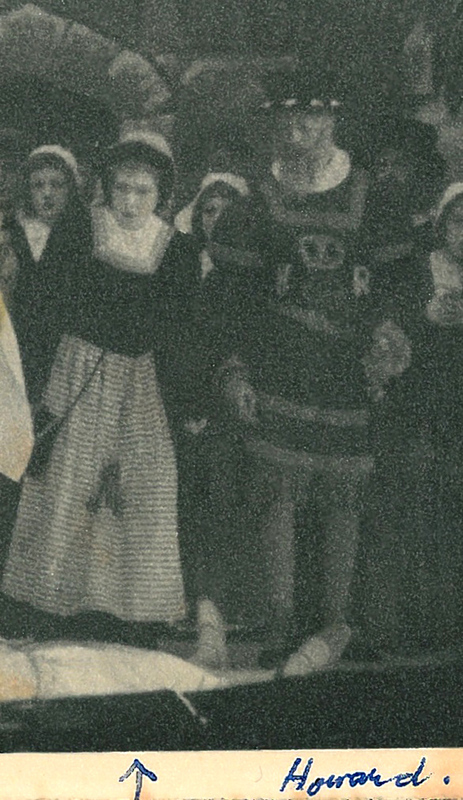
'IT WAS A LOVER AND HIS LASS' (1954)
Grade Eight Piano, Sir Malcom Arnold and the ballet 'Solitaire'
I went with my mother one evening to see The Sadlers Wells Ballet at the Brighton Hippodrome and was enchanted by 'Solitaire', a ballet with the music of English composer Malcolm Arnold. What amazed me was that this music was standing alongside that of great historic composers like Tchaikowsky and Delibes, but it was not just contemporary music with verve and melody and charm and excitement, its composer was English and still very much alive! This inspired me to think that it might be possible to compose in the present day for the public at large and I resolved to try and meet Malcolm Arnold one day and ask his advice. However, an immediate result of Malcolm Arnold's influence on me. on looking back, was that shortly after seeing and hearing this ballet in the year 1954, I immediately sat down and both composed and wrote-down my first complete song with accompaniment, a setting of Shakespeare's: 'It was a lover and his lass' which became Opus 1a 1954.
SINFONIA ANTARCTICA
On 25th August 1954 my mother took me to a Henry Wood Promenade Concert in the Albert Hall for a performance of Vaughan Williams' 'Sinfonia Antarctica'. We had seen the film 'Scott of the Antarctic' and it sounded exciting, composed with a wordless soprano part sung by Margaret Ritchie, organ and large orchestra. It was a hot night and after queuing for seats we stood in the promenade near the stage. Both of us were about 5ft 2in tall, crushed between tall people. I remember the extraordinary effect of a low 64-ft. pedal note holding under the full orchestra. The floor vibrated and I along with it. I found myself being passed out of the hall - having passed out in the hall!
SIR THOMAS BEECHAM
A more succesful concert visit took place in Brighton when Bartholomew Hales took me to The Dome to see Sir Thomas Beecham conduct. He started with the splendidly rumbustious overture 'Zampa' by Herold and continued with Delius' 'First Cuckoo in Spring' and Sibelius' Seventh Symphony, making a tremendous impression.
POETRY AND MUSIC
Our fifth form master was another English Literature specialist but with a different view from the irreverent Jack Smithies. The irascible Randall was mostly so because his pupils did not share his massive love and reverence for the subject. He had been an army Colonel in the war and appeared very tough, but when he read Keats or Milton or Donne he would quiver on the edge of tears. He adored Gerard Manley Hopkins and passed this passion on, poetry at its highest level moving me in as strong a way as music. Once he read us 'The Hound of Heaven', an extraordinary poem by Francis Thompson which I found very difficult to take, but halfway through the creation of Benedictus in 1979 I recalled the phrase 'the labryinth of my own mind' and went back to it, writing tenor Richard Lewis an 11-minute scena which became the very core of the work.
Due to the respect that Randall imbued I later found it difficult to set poor poetry to music. Fifteen years later I was asked to create a film score called All The Way Up and provide an original song. The producers engaged a distinguished lyric-writer to collaborate with me, but when I read what he had provided I reacted adversely, suggesting he try again. After three tries I decided to have a go myself and submitted all four lyrics to the producers. They chose mine. This did not endear me to the writer but it did give me the confidence to create lyrics from that time on, adding 'lyric-writer' to my list of professions.
-
 Malcolm Arnold
 -
 Piano duets with mother at 113 Preston Road
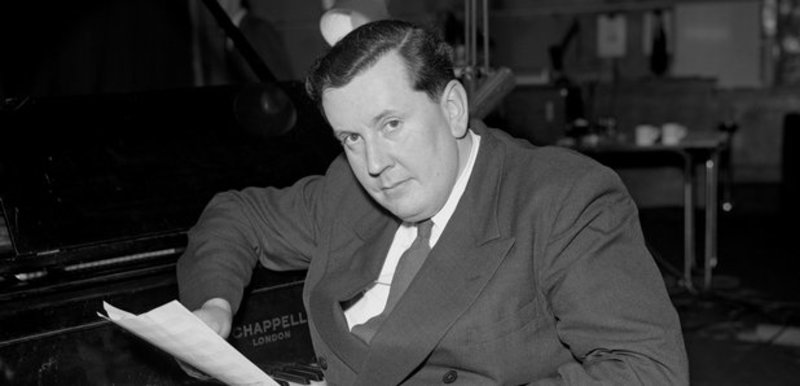
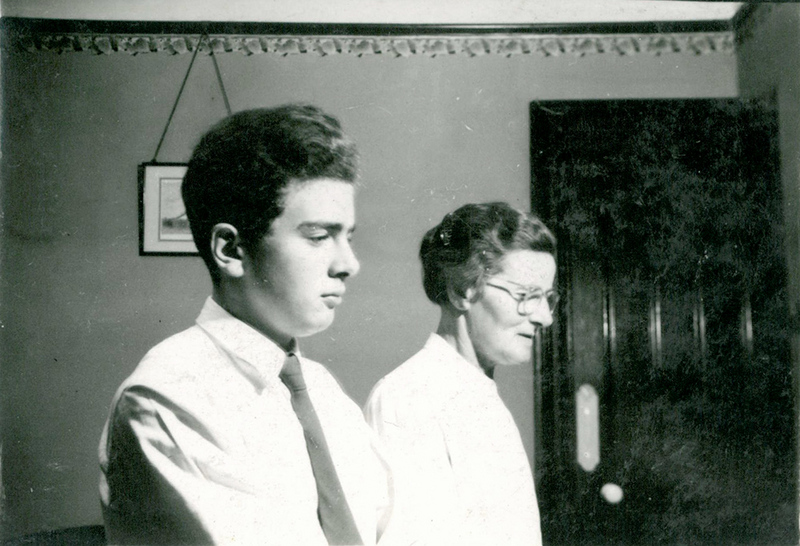
PIANO FANTASY (1955)
Coaching by pianist Clive Lythgoe, Grade 8 with Distinction
The senior history master at Brighton Hove and Sussex Grammar School was Stephen Pratt who had a passion for classical music. It was rumoured that he had bought a 'Black Box', which sounded highly suspicious until we realised that it was the first hi-fi system. With this box he mounted record evenings in the school library, one of which presented Benjamin Britten's 'Michelangelo Sonnets' and another 'The Rape of Lucretia'. He worshipped Britten as the foremost living composer at a time when there were many major composers still writing- Richard Strauss and Sibelius had died only recently: Walton, Shostakovich, Copland, Bernstein, Vaughan Williams, Poulenc, Samuel Barber and Stravinsky were all at the height of their powers.
As a result of this black box I inherited a musical gold-mine, because around 1954 Stephen Pratt decided to dispose of all his 78 records and move into the era of the vinyl LP. He asked in class if anyone would be interested in these demoded objects and I jumped at the offer, even though we didn't have a record player. On being pressured my father bought a basic plastic turntable which we could play through our ancient wireless and Stephen Pratt delivered a pile of disks to our house. One of the sets was of chamber music (Beethoven's opus 96 Violin Sonata played by Max Rostal) and he asked if it would be of interest. I said it would as I had composed some chamber music myself and mother and I played a movement for violin and piano which I'd written. (Unfortunately now lost.) I was apologetic about it because it sounded to me like bad Brahms, but he was full of enthusiasm and asked my mother if he could invite me to a concert series at the Royal Pavilion. He thought it could benefit my musical interests, which it undoubtedly did. A series of six concerts was to be given by the Amadeus Quartet and consisted of the finest string quartets of Haydn, Mozart, Beethoven, Schubert and Brahms, played with such total unanimity and love that I can still hear it in my mind today as a perfection never equalled.
The disk sets were top-quality ffrr Decca recordings, still highly regarded: Bela Bartok's 'Concerto for Orchestra', Igor Stravinsky's 'Petrouchka' and Ravel's 'Daphnis and Chloe' - all conducted by Ansermet. I played them over and over again, changing sides and records every 3-4 minutes. Soon after this Brighton Lending Library installed its own LP record section next to a collection of miniature scores and the library became my Aladdin's Cave: Julius Katchen playing the 3rd piano concertos of Bartok and Prokofiev was my absolute favourite, but alongside I listened to Berg and Borodin, Stravinsky and Skryabin, Puccini and Pergolesi, Ravel and Resphigi, Britten and Bloch, Szymanowski and Schoenberg, Webern and Wagner, plainchant, ethnic musics, folk musics, jazz - anything and everything that was music.
Valerie Whitley's treasure trove of music albums had already acquainted me with much of the traditional piano repertoire and I was moving on.
A CHANCE MEETING
In Brighton Library one day I was examining Howard Ferguson's Piano Sonata when a voice said:
'Are you going to look at that forever?'
'I'm sorry?'
It was a smart, fashionably-dressed young man.
'I am a concert pianist. My name is Clive Lythgoe and I have just been asked by the BBC to perform the Ferguson Sonata and you are holding what is almost certainly the only copy in the vicinity. I've misplaced my copy and urgently need one'
I was so impressed that he both performed for the BBC and knew Howard Ferguson that I willingly handed it over.
'Well thank you, that's most kind. Why are you interested in it?'
I explained that music was my hobby, that I played the piano and was looking for new repertoire.
'What are you playing at the moment?'
'Amberley Wild Brooks by John Ireland.'
'That's pretty advanced to be just a hobby. I'd like to hear it.'
He suggested a date when I could come over to Hove's elegant Brunswick Square where he shared an elegant top-floor apartment with the feature-film editor Peter Tanner. I played some Chopin to him, expecting some sort of kind but dismissive remarks. But instead I got fury:
'You have tremendous aptitude but you have been taught abominably! It is wicked that someone with such innate musicality can have been so disgracefully neglected!'
I told him I'd had two piano teachers, both respected local organists.
'Organists should never be let anywhere near a pianist, let alone try to teach one. With the organ you just push down notes and the pipes do the rest. With the piano, every nuance of touch makes a difference, the volume is controlled by the weight of the arm and the shoulders. It is an instrument not a machine. What about phrasing? What about pedalling? The pedal is the soul of the piano and you have no idea how to use it!'
And there and then he taught me the technique of pedalling each note, depressing the pedal after each note is struck and lifting it a split second before the next.
'This section needs half-pedalling', and he explained that too.
Clive Lythgoe had been a pupil of the world-famous pianist Myra Hess and he was a young classical concert pianist already working at the topmost level. He had recently made his debut at the Proms and was now giving recitals and performing concertos with leading orchestras.
'I'm doing a recital for the BBC Third Programme which will include the Ferguson Sonata. The very least I can do is invite you to it.'
On the day of the broadcast we travelled up to London on the all-first-class 'Brighton Belle' and headed for Maida Vale studios where I sat mesmerised as he played contemporary sonatas by Humphrey Searle, Bernard Stevens and, of course, Howard Ferguson.
He'd been given tickets for Svetlana Beriosova in 'Sleeping Beauty' at Covent Garden and that evening I found myself in the famous crush bar being introduced to the conductor John Hollingsworth and the administrator of the Opera House, Sir David Webster:
'I'm told that you're sixteen but can sight-read and play excellent piano and sing and write music. Maybe you should come and work for us as an assistant conductor?'
I was so flabbergasted by this suggestion that I was struck dumb with embarassment. To have suddenly stepped from nowhere to the highest echelons of the music world was more than I could deal with. The bell rang and we dispersed. Perhaps I should have followed this up, but I had no idea how.
My piano-playing had improved and my rendition of 'Amberley Wild Brooks' in the school's house music competition caused some attention.
'We were all up to our necks in water!' chortled jolly Jack Smithies.
Although I had sat for Grade VIII several years earlier I had only passed with a merit and now I sat it again, gaining a Distinction of 138 marks out of 150 and the comment:
'Real talent shown. Splendid!'
This was undoubtedly due to Clive and it was he that also started to make me think seriously about a career in music. I asked the careers master if there was such a thing as a musical career.
'Very precarious' he said.
I had a stab at setting a Shakespeare sonnet, and in the summer composed an original Piano Fantasy Op.1b, showing it to a friend of my brother's, Heather Waterman, an intelligent 19-year old who was head girl at Varndean Grammar School and also played the piano. She was distinctly unimpressed, saying: 'Who do you think you are - Beethoven?' Somewhat discouraged I put it into a cupboard where it remained. Very many years later however, in 2013, when researching repertoire for Vladimir Ashkenazy's piano album, I found the manuscript and, after some tidying-up and revision, was delighted to witness its acceptance into his CD programme.
That Autumn I seemed to know no bounds, my interests not by any means confined to music. I led debates in the Literary and Debating Society, won the Newton Cup fifth form prize for best all-round results, the tennis doubles and the Headmaster's Reading prize, discovering 'sprung rhythm' and giving an impassioned reading from Gerard Manley Hopkins''The Wreck of the Deutschland' that seemed to surprise people even more than my piano-playing.
CINEMA AS AN ART-FORM
Jean-Claude Deschamps, the son of my mother's great French friend from before the war - then Mademoiselle Peters - visited us and introduced me to the novel idea that cinema could be an art-form - a thought that was to have far-reaching consequences. There were many cinemas in Brighton at that time, including two dedicated to foreign films - the Paris and the Continentale. We saw Rene Clair's film/opera/fantasy 'Les Belles de Nuit' with Gerard Philippe - a genre of film unthinkable in either England or USA, 'Les Sept Pecheurs Mortales','Eduard et Caroline', 'Jour de Fete'. In all of them I loved the magical combination of music and image, the way in which cinema could achieve poetry.
BERTRAND-RUSSELL AND NIETZSCHE
Brighton Library had a philosophy section placed as inaccessibly as possible at the far end of a high gallery. I wanted to know about philosophy. Since 1953 I had lost my belief system and desperately needed to find a replacement. I started with Bertrand Russell's 'History of Western Philosophy' which was like an impersonal travel-book of writers on the subject, none of whom seemed to fire him with any sort of passion or interest. If pressed perhaps he might not have expressed enthusiasm for Nietzsche and I hold him responsible for introducing him to me.
'Most people hold ideas like fossils in a glass case that they occasionally take out and dust, but the real seeker after truth pursues ideas like a hunter savagely spearing live fish.'
This was more like it!
Friedrich Wilhelm Nietzsche had spent his life writing down every idea that came into his head. He arranged them in paragraphs and had them published as books with titles like 'Thus spoke Zarathustra', 'Beyond Good and Evil' or 'Twilight of the Idols'. He was brought up as a Christian by a father who was a Pastor but then lost his belief, declaring tragically and dramatically:
'God is Dead'.
He was passionate about music and culture and the lack of appreciation accorded to it. We seemed to have quite a lot in common and much of that summer I was on the beach reading him, his prose style getting rather uncomfortably entangled with my own and Proust's. Unperturbed I began to write down my own ideas, determined to create my own philosophy.
William Blake had said: 'I must create my own system or be enslav'd by that of another man's'.
-
 Clive Lythgoe, concert pianist pupil of Dame Myra Hess
 -
 Brighton Grammar School: School Prize and Reading Prize
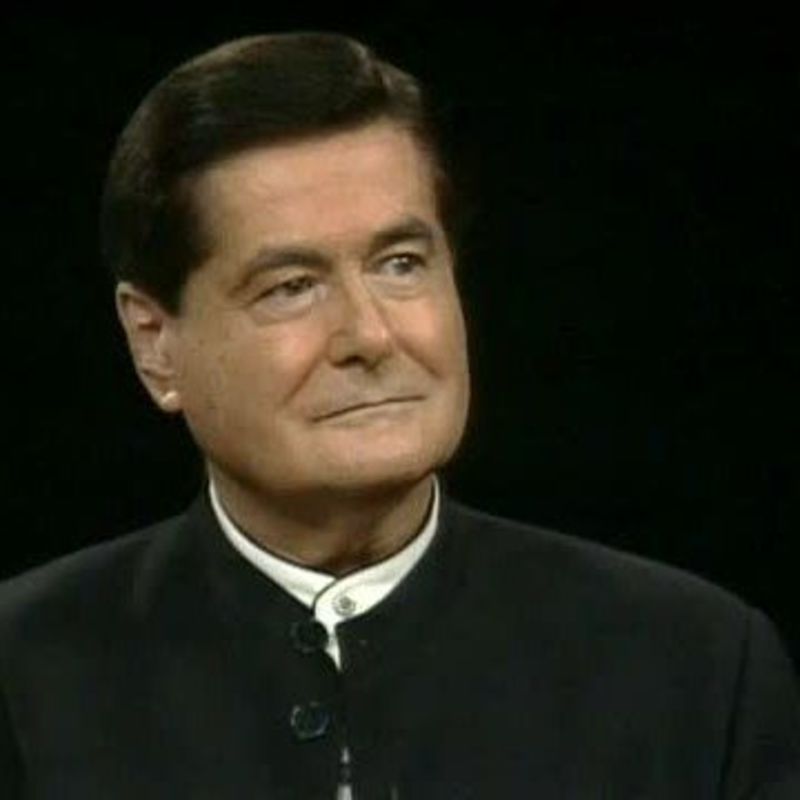
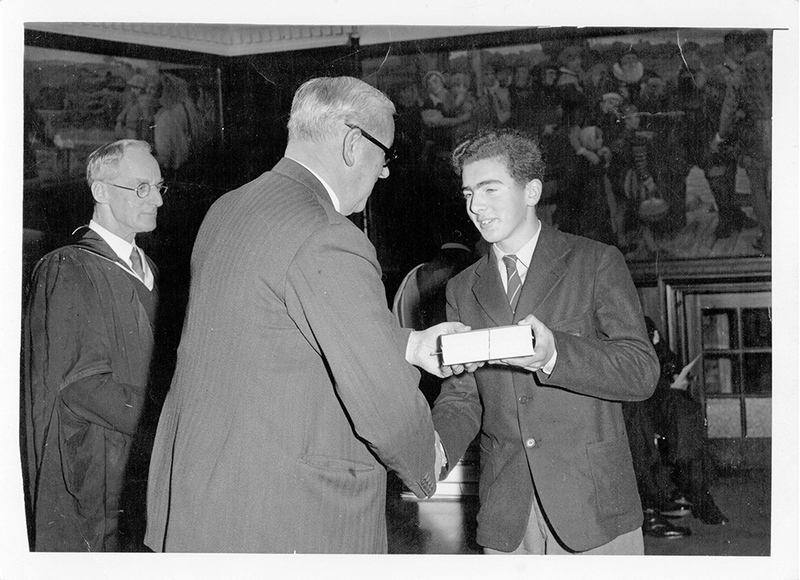
PARTY PIECES, PIANO TRIO NO.1, BURLESCA FOR VIOLIN AND PIANO (1956)
Piano coaching by Maud Hornsby and Christine Pembridge
MY FIRST COMMISSION
My two-piano partner David Shaw had left school to take up his organ scholarship at Brasenose, Oxford and I stepped in to look after the Ireland House entries for the annual music competition. There was a boy in Ireland House, Richard Annells, who played the violin very well and he asked if I could write him something. I composed Burlesca for violin and piano and it seemed to be received pretty well. It could perhaps be seen as the first-ever commission in my life. Somebody wanted me to compose something that would be played in public and this combination of circumstances encouraged me to compose music in a way that nothing else ever could. Later when evolving my own aesthetic theory I enshrined this genuine interaction of 'artist' and 'commissioner' as being the essential 'magical' condition vital to the creation of inspired music.
I was also emboldened to re-attack the Piano Trio that I'd abandoned the previous year by embarking on an Andante for piano trio, but this was not a commission and perhaps for that reason did not really take fire.
SERIOUS PIANO COACHING
The pianist Clive Lythgoe visited my mother one day and told her: 'Howard has a tremendous music talent and he should become a professional musician. But he has so far been badly-taught and right now he needs to have a really top-class teacher. The best piano teacher in Sussex is Maud Hornsby in Rottingdean. She's getting on now but has taught some most distinguished players, among them Kyla Greenbaum and Ronald Smith. Why don't you ask her if she would hear Howard?'
Maud Hornsby agreed to hear me and one afternoon I cycled to Rottingdean along the clifftops. A maid ushered me into a large Tudor-style cottage, the interior dark and mysterious, reminiscent of the film-set of 'Blithe Spirit'. In a long low room to the left of the lobby were two magnificent grand pianos, much music, many books and photographs of famous musicians. Maud Hornsby had a mop of wild grey hair and the eyes of Madame Arcati. Her sister was Lady Beaconsfield who lived there with her. She was not more than five feet tall and could have been 80 years old, or even more.
'What will you play for me?'
'Beethoven'
I started to play the early D major sonata rather nervously and she moved slowly round the room listening intently. She paced and said nothing. I felt large, strong hands descend heavily onto my shoulders.
'Weight', in a low whisper, 'more weight'.
For one awful moment my hair tingled and an icy finger went down my spine. We had been to an end-of-the-pier performance of 'Ladies in Retirement' where the old lady murderess slowly descends the stairs with a rope, creeps up behind her sister at the piano ...
The hands pressed down and started to 'play'- on my shoulders.
'Do you feel how I am transferring my weight onto the keyboard?'
Yes, I did feel. We had started the lesson.
'All my fingers have an equal weight and depth.'
Yes, I understood.
'I will start to teach you, but I am very old and and there is a lot of work to be done'.
Every Monday for four months I cycled to Rottingdean and at home I practised as never before- scales at last and arpeggios and studies and the Beethoven Variations in C minor with ever more weight, but one day in the summer Maud Hornsby invited both my parents over to tea:
'Your son is very talented and must go to the Royal Academy and become a pianist, but he has so much ground to make up technically that it will take a lot of very hard work. I fear that I am too old for the task in hand but I have a suggestion. There is a young lady who has just come down to live in Brighton with her mother and she is going to teach piano at Roedean Girls School. She might be persuaded to take Howard as a private pupil if I spoke to her.'
A TRIO AND SOME PIANO PIECES
However, when the school broke up for Easter I wasn't thinking nearly so much about piano as about writing something. I so much wanted to compose and resolved to create a piano trio during the holiday. I managed to complete a first movement and sketched out two others. I thought perhaps somebody would organise a performance but nobody at school was interested and I didn't continue. I was amazed several years later when the music publisher Chappell's liked it and published the finished first movement on its own as Fantasy-allegro. [This was later to form the firts movement of the
I was not sure how or for whom to write music. Frances, a girl-friend of mine in Brighton, was taking piano lessons and she had knitted me a bright-yellow sweater for my eighteenth birthday. I was so pleased with it that I responded by writing her piano music to play - 'Five Easy Pieces' named after a play then running in the West End. Later, when Chappell's showed an interest, they removed one of the five and changed to their own title of 'Party Pieces', publishing it with a brightly-coloured cover that, to be honest, I didn't much like. However, I copied out 'Five Easy Pieces' very carefully in ink, bound it, designed a painted cover and presented it to her. But for some reason she was not at all pleased! Perhaps she thought they were too easy and an insult to her skills, or more likely she thought (like every body else):
'Who does he think he is, Beethoven?'
Or perhaps she would have been happier with a large expensive box of chocolates? For whatever reason, she broke off the relationship shortly afterwards, giving me two unexpected experiences of reaction to my music - a negative one from a girl-friend and a positive one from a music publisher!
A VISIT TO FRANCE
In August I went for a never-to-be-fogotten two weeks in France with the Deschamps family, first in Nevers where I was much in demand for my piano-playing and then in Paris where we stayed with Jean-Claude's aunt and uncle in the Rue Lafayette and did a whirlwind tour of the city to an unceasing stream of fact, myth and cultural comment from Jean-Claude, who was highly informed. The songs of Gilbert Becaud, Jacques Brel and George Brassens were in the shops and a fabulous recording of the Chopin Waltzes by Dinu Lipatti had just been released with great success, a revelation which one could hear everywhere, echoing around stores, floating around cafes and pouring from open windows in passage-ways.
CHRISTINE PEMBRIDGE AND PIANO TECHNIQUE
I had my first lesson with Christine Pembridge in September and if I had thought Maud Hornsby made me practise hard it was as nothing compared with what I now experienced. As a child she had first studied with Adelina de Lara, a child prodigy who had been a pupil of Clara Schumann and a notable exponent of the works of her husband Robert Schumann, giving her last Wigmore recital in 1954 at the age of 82. One of the first pieces I learnt with Christine was his 'Romanza in F sharp', a piece I adored for its singing quality, produced in thirds by both thumbs in the inner parts of the texture. Christine took great pains to demonstrate to me how to achieve this lyricism from the piano, passed down directly from Clara Schumann, and suggested I use it as an audition piece for the BBC, who accepted me for a 'young artist' spot. The broadcast went out on 7th September 1957 and Christine was delighted to receive a post card from the great Adelina de Lara herself:
'I've just been listening to your pupil play the Schumann F sharp. It was most beautifully played (I am most fussy over that Romance). I congratulate you and him. Love Adelina.'
Several musicians have pointed out the influence of Schumann on my writing and this is nowhere more strongly felt than in 'Make-believe' the poignant end-song on 'Granpa' which is also pitched in that richest of all keys, F sharp major, perhaps in deference to Robert and Clara two or three generations on!
After Adelina, Christine had studied at the Royal Academy with Harold Craxton, vying for the top prizes with Peter Katin, and later still taking master classes in Paris with Marguerite Long, the friend and exponent of Ravel. At twenty-one she returned to give a performance at the Proms, but after a terrific performance, found that she had strained her hands and was advised by her doctor to rest for at least a year. Ignoring this advice she most unwisely soldiered on to give a further performance with the young Norman del Mar and the Halle Orchestra, which proved to be a fatal mistake - the sheaths of the tendons in her hands being torn and irrevocably damaged. Enormously gifted both musically and intellectually she was let down by the frailness of her physique and all possibility of conquering the concert world was denied to her. A tragedy.
She attacked my personalised, easy-going delivery of the repertoire with a sort of fury.
'You're not doing the correct fingering!'
'But I can play it'
'That is not the point. You make everything you play sound like your own personality - but it shouldn't! You have to get inside great composers and find their style and their historical tradition and interpret their musical sensibility. When you play Beethoven it sounds like Brahms and when you play Brahms it sounds like Chopin. It's no good'
And she was right of course, because in a way I never was cut out to be a full-time interpreter- the music I really wanted to play was my own, although I didn't yet realise it, and hadn't yet written much of it!
I worked with her and for her, and attacked my technique from all angles using Cramer and Hanon and the Chopin studies - double thirds, double octaves, left-hand facility in the 'Revolutionary', legato fluidity in the F minor opus 10. She taught me a 'Gigue in G major' by Bach virtually note by note, insisting on exact equality of tone, exact chording, exact part-balance and exact dynamics. It did me the world of good and I found I wanted to please her more than anything in the world- it was so difficult to do, but so rewarding if I did it.
She was unmarried and lived with her mother in a characterful house in Dyke Road called Port Hall. Although pursued by various suitors she seemed happy on her own pursuing passions for many things:
She had a passion for bird-watching which she passed on to me, and we would hike across the Downs in pursuit of the Dartford Warbler and the Blackcap.
She had a passion for plants and an encyclopaedic knowledge of them, especially Alpines.
She had a passion for dogs, especially Collies and the breeding of them.
She had a penchant towards the mystical and clairvoyant and introduced it to me by way of books like Axel Munthe's 'The Story of San Michele' and Heinrich Harrer's 'Seven Years in Tibet'.
She had passions for Astrology, Alternative Medicine and Palmistry.
She also had a passion for her former teacher Harold Craxton, worshipping everything about him including his piano teaching-pieces which she continued to champion for many years.
And it seemed as if she had a passion for trying to turn me into a concert pianist!
-
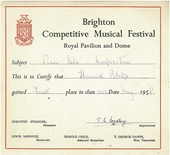 Brighton Competitive Music Festival
 -
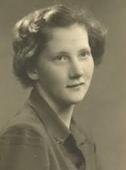 Christine Pembridge, concert pianist and piano teacher
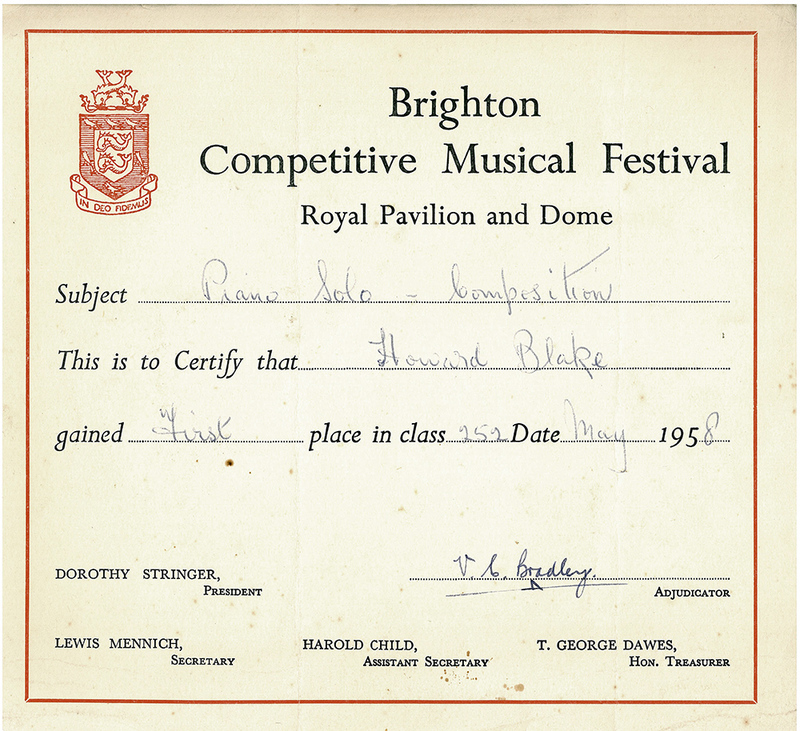
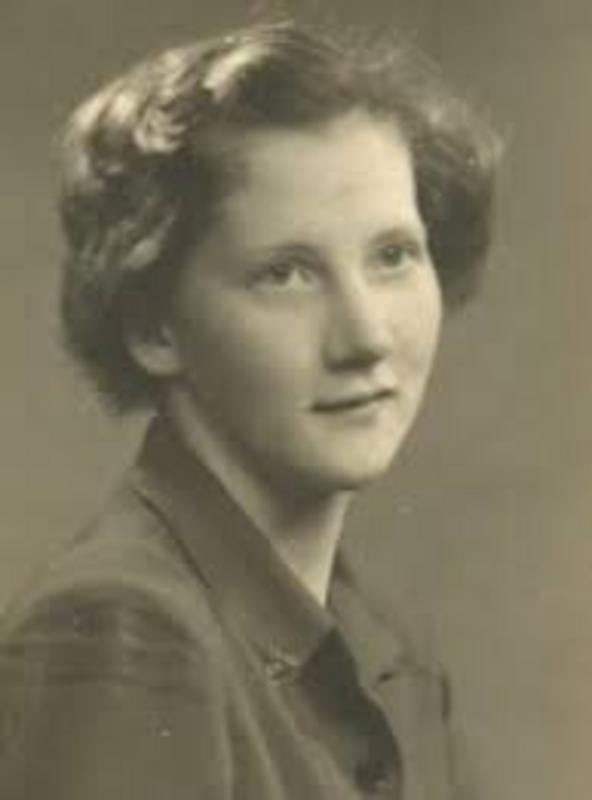
EARTH AND AIR AND RAIN, FAREWELL MY NANCY (1957)
Scholarships to The Royal Academy,The Associated Board and The Commonwealth.
Christine Pembridge entered me for The Hastings Competitive Festival Scholarship as a pianist. It was the only festival in the South of England at that time that offerred a fully-paid-up scholarship, and much sought-after. I played the Chopin F major Ballade, the Prelude and Fugue in B flat minor by Bach from the first book of the '48' and the A flat sonata op.26 of Beethoven. The chief adjudicator was Sidney Harrison, piano professor at The Guildhall and he announced me as winner in all three categories and the new holder of the John Lockey Scholarship, entitling me to three years free tuition at a music college of my choice. I played the Ballade again that evening at the end-of-festival concert in Hastings' White Rock Pavilion and was suddenly surrounded by press and festival staff and musicians and autograph-hunters, all screaming excitedly at me. I was unable to deal with it or know what to say, and in a slight lull I backed off and ran down to the beach in total panic. I was utterly unprepared for success. I did not come from an affluent background or from a family of musicians and my father had incessantly said:
'I will not have the word 'clever' spoken in this house. I will not have anybody showing off.'
Yet here I was receiving huge adulation for being 'clever', for 'showing off'. Up till this point I had thought there must be some mistake. Surely I couldn't possibly be good enough to consider a musical career.
Or could I? All the authority figures around said I couldn't and I thought that if I told the headmaster that I had won a piano scholarship he might be less than pleased.
The next morning after prayers, amidst announcements of house standards for the hop, step and jump and half-mile standards there was pointedly no announcement of the fact that I had won a scholarship to The Royal Academy of Music (nor as far as I know is there any record of it having been won - to this day!)
Our unmusical, sport-obsessed headmaster, Harry Brogden, button-holed me after prayers.
Brogden:'What team-sports are you doing Blake?'
'Tennis sir'.
Brogden:'That is not a team-sport Blake. What about football and cricket?'
'Well yes I used to play quite a lot sir'.
Brogden:'But not for some time Blake'
'Well no perhaps not'.
Brogden:'I didn't make you a prefect last year because I was observing this obsession of yours with music Blake. After your excellent academic record, The Humphrey Cup in the Junior School and now The Newton Cup in the Senior School, you should rightfully become a prefect and remain as part of your peer-group'.
'Thank you sir'.
Brogden: 'No, it's not 'Thank you sir.' I do NOT intend to elevate you in this way unless I have an undertaking from you that you will give up this musical obsession and buckle down to work. We are certain you could gain a place at Oxford for history if you put your back into it. So can I have your assurance Blake?'
I answered:
'Well this is the first time that you, or anyone else, has suggested History at Oxford and at such a late stage it would be a very difficult idea to adopt. My piano teacher Miss Pembridge, who has herself performed at The Proms, entered me:1 - for this year's Hastings Music Festival Scholarship:2 - for this year's Royal Academy of Music Scholarship and 3: - for this year's Associated Board of Music Commonwealth scholarship, whilst the most noted piano professor at the Royal Academy, Harold Craxton, has strongly expressed the wish to take me on as a pupil even if I only won one scholarship. Well now I've won three scholarships and I really think I should take all of them and see what happens!! Brogden:'You stand in danger of ruining your entire school career Blake - if not indeed your whole life. Do you realise that Blake?'.
I did NOT realise it. Nor would anybody with any sense have 'REALISED' it. I was a pupil with no high-class or moneyed connections of any sort gaining free tuition in all subjects in this fairly-new welfare state school and top academies of knowledge had recognised me as one pupil out of the blue as having momentous talent, which quality they wanted to do everything in their power to achnowledge and assist. How marvellous!
I wrote a letter to Brogden saying that I intended to accept the scholarships and wished to devote the coming months solely to music and would like leave of absence from the school for the summer term. This was not well-received.
Brogden: (wrote acidly)'I regret his inability to make his contribution to school life this term, and trust that our sacrifice, as well as his, will have been worth-while..
Brogden thought he could somehow persuade me to change my mind and enlisted two of my favourite tutors - Stephen Pratt, my senior history master, and Jack Smithies, a previous form master - to aid and abet him. An awkward ad hoc meeting happened in the corridor outside the school staff room where all three painfully insisted that I should try to gain a history scholarship and go to Oxford. But since it was the first time anyone had ever suggested such a thing to me and nobody in my family or anywhere else had ever either discussed it or in any way suggested how I might go about such a thing - or come to that, whether I was good enough even to do so - it was too late. I had now put in a great deal of hard work on the piano and won a scholarship to the Royal Academy by which I was thrilled. If I was good enough to win such a scholarship I felt I should be good enough to become a musician.
I explained this as best I could to the triumvirate and Steven Pratt and Jack Smithies started to back down. In utter contrast our excellent History-6th master Neil Pratt had written in my end of term report:
'he combines most succesfully a practical intelligence and exceptional musical ability. He will go far and deserves to do so.'
Their heart was not in it. Both of them actually believed I should go in for music and due to this unspoken vote of two informed musical people against one my 'abdication' was, rather curiously and rather surprisingly, accepted.
Spurred on by Christine, I sat for the entrance exam to the Royal Academy of Music, which I passed, and The Associated Board Piano Scholarship (for the whole commonwealth) which I passed and which it was explained to me that I would have been awarded publicly had I not already won the John Lockey Scholarship at the Hastings Festival - which seemed a bit unfair. I was also awarded a Sussex County University Award to fund my studies and travelled up to London where I was interviewed by the wardens of the RAM, Myers Foggin and Terence Lovett. I needed to have a second study and had put down 'organ', but when asked to show some written work I produced the Fantasy-Allegro for Piano Trio and they asked me to play some of it.
Myers Foggin was undoubtedly impressed and said: 'You very much seem to want to express yourself in music! Have you ever considered taking composition as a second study?'
I actually didn't even know that one could do such a thing! I had tended to think that because I'd missed years devoted to music, my fellow-students at the RAM might be way beyond me. But at this moment my first step in the direction of being a composer was taken. Not only that but it had been taken for me! By the Warden himself - a real topmost musician who recognised my compositional talent and wished to further it! A step I had never even considered. I considered it now and my request to study the composition of music was granted. How Wonderful! How marvellous!
Going back to Brighton Grammar School to sit A and S levels after all this was somewhat uncomfortable since I was more or less 'cold-shouldered'. I got very good results nevertheless and overall felt that I had been most fortunate to receive an absolutely free first-class education, courtesy of the Welfare State.
I took up my scholarship at The Royal Academy of Music in September 1957 with very high hopes. I believed it would be a heaven on earth where music was God. No more critical fathers or headmasters or brothers or small-minded neighbours and relatives. Just glorious music. But it wasn't quite like that.
My friendship with Christine continued on but I missed her teaching terribly. She had introduced me to Harold Craxton, her hero and father-figure, and now I was studying with him, but how could I possibly explain that I was 'Christine's hands' and left to myself wasn't all that interested in becoming a concert pianist. The lessons weren't at all like Christine's. He took a very non-romantic view of music and would say whilst I was attempting Liszt or Chopin:
'Don't get so excited.'
And I would say:
'But surely that's the whole point of it.'
Looking back I believe I would have been happier at The Guildhall with Sidney Harrison who had awarded me the prizes at Hastings and asked if he could take me on as a student. I had to turn this offer down due to the prior arrangement that Christine had made with Craxton. He was the authority on Beethoven and the classics at that time, but I so much wanted to play more modern material, which was not much part of his outlook. Though witty and affable he was also far from young and tended to fall asleep as I was playing! I didn't really get on with him.
In the first week I was invited to an informal reception by the principal, Sir Thomas Armstrong. There were several string players there to whom he said: 'I sincerely hope that none of you will sink to the level of playing orchestral music. Chamber music is of course the only real music of quality.' I thought this utterly absurd.
There was a wonderful student chorus under the tough and excellent choir-trainer, Frederick Jackson, from whom I learned a great deal, attempting to sing tenor in my first term in an all-Vaughan-Williams concert with the great man sitting in the front row. In the next term we gave an energetic performance of Walton's 'Belshazzar's Feast', but after that the choir was taken over by the unsmiling Sir Thomas, who presided over Bach's B minor Mass, constantly stopping to explain its importance and gravity.
(Mozart was once ticked off for not being serious enough about music to which he responded: 'The verb used to qualify music is play'. Schiller invented a word to define this: 'the urge to play', in German 'Spieltrieb', the name I was to give to my first commissioned string quartet, some years later.)
The downsides of my little band of appointed tutors were amply compensated by the upsides of my brilliant composition professor, Howard Ferguson. The first task he set me was to write a set of variations on an English folk-tune, the simplest of all musical forms. I chose the tune 'Farewell my Nancy' and came up with a set of variations for french horn and piano with which he was delighted. The second task he set me - 'Variations on a theme of Bartok' was to cause the utmost havoc!
-
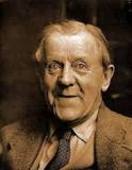 Harold Craxton, RAM professor of piano
 -
 Harold Craxton's studio house in Hampstead
 -
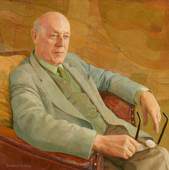 Howard Ferguson, RAM professor of composition

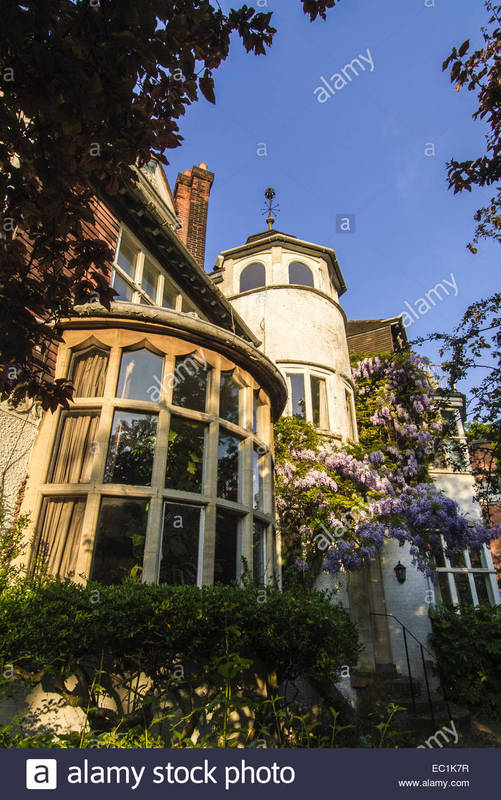
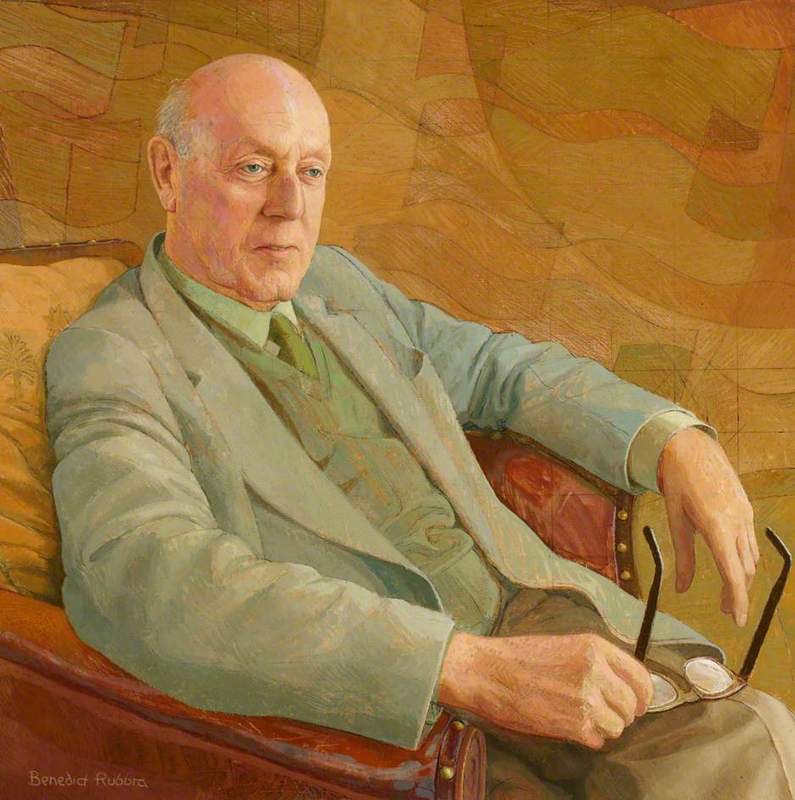
VARIATIONS ON A THEME OF BARTOK, JAMES JOYCE SONGS,TWILIGHT WALK,AUBADE (1958)
Howard Ferguson as composition professor
HOWARD FERGUSON
Having never met a famous composer before I was thrilled to have been taken on for composition classes by such a distinguished figure as Howard Ferguson in my first term. He was kind, affable and attentive. I would say that I was very unsure of myself and he'd quote William Blake:
'If the Sun and Moon should doubt they'd immediately go out.'
If I squeezed too many notes into a chord he'd say:
'Oh, oh, squashed flies!'
When he asked me to arrange a folk tune I made an arrangement of 'Farewell my Nancy' for horn and piano calling it Folk Song. When he introduced me to Gordon Jacob's book on 'Orchestration Technique' I started to work my way through all the exercises, greatly enjoying them. At the start of the second term he presented me with a copy of a short ten-bar piano theme and suggested I create a set of variations on it. I set out to do so and couldn't have been happier.
However, the theme which he provided me came from Bela Bartok's 'Mikrokosmos' and though short was decidedly not conventional. It was thought-provoking and hinted at atonalism and Variations on a theme of Bartok caused a sea-change in my life.
Down in Brighton we were still in the noisy old house in Preston Road and in order to concentrate I took frequent walks, thinking deeply about how to create music and concentrating in a way I'd never done before. Without referring to the piano I nevertheless started to develop a set of passionately-conceived movements for the piano in a style that was far more cogent and contemporary-sounding than anything I had done previously.
I became inspired with musical ideas and started to realise how extraordinarily important and fulfilling this was for me. At the same time I sensed that the pursuit of such creativity would probably be an isolated and lonely activity. In variations 6 and 7 I knew I had struck a real vein of originality, expressing my profoundest feelings.
Howard Ferguson grasped what I had done and was full of admiration saying that the work was so good that it ought to win a major Academy composition prize, and he entered it for one that was imminent.
But it neither won a prize nor was it commended. I wasn't particularly upset by this but he seemed suddenly sadder. He said that the Academy had taken a change of direction and they were expecting composition students to work with the 12-tone system.
'Well I could try that.' I said.
'No it wouldn't be for you.' he replied.
He seemed to grow even sadder.
'I have to tell you that I am going to wind up my activities as a composition professor and I won't be able to continue you with you into the next term.'
This devastated me. I had just glimpsed a wonderful new world and then just as suddenly lost it.
I had brought some new songs to the lesson - Osbert Sitwell's Winter the Huntsmanand sketches for a James Joyce cycle, Chamber Music, but the shock of this news caused me to abandon them and stop composing altogether.
Howard Ferguson in fact not only gave up teaching but gave up the whole vocation of music and from 1959 was himself never to write another note until he died 40 years later. Was he upset that I'd written such a brilliant piece? Was he upset because the authorities had disapproved of his teaching methods? Or did he just think that I was a waste of time? I seemed to have mortally upset him without my knowing why. Several times over the years I wrote to him and once or twice I saw him at concerts, but he never once spoke to me again. Had I done something wrong? Or said something wrong? I would never know.
THE AVANT-GARDE
The music establishment had started to move the goal-posts. In France the politically astute Pierre Boulez had started to eliminate new expressions of tonal music and composers who might feel tempted to indulge therein. In Germany and Italy and the USA the tonal establishment had started to give way under the intellectual onslaught occasioned by the exaggerated promotion of atonalism, one excuse being given that Hitler's Germany had been regarded as being opposed to avant-garde music, therefore we should play nothing but avant-garde music - an absurd non-sequitur and in any case untrue. Simultaneously a movement began to totally eliminate the category of 'light' music. New tonal music of any sort was becoming unacceptable and Radio 3 personnel were being advised to push modern music related to the 12-tone system and do their best to reduce what had always been considered as the essential staple diet of 'the great classics'. Everybody at the Academy was talking about 12-tone music, the avant-garde, aleatoric music, political expressionism, Cornelius Cardew, composing with dustbins, with sine waves, with drawing-pins stuck in pianos, atonality, bi-tonality, microtonality, half-tones, quarter-tones, anything at all except what the world had mostly regarded as music.
19 KNOYLE ROAD, PRESTON PARK
My father had taken early retirement at 60 and started to unwind, taking on extra-mural painting lessons three times a week at Brighton Art School which he found all-absorbing. It took his mind off us and with it the pressure. After I had won the piano scholarship I asked him if we couldn't look for a more comfortable house, explaining to him that it would be difficult for me to stay in a terraced house where neighbours would be certain to complain if I were to practise the long hours expected of me. Although I had a scholarship for my tuition and a local university grant to pay for a season ticket there would be no way I could afford to move to London, find my own accommodation and acquire a living-space and a piano. Perhaps my father felt guilty about what had happened with my brother, or more probably had just never thought about moving, but he gradually went along with the proposal, agreeing that I should be given a chance. After much searching we found a detached house in Knoyle Road at the other end of Preston Park and moved in on 30th April 1958 where the large untended garden was bursting with blossom. I was delighted beyond words.
On the very same day, synchronicity struck somewhat adversely when Harold Craxton rang:
'I think you should move to London. It is not healthy for you to have this close relationship with your ex-teacher Miss Christine Pembridge and I believe you are becoming isolated away from the society of other students. The faculty are somewhat concerned about you.'
In fact everything had changed in the short time since we started house-hunting. My ambition to be a pianist had started to wane and been thrillingly overtaken by the idea of becoming a composer. Yet at the very moment I had dramatically awoken to this I'd been dropped from a great height by my greatly-admired composition professor, Howard Ferguson. There were ominous rumblings from all the tutorial staff about my sense of direction. Sir Thomas Armstrong thought I should give up hopes of becoming a concert pianist or a composer and take a teaching course, something which would be total anathema to me. After all I could have taken the path to Oxford and a university degree in history. Becoming a piano teacher in a school was not at all what I had in mind. I had been somewhat unhappy at school and would rather do anything but teach. I received a letter from Sir Thomas:
'I am disturbed by the reports that I am receiving about your work in the R.A.M., especially in view of the good opinion that I had formed of your talents and potentialities. At present you do not seem to be showing a sense of disciplined purpose and I should like to have an opportunity to discuss the matter fully with you. Will you please ring up my secretary and make an appointment.'
I made an appointment and met him in his study in The Royal Academy of Music shortly afterwards. The conversation that ensued went something like this:
'Do you have a private income Blake?'
'No sir.'
'Could your father provide you with a private income for ten years?'
'I've no idea sir, but I don't think he would.'
'Then you must take the teaching course and aim at becoming a teacher.'
'Are you saying that I don't have the talent to succeed as a musician sir?'
'I am telling you the facts of life Mr. Blake and saying that your only option is to become a teacher.'
'I could have gone to Oxford to become a teacher. I came to the RAM because I wanted to become a musician.'
I had two years more of my private scholarship fully paid up and I think he was finding it difficult to know what to do with me.
I had been brought up to obey every last word that my parents breathed, to accept that I should work, learn, be punctual, be respectful, do as I was asked to do by those older and better than myself - a system that had left me with very little latitude, but when this system fell apart before my eyes at the age of fourteen I had had nothing with which to replace it and it had made me cast about desperately for a new philosophy ever since. My disillusion with my father had spread to a disillusion with authority figures in general, and since I had been brought up to do everything thoroughly and with total conviction this applied equally to my disillusion - at this moment with Sir Thomas Armstrong. He then said:
'Well if you are not prepared to study to become a teacher, what do you have in mind Mr. Blake?'
I answered:
'Well I need to address a whole sheaf of questions sir. The origins and practise of music and religion, the purpose and application of philosophy, the evolution and use of psychology, the history and meaning of the arts, the role of the artist in society, how knowledge is acquired, the future of music and film and poetry, perhaps an examination of the possibility of creating a non-Wagnerian equivalent of the 'Gesamtkunstwerk', and how this might be achieved.'
'I see...well, you'll be hearing from us Mr. Blake.'
'Thank you Sir.'
I never heard anything more from Sir Thomas! But he had said that I lacked 'disciplined purpose' and I took this to heart. I must find 'disciplined purpose'. I now had the most marvellous place to live and work in Brighton and I resolved to make the absolute utmost of my wonderful opportunities, for which I was enormously grateful. I had a grant from the Sussex County Council and a scholarship at The Royal Academy. I saw myself as 'an heir to nationalised education', like a prince in the bygone days of class, aristocracy and privilege. I thought:'Long live the Welfare State!'
I bought a stout foolscap exercise book and began writing my thoughts down. The style in which I wrote was borrowed mostly from Nietzsche but mixed with shades of Gerard Manley Hopkins and the divine William Blake, who became one of my primary mentors. I wrote in long-hand in ink and the writing of thought became an integral factor of my life, generating eventually thirty-three volumes when counted during the Faber litigation in 1999 - well over 10,000 pages: 'I must create my own system or be enslaved by that of another man's.' It was from this point in my life that I began to develop the idea that the aesthetic future must lie in the development of a new art which perfectly combined the musical with the visual - 'A Gesamtkunstwerk of Music and Film'. I determined to achieve this myself and set out to study all of the different arts that would contribute to such a fusion. The skills needed would include a knowledge of poetry, dialogue, scriptwriting, the fine arts, animation, drama and the theatre, opera, orchestral music, film music and so on. This is exactly what I undertook and I did it while I had the time and energy to do so. Looking back it can be seen that this quest indubitably led, in at least one memorable instance, to the creation of 'The Snowman' some 24 years later.
May 1958 BOOK ONE - THE WORK ETHIC Discovery of thought. What is the relation between the individual and society? What is Art and where is it heading? What is ego and is it good or bad?
CHRISTINE PEMBRIDGE
Christine and I went for a week's walking in the Welsh hills, something I'd enjoyed doing with my parents under the auspices of the Holiday Fellowship, the most innocent of Christian family-style organizations, sleeping in segregated dormitories - but Harold suspected the worst. At the start of my second year he was more or less ordering me to stop seeing Christine, suggesting again that I should move to London, something I couldn't afford to do. The result of this was damaging since I started to lose a most powerful ally and supporter in Christine. As far as piano-playing was concerned she had been my inspiration. I now became wary of Craxton and less than enthusiastic to work with him or for him. My interest in the piano started to wane and falter.
MILES BASTER
Meanwhile the professors of the Academy had put their heads together to try and rekindle my interest in the piano. Myers Foggin called me to his office and asked if I would be interested in playing the piano for a violinist. Miles Baster was an important figure in the Academy as leader of the first orchestra, not to mention the National Youth Orchestra, a scholarship-holder and final-year student. He urgently needed someone to play the orchestral part of the Elgar Violin Concerto since he had the opportunity to audition for six months of master-classes in the Juillard School of Music in New York. The Juillard Quartet were in London recording for the BBC and wanted to hear him.
I agreed and a few days later we went to Broadcasting House and played to them. I loved it and so did they. Miles was invited to study with Louis Persinger, teacher of Yehudi Menuhin, in New York. Meanwhile, said Miles, 'why don't we play a few concerts?' We started learning duo repertoire: Bach, Mozart, Beethoven, Faure, Prokofiev, Bartok, Ravel, and the most divinely-romantic of all violin sonatas- the Cesar Franck. We committed it to memory and did one or two concerts.
We were invited to a foreign girls' finishing school near Eastbourne. I had never seen such a remarkable collection of beautiful girls at one time and was delighted to be told by the aged headmistress that she would introduce us to some carefully-chosen girls after the concert. We played with an all-consuming passion, as if our lives depended on it. Bach, Mozart and then the devastating Cesar Franck which received rapturous applause from 200 ecstatic and beautiful young faces. Up to the headmistress's study and - the girls. In came six of the most unattractive females I have ever seen. Yes, they were certainly hand-picked and we gave no trouble!
ELONA THOMAS
Another performance, this time of both Cesar Franck's violin sonata and 'Variations on a theme of Bartok' for piano, got me into a whole lot of trouble. I had met Elona Thomas on the Brighton-London train in the company of John Higham, a fellow piano student at the Academy. She was 19, a soprano student at The Guildhall with the most exquisite features and waist-length blond hair. We talked about music and I mentioned that Miles and I were giving a recital in Brighton at Port Hall, the home of Christine Pembridge and her mother in Dyke Road. John said he would like to bring Elona along and this time the magic of my music worked its spell well and truly. After the recital she approached me with eyes shining and a smile that would have melted a battleship.
'Oh Howard, you're a genius! What a wonderful concert!
Up until this moment in my life, with the exception of the scholarship performances, I hadn't really played much solo piano or received much public appreciation. I had never dared to play a piece of my own for fear of being laughed at. But now, having had a work acknowledged and performed at The Royal Academy of Music, I found myself suddenly not just acceptable, but a star! I was not only a pianist, but also a fully-fledged living and breathing classical composer - and somehow this sparkling cocktail seemed irresistible to the young of the opposite sex.
'I think your music's wonderful, Howard! Couldn't we meet for a coffee?'
Brighton was teeming with coffee-bars in the late fifties and a close relationship developed between us, at the Hideaway, the Penny-Farthing, the Troubadour and her family's superlative house in Regency Crescent, several doors away from Laurence Olivier. At the Hideaway they would play endless romantic ballads of Nat King Cole, Frank Sinatra, Johnny Mathis and Julie London, which Elona would sing along with very softly, knowing both music and lyrics. It was the first time I had listened to this sort of music and in its own way it cast a sort of spell over me.
In fact we were both casting very different spells on one another! I had read about the notion of a 'Muse', a beautiful woman who inspires poets to write poems or bards to write songs. I had thought it a myth - but it was not. I had found a Muse, or a Muse had found me. The Muse's name was Elona. She came over to our new house in Knoyle Road and each time she came I would write a new song. I would play all sorts of things to her: Chopin, Skryabin, Delius, Bartok, Stravinsky, Debussy, Gershwin, Miles Davis. I would tell her of my ideas for works and she'd say: 'Write it, write it!' I kept a huge A3 manuscript book where I sketched out songs with titles like: 'Life with you would be like a wonderful dream coming true...' or 'If you knew how I feel, if you knew how I loved you...'. We talked about making films, writing symphonies, getting rich, building a dream house, living on a desert island...
MILES GOES TO EDINBURGH
The love affair upset the Pembridges, since they had inadvertently caused our meeting; it upset John Higham whose girl-friend Elona had been; and it upset Miles. I suppose Miles was gay, though in those days one couldn't say such a thing. He was a superb violinist. He played and owned a very expensive 17th-century Italian violin, an Amati, which despite its great value he treated very casually, chain-smoking through rehearsals and dexterously flicking ash through the S-holes.
'Surely that's very bad for the instrument?'
'It helps preserve the wood.'
He dressed in Savile Row tailored suits and bespoke shoes. He had a fine taste in restaurants, which he insisted on treating me to, and spoke with a cultivated but not exaggerated accent. He claimed to have bought his first car at the age of seven in an auction in Cornwall, the locals knowing that his father would cover it. He had played the Paganini D major concerto at the age of twelve, gained scholarships, become leader of the National Youth Orchestra and the Academy and appeared set to become a soloist. We heard Christian Ferras play the Brahms at the RFH and Miles said:
'He has become a great violinist despite being a millionaire.'
Was Miles a millionaire? A year later he was clearly suffering from immense anguish. He told me at last:
'My father was a first-class accountant and lawyer and I always loved and respected him and my mother. I grew up with everything I could ever ask for. We lived in a huge house and mixed in the best circles. I've had the finest education. I sensed something was wrong but I didn't know what. One day he told me: 'I have suddenly learnt that my father acted on behalf of criminals, bad people. He's let them down and they've destroyed him. It's all come out. I can't live with that.' Poor Miles. Everything - and yet nothing.
He was offerred the post of violin professor at Glasgow and Edinburgh and the opportunity to found and lead The Edinburgh Quartet and chamber orchestra. He decided to give up all thought of a solo career and devote himself to the less-conspicuous world of chamber music and asked if I would first play a recital at Corpus Christi College Oxford and then for his inaugural recital at The Leith Hall. I went up there and they both seemed to be a great success. He begged me to stay in Scotland as harpsichordist for the chamber orchestra and as continuing duo-recitalist. But I decided not. I couldn't play the harpsichord, I didn't want a whole career as an accompanist and I didn't want to leave Brighton or London - or (to be really truthful) Elona!
In fact Miles stayed in Edinburgh for the rest of his life, dedicating himself wholly to music and apparently largely uninterested in publicity, fame or money. If I was in Edinburgh I would sometimes meet him, but he never seemed to forgive me for, in his eyes I suppose, deserting him. Once I went to his apartment and found it difficult to believe. It was a council flat on the 20th floor of a block with virtually no furniture and freezing cold because of draughts that weren't rectified. I started blocking them up for him but he stopped me:
'They're good for me'
'Why do you live here Miles?'
'It's a great place to practise.'
I met him for lunch when The Snowman Ballet was at The Edinburgh Festival Theatre in 2002 and got him a ticket. Back in London I sent a note saying how pleased I was to have seen him and how glad I was to see him looking happy and well.
One day I had a strange phone call:
'This is the Leith Police.'
It wasn't a joke.
'We had to enter the flat belonging to Miles Baster since he has gone missing. Do you know his whereabouts?'
'Why are you asking me?'
'The only correspondence of any sort in the flat was a note from you, sir. We thought he might have contacted you.'
He hadn't, nor anyone else. A member of his quartet rang me a long time later. He had gone back to his roots in Cornwall. He was ill and he had died. There was to be a memorial concert. Would I record a message?
Poor Miles. I remembered that I had begun a Violin Sonata for him but could never complete it to my satisfaction. When he died I revised it by writing a new slow movement as a sort of 'requiem' to him and the other two movements fell into place.
-
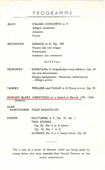 Thorunn Tryggvaason's RAM recital programme (including 'Variations on a theme of Bartok')
 -
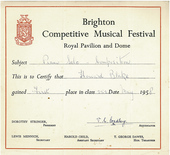 Brighton Competitive Music Festival - Composition prize for 'Variations on a theme of Bartok'
 -
 Soprano, girl-friend and museElona Thomas
 -
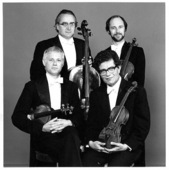 Miles Baster (lower R.) leader of the Edinburgh String Quartet
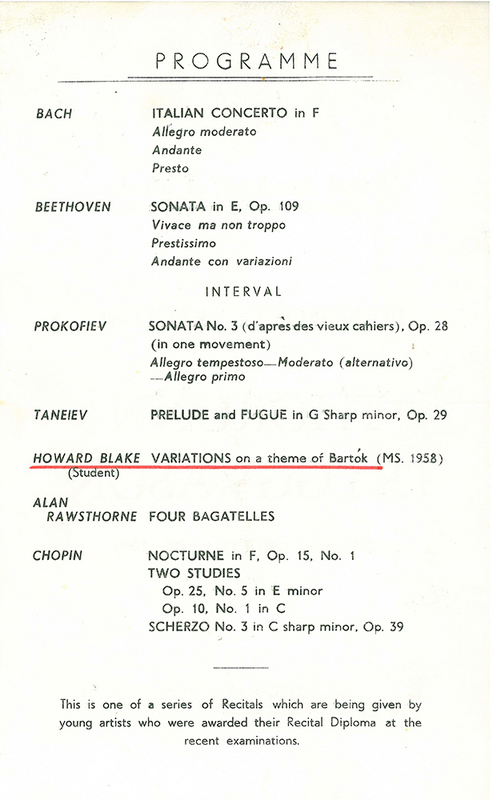
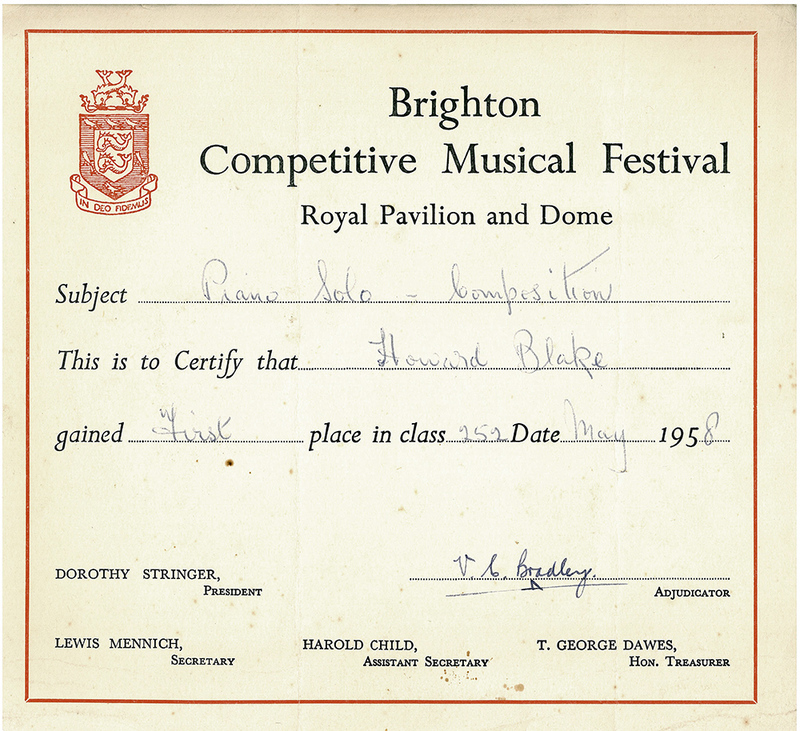
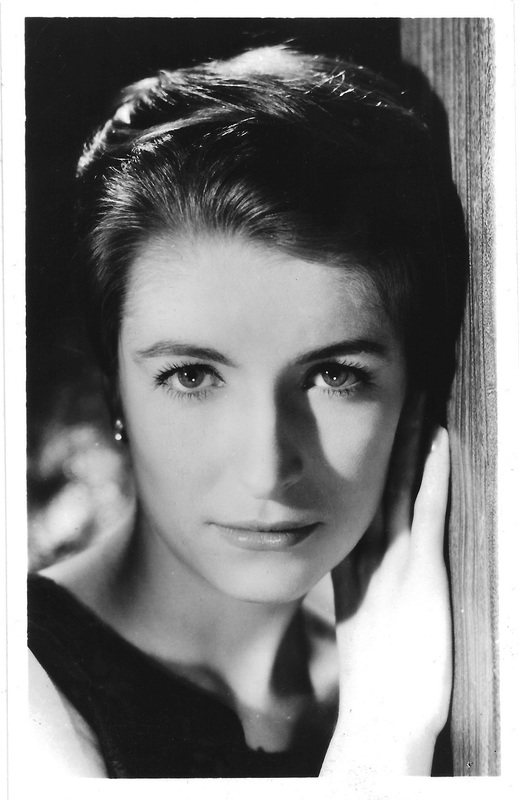
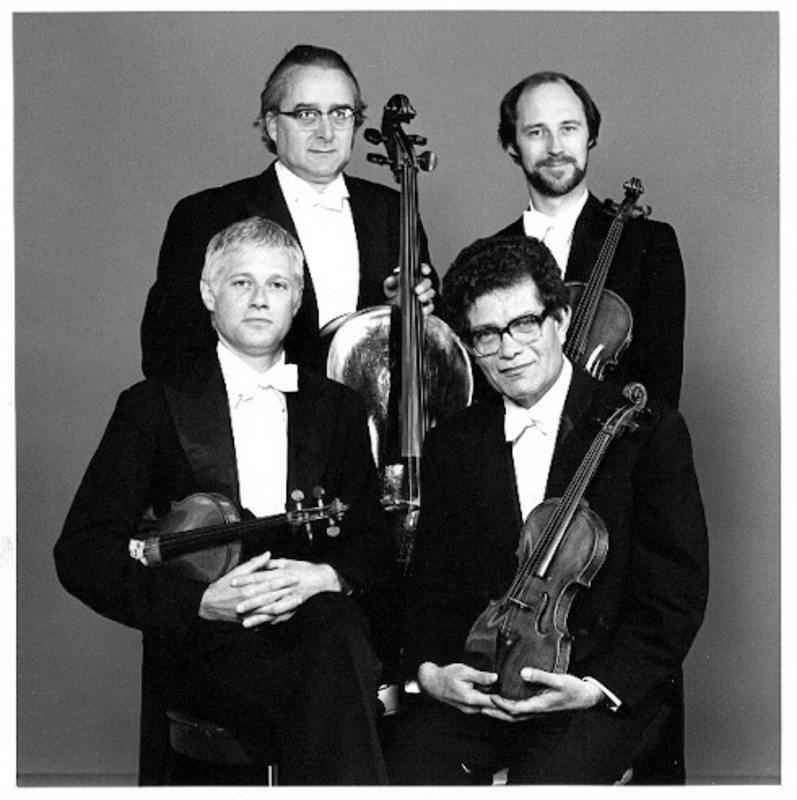
PRELUDE, SARABANDE AND GIGUE (1959)
Thorunn 'Dody' Tryggvaason performs 'Variations on a theme of Bartok'
I was still having piano lessons from Harold Craxton and one day played him the 'Variations on a Theme of Bartok'. He lit up in a way he had never ever done when I tried to play anything in the classical repertoire.
'Can you wait and play that again to my next student?'
'Yes of course.'
Into the room came a beautiful 18-year-old girl with ice-blond hair and he introduced me:
'This is Thorunn Tryggvaason, but we call her Dody. Her family are from Iceland but she lives with her parents and family in London. She's been a pupil of mine since she was seven, when she played a Mozart concerto with Barbirolli.'
I had heard of her of course, a child prodigy and now in her final year.
'Please listen to this piece' he said to Dody and I played my Variations again.
'I bet you could play the theme back to us by ear'.
She sat down and did so.
'It sounds like Bartok.'
'You are correct. What do you think of the work?'
'I like it'
'What about performing it at your final Academy recital? A work by another student?'
'Yes, all right, I would like to'.
I invited her to go out with me but she was always monumentally busy and organised, like Greta Garbo in Ninotchka. Once I persuaded her to visit us in Brighton where I was struggling with all my philosophical scribblings and fairly hopelessly with an incipient piano concerto.
'It will take you too long' she said gravely.
'What will?'
'For you to get anywhere. It will take a very long time.'
'I suppose it will.'
She gave the most dazzling performance of my variations and left almost immediately to study with Lev Oborin in Moscow, sending me occasional postcards.
'There are some very good players in my class here, but it is rather cold weather'
'There is one very good player called Vladimir.'
'Vladimir and I are working a little together'
Then the cards stopped until the world press announced the extraordinary news that a Russian pianist called Vladimir Ashkenazy and his Icelandic/English wife had been given permission by Kruschev personally to leave the USSR and work in the West with no recriminations or problems, an unheard of phenomenon during the Cold War. Kruschev was no match for the iron-willed Dody!
The kindly wardens of the RAM were still concerned about me and realised that I was struggling with both my own psyche and my 'philosophy of the arts'. They thought it useful to provide me with a kindly tutor versed in the more intellectual sides of music. His name was Dr.Philip Brown and he lived in a house in Redcliffe Square, a learned musicologist, editor of the Oxford Companion to Music. We met first for a tutorial at the RAM but then he decided that he would prefer to meet me once a week for lunch at the Athenaeum Club in St.James's. After our first lunch we took the lift up to the library.
'You may have noticed that the lift has the same shape as a coffin?'
'Really? Why's that?'
'Because so many members die upstairs. Look at this piece of music for piano. Who do you think wrote it?'
'Somebody nineteenth-century?'
'It's by Berlioz, who didn't write piano music. This is a transcription from his orchestral music.'
'It's rather awful isn't it?'
'Yes, you see it's rubbish without the orchestration.'
The idea was that I would tell Dr. Brown all my thoughts and conjectures and he would help put them into shape with me, but I couldn't seem to tell him what I was thinking and I wouldn't show him any of the writings since they embarassed me and I felt were sure to embarass him too.
THOUGHTS ON MUSIC AND CINEMA
I had recently had the chance to see Eisenstein's magnificent silent movie, 'Battleship Potemkin' at Brighton's newly opened Paris Cinema. Although made in 1925 as a silent film, a superb orchestral score had been composed by composer Edmund Meisel which had later been added as soundtrack. I had been overwhelmed by this - a combination of brilliant images synchronised to tremendous music, communicating both intellectually and emotionally. I saw that cinema in its early days had evolved as an art form but due to its ability to generate vast income from mass audiences had been hi-jacked and reduced to the banale. I felt that the future of the arts must lie in a resurrection of the cinema as fine art (and as a combination of all the existing arts) and I wished to devote my life to that end. I began to search around for a university course that might relate to this view. I tried the London Polytechnic but they said I should take a course in photography. I explained that I was a musician and wanted to approach film from the point of view of a composer and possibly film director but they didn't grasp this - or it didn't fit any course. I then tried the London Film School in Electric Avenue Brixton who weren't very sure what I meant but suggested I could take a general course in film-making. They advised me to talk to the Sussex Education Authority and try and re-locate my university grant. I did this and talked to them, but they couldn't see what I was driving at either and felt I should 'make the most of the Academy' and complete my 3-year scholarship as a pianist.
I hardly wrote any music but toyed with some piano pieces left incomplete. Many years later one of these became 'Prelude, Sarabande and Gigue' for solo guitar.
The Sussex Education Authority were nevertheless very helpful and sympathetic and one of them was a Dr.Brian Stone. When I composed 'Four Songs of the Nativity' for The Bach Choir in 1990 I chose some verses from the Penguin Books 'Mediaeval English Verse' and only after the first performance in St.Paul's noticed that the English translation had been made by the same Brian Stone. I wish I could have thanked him.
THE DEMISE OF DOCTOR BROWN.
I dreamed one night that I was crossing a great plain accompanied by Doctor Brown, dressed as ever in his black morning-wear with a wing-collar and cravat held by a pin. He was a little out of breath as I turned and saw that a tiger was following us.
'We must run.'
'No you go ahead, I'm a little tired.'
'Please Doctor Brown, please try.'
'No Mr.Blake, I insist that you go on without me.'
The next morning I received a phone call that Doctor Brown could not meet me for my lesson. He had died suddenly in the night.
-
 'Dody' - Thorunn Johannsdottir Tryggvaason
 -
 Variations on a theme of Bartok
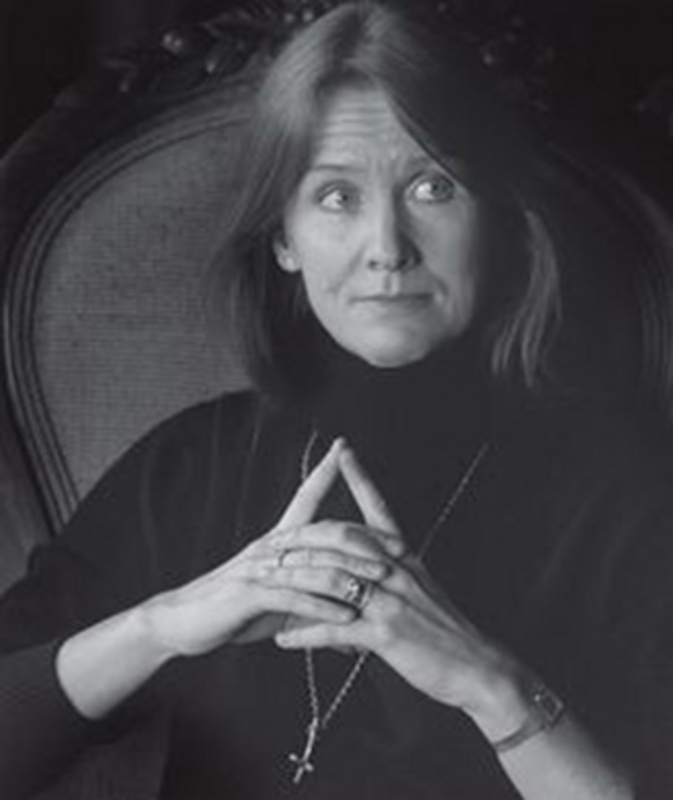
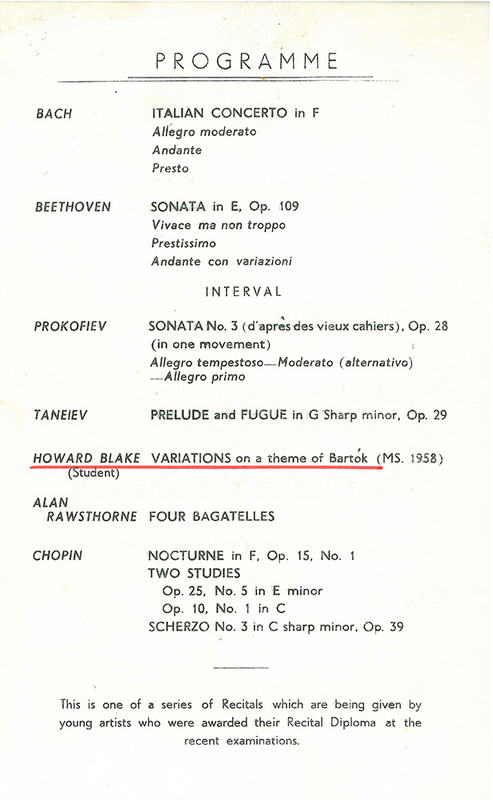
REMEMBRANCE MARCH, BLUE SEA AND EVENING SKY (1960)
'PASTICHE' FOR 2 GUITARS,VIOLIN AND PIANO
Myers Foggin had realised that I had stopped writing music since I'd been at the Academy and was concerned about this as much as he was about my piano playing. He was also concerned as to how I would make a living and kindly suggested that I might like to write some orchestral music for a library, giving me an introduction to Joseph Weinberger's music publishers in nearby Crawford Street. I didn't know quite what this meant but it was explained to me by the Director, Fred Benson, a wonderfully rough-diamond Londoner.
'All the documentary programmes you see or hear in the cinema or television or on the radio need music, and they mostly can't afford to commission new compositions, so we provide a catalogue of all the sorts of music that they might want. Clients come along and choose what's suitable and we provide a recording. If you compose us something you'll get a royalty every time it's played. Mr.Foggin has recommended you to us and Miss Stephie Lengauer will discuss with you what we'd like.'
Stephie was from Austria, as was the original firm of Joseph Weinberger, and we hit it off right away. She had a delicious sort of 'Third man' accent.
'Ve need two pieces. First the Duke of Edinburgh is often filmed yachting and ve don't have a really beautiful zeazcape. Secondly zere is ze opening of Parliament in Zeptember and ve don't have a really good 'zolemn' march. Ve have an orchestral recording booked in Stuttgart in about one month from now and ve'd like you to provide the scores. Ve copy out the parts and do everything else.'
'Why in Stuttgart?'
'The Musician's Union don't allow library music to be recorded in the UK.'
'Why not?'
'They won't accept a buyout fee and ve can't afford to run the firm if they insist on royalties for zeir members.'
'Can I go to the recording?'
'Vell I'm afraid ve couldn't pay for you to do zat.'
I would so much have liked to have been there since so far I'd never heard anything I'd written for orchestra.
'Would I get a copy of the record?'
'Yes you vould.'
That decided it and I composed two orchestral pieces: 'Remembrance March' and 'Blue sea and evening sky''. The march was like 'The Dam-Busters' but upside down, backwards and at a slower speed; the seascape was something like tongue-in-cheek 'Daphnis and Chloe' made-to-measure, off-the-shelf. I collected the two 78 rpm disks when they were ready and much to my surprise they sounded pretty good. Both were used for the occasions intended and more.
Note from an aficionado July 2019: 'I did not know until YouTube notified me that JW Music had a copyright claim on 'Remembrance March.' The video I uploaded was of President Lyndon B. Johnson awarding the United States' highest military medal to some soldiers for their actions during the Vietnam War. Your 'song', 'Remembrance March' which was attached to the footage by the U.S. Navy in 1968, greatly enhanced the emotional nature of the documentary footage. The short clip containing your 'song' can be found here: https://www.youtube.com/watch?v=-9vW_wqjmSU. Thanks for the good music, Matthew Bybee, Long Beach, California, USA.
In the Summer of 1960 I received my first royalty cheque - for seven pounds. I was so thrilled by this that I invited Elona out to a really good restaurant for the first time ever. At last I felt able to treat her properly. I told her about the recordings and proudly showed her the cheque.
'It's not for seven pounds, it's for seven shillings!
Humiliatingly, Elona paid for the dinner, but I had learnt something. I had learnt that I could conceivably make a living of some sort from composing. I had put a very cautious toe into the dangerous waters of 'commercial music' and I had ever so slightly started to 'loosen up' from the iron bonds of conformity.
'Pastiche' for two guitars, violin and piano
At this moment I had a phone call. It was three years after I had left Brighton, Hove and Sussex Grammar School, but out of the blue an enterprising deputation of sixth-formers wanted to visit me. They arrived at Knoyle Road requesting that I write a piece for their approaching annual school music competition. They were Ian Mills and Steve Peckham (guitars), Rees Allison (piano) and violinist Richard Annells, for whom I'd composed 'Burlesca' back in 1957. In the previous three years since I'd left school the musical world had considerably changed: Rock 'n roll and 'The Beatles' had just about appeared and the most popular instrument in the world had become the previously modest guitar, suddenly changed into a colossus with the birth of high-wattage amplification. All youngsters wanted to play the guitar and become stars and here in my music-room I had two of them and two aspirant classical musicians playing piano and violin. So I gave rock rhythms to the guitars and classical embellishments to piano and violin. Perhaps this was the invention of 'crossover?!'
BFI SUMMER SCHOOL
At the end of July I left the Academy with an LRAM and no idea what to do next. I spent what little money I had left from my grant on a week at the British Film Institute's Summer School in Eastbourne. It made me more than ever inclined to try and get into the film world although I had no idea how I would do so. During the autumn I continued to develop my grandiose schemes for creating a new film-based Gesamtkunstwerk and finished Book 6 of the 'philosophical notes'. My father politely enquired what I proposed to do and fairly firmly informed me that he did not intend to support me. I turned my mind to the idea of work and wrote letters to the BBC, to independent TV companies, to music publishers, opera companies, orchestras, arrangers, composers and anything else I could think of, getting one or two polite 'thank you for your inquiry' notes but nothing else.
TIN-PAN ALLEY
I wrote to Covent Garden conductor Sir John Hollingsworth whom I had once met on my famous night at the ballet. He suggested I score something of mine for full orchestra and he would have a look at it. I scored the Finale of the Variations and he wrote a kind letter back to say that he was impressed and he would do what he could to help me. He suggested I visit a contact of his in Denmark Street. Tin-Pan Alley music publisher Harold Franz was sitting behind a big shiny desk smoking a cigar. He wore large bejewelled cuff-links and a mohair suit.
'Sir John Hollingsworth suggested I come and see you.'
'What have you got?'
'Well I've brought along a suite for orchestra and some songs and piano pieces.'
'Have you got anything recorded I can listen to?'
'Well no.'
Harold's gaze flickered over my cheap overcoat starting to go thread-bear at the edges. He sighed a little.
'I tell you what son, I'll give you a fiver to go away.'
Eight years later I accompanied Bernard Herrmann to the premiere of the film 'Twisted Nerve' at British Lion and the very same Harold sidled up to us through the popping of champagne corks:
'We'd just adore to publish your score Mr. Herrmann.'
'Whadda you think of this guy,Howard? D'you know him?'
'Offer him a fiver to go away.'
THE ADELPHI
By November I had to do something and in desperation went to the Brighton Labour Exchange and talked to an adviser with definite people skills:
'What line are you in?'
'I want to be a film composer.'
'I don't think we'd have much in that sort of area.'
'I play the piano.'
'The Adelphi Hotel have got a piano. They need a hall porter. How about that?'
'I could try it.'
'All right, you try it. See how you get on. £3 a week.'
The Adelphi was just along from the Albion overlooking the Fishmarket. I was given a waistcoat to wear and told to stand in a little cubby-hole and await eventualities.
The first person to come in was the great Irish actor Michael McLiammoir in a badly-fitting red wig, about to start in a one-man Oscar Wilde show at the Theatre Royal.
'Would you care to transport these humble belongings to my state-room? Number thirty eight I believe.'
'I don't think it'll be a state room sir.'
'Sadly.'
Next was an attractive blonde of about 30 or so intent on getting her money's-worth..
'Will you put my car in the garage?'
'I'm afraid I don't drive'
'You're not much use then are you?'
She was right. I found that I couldn't do any of the normal things that were asked of me- open a bottle of champagne - remember what drinks people had asked for - plug the TV in - mend a fuse- nothing.
The manager called me to his office.
'You don't seem entirely suited to this sort of work.'
'Well no I'm not.'
'You're obviously well-educated. What do you hope to do?'
'I'm hoping to write music for a living, possibly in films.'
'Well this job won't get you very far. How about taking a training-course in hotel management?'
'I think I'll stick to music sir.'
'We took you on for only two weeks?'
'Yes sir.'
PARIS CINEMA
That same day I saw an ad. in the Evening Argus:
'Assistant projectionist wanted Paris Cinema.'
I looked in the Entertainments columns and they were running both parts of Eisenstein's 'Ivan the Terrible'. Wonder of wonders! I ran to New Street and met Roy the chief projectionist. He was short-sighted and couldn't actually see the screen.
'How is your eyesight?'
'Fine.'
'You will need to do the focussing.'
'All right.'
'What experience do you have?'
'I've operated an 8mm. Bell and Howell cine-camera and been on a film course with the British Film Institute.'
'You can start on three pounds ten shillings a week.'
'OK.'
It wasn't nearly as easy as one might think. At the end of my first night I laced up the little reel of The Queen on horseback and started the projector on cue. Unfortunately the reel had not been rewound and she appeared riding upside-down with a noise as of many machine-guns (the soundtrack being on the wrong side.)
The reels had to be spliced together from 1,000 feet into 2,000 feet reels and laced onto the machine ready for the changeover, a 4-frame dot scratched onto the top right-hand corner and easy to miss. While one reel was running one had to hand-wind the previous one onto a metal plate, holding it on with one's free hand to make sure that it didn't slip off and go all over the floor. But one night it did. I had stopped rewinding to go and check the arcs and the focus and went back to find that the rewind had gone on turning without me, great black festoons of 35mm film spilling all over the floor. Roy was out at the pub but Andy the other assistant came back from his break. As luck would have it he was new to the game as well, but with a decidedly adventurous streak.
'Roy's going to be very angry about this. I'll tell you what we do, we drop all the spare film through the trapdoor down to the usherettes changing rooms and it'll sort itself out.'
'Do you really think that'll...'
Too late. He'd thrown the lot over. Usherettes screamed, Roy appeared and chased after Andy threatening to kill us both, the manageress rushed up from the office horrified while the film kept inexorably unwinding.
It was a very late night for everybody.
-
 Sir John Hollingsworth conducts The Proms
 -
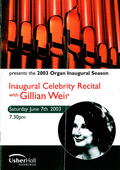 Organist Dame Gillian Weir at the Usher Hall
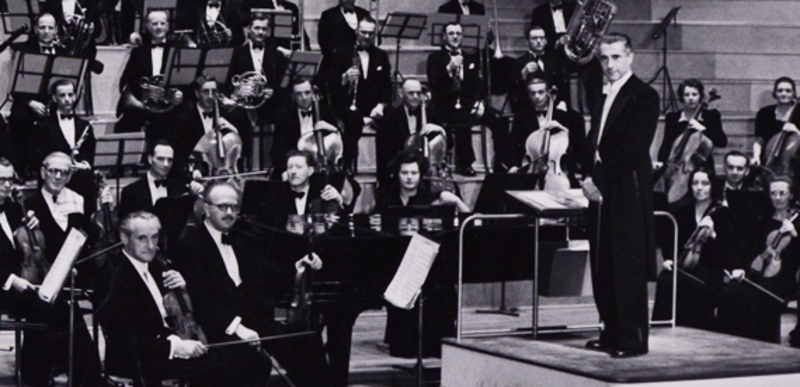
FOUR MINIATURES, SYMPHONIC EXTRACT (1961)
RHAPSODY FOR A SUMMER'S NIGHT, FANTASY ALLEGRO
Being a projectionist wrought havoc with my social standing, something I would never have anticipated. I was very naive about the ways of the world. After all I thought, I had just completed three years at University-level as a scholarship winner and I still saw myself as an aspirant concert pianist and composer with a possible great future. However, Elona's father, a prominent local property dealer, became aware of my situation and told his daughter: 'I absolutely forbid you to have any further association with a young man who works in a shabby cinema in Brighton.' This was very unkind (both to the Paris Cinema and myself!)and it upset Elona so much that she determined to leave home in order to be with me. We ran away together and moved into a little basement flat. This made things considerably worse. A serious threat to my well-being was communicated to my father, who took it very seriously. He reported to me that he had been told: 'My men will beat your son up so severely that he will never be able to work for the rest of his life'.
My Father at this time wrote to me: '..you must free yourself completely from this relationship. May God help you to do so. There is no doubt in my mind that on the slightest further provocation, real or imagined, injury may be done to you bodily, and cause serious harm to you and your career. Please know that your room is still available for you to use and when you come you may be sure of a welcome.'
With this my father proved to me that under all his reserve and self-absorption there was nevertheless a very real love and devotion. He rescued me from a dangerous situation and, horrified by these threats, decided to give me another chance. I gave up the job at The Paris Cinema and went home to Knoyle Road, where I immediately began to work at composition again. The strange thing was that the minute I started work on composition all else was forgotten and I was happy as a sand-boy. There was no academic pressure on me and I felt I had nothing to lose.
I started to put together a suite for small orchestra. The first movement was a 'Pastorale' which I sketched out in a matter of minutes, very English, with an oboe solo taken up by strings; the second movement was a jaunty little march leaning ever-so-slightly towards Prokofiev. The third movement dated back to an idea from 1955 and was called 'Interlude', a gentle clarinet solo over syncopated strings to which I added a middle section with solo flute and a somewhat lush recapitulation, while 'Finale' was new and more substantial. I called the work Four Miniatures
We learnt from the Academy that an 'Eric Coates Light Music Prize' was in the offing and it was suggested that I submit something. Myers Foggin, the Warden, thought I might be having a hard time and conveyed that there was a cash prize attached. He had also had some interest expressed by Philip Pfaff, head of Educational Music at Chappell's music publishers, whom I might like to contact. I checked the 'Four Miniatures' very carefully, fair-copied them and submitted them for the prize.
Having gained some measure of confidence from doing this I was delighted when concert pianist Clive Lythgoe phoned out of the blue to ask if I would consider writing him something for piano and orchestra. We didn't have a TV but he told me that he had his own programme on Southern Television called 'The Lythgoe Touch' and he was getting dates to play with orchestras on BBC radio. He had perhaps come slightly 'down-market' since I first met him and he wanted something which I suppose one might describe as 'schmaltzy' - or at least 'populist'. I wrote Rhapsody for a Summer's Night in the tradition of Richard Addinsell's 'Warsaw Concerto' or Charles Williams''The Dream of Olwen'. He seemed very pleased, broadcasting it with Paul Fenoulhet conducting the BBC Revue Orchestra. With this I felt that for the first time I was being accepted as a professional composer and orchestrator.
Clive had also taken up the little children's pieces that I'd written for Doreen in 1956 and he played them on his programme. That gave me an idea and I rang Philip Pfaff at Chappell's Educational Music. He said he'd like to see them and I went up to Bond Street clutching them along with various other juvenilia. Wonderfully he agreed to publish Party Pieces as they were now renamed; Burlesca (for violin and piano) and Fantasy-Allegro (for piano trio).
But none of this thrilling surge of activity produced any money - no advances, no commission fees, no royalties. I was not a member of the Performing Rights Society as yet, not having scraped up the necessary six active published titles to qualify. The results of The Eric Coates prize had been announced and I had not won it. I couldn't pay my parents any rent or upkeep and I had hardly the money to afford manuscript paper and postage. Meanwhile (with the emphasis on the 'mean') Elona's father was making ever more threatening noises. Elona and I crept into our favourite coffee bar:
'I think you should go to live in London.'
'I can't afford it.'
'I'll lend you five pounds.'
During June I had played for rehearsals of a summer season of 'The Boy Friend' and the choreographer, Leslie Placket, had kindly said that he could put me up on his floor if I ever needed to stay overnight in London. I rang and asked if I could take up the offer. His flat was in Notting Hill and I stayed over, the very next day playing for one of his classes - but unfortunately not to his satisfaction.
'You're too classical. You haven't got it!'
'What was I to do?'
I looked through the small ads in The Evening Standard.
'Experienced assistant projectionist required at The National Film Theatre.'
I paid sixpence return for the underground to Charing Cross and walked across Hungerford Bridge to the South Bank. A man was working outside the NFT building and I asked about the job. He explained that he was Charlie Beddows the Chief Projectionist:
'Have you had any experience?'
'Well I went to a British Film Institute Summer School, and I worked for three months in the Paris Cinema, Brighton'
'Forget it.'
I walked back along the river:
'Oi, come back!'
'I'll give you a week's trial for £8.00 and if you're any good I'll raise it to 9 pounds 10 shillings.'
'OK...thank you'
'You must be dead keen to work here?'
'Yes, I am.'
When I told my parents I had got a job working on the South Bank for the British Film Institute they seemed to be quite impressed and helped me once again. My mother's cousin, actress and novelist Mary Holder and her husband actor, Jack Bligh, had recently returned from Cape Town and moved into a mansion flat in Barkston Gardens. My mother asked if I might stay with them. They agreed and miraculously I was living in comfort again. Jack had started life as a stuntman for none other than Charlie Chaplin, who had been a great friend of his during his early life in the East End. At the weekends he and Mary would go and stay with the Chaplins down in Surrey. Jack was full of anecdotes of the early days of cinema and I was well-fed and well-entertained for several weeks.
The job at the NFT somehow made a wish come true. I was totally immersed in all types of cinema and music. I met and talked with visiting film directors and producers, cameramen and scriptwriters, critics and broadcasters. In that first year we were visited by Jean Renoir, Fritz Lang, Vincente Minelli, Jacques Tati and Luchino Visconti. I watched whole seasons of their work, and recorded their speeches. I had found an extraordinary way of getting a film education and making a living at the same time. I was still obsessed with music and film as an art form and my particular heroes were still Eisenstein and Prokofiev. A complete season of their work was just about to happen and here I was projecting it. I composed on my days off and projected films on my days on. It wasn't at all too bad.
-
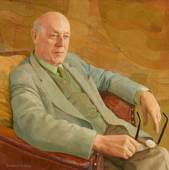 Composer Howard Ferguson
 -
 Uncle Jack Bligh and Aunt Mary in their heyday
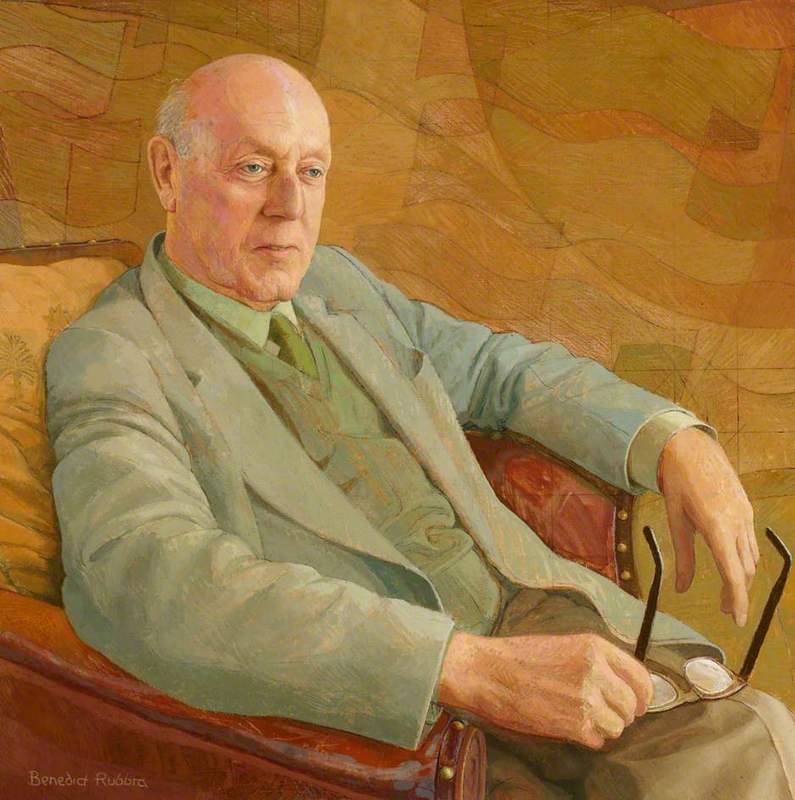
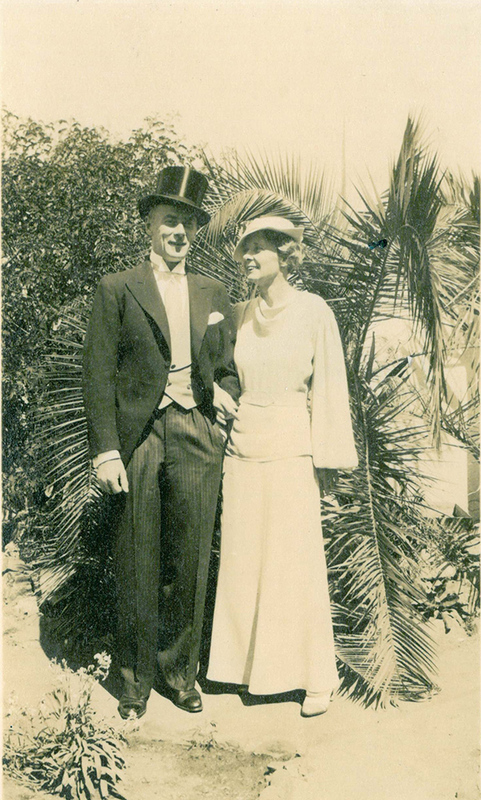
'A FEW DAYS' - 16mm. film with script, music and direction by Howard Blake. (1962)
Four showings at Cinema 1, The National Film Theatre, April 25-28 1963
The Co-Chief projectionist at the NFT was Alf Francis. He came from Essex where he lived in Laingdon with his parents and he was always cheerful. Because of the war he had had a rather limited education but was crazy about film, amazingly perceptive, highly practical, very witty and blessed with wonderful Cockney humour.
'Why don't you come down and give me a hand at the weekend. I'm relaying the gas piping.'
'Yourself?'
'Well who else you got in mind?'
He owned a 16mm Bolex camera and liked to shoot film and we started discussing whether we couldn't make one:
'We can borrow the lights from Warner Bros, get the processing done by Humphries on the back of a batch, Fred'll draw the credits and maybe we can get John Fletcher in to mix the sound. Neville Walker, projectionist, can be my assistant and we can edit it in the cutting-room. So what's the problem?'
We started shooting the film every Sunday that we had off. The Bolex was a very good camera and we were delighted with the rushes, which we could run on the big screen if nothing was happening. I learnt how to edit film, first with the positives back from the lab on single strip and later on with negatives on A and B rolls ready for processing, dissolves marked in and edge-numbers recorded. The 'story' was very simple, a boy meeting a girl, having a love affair, growing restless and parting. But story was not really the point of what I was doing. I'd never been very interested in stories in films, always more interested in the visuals and the music. Elona was enchanted by the idea of acting in a film and she enthusiastically agreed to come up to London secretly on Sundays to take part in it. I not only directed the film but needless to say played the part of the boy! It was wonderful to be back with Elona, although the outcome was predictable. One Sunday she was found with me in the Barkston Gardens apartment and we were both promptly expelled!
A glimpse of this drama can be seen on my Official You Tube Website 2019 where Emmett Elvin posts a background music track of piano, vibraphone, bass and drums called 'Night Tapestry' (1967) to a sequence from 'A Few Days' (1963).
When the film was nearing completion, I composed a music score for it and wrote a 'stream-of-consciousness' voice-over (a poem) which Elona spoke and recorded beautifully. John and Marlene Fletcher who ran a documentary film company off Wardour Street had got excited by the phenomenon of 'projectionists making a film' and wanted to help. I persuaded a flautist, clarinettist and harpist from the RAM to record the music and John, using about six different in-house tape recorders mixed all the tracks directly onto the main house's 16mm projector using a magnetic stripe. We had a master print and took it to the BFI for approval. We were greatly surprised when they offerred to buy it from us and give it a showing in the NFT. It was finally named A Few Days and lasted about 20 minutes. It was black and white and they showed it as a short, somewhat oddly, but amazingly, with 'The Maltese Falcon' starring Humphrey Bogart at The National Film Theatre Screen 1 from 25th. to 28th. April 1963.
Once I had made this film as an experiment however I curiously didn't feel nearly so interested in making another. I had almost given up music since I'd joined the NFT but now I started to miss it desperately. Sometimes I would play the piano in the theatre during the lunch-hour and staff would come in and listen and say: 'What on earth are you doing here working as a projectionist?'
I had started to wonder myself. I had enjoyed being at the NFT so much because it was like a family. It had taught me lots of skills which I had totally lacked and I had been happier there than I had ever been since my early childhood, yet somehow my major interest was still music, in which I felt I needed to go much, much further. Somehow word got around that we had made a film and British Film Institute Directors, James Quinn and Stanley Reid, came to see the film. To my amazement they were mightily impressed and on the spot they offerred me a grant to train to become a film director. Their enthusiasm for it was shared by Richard Roud (New York Times film critic in London) and David Robinson (cinema critic of The Financial Times).
I was greatly flattered by this wonderful offer. I could become a film director like David Lean or Sergei Eisenstein! But was this really my true course? I had done what I set out to do - as an experiment I had made a film with music and it had worked. I had directed it and much enjoyed doing so, but in the process I had also somehow come to the conclusion that my real calling was not as a film director, it was above all as a composer of music!
So, at this moment in 1963, having completed my film, I found that I missed music desperately. I had got so discouraged at the Academy that I had virtually stopped being a musician at all. Here, three years later I was again forced to think about the reality of my situation. If I became a student again, as I was being offerred, I would be without funds to live on and I needed to have a job in order to live. I had also not really aimed at becoming a film director in its normal sense and, in what was actually the most drastic decision of my whole life, I had decided that, even if destitute in the street, I would go on being a practising musician and play music for the rest of my life. This was my true course and I felt compelled to get back on to it now! But how?
At several crucial points in my life I made decisions that utterly horrified my friends and family. This was another of them. Why on earth wouldn't I accept a scholarship to become a film director? Was I mad to throw such an offer away? Well, the answer to this was: although I was told that the possibility of making a living from composing for a living was well-nigh impossible, I missed music so much that I felt that I simply had to go back to it, however difficult it turned out to be. I missed playing the piano and missed playing the piano to people. I felt deep within me that I wanted to play to people every evening and all of every evening no matter where or what it was that I had to play. How could I do such a thing? There must be a way.
I looked again at the small ads. in the Melody-Maker:
Pianist wanted at top-class country club in Warlingham, Surrey. I rang and the lady owner suggested I come down and play for an evening. Since I had recently gained a driving license I hired a car to get there, taking sheet music of musicals such as West Side Story and My Fair Lady. There was a good upright piano and I sat down and played though the music as printed. It didn't seem to get much response. I tried a bit of Chopin and I tried playing one or two popular songs by ear. The lady owner came over:
'I'm sorry Mr. Blake but you haven't got it. It's no good at all. You just don't know how to 'swing' or 'put a song over' or entertain our members at all. But thank you for coming anyway. The pianist who just left us was Johnny Howard who was quite marvellous. He's been snapped up as musical director for 'Come Dancing' on television, conducting his own band and doing terribly well!' This didn't thrill me as perhaps she thought it would! But she kindly paid me the going rate of £4.00 for the evening, which exactly covered the cost of the car and gave me food for thought.
-
 NFT projectionist makes film - Press Article about 'A Few Days'
 -
 Howard in the projection room at the National Film Theatre
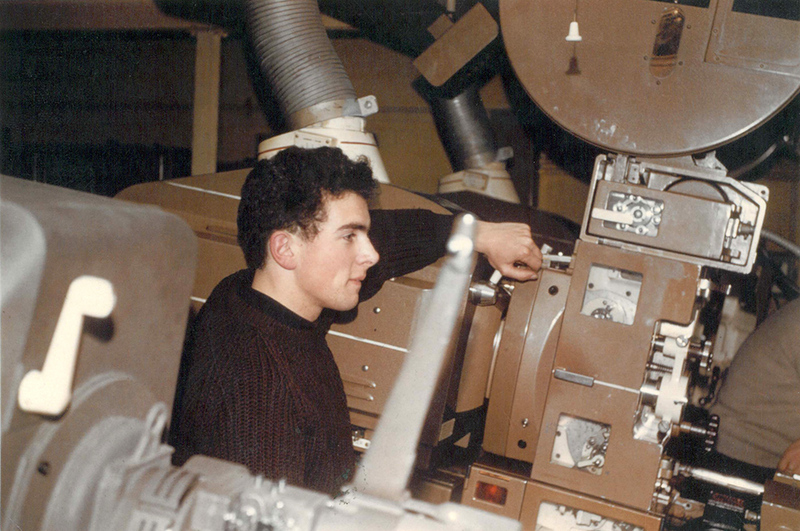
PRELUDE IN B MINOR (1963)
A piano piece for Vladimir and Dody Ashkenazy
A meeting was what perhaps made the decision on my next move. Quite by chance in the foyer of the NFT one evening I ran into Dody (Thorunn Tryggvaason) and Vova (Vladimir) Ashkenazy who was now her husband. They had just arrived from USSR and he was dying to see 'Ivan the Terrible', which had been for long banned there. It had recently been shown at the NFT but I told him that unfortunately they had just missed a public showing, but if he would like me to I could probably organise a viewing on 16mm in my flat. Dody asked me:
'How can you do that Howard? Do you work here?'
'Yes I work here as a projectionist.'
'Have you given up music?'
'Well not entirely. I wrote some for a little film I just made here.'
'Don't you play the piano any more?'
'Not really.'
'What a shame.'
I borrowed 'Ivan' from the BFI library along with a projector and on 21st November invited the Ashkenazys and one or two other friends round for 'Beer and Eisenstein'. We ran both parts complete and Vova was entranced. He sat down at the piano afterwards and played some of Prokofiev's themes back by ear. As they left Dody said:
'You should get back to the piano and music Howard.'
I felt I should too but didn't know how.
However the next time I was down in Brighton with my grand piano I sat down and wrote Prelude in B minor, a piano piece with a distinctly Russian tinge, as a sort of tribute to the Ashkenazys. I had completely stopped playing the piano seriously at this time so I didn't do anything with it, but when I came to assemble 'Lifecycle' very many years later in 1996, I transposed it into B flat minor and revised it somewhat so that it became Romanza - Andante con moto and in 2013 it was recorded in this version as one of the works on the album 'Walking in the Air - the music of Howard Blake' performed by Vladimir Ashkenazy, released March 3rd 2014 on Decca Classics.
8 LLEWELLYN MANSIONS
One morning voice-over actor Henry Soskin walked into our NFT staff-room and asked if anybody would like to take over a reasonably-priced flat in Olympia. He'd secured a mortgage for a house. I jumped at the chance. Since with Elona's help I'd left Brighton in 1961 I had lived, apart from the short period at my aunt and uncle's, in bedsits - and hadn't much to recommend me. But now Elona had acted in my little film and was quite excited that it had been a success. Perhaps, if I had a nice flat, she would be happy to marry me? In great excitement I invited her over to see the flat. We talked and planned and thought how wonderful we could make it and how at last maybe her parents would accept me. I'd moved into the empty flat with just a mattress and a table but I was in paradise. She accepted. She would go back to Brighton and tell her mother. She would be back by midday. But midday came and went and when I rang her mother answered:
'We will make sure you never ever see Elona again.'
I plunged back into a black cloud of despair and thought the world would end. I went through the motions of working but was heart-broken and drank a lot. But one night I came to my senses. I thought: 'Well, she doesn't want me. She doesn't need her parents permission, she's twenty-five. According to friends she ruined my Royal Academy of Music career, because I stopped working and joining in student life - then she ruined my concert career because she didn't want me to go to Edinborough. Then I changed direction and made a film and that hadn't made any difference. I thought: 'I don't ever want to be at somebody's beck and call like this. I shall devote the rest of my life absolutely to music and nothing else, however difficult it might be and however lowly. It would be better to play in the street than not play at all'.
So something fundamental changed in my attitude towards a 'partner' and from then on instead of devoting my life to love and family I devoted it to music, which became my first love, instead of my family. (I don't think this was a good thing to happen, it is just something that DID happen. It changed me and I felt I had to go along with it.)
Curiously it also liberated me into taking on whatever I could find, regardless of what 'people might think of it'. I just followed my nose - into jazz, into rock, into musique concrete, electronic music, lyrical music, whatever the world presented, whatever attracted me and whatever I felt I could learn to do.
GOLDEN BOY
In my summer holiday I was at a very loose end and went to stay with my parents down in Brighton. There I happened to bump into a young professor of psychiatry called Peter Wilson and his wife Jill, who were organising Studio 8, a group of young people about to present an amateur production of Clifford Odet's stage play 'Golden Boy' - the story of a boy who is brilliant both as a concert violinist and as a prize-fighter. Could I arrange some music for it?
I suggested using amplified existing recordings of two sharply-contrasted LPs playing on separate turntables: 1 to play Bartok's solo violin sonata. 2 to play Art Blakey jazz drum solos. This juxtaposition turned out very effectively and I was caught up both with my first experience of creating sound to stage and with the enthusiastic company of young actors working together. One was Kenneth Cranham, soon to go professional and another Gary Farr (of the T-bones).
In Brighton all was modern jazz at that time, in jazz clubs on the front, in the hit parade, in record shops, on the radio. Peter Wilson himself played jazz piano and it was really he that introduced me to the worlds of Dave Brubeck, Bill Evans, Oscar Peterson, Quincy Jones, and a myriad others. When he and Jill were looking for a flat in London I suggested they might rent my two upstairs rooms. This so coincided with my changing life-style that I could hardly have done better. I was fed with intelligent conversation, news of the jazz world and an exchange of disks to play. My new flat came to life.
-
 pianist Vladimir Ashkenazy nicknamed Vova
 -
 pianist Thorunn Tryggvaason nicknamed Dody
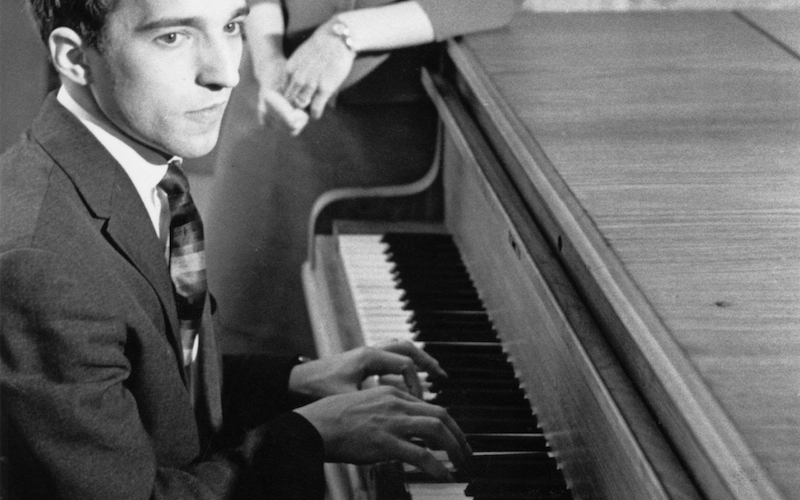
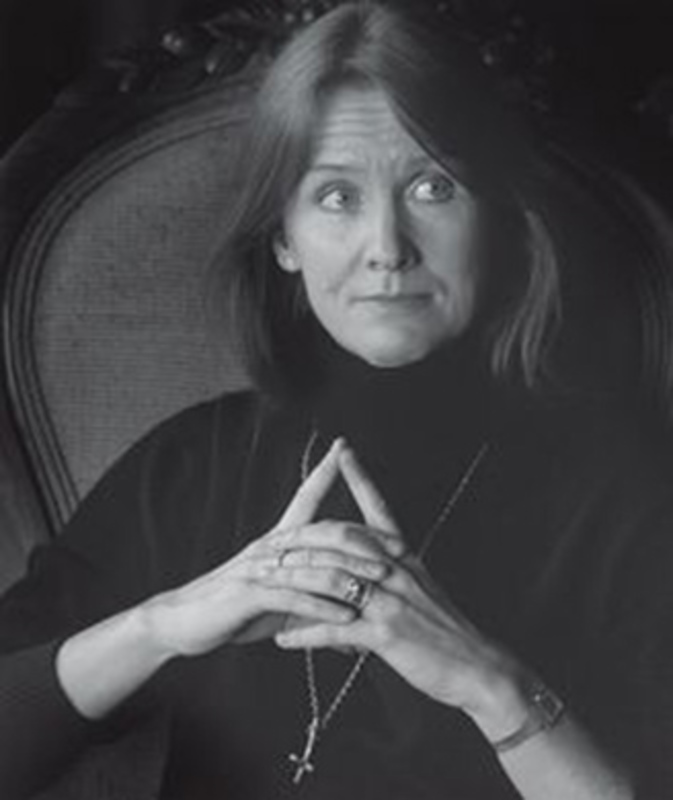
PIANO TRIO NUMBER 2, LATIN MOON (1964)
MOVEMENT FOR ORCHESTRA - IMPRESSIONS OF A CITY - RICHARD FRANK
In order to achieve paid work playing the piano I needed to find out about jazz and how to play it. I saw an ad. in the magazine 'Melodymaker' for the 'Chiswick Jazz Piano School' and booked a lesson, at the same time giving in my notice at the NFT.
I was the Fool in the Tarot jumping gaily off the cliff- but I somehow felt good about it!
CHISWICK JAZZ PIANO SCHOOL
'The Chiswick Jazz Piano School' was in fact two rooms over a shop. Norton York, a man of about thirty, married with a wife and children who lived upstairs, offerred people the wonderful 'opportunity' to 'audition on TV'. He had a closed circuit camera and a monitor screen on which they could see themselves. He would then tell them their 'potential' in the 'control room'. He also played piano in West End clubs and mentioned working at The Astor and The Celebrity.
'All you have to do is learn to think on the off-beat and beat your foot on it. Then you learn all the popular standards and play them. Start with 'Lady is a tramp' and then carry on with all the ones on this list.'
The lesson, the list and the information cost me £4 but I went away and practised. I returned for a second lesson one week later and dutifully played my worked-up version of 'Lady is a tramp' along with one or two other popular tunes suggested - whereupon he said:
'There's a job going in a pub in the Edgware Road but I don't really have the time to undertake it.'
This caused my eyebrows to raise but that evening I went to the Lord Chancellor pub in Frampton Street and met Harry Penning the landlord who took me on.
I was both playing the piano again - and earning a living!
During the day I learnt tunes, taking them from 'busking books' and sheet music or writing them down from the radio and records. Some nights the customers would stand up and sing with a microphone and shout or laugh at me for not knowing a tune, but I'd say 'I'll play it for you tomorrow' and I would. It was relaxed and uncritical and I was nobody at all. It paid more than being a projectionist and gave me all day in which to write music. As I got better the pub filled with people and Harry Penning took on a drummer called Johnny Russell and a guitarist/singer called Bernie. At the weekends the pavements outside got so crowded that one couldn't move.
In addition to this work my drummer Johnny found us a late-night job in a club in Queensway. I could play the piano on week-nights and he could join me at weekends. I hurried over there late that evening and met the irascible Viennese restaurant owner, Sammy Frey, who showed me the piano in his basement 'nightclub'.
'You may start.'
'But there's nobody here.'
'Well they might hear you and come in! Start!'
CHAPPELL'S EDUCATIONAL
I visited Chappell's music publishers again and met the head of 'educational' music, Jonathan Dyer.
'We haven't heard from you for ages. What have you been up to?'
'Ive been working at the NFT and making a film.
'What's the music of it like?'
'Well it's scored for flute, clarinet and harp'
'Can we see it? Perhaps you can adapt it?'
I showed him the score and he persuaded me to turn it into a 3-movement trio making the harp part suitable for piano and writing a third movement - Allegro. The music from my little film 'A Few Days' suddenly became 'educational', published as Trio for flute, clarinet and piano!
WEST END ENGAGEMENT
The same day Norton York phoned me:
'I have an opportunity for you to play at a top West-End night club. Only one night, but you must wear a smart DJ and play solo piano very tastefully.'
I bought a second-hand dinner jacket and bow tie for the occasion and reported to the club and its band leader, Mr. Sonelli.
'Play nice and quiet for half an hour till we come back.'
'Yes Mr. Sonelli.'
'Sonny Lee.'
'Yes, OK.'
I was very nervous. The club was dimly lit with shaded table lights and diners in evening dress. I launched into 'Some enchanted evening'. I had only just about reached the middle eight when a very drunk young man of gangster-like appearance lurched up onto the platform with me. His shirt was open to the waist and he had a large fairly recent knife-scar down one cheek.
'Lady is a tramp'
'Sorry?'
'I'm gonna sing.'
'Oh, well I'm not sure about that. I think perhaps you should ask the band leader, Mr.Sonnelli.'
A very large and very well-dressed man rather like George Sanders appeared beside me.
'Yes of course.' (in beautifully rounded accents) 'I will go and ascertain his view.'
'Thank you.'
He returned to say that consent had been graciously granted.
I played 'Lady is a tramp' and his punk-friend sang abominably, shouting through the microphone.
I returned rapidly to 'Some enchanted evening' but he wasn't to be deterred.
'Now I wanna sing 'I get a kick outa you.'
'I don't think that's such a good idea.'
The very large man grabbed me by the throat deftly pulling a flick-knife from somewhere. His accent and demeanour had changed.
'F****** play it or I'll cut yer f*****' 'ead orf!'
Fortunately I knew the tune...
SIR MALCOLM ARNOLD
I hadn't bargained for this sort of low-life and I cast around in my mind for what to do. When I had been working on the music for 'A Few Days' I had written to Malcolm Arnold for advice. Malcolm Arnold was regarded as the most prominent of our composers and in Brighton I had seen his ballet 'Solitaire' when the Sadler's Wells Ballet visited the Hippodrome. I had been thrilled to realise that such beautiful music could be written by a living English composer. I had received a characteristically energetic response:
'Thank you for letting me see your music which I like very much. I think you would do very well in film music.'
He had invited me to the Saville Club and we had a splendid lunch - a well-fed, well-dressed, articulate, happy man exuding confidence and well-being. He spoke at length to me about the music profession, described in detail its various organisations and institutions and generously advised me how best to approach them. He also suggested some contacts that I might follow up. Shortly afterwards I visited singers' agent Norman McCann who was very helpful and recommended me to a publisher called Richard Frank in Tottenham Court Road, telling me:'He's a serious musician and won't rip you off, and if you write good music he'll help you.'
(A footnote: It is sad to recall that, not so long after this meeting in 1963, Malcolm gradually started to be regarded as 'persona non grata', particularly by certain key-people at the all-important BBC. He went into a decline from which he never recovered. Meeting him on his 70th birthday concert in 1991 it was tragic to observe how he had not only wasted away but somehow lost his great generosity of spirit and become so ill-at-ease. There were people who should have been ashamed at what they did to him.)
RICHARD FRANK AND ANGLO-CONTINENTAL MUSIC
On my investigative searches around the London music-world an artist-agent suggested I visit a publisher called Richard Frank. 'He is a one-man business publishing orchestral music under the name Anglo-Continental Music, tucked away in a tiny top-floor office in Charing Cross Road. Most of what he publishes is the sort of light music as played so much by the BBC, but he is at heart a serious classically-trained musician who genuinely admires and respects talent and if he likes what you compose he might publish it or get it recorded. He is absolutely straight and you can trust him.' I rang and asked to see him and we met on May 6th, 1964, which turned out to be a resounding red-letter day in my life. Richard was Polish/Jewish and had been the conductor and musical director of the ballet company in Krakow Opera House before the war. On the day Hitler invaded his country he happened to be on tour in Russia and instead of returning home headed for Shanghai and wended his way across the world to London.
I showed him some of my work: the 'Rhapsody for a Summer's Night' which he immediately thought he could get the popular broadcasting pianist Semprini to do - which he did! He liked the 'Four Miniatures' too and in no time was able to place them with some of the BBC orchestras.
But one day he said: 'Why don't you write something big - a symphonic piece with brass and full woodwind - a tone-poem or an overture - something exciting and interesting. I just don't understand why you aren't writing! You're so English! So timid! What's the matter with you? You write really well! Why don't you get on with it?!'
Nobody had ever talked to me like that or got excited enough to demand some new music from me. I started very laboriously to work on a single-movement piece for full orchestra Movement for Orchestra which would be descriptive of London, like a tone-poem. Richard became my mentor and guide. He insisted that I should turn my attention intensively to composition. After quite a lot of hard work I took my first orchestrated sketches to show him and he laughed with a gutteral roar from the throat:
'It's so feeble! So apologetic! So English! Look here, this is double forte, you want it to be loud, bold- and what's it scored for? Four woodwind! Hopeless! It should be on full brass in unison. Do it again!'
I went home and worked on it.
'Better' he said and smiled. 'Better.'
If anyone in my life taught me to be a composer it was Richard Frank for whom I have a great deal to thank.
THE MELLOTRON
I was still playing every evening in the Lord Chancellor and its owner Harry Penning was doing very well. The Lord Chancellor was making money and my music was making that happen! Harry had put in a stage and lighting and now wanted to improve the sound and volume of the band.
'There's a new thing called a 'Mellotron' Howard. It can play all the sounds of all the instruments. It's like an organ and I'd like us to go and look at it.'
In a show-room off Park Lane we met Eric Robinson, conductor of 'Music for You' on the BBC, whose project it was.
'Harold will demonstrate the instrument for you.'
Harold turned it on and the introduction sounded as if it was played by the whole Nelson Riddle Orchestra - which in fact it was! Then the tune of 'Lover' came in as if on the strings of Mantovani - which in fact it was!
'Wouldn't you like to have one of those Howard?'
'Can I just try it?'
Its owner, Eric Robinson looked a little dubious.
'It takes some time and training to master.' he said.
'Well, I'd just like to understand how it works.'
The machine consisted of thousands of small flexible metal tapes with a note or phrase of well-known orchestras and soloists recorded on them. I tried playing 'Lover' myself and it worked brilliantly because there was a major chord on each first beat, so that if one played the bass note of each chord the machine would engage satisfactorily. However as I soon discovered, if the chord changed on a different beat or note of the bar or if the key changed, the machine couldn't deal with it and total chaos would ensue. When I did this everybody laughed uproariously - except that is for its owner, Eric Robinson. who said to me:
'We would be pleased to fund you for a training course Mr. Blake.'
Peter Sellers, who had always wanted to play the piano, had come there and heard 'Lover', thought it fantastic and ordered three machines to be delivered, one to a yacht in the Mediterranean. But as it turned out, the only tune that he had ever wanted to play was Antonio Carlos Jobim's 'Desafinado' ('Slightly out of tune' appropriately enough) and the machine absolutely refused to play it. The tune is one of the most subtle themes both harmonically and rhythmically. The three machines were returned, the Mellotron having been found impractical and never coming into general musical use.
I said to Harry:
'If you want me to play an organ I'd have to have a proper instrument with complete keyboards and pedals, a machine that can play music - like a Hammond.'
'All right. I'll buy you one!' said Harry.
In no time at all a Hammond M100 with pedal-keyboard was installed on the platform in the pub and everybody seemed to very much like it. It was about 10 million light years away from St.Augustine's and Cesar Franck's 'Chorale Prelude in A minor' but I could play the organ and the skill I had learned as a church organist was now to prove very useful!
NORMAN MEAD
I visited Norman Mead, head of the music arranging department of the BBC in the Aeolian Hall in Bond Street.
'Can you score for big band and orchestra?'
'I don't know. I haven't ever done that, but maybe I could.'
This was not well-received.
'Who do you regard highly in the field of big-band scoring?'
'Quincy Jones. I think he's brilliant.'
This was even worse-received.
'I'll give you a Sinatra tune to score - 'You're nobody till somebody loves you'- but I can't promise anything.'
I took it away and scored it as well as I knew how and he flicked through it.
'Nobody scores trombones in the tenor clef any more.'
'I'm sorry.'
'We'll let you know.'
I never heard anything more from the BBC, but not so much later - and quite amazingly - I got to work with the great Quincy Jones!!
TIBOR KUNSTLER
Not content with just an organ in the evenings Harry Penning now decided to acquire the celebrated Hungarian violinist Tibor Kunstler to play at lunchtimes. He had been the star at Quaglino's for many years, but since The Beatles and rock such recherche features of London's nightlife were all but gone, Tibor being a major casualty. Since the main clientele at that time of day tended to be refuse-operatives I was rather doubtful as to the likelihood of success. We talked about music and played a little.
'You play really well. I'll bet you know the Cesar Franck Sonata?' he said.
Since nobody was in the pub we played the first two movements of it, which was utterly surreal. Cesar Franck was not as many light years away as I had thought.
Some dustmen came in and Tibor's face lit up, old showman that he was. He beamed at me and asked:
'Would you play 'Autumn leaves' - in A minor. I will play the tables.'
'I'm not sure that's a...'
But he had started and he played exquisitely as only someone who has 'brought a night of candle-lit romance to a million lovers' could. A white-haired 20-stone refuse-operative in grubby T-shirt and trainers stood at the bar and Tibor sidled up, playing himself towards him and smiling from beneath the brilliantine.
'Bugger off yer big poof' said the dustman.
CANARY ISLANDS
Harry obviously had a great deal of money and suddenly had bought a hotel in the Canaries. His idea was to take all of us musicians out there, with me as musical director. I would live in a chalet by the sea, drive a Mercedes, have 'as many girls as I liked', and never want to come back. Silly man that perhaps I am I still wanted to 'make it' in London, I still wanted to compose and despite all that had happened I still didn't want to be too far away from my ever-beloved Elona.
-
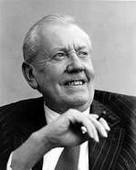 Composer Sir Malcolm Arnold
 -
 Hammond organ
 -
 Mellotron
 -
 Violinist Tibor Kunstler
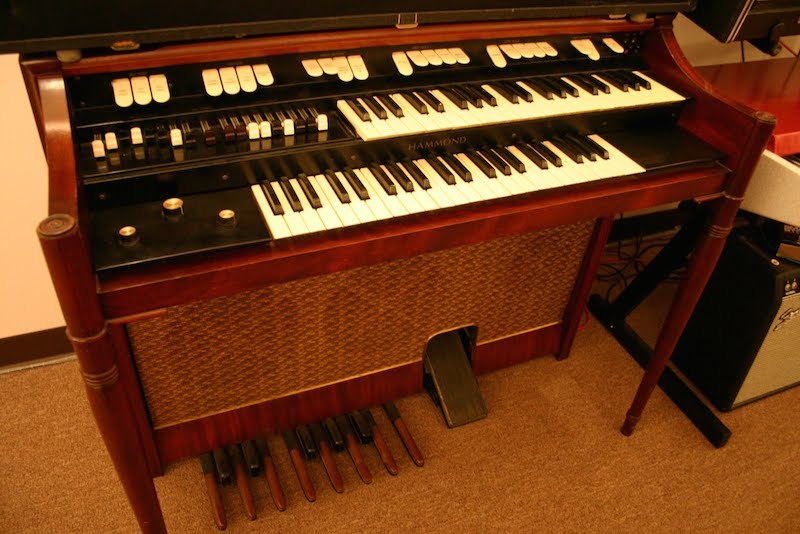
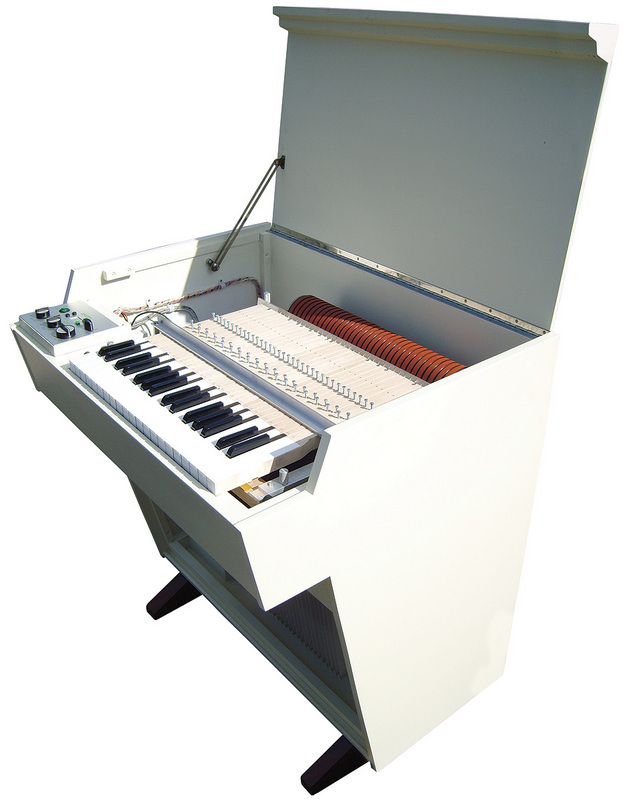

'HAMMOND IN PERCUSSION' EMI album, 'THE SHARK' (1965)
Stork Club,Pigalle,Talk of the Town (BBC International Cabaret)
I had turned down leisure and luxury in the Canaries but if I was to stay in London and maintain both 8 Llewellyn Mansions and the vain hope of regaining Elona, I very much needed to earn a living. Having been introduced to the Hammond organ I now decided to buy myself one on hire purchase. I had it adapted for transportation by being cut in half and coupled with a revolving Leslie-style speaker made for me by Watkins, creating the sound that had suddenly become popular, due mostly to the great Jimmy Smith. Sawing it in half meant that it could be transported in my Vauxhall estate car. I thought this would get me work, since not many people had such an instrument and could play it. I 'depped' for a night in the Tottenham Royal and for Johnny Howard's 'Come Dancing' band in Purley, but I needed a 'residency' and that was proving difficult. 'Aldo's', a night-club in Swallow Street offerred me a residency for my own group and I was delighted. I took on a singer, a guitarist and a drummer to form 'The Howard Blake Combo', proudly announced on my own specially-made music stands! I thought it looked and sounded pretty good but it was very short-lived. We were to be paid at the end of the month and that just didn't happen. I learned a lesson about the ways of the world.
However my arrival in Swallow Street had not gone un-noticed. Next door to Aldo's was The Stork Club, and across Piccadilly was The Pigalle. The Mike Negel Trio needed a pianist to play in both of them. I met Mike in Paul Raymond's Review Bar along with the great man himself (who was also interested!) Mike was a smart, good-looking man of about 40 with a stunning blond wife, Joy, who was both singer and bass-guitarist. He said: I need a pianist to play six nights a week in two clubs. We play the bar of the Pigalle from 7.30 to 10.30 with a meal and breaks, then we cross the road and play The Stork from 11pm till it closes. 'When does it close?' I asked. 'When it closes!' he said. 'How much do you want?'
At The Lord Chancellor I had been earning about £25 per week so I suggested doubling it to £50. This was accepted at once, so perhaps I should have asked for more? However £50 a week in 1965 was a lot of money when the basic wage would have been about £3.50. It got me out of trouble financially and I did it for about 3 months at which point we all collapsed more or less from exhaustion. We moved to a far more sedate residency in Hampton Court, by name the Nordic Club. It not only paid well but we only worked from 7.30 to 11.00 which included playing for a cabaret each evening which was a lot of fun. The Nordic was related to the Astor Club in London's Berkeley Square and the performers were driven down every night to do their act with us. It was much more civilised than Soho and it taught me about cabaret, so that when I was taken on by BBC TV to play for International Cabaret at The Talk of the Town I knew pretty well what I was doing.
The organ wasn't much in use but on occasion I would put in a 'dep' at the club and play a 'gig' with a band. I was playing my Hammond organ with a Rhythm and Blues group in the Ad Lib club in Leicester Square one night when a voice behind me said:
'Why are you playing with this band?'
'I'm trying to make a living.'
'How would you like to do an audition at Abbey Road?'
The voice belonged to a young man called David Paramor and I knew that EMI was run by a man of the same name - Norrie Paramor - who in fact turned out to be his uncle. Next morning I went to Abbey Road Studios and met a Mr.Laurie Gold, who hired all the musicians. He sat me down at a piano in Studio 2 and gave me music to read, some fully written-out, some with just chord symbols. He asked me to improvise and play in different styles. Then he asked me:
'Do you want do some recording?'
I said:
'Yes I'd love to.'
David Paramor was pleased as punch that he had spotted an acceptable talent for the family firm and immediately signed me to make a solo album on the EMI Studio 2 record label. He wanted most of the tracks to be famous standard songs and wanted to call it 'Hammond in Percussion' - which he did! I would play and write all the arrangements, compose two or three of the numbers and experiment with multi-tracking myself on several instruments.
[Footnote: In 2014 a book called 'Bathed in lightning - John McLaughlin, the 60s and the Emerald Beyond' was published by Jawbone Press, London. It gave a lively and detailed description of Abbey Road Studios and what was called the 'session scene' at this time, the people who were involved in it and the way 'Swinging London' worked. The author Colin Harper contacted me whilst writing this book and I was able to add a few memories and anecdotes of this rather remarkable time.]
-
 John McLaughlin
 -
 A pre-LedZeppelin John Paul Jones
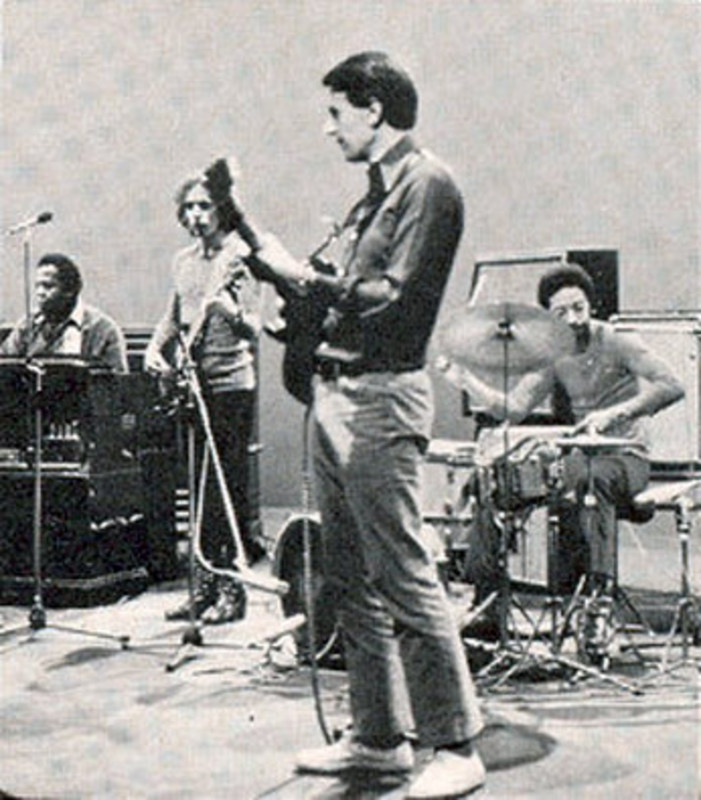
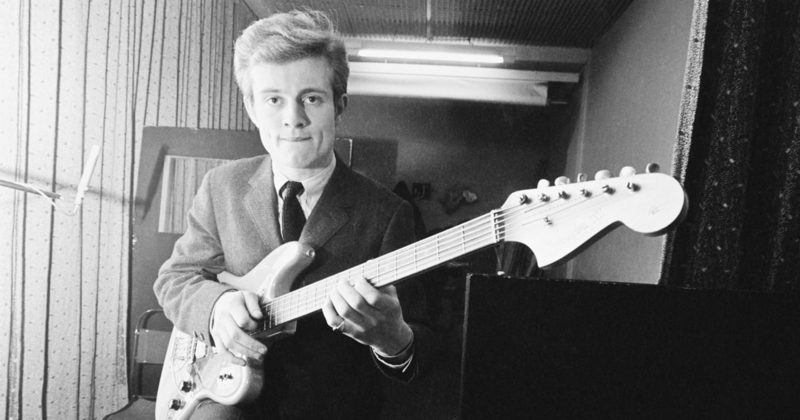
Recording with 'THE SCAFFOLD' and PAUL McCARTNEY (1966)
Pianist/organist at EMI Abbey Road Studios,'Hammond in Percussion'
Laurie Gold booked me to play piano on 'Thank you very much' by The Scaffold. The lead singer was Mike McGeer and his brother Paul McCartney was playing the tambourine. Everybody was very cheery. The bass-guitarist was John Paul Jones and had a blonde Beatles haircut. He said he'd been at Westminster Choir School - probably not that long ago. I asked him if it was fun to do sessions.
'No, I'm going to start a band with Jimmy Page specially for America and we're going to make lots of money.'
'What are you going to call it?'
'Led Zeppelin.'
'That's a good name. What sort of music?'
'Loud music.'
EMI was the epicentre of the most gigantic success-story in the history of popular music and dozens of singles a week were being turned out. Most of them needed session musicians and playing on them was like joining a club. The same players would turn up everywhere - Pye, Phillips, Decca, Advision, Olympic, Nova, CTS, Angel, Levy's, Lansdowne - the list of working studios grew and grew. The top players were brilliant at what they did - unsung stars within a closed community: 'Big' Jim Sullivan who read books on astronomy as he played, dreaming up the most brilliant guitar 'grooves' on everything you heard; the introspective John McLaughlin who went off to reinvent himself as Mahavishnu and win USA Best Guitar awards, Barry Morgan a virtuoso Latin-American percussionist who was to found his own studio, drummers like Ronnie Stevenson, who went to Germany to play for Kurt Edelhagen, Ronnie Verrall, Clem Cattini and Ginger Baker, trumpeters like Kenny Baker and Derek Watkins, flautists like Chris Taylor and Ray Swinfield. Work swirled around us like a flood with hardly the time to think what one was playing and who one was playing for. I went along with the flow.
HAMMOND IN PERCUSSION
The recordings of 'Hammond in Percussion' had started at Abbey Road Studio 2 on January 17th 1966. With me were lead guitarist John MacLaughlin, who later became the legendary Mahavishnu, Eric Ford, best known as a rhythm guitarist, drummer Tony Kinsey and the excellent tympanist on some of the tracks, Eric Allen. Russ Stapleford was the bass guitarist. It was in some ways a ground-breaking album in that I double-tracked myself using the brand-new stereo 2-track facility which Studio 2 pioneered. I played piano, 'jangle-box' (ie treated piano), Hammond organ, Vibraphone and Marimba. The celebrity photographer Angus McBean took the sleeve photos of me and a new-found composer friend, Stanley Myers, wrote the somewhat tongue-in-cheek sleeve-note:
'He's a composer, Theme from H and Shark are by him : an arranger (his version of 'Yesterday' is surely the most original yet); a concert pianist (listen to his spectacular performance of the 'Exodus' theme); and probably the swingingest organist this country has produced ('Gravy Waltz' and 'Dace' should convince you of that. He also plays vibes, marimba, celeste and 'jangle-box'. The word is versatile'....
STANLEY MYERS
I met Stanley because I had parked the organ in a night-club in Holland Park Road pending engagements. He had been to look at the club as a possible location for a film on which he was musical director. Rather like the props director in 'Sunset Boulevard' he was interested in the machine rather than the person. He phoned me:
'I understand this organ belongs to you.'
'Yes.'
'Could we hire it for a film?'
'Certainly'.
'Do you know how it works?'
'Yes of course.'
'Could you come over and show us?'
He was interested in 'funky' and I went over and played some typical 'funky licks' a la Jimmy Smith.
'Gosh that's terrific. Could you possibly write down some of those phrases so that I get them into a score?'
'Yes I could do that.'
'Do you know anybody who could play like that on this film session?'
'Well I could if you want me to.'
So began a friendship of nearly 30 years, endlessly talking about music, films, publishers, books, politics, injustices, literature and girls...all of which he seemed to have at some time dated. We went to concerts of Pink Floyd, Soft Machine, Pierre Boulez, Karlheinz Stockhausen,John Williams, The Thad Jones Mel Lewis Band....everything in the world interested him. And me.
I played on many film sessions for him and greatly admired his scores, which were deft, witty, intelligent and often very beautiful. He had read PPE at Balliol and never intended to be a musician, but whilst at Oxford had begun to play piano for undergraduate reviews, suddenly becoming MD for a tour of 'Espresso Bongo' with Paul Schofield and dropping into the musical world at the deep end. He was ever aware and ready to admit the gaps in his knowledge. He rang me once having just landed a film which required a full string section:
'Howard, where the hell do I put the violas?'
But on 19th May 1966 Stanley landed his first really big composing assignment, 'Kaleidoscope' with Warren Beatty at Denham. Stanley wanted me to play something like 24 different instruments on it and asked his contractor David Katz to fix it. MU rules were one fee per player with doubling for each extra instrument which worked out cheaper than booking 24 players. Not that I think this was in Stanley's mind. He just liked to use lots of different sounds. I was part of a top-level big band of 30 or so and the experienced players from the Ted Heath era watched me with some suspicion. But I pulled it off and David Katz was very impressed.
ARDMORE AND BEECHWOOD
It was suggested that I talk to a top London music publisher. Maybe they would publish the numbers for the solo album? On March 1Oth. I was introduced to the director of the firm:
'We'd like to sign you as a song-writer, son.'
'Gosh, really? How marvellous!'
You're an EMI artist, you ought to have a publisher representing your interests.'
'Well, I've never thought of myself as a song-writer, not of pop-songs anyway. I actually trained as a classical composer.'
'That's OK son, that doesn't matter. We'll sign you for two years. Here's the contract.'
I signed. Dave said he'd like to write lyrics for me. In fact, although I'd started playing on lots of rock and pop records I wasn't at all sure I could write this sort of thing. But after my years away from music I felt I should try everything at least once. Give it a go. We sat down and worked on his titles:
'And it looks like rain', 'I can't love her half as much', 'Mailin' my letter', 'Black Velvet', 'It's not me'. (opus 19) Five songs (/opus)
We went into a recording studio and 'demoed' them and I rang my publisher.
'I've got some songs for you.'
'So what?'
'Wouldn't you like to hear them?'
'No son.'
'Why not? You've signed me up as a song-writer.'
'We just want to collect the publishing royalties off your solo album.'
'That's preposterous.'
'Listen son, you can't just sit down and write hit songs. You have to listen to everything that's going on, take bits of it from everywhere and stick it together in the right order. Then you get a great title and make some money. OK?'
'Well how do you know I couldn't do that?'
'Well why do you think I'd want you to do that?'
'Because you've signed me as a songwriter.'
'Yes, but I can do it myself and make twice the money.
'Well, will you let me out of the contract?'
'No son.'
I'd learned another lesson...
FRANK DUNPHY
My life since leaving the security of the NFT had been pretty chaotic, but I now seemed to be on the move upwards and needed to get more of a grip on things. Drummer and man-about-town Mike Negel had always been generous in handing out worldly-wise advice. He told me about a 'new boy on the block', Frank Dunphy, a qualified accountant from Dublin who at only 25 had taken over a show-business accountancy firm in Soho - Hogbens in Charing Cross Road.
'He's taking on all the young bright talents, why don't you call him?'
'Do I need an accountant?'
'You will do very soon. Go and see him!'
I got to see him for the first time on April 14th. He sat cheerfully at a big desk by the window overlooking Cecil Court, smiling as if he hadn't a care in the world. He was dressed very smartly and exuded a charm and bonhomie that was instantly engaging. After clearly laying-out the way he would handle my tax and business matters we relaxed into joke-telling as if we'd known each other for ever. At the time he lived with his wife Eileen and two young sons out in Sittingbourne and I became a firm friend, sometimes visiting them there and frequently meeting Frank for lunch when in town.
Without his careful advice I don't believe I would ever have succeeded in the way I ultimately did. He and his family were staunch Catholics and Catholicism definitely included a belief in the good things in life and didn't regard making a good living as anything sinful. After my self-denying, sin-oppressed family upbringing as a self-denying Protestant this was something quite new to me and it opened my eyes to a more confident life-style.
Many years later in the early eighties when I had written 'The Snowman' Frank was to negotiate my recording deal with CBS Masterworks, the creation of my publishing firm as a limited company (Highbridge Music Ltd.)and my publishing deal with Faber Music. So he became far more than an accountant and his experience of acting as business manager was to stand him in good stead when he master-minded the ascent of Damien Hirst to dizzying heights in the nineties.
A HUGE SUCCESS
My record 'Hammond in Percussion' was regarded as a huge success and a second Howard Blake solo Hammond organ album was set up by EMI very soon afterwards, again in Abbey Road Studio 2. It was to be called 'That Hammond Sound' and the sleeve note read :
'Following the incredible success of Howard's first album 'Hammond in Percussion' it was decided that a further album in this series should be made available. 'That Hammond Sound' once again demonstrates the superb Studio 2 Stereo sound aided by the most up-to-the-minute recording techniques and bringing into your own home the exciting sound produced by this group of London's top musicians. Every track has been specially arranged by Howard himself and he also composed the very wistful title 'Scorpio'.
My sleeve credit read: organ, vibes, xylophone, piano, marimba and celeste!
However, not all was quite as it should have been. On my first album I had used my own Hammond 100 instrument, which I had had specifically adapted by the brilliant Watkins to make the sounds of the time exactly as I preferred. But when I arrived at Abbey Road on the day of the new recording with this precious jewel in my estate car and asked for assistance to bring it in, I was met with:
'You won't be needing it. We've brought in the biggest, most expensive,top-of-the-range A3 Hammond Organ with full pedal board and everything. It should sound terrific!'
I looked at it and had considerable qualms, but could not persuade the Abbey Road staff to bring in my own M100 which I felt pretty sure I would greatly prefer. I settled for this huge instrument provided, but found it 'uncomfortable'. However, I'd agreed to make the disk and there was no real way for me to get out of it. When asked if I would like to make another album I not surprisingly declined.
DAVID KATZ
However, as a result of meeting Stanley Myers I had started to play on recording sessions for his orchestral manager, David Katz, and I was starting to enjoy them!
'Stanley tells me you can play anything.' he said.
'Well I play the piano and the organ and I write music'.
'But Stanley tells me you can also play things like marimba and vibraphone and even a bit of percussion?'
'Well I've just done an LP for EMI that's like that, yes.'
'Do you know about voices too?'
'Well yes, I trained as a singer.'
'Well Howard, I've got lots of lovely work for you to do!
'I'd be delighted!' I said to him.
VANESSA REDGRAVE, 'CAMELOT' AND THE VOICE-COACHING OF RICHARD HARRIS
David Katz very soon phoned me again: 'Richard Harris, lovely, lovely actor but can't sing a note and wants to be King Arthur in 'Camelot' and he's gone completely mad and paid for his own screen test at Pinewood with Vanessa Redgrave, so you've just got to drop everything and get up to Hanover Studios, Hanover Square and teach him the songs and then go down to Pinewood with him and play the piano and get him the job'
Richard arrived in a black Rolls Royce in denims and an Irish tweed cap signing shop girls' autographs even as he was getting out of the car.
'Oh the pity of it - the pity of it all!'
He had a splendid voice which he loved to use and up the stairs and into the rehearsal room he was delivering lines from plays and orations with resonant abandon. I took out 'How to handle a woman' and put it on the piano.
'HOW - TO - HANDLE - A - WOMAN' he roared, with anguish and ferocity and high drama. This wouldn't do at all.
I thought about it.
'Sit down and put your head between your legs...now breathe out...don't move...keep still...breathe out...yes...relax...now... as quietly as you possibly can...sing...and out came the sweetest little tenor voice imaginable:
'How to handle a woman...'
perfectly in tune and utterly beguiling and we learnt the songs using it. He had no idea he owned such a voice, but we took it down to Pinewood on the 28th and presented it to Joshua Logan and he got the part.
-
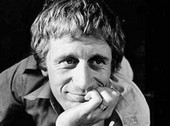 Peter Collinson, director of 'The Italian Job'
 -
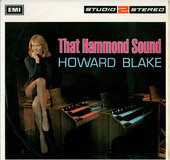 'That Hammond Sound' - EMI Studio 2 second album
 -
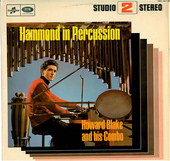 'Hammond In Percussion' - EMI Studio 2 first album
 -
 Vanessa Redgrave and Richard Harris in 'Camelot'

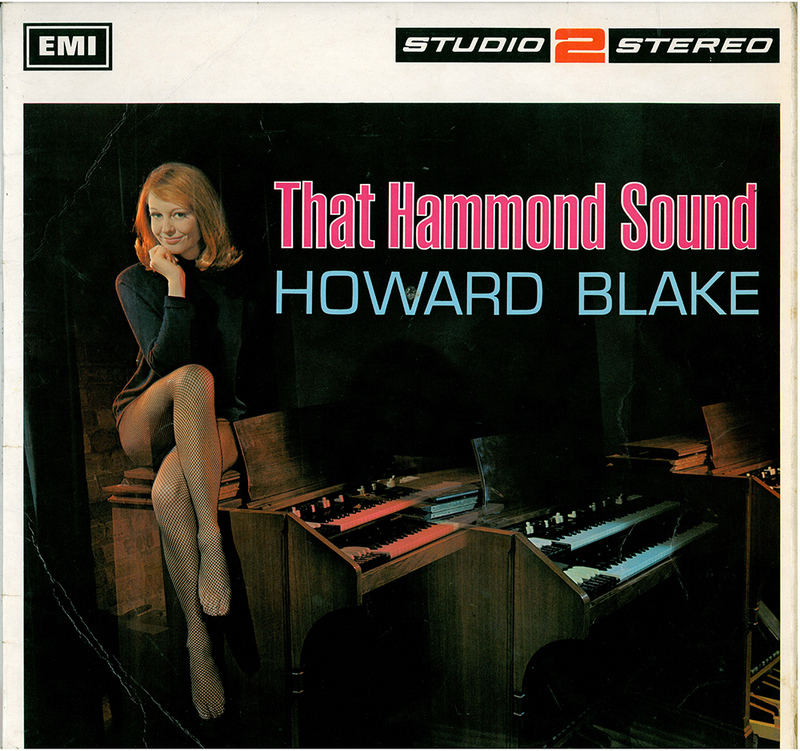

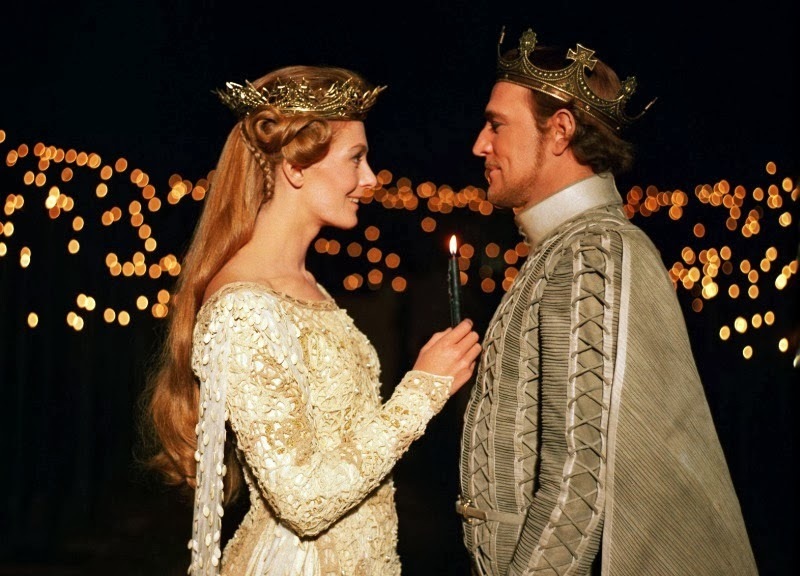
THEME MUSIC, PETER COLLINSON,'RED, WHITE AND ZERO' (1967)
'I'll never forget what's 'is name': BBC TV International Cabaret
LIZ KEYS
My standby drummer at the Nordic Club was Cavan, son of Hazel Malone, an agent for many of the prominent, glamourous young sixties actresses in swinging London: Adrienne Posta, Jenny Agutter, Carole White, Judy Geeson, Susan George, Francesa Annis, Michele Dotrice, Jane Asher - many of whom I met with at this time. Cavan sometimes played drums for me but worked with his mother's Mayfair actor agency as his day-job. In the evenings we often used to meet up at 'The Cricketers' in Chiswick. The artist Ruskin Spear RA was forever propping up the bar there and, doubting my ability to play both Bach and Duke Ellington, of which I'd spoken, asked me to play for him one night in his studio across the road, and after this we became the greatest of friends. In 1990 his widow rang me. She'd been sorting out all his prints with him just before he died. The last one was named 'After the hanging' but wryly depicted the team of judges at the Royal Academy Summer Exhibition.
'Give this one to Howard,' he said - he'll get the joke!' This picture hangs in my studio to this day and is a fond reminder of a great friend and artist with a great sense of humour. Cavan was also impressed by my piano-playing and most interested that I was starting to write for films.
'You need a really good agent' he said. 'I'll ask Mum who would be the best for you'.
Mum came up trumps one day and announced that she knew just the right person: Liz Keys at London Management. She arranged an introduction for me and I went to see her. She had an astounding roster of composers which included Aaron Copland, Bernard Herrmann, William Walton, Herbert Spenser, Richard Rodney Bennett and Malcolm Arnold, to name only a few. I wasn't writing very much but she seemed interested in my piano-playing and thought I might be useful. She personally only represented composers but belonged to a major agency called London Management run by Lew Grade, his brother Bernard Delfont and the Berlin family related to the great Irving Berlin himself.
The brothers Lew Grade and Bernard Delfont put on Sunday shows in Yarmouth, Torquay and Bournemouth. They represented comedians like Tommy Cooper, Dave Allan, Frankie Howerd, Roy Hudd, Dick Emery and Morecombe & Wise. I drove down to the Winter Gardens one Sunday and found myself on stage playing virtually the whole time, afternoon and evening for every single artist on stage. I got confused - back-stage it was pitch-dark and hard to see what was going on. The SM said to me:
'You're on.'
'Where's the piano?'
'It's out there.'
'Who's on?'
'Just get out there.'
The Steinway must have been somewhere but I couldn't find it. All the lights went up and I was standing centre-stage with Morecombe and Wise. There was no piano.
'What are you doing?'
'Playing the piano.'
'There's no piano here. Look for yourself.'
'I'm sorry, I'll get off.'
Oh, no, no, no. You stay here.'
They made a comedy routine around me and the more awkward and embarassed I got the more the audience laughed.
LIZA SHANE
'Liza Shane' was really Hazel Collinson and had taken over from Barbra Streisand in the London production of 'Funny Girl'. Via London Management I was asked if I would accompany her and be part of 'creating an act' with show-biz director Billy Rose. She wanted to try it out in some Sunday concerts for Bernard Delfont and then do a 3-week solo season at the Pigalle. The first concert was in Yarmouth. She and her husband Peter seemed pleased and they invited me over to their tiny top-floor flat in Belsize Park.
'We've got another concert this weekend in Torquay with Roy Hudd and I've just bought Dirk Bogarde's Rolls-Royce, midnight blue with white upholstery. Would you like to drive us down in it and make the sandwiches?'
'I'm not good at sandwiches, but I'll try.'
I made Bovril-and-lettuce sandwiches which did not go down well. We went to tea with Bernard Delfont's mother.
'My son Bernie's bought 125 cinemas. What does he want with all those cinemas?
I didn't really know who Peter was but gathered he was involved with advertising and films. He liked the fact that I knew a lot about films.
'Who directed 'The Hill'?'
'Sidney Lumet. Listen I'm sorry about the sandwiches, why don't you come over for dinner?'
As a joke I put together some spoof commercials on my tape recorder, double-tracking piano and loony commentaries. Peter was not amused.
'The sandwiches were bad enough.'
But next day I had a call from the advertising agency Benton and Bowles who asked if I'd like to write something for them: Picador Cigars for Masius Wynne-Williams, two at 15 seconds each. Peter had directed them. I asked David Katz if he could book some singers and players:
'Love to darling.'
I set the text for three tenors, three trombones, bass guitar and drums:
When men get together there's Picador there, 'Cos Picador's great anytime anywhere.
Well it wasn't exactly great poetry but perhaps William Blake would have forgiven me:
Eternity is in love with the productions of time, he had said.
The next week I wrote three scores for Camay for solo acoustic guitar, french horn and string quartet - chamber music for scented soap; a week later 3 for the Co-op, composed for big band a la Quincy Jones- jazz flute, 3 trumpets, 3 trombones, string bass and drums. The players were fantastic: Kenny Baker, Stan Roderick, Kenny Clare - the best.
Not only was it terrific fun but I was getting paid for it and this fact did not escape Liz Keys who sorted out the business for me.
THE PIGALLE
The Pigalle was a big floorshow-restaurant on Piccadilly which sported a full stage-facility with band and resident dance company. Liza and I did two spots a night there and two in the Society restaurant which backed onto it into Jermyn Street, later becoming 'Tramps'. We had Sunday off and returned on Monday for the second week. But what was this? Outside on Piccadilly was a large billboard:
'DINAH WASHINGTON WITH 25-PIECE BIG BAND'
The posters for Liza in the lobby had disappeared and standing there was the owner and very unamused comedian, Al Burnett:
'They've taken me over.'
'Who have?'
'Overnight they've brought in dozens of one-arm bandits and gambling tables and roulettes and blackjacks and their own band and singer and compere, everything. We've had it, go home, we're all done for!'
Peter arrived at this moment and had Al explain it again.
'You're not doing that to my lady.'
'There's nothing we can do about it?'
'Oh yes there is.'
He picked up a phone and rang the head of London Police Special Branch, getting through instantly. Who on earth was this man with Dirk Bogarde's Rolls-Royce and such amazing connections? Within minutes the place was teeming with police. We were told to go ahead with the show, although the big-band would run alongside us until they'd 'sorted out the paperwork.' We were not to go out of the club on our own without a police escort and we must report any threats immediately.
What did they mean by 'threats?' In clubland we had heard that Frank Sinatra had moved into the penthouse of the Park Lane Playboy Club, and we knew that the film-star 'gangster' George Raft had moved into the Astor club, since a couple of days earlier Mike Negel and I had been invited for a drink with him there. Nothing wrong with that. Or was there? At this moment, when Peter informed the police of the illegal take-over of the entire Pigalle Club, The Special Branch of the London police force clearly thought there was: the debonair penny-flicker was removed from the Astor, Ol' Blue Eyes was warned of arrest and later fined £100,000 - I don't remember what for, but it was headlines in all the papers. The take-over of London's nightlife was prevented - an event little known about to this day.
THE CABARET CLUB
In early September a West-End-organist/MD asked if I would deputise for him for a week at Murray's Cabaret Club just off Regent Street. It seemed harmless enough. He assured me that it was well-run with a high-class clientele - which was in a sense true. I met him in a basement in Cork Street and talked through the music.
'The Colonel will give you the signal to start and the cast will enter. You just play the whole pad without stopping from end to end.'
It seemed simple enough. I arrived about 7.30 and played polite cocktail music. The basement was transformed in the evening with pretty opera boxes with chandeliers, red velvet curtains and little round golden tables. On signal I launched into the show music. The top of the organ was on a level with the tiny stage onto which suddenly burst 24 absolutely gorgeous 20-year old girls, totally naked except for high heels and a garter round one thigh. I lost the place and the girls all turned and giggled at me. The colonel glared from the wings, indicating that I'd better keep my eyes strictly on the music and when they went off cautioned me:
'If I catch you anywhere near any of my girls you will be in severe danger of getting beaten up.'
They were his investment. A few minutes later they started to appear again, now in haute couture ball gowns. In the opera boxes sat millionaire elder-statesmen, each of whom had chosen a lady to join him for dinner.
'Third from the right please Colonel!'
Two very well-known young ladies had worked there - Mandy Rice-Davies and Christine Keeler - and it was in this club that the earth-shaking political scandal of Stephen Ward and Profumo had begun. It rocked the Conservative party and in many people's view led to the fall of the government.
PETER COLLINSON
Peter Collinson had grown up in an actors orphanage but was immensely bright and gifted. It's not so well known that Noel Coward gave his time and money to this charity but it was his philanthropy that caused him to spot Peter there and help him. After army service in Malaya Peter worked in a Dublin theatre as ASM and then as a director and this led him towards television and commercials in London. Few would have foreseen the colossal forward-leap which led to his making 'The Italian Job', but it must have been through Peter's connection that Noel uniquely agreed to act in it, a phenomenon which surely must have helped the financing. Peter's first step towards features had happened with a film called 'Penthouse', a film laced with a good deal more sex and sadism than had been allowed up until then. Peter asked me down to Twickenham one day to talk about doing the film score and we were joined by the British Film Censor - who I'd met before at the NFT under rather different circumstances.
'It's about a beautiful model trapped in her luxury penthouse by a sexually-deranged psychopath.'
'Splendid.'
'Obviously we can't show everything.'
'Why not?'
'Well we need to respect your censorship rules and so on.'
'Come now Peter, we're in the Sixties, we're all grown-up people. I'd love to see the script!'
I wasn't sure I liked the direction this was taking and when I said that I'd have to 'run it past my agent' Peter got annoyed and the score was done instead by bass-player Johnny Hawkesworth.
SEPTEMBER 27TH DAVE ALLEN AND MAGGIE SARRAGNE
Maggie Sarragne was Mrs.Donald Campbell's stage name, a cabaret-singer who lived in a pretty little cottage in St John's Wood. I flew up to Aviemore with her and Dave Allan to do a one-night cabaret show.
'Would you let me read you palm.'
'If you like.'
She looked intently at my hand for a long time.
'You should be phenomenally succesful according to your palm. You are starred and double-starred and triple-starred, and you will eventually be recognised for what you are, but it will take you your whole long life to arrive.'
'That's not very encouraging.'
'I think it's wonderful and you're very lucky. Has anyone else told you the same thing?'
'Yes.'
(Robert Louis Stevenson said 'To travel is better than to arrive.' but it's not really what you want to hear.)
THE AVENGERS
'The Avengers' was starting a new series at Elstree and David Katz asked if I'd like to play organ and vibraphone on the series. The composer/conductor was the famous Laurie Johnson and the orchestra were his own hand-picked favourites including a pianist who had played for him for many years. However David had suggested that adding an organ sound might be a good contemporary addition. I could also play harpsichord, vibraphone and marimba which would give colour. During July it was arranged that I would visit Laurie at his beautiful home in Stanmore where we talked about musical trends, new sounds and new instruments. I also showed him some of my compositions and orchestrations and when the time came to record I was booked to play in the sessions.
It was said to be the most succesful TV series running in the world at that time and reputedly shown in 192 countries. The stars were Patrick McNee and Diana Rigg. I played a 3-hour session for Laurie on October 14th and then a whole day of title sessions for the start of the new series on October 18th. On this famous title theme music I played what was called a jangle-box - in fact a term for a treated piano with brass studs on the hammers which is heard prominently in the orchestration.In an amazingly short time I felt I'd made it to the top of the session profession.
But I wasn't well.
For some long time I had had bad colds and catarrh and toothaches, and my health hadn't improved by working constantly all day and all night. My doctor had diagnosed four impacted wisdom teeth and an NHS hospital bed was found at St.George's Tooting for November 9th. It should only take a day which would be fine. The next Avengers recording was not until 15th for which Laurie had written an episode specially featuring my playing. I would have to be there for that - because musicians are just never ill.
All the others in the hospital ward had gone by the end of the first day but I was still there the next day, and the next and the next. The operation had gone wrong and I was bleeding internally, my face had puffed up and gone yellow and blue reminding the nurses of Henry VIII on a bad day. I was still there on the 14th and was told that under no circumstances could I leave.
But I got up and left. At last I had gained a career and there was no way on earth that I was going to throw it away.
I arrived at Elstree and tried to grin cheerfully at the gate-man.
'Who are you?'
'You know me. Howard. Avengers.' - I could barely talk.
'Don't recognise you mate. You can't come in.'
'I have to... look you can see it's my car... and my musical instruments...and I always wear this leather jacket...'
'Mmmmm, OK.'
I was in and there were my friends.
'My God what's the matter with you? You look like Henry VIII.'
I played the session and survived!
MOVEMENT FOR ORCHESTRA
Richard Frank decided that 'Movement for Orchestra' was completed to the satisfaction of both of us. It was now an 'impressive' (to us at any rate) 12-minute work for full orchestra. I tried out different names for it: 'Symphony in one movement' or 'Impressions of a city', but 'Movement for orchestra' seemed established. It was long before computerised music-printing and I fair-copied its 69 pages onto 25-stave transparencies through thick, wax-coated, yellow paper and proudly presented it to Richard. He beamed: 'If the BBC don't like this, they won't like anything!' Some small corner of mind had clung onto the idea that I might somehow still be able to instate myself with them as a composer. They sent it back without comment and I thought:
'Well, they have to be right, they are the authority and I don't have the sort of talent which they recognise. I must be grateful that my gifts are being recognised in the world of recording sessions. People often said, and say: 'If Mozart was alive today he'd be writing film music.' And I was. If playing and writing on demand was what Mozart would have done, it should be good enough for me. It was only Wagner who had posed as God and demanded total obsequience. Mozart took every job offerred and turned it into something wonderful. I should just accept what I was, settle down and do the same. Everything I did would be to the best of my ability.
In fact, although the BBC were uninterested, 'Movement for Orchestra' was to move my career forward by a huge degree. Later in the year I was taken on by the composer agent Liz Keys at London Management and she introduced me to Bernard Herrmann. He asked what I was writing, I showed him the score of 'Movement for orchestra' and he was very impressed. So much so that, when Laurie Johnson needed a composer to take over the scoring of 'The Avengers', he recommended me to him.
THEME MUSIC
Weinberger's had asked if I'd like to write a complete album of background music and play and record it as well and I leapt into this with high energy, composing crazy titles for imaginary films: 'Colt '45', 'March of the Grommets', 'They! are coming', 'High 'n Groovy', 'Kraken' and 'Kill or be Killed!'. 'Night Tapestry' was a Jacques Loussier/Bach-style piece for piano (Howard Blake), guitar (John McLaughlin), Bass (Russ Stapleford), vibraphone (Jim Lawless) and Drums(Tony Kinsey.) The album was to be called (opus 27)'Theme Music'. David Katz had somehow heard that I was recording a complete album of my own music and he asked if he could look in. He sat and listened without interrupting us and was particularly taken with 'Night Tapestry'. He said: 'That is fabulous! I've got to get you writing movie scores!' He was as good as his word and within no time at all was causing me to be engaged not only for playing in studio recordings of all types, but to compose and direct music scores for film and television musical scores of all sorts. I was absolutely delighted!
I'LL NEVER FORGET WHAT'S 'IS NAME
A young man just down from Cambridge was making his first feature film: 'I'll never forget what's his name' , an anti-establishment comedy with an all-star cast: Orson Welles, Oliver Reed, Harry Andrews, Carol White, Michael Hordern. He was director Michael Winner and I met him at his flat in Lennox Gardens with the French composer Francis Lai who had recently composed the highly succesful 'Un homme et une femme'(A man and a woman). They needed some contemporary London-style arrangements and I did them in best post-Sergeant Pepper style. Francis was from Nice, a brilliant accordionist and musician as one could hear from 'A Man and a Woman', but very quiet and rather nervous.
'HALF A SIXPENCE' and 'PROJECT TEMPO'
Amongst innumerable sessions I played piano one day on the film 'Half a Sixpence' shooting with Tommy Steele at Shepperton Studios. The conductor was Irving Kostal who had been MD for the film of 'West Side Story' and he was immensely impressive. With him was a music editor to whom he introduced me, since he believed I'd be interested in a book he'd just created. He was Carroll B. Knudson from Hollywood who had self-published 'Project Tempo' a book which he was most pleased to show me:
'You see this Howard. I rented computer-time from the main-frame computer at USC and printed 100 copies of all 271 pages. I had them lying in piles all over the house and my wife got so fed up that she finally decided to help me bind them - just to get rid of them!'
'What is it?'
'It's closely-printed number information. There's a rule in the cover and you put it under a line of numbers. At any given metronome tempo you can calculate with absolute accuracy on which beat or part of the beat any second or part of a second will fall, given that you are using 35mm film running at 24 frames per second.'
I let this sink in. It could be astonishingly valuable.
'David tells me you're a rising star. We'd be delighted to make up one of the limited edition for you and print your name on the cover - in gold. It'll be £50.'
That was a lot of money in 1967 but I decided to do it and I still have it with me today. Once I'd learnt how to use it, it put me way ahead in the field of synchronising music to film since everything I wrote fitted instantly and perfectly. In a world where time was expensive, it saved time. [Published by: 'Hollywood Music Supervision and Editing for films', Carroll B. Knudson, 1539 W.Magnolia Boulevard, Burbank, California.]
RED,WHITE AND ZERO
I needed the information from Carroll B's timing - book rather sooner than imagined. John Fletcher, who'd so kindly mixed the sound on 'A Few Days', was now involved with a rather extraordinary 'pantechnicon' film; 'Red, White and Zero' - three films each by a different director: Lindsay Anderson, Tony Richardson and Peter Brook, all with a left-inclined tendency. 'Zero' stood for Zero Mostel, later the brilliantly-funny star of 'The Producers', but on this occasion playing the part of a Wagnerian opera-singer late for 'The Ring' at Covent Garden and desperately trying to get there through the traffic from Heathrow. John thought that my knowledge of both Wagner and jazz might produce something interesting and when we met Peter it was decided that I'd do a jazz version of 'The Ride of the Valkyrie' as music track. I thought it was quite a funny idea and liked what I'd come up with, but when we got to the music recording in Elstree I started to realise that a knowledge of both jazz and Wagner was needed to appreciate the in-jokes contained in it and that the scoring for brass and percussion satirising Wagner's heaviness in fact just sounded a bit heavy. The film 'Zero' was never finished, nor 'Red' with Vanessa Redgrave. The third section was Lindsay's 'The White Bus' and that was released on its own, a splendidly surreal political satire with Arthur Lowe as a pompous provincial mayor, the making of which John captured in a wonderful award-winning documentary called 'About the white bus.'
'IF'
Despite the collapse of 'Zero' Lindsay asked me if I'd score his first big feature 'If'. I was invited to a viewing room in Wardour Street starting sharp at 9.30am, but somehow managed to turn up twenty minutes late. They started without me and Lindsay was unduly furious. I sat down and watched the rest of the film but when it got to the scene where Malcolm MacDowell machine-guns down all the parents at the school open-day this was too much for me. I did NOT want to compose the score. Lindsay came from the most privileged background, his father having been in the very top brass of the British army. He clearly hated being from the elite and was always seeking out so-called 'genuine working-class people'. He was in a position to take out all his spite publicly on film and I felt that this scene went grossly too far. I suppose he called the film 'If' because of Rudyard Kipling's poem of that name that was (and is) used in schools as the absolute text-book of self-control, self-possession, courage in adversity, modesty in behaviour and refusal to admit defeat. Far from agreeing with Lindsay I found that I agreed with the poem and its message. Many years later, in 1999, I was to set 'If' to music.
THE SPORTING BRITISH
A week later I wrote a score for a documentary film called Dairy at Park Street for the Milk Board for solo guitar, asking 'Big' Jim Sullivan if he could record it on solo 12-string acoustic guitar. FISHMARKET followed two weeks after that, a score for a documentary about Billingsgate using flute doubling bass clarinet and piccolo, trumpet doubling cornet, percussion playing xylophone, Vibraphone and side drum and myself playing piano. The third of this sudden trilogy of documentaries was a light-hearted look at English pastimes THE SPORTING BRITISHand I was more ambitious, using Piccolo trumpet in B flat doubling Flugel-horn, 2 woodwind, guitar, bass, drums and percussion and myself on organ and piano. I was thrilled with this score which somehow combined elements of pop, jazz and classical whilst remaining expressive and able to support the dramatic content. I had found that above all things I loved writing music. Not only that but I had outlets to play and record it. It suddenly seemed so easy and the way I wrote was rapid and fluent.
CUBA VA!
These documentaries happened through my dear friends John and Marlene Fletcher whom I had met whilst a projectionist, when John had very kindly mixed the sound track of my 16mm film for me. They encouraged me enormously, but on one project I drew a blank. We were invited to dinner by Felix Greene, brother of both Hugh Carlton, head of the BBC and Graham Greene, the novelist. Felix had spent two years with Fidel Castro and shot 'Cuba Va!' a wildly propagandist polemic about the Cuban Communist dictator. He and his American wife lived in a beautiful penthouse off Baker Street, but to get in we needed a codeword because the premises were purportedly watched by MI5 and his phone tapped. He spoke fondly and volubly on the subject:
'Converting the Cubans is a difficult task and will take a considerable time'
'Give them all a free fridge' I volunteered.
There was an icy silence in which I could hear a beautiful 18th-century carriage-clock ticking behind me.
'I'm not quite sure if Howard would be completely the right person for this John.'
We all got the message and I left before the pudding.
BBC INTERNATIONAL CABARET
One of the musical directors at Abbey Road started an all-star session-musicians big band, named after Jack Dorsey, and asked me to play piano. He had somehow got hold of original scores and parts from the great bands: Count Basie, Stan Kenton, Duke Ellington, Billy Strayhorn, Neil Hefti, Jack Teagarden and Jack Dorsey, after whom he named the band. We did a couple of BBC jazz club programmes, some concerts and gigs and I experienced at first hand the excitement and expertise of the genre. Perhaps because of this I was invited to play every Sunday on BBC's 'International Cabaret' 'live' from 'The Talk of the Town' with Alan Ainsworth's band. The same top men were in it, Kenny Baker, Don Lusher et al and we accompanied 'big names' like Billy Eckstine, Eartha Kitt, Juliet Prowse, Marion Montgomery, Vicki Carr, Nana Mouskouri. There were rehearsals in the morning and afternoon and at 6pm an invited audience would come in for the filming. The compere was the wildly funny Kenneth Williams who liked to make fun of me rather as Morecombe and Wise had done:
'Ooh, look at 'im on that big white piano there! Who does 'e think 'e is?'
One Sunday several of us went for a Greek lunch and I came back feeling slightly unwell. I started into the introduction of a number with American singer Vicky Carr but as the cameras started rolling realised I was about to be violently sick. I ran desperately towards the conveniences, placed with staggering inconvenience through the audience and down marble stairs to the basement, then lurched back to huge 'tutting', having turned an unpleasant shade of green.
'Are you alright to shoot?'
'Yes I'm fine.'
But I wasn't and it happened twice more until I simply had to leave. I wasn't asked again, but then perhaps it was just as well, since I was getting busier and busier with writing rather than playing.
DUDLEY MOORE
My drummer on 'Zero' had been Jack Peach who looked like a rugged fisherman, which in fact he was. He also played and fixed musicians for Dudley Moore who was to make two feature films in England before deserting to Los Angeles: 'Thirty is a Dangerous Age Cynthia' and 'Bedazzled' with Raquel Welch. He was a marvellous musician and had studied organ and composition at Brasenose Oxford gaining a full Doctorate. His delight was to score his own films and conduct them which he did at Olympic Studios in Barnes. I played keyboards for him and we went for coffee:
'I'd give anything to do what you do Howard.'
'Are you crazy? You're the most succesful comedian in the world, you've got an Aston Martin with a fridge in it, all the pretty girls in London doting on you, you play fantastically good jazz whenever you feel like it and make lots of money. What's the matter with you?'
'I wish I was just a musician Howard.'
I think he did. Almost 30 years later I met him again in Hollywood where I'd been to talk to Disney about a score for 'James and the Giant Peach'. I was waiting to meet the director for lunch when he walked into the restaurant and asked me what I was up to:
'Oh I'd give anything to do that Howard'
'But I haven't got the job!'
'No but they asked you. I would never be asked.'
'I'm sure if you wanted to you probably could.'
'No I'm finished, they don't want me anymore.'
'You're the top comedian in the world Dudley, and you've got a hugely succesful restaurant I've just been to up in Venice.'
His wife came in and sat way across the restaurant at the table he'd reserved.
'You'd better go Dudley.'
'I wish I was just a musician Howard.'
I suspect Dudley would have been happier as a composer than as a comedian. 'Little Miss Muffet' his devastatingly brilliant send-up of the Benjamin Britten folk -song genre shows just how good he would have been had he taken himself seriously.
-
 Lyndsay Anderson, director of 'If' and 'Red, White and Zero'
 -
 Laurie Johnson
 -
 Dudley Moore
 -
 I'll Never Forget What's 'Is Name' which featured Oliver Reed and Orson Welles.
THE LOST CONTINENT, A TWISTED NERVE (1968)
Quincy Jones, The Avengers, Laurie Johnson and Bernard Herrmann
TERRY DONOVAN
I hadn't grieved too much about losing my job as pianist on 'International Cabaret' because as it turned out my career as a session pianist was already coming to a close. I was too busy writing and I found that I loved doing it. Peter was still asking me to write TV commercials and other producers were wondering if they were missing out. An enterprising young producer, Graham Baker, rang from Benton and Bowles:
'We'd like to ask you to compose some experimental music tracks. We'll pay for them and we'll pay for you to record them. Let's say we have a client called 'Prompt' and a jingle that says: Spray dirt away with Prompt.' What could you do with it? Could you do it in different styles for instance? Could you surprise us?'
This was terrific fun! I was being asked to create loony spoof-commercials like I had for Peter and Liza's dinner party, but the difference was that I was getting paid for it. Would Mozart have done it? I'm quite sure he would!
I booked 3 singers and 5 players and wrote 3 different commercials: classical, rock and jazz, and word started to get around: Nick Galtress from Lonsdale Crowther commissioned a track for the launch of St. Moritz, Bob Mahoney from Wynne Films asked for a track for Ricol and Mike Fredman from Ogilvy and Mather a track for J and B whisky. They all seemed very pleased, especially Graham who had now been given the lucrative Courage Light Ale account:
'I'm shooting a film with mounted hussars in Hyde Park at dawn, directed by the great photographer Terry Donovan. We want something really striking.'
It was shot like a cavalry charge from a feature film and I thought should sound somehow historic but with a twist. I wrote in a Mozartian style but with a slight rock accent and scored it for two harpsichords (Carl Davis and Stanley Myers), piano (HB) and timpani playing glissandi (Terry Emery) - an unheard-of line-up for a TV ad. At first both agency and client didn't like it, but after talking it through asked if I could re-record the same music with a bigger line-up, more like a feature film, more heroic. I used a string orchestra with french horns, adding the ingredient of an electric guitar, and giving the timpani a rhythmic pattern.
LAURIE JOHNSON AND THE AVENGERS
Laurie Johnson was working hard to complete a musical for Drury Lane called 'The Four Musketeers', a star-vehicle for Harry Secombe. He really did not have time to do this and write the scores for 'The Avengers' at the same time. David Katz said Laurie was thinking about taking on a composer to help him and suggested I show him some of my scores.
'He'll trust you because you've played on the show for over a year, you know his style and you've been part of the team.'
'I don't know if I could do it David'.
'Of course you could!'
I agreed to write an episode called 'My Wildest Dream' and went to view it.
'Since it's your first attempt we'll give you plenty of time. How would two weeks be?'
Two weeks? I'd have to compose incidental music for a one-hour film with no idea how much music that would entail. I would have to score it, check it, have the parts copied, then arrive and stand up to conduct the recording in front of critical players. I had been thrown in at the deep end of commercial scoring. How would I set about it? Laurie helped me:
'After the viewing just think up thematic material on the way home. I usually do that and sing into a tape recorder in the car, at the same time noting instrumentation ideas so that I can get started straight away.'
It sounded simple enough, but it wasn't. The next two weeks proved decidedly 'formative'. I had no ideas at all. I'd never dreamed of writing 'suspense' music. I tried a few chords, jotted down some themes, but it sounded derivative and inappropriate. I started to sweat, walk round the flat, sharpen pencils, make coffee - nothing helped. In school and college I had been told that one must 'be original'. This stricture applied to the instant production of music that needed to 'do a job' made it impossibly difficult. Yet I had to produce something. After several lost days fruitlessly pondering on this I made a decision:
'I must write the first thing that comes into my head. I don't have any time or any alternative. I have agreed to do it and I'm contracted to do it'
I laid out some score paper for the standard line-up - 3 trumpets, 3 trombones, woodwind, piano, percussion, guitar, bass. Karen Heward, the music editor, had already measured all the film sections and I had cue sheets at the ready. I had a top-quality stop-watch with a stop/start facility which I'd bought from a little jeweller's shop near me in Olympia. I had the whole writing-kit.
It was a horrible experience. I forced myself hour-after-hour, day-after-day to get notes onto paper. If it was rubbish and was laughed off the studio floor, well at least I'd completed it and done what I had promised.
But an odd thing happened. At some point during the second week an idea on paper started to 'walk away' on its own. It said to me:
'This all right. I know where I'm going. Just write me down and get a move on!'
I did so, and I kept going, keeping all critical analysis in suspension.
'Look at a tightrope walker. He is evidently completely concentrated, because if he were not he would fall to the ground. His life is at stake, and it is only perfect concentration which can save him. Yet do you believe his thought and his imagination are occupied with what he is doing? Do you think that he reflects and that he imagines, that he calculates and that he makes plans with regard to each step that he makes on the rope? If he were to do that he would fall immediately. He has to eliminate all activity of the intellect and of the imagination in order to avoid a fall. ['Meditations on the Tarot'- Martin Kriele 1985.
I had achieved this state by a combination of force - huge pressure being put on me - and accident- the right-hand side of the brain had somehow come into play and told the left-hand side to shut up. Suddenly the 'flow' which had effortlessly animated my earliest pieces had returned. I had suspended the 'oscillations of the mental substance' and learnt 'concentration without effort'.
Laurie's copyist Eddie Grey started collecting the scores from me and I asked nervously if they looked all right.
'They look fine to me.'
I got to Elstree and smiled at the gate-man - no longer just a keyboard player but composer, conductor, musical director.
'All right mate? How's the teeth?'
At the end of the first recording session the session players applauded- something that I can only remember happening on one other occasion in my whole studio career. I went up for lunch in the canteen. All the players stayed at one end, all the production-team stayed at the other end. I had become 'management' and my stomach sank - there was a price to pay for such a sudden leap. I went on to do further episodes in the third series: 'All done with mirrors' ,Whatever happened to yesterday,which had its name changed to 'Super Secret Cyber Snatch', Game, and then on to some in the fourth series: Noon-Doomsday, Prisoner, re-named 'Wish you were here', The Interrogators, Take me to your leader, and Who was that man I saw you with'- but the extraordinary elation of that first session never quite happened again.
BERNARD HERRMANN AND 'A TWISTED NERVE'
Laurie Johnson was a great friend of the legendary composer Bernard Herrmann who was writing a film for the Boulting Brothers called 'A Twisted Nerve'. He'd asked Laurie if he would record some orchestral arrangements in a basement studio in Kingsway, but Laurie was busy and hated working 'underground'. I wrote and conducted some straightforward-enough numbers but everybody seemed thrilled to bits. Roy Boulting and his wife Hayley Mills were there and we all went for a drink. Roy seemed so impressed that off the top of his head he offered to sponsor my further coaching as a composer `anywhere in the world'. However at this moment I was so phenomenally busy on all fronts that I couldn't imagine a way to extricate myself from all the commitments even if I had wanted to. I'd become very happy doing what I was doing and the thought of 'going back to school' horrified me.
Bernard and I started to talk about music and the problems that surround composition. He was furious about almost everything and felt that his career had been unjustly destroyed. He thought films had been taken over by the pop world and nobody wanted 'proper' orchestral scores since 'The Graduate' and The Beatles. He felt neglected, unappreciated and unwanted, but when he spoke of great music he would come to life and be warm-hearted and kind and generous. He had a really lovely young wife, Norma, who was the soul of patience and understanding and we all used to meet up. I showed him 'Movement for Orchestra' and he was delighted with it. But of course it was tonal and melodic and contrapuntal and we 'spoke the same language' - the language of Debussy and Ravel and Copland and Sibelius and Bartok - music-music.
'Has it been played by the BBC?'
'No.'
'Outrageous, what's the matter with them?!'
He had a theme in the film which he felt might be given some sort of jazz treatment and I suggested it could be done with 3 flutes, jazz harp, bass and drums as there was a fabulous jazz harpist in London called David Snell.
'OK, you organise it and arrange it and we'll do it as part of the sessions. Why don't you play celeste on the score as well, and by the way, where can I get a theramin?'
'Difficult to find, but I've got a Moog synthesizer that has a ribbon controller and achieves a virtually identical result.'
'Let me hear it.'
Bernard came over to my flat in the Hammersmith Road and I demonstrated the Mini-Moog to him. I had bought the prototype direct from Dr. Robert Moog when he had presented his revolutionary new instrument at a lecture in Advision Studios. So I also helped Benny by playing 'theramin' on some of his recordings, notably a major album of his large-scale epic scores recorded at Kingsway Hall, also playing organ and celeste. Benny was notoriously difficult, but he didn't mean to be. Mostly he felt that his music was being threatened and when he did he would explode in fury. First thing in the morning on 'Twisted Nerve' he asked for four bass flutes to play a sustained low bass line, not easy at the best of times. It needs a lot of 'puff' and the instruments need to warm up.
He didn't immediately like what he heard and slammed down the baton on his conductor desk:
'I could make a better sound farting!'
'You can't talk like that to musicians Benny. You'll upset them!'
'I'm sorry, I'm sorry everybody.'
And he was. He would tend to burst into tears and then apologise.
One day I visited Benny for tea in his house in Regent's Park. His study was packed with thousands of 78 rpm records: his recordings as conductor of the CBS Symphony Orchestra, his scores for Welles and Hitchcock, and his own 'serious' music, much of which I think he had sponsored recordings of himself (sadly to say): for instance the opera 'Wuthering Heights' and the cantata 'Moby Dick'.
'How do you write Benny?'
He pulled out some specially-printed pocket-size yellow manuscript paper of nine lines.
'I write on this with a fountain-pen and I never cross anything out.'
'Surely you can't score for orchestra on this?'
'Sure I can. Here's a line-up: 4 bass flutes, 4 cor anglais, 4 bass clarinets, 4 contra bassoons, 4 horns, 4 harps, 4 vibraphones, strings.'
'That would sound terribly dark.'
'I wannit to sound dark!'
'How many violins did you use on the shower scene in Psycho?'
'Ninety!'
'It couldn't have been?'
'Ninety!'
'How many radio shows did you do with Orson Welles?'
'500.'
'What was your favourite line-up?'
'Vibraphone and strings.'
The LSO were looking for a new conductor and Benny would have loved to do that more than anything in the world.
'What do you think of Andre Previn? I think he's pretty good isn't he?'
'There's only one trick about conducting and that is getting the job!'
Oh Benny you don't mean that.'
If he'd met up with Andre Previn of course he would have got on like a house on fire, but saying things like this upset people and they began to upset me a bit.
QUINCY JONES AND McKENNA'S GOLD
Quincy Jones was recording an album for a huge 70mm epic called 'McKenna's Gold' for which he had composed the score. He needed a conductor and David recommended me:
'I've told him you're the whizz-kid.'
'Can I see the score?'
'No, don't worry darling, just turn up.'
Wessex Studio was in Islington and enormous. I got there early and counted stands for well over 100 players, maybe 120: 12 percussion, 12 guitars, 16 horns, 12 brass, 90 strings. I tried to imagine what it would sound like. The score was lying on the conductor's desk and I got up there and opened it. The only things I had ever conducted up to now were my own scores, which I conducted with a pencil. Should I have a proper stick? It had never occurred to me until this moment. There must be a reason for having one. I learnt later that 'of course, a white stick shows up brilliantly against a black suit and you can see the down-beat even from the back desk of a 120-piece orchestra.'
It was too late to acquire one and I stuck to the pencil. The first bar was tutti and marked fff. The style was flamboyant Mid-West epic. I read the score through as the players gradually drifted in, worked out tempi and marked in cut-offs and fermatas.
I lifted the pencil in an up-beat in the tempo and the sound hit me like a force-ten gale. I went into the box to meet Quincy.
'All your instincts are right, man.'
'I'm not sure the 12 guitars are clear about what they're doing.'
'You sort them out, man.'
'OK.'
He was pleased. We got on brilliantly.
EVA'S THEME FROM THE LOST CONTINENT
In the Spring of 1968 I was commissioned to compose and perform some additional music for the Hammer Horror film 'THE LOST CONTINENT'. Over the years a mystery about this developed with film-buffs asking: How did this happen?
Phil Martell was musical director of Hammer music. He rang and explained that Gerard Schurmann had written a '12-tone non-melodic film score', which is what in general his 'stable' of composers were expected to provide at that time. On this occasion however there was a love interest in the film and GS was apparently unable to provide anything suitable. Phil asked if I would visit GS in his Hampstead studio and examine the score with him for a possible tune or musical phrase that I could 'turn into something.' I went and did so. There was one possible phrase in the whole huge score - the four notes b.c.a.b (in fact the same four notes that begin the standard ballad 'Time on your hands', although in a different rhythm and key.) I said I could use these four notes and expand them into a theme for Hammond organ, bass and drums - Phil wanted that 'trendy' organ sound because he had introduced a song by a group called 'The Pedlars' into the film soundtrack with organ and rhythm-section backing. Gerard was quite happy to give me permission to resolve the problem and Phil was very pleased with what I both composed and played. In 2000 32 years later GDI issued an album of Lost Continent which said 'Gerard Shurmann's original orchestral cues for 'Eva and Lansen' and 'Memories' were revised for the completed film with a new rendition realised by a 'relaxed and jazzy Hammond organ combo in which incidentally the organ soloist was Howard Blake.' He could not bring himself to credit me with having written it for him - which I had (apart from the first four notes!) He had the nerve to call me from Los Angeles and accuse me of 'stealing his theme for Lost Continent'. To save a problem developing I told him that 'his 4 notes' were the same as 'Time on your hands' - which is copyright. He backed off and this concluded the matter!
THE ITALIAN JOB
My friend Peter Collinson had soared meteorically into stardom as a film director and I was rather hoping I might tag along as composer, but for some reason he took against my signing with Liz Keys as agent and when he came to record the music for his monster triumph 'The Italian Job' I suddenly found myself booked on keyboards whilst Quincy was booked to write the score. The sessions took place at Olympic Studios and whenever Noel Coward appeared as the prison gang boss I would strike up 'Rule Britannia' on harpsichord - but tailing off into a slight wry jazz twist. I also played Hammond organ and piano, recording a joke version of 'Moon River' for Quincy to send to Hank Mancini as a Christmas present. It was fun!
The success of the film was a colossal vindication of Peter's talent. He had grown up in an orphanage, served as a soldier in the horrific Malayan war on National Service and then amazingly forged a career by sheer will-power, determination and energy right to the very top. But like so many talents that can burn out, tragedy struck Peter. At the age of forty-four he died of cancer - a great sadness to me, to his friends, to his family and to the profession.
MIKLOS ROZSA
I met Benny and Norma at Khan's in Westbourne Grove and waxed lyrical about Quincy.
'Huh, Quincy Jones, what does he know about anything?'
'Well I think he's about the best jazz arranger in the world.'
'Huh, jazz-arranging! Anyone can do that!'
Very unwisely I made a come-back:
'Well you can't.'
This sort of Scorpionic sting-in-the-tail very often got me into trouble. It was a joke, but it upset Benny terribly and he looked to be on the verge of tears. I had to be much more careful.
I had lunch soon after with Benny Herrman and Miklos Rozsa at 'The Gay Hussar', two of the mightiest composers of the Hollywood era. Neither of them were doing very much and they were puzzled. The studio system had changed. When there were vast empires making dozens of films there was room for opulence, extravagance, experiment and eccentricity. If a hundred films for Fox made no profit, one might suddenly make such an enormous profit that nothing else mattered. But when each film was a money-making project backed by investors, music became one of the elements to be scrutinised. The loan from the bank would be on the point of exhaustion and music is always the last element to be added to the production. Because of this the days of huge music-budgets were drawing to a close.
Benny loved to say: 'Film is a mosaic art'
This has advantages and disadvantages. The most hurtful thing that happened in Benny's professional life was one of the disadvantages. Alfred Hitchcock was as much affected by the changes of the cultural climate as anyone else and music was a major ingredient of his work over which he had total control. Benny had not worked for him since 'Marnie'. 'Torn Curtain' had been scored by John Addison and Topaz by Maurice Jarre. Benny's star started to rise again with Truffaut's eulogy of him in Cahiers du Cinema and 'Fahrenheit 451' and I believe he hoped to make it up with Hitchcock and do 'Frenzy'. But apparently Hitchcock was persuaded by Ron Goodwin that Benny was 'old hat' and the score went to another composer - guess who? None other than Ron Goodwin, and I know this upset Benny a great deal.
BRIAN DE PALMA
Benny took on Brian de Palma's 'Sisters' which I played on. It looked pretty nasty and in the first coffee-break he didn't look too cheerful:
'Are you OK Benny?'
He looked at me in misery and this time did actually burst into floods of tears.
'I just need to work Howard. I just need to work.'
The film-world is no respecter of persons and poor Bernard wasted nearly ten years 'out in the cold.' What a waste. I was wrong about his contact with Brian de Palma because in 1976 he created a superb score for 'Obsession' following the equally brilliant 'Taxi Driver' for Martin Scorsese. His career looked set to take off up to the stars again - but it was too late.
Wealth meant very little to him and he always took buses rather than taxis. Just before he died I glimpsed him outside Liz's office in Regent Street waiting for a bus in the rain. [Footnote]In a website interview in 2010 called 'Running with the Kids' Norma Herrmann was asked Bernard's opinion of Howard to which she replied, "Oh yes he loved Howard Blake before everybody loved Howard Blake." I was most touched by this wonderful remark.
PICCADILLY CIRCUS
Stephie Lengauer at Weinberger's was approached by a young architect, Tom Law, who needed music for a rather unusual project: the total reconstruction of Piccadilly Circus! Tom had won the award for the best design and it was proposed to create a permanently-open exhibition in a space within the Criterion Theatre, situated on the circus's south side.
'We have model displays and photographs and a film that will run on a permanent loop all day, every day.'
'The music will have to be extraordinarily 'neutral' to bear such repetition. Anything melodic or expressive would eventually drive you crazy. On the other hand it should be dramatic, it should support the images and draw the public's attention to the film.'
'What will you do?'
'Percussion only, maybe 4 players using all sorts of different percussion instruments, some of them with their natural sound, some 'treated'. Taking for instance the sound of a tam-tam roll and varying the pitch on it, or taking a glockenspiel sound and turning it into a bass sound.'
I created Exhibition in Piccadilly and Tom was pleased. Involved with the project was David Kingsley, head of the advertising agency of Kingsley-Manton-Palmer, who was to become a great friend.
MAVIS TAYLOR
Somewhere amidst all this hurly-burly I met a beautiful girl called Mavis who was working in the pub next door to my flat. She was a member of The National Youth Theatre and about to play a lead role in Shakespeare's Anthony and Cleopatra at Stratford. She came from Hartlepool but had no trace of a Geordie accent, speaking The Queen's English beautifully. I was exceptionally busy writing music and she started coming round and making lunch for me. One day I had run out of clean shirts and I asked if she could possibly go out and buy me some? Off she went, bringing back a beautiful selection. That impressed me. I could hardly manage without her! Another day she talked about houses and asked why I didn't have a more impressive address? After all, I was on television, I was working in films, I was playing piano, I was conducting - I was a star! A celebrity!
I said: 'Look Mavis, it's quite simple. I just don't have the time to hunt for houses. I'm working flat out on 'The Avengers' scores and a whole lot of other things as well. I can hardly keep up. Added to that I've now got a cinema feature-film in the pipeline!
'Leave it to me!' she said. 'I'll find us a great place to live - a place you'll be proud of.' And so she did, without any further ado. Some days later she persuaded me to meet up with herself and my Irish accountant Frank in the salubrious environs of high-class Knightsbridge. Number 40 Hans Place, an impressive 5-storey mansion on a 10 year lease for only £6,000. It seemed impossible, but Frank okayed it, because it was a very short lease and needed a great deal of redecoration - a good combination if you're thinking of selling at a profit - but an awful lot of noisy work!
'My family will all come down from Hartlepool and paint it', cried Mavis. And so they did.
I married her, sold Llewellyn Mansions, and we moved in.
A Poem for Mavis
Mavis is a word which means A thrush, a sort of bird Who lives at ease and flies and sings Without a care for the foolish things That trouble others so. So innocent and gay She looks around as if to say No problems have occurred.
-
 Quincy Jones
 -
 Bernard Herrmann
 -
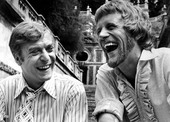 Peter Collinson (with 'Italian Job' star Michael Caine)
 -
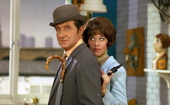 The Avengers - the Tara-King series
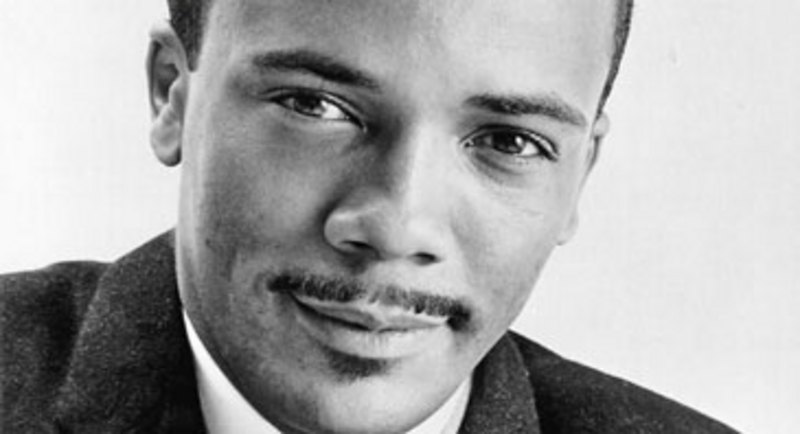
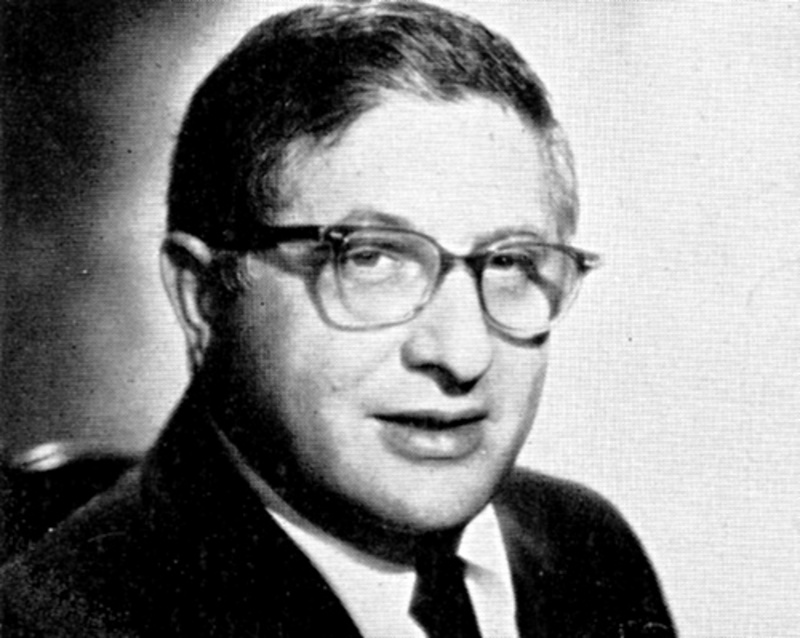
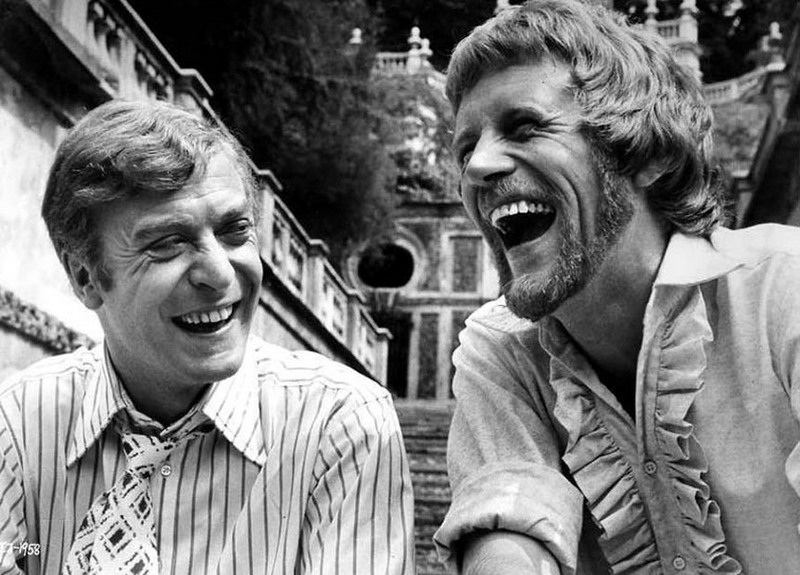
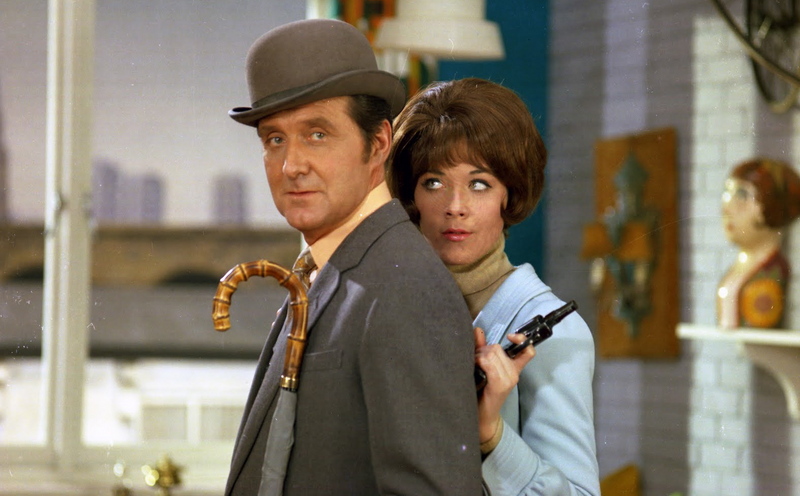
SOME WILL SOME WON'T, AN ELEPHANT CALLED SLOWLY (1969)
'COURAGE LIGHT BRIGADE' - Best Sound Track Award, McKENNA'S GOLD (as MD)
My music for the beer commercial 'The Courage Light Brigade' was submitted for a 1969 advertising award and at the last moment won the TV Mail Award for Best Sound-Track of the year. The awards dinner took place at the Park Lane Hilton and Mavis and I were invited. I was introduced to the young and very beautiful Shirley Bassey who asked if I could write her a song, but in the flurry of the moment explained that I didn't really write songs, I was more a composer of orchestral tracks. Perhaps my earlier ventures into trying to write songs had dissuaded me from the whole idea. I was swept along on a crowd of people energetically congratulating me: 'You've made it!'
TV commercial music tracks up to this moment had been largely dominated by Johnny Johnson and Cliff Adams, the style being fairly light in nature. The Courage music track was essentially classical in feel and this started a trend, producing a flood-tide of further offers, not least the corporate advertising for ICI 'Pathfinders' , which played on TV for years to come. Overnight I became London's favourite commercial composer.
AN ELEPHANT CALLED SLOWLY
At the same time that Bernard Herrmann and Miklos Rozsa were not receiving offers for film scores,I was. I looked young and trendy, with long hair, flared trousers and a leather jacket. I drove a sports car, an extraordinary prototype made specially for the 1968 motor show by the Honda brothers, half the size of an E-type but similar in design, eight carburettors and an acceleration that could beat everything else on the road. Laurie Johnson and 'The Avengers' had given me the plummiest of all plum series to write and conduct, therefore I was directors' number one choice. Jimmy Hill had directed some of the best-ever episodes and he invited Mavis and I to dinner at his 'farmhouse' in Shepherd's Bush. Could there possibly be such a thing? We followed instructions and arrived at a high brick wall amidst low-priced terraced houses, but there was a tiny door and when we pressed the bell we were let into an area where time had stood still- a beautiful Tudor farmhouse in exquisite condition and Jimmy's vintage Rolls-Royce tucked away in a stable. Over quantities of champagne Jimmy described his new film. He had had a big success with 'Born Free' and the cuddliness of lions and now he had made one about an elephant called 'Poli-Poli'. He had decided to use tracks from a popular album called 'African Safari' by Bert Kampfaert and wanted a score to fit around it, extend it and complement it. This had probably put other composers off- they would say:
'It must have my own theme-tune,'
but this didn't put me off. I just thought:
'I am being offerred a full-length feature film for the cinema. How marvellous!'
I thought: 'I have been writing for 'The Avengers' with more-or-less a 'big band', no strings, brass and saxophones and rhythm. So why not a big-band for elephants? They're pretty big. I set out boldly on the scoring, with Mavis looking after me, cooking meals in the Hammersmith flat and buying me shirts and ties with gay abandon.
The film was titled 'An Elephant called Slowly' and starred Virginia McKenna and Bill Travers. Mavis and I were invited down to their 'game-keepers cottage' in Surrey and as we got out of the car a lioness gambolled playfully towards us.
'She's very, very young and completely harmless' cooed Virginia, but we went into lunch with stomachs fluttering and hearts beating overtime.
It didn't occur to me to listen to John Barry's score for 'Born Free', because I presumed Jimmy would want something 'original'. Without too much conscious thought on the matter I took rather a 'funky' line with the project. When the elephants all marched together I had them do it to a really heavy rock beat, with big band trumpets blasting over it, and Ronnie Verrall playing rock-drum fills as if he was going to bust. When the action lightened and the elephants played together I had funky saxophones against a heavy back-beat. Other scenes were more 'classical'. When hippos wallowed in the river a soprano saxophone led a sort of Milhaud-type waltz with two further saxes in trio, and when ostriches appeared to compete in a race, the scoring was brittle in simultaneous 3 and 2 time like Stravinsky or Satie.
When the film came out everybody seemed pleased.
I was approached by Bell Records in New York who made a very nice album from my music and released it in New York. Gradually it dawned on people that I had not written a 'conventional' film score until one day in the nineties the score made a mark in 'Blaxploitation' on the web.
Guitarist (sic!) Howard Blake scored the follow-up movie to "Born Free" in a completely oddball funk fashion. A great, almost tongue-in-cheek album with a big band Disney-style sound in places, don't miss the excellent slowburn breakbeat instrumental "Elephant Rides Again".
Its latest surprise incarnation was in 2003 when a song based on 'Elephant rides again' was featured in the Hollywood blockbuster movie 'The Prince and Me' in a single by Jem Griffith called 'Just a Ride'.
SOME WILL, SOME WON'T
No sooner had I completed this than Mario Zampi asked if I would score an all-star British comedy film, 'Some Will , Some Won't' - a remake of 'Laughter in Paradise', starring Leslie Phillips, Ronnie Corbett, Thora Hird, Wilfred Brambell, Dennis Price, Michael Hordern, Arthur Lowe, Barbara Murray and Eleanor Summerfield. What a cast!
And yet...remakes never work. Because all ideas are 'of their time', and the humour of this film relied on an out-dated class-consciousness based on the underling's terror of upsetting his superior. By 1969 these social attitudes had been well and truly challenged, if not removed, and whatever a score can do, it cannot make an unfunny film funny. I did my best. I created a little celesta theme for Wilfred Brambell's crazy old man's joke (ha, ha, you think you're going to inherit all the money, but you're not!), a big jazz-waltz theme to spell out the words 'some will, some won't', a bass guitar riff to accompany the fake-gangster, fake-suspense-running-gag and so on..everybody and every idea having its own signature, all of the themes counterpointing each other. Once again I didn't score for a big string-lined orchestra, but used rhythm instruments, organ and guitars, which perhaps had never happened before in this genre. We recorded it in the venerable old Elstree sound-stage and this didn't work either. The studios in town had moved on to multi-track and sophisticated echoes and direct injection, new techniques that acted together to make new sound concepts.
The work I did in commercials was at the forefront of this. Commercials for Bounty,'the Taste of Paradise', which played on TV for the next 15 years, for Deep Heat, Delight, Jaffa, Kleenex, Gipsy Cream, Hearty Joe, Kleenex, Mon Cheri, Energen, Lifeboy, Babycham, Nescafe, Golden Glen, Singer, Patacake, Becel, Hunter, Ribena, Dunlop (with a scat big-band track from Jon Hendrix), Maxim for Ridley Scott, Carrol's, Berec, Kleenex, Jaffa, Broadleaf, Mothercare, Berec.)
AGE OF CONSENT
Stanley landed a delightful and unusual Australian film project produced by James Mason, who also starred in it opposite a very young Helen Mirren. The director unbelievably was the great Michael Powell whom I met at the recordings in Olympic. Stanley wrote an exquisite orchestral score with a prominent solo piano part and asked if I would stop composing and come over and play it. Suddenly James Mason was sitting next to me in the studio and saying:
'I'd give anything to play the piano like that.'
I turned to him and said:
'I think you're doing all right James'
The remark amused him, fortunately. He was for me maybe the greatest of all screen actors due to his performance in 'Star is Born'.
Footnote: I discovered some years later that an earlier score for the film had been written by the Australian 'serious' composer Peter Sculthorpe but a decision was taken by Colombia executives to scrap that score and invite Stanley to replace it with a completely new one. Having heard both of them I strongly believe that those executives made the right decision. The film was hugely succesful with Stanley's score and when in 2005, at the insistence evidently of Martin Scorsese, the Sculthorpe score was placed back again with quite an amount of lost footage, the film lost all its exuberance and sense of delight. On its first release the film was such a huge success with Stanley's score, running in Sydney for seven months, that this seemed a very strange thing to do. I was sad about what happened since I thought Stanley's the best score of his that I experienced. He wrote what was almost a piano concerto for me which I loved playing for him. The recording sessions took place at Olympic in Barnes with the greatest of all English film directors, Michael Powell, presiding over the control box and James Mason, the musicians and everybody else in the greatest of good spirits.
McKENNA'S GOLD
David Katz invited me to conduct Quincy Jones' score for this big Hollywood-based feature film of 1969. It starred Gregory Peck, Tely Savalas and Omar Sharif and, as I write in 2022, happens to be being shown on TV - some 53 years later! I believe it was due to the USA musicians' strike that this recording happened in the UK, but I was glad to help Quincy out and we got on very well. It was a dramatic score in the tradition of Hollywood Westerns and fun to conduct. I got to the big Islington studio an hour before the start time, thinking I might acquaint myself with it, but although David Katz had arrived, the score hadn't. 'What am I to do?' I cried. 'You'll be fine Howard', said David, who really had great faith in my musicianship. 'Just read it.' 'Will Quincy be here?' I asked. 'He's on a plane and running a bit late. But he should be here in a while.' And sure enough he arrived an hour or so later in time to hear the first completed take of the title music. I went into the box to meet him and asked 'Is it OK?' to which he answered: 'All your instincts are right, man' - a compliment which encouraged me to conduct and enjoy conducting the rest of the film.
-
 'The Charge of the Light Brigade', Best Soundtrack 1969
 -
 Howard and Mavis at the Best Soundtrack ceremony
 -
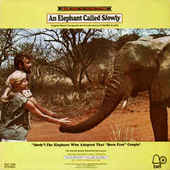 'An Elephant Called Slowly'
 -
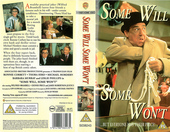 'Some Will, Some Won't'
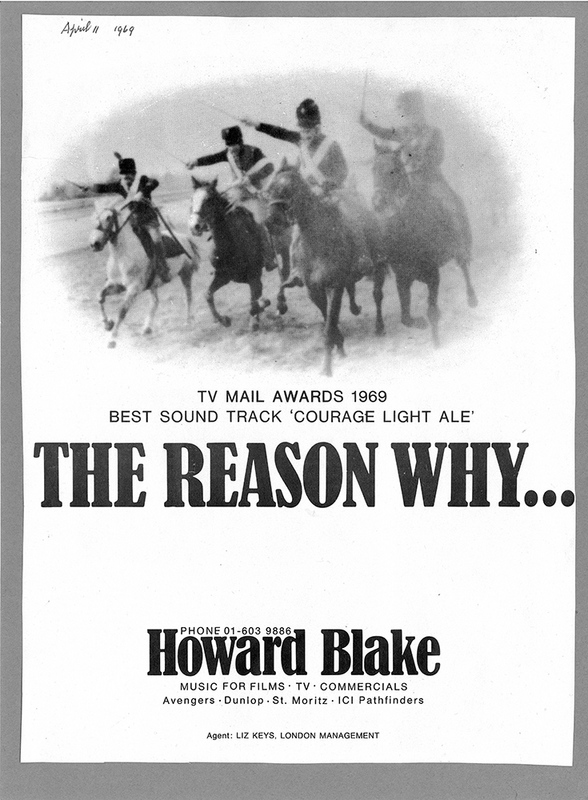
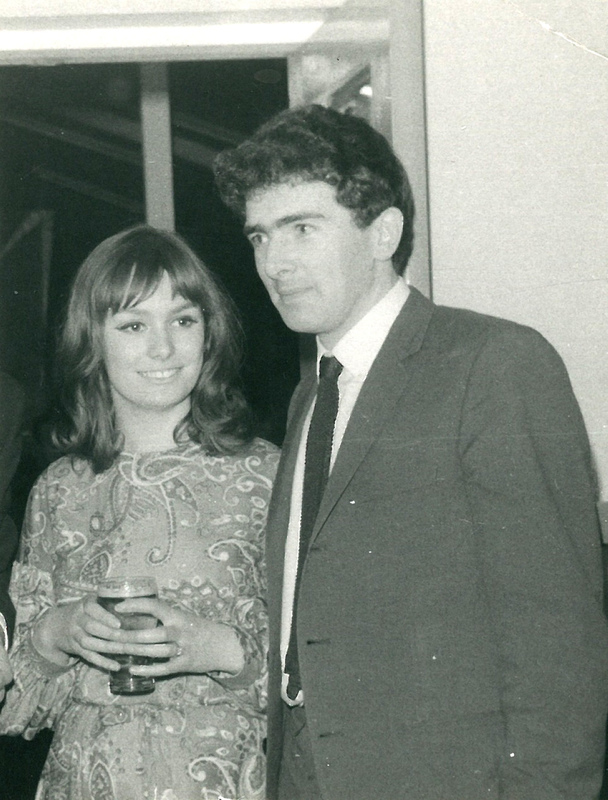
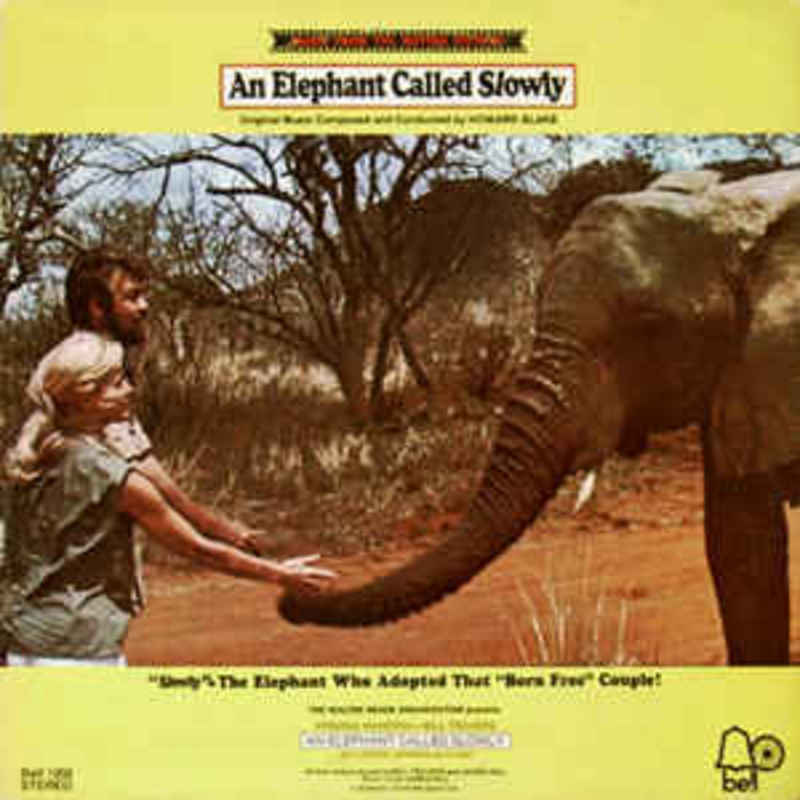
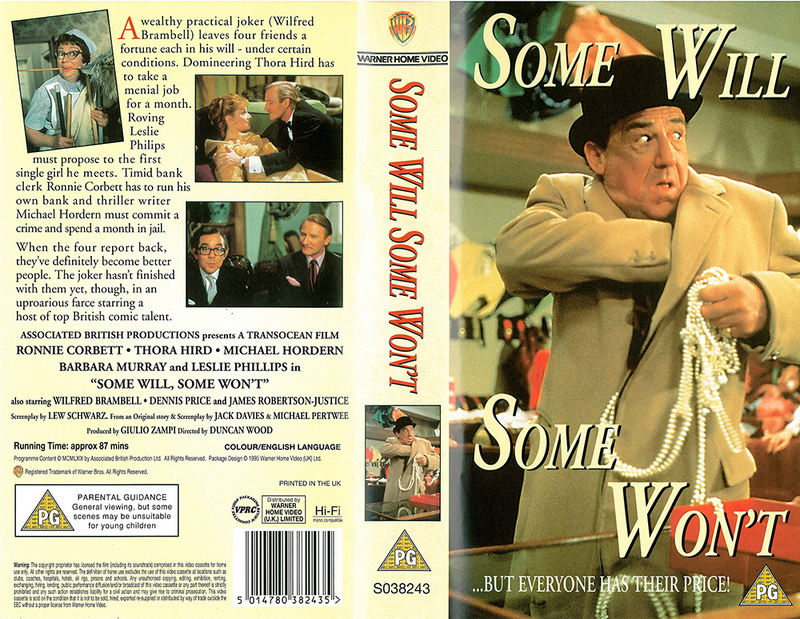
film: 'ALL THE WAY UP!' (Live bbc tv) 'MUSIC NOW' (1970)
Escape to a Cornish beach, Yoga, 'WALKING IN THE AIR', RIDLEY SCOTT
'ALL THE WAY UP!'
Granada TV had decided to move into feature film production and in November the producer and director visited us in our new home at 40 Hans Place, Knightsbridge. I was asked if I would compose the score for this first film, a satirical comedy called 'All the Way Up!' starring Warren Mitchell as a vulgar go-getter in a northern town aiming for the high life. It had started life as a stage play with Laurence Olivier and relied very much on the dialogue and acting. The producer was Philip Mackie and he wanted a song written for the film that would express the cynicism of the subject, but with a bit of contemporary bounce and humour. I suggested featuring 'The Scaffold' whose style I thought would fit the bill.I had in fact played piano on their number one chart hit 'Thank you very much' with Paul McCartney on tambourine, John Paul Jones on bass-guitar, Jimmy Page on lead guitar and Clem Cattini on drums. Quite a line-up and a great way for me to have familiarised myself with their wry, humourous style.I explained to Granada that I didn't write lyrics and asked if they could provide a good lyricist for me to work with. Norman Newell came to see me and I explained the idea, but when he presented a lyric I was not too keen on it. I tried to sketch out what I had in mind, but once started on it I got hooked and leaving the score to one side spent several days working on the lyric. Norman had written a couple more by this time but I still wasn't very convinced and submitted all our various efforts to the producers to get a reaction. To my surprise they chose mine and all of a sudden I was lyric-writer as well as composer:
'All the way up, get a little bit higher All the way up, take it up to the top All the way up, push a little bit harder but don't ever stop; Finding a road that leads me up the easy way, Taking a ride that satisfies me more and more each day,
All the way up, yes I'm finding my way now All the way up, right on up to the top All the way up, I don't care what they say now but I'll never stop,
All the way up, take it further and further, All the way up, with a little to spare, All the way up, I'm so full of ambition and I know I'm going to get there,
All the way up, get a little bit faster, All the way up, I'm ahead of the crowd, All the way up, not a thought of disaster till I'm sitting on a cloud, The world's wide open and waiting for a man Who has found how to make a connection, Who has practised the art of deception, Who is set now to take one direction, All the way up!'
BBC AND 'MUSIC NOW'
I missed my old flat, I didn't like the house, I didn't like my new lifestyle there and Mavis and I were starting to quarrel. I'd just written a film about an arrivist, a go-getter, an upstart, and I felt like one myself. Was this really what I had set out to do? Was this what my talent was for? After several years of joyous, chaotic upward mobility I was suddenly questioning everything and this was brought to the boil, suddenly and in no uncertain measure and in public. David Buckton, a producer from Islington, rang me and asked if I would appear on a live BBC2 TV talk programme, 'Music Now'. He had chosen me as an example of a 'succesful media composer' of the day. Hans Keller, ferocious spokesman of BBC Radio 3, was proposing to expound the theory that only PURE music has any validity. He might attack me. Could I defend myself?
'By all means I said. Love to.'
I arrived at White City TV studios and was warmly welcomed by the presenter who explained the programme and invited us all to come up to the control box for champagne afterwards. Hans Keller was asked to kick the thing off and in a delightful z-inflected Austrian accent said something akin to the following:
'Real proper true meaningful music does not rely on any azzistance from any other art-form. It is pure abstraction at the highest possible level of culture. I give as an example the last three string quartets of Beethoven. When you understand my theory of functional analyzis you will understand that the simple phrase, the unit, is perfectly formed and then developed by way of only, and I stress ONLY, using those elements - these particular note formations being transformed by way of metamorphozis into other more elongated, truncated, extended or abridged formulae that ORGANICALLY display cohesion, zolidity and forward movement towards an ultimately ineffable structural consummating synthesis.'
'Howard Blake, what do you have to say about that?
'Well poor old Beethoven's last three string quartets always seem to come up in this sort of context. I think he would have been pretty annoyed. He'd have said that they had something to do with God and Inspiration and the fact that he was getting old, losing it a bit and nobody wanted to play his large-scale works any more. If Mr. Keller is saying that music should not rely on any other art-form Beethoven's 9th Symphony goes right out the window because he used lyrics by Schiller. The same goes for his opera 'Fidelio', totally reliant on the libretto and all his and everybody-else's art-songs by great poets. Forget Schubert and Brahms and Mahler and Mozart and Bach. They're heavily reliant on 'other art-forms.' And what about ballet? It's totally reliant on dance. So are you going to chuck out all the best music of Stravinsky: The Firebird, Petrouchka and The Rite of Spring? All of Tchaikovsky? All the operas of Verdi and Puccini and Moussorgsky? Perhaps you're just getting at film music? I agree that most of it seems poor, because it's written at very high speed and it does a subservient job most of the time - under traffic, under dialogue, under sound effects. That's what it is there to do. But then have you ever considered the incalculable amount of dross produced in the pantheon of great opera, ballet and serious music. It's very easy to see only masterpieces when one looks backwards, because one discards all the dross and retains the gold. Music is part of humanity, like breathing and making love and living. A human being isn't an abstract concept Mr.Keller. It's alive.'
Hans Keller appeared to be struck dumb by this and made no come-back. I had apparently transgressed the rules of polite discussion and possibly won the argument I had been expressly chosen to lose - like the boxer in a 'fixed' fight who knocks out the champion and causes all the gamblers in the know to lose their bets. At the end of the programme I was not invited up to the control box but shown the door! I met David Buckton, the director of the programme, some days later and I asked him:
'What do you believe in? What do you believe life is about?'
'I don't believe in anything at all.' he said.
'You can't possibly mean that? You're a BBC director, a university graduate, a privileged person in our society. Why do you direct programmes for instance?
'To make a living.'
'Is that all?'
'Yes.'
'Well I can't live like that. I believe in art, I believe in humanity, I believe in living. Being on your programme has shaken some of that belief. I need to think all these matters through in depth in order to continue with my life. Perhaps you and Mr.Keller are right. Perhaps we might as well all blow our brains out?'
'You're taking things far too seriously old boy.'
'Don't give me that 'old boy' rubbish. I find your attitude deeply shocking'
'What are you going to do about it?'
'Well you may not know what you think or believe but I'm going to find out what I do think, and I won't go on with my life in the way it is until I do.'
'Good luck.'
Looking back I see this television experience as somewhat akin to the discovery of the wizard in 'The Wizard of Oz'. I had scaled the heights of the music and media world in the firm belief that 'those at the top know what they are doing'. I had now met some of them and was far from persuaded!
[Footnote on Hans Keller and Functional Analysis: 'The Twilight of Twaddle': 'Hans Keller's wordless Functional Analysis, September 7th 1957, was to prove a watershed for music analysis. Onto the innocent listeners' ears that evening, courtesy of the BBC Third Programme, burst an entirely new concept: a way to make plain the unity lying behind the diversity of a composition without the need for words of explanation. Its developer, Hans Keller, called it Functional Analysis, or FA for short (a neat parallel here with his other passion – football – but in no way connected of course – although perhaps you, dear reader, know better…).
DR. CHANDRA SHARMA
I rang Stanley who came over to see me.
'I'm in a terrible state Stanley.'
'Why?'
'I don't know why. I can't bear being in this house, I don't want to write any more music, or play or do anything. I don't feel well.'
'You look all right.'
'I don't believe what I'm doing.'
'Go and see Chandra Sharma, he'll sort you out.'
'Who is he?'
'Just the most brilliant doctor in the world, and guru and magician and mystic...patients like Yehudi Menuhin and Tina Turner. I'll tell him you'd like to come over.'
Dr.Sharma was sitting cross-legged on a wide, low, carved Indian chair with his back to the window.
'Good morning.'
He smiled.
'There's nothing really wrong with me, I would like a bit of a check-up.'
He smiled.
'I've been working very, very hard, and we moved house and I'm being offerred lots of things, and I'm not sure I have time to do any of it.'
He smiled...and suddenly for no apparent reason I burst into tears.
'That's better Blake. Stretch out your right hand.'
'What?'
'Your right hand. Hold it out straight.'
I did so and it shook uncontrollably.
'Now the left hand'
Same result.
'Oh yes Blake you are going to be dead in five years!'
He looked straight at me and rocked with silent laughter, as if this was the most tremendous joke.
'Yes, Blake, you are speeding. You need to calm down, take up some system of meditation, do some exercise, a bit of Yoga perhaps.'
'I don't know what I think any more. I really want to find out the meaning of everything.'
'Try Watkins bookshop, Cecil Court. They have books on every belief system.'
'I just want to get out of what I'm doing altogether.'
'Well we can't do that Blake. We all have to swim in the river, not stand on the bank. But you should take some time off to refresh yourself. I'll give you a check-up anyway.'
He did so.
'There is nothing the matter with you.'
'There must be something? Isn't there some operation I ought to have at some time, maybe not pressing, but eventually necessary.'
He looked at me steadily for a long time.
'I see what you are after Blake. Well, in fact you do have a grumbling appendix, not at all serious, due to eating and drinking the wrong things. Eventually you will no doubt get appendicitis and have to have it removed.'
'I'd like that.'
'Yes I can see that you would like that. It would give you a reason to disappear.'
'Yes.'
'It is possible to have such an operation, but if you want it right away it will have to be done privately. I can arrange for the best surgeon in Harley Street and you can stay at a private clinic in St John's Wood.'
'How about Monday?'
I woke amidst a great mass of expensive flowers:
'Get well soon Howard!'
'Every good wish for your recovery!'
Half of London seemed to care about me, or did they just want me to get back to work? The conservatory next my room was full of beautiful foreign girls recovering from abortions, princesses draped in superb silk or chiffon dressing gowns.
'Are you in pain darling?'
'Can you move?'
I wasn't really in pain, just a bit sore and the point was I'd stopped working. It felt wonderful!
CORNWALL AND JUNGIAN INDIVIDUATION
A few days later I was back in the castle and talking to Mavis:
'I want to drive as far as possible from London and find somewhere in the country or by the sea where it's totally silent and calm and I can think about things.'
'What things?'
'Well I want to breathe some fresh air, and do some Yoga, and read a bit of Jung and think about music and art and my place in society and that sort of stuff.'
'Well your place in society is here. We're living in this magnificent house in London and you've got the whole world at your feet. Why on earth do you want to leave it all? What's the matter with you?'
'I can't do it any more. Come with me, it'll be great.'
'I want to stay here.'
Perhaps by some sort of sympathetic magic my little grey Honda sports car had coked up its 8 cylinders and died. I traded it in for a silver-sand sit-up-and-beg Saab 96 with free-wheel clutch facility for accelerating round corners, packed an overnight bag and drove west. I had no idea where I was going but an 'alternative' couple, who were occupying our basement flat, had talked up a 'meditation commune' hidden away across a rocky beach somewhere near St.Ives. I thought I might give it a try. After a several-day circuitous trajectory through Surrey, Hampshire, Dorset and Devon I arrived there, but scrambling over rocks after an appendectomy is not to be recommended and I retired hurt.
I drove North next day past a sign saying 'holiday chalets' and turned in to a large holiday camp, not yet open for the season. Right on the edge of a monster sand-dune above the sea perched a lone cabin under a telephone pole. Six fat cuckoos were singing major thirds tuned at random. The perfect place. I would be the seventh.
'For all inquiries contact Messrs. Grabbit & Runne, Perranporth.'
'I'd like to rent cabin number 34.'
'We're not open for the season yet.'
'It doesn't matter. How much would it be?'
'£2.50 a week.'
'I'll take it.'
I woke to the sound of Atlantic rollers and wind whistling through grasses and did my first painful hour of yoga with the instruction book from Watkins perched in front of a small electric fire. I was glad no-one was watching. It was much too cold to swim, but each day I walked for miles along the wide white beach. I bought health foods as recommended by Sharma's clinic: half-fat cheese, fruit, beansprouts, nuts, pumpernickel, salad, yoghourt, china tea and lemon. An excellent bookshop in Truro provided me with a Shorter Oxford Dictionary for £5.00, Jung's 'Man and his Symbols', Fromm's 'The Art of Loving', Colin Wilson's 'The Outsider' and books on birds, plants, thought and ecology.
One cold,stormy morning I stood at the top of my gigantic sand-dune and reasoned with myself:
'Why have you left London?'
'I didn't feel free.'
'Why didn't you feel free?'
'Because of fear.'
'Fear of what?'
'I don't know.'
'Do you think if you had no fear you would feel free?'
'Yes.'
'Well, let's start somewhere. For example, what do you fear right now?'
'I fear the cold. I fear the sea which is extremely rough. I fear being laughed at. I fear scandal and rumour. I fear being without money. I fear being an outsider. I fear being alone. I fear having no one to care for me. I fear being unsuccesful. I fear the wrath of the establishment if I don't think as it wishes me to think. I fear...'
'It is fear which is preventing you from being your true self and for that reason you feel unfulfilled, frustrated and despairing despite whatever outer comforts you may have gained. If you can overcome fear you will be able to fulfil yourself as God (or the universe or nature or whatever you want to call it) intends and this will give you true happiness regardless of torments that may be imposed by detractors. It will give you the strength to overcome all obstacles, to rise above them, ignore and transcend them.'
I stripped off my clothes and tore headlong down the sand-cliff down into the sea. It was as cold as ice and I was hurled about in gigantic waves. I felt ecstatically happy. Colin Wilson talks incessantly in his books of Factor X, the experience of transcendence that we all desire within us. Jung describes it as the moment of initiation, individuation, self-realisation.
I had found it.
Primitive societies regard the experience of initiation as essential. At a certain age men must go through ordeals to prove themselves, to prove that they are brave and can stand up for the tribe and their wives and families against all odds, if necessary die in the attempt rather than ever give in. Women don't need such experience since initiation arises through the painful experience of childbirth. Today's society buries this instinct in dangerous-sport clubs, parachuting, deep-sea diving or just funfare helter-skelters, recognising the thrill-factor only as a form of fun rather than as an experience of fear in the pursuit of inner truth. The danger of this 'fear-as-fun' view is revealed in the enormously-increasing number of brutal crimes carried out for no other reason than to experience a thrill, and it is no accident that Colin's researches with Factor-X led him gradually to become the most prolific writer on the psychology of crime.
I had inadvertently discovered a means of self-initiation by jumping off a sand-dune, which surely couldn't have hurt anybody. The great astrologer Samuel Weir, whom sadly I never met, studied my astral chart and wrote to me with advice concerning 'jumping off cliffs':
'The fact that you have proved your ability to both write and interpret music can easily obscure the truth that had the same amount of stubborness, fixity of purpose, self-reliance and will-power been used in almost any other field of effort, your great determination to overcome obstacles would have given you equal success there also. So,you are much more than a composer. The stresses within your nature have been used by you as a coiled spring driving you to achievement. Starting with what was virtually 'detective work', investigating 'composition', you then divided and mixed tone values until your critical ear was satisfied. The criterion seems to be throughout that the end product should be both totally unexpected- by ordinary classical standards- yet truly harmonious in the tradition of 'Uranus' in The Planets. Yet not so much 'The Clown' as 'The Fool' in the Tarot - and no praise could be higher. It is the letter Shin, the 21st letter of the Hebrew alphabet which is attributed to the Arcanum, 'The Fool':
'With light step, as if earth and its trammels had little power to restrain him, a young man in gorgeous vestments pauses at the brink of a precipice among the great heights of the world; he surveys the blue distance before him -its expanse of sky rather than the prospect below. His act of eager walking is still indicated. The edge which opens on the depth has no terror; it is as if angels are waiting to uphold him, if it came about that he leaped from the height. He is the spirit in search of experience. He is not afraid to jump off the cliff.'
I jumped off the cliff!
When I came to write the large-scale oratorio 'Benedictus' some nine years later the dramatic scena for tenor and orchestra, which is the central peak of the work, sets Frances Thompson's inspired mystical poem 'The Hound of Heaven'. In a remarkable passage Thompson describes s fleeting glimpse of 'God' and the life-changing nature of that experience:
I dimly guess what time in mists confounds; Yet ever and anon a trumpet sounds From the hid battlements of Eternity; Those sunken mists a space unsettle, then Round the half-glimpsed turrets slowly wash again. But not ere him who summoneth I first have seen, enwound With glooming robes purpureal, cypress-crowned; His name I know, and what his trumpet saith. That Voice is round my like a bursting sea; Rise rise clasp my hand and come!
On the last two lines my score summons up the swelling and breaking of the most colossal wave. It is my wave as I jumped off that cliff! It endeavours, dares to describe that ineffable moment of individuation, the ecstasy of self-realisation.
Having realised I was held back by all these absurd fears I started to think that I did not want to go on just making money from commercial music, however lucrative. I remembered my dreams of combining film with music on a 'serious' level and felt that I should try and go further 'as an artist.' I realised that although I had been advised that I would never be good enough or fast enough to compose professionally ,this had proved to be totally untrue. (In fact several times recently I'd been described as 'the fastest writer in the business'). Writing commercially under extreme pressure had forced open a stream of creativity beyond anything I could have imagined, even though the actual product had often not been my own, and I had frequently not been in sympathy with it. I felt that if I could now develop my own musical voice far further, keep this ability to create fluently and use all the other expertise I had in film and media and lyrics and production intact, I might be able to create a genuine new music with some gravitas to it, which might speak to the hearts of everybody in a comprehensible language. I was not sure how the visual element would fit in, but believed I must start all over again in order to develop my composition skills further than I had so far. I had come back to my 18-year old fantasy of a 'film symphony', progressing beyond Beethoven in music, beyond Wagner in opera, beyond Tchaikovsky in ballet, beyond Eisenstein in film - New Art, the Gesamtkunstwerk of the twentieth century.
But how on earth would I set about this great 'film symphony?' I began to sketch out a scenario. It should begin with the unconscious, the perfect innocence of the child, the eternal nature of the sea, the beauty of total purity. I walked along the beaches day by day and fragments of melodies came floating into my head. One fragment was to become the theme of Festival Mass, another the theme of 'The Passion of Mary' and one was to become 'Walking in the air'.
Liz eventually tracked me down. A young chap from the Sandy Beach Hotel had somehow heard about me and ran across the dunes to my hut:
'Your agent wants to speak to you. Liz.'
I followed the telephone line to a wind-swept phone box and rang her.
'You've been offerred a feature film by Betty Box.'
'What's it about?'
'It's called 'Percy' and stars Hywel Bennett. It's about a man who has a penis transplant.'
'I won't do it.'
'Why not?'
'I've got enough problems of my own.'
A few days later the young chap knocked on my door again:
'My mother says would you like to have dinner at the hotel?'
'Oh that's very nice of her.'
I went down there and was warmly welcomed.
'Would you play a bit of piano for us?'
And that was it.
At the weekend I was invited again and offerred the use of an attractive bungalow next to the hotel. In the early evening Mavis arrived down from London 'to discuss my problem'.
'I don't have a problem. I haven't been so happy for years.'
'Well thanks a lot!'
From next door we could hear an ever-mounting roar. Lots of people were arriving, laughing and chatting and drinking.
The young chap knocked on our door:
'Mum says you promised to play tonight and we've got half of Cornwall here. Can you come over?'
'Oh, so you're playing in bars again!'
Mavis was not at all pleased and the discussion started to broaden out and take root. It would be a long one.
'The customers are getting annoyed waiting for you. They might turn nasty. Please come over Mister Blake!'
'I absolutely forbid you to go and play piano in a bar until we've sorted out our relationship!' said Mavis.
I never got there and late in the night we drove back to Knightsbridge.
The idyll had ended.
A COURSE OF ELECTRONIC MUSIC AND A NEW LEASE OF LIFE
I went to see Liz in her office at 295 Regent Street:
'I took you on as a young unknown and built you up so that you're offerred top-quality feature films. Now you're turning them down. Word will go round the business.'
'I've brought you a present.'
I had bought a sort of desk-top box made of onyx and I placed it in front of her. It was really rather ghastly and she regarded it in silence.
'I can't thank you enough for all the help you've given me. I realise that I've let you down and that we'll have to part company.'
She continued to contemplate the box in silence and I slunk away.
Film offers had stopped coming in as I started to consider my next disastrous career-move. Mavis was by no means pleased either.
'What are you going to do?'
'I want to start all over again. I'm not good enough and I don't know enough. Maybe I'll go to Los Angeles and enrol in the USC composing course. I want to listen to more experimental music, maybe study electronic music, find out what's going on. It'll be in preparation for the 'film symphony' which I'm going to start sketching.'
'But what about working and making a living, and what about this house and us?'
'I can't work in this house. It's ghastly, it's so big that we invite guests, it needs so much decorating it's full of decorators, and it needs such a lot of cleaning that it's full of cleaners. I can't concentrate. Worst of all I can't play the piano because of the neighbours. I want to move out to the country.'
'Well I want to stay here.'
'All right, well suppose you stay here and I find a room somewhere to work in. Let's try that.'
I rented one of the smallest of the Bolton Studios off the Fulham Road, and started painting it, which I found therapeutic. I thought:
'Mavis wants to go on living in the castle and I want to work here. I need to go on making a living and maybe I've caused a bit of a blip in my film work, but I'm still being offerred things. I should use them as an opportunity for musical experimentation. I can book whatever instruments I want, try out any techniques that I like and create brilliant screen tracks. In my spare time I can still study and continue with the project.'
I'd got a new slant. Commercials were fun things. I evolved the theory:
'All reward for artistic work varies in inverse proportion to its quality. (But perhaps one can improve the quality)'
A delightful advertising chap called Bobby Silas invited me to a top-secret advertising discussion:
'What is muesli?'
'A sort of breakfast cereal eaten in Switzerland.'
'Excellent. Go on.'
'It's made of fruit and nuts - very healthy.'
'How do you know all this?'
'Well I actually eat it because I've been brain-washed into health food by my Indian doctor.'
'Brilliant. You've got the job!'
With tender loving care I wrote a lyrical, slightly rock-inflected theme-tune for the launch of Alpen scoring it for alto flute and oboe in unison, with Fender-Rhodes piano, bass guitar, drums and strings, recording it at CTS Bayswater. Not only was I writing commercially but I was simultaneously promoting my own new-found life-style! It was a new departure for Weetabix who manufactured it, but their sales went up by 500% in the first week, the TV Mail printed an article called 'One that worked', and everyone was very pleased.
Three days later I was approached by Masius Wynne-Williams to write a track for W H Smith- something new and startling perhaps?. As part of my own re-education programme I had signed up for an electronic music course given by Ernest Buerk in a basement off Baker Street and once a week we played with overdubs and multi-tracking, ring modulators and musique concrete. We would need to present an electronic track of our own making for the end-of-course concert. Robert Moog had just visited Advision to present his new mini-Moog synthesizer and I bought his own display model from him. I wrote a strict 8-part fugue for it in G major and laid down rhythm on about 4 tracks. Then I played in all the other 'voices' on different synthesizer sounds on the other 20 and went to mix. It did sound startling and original. W.H.Smith not only used it but adopted it as their signature-tune.
Liz's foreboding about films proved not entirely justified when I was offerred a film for Anglia TV, a documentary called 'Trail to Survival'. I scored it for organ, piano, harpsichord, Moog, woodwind and rhythm section and David Katz booked a young pianist fresh from the Academy called Rick Wakeman, who was excellent. The Moog was sitting on top of the organ and I said to him:
'Why don't you play both at once. You'd make a fortune.'
He did.
I wrote some tracks for 'Craven A' with absurdly difficult timing complications and this prompted me to attempt an essay on the subject. I was fascinated by the relation of film timings to music and called it:
'Music is the mathematics of emotion.'
My friend and collaborating film - director Graham Baker showed me an ad. he'd produced for KP nuts. It featured children riding chopper bikes.
'What could you do with it?'
'Could you lend me one of the bikes to record?'
'Record the bike?'
'Yes. I could record all the different sounds that a chopper bike makes, put them on 24 separate tracks and add a rhythm section.'
'Try it.'
We called the tracks: bell, spokes with spanner, frame clang, pedal whirr and so on, eventually adding a solid rock-guitar solo. It ended with the spokes slowing down most intriguingly , all giving slightly different pitches.
At Ernest's end-of-course event my contribution was the concert-work:
I received a call from Ridley Scott who had made some cinema ads for SR Toothpaste, shot in the snow-covered highlands of Scotland to appear like Russia. It seemed appropriate to write in full orchestral feature-film style with a strong flavour of Moussorgsky. Quite how appropriate was only revealed some six years later when I was invited to score 'The Duellists'. In the retreat from Moscow sequence one shot seemed strangely familiar. I turned to Ridley in the viewing-theatre and he grinned at me:
'You're right, it's a shot from SR. Why do you think you got the job?!'
-
 'Courage Light Brigade' winner of TV Mail Award for best soundtrack by Howard Blake
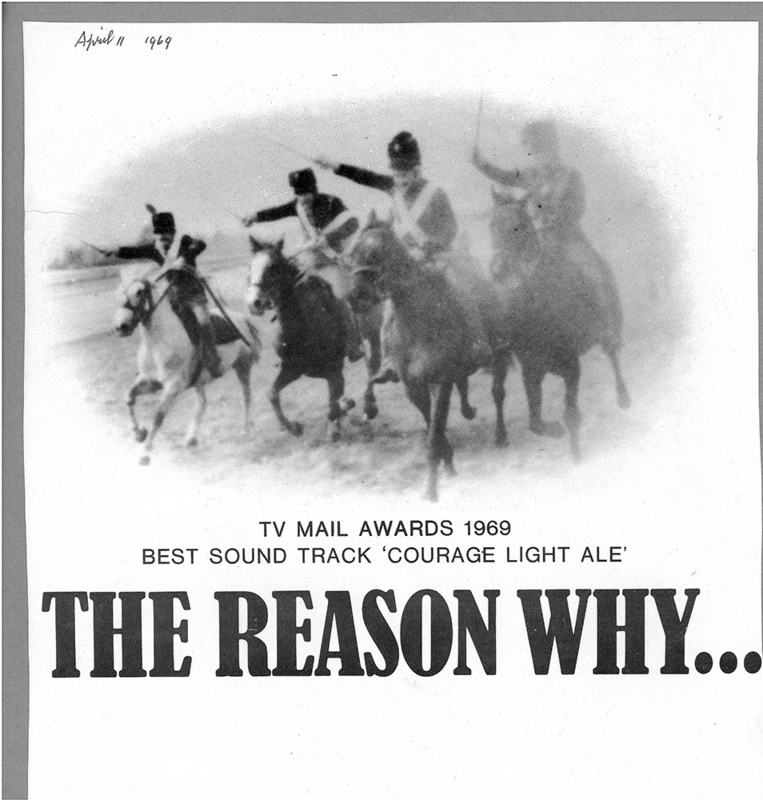
Move to the Sussex countryside (1971)
Serious concert work: 'SONATA FOR TWO PIANOS'
I was enjoying life in Bolton Studios but spending hardly any time at 'the castle'. The marriage was no longer working and Mavis had started to realise that I wasn't coming back.
We agreed to separate. She wanted to move out of Hans Place and live in the studio since she had taken up sculpture and painting and it would be perfect for her. What could I say? I put 40 Hans Place on the market and pondered.
Almost immediately there was a ring on the doorbell - an American who was interested in renting. I invited him in and he looked around with what seemed like a more than ordinary curiosity.
'Are you Howard Blake the composer?' he said at last.
'Err - yes I suppose I am.'
'My name's Fred Brogger and I represent and manage a composer. We're so envious of you.'
'Really. Why?'
'Well you do everything here in London - you compose film scores, TV series, prize-winning adverts, you conduct, you play the piano, you've got the whole thing sewn up!'
At this moment in my life I didn't at all see myself like that. I told him that I was actually planning to leave town.
'My God!' he said, 'Could you give me some tips for John - he'd give anything to take over from a position like that!'
I offerred him a drink and we sat down and talked about the music business - how I'd gradually built up contacts and risen rapidly to take over 'The Avengers' and how that had led to feature film commissions - so on and so on. Finally I asked him who his client composer was.
'His name is John Williams' he said.
(Like myself John Williams had been a session piano player, with Henry Mancini on 'Peter Gunn' for instance, so we had much in common. He had moved on to scoring for TV films and B-movies but the break into big-time scoring for features which happened with 'Jaws' lay in the future.)
I went ahead and rented out the house. I had nowhere to live. Was I mad? In Cornwall I'd decided that I wanted to live in the country and write serious music. Perhaps the opportunity was being forcibly presented to me? My parents were still in Brighton and growing old and I had felt more and more that it would be good to be near them. The countryside in Sussex was where I had always longed to be. I rang and asked if I could stay with them and do some house-hunting, took a train from Victoria and bought 'Sussex Life' magazine from the bookstall. As the train rattled down to Brighton I thought:
'What would I most like in the world?'
I'd sometimes dreamed of a watermill in a quiet valley with bluebell woods, a lake and a waterfall, meandering paths, a stream and wild birds singing, an impossible dream but...
I opened Sussex Life - and there it was:
Highbridge Mill, set in 5 acres of informal woodland, originally a watermill, with wheel and machinery dating from 1810, lake, stream, waterfall and mill-pond.
I drove out from Brighton to an address just South of Cuckfield and turned down a long tree-lined drive - just to have a look. I parked next to two nearby cottages and walked towards the mill-house. A silver-haired lady of about 60 was coming out of the house to her car.
'I hope you will forgive the intrusion, but I saw the house advertised and wondered if it was still for sale?'
'Oh, that's perfectly all right but I'm afraid I've just sold it. I'm on my way to see the estate agent. Might I ask why you're interested?'
'Well I'm a composer and I'm looking for a place to write and this looks as if it would be fantastic.'
'What a pity! You're exactly the sort of person to whom I wanted to sell. It's so utterly inspiring here. Do have a wander.'
I wandered down along to the waterfall where a plank bridge crossed three sluice-gates. One could look down along a ravine banked by moss and fern-covered rocks. A gigantic beech overhung a deep black pool with eddies of water swirling down through pebbles of a shallow river-bed.The house had an oak verandah coated with lichen on which climbed an immense Albertine rose. It was exquisite.
'Well never mind, there'll be others.'
I had no distractions living with my parents, just regular simple meals and some gardening. A piano was still in my room and manuscript paper. I devised a scheme of exercises to get myself going in the right direction:
1.Write a piano sonata in the style of Beethoven
2.Write a string trio or quartet in the style of Bartok
3.Write an oboe quartet in the style of Mozart
4.Write a 12-tone piece in the style of Schoenberg
5.Write a choral work in the style of Bach or Walton
6.Write a concerto movement work in the style of Frank Martin or Stravinsky
7.Write a folk-song arrangement for small orchestra like Delius, Vaughan-Williams or Holst
8.Write a 2-part invention in the style of Bach
9.Do counterpoint exercises from a good text book
10.Do 2 hours a day piano practise
11.Do 4 hours a day composition
12.Do 2 hours a day thought and reading
Observe and create complete pieces as structures, not individual mind-blowing sounds and tunes and harmonies!
I started on number one by taking out my mother's old edition of the Beethoven sonatas and choosing one I didn't much like - B flat, Book One - and the same day paid a visit to Christine to ask if she'd give me some more piano lessons. I told her I was going to attempt a piano sonata:
'I don't think you need any more lessons from me but why don't you make it a two-piano sonata and we can both play it.'
Two-piano was quite different, a big pallet, a big sound that always made one think of Bartok. All right, perhaps a sonata in the form of Beethoven but with the harmonic language of Bartok. That'd be a good exercise! But in C major, not B flat, Bartok would never write it in B flat! I wrote it quite quickly as if for years I'd been deprived of composing properly (and I suppose I had):
Sonata for two Pianos. In four movements: Allegro-Andante-Scherzo-Presto
I took it up to Christine to try it out, but she wouldn't:
'I can see it's just a pencil manuscript and I can't read that. I'm sure you need to do a great deal more work on it and get it properly printed and then we could schedule rehearsals and prepare for a performance.'
'I can't work like that Christine. It's finished, it's ready, it's playable and I really want to hear it to make any adjustments before I lose interest!'
'What do you mean, lose interest?'
With the inner source of dammed-up emotional powers and the feelings often over-ridden by burdens and obligations-even if only emotional ones-the only free channel left is to pour you feelings into music. Even sympathy towards yourself becomes constricted and those towards others severely practical if not totally lost. Driving on seems the whole channel for your great energy, nothing else seems allowed to stand in the way of your ambition. [Samuel H. Weir]
No, she wouldn't play it and it was to wait for 24 years before the first performance by its composer and Wayne Marshall at The King's Lynn Festival 1995 (and a further 18 years before the first recording was made by Ashkenazy pere et fils in 2013. Well worth waiting for!)
I'd also summoned up the courage to write Christine a Partita and Inventions a deux voix, but we didn't get that far.
Undeterred I embarked on Exercise 2. I'd employed the oboe player, Celia Nicklin, on a number of recordings and she'd once cautiously suggested that I might write a piece for her.
'Why not an Oboe Quintet?'
I attacked it at once and again found it easy to write fluently:
Oboe Quintet. G major, in three movements: Allegro-Lento-Vivace.
This time I didn't feel the need to refer to Beethoven. I rang Celia and she said she'd be interested to read it through. We arranged a session with a string quartet at the house of eccentric recording engineer and viola da gamba player Adam Skeaping in Barnes. Everybody seemed to think it was all right but nothing further happened and I started to realise that in order to get performances one needs to pay out money or get grants or be sponsored or have a record company. Players themselves would be pleased to play if paid to do so but probably wouldn't rush around to organise any of these things of their own accord. In this sense it was very much like doing TV or commercials or films except that there was no flow of money available to pay for it!
I had gone on looking at houses through the Summer without seeing anything remotely as interesting as the mill, which I couldn't get out of my mind. One Monday I followed another of my dangerous compulsions and for no reason drove out to look at it again. I parked by the two cottages and walked towards the mill-house and with identical timing to the first visit the silver-haired lady came out heading for her car.
'Good morning, please forgive my intrusion. Perhaps you remember that I came out here once before and saw the house. I've never stopped thinking about it.'
'Well how odd!. I do remember, because you called here at the moment I thought I had sold it. In fact after the whole summer the wretched buyer has just this moment pulled out. He can't get a mortgage. I'm just going to see the estate agent to put it on the market again.'
'I'll buy it and I'll pay you a non-returnable cash deposit to prove it right now - if you'll promise to sell it to me.'
She stopped in her tracks.
'A non-returnable deposit? That's very generous. Suppose you find on inspection that there's something wrong? What then? By the way my name's Marjorie Hervey.?'
'Well I'll lose out Miss Hervey, but I won't pull out, because I've fallen in love with it.'
I signed a cheque and gave it to her. She looked at me:
'Come in and have a cup of tea.'
The sale went through and I made over the balcony room of the watermill in the meditative colours of saffron and green. I moved in the Baldwin grand piano which Julian Lee had found for me and placed my old London writing-table next to it. I had my stereo and an armchair and not much else. The entire space containing dining-room, kitchen, bathroom and bedroom only measured about 30'x 15'. Downstairs there was a guest-room with a door to the garden but the rest of the building was unconverted and full of ancient mill machinery.
After so long in London it was like being in heaven. I sketched a little movement for four woodwind instruments that reflected the simple joy of being there in the outdoors and the countryside and got an ad hoc quartet together to try it through: Flute: Ken Dryden, Oboe: Celia Nicklin, Clarinet: Martin Roncetti, Bassoon: Martin Gatt. I called it 'Song for Four Woodwind' and I later expanded it to became the first movement of 'Serenade for Wind Octet'
I had a visit from the curate of Holy Trinity, Cuckfield, the Reverend Charles. He scouted around the mill with some suspicion.
'Do you play that grand piano?'
'Yes, I'm a pianist and composer.'
'Are you a properly trained, classical pianist?.'
I played him the Chopin Nocturne in D flat.
'Are you married?'
'Separated.'
'And what sort of music do you 'compose'?
(using the word 'compose' made him look as if he'd swallowed a raw onion.)
'I want to move beyond atonalism and create wonderful melodic music for the widest possible audience.'
'I don't think they will like that.'
'Who's they.'
He smiled, what they call in novels, 'enigmatically'.
'You should go back to London where you belong.'
'I only moved in yesterday.'
In 1974, much to my surprise, the PCC and congregation commissioned an Order for Holy Communion(Series 3). It was instigated by Dick Walker, Canon Fisher and the Reverend Charles. It has been happily used in the church ever since.
I received a gold-embossed invitation to a black-tie dinner from the local chairman of the Conservative Party. I regaled the company with anecdotes of sixties London and they seemed to find me highly entertaining. The gentlemen retired for brandy and cigars.
'I hear you have bought a most beautiful property. Many congratulations! We're delighted to welcome you into our community. I knew about you immediately because you went to Brighton College with my son.'
'I didn't go to Brighton College, I went to Brighton Grammar School.'
'Oh my God, I've got the wrong Blake!! I wonder if you'd mind leaving?'
My most earnest intention was to learn more about the serious art of composition and having given up the idea of USC I decided to investigate nearby Sussex University. I made an appointment with the Bursar:
'I want to study strict counterpoint, harmony and form in serious music with a view to taking a degree and possibly heading for a doctorate. Would you have such a course?'
'We have music courses but you would need to do 50% sociology.'
'What does that involve?'
'It teaches how the musician relates to society.'
'I wouldn't want to do that. I know all about how the musician relates to society. I've been doing nothing else for 10 years and I've moved down here in order to escape from it.'
'All our courses insist on 50% sociology.'
'Well I suppose I could use that 50% to write a critical thesis on how the musician relates to society. It certainly needs doing.'
'Would you need a grant?'
'Is that what one should do?'
'It depends on your situation. Do you have an income of any sort?'
'I have a royalty income which I supplement by doing commercial work, mostly for television.'
'How much do you make a year?'
'I suppose about £30,000.'
'Good God, that's more than the entire faculty get! Are you mad? You're actually working for television and making a fortune. Why the hell would you want to come here?'
'I want to advance academically in the field of serious music without reference to commercialism. I thought universities were dedicated to the disinterested study of knowledge.'
'Everybody here is dedicated to trying to get into television mate! Can you get me in?'
I turned my attention to conducting. Although I conducted constantly I had never had lessons or gained a stick-technique. I wrote to Erich Leinsdorf, a conductor I much admired, and asked if he would give me conducting lessons?
'Dear Mr Blake, There is only one way to learn conducting and that is by doing it. Some people can, some people can't.'
My mother played once a week in an amateur string orchestra in Hove and they had temporarily lost their conductor.
'Would you like to to come and conduct us?'
'I'd love to.'
It is very easy to conduct top-level orchestras like the Philharmonia or the RPO, since they can play to near-perfection without so much as looking at you. It's quite another matter to conduct a rehearsal orchestra where you have to indicate every beat and every nuance. The Hove String Orchestra were very kind and allowed me to practise with them and on them. They had a terrific library and week by week we worked through the wonders of the string repertoire, the stick gradually becoming second nature to me.
I wanted to learn the violin so that I could write better for strings and was recommended to a teacher of the instrument called Ted Greenhow whose son had been at school with me:
'Would you come out to the mill once a week and give me a lesson?'
We started on Grade 1, first position, and I practised about half an hour every morning, slowly playing more and more advanced music until a couple of years later I managed to scrape my way through Mozart's wonderful Quartet in D minor K.421. I had had a longing to do this ever since hearing the Amadeus years previously.
Sometimes Ted and I played violin duets, even the Bach Double (although fortunately this is not in living memory!) and I wrote us some variations on a song: Variations on Gather Ye Rosebuds While Ye May
The commercial work in London really 'sponsored my studies' and I kept most of the contacts going. The system seemed to work well although it took a lot of energy, since I was in effect doing two or more jobs. However the devotion to Yoga and a monk-like lifestyle made it possible and exciting. I was thrilled with what I was doing and saw myself as tremendously fortunate to be able to.
As a sort of thank you present I wrote 'Two Pieces for The Hove String Orchestra'.
-
 Blake Water Music
 -
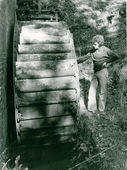 Highbridge Mill, the water-wheel
 -
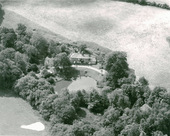 Highbridge Mill from the air
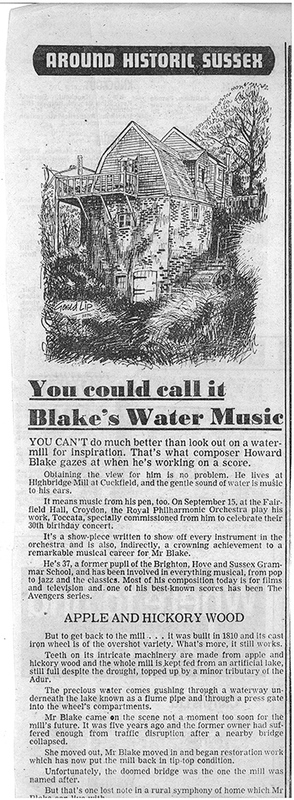
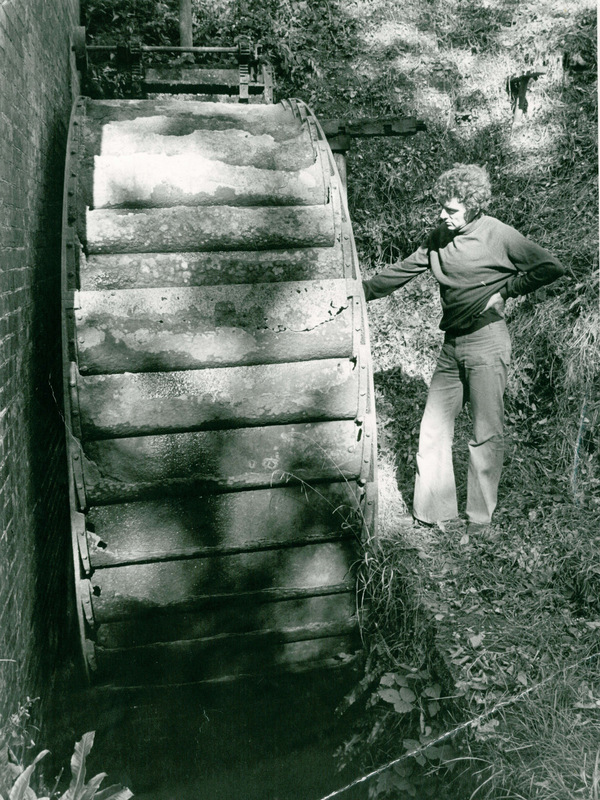
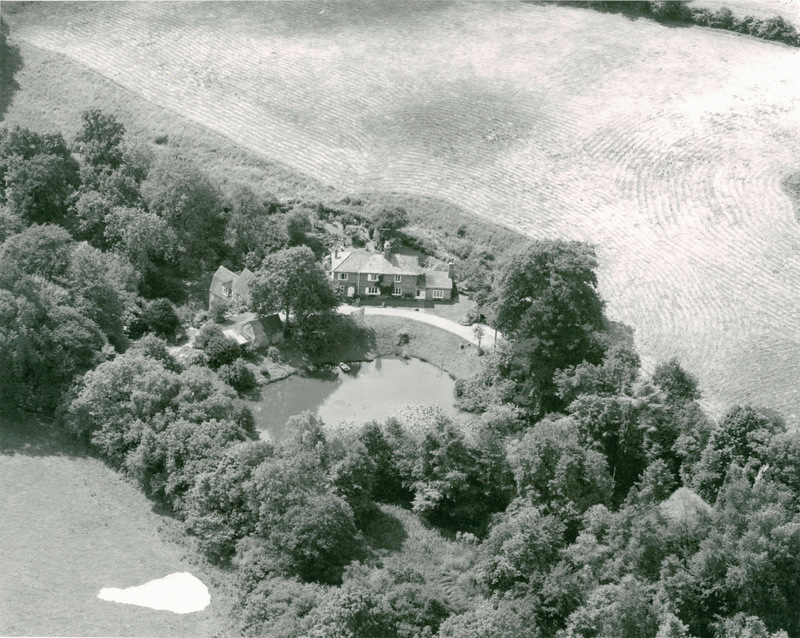
tv: 'THE UP-AND-DOWN-MAN' (1972)
MOVEMENT FOR ORCHESTRA (Symphony no.1)
Richard Frank rang me:
'There is a way of us getting 'Movement for Orchestra' recorded. In Ljubljana.'
'Where's that?'
'Slovenia. I have a friend, Samo Hubad, a very good conductor. You put up the money and I will arrange everything.'
'That's Iron Curtain. Why do we have to go there?'
'It's very cheap but very good, and we will have a recording to play to the people here that matter.'
I flew with Jugoslav Airlines on a smallish plane which got diverted to Belgrade. Announcements seemed to be in a mixture of Serbo-Croat, German and French:
'Kasati! Geh' schnell! Vite, vite! '
'What's happening?'
'Ve get train. Five minutes. Ve run.'
The streets were pitch-black and we ran madly towards the station. In the night we stopped for what seemed hours, soldiers shouted and waved machine-guns and people screamed. On the return journey we hit extreme turbulence from Frankfurt. The wings flapped up and down and the plane would drop by hundreds of feet. Did it really have to be this difficult to get a new work recorded?
In fact the recording of Movement for Orchestra was excellent. I took a copy of the disk to David Kingsley who was amongst many other things a Vice-President of the Royal Philharmonic Orchestra and through his good offices the orchestra agreed to programme it. The first performance of 'Movement for Orchestra - Impressions of a city - Symphony no.1' was conducted by Hans Vonk. My composer friends were there: Stanley Myers, Carl Davis and Christopher Gumming and I believe it inspired them to follow in my footsteps. It was a thrilling occasion!
A STATE OF GRACE AND A REVELATION
I was living an idyllic and peaceful lifestyle. I visited Chandra Sharma one day who said I was 'in a state of grace.' It felt like that. I would rise early and do an hour of Hatha Yoga, gradually achieving the Lotus position sitting and later whilst doing the head-stand. I would walk through the fields to the north of the stream, cross it and make my way back on the south. Breakfast was Muesli, chopped fruit, nuts and Bulgarian yoghourt with brown sugar. I would work at piano technique for an hour and violin for half an hour, have a pot of China tea with lemon and start doing counterpoint exercises, studying form and composing. After a light lunch I would do any business, phone calls,letters and shopping. Dinner would be mostly cheese and salad bought from the local health food shop and in the evening I would listen to Radio 3 or records, read my latest non-fiction book or just carry on composing. I didn't have a television.
I was reading Walter Piston's 'Counterpoint' one evening and was suddenly inspired by a section on the structure of melody. I thought that, contrary to given contemporary dogmas about music, it might still be possible to create an original melodic style, particular and personal to me. I took the well-known poem of Byron 'So we'll go no more a-roving' and set it to music with a simple melodic line. It worked. It was enchanting. I thought:
'I am only alive once and I should write regardless of dogmas, and if I have such a melodic gift, even if it is regarded as 'unfashionable' I should nevertheless write it, since it is a 'God-given gift' and I should use it.'
The song in fact proved to be the first trickle of an unending stream of creativity that lasted until about the year 2000.
THE UP AND DOWN MAN
A producer called Arthur Solomon rang me. He and his partner Rafi had a company called Radius and were making a children's series for Thames TV with a mime artist called Ben Benison. The director was Rex Bloomstein and they were provisionally calling it:'The In-and-Out, Round-About and Up-and-Down-Man'. Some title!
'Would you like to come and have a look at it?'
It was to have no dialogue, just music. They had very little money and Liz was highly dubious. A year earlier I might have seen it as not worth doing, but the timing of the request was inspired. Perhaps I could experiment with my new melodic style.
I went to the cutting room and had a look. They had made two black-and-white silent movies, slightly amusing, slightly wan, slightly satirical- a present-day venture into the territory of Chaplin. I said immediately that I wanted to do them, but I wanted to use a classical piano trio: violin, cello and piano. This time the production team were dubious:
'Isn't that terribly old-fashioned?
'Yes it is, but to make mime come to life I want to allude to and satirise all sorts of classical thematic material which will make it funny and give it meaning and line. It absolutely won't be 'background' music, it will be 'foreground' music.
'But shouldn't we be using guitars and drums and so on?'
'I want to write music with expressivity and flexibility, fitting exactly to the frame and yet not using a click-track, music that moves and sings and dances with the mime artist's own pulse and emotion. I'd like to compose the whole thing as chamber music in a simple melodic style:
'Who would you get to play it?'
'I have a truly marvellous Jewish violinist and I'm sure we can find an equally good cellist.'
Perhaps that helped to settle it since they were all Jewish/Israeli. There were to be 13 episodes of seven minutes or more each. My violinist was Jack Rothstein.
Jack was the most highly regarded lead violinist in the London recording world. When I'd first started playing on orchestral sessions I'd see him from my piano stool at the back of huge string sections in Abbey Road or Shepperton. He'd be demonstrating the bowing, suggesting fingerings, talking and explaining, telling jokes in five or six languages and playing all the while in the most vibrant singing tone. His playing contained hints of the gipsy, of jazz, of the palm court, of Vienna, of some sort of extraordinary cosmopolitan background that had somehow condensed down into a supremely adaptable talent, utterly perfect for the session world, where any and every style possible may be demanded at the drop of a hat.
On one occasion during a playback he lapsed into the Franck Sonata for no apparent reason and I joined in from the other side of the studio. (How that work followed me around!) Another time he played the opening of Schubert's great Trio in B flat. I joined in gamely and the cellist Peter Willison picked it up too. It sounded fabulous and I wished we could play the whole work. As we moved from one studio to another it was a sort of game to try and catch the other person out, playing by ear or memory or improvising. Mostly what amused Jack was spotting where the composer had borrowed from - not something that composers in any way welcome(!), but pretty safe when they're in the box for playback.
He never talked about himself and I found out about his background by chance when I was in Montreal. Jack suggested I look up an old friend of his, Sacha, who I tracked down playing double-bass in a gipsy orchestra at the Hilton, a strikingly-tall Hungarian who could have been 45 or 85.
'Oh, Jacques La Roque, my dear, dear friend. What a talent! He grew up in Egypt and went to a French school, but he's really a mixture of Rumanian ,Hungarian, Palestian, French, Czech and English...maybe a bit of Italian? I led a concert band working all around the Middle East for ENSA during the war. When we got to Alexandria I was told of an amazing 16-year old boy who could play the clarinet like Benny Goodman, the violin like Stephane Grappelli, read anything, play anything...a marvel. We took him on and then were invited to appear at the London Palladium, with Jacques as the star turn - brilliant- but he wasn't satisfied! The next thing we know he's decided to stay in London and he's taking classical violin lessons from Max Rostal! A year later he's playing in the Boyd Neal Chamber Orchestra..and a year after that he's leading it! What a talent! If only he'd stayed with us!'
Jack had in fact found his true forte as a leader. Sometimes he would be a soloist, but was less than comfortable. He loved to be amongst other players and was fascinated by every conceivable style of music. A rigidly classical chamber orchestra like the Boyd Neal couldn't feed this fascination, but working on recording sessions most certainly could, and did. When I began to use string sections for my film scores Jack would lead the orchestra for me. When I rang and asked if he'd do 'The Up and Down Man' he jumped at it.
At Jack's suggestion Peter Willison joined us to play the cello and I played the piano, simultaneously following a stop-watch balanced on the music stand. I booked Adam Skeaping's crazy studio again, which meant climbing three flights of stairs every time we listened to a playback, but nobody complained since it turned out to be fun. The name was shortened to The Up and Down Manand started to run under that title on Thames Television.
What I did not realise at the time was that I was unintentionally evolving or inventing my own way of scoring wordless film, a technique that would enable me to write not only for mime but also very accurately and expressively for wordless animation film, with which it has considerable similarities. Two years later I had just such an opportunity in Canada when director and animator Gerry Potterton invited me to Montreal to score the Oscar Wilde story 'The Remarkable Rocket' (1974). The experience of this would in its turn enable me, some eight years later, to compose nothing less than 'The Snowman!' (1982)
FANFARE FOR THE NATIONAL FILM THEATRE
Leslie Hardcastle was still the brilliant manager of the NFT and rang to ask if I would like to provide a fanfare for the next London Film Festival. It needed to be loud to cover the noisy opening of the distinctive 'solid curtains' and last about 1 minute. I decided to compose a fughetta for eight brass and Leslie was enthusiastic. I thought immediately of the distinctive 'early' brass sound made by the Philip Jones Brass Ensemble to which I would add some timps. I rang David Katz and asked him to 'fix' them. He refused:
'I will fix eight wonderful players for you darling.'
'No David, I don't want a group of session-players, I want the sound made by Philip Jones. It's completely different.'
Up till now everything I had ever recorded had been contracted for me by David.
'What's the problem?'
He wouldn't say, but I was somehow rocking the boat. He kept all the players on tap by promising that they got all the work, not just some of it. That's how it worked. We parted company. He had been a colossal help to me and I was sad, but for the first time I was introduced to a top musician from the serious classical world at the same level and this connection would later lead to the commissioning of the Sinfonietta and much else. Meanwhile The Philip Jones Brass Ensemble played Fanfare for the London Film Festival magnificently.
-
 Piano Quartet
 -
 Highbridge Mill
 -
 Jack Rothstein
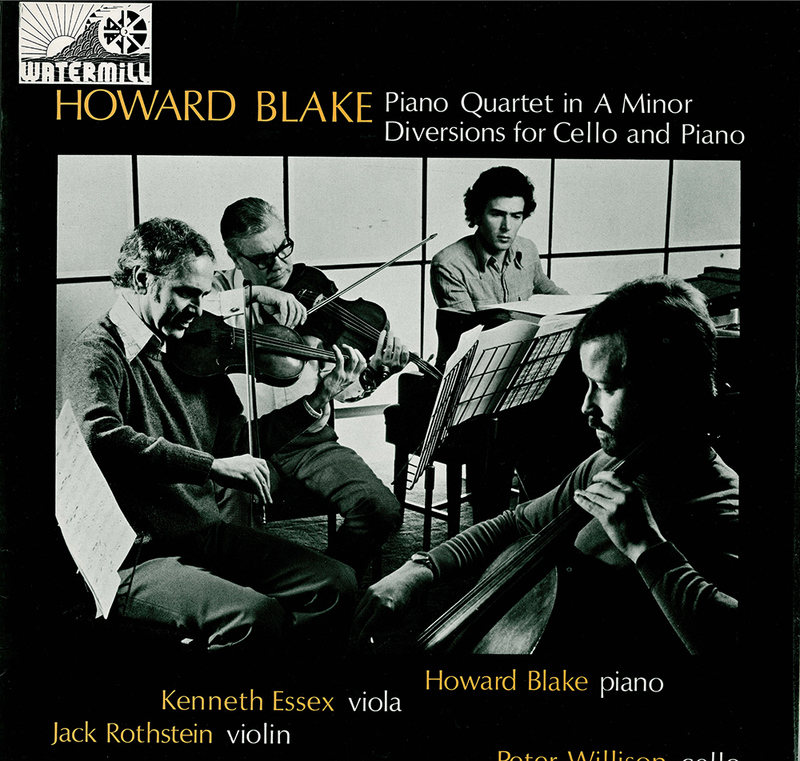
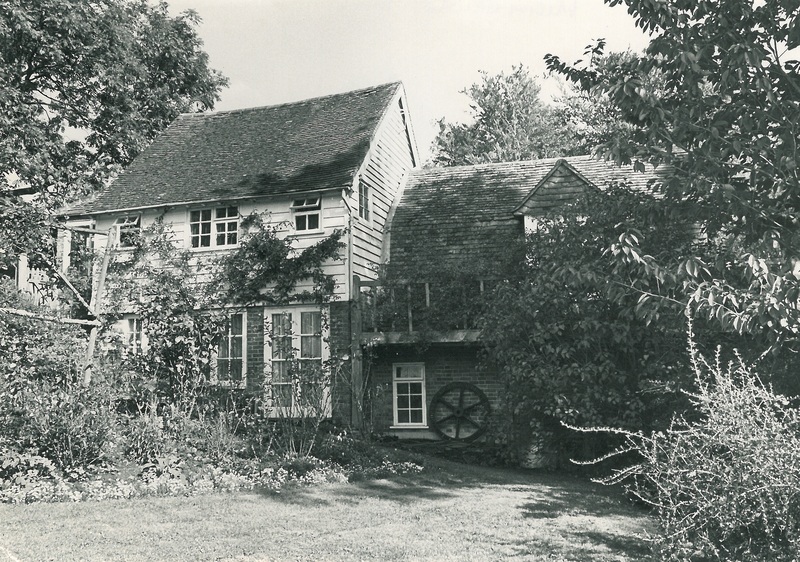
THREE SUSSEX SONGS, DIVERSIONS FOR CELLO AND PIANO, THE ROTHSTEIN VIOLIN SONATA (1973)
script: 'TINTACK THE COBBLER', film: 'THE RAINBOW BOYS'
'THE RAINBOW BOYS'
I had dinner at the Post Office Tower with Gerry Potterton, an animator from Canada who had ventured into making a feature film, 'The Rainbow Boys':
'Would you come over and look at it?'
'What, in Canada?'
'Yes. We'll fly you there for the day.'
It was minus 40 degrees and on the roof of the Hotel Bonaventure I swam in a steaming floodlit pool surrounded by Christmas trees. The film was oddly quirky, three misfits in search of a gold-mine. They find it, lose all the gold and laugh uproariously. The lead actor was Donald Pleasance. It was shot in the forests of British Columbia and on completion we flew to Vancouver for the premiere where it was received with a certain amount of bewilderment. However I'd been able to record with excellent musicians from The Montreal Symphony Orchestra in a more classical manner than previously and had enjoyed it.
Gerry's real talent was animation and his company was busy making cartoon versions of Oscar Wilde's fairy stories. He showed me preliminary work for 'The Happy Prince'and asked if I'd like to score it. I met Mike Mills, the director assigned to the picture, and it was agreed that I would write two songs, one active and joyful as swallows swoop across a lake in summer, one sad and lamenting as the swallow wings its way back to Egypt in the autumn. The treatment was to be finished by mid-May and the layouts by the end of July when I would need to record.
I returned to Sussex very enthusiastic about the project, understanding that the company would send a contract. I thought the two songs should be for trebles and orchestra and spoke to Stephie Lengauer about using The Vienna Boys Choir. Once I started to think of the sad flying theme needed I at once turned to the haunting tune from Cornwall. It was so right for 'The Happy Prince' and the 'film symphony' had not got much further. I gave the tune a middle eight, a beginning and an end, provisionally called it 'Flying through the Air' and rang Gerry.
There was an embarassed pause.
'I'm afraid Mike has given the job to another composer. He'd forgotten to tell me'
'What?!'
'I'm sorry.'
'Who's he given it to?'
'Ron Goodwin.'
'Oh really. I know Ron.'
I rang him and explained that I'd not only been given the job but had already written two songs.
'Well that's the business isn't it mate? Tough.'
'I'll remember that Ron.'
'Walking in the Air' went back in the drawer.
FORSYTH'S BARN
James Forsyth was a playwright who lived with his wife Louise at the top of the hill in 'Old Place', near neighbours. They decided to turn their beautiful old barn into a theatre and I helped provide music for a nativity play. They liked what I did and asked if I would organise a May-time concert. I saw this at once as an opportunity to perform my beloved Schubert B flat and asked Jack and Peter if they'd come down. We were right in the middle of 'The Up and Down Man' so it would be easy to rehearse the Schubert on the end of a recording. I went out, bought a new Welmar upright piano and had it sent to the Barn. The theme of the concert was May and it started outside with a maypole dance. The barn had no acoustic and no heating, but the cherry blossom was in bloom, birds sang all around and fortunately it was beautiful weather. Guitarist Paul Gregory played Renaissance lute pieces; Christine Pembridge played 'May, charming May', 'Le Coucou' and some Beethoven; Mavis came down and read Thomas Hardy and Sassoon, and mezzo-soprano Kathleen Willson asked if I would compose her something. I set 'This is the delicate time of the year' by Cuckfield poet Judith Garrett and everybody was much taken with it.
I was invited to the next meeting of The Forsyth Barn Theatre steering committee. Beautiful Mrs. Garforth, the major's wife, expressed her amazement that I'd managed to persuade such tip-top musicians to come and play in a barn and thought the performance of the Schubert was the most wonderful thing she'd ever heard.
'But why aren't you composing and performing in major concert halls and on the BBC and that sort of thing?'
'Well I never really got going in the classical world and I've been working for years as a 'commercial' musician, writing for TV and films and playing on recording sessions. I've only recently got away down here to try and re-find my own style of 'classical' composition. The song I wrote for the concert was the first 'art' song I'd written since I was at school.'
'Do you mean that you want to write music like Schubert and Beethoven and so on?'
'Well I suppose you could put it like that.'
'Well I think we are very lucky to have you here and I think the Barn Theatre should do everything it can to encourage you. May I suggest to the committee that 'Music in May' next year should be a complete concert of Howard's music specially written for the occasion?'
The motion was carried unanimously.
VIOLIN SONATA - THE ROTHSTEIN opus 169 October 1973
Peter Willison had been the first member of my trio to request a concert work and I had responded with 'Diversions for cello and piano'. Now, with this local interest in the mounting of a concert of my music, Jack Rothstein rose bravely to the occasion and demanded a full-blown Violin Sonata in G minor. I set to work, naming it 'Violin Sonata, The Rothstein' and he was delighted! It was in three movements: 1. Allegro Moderato, 2. Lento espressivo, 3. Vivace. I followed the long-existent form of a sonata, but the musical language I adopted was far from conventional, making use of rock and jazz rhythms to give it energy and verve. Jack entered into its spirit and performed it magnificently!
DICK WILLIAMS, MASTER-ANIMATOR
In 1971 John and Marlene Fletcher had introduced me to master-animator Richard Williams, famous for his one-man feature-length masterpiece 'The Little Island', for the sequences in Tony Richardson's 'The Charge of the Light Brigade', for the drawn Oscar-winning B&W Christmas Carol and many years later for 'Who killed Roger Rabbit'. My own recent work on the 13 episodes of the mime series 'The Up and Down Man' had helped give me a slant on how to compose for children because of its'animated' quality and I warmed to this new medium, so beloved by the very young. Dick Williams played excellent jazz cornet as a hobby, had a passion for Gurdjieff, ran an animation film company at 13 Soho Square and was in enormous demand. I started to score one or two things for him: the credit sequence for 'The Pink Panther Strikes Again' which brought me into contact with Henry Mancini': 'Embassy American' with the RPO, counterpointing USA and UK themes (New York Celne award):'Samson'(Grand Prix du Cinema, Cannes).
One evening after working on a commercial I asked why he hadn't gone on to make feature films like Disney.
'It's all downstairs Howard. I've been making the ultimate feature for 12 years. I've got voice tracks of Orson Welles, Vincent Price, Kenneth Williams, all sorts of stars. There are cans and cans of it shot.'
'What's the title?'
'Nasruddin.'
'What's that?'
'Nasruddin is an Arabic folk-hero, a bit like say Till Eulenspiegel, a fool who does everything backwards but it comes out forwards. The stories about him teach a Sufi way of looking at things.'
'Sufi?'
'Yes, Idries, whose brother Omar runs the company is the Prince of the Sufis and the greatest expert on it.'
'Could we see it?'
Dick asked his projectionist to stay on overtime. It was astoundingly brilliant hand-drawn animation, reel after reel of it. One amazing sequence drew 'the thief' trapped and hysterically trying to escape from turning wooden cogs and wheels inside a mill. Another had him attempting to pole-vault the dome of a mosque to steal the golden ball atop it. Another was of an army made up of Da Vinci's extraordinary war machines. But what was the story?
'Idries writes the story. Everything has a profound meaning. It's going to get there eventually.'
'What other films or books has Idries done? Does he really know what he's up to?'
'He's published a new translation of the Omar Khayyam, he's written books on secret societies and edited these Nasruddin stories into a book which I illustrated.'
'That's not exactly the experience you need to make a feature film. I can't see this ever fitting together and being released, but I think one could probably take a great deal of the material and turn it into something terrific. You need to create a new script.'
'Idries wouldn't be pleased if he heard that.'
I did some research. According to eminent authorities his 'translation' of the Omar Khayyam was a compound of two or three existing texts. His claim to be Lord High Prince of the Sufis and direct descendant of Mohammed also appeared to be somewhat in question. Sufism in one reference was assessed as 'taking the art of lying to a sublime level.' I didn't like the sound of it.
'I think you should look into the Shah brothers. Look at all this Persian 'magic' junk in your office. It's spooky!'
Somehow I got into Dick's brain. He did an audit, sacked Omar, appointed a mutual advertising friend, Carl Gover, to run the office, and took on lawyer Brian Lewis. The magic artifacts were bundled into a blanket and taken to Oxfam. I had dinner that night with Rula Lenska and Pavlik Stooshnoff. Pavlik ran an icon gallery and he sold me one of St. George slaying the dragon. I gave it to Dick and it went up on the wall over his desk. Dick, Brian and I commandeered a 'script-room' in the basement, pinned up frames of all the sequences around the walls and began to discuss story-lines. We liked the Thief character and we liked the Grand Vizier and the great Mogul but they were all baddies. We needed a hero-figure on the side of good and the idea of a cobbler came into my head. I asked Dick if I should write something down on those lines.
'Sure, great idea, see what you come up with.'
At this moment a biker walked into the room, his face hidden by helmet and goggles. He dumped a package on the table and left. It was a message written in big letters cut out from a newspaper-just like an old-fashioned whodunnit:
'Three men are plotting against the work of the Great Master of Magic. The man who started this plot will die.'
Brian and Dick looked at me:
'That's you Howard.'
I tore it up and put it in the bin.
'Let's get on.'
Mavis and I were together again and had borrowed David Shaw's flat in Cadogan Gardens. That evening she went early to bed and left me typing the script.
An Eastern Western
Written after seven and a half afternoon discussions with Richard Williams at 13 Soho Square, July 1973.
'Once upon a time there was a great country, ruled over by a great king. It was a land of high mountains, capped with snow and of broad, rich valleys plentiful with fruit....'
Around midnight I looked up and a dagger came out of the wall facing me, whistled at high speed through the air and hit the wall behind me with a resounding thunk. I was frozen with fear. It was a hallucination, but cold sweat had broken out on my face, my spine was shivering and my heart-beat semed to have moved up to about MM140. I cautiously turned to look at the wall. There was nothing there. I put the script away and went to bed:
'Is something wrong?'
'No, I'm fine.'
'You're sweating.'
'Yes.'
'Go to sleep.'
I lay staring at the ceiling and for no reason lifted the sheet. On its underside hundreds of swastikas in circles were revolving anti-clockwise. I put it down:
'Go to sleep!'
I made my way to Soho in the morning, turning round from time to time to see if I was being followed. I wanted my back against a nice brick wall. I saw myself in a mirror at Dick's reception and I was white as a sheet:
'What's the matter?'
'Nothing.'
'You're white as a sheet.'
I was shaking. Who could I talk to? I picked up the phone and rang Chandra Sharma. It was a long-shot because he never answered the phone:
'What's the matter Blake?'
I hadn't spoken and this made me even more nervous:
'Come over, right away.'
I told Chandra what was happening and he looked at me carefully:
'Who have you got involved with lately?'
I told him about Dick and the film.
'Somebody's mounting a psychic attack on you.'
'Is that possible?'
'They can do it to you Blake.'
'That makes me feel even worse. What can I do?'
'If you are riding a horse and someone whips it you can go out of control and have an accident, maybe the horse jumps off a cliff. If you stay still and never start to ride, the horse cannot move and you are safe. You have to stay still.'
'Do you think I can do that?'
'Yes, I believe you can do that Blake.'
Gradually the hallucinations stopped.
Dick liked the script a lot and wanted to buy it and we had lunch with my agent Liz Keys (London Management):
'I think Howard would rather be part of the team and go on working with you.'
'I'm prepared to pay £500 for it.'
'I don't think we'd want to do that.'
I went on composing tracks for Dick from time to time but Tin-Tack wasn't mentioned. I heard that it had been renamed 'Cobbler and the Thief' and lost touch, but some time in the late nineties he rang me:
'We're making 'Cobbler and the Thief' for Disney. I've got a studio of 100 animators working on it in Camden Town. Why don't you come over?'
A receptionist told me he was in a very important meeting but might find a moment. About an hour later he put his head round the door:
'Would you be interested in doing the music score?'
'I'd be pleased to talk about it.'
I sat in the reception for a hugely long time and eventually went home.
HELEN WATTS
The distinguished mezzo-soprano Helen Watts had moved into the cottage next door to me and we got on splendidly:
'Why don't you write me a song?'
'Maybe I could set a couple more songs by Judith Garrett?'
Cuckfield Church needed to raise money for a new spire and we volunteered to give a concert. I rehearsed for the first time with a singer of international standing: Purcell, Arne, Warlock, Schumann, Kabalevsky, Britten...and Three Sussex Songs by Howard Blake.
LEAVING LILY
Graham Baker and I shared a passion for English music and above all the under-recognised composer Ernest J. Moeran who had lived in Norfolk. Moeran had been severely wounded in the the First World War and many passages in his magnificent Symphony in G minor hint at the horrors he experienced in that most contrived and worthless of all wars. Graham wrote a script for a short film that he would direct and shoot in and around the village in Norfolk where he spent his weekends, using local people to act the parts. The music would be from Moeran's Symphony and I would assemble an orchestra to record passages from it along with one or two specially-composed additions. The story is of an 18-year old village boy Tom gaily setting off for the war, of Lily the girl to whom he bids fond farewell and a horrific premonition. Its working title was 'Tom and Lily', which at the last minute I suggested we change to the evocative 'Leaving Lily'. Though essentially small-budget it made a very deep impact on those who saw it, gaining Graham a prize at the Short Film Festival of Chicago.
-
 The Lake at Highbridge Mill Autumn 1973
 -
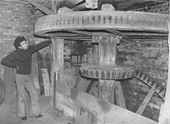 Restoring The Mill 1973
 -
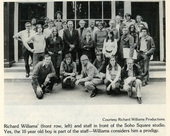 Richard Williams animation company 1973 HB extreme R.
 -
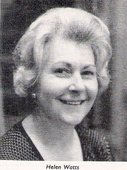 Helen Watts mezzo soprano
 -
 A still from 'The Thief and the Cobbler' by Richard Williams
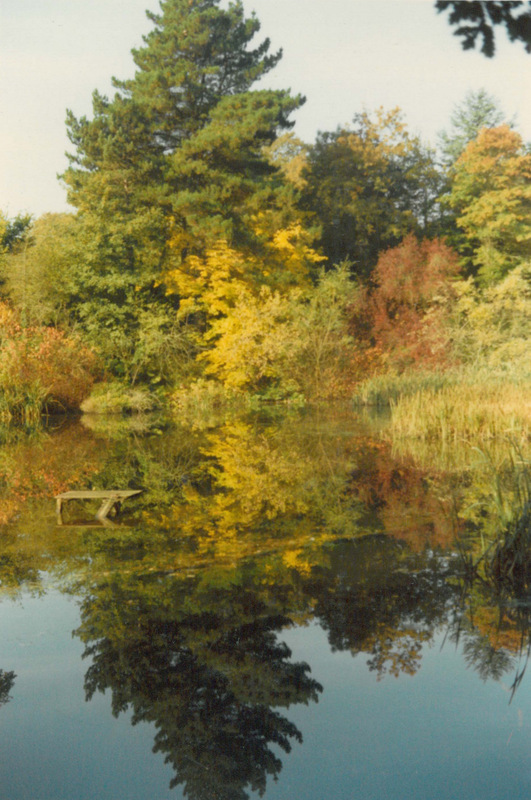
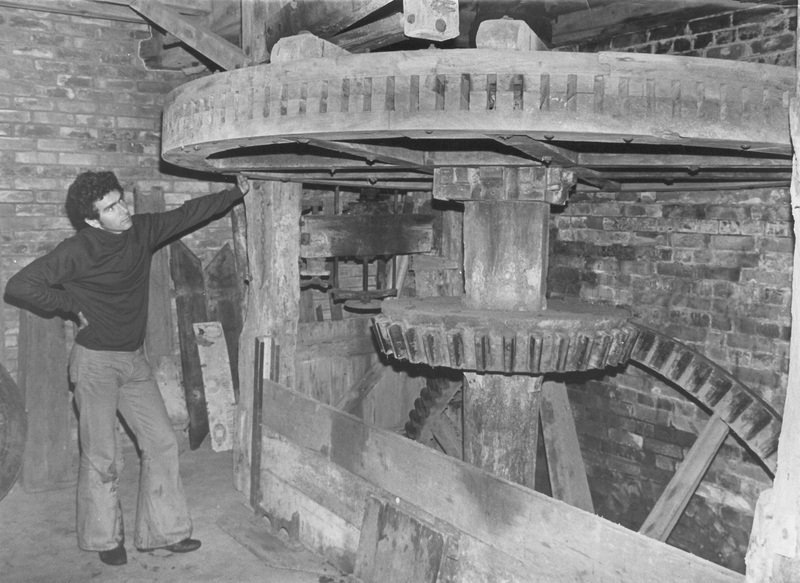
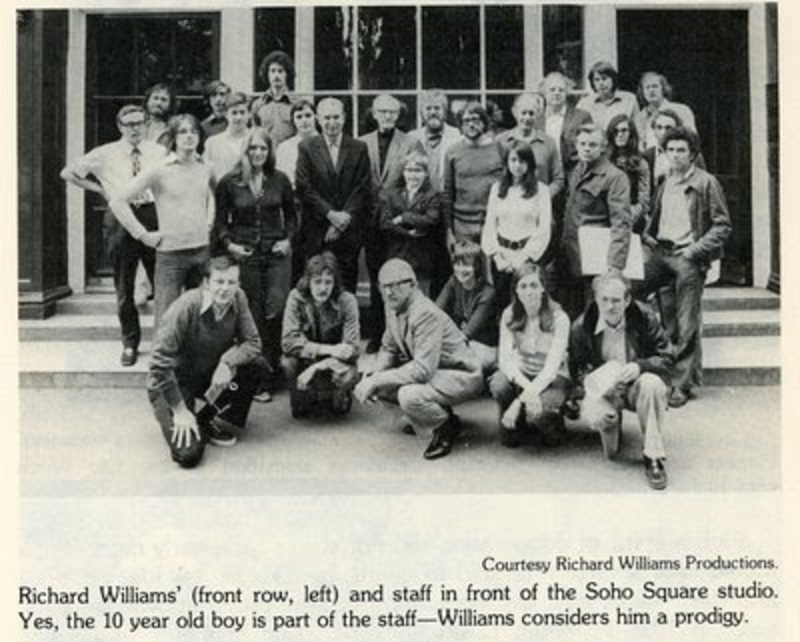
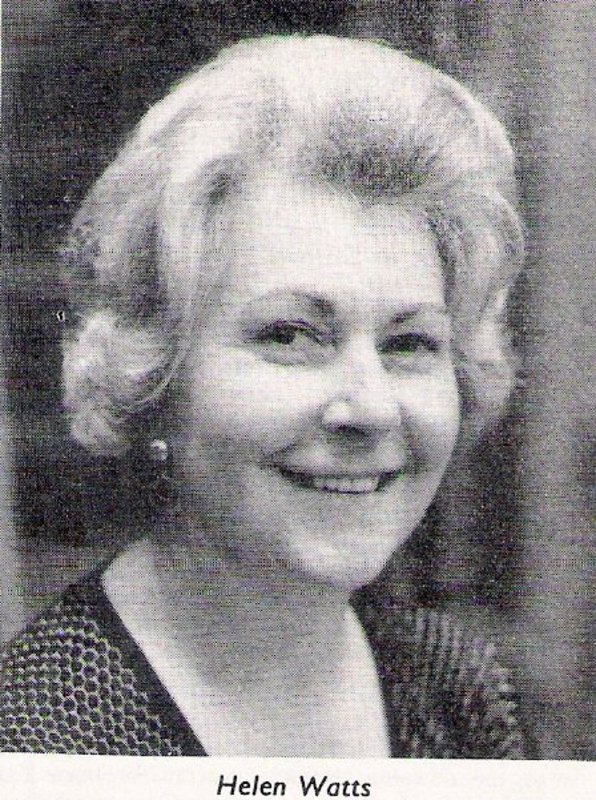

PIANO QUARTET, SONATA FOR VIOLIN AND PIANO ballet:REFLECTIONS (1974)
animated film:'THE REMARKABLE ROCKET satire: THE NEW NATIONAL SONGBOOK.
Jack and Peter were surprisingly enthusiastic about the proposed all-Howard Blake chamber-music programme. Jack asked me for a violin sonata, Peter asked for a set of cello variations, and I decided I would write my own full-scale Piano Trio, if only to dispel my obsession with Schubert's. Jack had other ideas about the piano trio however and explained that his great friend Kenneth Essex loved trout-fishing almost as much as playing the viola. Couldn't I possibly make it a Piano Quartet rather than a Trio? Then he could come down to the mill, spend some of his time fishing and some of it rehearsing. In his time Kenneth had played viola with the Hurwitz, the Gabrieli, the Georgian, the Haffner and the Aeolian - a marvellous and very experienced player. There was really no answer except to make it a piano quartet, since they were all playing for love rather than a fee. Starting in October 1973 in quite rapid succession I completed three chamber music pieces, the first one for Peter:
DIVERSIONS FOR CELLO AND PIANO
My house was named Highbridge because there was in fact a splendid but ancient high bridge supporting the road from Ansty to Cuckfield which crossed the tributary of the river Ouse which had once powered the mill and lay at the top border of my property. It was rumoured that a local council surveyor had tested the strength of the bridge by having some holes drilled into the brickwork. All seemed well and the holes were sealed up but unfortunately they had drilled through a mains water supply pipe and water spread rapidly within the structure, causing it to collapse. It was decided to create an embankment with a tunnel to replace the bridge and the roads all around had to be diverted. A large sign said 'Major diversions' and it suggested an amusing title to me: 'Major Diversions on a Minor Road'. Why not write a minor melodic theme and then compose various highly contrasted diversions from it, eventually returning to the original theme, splendidly reinstated. When the work was finished I tried it through with Peter Willison who seemed very pleased with it. I had no idea that the piece would change and enlarge and transmogrify in the extraordinary way it did. The second piece had been for Jack.
The first draft of this piece was not quite as satisfactory as that for 'Diversions'. In the years to come I quite frequently revised it but for some reason kept it out of sight. Twenty years later in 1994 the distinguished Berlin violinist Christiane Edinger wanted to try it and we half-heartedly played through Violin Sonata, only to put it back in the cupboard. Then in 2007 I happened to be invited to a drinks party at Chester Music where I met the violinist Madeleine Mitchell, who had played for me on the film 'The Hunger' in 1982, years before. She asked if I'd written any violin music and I told her about the sonata (sitting there now for some 34 years!)
'Can we try it?' Madeleine said.
'I'll do some work on it and call you' I said.
I wrote a new slow movement which I thought was stronger. I wrote a new Coda for the third movement featuring an intriguing, close-together canon, and I brushed up the writing from beginning to end. We recorded it at Potton Hall for Naxos in May 2008 and it was well-received.
It had in fact become a new piece and I later decided to name the first version of my violin sonata: THE JACK ROTHSTEIN , VIOLIN SONATA NO.1, and the second version of my violin sonata THE MADELEINE MITCHELL, VIOLIN SONATA NO. 2.
But the sonata's strange progress still hadn't quite finished. In November 2010 I went with my son Christopher to Bratislava to witness the finals of the EBU young musicians prize. The 22-year old Benedict Kloeckner had decided to play my 'Diversions for Cello and Piano' and with them he won the prize. I was so delighted both by his brilliant playing and the fact that he had revived the work, that I transcribed the Violin Sonata onto cello, rather as Cesar Franck once did. Benedict was delighted with it and we unveiled it at a concert in Schlangenbad (nr. Mainz) quite soon after.
But back to 1974 where the third work for Forsyth's Barn Ansty was to be:
This work has always been very close to me. It made me so happy when I was writing it, as if all the troubles of the world had somehow been solved or forgotten. The writing of the slow third movement was a magical experience. I was busy but felt that for some reason the time to write it would be around 5pm on a particular Saturday. It was a fabulous sunny afternoon and at 5pm very silent. The idea of four ascending notes in E major sprang from nowhere and the movement seemed to develop of its own accord. I was in a trance. My Canadian neighbour Jerry Walls told me later that he had come round to ask me about some gardening problems, but he could hear me playing and he thought he should just wait until I stopped playing. When I stopped playing I had virtually completed the movement.
STANLEY KUBRICK AND BARRY LYNDON
Somehow I didn't want any commercial work to 'impede the flow' whilst completing this piano quartet. I felt that if I stopped I would lose it. Sidney Sax rang me one morning and asked if I'd like to do some Schubert arrangements. I told him that I didn't really do arrangements any more and that I was immersed in writing a piano quartet.
'Well I've spoken to the director and he'd really like you to do it.'
'I'm sorry Sid, I'll have to pass on this one.'
The director was Stanley Kubrick and the film 'Barry Lyndon'.
Once again I'd passed on a mammoth project no doubt worth a great deal of money just to follow my own inspiration, where no money was involved at all, no fame, no celebrity - a tiny insignificant concert in Forsyth's Barn. Yet I 'd been so extremely happy that Rosemary Forsyth and the good people of Cuckfield had asked me to compose an entire concert. An entire concert of brand-new music! I was determined to complete it and complete it I did.
I added 'Suite the Up and Down Man', and May 11th in Forsyth's Barn witnessed a complete concert of four world premieres!
MUSIC IN MAY - a programme of new, melodic music by Howard Blake
Two members of the audience were remarkably struck by the new music: One was the editor of 'The Up-and-Down-Man', Jack Dennis, who proposed a recording of the Quartet and Diversions and released it with vast enthusiasm on a specially-created label, Firecrest, later in the year. The other was an eminent local choral director, Janet Canetty-Clarke:
'Your music is like a breath of fresh air! Would you consider composing a work for my choir?'
'Well that's very kind.'
'I conduct The Ditchling Choral Society and we put on regular concerts- 'Matthew Passion', 'Dream of Gerontius' and so on. I know you could write something wonderful for us.'
'What would be the text?'
'You choose a text. What I have in mind is putting on another concert of your music but with the new choir-piece as the main item, but we must do this Piano Quartet too. It's just marvellous! The Norman Hay Hall is very good, part of St. Francis Hospital, we could put it on there.'
I sent Marlene a copy of the Piano Quartet disk and she rang me:
'Wouldn't it make wonderful dance music?'
'I had never thought about it.'
THE LONDON CONTEMPORARY DANCE THEATRE
She went to see The London Contemporary Dance Theatre at Sadler's Wells one night and gave a copy to Robert North, the principal dancer and choreographer. He made both works into ballets: Diversions (Ballet) in 1974 for LCDT and Reflections (to the music of the piano quartet) for Ballet Rambert in 1976. There was also 'Meeting and Parting' (Ballet)(to the music of the 12 Piano Pieces), The Annunciation (to music from Stronger than the Sun in 1979. The 3-act ballet for the new Opera House in Gothenburg, Eva (to music from the Violin Concerto, Benedictus, and Toccata and the Piano Quartet) in 1996, and most famously The Snowman Ballet (in Gothenburg, Verona and Scotland) and The Snowman Stage Show(Sadler's Wells, Birmingham, Edinburgh, Manchester, 1997-2008).
Gerry Potterton was directing one of the Oscar Wilde series himself and to make up for the loss of 'The Happy Prince' offerred me 'The Remarkable Rocket', a parable about vanity, the rocket thinking himself the most important firework of a royal display but being so self-obsessed that he misses the moment and goes off unheeded long after the event. Timing is everything.
David Niven was the excellent narrator and Gerry had hoped that he could have Peter Sellers team up with him to do the many different character voices, but in the event the producers decided they didn't want to run to this expense and they took on Graham Stark instead. He did them well, but where Sellers would have no doubt made them brilliantly funny, the Stark version seemed over-wordy and the sly satires on social pretension seemed too sophisticated for young audiences. Nevertheless I had scored my first cartoon film and the experience proved invaluable when I came to 'The Snowman'.
The flamboyant David Kingsley was a man who had worn many hats: President of the London School of Economics Debating Society, media adviser to both Indira Ghandi, President of India, and Kenneth Kaunda, President of Zambia, sometime speech writer and media-adviser to the Prime Minister, Harold Wilson, founder and director of the advertising agency Kingsley, Manton and Palmer, instigator of the Social Democrat Party and vice-chairman of the Royal Philharmonic Orchestra. He asked me to look at a book he had produced called 'The English Difference'. It was a book more-or-less about 'what makes the English different', written largely by the humourists Paul Jenkins and John Gorham, but with innumerable contributors to the lavish art-work: Michael Foreman, Bill Tidy, Richard Usborne, David Gentleman, Anna Pugh, a huge list. I suppose one should call it a 'coffee-table book', very 'sixties' and very pop-art and very flippant and very iconoclastic. My friend from schooldays - Chris Geer - took a huge dislike to it, but I liked it and when David asked if I could 'set it to music' I jumped at the idea. That night I had booked to hear Beethoven's Ninth at the RFH conducted by Rudolf Kempe, but he had gone sick and the last-minute conductor didn't appeal. I went next-door to the Purcell Room and saw that Tristan Fry was playing percussion with a vocal group called 'The Scholars'. They were an absolutely top-class 5-singer vocal quintet but they sang a rather wacky crossover programme veering from Gesualdo to 'West-Side Story' and I started to imagine 'modern madrigals' for them. Arriving home I sketched the first three of a collection, both words and music. I intended to call it 'The English Difference' but David later decided, somewhat contraversially, to name it 'The New National Songbook'. and The Scholars recorded it with me, performed it at the Queen Elizabeth Hall, on BBC Radio 3, on the Esther Rantzen TV show and in numerous concerts.
'We were watching the birds...'
For Christmas 1975 I wrote words and music for Lullaby, a Christmas narrative. Perhaps I could launch my dormant song with an a cappella vocal group? Enshrined in the work was the song, on this occasion to the words: 'Sleep my little child'. The work was well-received but nobody offerred to record it or perform it again. 'Walking in the air' went back in the drawer for a second time. The following year I knocked up a Scholars Christmas Medley, with 'early music' versions of 'I saw mummy kissing Santa Claus' and such like. Rather ghastly but it went down rather better!
Paul Hamburger at BBC Radio 3 programmed a live concert of 'The New National Songbook' with The Scholars and commissioned a new song for the occasion. I wrote a very dark political lyric in a song for 5-part vocal group and ensemble called
[op.275]'From the Cradle to the Grave'[/0p.275]:
1.From the cradle to the grave Lovingly protected Every burden, every woe Tenderly accepted All the help you need Freely guaranteed Simply take a form and sign your name; They will defend you Nurture and tend you till Death spreads her wings Calls her children home.
2.From the cradle to the grave Problems all predicted Drugs to make you feel all right Generously prescripted Babies undesired May not be required Ended in the twinkling of an eye; They will protect you Heal or vasect you till Death spreads her wings Calls her children home.
3.From the cradle to the grave Poverty has vanished Fear of hardship phased away Unemployment banished Once you pay your due Paradise comes true No more harsh realities to face; They gladly lead you Clothe you and feed you till Death spreads her wings Calls her children home.
4.From the cradle to the grave Nothing is neglected Every little doubt or fear Carefully rejected Slogans for the mind Carefully designed Help us all to feel that we belong They will create us Make us or break us till Death spreads her wings Calls her children home.
5.What's that voice I faintly hear Fearfully despairing Asking what became of love What became of caring? Laugh away its fears Ridicule its tears Just relax and let the world go by; They will enfold you Guard you and hold you till Death spreads her wings Calls her children home.
On another occasion one of the girls in the group was wearing a T-shirt which read:
oh please do not kiss me oh please do not kiss oh please do not oh please do oh please oh
which I set as a 5-part a cappella glee, Oh please do not kiss me or 'T-shirt slogan'(1978).
Michael Leighton Jones, the baritone in the group was a friend and supporter and asked if I could write something for baritone and harpsichord. I responded with an 8-minute scena to words by Robert Browning: 'A Toccata of Galuppi's', which we performed in a BBC Radio 3 recital along with some jolly Warlock and some very gloomy Pfitzner, perhaps my only appearance as a concert harpsichordist!
-
 The new national song book
 -
 On the Sea of Galilee
 -
 The Piano Quartet
 -
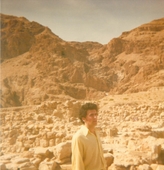 Qumran, once monastery of the Essenes, beside the Dead Sea
 -
 Outside the garden of Gethsemane above Jerusalem
 -
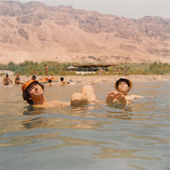 Floating on the Dead Sea
 -
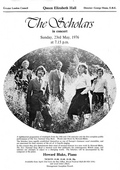 The new national song book
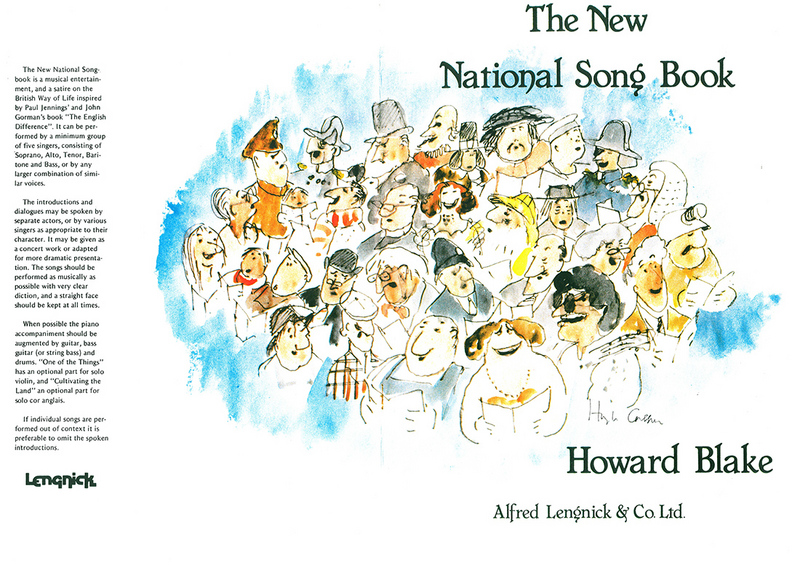
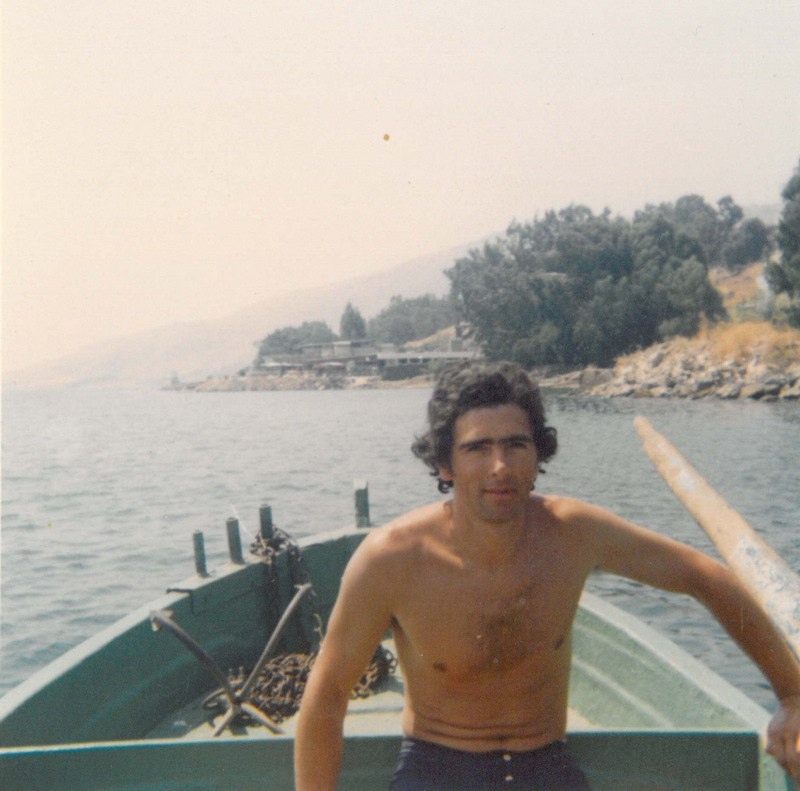
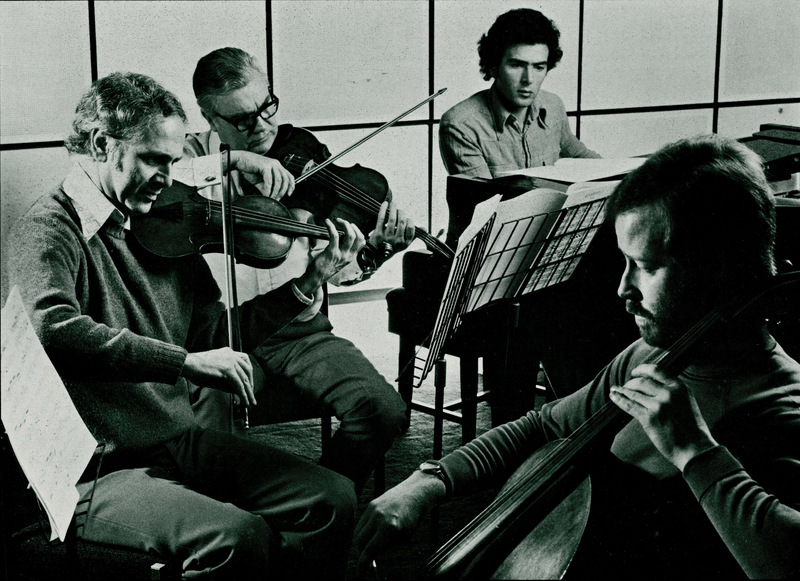
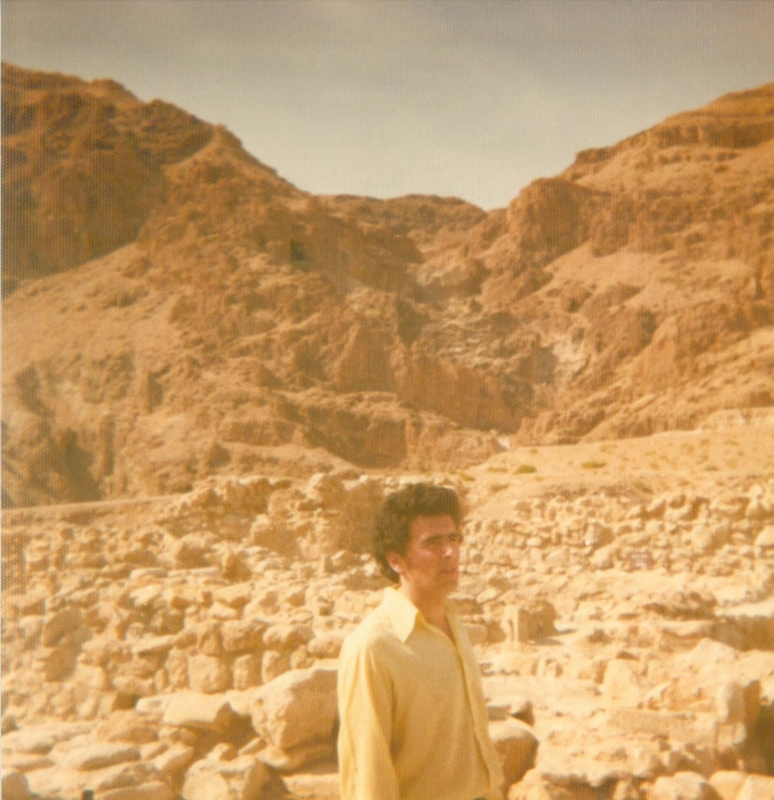
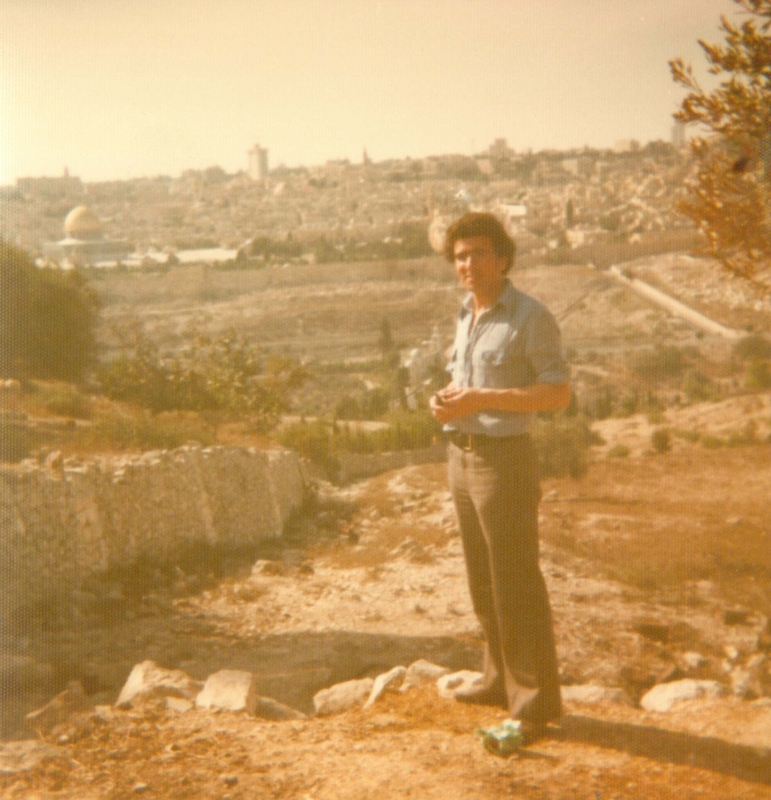
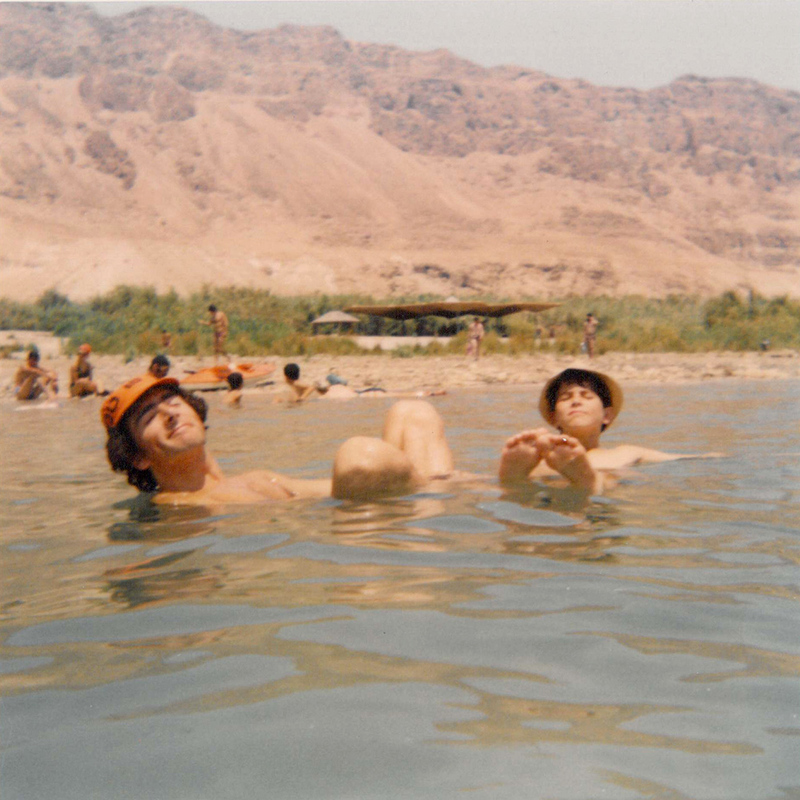
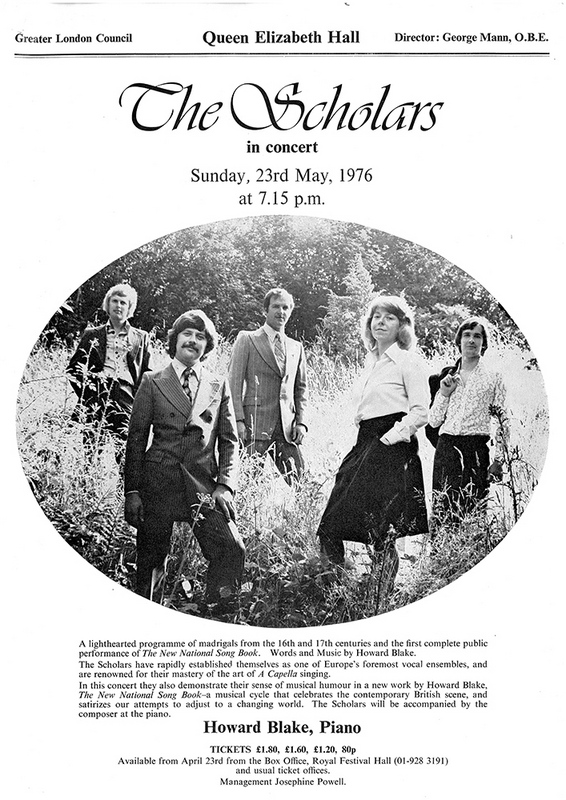
THE SONG OF SAINT FRANCIS, STRING TRIO, THE STATION (1975)
PENNILLION FOR VIOLIN AND HARP, HOKUSAI, PINK PANTHER
PENNILLION
Jack Rothstein introduced me to harpist Annabelle Etkind and asked if I would consider composing a piece for harp and violin. Harp and violin- that's such a Welsh sound I thought - like something played at an Eisteddfodd. 'Pennillion' is an ancient Welsh song-variation form associated with the harp. Why not have the violin as the singer? They performed it at a major charity event in Grosvenor Square and her mother Evelyn was entranced:
'You're so brilliant!'
'Thank you.'
'And thank you for writing such a lovely piece for my daughter.'
'A pleasure.'
'I hear your brother lives in Jerusalem.'
'Yes he does.'
'How interesting. I go there a lot!'
'I'm going over there soon. Maybe we could meet up?
Shortly after this we did indeed meet up at The King David Hotel in Jerusalem whilst I was visiting my brother and his family, causing Evelyn to believe that I was Jewish and leading to certain misunderstandings.
'HOKUSAI', 'THE PINK PANTHER' AND TWO OSCARS!
Working on various animation projects in the Richard Williams Studios, one of his chief animators, Tony White, asked if I could create some music for a short (non-commercial) film about Hokusai. He was funding it himself and I didn't charge him anything for it. It was very beautifully made and for it I adapted a segment of authentic Japanese folk music, setting it for flute and percussion. At more or less the same time, but in very different vein, Dick asked if I could help with some music for the (definitely very commercial!) Blake Edwards film: 'The Pink Panther Strikes Again'. The music for this whole series of wonderfully funny films was of course composed by Henry Mancini, but he was busy in LA and Dick urgently needed tracks in order to create the opening and closing credit sequences. Hank (as he was called) phoned me long-distance and explained what was needed: 'We see the Pink Panther going into an empty cinema as the main theme on saxaphone is played, but then a series of 'send-ups' of very famous movies ensues, The Pink Panther in each case disguised as the main character and each piece of music being a variant of the main theme. The famous movies were: Batman, King-Kong, Sound of Music, Sweet Charity, Hitchcock, Keystone Cops. I created such a score and went into a studio to record it as a guide-track. Since this didn't take very long I managed to squeeze in Tony's score with it at the same time, saving him a lot of money. Tony was delighted with what I did and was able to finish the film which quite soon after won an Oscar for 'best short film'. At the same time Hank approved my track for the 'Pink Panther Strikes Again' having it arranged up for big band, the result being an Oscar for best title music! I don't believe I got any mention for this, but I was delighted to work for Hank, later taking the job of music director and arranger on 'Victor/Victoria' for him.
THE STATION
Elona Thomas was now living with the Welsh tenor Jeffrey Talbot and the three of us met for dinner. Unexpectedly and magnificently he burst into Donizetti right in the middle of the restaurant.
'What a marvellous voice!'
'Thank you.'
'Why don't I write an opera for you?'
'That would be jolly.'
Jeffrey was very jolly; a large man with a large smile and a natural high tenor voice that would sail in full voice up to a top D.
I had never really thought about composing an opera. In the sixties and seventies the full-blown operatic voice with its immense over-cultivation and high-octane power was utterly incompatible with the down-market, blue-collar culture of rock 'n' roll. Opera had become an elite enclave for the very rich and I thought that if I were to write an opera it would probably have to be a satire on the entire genre. Next day I was standing on the platform of grey and drafty Haywards Heath Station:
'The next train from Platform 3 has been delayed due to a points failure.'
I looked at five forlorn travellers standing on it. Just right for an opera cast! And standing ready to sing. On a platform! A young PA (soprano obviously), an older business-woman (contralto), a young city-type (tenor), a scruffy-looking biker (character baritone perhaps?) and the Station-Master (definitely basso profundo). I noticed two girls serving in the buffet. (mezzos I should think.) I would set Haywards Heath Station to music!
Libretto and music for a one-act opera 'The Station' took shape in my mind. I would put it on in Forsyth's Barn for the next Music in May!
ISRAEL
My brother Philip Lawrence Blake had shown an interest in the plight of the Jews as far back as 1953. After his first year at Oxford he had gone on a working holiday to a Kibbutz in Israel and absolutely loved it. After one or two trips back to Oxford he decided to stay and married a Jewish girl named Esther. They settled in Jerusalem where he fathered three children, changing his first name to Zion. I had seen very little of him through my crazily-busy sixties, but in 1974 I asked if he'd like to take a week off work and accompany me on a tour of Israel. We visited the wailing wall and the temple site, the Templar stables and the Al Aksa mosque. We took a bus to Nazareth, swam in the sea of Galilee and in a temperature of around 124 degress Fahrenheit climbed up the cliffs above Qumran, where the Dead Sea scrolls were found. I had one day to myself and wandered round the old city of Jerusalem. Philip and I had been been so strongly brought up Christian that it was hard to believe that he could have changed to Judaism. But then I had changed too. Was I still a Christian? I didn't really know. After Philip's trauma I had stopped attending church except to play the organ. Then that had gone too and after leaving home I had delved into alternative belief systems. I'd been more agnostic than anything else, and pretty cynical and capitalist through my commercial success period. Hardly surprising! Then Jung and his individuation theory had been a great influence, Chandra Sharma with transcendental Yoga had been another. Right at this moment I was being asked to create a choral work and instead of looking at Christian texts I'd been looking at a fairly odd book called 'Towards the One', some sort of concocted liturgy for comparative religion. I realised Jews did not believe in Jesus Christ, but then did I? I wasn't at all sure...
I saw a doorway marked 'Ancient Law Courts' and bought an entrance ticket from a French-speaking nun:
'Vous pouvez entrer. Je vous suivrai en quelques moments.'
I climbed down wide stone stairs cut out of rock, worn by countless millions of feet over centuries. I was in an enormous underground space, more like a cave than a room. Every inch of the floor was scratched with gaming scores and tallies.
'And for his raiment they cast lots.'
I stood still and shivers went down my back. They didn't go away, they continued. My hair stood on end and I could not move. I was petrified! Why? There was nothing there.
After some moments - I don't know how many - the nun came down the steps and addressed me:
'Excusez-moi Monsieur. Vous vous tenez sur le point exact sur lequel le Christ a ete condamne a mort. Bougez s'il vous plait.'
'Excuse me Sir.You are standing on the exact spot on which Christ was condemned to death. Please move!'
This somehow unlocked me and I was able to move again. The nun escorted me back up the ancient steps to the outside world to find that everything was carrying on as usual.
THE SONG OF SAINT FRANCIS
On my last two days we travelled north to Nahariya near Acre. I met a crowd of Esther's relatives and a somewhat acrimonious discussion took place over the role of England in regard to the creation of Israel. We stayed in a flat belonging to Esther's sister and I woke in the night. I opened the window onto palm trees and silent dusty streets. I thought of my brother and was sad. I remembered his breakdown and the hospital. What was it called? St.Francis! How odd. I was being asked to do a concert of my work in the very place he had been treated. My hair stood on end again. I had a remembrance of the 'Canticle of the Sun' by St Francis, which so wonderfully praises God as revealed in nature. In this country, the Holy Land, Nature is at its most vivid, a matter of life and death. I would write the work as some sort of act of atonement.
Returning next day to London I went from Heathrow to the Franciscan library near Victoria, found 'Il Cantico del Sole' in its original early Italian and began to set it to music as The Song of Saint Francis
A FIRST PERFORMANCE BY THE ROYAL PHILHARMONIC
The Royal Philharmonic Orchestra gave Movement for Orchestra its first concert performance at The Fairfield Hall, Croydon on September 15th, conducted by Arthur Davison, just about 10 years after I'd written it. It went down quite well and as a result I received a commission to write a 'Toccata for Orchestra' for their 30th anniversary. The orchestra had been founded in 1946 by Sir Thomas Beecham and I felt really proud to have been asked.
'TOCCATINA' AND THE BEGINNINGS OF 'LIFECYCLE'
Back in 1957 I had won the Hastings Festival Scholarship as a pianist, a year in which my Brighton piano tutor Christine Pembridge made me practise technique as never before, working at studies of Cramer and Hanon and Chopin's virtuosic Ballade no. 2. (It is said that he only used to play the simple F major tune and would miss out the fiendish A minor sections!) I remember thinking it would be fun to write a 'cross-hand' study, which is what 'Toccatina' is. I sketched it out roughly and put it aside. The key of E major made it easy to play since the LH picks out the on-beats of each triplet and the RH plays the 2nd and third note of the triplet on the white notes. The piece would be much harder if written in C major. Chopin's black-key study is not cross-hand but makes brilliant use of the geography of black keys - again it would be extremely difficult to play all on white notes. The black notes help to orientate. 'Toccatina' is therefore written in E major which makes very good use of this orientation factor and makes it quite easy to play - or at any rate easy to play much faster than in a less-suitable key. After Ashkenazy's fantastic all-Scriabin recital at the QEH in 1975 I talked to him backstage and he casually said something like: 'Why don't you write some entertaining piano pieces?' maybe thinking of the pieces Andre Previn had written for him. I was so excited by this idea that I went home that night and wrote the first three almost at one sitting: Prelude in B minor, Nocturne in B major and Impromptu in E minor. There I came to a halt and thought: This gives me a key formula for a huge work which is Major, Minor, drop a fifth to the next Major and Minor and one could thus traverse all 24 keys of the chromatic scale ending with F sharp major from which one would drop a fifth and recommence the whole cycle in B minor. Thus played it could go on being played forever! So where I was at number 3 the sequence would dictate that piece 4 must be in E major and this brought back into my mind the early unfinished cross-hand sketch. This time I worked at it and gave it a form and, having polished it, turned to number 5. I thought then: I have used something from past early sketches and maybe I can do the same for other pieces. I remembered a 'Mazurka' in A minor from 1970 and it dropped in perfectly. I completed what was first called '12 piano pieces' and performed them in a recital on BBC Brighton soon afterwards. The second collection of 12 pieces was not written until 1995 when I renamed the entire 24 'Lifecycle'. They were published by Faber Music but nothing much happened with them until the Shanghai-based pianist William Chen recorded the whole set in Sydney, Australia, issued on Australian Classic FM in an astoundingly good recording! In 2013 Vladimir Ashkenazy would record eight of the pieces on Decca. He uncannily sensed the pieces I had specifically written for him, in general avoiding 'arrangements not specifically written for the piano'. His rendition of 'Toccatina' is quite a lot different from William Chen's, but everything he plays he 'makes his own' - the secret of all great performers.
-
 Scruffy at Highbridge Mill
 -
 Schubert's B flat Trio (Howard, Jack Rothstein and Peter Willison)
 -
 London Contemporary Dance Theatre/Sadlers Wells
 -
 The Song of Saint Francis
 -
 'The Station' opera, Jeffrey Talbot, Elona Thomas
 -
 Hokusai (best short animated film)
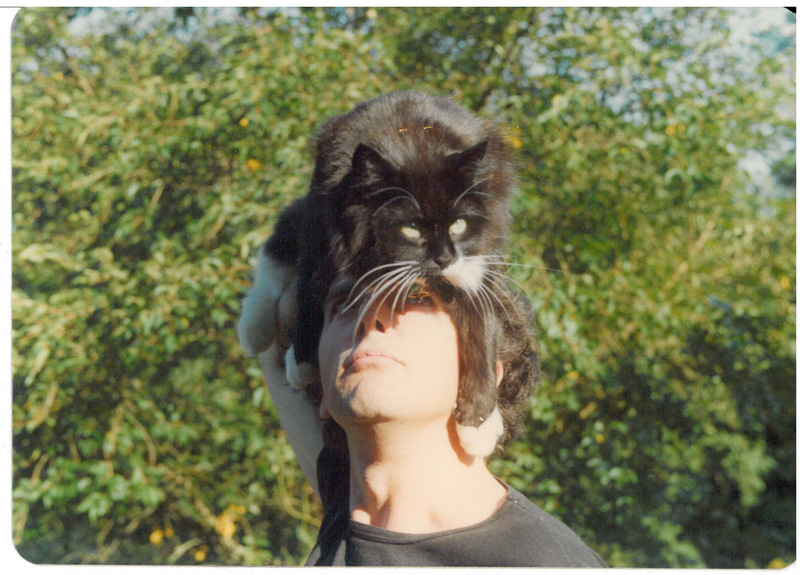
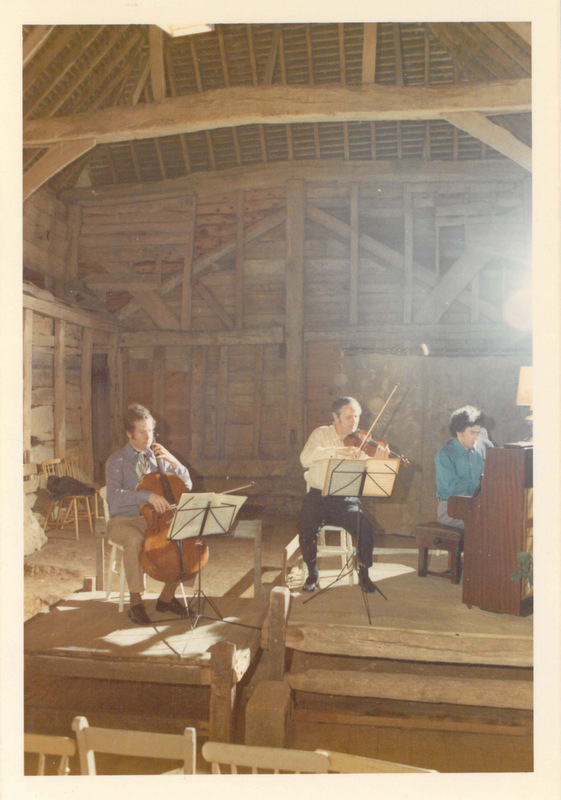



DANCES FOR TWO PIANOS, TOCCATA - A CELEBRATION OF THE ORCHESTRA (1976)
Ballet for the Queen's Silver Jubilee: THE COURT OF LOVE
AN ALL-HOWARD BLAKE CONCERT IN MID-SUSSEX
The premiere of The Song of Saint Francis took place as planned at the Norman Hay Hall, St. Francis Hospital, Haywards Heath, Sussex on 8th May 1976 with The Ditchling Choral Society accompanied by two pianos played by John Walker and the composer and conducted by Janet Canetty-Clarke, the choir director. Jack Rothstein, Kenneth Essex and Peter Willison played the Piano Quartet with me, and Suite 'The Up and Down Man was played without Ken as a piano trio. Jack played Pennillion with harpist Annabelle Etkind and the choir sang songs from the 'The New National Songbook' and an a cappella setting of The Prayer of St. Francis. To bring the concert up to its appropriate length I had composed Dances for Two Pianos specially for the occasion and played them with Janet. The concert was a great success and, rather amazingly, sold out.
The Song of Saint Francis was particularly well received and Janet asked if I would orchestrate it for a major performance in Worth Abbey alongside the Mozart Requiem the following year. On examining the scoring I was convinced that Mozart's instrumentation could work for it by replacing the two basset-horns with bassoons and adding certain percussion instruments to reflect the different elements characterised in the verses. I set to work.
PREMIERE OF 'TOCCATA - A CELEBRATION OF THE ORCHESTRA'
On September 15th under the conductor Hans Vonk, the Royal Philharmonic Orchestra gave the premiere of 'Toccata' to celebrate their 30th anniversary. Perhaps it was not quite what they had expected. They had asked for a showpiece like Britten's 'Young Person's Guide to the Orchestra' and this is to some extent what I attempted. However it didn't quite turn out like that. It was 20 minutes long, long enough to be called a Concerto for Orchestra and bristled with modern cross-rhythms and devices from jazz, rock and film. Conductor Hans Vonk clearly took an immense dislike to it and at the end of the performance threw the score on the floor and stamped off without bowing. A little ungracious!
At the time I was interested in gematria and celestial mathematics and I used a complicated formula to create the form. It is an 84-bar tune which divides into the magic numbers 4, 7 and 12. I stuck rigidly to the formula , but have to admit that such formulas tend to be an impediment rather than an asset. Composers Christopher Gunning and Stanley Myers, both coming from the same composing stable, just loved it, and I think the orchestra did to some extent as well. It received a favourable review from Edward Greenfield however, who thought it original:
'It introduces the instruments of the orchestra but not in their conventional roles.'
'THE COURT OF LOVE' - A BALLET FOR THE QUEEN'S SILVER JUBILEE
Lynn Seymour was prima ballerina at The Royal Opera House and the most marvellous dancer. I saw her first in a rehearsal there of Kenneth MacMillan's 'Song of the Earth'. I didn't instantly realise it was her, but from the second she came on stage I was riveted. She was at the height of her powers and famous above all for having partnered Rudolf Nureyev in 'Romeo and Juliet'. I met her because she and Robert North had agreed to dance a 'pas de deux' to the Andante from my Piano Quartet as part of Margot Fonteyn's farewell tour. I went to see them perform it and Lynn asked if I would be interested to create a ballet with her. She had been asked to choreograph a work to celebrate the Queen's Royal Jubilee. I had an idea for it and wrote scenario and score of 'The Court of Love'. Lynn choreographed it for the Sadler's Wells Royal Ballet with David Bintley as The Knave. Barry Wordsworth conducted the premiere at a Royal Gala on 26 April. I was honoured to have dinner with Princess Margaret and to meet the luminaries of the ballet world: Dame Ninette de Valois, Sir Frederick Ashton, Sir Kenneth Macmillan and Sir Robert Helpmann. The ballet was well-received and toured succesfully for a couple of years.
-
 David Bintley in 'The Court of Love' at Sadler's Wells Royal Ballet, celebrating the Queen's Silver Jubilee
 -
 The Scholars sing 'The New National Song Book'
 -
 'Toccata' commissioned for the The Royal Philharmonic's 30th Anniversary
 -
 The Scholars sing 'The New National Songbook'
 -
 Toccata for orchestra
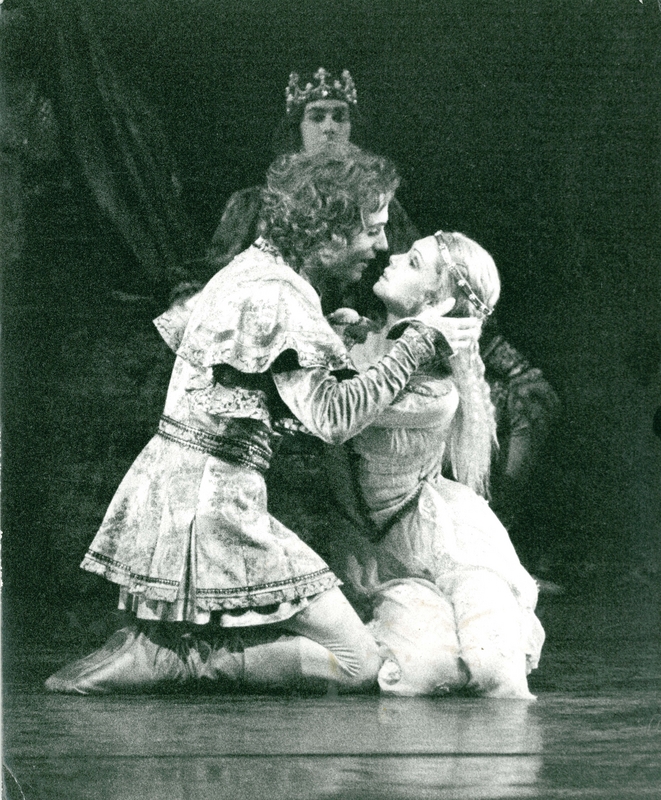
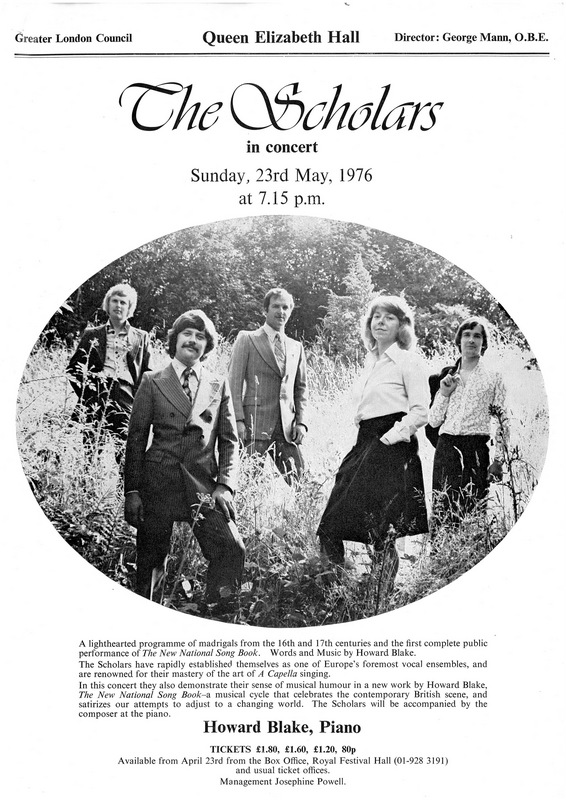
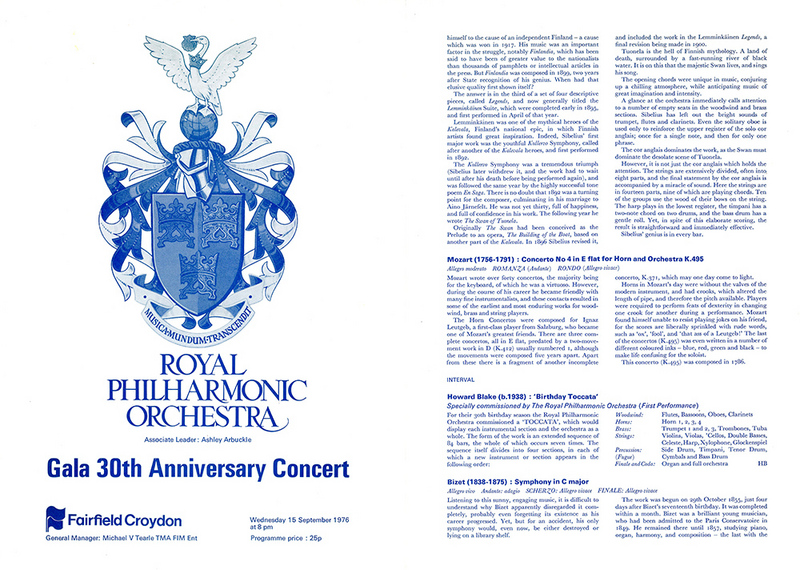
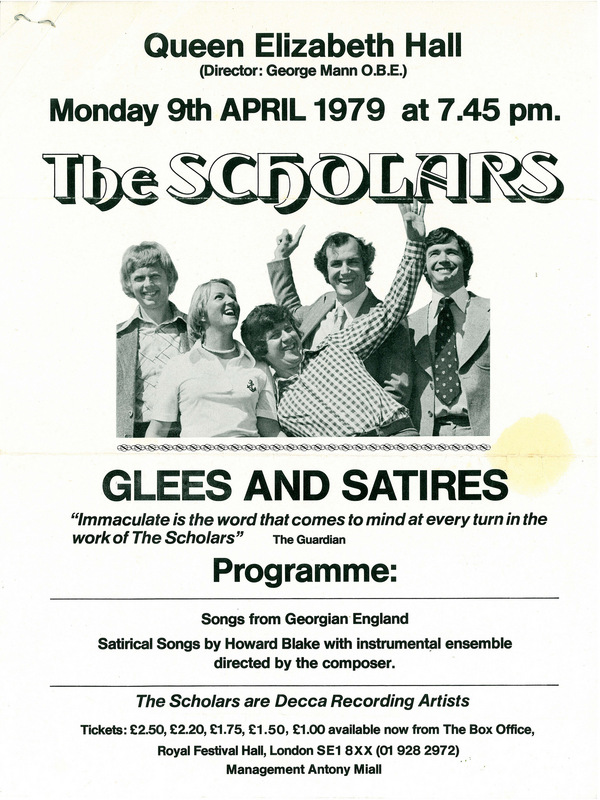
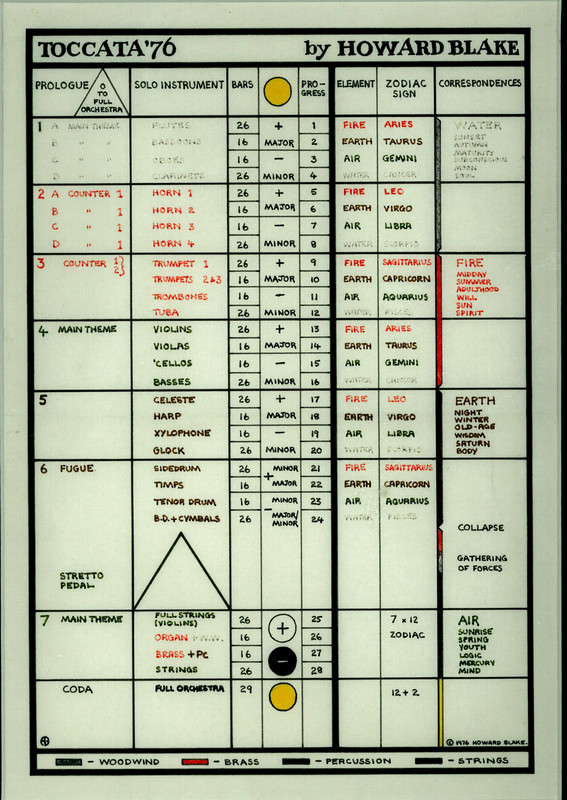
films: 'THE DUELLISTS', 'STRONGER THAN THE SUN' (1977)
Ballet: 'LEDA AND THE SWAN'
'THE DUELLISTS'
I got a call from Ridley Scott:
'I've made a feature film with David Puttnam and we'd like you to do the score.'
'Oh gosh Ridley, I've really sort of given up doing films.'
'What are you doing?'
'I'm writing a ballet for the Queen's Jubilee.'
'We'd like to show you the film. It's looking terrific.'
'I'm terribly busy. Do you want to come down to the mill?'
'What mill?'
'I'm living in an old water mill in Sussex.'
'That sounds great. David'll love it. How do we get there?'
'Get on a train to Haywards Heath and I'll pick you up at the station.'
I was reluctant to do it, because I could see it taking me away from my newly-won freedom and my 'real' music. The two arms of my career were starting to fight each other.
David Puttnam fell in love with Highbridge Mill:
'Does it work?'
'Yes it does.'
'Wow, let's get it going!'
I showed them how to open the sluices and the great iron wheel lumbered into motion. We spent the afternoon playing with it.
'Fantastic! I want one. Can I buy it off you?'
'No you can't!'
David scoured the land for a similar mill. He found one in Ireland and got so infatuated with 'the countryside' that as Lord Puttnam he was to become President of the 'Council for the Preservation of Rural England.' The boy from Ilford fell in love with the countryside.
Next morning I was at RSA in Lexington Sreet and instead of a watermill we were playing with a Steinbeck flatbed viewer. I saw the first shots of the film and realised that it was the most beautiful film I'd ever seen. David was in terrific form:
'We want to give you a virtually free hand to write a great classical score. We want the end credits to be magnificent, like a new Wagner's 'Liebestod' from 'Tristan and Isolde.'
'How long do you want the credits to be?'
'As long as you want. I'll keep them going till the music ends.'
No composer on earth could resist such an offer.
I started work and recorded the score with John Richards at CTS Wembley April 12-14th. Ridley and David were delighted and David wrote me a card:
'Not just good - it's great!'
'The Duellists' starred Harvey Keitel as Ferraud and Keith Carradine as D'Hubert with numerous cameo parts by Albert Finney, Edward Fox, Tom Conti, Robert Stephens, John McEnery and others. It was a great success at the Cannes Festival and won the Special Jury Prize. Ridley had made a dauntingly-brilliant entree into feature films and never looked back.
The film was made for roughly one million pounds, which would have been considered a small amount for a sumptuous period epic at that time. Keith Carradine later recorded his views on the film:'Somehow what Ridley managed to accomplish was the illusion of richness. It really emerges as a sumptuous film, but a lot of that is owing to the score. What Blake managed to do was create a classic score which evokes the atmosphere and drama of the period and what it adds to the film is immeasurable.'
THE SONG OF SAINT FRANCIS AND THE BIRTH OF 'BENEDICTUS'
The premiere of The Song of Saint Francis took place on 15th May in Worth Abbey and I met the great tenor Richard Lewis who was singing the tenor part in Mozart's Requiem. The Abbot, Victor Farwell, invited us into his room for a Benedictine:
'How dare you write a work for the opposition?'
'What do you mean?'
'St. Francis. He's the opposition.'
'I'm sorry, I'd no idea.'
'Would you write an oratorio for the 1500th anniversary of St Benedict?'
'When is it?'
'1980. He was born in 480AD.'
'I don't know anything about him.'
'You can come and stay with us and we can tell you all about him.'
'All right.'
Richard Lewis was listening:
'Write a great tenor part and I'll sing it. But it must be rewarding, demanding. And I'd like some sprechgesang in it.
'All right.'
I'd already agreed to do it.
ALIEN
On the strength of 'The Duellists' Ridley was immediately offerred the sci-fi film 'Alien' and he asked if I would score it. I went down to Shepperton and looked at the set with him. I agreed I would like to work with him on it and would ask Liz to negotiate a contract. However, his producer was not user-friendly like David. He explained to me that Twentieth Century Fox had its own talent and its own stable of composers. I was not one of them. Jerry Goldsmith was and he was going to do the score. Ridley found he had no power to contradict this and Liz said she could do nothing.
'LEDA AND THE SWAN' - A BALLET FOR TELEVISION
Lynn Seymour visited me at Highbridge Mill one day to tell me that she had been asked to create a television ballet for the BBC 'Omnibus'programme.
'Would you be interested in composing a score?'
'What's the scenario?'
'I don't have one but I want it to be as erotic and sensual as possible. Have you got any ideas?'
I had written the scenario for our ballet 'The Court of Love' created for Sadler's Wells Royal Ballet for the Queen's Silver Jubillee so this wasn't as surprising as it might have been!
'How about using an erotic poem? For instance W.B.Yeats's 'Leda and the Swan'?'
'Read it to me.'
I took down my 'Little Treasury of Modern Poetry', presented to me when I won the 'Headmaster's Reading Prize' at school. I don't think he would have approved.
'A sudden blow; the great wings beating still Above the staggering girl, her thighs caressed by the dark webs, her nape caught in his bill, He holds her helpless breast upon his breast.
How can those terrified vague fingers push The feathered glory from her loosening thighs? And how can the body, laid in that white rush, But feel the strange heart beating where it lies?
A shudder in the loins engenders there The broken wall, the burning roof and tower And Agamemnon dead. Being so caught up, So mastered by the brute blood of the air, Did she put on his knowledge with his power before the indifferent beak could let her drop?'
Lynn loved it:
'I will find the most beautiful boy and girl to dance it and in the middle we can have the poem read over the music by Derek Jacobi. How would you score it?'
'Well if it's going to have words over it, it shouldn't intrude too much. Perhaps a string quartet?'
'Marvellous!'
I started work and recorded 'Leda and the Swan'in July at Lime Grove with the Delme Quartet. Unfortunately the programme director, Bob Lockyer, didn't take kindly to the idea of the poem:
'No we can't have a poem in a ballet. Anyway we don't have any budget for it.'
It was excluded, which was a pity because without it the ballet didn't make much sense. It was shown on TV and a newspaper headline said, perhaps with some justification:
'A kiss, some feathers and they call it art.'
The string quartet was buried in a drawer in disgrace and thirty years passed by. In February 2007 I was in Scotland for a wonderful concert given by the Edinburgh String Quartet who proposed a quartet commission:
'Have you ever written one?'
'I've written works which use string quartet - to accompany a singer for instance in Shakespeare Songs or a flute in the Flute Quintet- but not a serious string quartet on its own.'
'We heard you had written one.'
'Well I did once write a ballet for string quartet.'
'Could we see it?'
When I got home I took 'Leda and the Swan' out of its drawer and started printing it up on computer. At first I scrapped large chunks of it. It embarrassed me, but the more I listened to it the more I realised that a lot of it did work, even the intentionally under-powered section meant for the poetry-reading, which in some way created breathing space. It had some purple passages in it but then that's what it was supposed to have had! I took great trouble to try and perfect it.
LYNN SEYMOUR AND RUDOLPH NUREYEV
David Puttnam came to the premiere of 'The Court of Love' and was bowled over:
'Let's make a ballet film.'
'OK.'
We talked about subjects and somewhere along the line I mentioned the Max Ophuls film 'Lola Montes', the story of an extraordinary Irish 19th-century adventuress who had posed as a Spanish dancer and seduced her way through all the celebrated men of Europe, finally causing the downfall of King Ludwig I of Bavaria and ending up as a circus high-dive act in Barnum's Circus in New York. We thought it would be the ultimate ballet part for Lynn who was at her peak. Rudolf Nureyev was currently her partner in 'Romeo and Juliet' and he was interested. Jacob Rothschild was alo interested. He very kindly provided us with some research material and was interested in financing it. A Wednesday morning meeting was set for all parties involved to meet at David's office in Kensington, but the evening before he inexplicably panicked and cancelled it.
The moment was lost forever.
'STRONGER THAN THE SUN'
Film director Michael Apted had been impressed by the score of 'The Duellists' and asked me to score a BBC film of a play by Stephen Poliakoff. 'Stronger than the Sun' featured Francesca Annis and Tom Bell, a tragic and powerful story of a woman working in a nuclear plant, Sellafield, who commits suicide by swallowing plutonium as a protest against global nuclear proliferation. It is like music for a 'crucifixion' and writing it opened up a deeper vein in my music than hitherto. I played the score through to Michael and Margaret Matheson the producer who was impressed with it and went out on a limb to let me have the line-up I required, landing herself in major trouble for overspending. We recorded the score on 20 September at Lime Grove with a string section from the RPO consisting of 6 violas, 6 cellos, 1 double bass, percussion (2 timpani, side drum, sus.cym) and piano. It worked wonderfully.
After the screening Robert North approached me about using the music for a ballet: 'The Annunciation' first performed by LCDT in Jerusalem in August 1979
Whilst writing it I realised that, having escaped from one 'rat-race' in the Sixties I had now entered a different one in the Seventies. Despite 'giving up' films and the media I was back up to my neck in them. The new impetus and strength that my 'sabbatical' had given to my music was being recognised by creatives and once again being fully 'utilised by society.' How long could I keep writing at this speed, and how should I deal with it? Shadows crossed my mind again whilst composing 'Stronger than the Sun' and I had a sense of foreboding. I felt that the bubble of success would suddenly burst again. The deeper threads in my musical language were soon to re-appear in the oratorio 'Benedictus', and again many years later in 'The Passion of Mary'.
'AGATHA' AS MUSICAL DIRECTOR
Due to the strong impression made by 'The Duellists' I was deluged in a flood of films,and concert music once again took a back seat. David Puttnam invited me to be musical director and composer on Agatha and the director chosen was Michael Apted for whom I had just scored BBC's 'Stronger than the sun', which I'd much enjoyed. We set off for The Swan Hotel, Harrogate where the film was to be shot. Through my friend Angela Fox in Cuckfield I was invited to a delightful lunch at Harewood House by the Earl and as we sipped a pre-luncheon drink remarked on the superb view.
'Yes' he said 'we had it built by Capability Brown.'
When shooting was under way I was also asked if I would like to appear as a pianist playing in a palm court trio. We pre-recorded some of it with Sid Sax on violin and the legendary cellist Reginald Kilbey, who could instantly create perfect cello lines by ear. 'Agatha' had major stars, Dustin Hoffman and Vanessa Redgrave, and a top cameraman in Vittorio Storaro, but not all was sweetness and light. On day one of shooting three different scriptwriters appeared all claiming to be the chosen one and the film is now notorious for the chaos surrounding it.
-
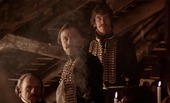 Scene from Ridley Scott's 'The Duellists'
 -
 'The Duellists' Jury Prize at Cannes Film Festival
 -
 'The Annunciation' Robert North's ballet for LCDT
 -
 'The Court of Love' - the maiden and the troubadour
 -
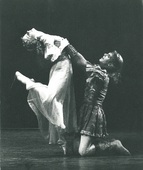 'The Court of Love' - The Maiden and The Prince
 -
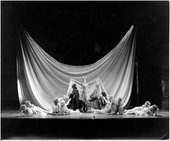 Finale - 'The Court of Love', Sadler's Wells Royal Ballet
 -
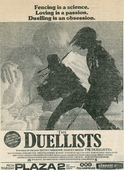 'The Duellists' Jury prize Cannes
 -
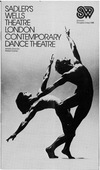 'The Annunciation' ballet LCDT
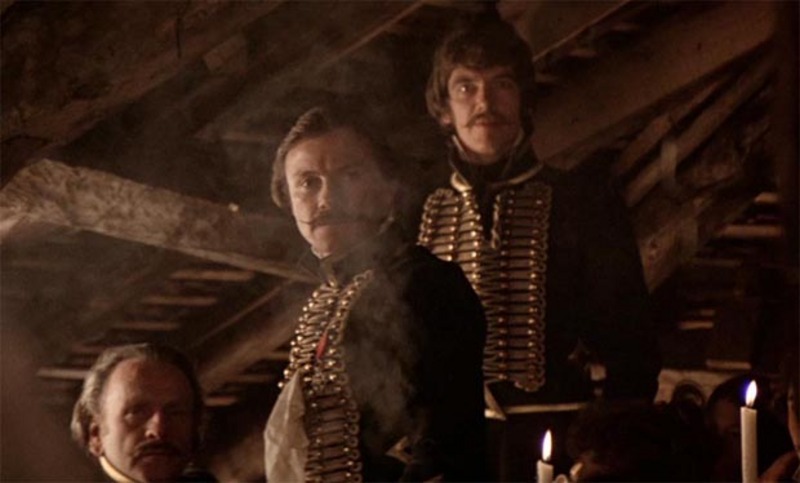
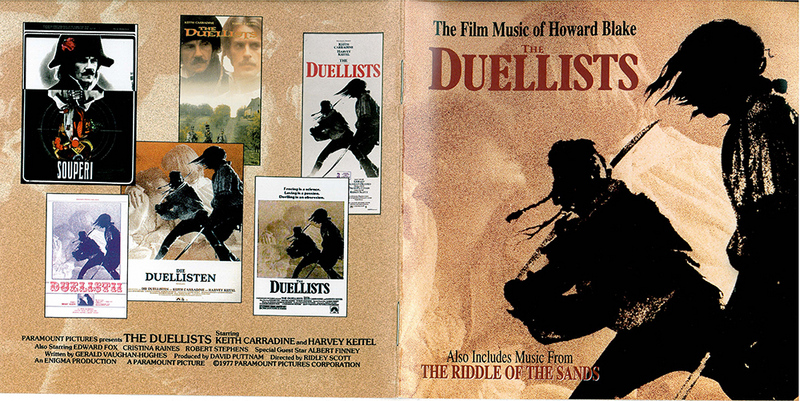
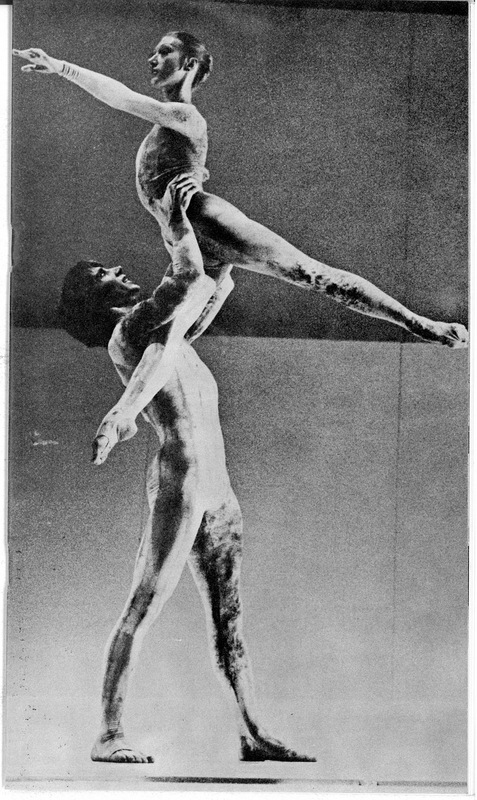
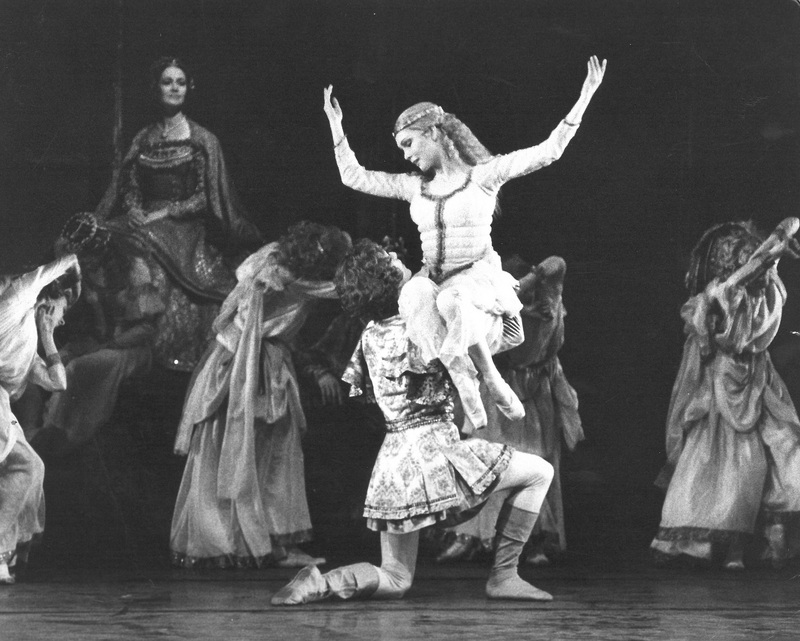
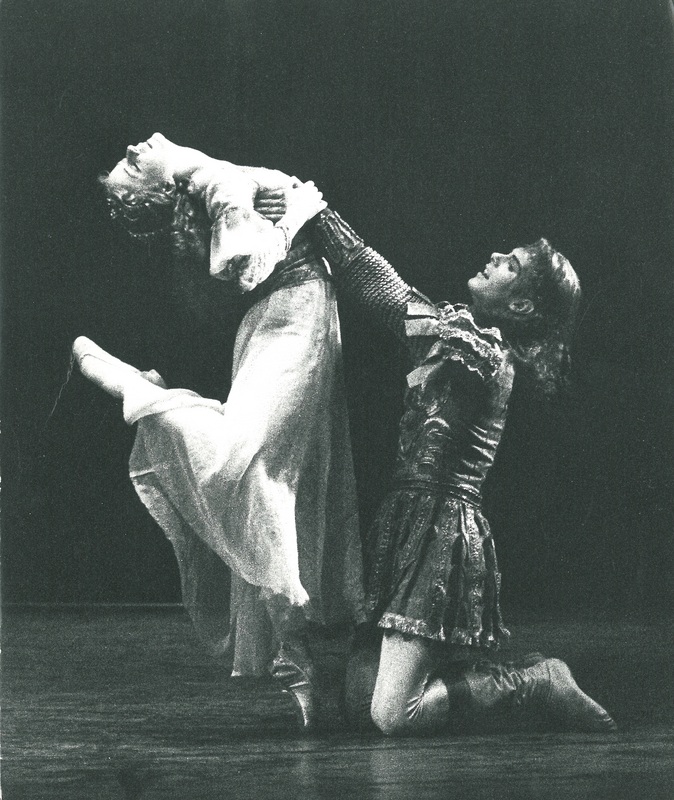
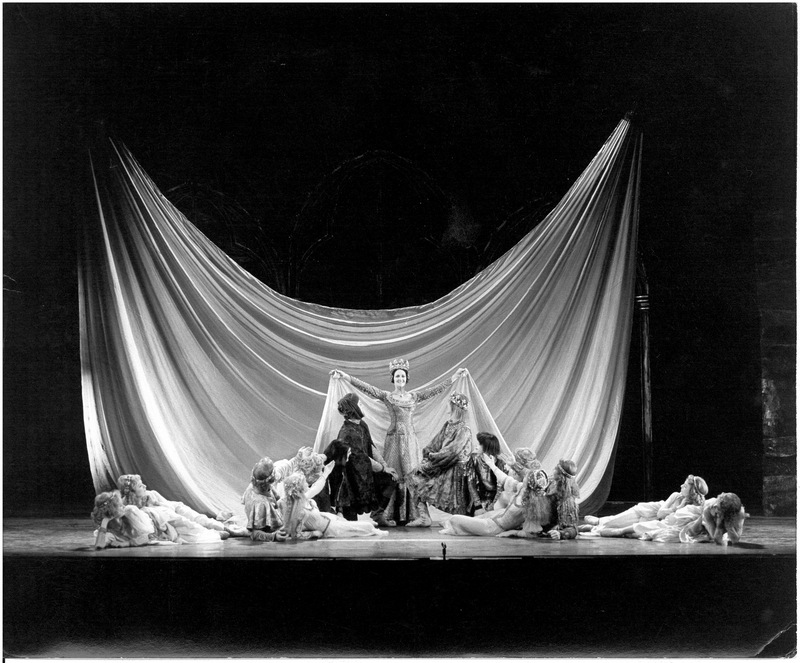
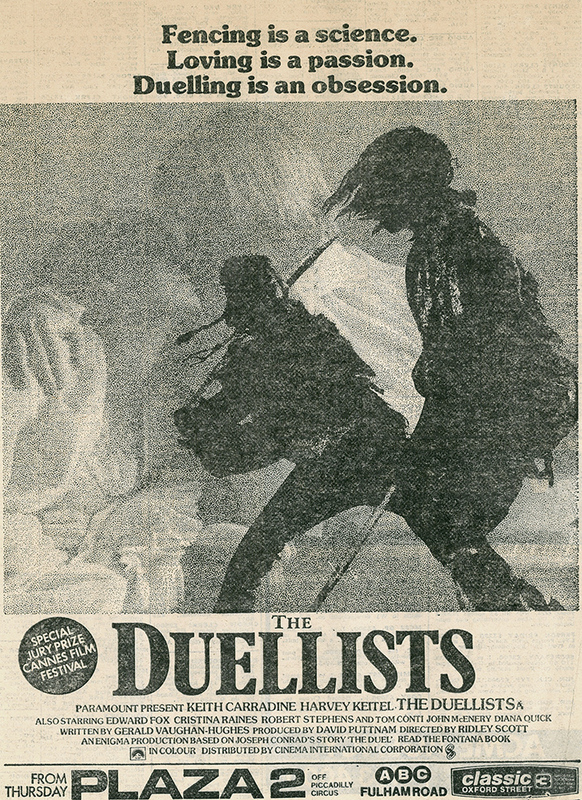
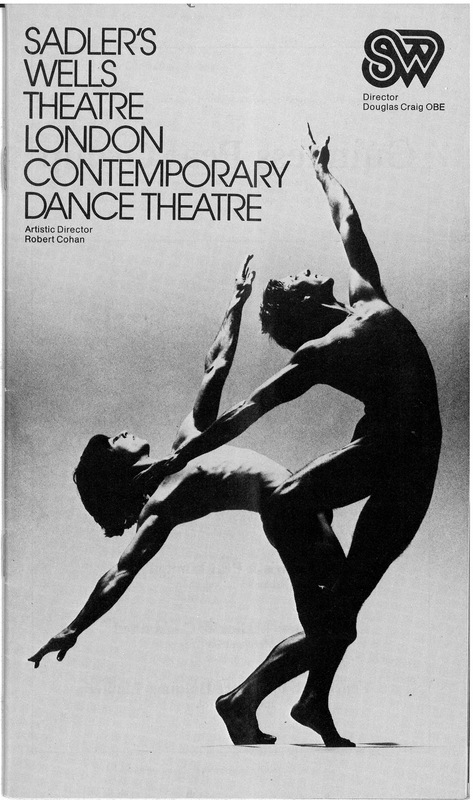
baritone & harpsichord: 'TOCCATA OF GALUPPI'S', FLUTE CONCERTINO (1978)
tv:MOON STALLION, films: BLOOD RELATIVES, AGATHA, ODD JOB, RIDDLE OF THE SANDS
BLOOD RELATIVES
Going down to Shepperton Studios one day to discuss 'Agatha' I bumped into Peter Collinson and he asked me if I could possibly write a score for the French director Claude Chabrol's 'Blood Relatives' with Donald Sutherland and Stephane Audran. Michael Klinger had apparently acquired the English-spoken version for world-wide distribution and they felt that the existing score recorded in France was not suitable. I was not sure of the ethics of this or whether the great Chabrol approved but I took it on and managed to complete it in three weeks, recording it with John Richards at CTS on April 28th, a score for dark low woodwind, harp, percussion and strings.
'AGATHA' AS COMPOSER
When the filming of 'Agatha' was completed I was asked to compose and record a large-scale score 'in the manner of Max Steiner', but suddenly David Puttnam walked away from the project and a new producer arrived with totally different views. The director Michael Apted loved the score although in his enthusiasm it was dubbed perhaps too loudly. A questionnaire at a BAFTA viewing revealed that the audience loved the music but didn't much like the film. This did not please Jarvis Astaire, the incoming producer who as I understood it at the time decided to scrap the entire score. The editor, my friend Jim Clark, however presented a different take on this in his autobiography of 2010 'Dream Repairman':
'This production had another strange and rather sad little story. Howard Blake had written an absolutely wonderful score for 'Agatha' which we recorded and mixed. It was very much in the Miklos Rosza style and I thought it was great and so did Michael Apted. We ran the movie one night at BAFTA for an invited audience and for some reason Vanessa didn't like the music and she was instrumental in having First Artists dump Howard's score and replace it with an American score by Johnny Mandel. It changed the nature of the movie because it became more sentimental.'
I was mortified. If the score had remained I think that I would have moved into the forefront of feature film composing. This was clearly a blow and my career developed differently.
THE RIDDLE OF THE SANDS
My Irish accountant and dear friend from 1966 to 1999, Erskine Frank Dunphy, was named after the novelist, adventurer and Irish patriot, Erskine Childers, who wrote a famous novel about Kaiser Wilhelm's supposed dastardly plan to invade England on its undefended East coast by using flat-bottomed barges containing the Prussian army. This unlikely story was believed in about 1909 by the youngish Lord of the Admiralty, one Winston Churchill, who 'asked questions in the Commons' and caused funds to be made available to construct coastal defences. A film had been made of it by director Tony Maylam for Rank who approached me about an orchestral score. He wrote about his decision when the album of the score was eventually released:
'I always knew that the choice of music would be extremely important in the film's eventual success. I considered several composers and different styles of music, ranging from Rick Wakeman, who was a major popular recording artist at the time, to Andre Previn. Then I went to a preview of a screening one night in 1977 at the Brtish Film Academy theatre of a first feature by film director Ridley Scott. The film was 'The Duellists' and the music knocked me out. It was by Howard Blake. Following the screening I spoke to Ridley about Howard and he couldn't sing his praises highly enough, so a meeting was set up. As Howard wrote the major themes in the movie, he'd play them through to me on the piano in his studio. We'd discuss them and make any changes or refinements and then he'd put the changes into the full score. The recording took place over three days at the Music Centre Wembley in September 1978, with Howard conducting the National Philharmonic Orchestra, comprising sixty musicians and choir. Among them were several world famous musicians, including John Wilbraham and Alan Civil. Howard's score and the movie were well-received by the British press on its UK release in 1979, following an acclaimed premiere in Dublin with the Childers family present. The film went on to enjoy world-wide theatrical success and is now gaining a vast new audience on TV and cable where it's become an annual favourite. [Tony Maylam,London, 2000]
It was thought that Prince Charles had a hand in it. Certainly it was a very English and patriotic affair. 'The Riddle of the Sands' starred Michael York as an upper-class Foreign Office blimp, Simon McCorkindale as a trusty thoroughly-decent chap much given to yachting in small boats, Alan Badel as a dodgy Englishman who has ratted and become a German spy, Francesca Annis as his wholly innocent daughter who assumes a delicious pseudo-German accent and is the understated love interest. I was given much longer than usual to compose a score - almost the whole summer. My second wife, Patricia Rayment, was expecting a child and didn't want to live away down at the mill, so I decided to rent a pleasant Kensington mews house, not that far away from Barkston Gardens. In the large ground-floor reception room I placed my upright Welmar piano and, by courtesy of British Lion, a full-size Steinback flat-bed viewer as used by editors on feature films. I gave the film a German musical orientation with little glimpses of Mahler, Brahms and Wagner - in fact rather cheekily quoting his 'Tarnhelm' motif as the theme for the gunboat-masquerading-as-a-paddle-steamer. The main theme was possibly more like Mendelssohn and I scored the long opening credit sequence for female choir and symphony orchestra - unusual and I hoped original scoring for a film. I enlisted two of my friends to help me. Chris Geer had read German Lit. at Oxford and provided a splendidly appropriate lyric praising the dawn, the sea and the Vaterland. My one-time school friend David Shaw who was temporarily available after having been a voice-coach at Covent Garden, Ulm and Bayreuth asked if I could find him something and I suggested he supervise the John Alldis Choir, since his musical experience in Germany seemed appropriate.
'All right, I'll get you the job, but don't whatever you do make remarks about the music in front of the director.'
'Why not?'
'Well because this is a film and you're not used to that milieu. With newly-written music, directors get very jumpy and nervous. Just conduct and leave all the rest to me.'
'I understand.'
We recorded at CTS on 18th September 18-20. The opening with the female choir sounded fabulous and Tony loved it. David came up to the box.
'It's pretty funny German isn't it?'
'What do you mean?'
Tony twitched a little.
'Well it's not Goethe is it?'
Tony twitched a little more.
I tried to to mouth 'shut up' but it was too late.
'I had it specially written.'
'Oh I don't think I can risk that. Make it into an instrumental.'
The choir was junked and my score was a little spoilt. A great pity.
PERFORMING RiGHT SOCIETY
On the other hand I felt that I was extraordinarily lucky to be so busy in so many fields. I felt that I should 'do something to repay society a little'. Since the only world I really knew was music and the media I become interested in musical politics. A lawyer called Trevor Lyttelton had been making waves within the PRS to which I belonged. I went to talk to him and it was suggested by him and various other people that I stand as a director. I got a large number of votes and joined the council. I got to know Michael Freegard, Vivian Ellis, Alan Frank, Sir Lennox Berkeley, Dick James, Cyril Simon, Jo Horovitz and many others. Also I was 'cultivated' by Donald Mitchell from Faber Music. I took PRS seriously and devoted time to it for the next 9 years, also founding the Association of Professional Composers and lobbying for all three existing composers' organizations. (APC, CG, BASCA).
THE ODD JOB
Director Peter Medak invited me to score 'The Odd Job' a small-scale cinema feature-film black comedy with Monty Python's Graham Chapman, David Jason and glamourous starlet Diana Quick. I wrote both words and music for its wry title-song: 'Too late love', which was sung beautifully by Tony Burroughs. The score unusually featured solo jazz violin and solo jazz viola, something my friends Jack Rothstein and Ken Essex had always wanted to do. I booked them as the soloists which pleased them no end!
CATHERINE GRACE BLAKE
At the beginning of the year I had moved into a pleasant rented mews house in Earl's Court with my second wife Patricia ('Trisha') and now on 4 October at 1.50am she gave birth to my first child, Catherine Grace Blake, safely and happily born in a Wimbledon nursing home. I named my daughter Catherine after the wife of my hero William Blake, and Grace after my much-loved mother. Catherine was and is the most lovely girl, in whom I ever took and take great pride.
'THE MOON STALLION' There had conveniently been a pleasant quietus at this time, caused by the fact that I was waiting to start on the score of 'Agatha', but now I was offerred a new assignment to score The Moon Stallion a BBC TV series for children, directed by Dorothea Brooking - quite a marked change from what I had been doing. It seemed somehow appropriate to be composing for children at the time of the birth. The subject seemed to be a fanciful tale of ancient myth and magic and it was only some time later that I wondered if its creators were rather more serious about the magic than I had supposed! I gave the score an intended celtic or druidic ring by using the ancient instruments of dulcimer and tabor mixed in with harp, flute, oboe and wind chimes!
-
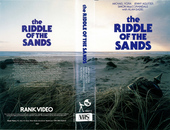 'The Riddle Of The Sands' (video release)
 -
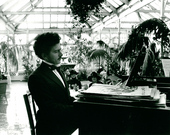 Howard at The Old Swan Harrogate in the film 'Agatha
 -
 'The Moon Stallion'
 -
 Graham Chapman and David Jason in 'The Odd Job'
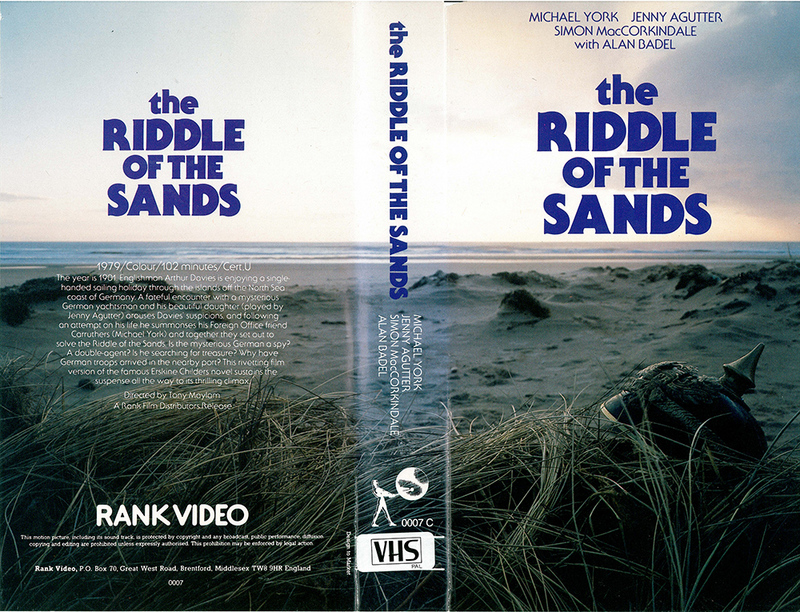
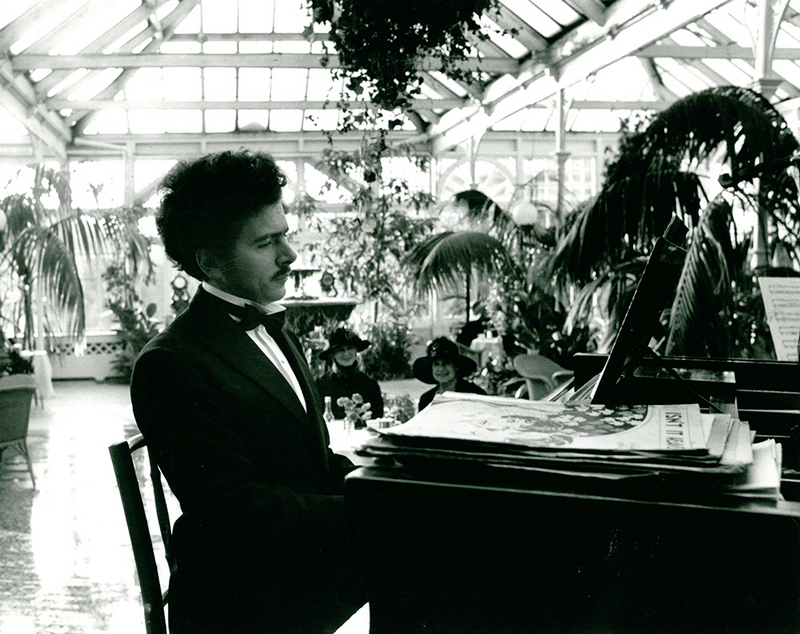
Ballet:THE ANNUNCIATION. choral: 'FROM THE CRADLE TO THE GRAVE' (1979)
Films: THE CHANGELING, S.O.S.TITANIC, tv: GENTLEFOLK, AGATHA
I was too busy and was finding it difficult, if not impossible, to organise life between the film world and the classical world. But practicalities caused a change. The lease on the mews house ran out and I moved back to the mill.
THE CHANGELING
I had scored Peter Medak's previous film 'The Odd Job' and he was very keen for me to compose the score for 'The Changeling'. It was a film about a concert-pianist/composer who moves to a haunted house and finds an old music-box in the attic. The theme entrances him and he decides that he will develop it into a full-scale concert piano piece. Peter asked me both to compose such a piece and to record it myself on the piano, which I did. I called it 'The Music Box'. Peter loved it, but when it came to the formal commissioning of the full score, and supposedly because Canada had a law about using Canadians on Canadian films, it was handed over to two Canadians, Rick Wilkins and Kenny Wannberg - whose name I saw by chance on a feature last week as 'sound engineer'. I don't know if he wrote any other scores. The plot was such a gift for a composer that I was very sad to lose it. The duo did use/borrow/hint at my theme by using concert piano in the score and various such tricks, whilst trying not to infringe copyright and one would have thought it would have turned out as a bit of a mish-mash. In fact as the review says it is not at all a bad result for a film by three composers!
I compensated for the loss of this film a couple of years later by writing 'Amityville 3', which was to be my only complete horror film credit. Maybe if I'd already done Changeling I would have used up all my horror ideas and turned down Amityville? Who knows how these things work? It's also possible that if I'd gone off to Vancouver to write 'The Changeling' I might not have embarked on the next work, which turned out to be both monumental and hugely rewarding. BENEDICTUS - A DRAMATIC ORATORIO
The commission of a full-scale dramatic oratorio on Saint Benedict suddenly became a reality. Janet Canetty-Clarke in deepest Sussex had persuaded her committee to support the creation of a substantial new work to be premiered at Worth Abbey the following year. The fee offerred was somewhat frugal - £500 to include the score, parts and rights, a tiny amount for the huge amount of work involved, the suggested professional rate for such a commission being more like £20,000, but I was thrilled by the idea of creating such a work and totally committed to the idea of doing it. I remembered the Abbott's invitation and asked if I could come and stay in the Abbey for a few days. Perhaps I could regain my 'state of grace' and maybe I would be inspired with an idea.
The Abbey was situated in magnificent parkland near the village of Worth, 2 or 3 miles North of Cuckfield. It had once been the stately home of the first Lord Cowdray but had been converted for monastic use, boasting an impressive modern abbey church-in-the-round, capable of seating about 1700 people, and having an awe-inspiring echo. The Benedictine monks who made up the order taught in the school which adjoined it.
I was given a cell near to the church and instructed on how to behave. No speaking during meals; attendance of services in the church; work; prayer; meditation.
The monks knew why I had come to stay and one of them showed me to the library:
'You can find any number of books on St. Benedict here.'
'Is there a book that expresses his beliefs?'
'The Rule of Saint Benedict', our guide to living in the community.'
He found a copy for me and I sat and read it. It was not so very long and not at all forbidding. It contained all the most wonderful sayings of Jesus and many quotations from the Psalms, which I learnt were used in the services to echo the days and festivals of the year. It was a text-book of how to approach nearer to a spiritually-motivated daily life and I found it inspiring. It was neither Catholic nor Protestant and I learnt that there are Benedictine monasteries within both persuasions. I would write a work describing an ordinary person walking into a monastery, hearing the voice of St. Benedict reading from his rule, conducting dialogues with the monks and with himself, expressing his inner doubts and fears and gradually becoming so strongly affected that ultimately he signs to enter the order as a Novice.
I discussed this idea with The Abbot, Victor Farwell:
'It's not exactly the life-story of Benedict is it?'
'No, not all, but I gather that one of your students is already writing a musical about his life. I would like to do something quite different. What do you think?'
'I think it's a splendid idea.'
'Would you check that the text is acceptable?'
'I would be delighted.'
I began by setting the Prologue in the style of plain-chant, sung by tenors and basses like monks: 'Ausculta o filii'. The sopranos and alto join in and it rises to a mighty climax. The 'everyman' figure (the solo tenor) walks into the church and sings out an impassioned aria expressing his despair, as the Benedictines would do it, by couching their troubles in the words of a psalm:
'Thy rebuke Lord not thy vengeance, thy chastisement not thy condemnation. Thy arrows pierce me, thy hand presses me hard, thy anger has driven away all health from my body, my bones have no rest..'
Sopranos and altos sing like angels expressing the comforting words of God:
'Thou Lord wilt listen to me..be my refuge, my defence..'
and this idea is taken up in a chorus of exhortation; 'I have piped unto you and you have not danced..'
'He that hath ears to hear, let him hear.'
'Everyman' listens, but questions:
'Lord who shall dwell in thy house, who shall rest upon thy holy hill?'
The chorus reply and this dialogue continues throughout Part One until he expresses a heartfelt desire to approach nearer to the divine:
'My soul has a desire and longing to enter into the house of the Lord...'
I began part two of the work with a warning from the Saint:
'Test the spirits to see whether they come from God.'
My inspiration came to a stand-still. How would 'everyman' react next? Come to that how would I react? I would question my motives at the very deepest level. I had been doing much of this, reading Jung and Fromm and Freud et al. The tenor had expressed his longing 'to enter into the house of the Lord', but he should express his despair at being locked into the 'labyrinth of his own mind.'
Where did that line come from? Had I made it up? I couldn't place it. For days I researched texts. I wanted a huge solo for Richard Lewis, as I had promised him. Nothing worked. My mind went back to the fifth form and Randall the English-master, so mad about Gerard Manley-Hopkins. It wasn't him but it was not far off. At last I got it. Francis Thompson -'The Hound of Heaven'. It was in an anthology right in my own room!
The poem said exactly what I wished to express:
'I fled Him down the night and down the days, I fled Him down the labyrynthine ways of my own mind...'
Gradually he goes from the very depths of despair:
'My mangled youth lies dead beneath the heap. My days have crackl'd and gone up in smoke...'
to the most glorious vision and affirmation of the Almghty:
'His name I know, and what his trumpet saith. That voice is round me like a bursting sea:'
At this point full choirs and orchestra fff burst into what Browning might have meant by the 'great C-major of life:
'Rise, clasp my hand and come!'
When I first heard it it sounded like the monumental wave that had once submerged me off the beach in Cornwall.
The third part of the work is a setting of the service of admission to the Benedictine Order Psalm 139 'O Lord thou hast searched me out and known me.' and ends with Psalm 103: 'Bless the Lord O my soul', when the novice must repeat the phrase 'Pray for me' three times.
I added a passage from the Epilogue of the Rule: '...then must we, while there is time, while we are in this body and can fulful all these things by the light of this life, hasten to do now what may profit us for eternity...'
and a mighty eight-fold 'Amen' recapitulated the music of 'He that hath ears to hear' and ended the work.
Or did it? The work still didn't feel complete. It needed some sort of overture, possibly a short Interlude and an Epilogue. But I couldn't imagine an overture for full orchestra. The work was about one person, a solitary monk. Shouldn't it be for a solo instrument? I needed time to think and set about the orchestration later. The premiere was a year away in May 1980.
ROGER GIMBEL
The phone rang. A cheery American called Roger Gimbel. He had been impressed by my score for 'The Duellists'. Would I consider coming to Hollywood to score a biggish feature film?
What's the subject?'
'The Titanic'. I'm staying in The Churchill Hotel. Would you come up to London and talk about it?'
I thought about it. What timing! Just as I needed to 'get away for a break'. Not most people's idea of a break, but the £500 for the oratorio wasn't going to keep the bills paid and a Hollywood film would certainly help fill the coffers. I could start to orchestrate when I got back. It should only take about a month. I flew to Los Angeles on July 21st.
HOLLYWOOD COMPOSERS
On my first day I was called by Sam Schwartz who represented composers for ASCAP. It happened that a meeting of all the ASCAP composers was to be held that evening. Sam picked me up in his car and on the way to Venice, North LA, we picked up Lalo Schifrin and Henry Mancini, later meeting a whole plethora of composers including Jerry Goldsmith, Johnny Mandel, James Horner and George Duning (of 'Moonglow' fame). Sam appeared eager to sign me up and talked of shortly becoming an agent, but I already had Al Bart, who was Liz's USA partner and I felt a loyalty to both which I would not wish to break.
S.O.S. TITANIC - a large-scale score for a large-scale Hollywood epic:
S.O.S. TITANIC was what they called a mini-series. At 150 minutes long, almost the length of two films it was intended both for TV and cinema. There was a big and starry cast including David Janssen, Ian Holm, David Warner, Cloris Leachman and Helen Mirren. The director was William (Billy) Hale. It was called 'SOS Titanic' and was later assessed as the most authentic and accurate account of the disaster and well-researched. We had a man who was an actual survivor on the team who was fascinating to talk to. Producer Norman Gimbel was the son of the Gimbel of Gimbel amd Macey's in New York, the most famous of practical jokers. Norman followed in his footsteps; when I arrived he had an issue of Variety printed with the headline 'Howard Blake dies at age 95'.(His idea of a joke!) He didn't seem too concerned as to whether the film succeeded or not. I later found he was known as a lyric writer but he never mentioned it. He hired me on the strength of 'The Duellists' which I'd just written and because he was obliged to have a certain proportion of Brits on the team because it was an Anglo-USA production. It was made by Bernard Delfont, brother of Lew Grade who was making 'The Raising of the Titanic' on the next lot - not to be outdone! I met Lew in the car park on the first day of shooting and asked him how it was going. He said 'It would have been cheaper to drain the Atlantic!' I liked the black and white documentary footage of the launching and that inspired my theme for the opening. Originally I suggested to write the score for large organ, suggesting the one in the Mormon Tabernacle, Salt Lake City, but Gimbel said no. I used 4 horns and 4 trombones with percussion, flute, oboe and strings and recorded in Denham Studios in London, flying back from Los Angeles for 5 days to do so. The set of S.O.S.Titanic was a gigantic affair that could be moved up and down electronically. The ship interiors were shot on the Queen Mary in Long Beach and the first class lounge was a replica of the dining room of the Waldorf in the Aldwych. I recorded a Scott Joplin waltz (his only one, called 'Bethena') for the Irish lovers dancing on deck and several more period-sounding waltzes of my own. The dance music played below decks when the Irish lovers first meet was a famous standard: 'The Connemara Waltz.'
I was given every possible comfort to help me write - first an apartment in 'The Valley' (Ventura Boulevard) at the 'The Sportsman's Lodge' - a lovely group of apartments, restaurants and bars surrounding an Olympic-sized swimming pool. Secondly a place to write - a studio-house opposite the old RKO Pictures building in Studio City, a car with a chaffeuse, my own music editor and my own music co-ordinator. The weather was fabulous and I had a generous per diem. What more could I wish for? Nothing - but the extraordinarily sudden change of life-style from monastery in Sussex to the flesh-pots of Tinseltown took a bit of adjusting to!
Some press quotes from the time of the film's release: 'The original soundtrack of this epic film, made for both television and cinema, is arguably the most intelligent and authentic version of the Titanic tragedy yet made. The score contains Howard Blake's large-scale symphonic score which he both composed and orchestrated, but also contains a tapestry of historically-correct music such as that which was played on the ship in its last hours.'
'Premiered by ABC on September 23rd 1979, S.O.S. Titanic ran for three hours and was the costliest television film ever made. A huge star cast included David Janssen, Helen Mirren, Ian Holm, David Warner, Harry Andrews and Cloris Leachman. The brilliantly-researched script by James Costigan was based on a first-hand account by passenger-survivor Lawrence Beesley.'
'US-based producer Roger Gimbel wanted to use an English composer and had been much impressed by Howard Blake's recent score for Ridley Scott's 'The Duellists'. Apart from the composition of a serious symphonic score there was also the intention to create a tapestry of historically-correct music such as that which would have been heard on the ship. An innovation in the story-telling portrayed the differences between 1st, 2nd and 3rd class passengers and this was also to be reflected in the music—with, for instance, Irish music from the 3rd, songs with piano from the 2nd and a sophisticated orchestra in the 1st.
THE COAL-MINER'S DAUGHTER
After scoring 'S.O.S. Titanic' I was tired. I couldn't wait to get home and start the scoring of my magnum opus 'Benedictus'. Living in 'The Valley' as they call Ventura Boulevard, was strange - and curiously lonely. If I talked to anyone outside of the production team, within seconds they would be asking if I was 'working in the movies'. It was as if the entire population of the city of LA could think of nothing else in life but to 'get into the studios'. On one occasion I left Paramount and, since it was a beautiful afternoon, decided to walk back to The Sportsman's Lodge. A taxi sidled up alongside me close to the kerb and the driver asked if I needed him. 'No thank you' I said, but he continued to follow me:
'You ain't an actor 'cos there's no shooting today. You're not scenery or costumes and you're not dressed like an exec. You might be a muso but there's no scoring today. You could be a musical director. Yea that's what you are! Hey! I just love music. I'd just love to talk to you about music.'
I couldn't think how to lose him and it was actually a very long walk. I took the line of least resistance and foolishly got in. We turned up Coldwater Canyon. Half way to the top he pulled into a lay-by, got out of the car and like lightning produced an amplifier and two loudspeakers which he stood on the bonnet. A guitar shot into his hand and with one foot on the running board he launched into some sort of rock/pop song.
'Take me to the hotel' I screamed.
'Hey, you liked it, I can tell - I've got another one.'
'Take me home!' I screamed.
'This one'll be the theme tune for the film you're working on. OK? Listen to this!!'
'Look I'm writing an orchestral score and there won't be a theme song. Anyway I'm not in the position to decide about such things. It's not what I do. Please get on with the drive!'
Fortunately he backed off. One had to be careful who one spoke to.
AGATHA
Film director Michael Apted joined me one evening for dinner. In 1978 I had written a huge orchestral score for 'Agatha' in England and due to a change of producer the score had been dumped. It wasn't Michael's decision or producer David Puttnam's and they had both felt a bit guilty about it. I found out what had happened. When I had been approached to score the film I was told that the acting was a bit weak - Vanessa Redgrave and Dustin Hoffmann didn't exactly hit it off and her ingenue Timothy Dalton was somewhat less than spectacular. The film needed a very strong and very emotional score to carry the whole thing off. Could I do this for them? I said that I could certainly write them a strong score but it was a dangerous proceeding and might ruffle a few egos.
I set to work on it and everybody was delighted if not thrilled by the result, particularly the producer David Puttnam. He thought it worked brilliantly and he wanted to present the film to the public exactly the way I had carried it off and immediately. But Vanessa Redgrave somehow got Puttnam sacked and replaced by an unknown producer, Jarvis Astaire and my immense and beautiful orchestral score was scrapped and removed. One of the great disappointments of my professional life'
'THE COAL-MINER'S DAUGHTER
The whole production team loved my score - David Puttnam and Michael Apted
'I'm working on a film called 'The coal-miner's daughter - would you come and view it with me? It's about a country and western star and needs a score.'
I went up to Universal next day with my Hollywood agent, Al Bart, in tow. We went into the viewing theatre.
'D'you wanna eat something? A burger? A chicken wing? Club-sandwich?'
'What here? In the viewing theatre?'
'Sure. Why not?'
I felt it might be bad manners not to accept and agreed to eat a burger. It was gigantic with all sorts of extras and sauces and I found all my attention going on to trying to manage it. Michael said sarcastically:
'Can't you stop eating burgers and watch the film! Don't you like country music?'
Al chipped in: 'Sure he likes country music, everybody likes it.'
'I actually don't much like country music' I said. I'm not at all sure I could score this film.'
'Sure you could, you'd do a great job. You're a composer - composers can write anything!'
I started to feel thoroughly uncomfortable.
'I can't write anything'. I have to have some sort of identification with the subject.'
'Listen, you got a problem? You've got the job!!'
I was asked to come by the studio at 9.15 the following morning to agree the deal. I had to ask for the head of the studio. I drove in at exactly 9.15 and drew level with a very tall and tough-looking security guard with a gleaming military-style peaked cap and uniform.
'I've come to see the head of the studio' I said.
'You gotta pass?'
'Err, no, I haven't got a pass'.
'You haven't gotta pass you don't come in'.
I sat in the car and thought of my beautiful water-mill and of Tricia and my tiny daughter Catherine. I had told Tricia that I had a beautiful large apartment by a pool and I asked if she would consider coming out and joining me. She did not react at all positively to the idea. I also thought of Janet Canetty-Clarke, her friendly singers of The Ditchling Choral Society and their hoped-for premiere of my great work to be performed in Worth Abbey, of James Forsyth and his barn-theatre, of Angela Wigglesworth and her piano recitals, of Helen Watts and her wonderful singing, of Judith Garrett and her beautiful poems. The two halves of my life were at extreme opposite ends of the musical world's spectrum. Of course I realised that I was being offerred a major opportunity and even possibly a life-long career in Hollywood. Or not - if I turned this down.
'Please tell your head of studio that I have returned to England' I said. I drove off, packed and left for the airport. Perhaps it was a crazy thing to do, but, if I had stayed there, would I have completed 'Benedictus' and experienced the wonderful premiere with Richard Lewis and the National Philharmonic? Would I have then composed 'The Snowman' giving such joy and emotion to people across the world? Would I have written and played a concerto for Princess Diana and spoken with her? Would I have written a piece for the 50th anniversary of the United Nations and met the Queen? I doubt it.
GENTLEFOLK and OUR JOHN WILLIE
I went back to my life at the mill and did one or two quite modest commissions: a BBC Play of the month,'Gentlefolk' for director Rodney Bennett for whom I wrote a chamber music score for the Gabrieli string quartet, with Thea King as the marvellous clarinet player; and a children's series for BBC called 'Our John Willie.' with virtually no budget, which I parsimoniously scored for the slender resources of bassoon and harpsichord. I had well and truly left Hollywood.
-
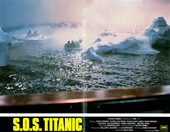 SOS Titanic
 -
 Benedictus Tower Records
 -
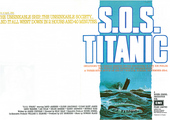 SOS Titanic

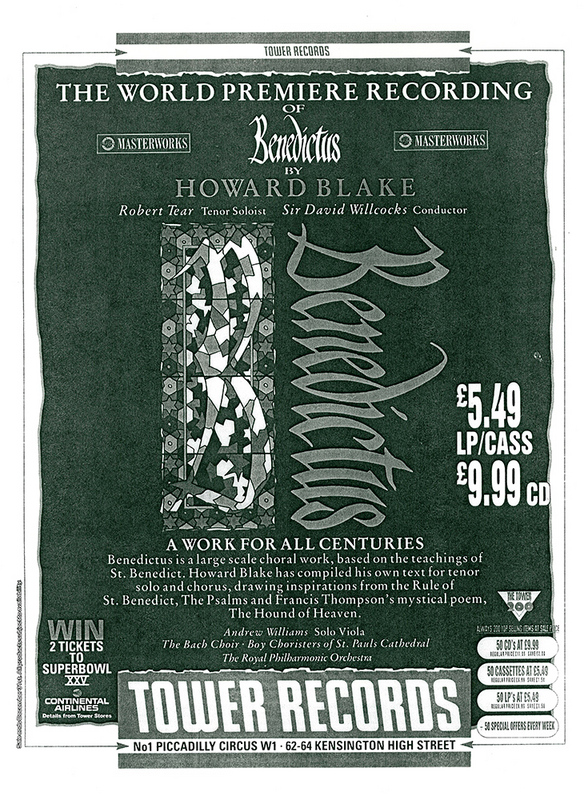
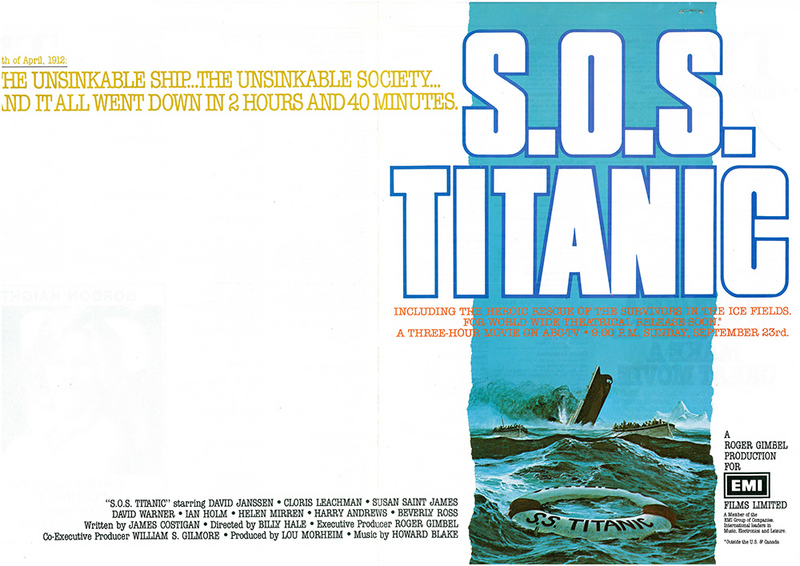
'BENEDICTUS' A DRAMATIC ORATORIO (World premiere,Worth Abbey) (1980)
Orchestral score of 'Flash Gordon' gains joint BAFTA with group Queen
CHRISTOPHER JAMES BLAKE
On March 30th at 2.50 pm I was present when Trisha gave birth to my first son Christopher in Hammersmith Hospital. He was named after my great friend Christopher Geer, the James coming from his maternal grandfather. He was born musical, with the ability to play tunes by ear on the piano and with a keen intelligence that was to help him to rise to the top of the tree. I was and am most proud of him.
THE FIRST PERFORMANCE OF 'BENEDICTUS'
After the hurly-burly Hollywood trip I had gradually settled down to orchestrate my beloved 'Benedictus' ,as I named it, and I prepared for the first performance on 10th May at Worth Abbey.
I still hadn't decided on a plan for the overture but I spoke one day to Ken Essex who was the one member of my piano quartet for whom I had not written a solo piece, although he'd repeatedly asked me.
'What do you think about an overture for solo viola?'
'Just for solo viola would be fine Howard.'
I wrote 'Prelude for solo viola.' and sent it to him.
Curiously although he studied it and learnt to play it wonderfully, he was too nervous to play it in public and the soloist at the first performance was Frederick Riddle, who didn't bat an eyelid.
I attended some choir rehearsals conducted by Janet Canetty-Clarke who was to conduct. I thought it might have been more practical for me to conduct myself, since I was still finishing it and notes and dynamics and phrasing were constantly being revised, but I knew how passionately she wanted to do it and thought she'd manage. The great Welsh tenor Richard Lewis had agreed to sing the tenor role, which he'd discussed with me at considerable length and Sidney Sax had amazingly agreed to bring his National Philharmonic Orchestra down with Frederick Riddle to play the taxing solo viola part. Producer Jim Parr of BBC Radio Brighton had agreed to broadcast it.
Out of the blue I got a call from the music-film producer Tony Palmer, famous for his filmed documentaries of Shostakovich, Britten, Menuhin, Walton, Malcolm Arnold and many other great composers. He wanted to film the first performance for television. He came over to see me at the mill on the 8th May and we went on up to hear a rehearsal in the Abbey. After the rehearsal he confronted me:
'You have to conduct it yourself.'
'Why?'
'You know why.'
Richard Lewis said the same. He explained that Janet could not conduct up to speed and because of this he would run out of breath in the demanding passages and his voice would almost certainly crack. Word somehow got through to Sid who phoned and said he would not be bringing the orchestra down unless I conducted.
I found myself in a very awkward position. I took Janet aside and very tactfully and quietly explained it:
'You must talk to the committee.'
She left without another word and next day I found myself in a 'when did you last see your father' situation, hauled before the grim-faced committee of the Ditchling Choral Society. It included a JP, a doctor, a bank clerk who was the chairman and Janet's husband. I explained that it would be marvellous for the work and the choir if Tony Palmer filmed it. It would make the work that they had commissioned instantly famous and Janet and the choir famous along with it.
'The Ditchling Choral Society already is world-famous and Janet is its conductor. We, the Ditchling Choral Society, commissioned you to write a work. You have written it and delivered it on time, you have been handsomely paid the sum of £500 and we require no further involvement from you. If the tenor or the orchestra do not fulfil their contractual commitments we shall take legal action against them and sue for damages. You will not be welcome at the concert tomorrow.'
The chairman added that he thought I'd just written it 'for the money' and explaining to him that the current going-rate according to the profession should have been in excess of £20,000 didn't cut much ice.
The JP chipped in;
'It's obvious that you just want a chance to make a name for yourself as a conductor. In any case we the DCS own the work.'
'No, I'm afraid you don't. The copyright belongs to the composer.'
I went next door and asked Helen Watts what I should do.
'Get drunk!'
Many friends came down to the mill next day, including fellow-composers Carl Davis, Stanley Myers and Chris Gunning. They escorted me to the sold-out concert, with an amazing audience for a new, contemporary, concert-length work - 1,700 people, out in the middle of the countryside. The 'bank clerk' was on the door and refused me admission although I had a ticket. My hefty friend Christopher Geer, who was about to speak the part of Saint Benedict, gently stroked the chairman's tie and asked very quietly and most courteously:
'Would you like to have your tie shoved down your throat?'
I said: 'Come on chaps, this is a religious work' - and we passed through the door.
At the end I was not asked to take a bow, but got up eventually and walked on to the stage to deafening applause. Afterwards I put the score away in a drawer in great despair. I had sacrificed a great deal to compose this work, not least a long-term contract with Universal in Hollywood. I felt very badly treated and the effect of ostracization this time brought about the end of my idyllic life in Sussex, although it was another eighteen months before I could bring myself to sell my much-loved mill and leave Mid-Sussex for good. Somehow the furore was blamed on me. Villagers did not like the publicity I was receiving. The papers were full of this 'local Sussex star'. In the week of 'Benedictus' The Mid-Sussex Times had printed a full-page picture of me captioned:
'Our gift from God'.
This did not help! From my point of view I felt I had at last written a real work despite all obstacles and it had been destroyed. The first performance was a disaster and the fabulous offer of a filmed television premiere seemed to have been lost forever.
MUSICAL WORKS CREATED DURING HOWARD'S ASSOCIATION WITH THE DITCHLING CHORAL SOCIETY
Serenade for Woodwind (for Ken Dryden, Celia Nicklin, Martin Ronetti and Martin Gatt)
Music for a nativity play (for Forsyth's Barn Theatre)
Communion Service Series 3 (for Rev, Charles and Holy Trinity Church Cuckfield)
Three Sussex Songs, with lyrics by Judith Garrett: 1.This is the delicate time of the year 2. I wait through the daylight hours 3. The dying fall of summer's music (for Dame Helen Watts)
'Almighty God give us Grace' – anthem (for Neil Page, Hurstpierpoint College)
Diversions for cello and piano (for Peter Willison)
Sonata for violin and piano (for Jack Rothstein)
'It was the time of roses' – variations for two violins (for Ted Greenhow)
Three Guitar pieces (for Paul Gregory)
Piano Quartet in A minor (for James and Louise Forsyth)
The New National Songbook – 'The English Difference' – an entertainment (for The Scholars)
Lifecycle – 24 piano pieces (for Vladimir Ashkenazy)
The Station, an opera in one act (for Jeffrey Talbot)
String Trio (for Jack Rothstein, Kenneth Essex and Peter Willison)
Pennillion for violin and harp (for Annabelle Etkind and Jack Rothstein)
The Song of St. Francis – cantata for choir and orchestra (for Janet Canetty-Clarke and The Ditchling Choral Society)
The Prayer of Saint Francis – a setting for a cappella chorus (for Janet Canetty-Clarke and The Ditchling Choral Society)
Lullaby, a Christmas narrative – for soloists choir and orchestra (for Janet Canetty-Clarke and The Ditchling Choral Society)
Dances for two pianos (for Janet Canetty-Clarke)
Farewell my gentle harp (for Annabelle Etkind)
Toccata for orchestra (for The Royal Philharmonic's 30th birthday)
Sinfonietta for ten brass (for The Philip Jones Brass Ensemble)
Four Songs of the Nativity (for Sir David Wilcocks and the Bach Choir)
Shakespeare Songs (for Martyn Hill and The Chester Festival)
Footmote: A curious result of my inviting Carl Davis to the premiere was that he became most excited by the novel idea of 'a dramatic oratorio' and said to me afterwards: 'I'm going to approach Paul McCartney and suggest we collaborate on a work of the same sort - but about him rather than Saint Benedict!' This is exactly what happened and it resulted in their joint creation of 'The Liverpool Oratorio'.]
THE ASSOCIATION OF PROFESSIONAL COMPOSERS (APC)
In early 1980 along with Stanley Myers, Carl Davis and Maurice Jarre I acted on the jury of BAFTA to judge the best film score of the year. Afterwards we discussed the composing profession and decided we should form an association. The first meeting was organised by Stanley in a house in Notting Hill at 6pm on 7th March 1980 and was surprisingly well attended by about 50 well-known composers. The first chairman was the distinguished contemporary classical composer Nick Maw and the organisation developed and thrived 'and became a power in the land' until its eventual merge with BASCA at the end of the nineties.
'FLASH GORDON', 'QUEEN' AND DINO DE LAURENTIIS
On a quiet Thursday afternoon in June my friend John Richards the sound engineer at CTS Recording Studios Wembley rang me:
'What are you up to?'
'Not much.'
'Could you come and look at a film?'
It is the film 'Flash Gordon', said to be costing Italian film producer Dino de Laurentis 50 million pounds. The Royal Philharmonic Orchestra are booked for two weeks to record a full-scale orchestral score. Something has gone drastically wrong. The orchestra has no music to play. No score has been written. I asked how this could possibly have happened and over the years I have pieced some of the story together:
The group 'Queen' (John Dean - bass guitar, Roger Taylor - drums, Brian May - guitar and Freddie Mercury vocals and synthesizer) were engaged to provide the entire music track for a film that was nearly two hours long - 115 minutes. To ask a pop/rock group without any experience of film scoring to do such a thing was to say the least ill-advised. It seems that Brian May, the leader of the group, apparently thought that he could put together music rather in the same way that he might have put together a record album, like writing a string of singles one after the other which would somehow fit the different scenes. He had one great idea and that was the single 'Flash a-ah' which I would say unhesitatingly was a very catchy and very well-produced single. However it seemed to have taken up all of Queen's time and they had produced virtually nothing but a few guitar chords and a couple of short riffs. They had been given a couple of months studio time to develop ideas, but the only real result was this single. They did not understand that the film would need to be measured and that they (or someone) would have to write and record music which fitted exactly to the film. They turned to a musical assistant, the cellist Paul Buckmaster, who had helped them with arrangements before. What happened? I questioned members of the orchestra, the music editor and others present at the first day of recording. Paul Buckmaster mounted the rostrum. No music stood on his or anybody's music stands.
'Where is the score?' everybody asked.
'There is no score, we are going to make it up as we go along. Will the orchestra please turn round and look at the screen. Watch the first scene. You will see Flash Gordon fly down from the top right-hand side of the screen. When you see him I want you all to go: 'da da do do bee be nah nah, mmm, mm...' and he sang or hummed a line for the orchestra to imitate.
He was in fact known to do such a thing to help bands in recording studios: (a quote from IMDB) 'He wrote arrangements for studio sessions in which he also participated by humming bass lines and rhythms to lead the musicians. The arrangements he wrote were often used as a starting point to be transformed. This was in keeping with what he called 'The Stockhausen approach.'
This is quite obviously an impossible way to proceed and after two days of recording only one and a half minutes is recorded. The situation is desperate. The orchestra is sitting there doing nothing. Barney Colan head of music in Universal Hollywood has come over, and Dino de Laurentiis is there. He asks me:
'Can you write a new score by Monday?'
I reply: 'Nobody on earth could - not even Mozart, Beethoven and Bach put together could. It will take at least a week to assess it and measure it.'
Dino appoints me:
'You are now the Musical Director. What do we do with the RPO?'
'We pay them off.'
'OK'
I assess that it will take four or five weeks, but a deal is done with 'Queen' lawyer Jim Beach by my agent, Liz Keys, London Management. I start work. The music editor is not cooperative. He doesn't want to re-measure the film, he wants a holiday. Brian wants his short riffs 'sewn into the score', which makes it more difficult. The amount of time I have gets whittled down. I start work in my house in Mortlake with my wife and two tiny children. All hell breaks loose with phone calls and motor bike deliveries, copyists and visitors. The family move out and I don't eat properly. I live on coffee and biscuits. I write an enormous 500-page score fully orchestrated in 10 days and for the last four days I don't sleep. A team of copyists copy it. I feel fine. I am high as a kite. I go to Denham and conduct for 3 days. It works brilliantly and everybody's pleased. Queen are 'amazed'. I go back to the house and go to sleep. Three days later I am still there, since I have never woken up. A doctor is called, who can't wake me. He shoots me full of Benzadrine to wake me. I have chronic bronchitis and double pneumonia brought on by total exhaustion. I would 'probably never have woken up', he says. Nobody thanks me or rings me. I am not welcome at the mixing where they substitute some of my music with synthesizer equivalents. But I gradually recover.
Dubbing sessions began and I later discovered that much of my score had been replaced with synthesized music, myself having demonstrated how to handle it. They had a very good lawyer called Jim Beech who knew all the angles and I was no match for him at all. Everything to do with Flash Gordon was very, very disappointing.
However, my relations with the members of 'Queen' were always cordial. Brian May came over one day and hummed an idea for an 'overture'. As he did so I jotted it down on some manuscript paper and then played it back on the piano, which really startled him. 'How on earth did you do that?' he said.
Freddie Mercury also asked me one day if he could suggest a tune for 'The Flight to Arboria'. He sang it to me unaccompanied in his high falsetto voice and I thought it was delightful. However it was only 18 bars long and I asked if he would let me expand it into a fully-orchestrated cue for the film. He was delighted at the idea and I added a middle eight (in fact a middle eleven!) which he much approved of. Snippets of this melody are heard in several orchestral sections of the final film but it is never heard complete with him singing, which is rather a shame. Perhaps it might have been an additional hit song for the movie?
Whilst scoring I had cassettes of guitar ideas from Brian May, in particular the slow 'falling-chord' sequence. I wrote this out into my score at one point and surrounded it with big orchestral colour. When I started the 3-days of recording at Denham with the National Phiharmonic Orchestra all the members of Queen came along and were fascinated, and particularly amazed when it came to Brian's solo guitar which they could hear on headphones whilst I conducted the huge orchestra in synchronisation with it.
Many months later Brian May came round to our house at Worple Way, Mortlake and we listened to the finished album which for some reason he only had on cassette. His own stereo-system was out of action. Unfortunately so was mine and we lay on the floor and listened on my baby son Christopher's Mickey Mouse cassette player. So much for a budget of £50,000,000!
JOINT BRITISH ACADEMY AWARD WITH 'QUEEN'
John Richards rang me again:
'You're nominated along with Queen for a joint British Academy Award for Best Score.
'Shall we take our wives and go to the dinner?'
(Both of us were in trouble. I with Trisha, John with Juliet.)
'Is that a good idea?'
'It'll be fun.'
David Frost announced the prizes:
'The nomination for Best Film Score goes to 'Queen'.
'I thought you said...?'
'It says it in the programme...'
'He hasn't read it out...'
Everything to do with Flash Gordon was disappointing.
John said: 'You've just been in Hollywood?'
'Yes'
'What's it like?'
'You've never been there?'
'Never.'
'Oh, you should go and have a look at all the sound studios. I can give you all the names and numbers. You would love it John'
He did love it. He went there, met Gail,studio head and life-long harpist for the Oscars, married her and lived with her happily in Studio City ever since!
US MUSICIANS' STRIKE
In the second half of the year there was an actors and musicians strike in Hollywood. All of the work came to Europe and London, where the MU had no agreement with the American Federation. I was overwhelmed by conducting work for The National Philharmonic at Abbey Road. There were recording sessions pencilled in every hour for 6 months. I conducted 'Terror Train,'Sophia Loren', 'Popeye' for Robert Altmann, 'SOB' for Blake Edwards and Henry Mancini, 'The Silence of the North', 'Happy Birthday to me', 'Love Max','Every which way but loose' for Clint Eastwood and Elmer Bernstein , episodes of 'Hart to Hart' and 'Love Boat' for Aaron Spelling, and others that I can't remember. Then suddenly the M. U. put a block on all the work. I got enmeshed in union discussions and when there was a mass protest meeting of 600 session musicians I was asked to address it. A petition was signed by all but it 'got lost' on its way to the MU. The colossal working spree stopped as suddenly as it started.
This effectively ended the hey-days of recorded music in London, roughly 1963-1980.At one point there were something like 100 recording studios working flat out and there was work for everybody. Addressing the 600 or so top session musicians in Studio 1 Abbey Road on that day in 1980 I advised them that our own MU had no sympathy agreement whatever with the American Federation and a move to effect one needed to be voted in by the members. I warned them that if they did not make a move they might soon very well be unable to afford their mortgages and I begged them to give time for consideration. But is was too late and the great recording jamboree was over. By chance I had been lucky enough to experience the best of it.
-
 Sadlers Wells 'The Annunciation'
 -
 Benedictus
 -
 Flash Gordon CD
 -
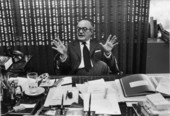 Dino de Laurentiis
 -
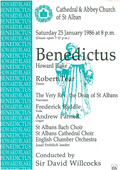 Benedictus Cathedral and Abbey Church St Alban Programme
 -
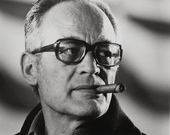 Dino de Laurentiis
 -
 Flash Gordon CD
 -
 'Benedictus' published vocal score


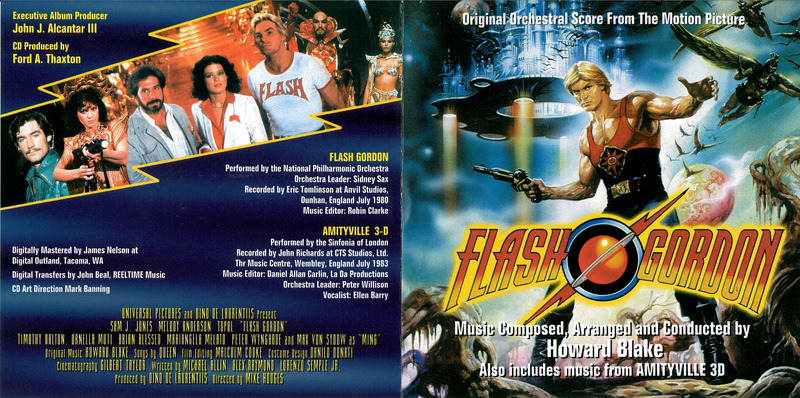

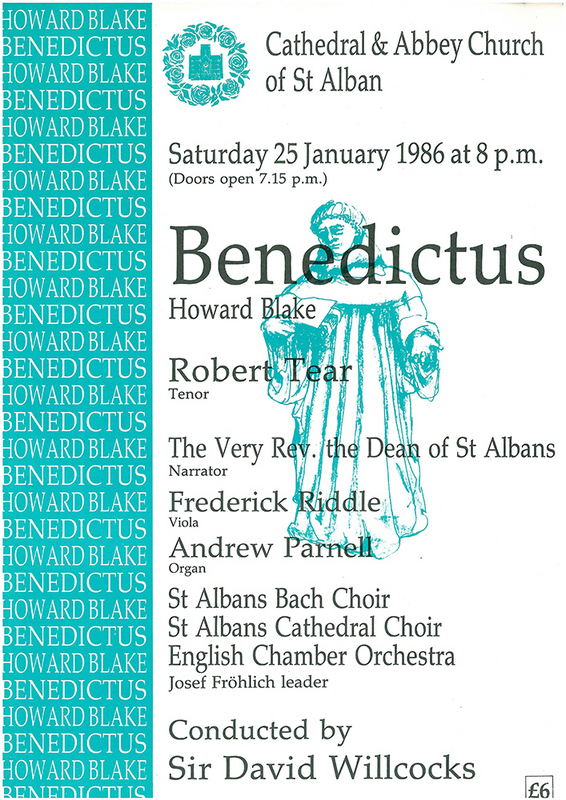
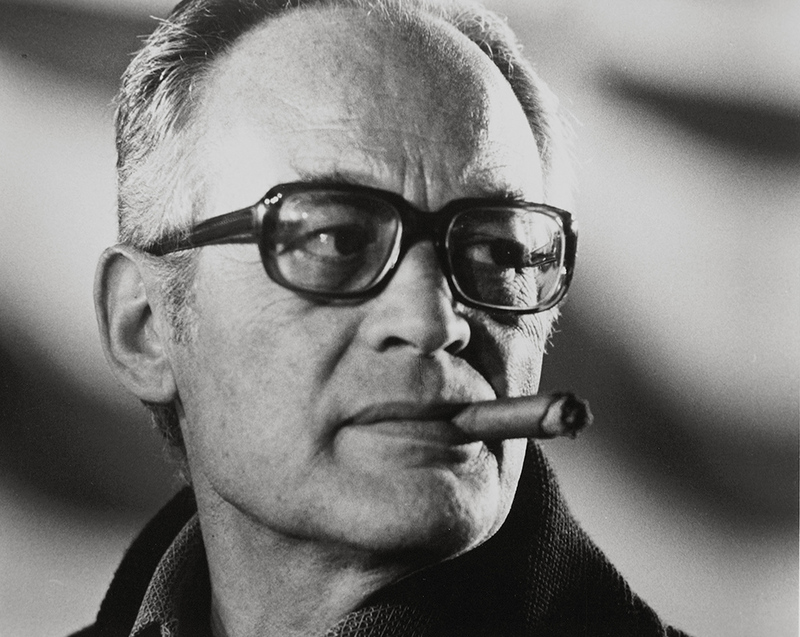
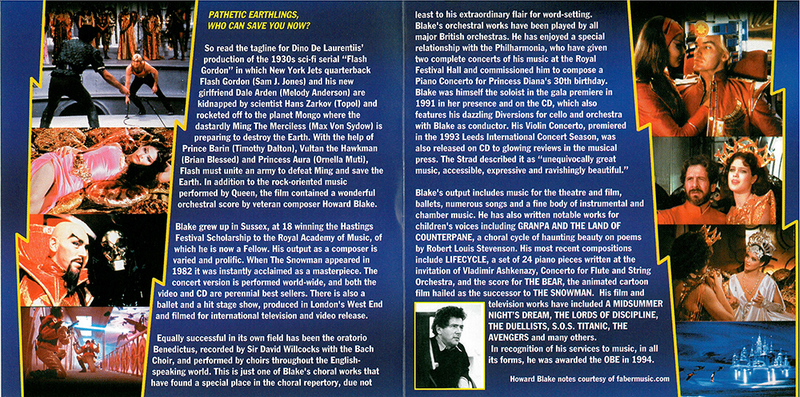
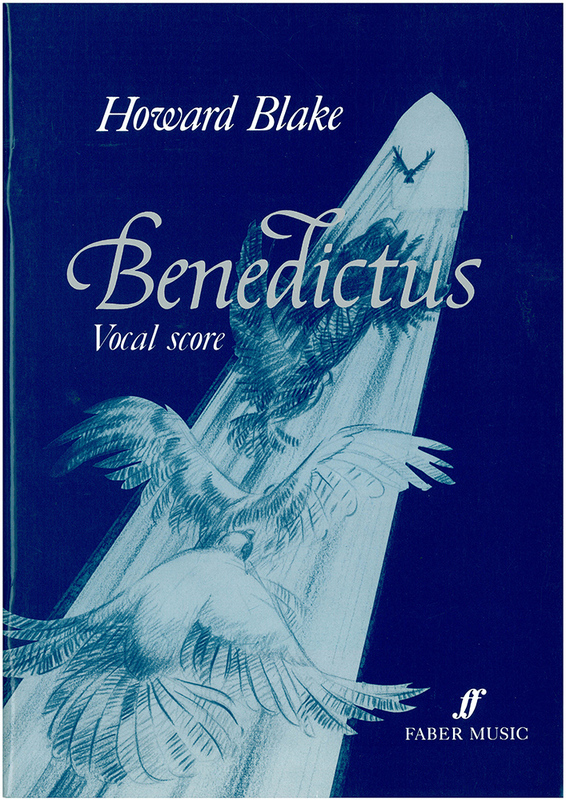
SINFONIETTA FOR 10 BRASS, ELEGY FOR SAXAPHONE QUARTET (1981)
Films: VICTOR,VICTORIA (Julie Andrews); MRS, REINHARDT (Helen Mirren)
VICTOR/VICTORIA
In January 1981 Henry Mancini rang me from his home in California and asked if I would act as musical director and do 'a bit of orchestration' on the film 'Victor/Victoria'. He was too busy on another States-side project. I had known 'Hank' for some time having helped him with the title sequence of 'Pink Panther Strikes Back' back in 1975. I went off down to Pinewood and entered a large rehearsal studio where a fabulous mink coat lay on a single chair in the centre of the room. Julie Andrews appeared and greeted me warmly, flinging the coat carelessly onto the floor saying,'Do sit down'. Then Mike Reed arrived, the rehearsal pianist and dance routiner and I watched rehearsals with Julie Andrews, Robert Preston, and choreographer Paddy Stone's troupe of male dancers. The numbers had already been created and rehearsed, but I found I was not at ease with them. The film was supposed to be set in the early thirties and the existing working piano arrangements did not reflect this. The big production number was 'Le Jazz Hot'. I felt it needed a genuinely thirties-sounding orchestration with big band plus orchestra in the sumptuous style of Paul Whiteman. Shortly afterwards I bumped into Blake Edwards in the corridor outside my office and asked if he had a moment.
'Sure' he said.
I invited him into my office and sitting at the piano explained my thirties-sounding idea for the film. Blake loved the idea and said:
'Do it!'
I have to say that this considerably upset Paddy and Mike but did achieve a really terrific hit number for the show, later translating into a succesful musical on Broadway. The recording of 'Jazz Hot' took place in February at CTS Wembley with John Richards as engineer, Julie Andrews as soloist, a fabulous big band plus large string section and all the dancers present trying out their newly-considered step changes on a specially-built rostrum. Hank arrived the night before and I rang him at The Inn on the Park, saying that I would much like to show him the new orchestration, since he would be conducting it in the morning.
'I'm sure it'll be fine' he said, 'I'm just off out for dinner and I have every faith in you.'
However the score really needed some explanation and next day Hank found himself in trouble. After making various attempts to pull it all together he called out: 'Is Howard Blake in the room?' 'I'm up in the control box' I cried. With the grace and generosity that only truly great professionals possess he called: 'Would you come down and help an old man?' causing much laughter with the band. Once sorted the result was a truly spectacular recording, so much so that the Academy Awards of 1982 awarded to Henry Mancini and Leslie Bricusse: 'best original song score and its adaptation or adaptation score'. I was slightly disappointed not to to be included but received the screen credit of:
'Production Orchestrations - Howard Blake'
The rapport I'd made with Blake over this produced an unexpected result when during the later stages of filming he asked if I would consider appearing in the film as Julie's pianist in her big romantic ballad performance for the night-club scene.
'It's only one shot Howard' he said, 'You'll have a great time.'
I had to get down to Pinewood by 6.30am, get into costume - period white tie and tails - go to make-up, have my hair coiffed - and at about 8.30am seat myself at the Steinway on the sound stage ready to be lit. I sat and sat and sat and every time I tried to stand up and stretch or attempt to get away met with: 'No that's just great where you are - we need you there - it's looking great!' What was so special about my appearance and why was it so difficult to light?
It turned out that this one shot was no ordinary shot, it was a 360-degree angle shot, where the cameras circled the entire stage and the scenery and audience and everything else had to move accordingly. I sat there with very little respite until they called 'It's a wrap' around 6pm. I tried to stand but couldn't move. I was locked solid after so many hours on a piano stool. Blake found this hilarious but kindly summoned his own personal lady masseuse to try and straighten me out. With typical US efficiency she appeared in no time at all with a portable table carrying the slogan: 'Have board will travel'. I recovered.
EXECUTIVE DIRECTOR OF THE PERFORMING RIGHT SOCIETY
I was made an executive director of the PRS and was instrumental in another part of the forest causing the MU session section to be democratically elected. I was also very enthusiastic and energetic on behalf of the APC.
SINFONIETTA FOR TEN BRASS - THE PHILIP JONES BRASS ENSEMBLE
In February, BBC producer Jim Parr at Radio Brighton asked if I would accept a commission to write a work for The Philip Jones Brass Ensemble, a group that he very greatly admired. I accepted and wrote 'Sinfonietta for Brass'. I loved writing it and it was enthusiastically premiered in the Brighton Festival alongside a little-known Beethoven work for trombones, achieving the press headline: 'New brass work upstages Beethoven!'
ELEGY FOR SAXAPHONE QUARTET
I was also commissioned to write 'Elegy' for Christopher Gradwell's London Saxaphone Quartet a short work in one movement which was premiered at a Marble Hill English Trust concert.
THE DEMO OF 'THE SNOWMAN'.
In the summer Gerry Potterton invited me over to New York for the premiere of an animation feature he had directed called 'Heavy Metal'. It took place in The Guggenheim Museum in New York with heavy metal bands including 'Blue Oyster Cult' providing the 'cocktail music'. There were one or two Brits there from the film animation world including John Coates who had worked on 'Yellow Submarine' and Pat Gavin, famous for his graphics on the 'South Bank Show'. The next day Gerry and I drove up to the Southern Townships of Quebec where Gerry had a beautiful old settler farmhouse and we started discussing the idea of starting a film company in Montreal. We visited the Bank of Canada and asked if they would back us. To my considerable surprise we were offerred an advance of $3m dollars if we could produce a list of feasible projects. I went back to New York for the premiere of 'My Dinner with Andre' and met Louis Malle. I was having a wonderful time. I decided that I would move to Montreal and make films. Start a new life. I returned to Sussex to put the mill on the market and sort things out.
But things did not work out as I had thought. Gerry followed me over to London and one day we met for lunch in Charlotte Street. He asked if I'd mind first dropping in on the animation film company TVC to pick up a cheque, and waiting for us was the company director John Coates:
'You're a film composer aren't you? Didn't we meet at Gerry's premiere in New York?
'Yes.'
'I've just made a 9-minute demo for a children's film called 'The Snowman'. I asked Ron Goodwin to compose a score for it, but I don't think it's quite right. Would it be unethical of me to ask you to look at it?'
'Well in this particular instance, I don't think so.'
I was remembering my disaster with The Happy Prince
We went into the viewing room. The minute I saw it I realised that my innocent tune from Cornwall which I had so much wanted to use in 'The Happy Prince' under the working title 'Flying through the Air' would in fact work miraculously on this film of The Snowman. In fact I realised that the whole film would work wonderfully with nothing but music - THE MUSIC WOULD BE THE SCRIPT. It is what I had always wanted to do. Combine image and music. At last I had found a subject where this would work brilliantly.
Synchronicity.
'I'll do it providing the film has no dialogue, just music.'
John was dubious.
'I think it has to have dialogue. All films have dialogue.'
'Let me do a piano demo for you and I'll show you what I mean.'
'All right.'
On 31st September at Advision I recorded a piano track against the filmed pencil drawings. It worked. John took it into the new TV Channel 4 the following day to get a sounding from its director Jeremy Isaacs:
'It's a brilliant idea. We should do it.'
It didn't mean we could start immediately but it did mean that if Jeremy Isaacs could get the finance together it would be likely to happen. Meanwhile the mill sold for the asking price and I packed up all of my belongings in a crate to go to Canada - including all my manuscripts and the grand piano! There was a roomful of orchestral parts but I loaded these onto a wheelbarrow and burnt them on a bonfire, twenty-nine barrowfuls.
MRS. REINHARDT
Just before leaving I was offerred a TV score to write for the BBC: 'Mrs Reinhardt' starring Helen Mirren, directed by Piers Haggard. I took the work back to Montreal with me and composed it in an apartment in the French Quarter, but I decided that I would need to go back to London to record.
THE LOSS OF THE MILL
Cooperation on the new film company in Montreal was not progressing. Gerry and I couldn't agree on one single idea for a feature. The company got as far as the notepaper design and stuck there. Things started to look altogether less promising.
On Wednesday 11th November I flew back to England since I had to hand over the keys of Highbridge Mill to the buyer at 12am on the Thursday. But at around 11am the phone rang. It was my agent Liz:
'Would you like a job as musical director at MGM in London on a feature film for Tony Scott, Ridley's brother? It stars David Bowie, Catherine Deneuve and Susan Sarandon and is called 'The Hunger'. Tony wants to use existing classical music for the soundtrack and would very much like you to undertake it.'
My whole life swam in front of my eyes. After nearly six months of trying to get something under way in Montreal, in fact very little had happened. The film company was looking like a pipe-dream. I took the job, handed over the house keys, drove to London and started work for MGM on the following Monday. I checked into the Tara hotel in Kensington and scoured the Sunday Times, where I saw:
'Two turn-of-the-century Edwardian artists studios converted into a working apartment close to Kensington Gardens.'
I inspected it the next day, put in an offer and prepared to move in on January 12th 1982. I first rang the Brighton company who had sent my belongings off to Montreal in a crate, but there had been a mistake. They had forgotten to unload it at Montreal.
'Where is it?'
'I'm afraid it's gone on to Toronto docks.'
'Excellent! Could you send it back to London.'
'I beg your pardon sir?'
It all turned up safe and sound. I was back in the music business in London and seemed to be very happy about it. I put the idea of the film production company on permanent hold. Surprisingly, Gerry sounded quite relieved.
I decided 'to make the best of it'. The disaster of my 'Benedictus' premiere meant that my classical career as a composer had been set back. Nothing of mine was published other than by my own company, Highbridge Music. I decided I was not meant for a classical career. I'd also failed to become a film producer for the second time. I would have to go back to film scoring - where I belonged?
This change of my attitude had some curious side-effects. For instance, in 1975 I had composed 'Lullaby for five a cappella voices' for The Scholars. It had contained the melody 'Sleep my little child' and was so well-received at its premiere in St. John's Smith Square on December 21st 1975 that I rescored it as 'Lullaby for soloists and orchestra' and presented it gratis to The Ditchling Choral Society for their Christmas concert at Hurstpierpoint College Chapel on 18th December 1976. Nobody seemed very interested however and as I left the chapel one of the choir called out, laughing sarcastically:
'It's a hit!'
but nothing future was planned and when I moved back to London I thought:
'Well I might as well make use of themes like this where they'll be appreciated.'
Seven years later (in 1982) with a new lyric 'Walking in the Air' it became the theme-song of 'The Snowman' animated film and was very much a hit!
-
 Julie Andrews
 -
 Julie Andrews
 -
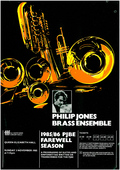 Sinfonietta - Philip Jones Brass Ensemble
 -
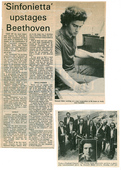 'Sinfonietta upstages Beethoven', Brighton Festival
 -
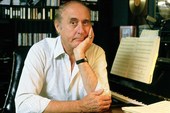 Henry Mancini and 'Victor/Victoria'

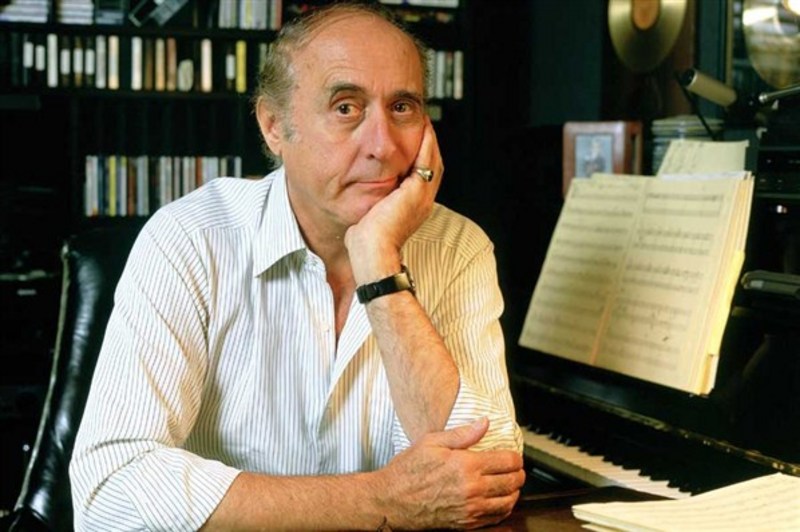
THE SNOWMAN - a 26-minute animated film where the script is the music (1982)
other films: THE HUNGER, ALL FOR LOVE, LORDS OF DISCIPLINE, THE KEEP
'THE HUNGER' - DAVID BOWIE
'The Hunger' was Tony Scott's stylish contemporary rethink of Dracula. It starred David Bowie and Catherine Deneuve and was mostly shot in a large empty house off Curzon Street in Mayfair. Most days we were there we all went for lunch at The White Elephant just across the road. For the soundtrack Tony wanted in general to use existing unusual and interesting music of all sorts. It was fun. I started to go to his house in Wimbledon at 8.00 in the morning with loads of records to play to him before he set off to start the day's shooting. We chose music and I rerecorded it with the finest musicians, starting with some chamber music recorded by pianist Howard Shelley, violinist Ralph Holmes and cellist Rafael Wallfisch - sections of the great Schubert Piano Trios in E flat and B flat, the Bach Partita in E for solo violin; the Bach cello suite in G. I listened to Maurice Gendron's cello recordings of the Bach Suites as a reference, which I decided were the best, (not knowing that I would soon have the privilege of working with him.)
'THE HUNGER' - CATHERINE DENEUVE
Catherine acted the part of a 5,000-year-old vampire concert pianist and as her star piece I had chosen Ravel's 'Le Gibet' (The Scaffold) by Ravel, which seemed appropriate. We had arranged for a French coach to train her to look convincing as a pianist, but after several takes Tony despaired:
'Howard, this doesn't work. You get behind Catherine and move her around convincingly to the music!' I asked Catherine if she minded. 'Mais non, pas de tout'
I held her around the waist and moved her around. Tony was pleased; 'OK, we'll take it!'
I got out of the way and he shot some more footage, but it didn't work.
'Howard, you'll have to be with Catherine all the time and move her around.'
'Well how can I do that and not be in shot?'
'You'll have to get under the piano stool somehow and manipulate her somehow from there.'
Errr.. I asked Catherine if she would allow me to do so and she smiled: 'But of course'.
I had the enviable task of not only manipulating the body of the most beautiful French woman in the world, but getting paid for it!
Of course she simply mimed to a recording of 'Le Gibet', but I am still uncertain whose recorded version was used. I understood that Howard Shelley had recorded one on the day of the Schubert Trios at CTS Wembley, but I wasn't present that day and later Tony asked me if I would make my own recording. I learnt the piece and recorded it at Advision on the same session that I recorded 'Dolphin Square Blues' for the scene in which I appeared as a piano player at the Dolphin Square location. I also recorded a free rhapsodic improvised piano version of 'Lakme', a recording which Tony loved and used later in other films, notably 'True Romance' and 'Carlito's Way'.
THE HUNGER - SUSAN SARANDON
Tony next wanted to shoot a love-scene between Catherine Deneuve and Susan Sarandon. It was to be shot on a set which looked like an Egyptian temple, perhaps recalling Catherine the Vampire's days in pre-history. Tony also wanted to shoot very explicit nude sex and Catherine did not wish to do that. He asked me to find a stand-in and I put an advert into 'The Stage':
'Catherine Deneuve look-alike required for major Hollywood feature film. Must be prepared to do explicit sex scenes and play piano to the standard of Grade V.'
Applicants were to turn up at the Curzon Street location at 6.30pm on the next Monday evening. I walked into the big concert room to find Tony smoking a cigar on a couch surrounded by maybe 50 blonde Catherine Deneuves, all clutching sheet music copies of 'The Rustle of Spring'.
'We're going to have a great evening, Howard', said Tony
While Tony was busy shooting this scene I continued my music researches. I discovered an opera by Delibes in which a Princess falls in love with her slave-girl and there existed a duet for two sopranos called 'Viens, Mallika' which I thought might catch the spirit of the scene. I found an old recording from the Fifties by Marianne Mesple and played it to Tony. He liked it but didn't like her vibrato.
'Could you record it without the vibrato?'
I recorded the soprano duet from Delibes' 'Lakme' with specialist early music sopranos, Elaine Barry (whom I used in Amityville 3D for the high vocalise with orchestra) and Judith Pearce, who often teamed up with her. I conducted them with my orchestra The Sinfonia of London in CTS and it went onto the film. I had no complaints and in fact no comments at all, so I presumed that it was satisfactory to all concerned.
However, about a year later Tony Scott rang me:
I've taken the greatest shot of all time. It's the shadow of a 747 flying up the Empire State Building and Lord King wants it for an ad for British Airways. Could you adapt that duet-thing you did for The Hunger to fit to a TV ad?
Yes I could adapt it and I recorded it again with the two girls as track for the British Airways commercial and indeed signature-tune for them. This duet, known as 'Lakme' became perhaps the most long-running and succesful ad music of all time and one of the most popular operatic hits of all time. Recorded in 1984 for BA it is still running throughout the world on every BA plane and in every airport in 2017!
'THE HUNGER' - BAUHAUS
I did some research and discovered a punk rock group from Luton called 'Bauhaus' and recorded 'Bella Lugosi's Dead' for the film. It was very noisy but the single went into the top 10. Tony also asked me if I would appear in the film as a pianist wearing a white DJ and sunglasses, and I wrote and played a piece which I wrote specially for the film - 'Dolphin Square Blues'.
'THE HUNGER' - HANS ZIMMER
Tony was up in my Kensington studio one morning to talk about music for the 'living dead' scenes in the attic. He wanted something totally electronic, horrible-sounding and scary and after discussing it for a while we both came to the conclusion that I probably wouldn't be the right composer for such a job!
He asked me: 'Where could I hear some samples of different scary electronic sounds?'
I said: 'Well, a great friend of mine, Stanley Myers, has a little studio called 'The Snake Ranch'. A young German boy of about 18 is looking after the equipment there and building up a tape library of every type of music that might be used in films. I think he might be able to help.'
'Where is this?'
'Lots Road, Fulham, no distance, we could take a taxi down there.'
'OK, why don't you call him?'
I called young Hans Zimmer who was free and most pleased to help and by the time we got there he'd already assembled some possible tracks. Tony listened to them in silence and asked me to walk outside for a minute.'
'Howard, you're wasting my time. This guy will never amount to anything!'
Well, it was clear that Hans wasn't on Tony's wave-length on this one, but he nevertheless mentioned Hans to his brother Ridley and Hans rapidly progressed into the creation of movie scores, globally and at the highest-possible level.
THE SNOWMAN
In 1978 a short wordless picture-book called 'The Snowman' by graphic artist Raymond Briggs was published by the book publishers Hamish Milne. It did not do very well as a book and after several years was remaindered. However as possible material for a film it had been noticed by US animator Jim Duffy working for TVC (Television Cartoons}, an animated film studio in Charlotte Street London. On Duffy's recommendation an option came to be purchased in 1981 by Iain Harvey, a Hamish Milne finance director, for the modest sum of £500. He suggested a split on the rights with John Coates, owner and director of TVC, with a view to making a children's animated film for Channel 4 TV. A 9-minute 'animatic' was put together by staff artists Hilary Audus and Jo Jo Fryer, a storyboard made up of stills from the picture-book and a 'kiddy-style' music track was commissioned from film composer Ron Goodwin.
A chance meeting changed everything. Canadian film and animation director Gerry Potterton happened to visit London. I had scored two films for his company in Montreal, in 1973 his feature film 'The Rainbow Boys' and in 1994 an animated film of Oscar Wilde's 'The Remarkable Rocket' and we had become good friends. On September 24th 1981 he rang to invite me to lunch in Charlotte Street, asking if I would mind going in to the TVC office with him for a moment to collect a cheque from John Coates for whom he had done some work. I agreed of course and we walked in. On seeing me John realised that he had met me briefly in New York that summer and he knew that I was an experienced composer. Grasping the opportunity he asked if I had a moment to look at his new animatic since he 'wasn't entirely happy with the music'. I watched the film but then asked if I could see it again without the existing music which I felt was rather mundane for the 'magical' nature of the story. Having done so, I said that I believed I had a theme which I had never been able to 'place' correctly. I thought that it could work wonderfully with the flying scene and believed that the film could work brilliantly with music only, that is to say without dialogue or voice-over. John asked how this could possibly work and I tried to explain. He was not convinced but rather bravely asked if I would consider making a demo to demonstrate exactly what I meant. He admitted he would not have much money available for commissioning such a thing, but since I was fired up and wanted to do it I was happy to agree to a modest fee of £200.
Seven days later on 1st October 1981 I had composed a 9-minute piano track which I recorded at nearby Advision Studios. It included the complete music of what was to become 'Walking in the Air' but so far only as an instrumental to accompany the flying scene sketches of the boy and The Snowman. John Coates took the demo to Jeremy Isaacs, the new head of Channel 4 TV, who declared the concept to be brilliant and said that he would love to make the complete film. However, he could only fund about one third and would need to find investors to fund the rest. We would need to wait for a while. Nearly six months later on 25th March 1982 John Coates announced that the deal was done and invited me to TVC to meet Dianne Jackson whom he had chosen to be director of the film. He opened a bottle of champagne and the three of us celebrated delightedly.
In Tokyo in 1992 in a filmed TV interview I mentioned this date and was told (quite unbelievably)that March 25th had been made 'National Snowman Day' in Japan! 'Why?' I asked, 'Because it was the day you signed the contract with John Coates to create The Snowman!'
During this initial meeting it was decided to first develop a complete story board that would last for a 'commercial television half-hour' - that is to say (at that time) 26 minutes of film with space for ads. The Briggs story as it stood would only have lasted about 12 minutes and new narrative would have to be written. Since Raymond Briggs did not want to be involved in the film this was largely down to Dianne, with the help of John Coates and supervision provided by Jimmy Murukami, appointed as direction supervisor. Dianne rapidly proved to be an inspirational director whom everybody loved working for.
I got to see a 26-minute completed pencil storyboard on April 6th and set about composing a complete piano score. I asked Dianne if she could provide me with the length of each frame of the story, measured not in feet and inches as used by animators, but in minutes and seconds as used by composers. Fortunately the film editor at TVC, another Canadian called Taylor Grant, understood exactly how to do this and he and his musically-trained assistant were able to provide me with perfect split-second timings. (Taylor was to do this for me not only for The Snowman, but for other projects to come such as 'Granpa' and 'The Bear').
I recorded the piano score to picture on May 6th, again at Advision. There was no vocal at this point but the animators were now able to start work, directly matching up their images to the piano track.
'WALKING IN THE AIR'
One evening Terry and Mandy Oates came to see me at my studio. They had shown interest in taking over my music-publishing interests but because they were patently not interested in my 'serious' concert music I had not proceeded any further. They asked what I was up to and I played them the new track of The Snowman with the semi-complete video. Terry said:
'You ought to write some words and make that tune under the flying scene into a song.'
I listened to this with interest because Terry had once suggested to Henry Mancini that there should be a lyric on 'Breakfast at Tiffany's.' There was and it was 'Moon River' and Terry published it. Next day I set off for the park with a picnic. The old working title of 'Flying through the air' wasn't very clever, but as I walked across the road the words 'Walking in the air' came into my mind. Better. I rented a deck-chair and spent most of the day in it. The rest of the lyric followed:
We're walking in the air We're floating in the moonlit sky The people far below Are sleeping as we fly
I'm holding very tight I'm riding in the midnight blue I'm finding I can fly So high above with you
On across the world The villages go by like dreams The rivers and the hills The forests and the streams
Children gaze open-mouthed taken by surprise Nobody down below believes their eyes
We're surfing in the air We're swimming in the frozen sky We're drifting over Icy mountains floating by
Suddenly swooping low on an ocean deep Rousing up a mighty monster from his sleep
We're walking in the air We're dancing in the midnight sky And everyone who sees us Greets us as we fly
I finished the orchestration of 'The Snowman' and recorded the complete track in two three-hour sessions on 5th July with John Richards at CTS recording studios, Wembley. It was my own hand-picked orchestra with all my friends: Jack Rothstein as leader, Ken Essex lead viola, Peter Willison lead cello. It sounded marvellous, but Sid Sax didn't like my picking my own orchestra and parted company with me, rather as David Katz had done ten years earlier. As regards the vocal, John Coates wanted to use an 'ordinary-sounding' boy and we tried dubbing on two different boys, chosen more or less at random, from a school in South London. But it didn't work. Although 'Walking in the air' sounds fairly simple, the purity of line demands a really well-trained treble who has fine breath control, perfect diction and perfect intonation. I racked my brains as to how to find such a boy and then on a hunch rang the soprano Elaine Barry, who was soprano for 'The Scholars' with other top professional session singers from 'London Voices'.
'How can I find the best treble in the world?' I asked her.
'I'll ring Barry Rose, the choirmaster at Saint Paul's Cathedral', she said.
The next Sunday Elaine and I went to St. Paul's choir school in the city and met Barry Rose.
'I've taught your song to six of my best boy choristers and they will each sing it for you. You can decide whom you think the best.'
They sang and Elaine and I instantly voted for 'the boy second from the right'. His name was Peter Auty and the next day he and Barry joined me at the De Lane Lea voice-recording studio in Dean Street, Soho. We donned headphones and Peter sang to the full orchestral mix of the song. After quite a few takes and some editing we had a vocal track that was, as far as I was concerned 'just about as perfect as one could ever get'. Peter Auty went on to become a distinguished solo tenor with Covent Garden Opera. The 26-minute Snowman cartoon film featuring the song 'Walking in the Air' was first shown at Christmas 1982, immediately nominated for a Hollywood Oscar and went on to win many prizes and become an 'all-time classic' - to some people 'an icon'.
On the whole I felt I'd made the right move returning to London, even if it was via Montreal!
HEARTBEAT
Somewhere in the middle of all this my friendly BBC Brighton producer, Jim Parr, asked if I would write a jazz fusion piece for 'National Arts Day'. I wrote 'Heartbeat', long before a TV show of that name started. It was for the Danny Moss Quintet, tenor sax, piano, bass drums, plus a string orchestra and took place at the Gardner Centre of Sussex University on May 30/31. I enlarged it later into a tenor saxaphone concerto for BBC 2 in 1990 when the soloist was Ian Dixson.
ALL FOR LOVE
I was offerred to score a 60-minute TV film with veteran stars Jean Simmons and Ian Carmichael. For this I adapted the score for my wonderful piano quartet later also adapting into a concert piece. The film was called 'Down at the Hydro' from a series called 'All for Love' and the director was John Irvin, famous above all for his 'Tinker, Taylor, Soldier, Spy' with Alec Guinness.
THE LORDS OF DISCIPLINE
In autumn 1982 I was asked to be musical director and composer on an American military film shooting in England called 'The Lords of Discipline' with David Keith. I didn't really ask exactly why this was so. I enjoyed meeting the director Franc Roddam and he had an infectious enthusiasm for the project and I threw myself into the world of all-American military music, creating from the students at Kneller Hall a marching band with white Sousaphones and bell-trees and arrangements of Dixie and other deep-South airs. I also arranged some sixties-style rock for the graduation ball and created music for a college student song called 'Carolina keep us faithful'. The story was supposed to be set in The Citadel in South Carolina but was in fact shot in England at Wellington College, Kneller Hall and Sandhurst - all of whom seeming delighted to cooperate. I then created a complete orchestral score, recorded it 10-11 November at CTS and was ready to move on to the next project.
But Jeff Katzenberg, head of Paramount Pictures, was not so happy. Director Franc Roddam, myself and the editor were summoned to LA. Paramount paid us to travel first-class on Pan-Am and I was delighted to find myself next to Joan Collins. We discovered we both grew up in Brighton and we drank champagne and told stories all the way to Tinseltown. I was booked into a suite in the Chateau Marmont on Sunset Boulevard and a couple of days later we met Jeff looking very business-like in his office. He told us The White House thought the film was 'sort of a bit anti-American' and suggested Franc re-shoot the ending. I was persuaded to stay and write a new 'upbeat all-American' score and to do this I had to stay in LA over Christmas. This wasn't as bad as it sounds. For Christmas lunch Franc and I were invited by Ridley and Tony Scott and families to their house on Laurel Canyon - a whole party of Brits out by the pool and a temperature of 70F degrees. At the start of the new year I conducted a complete new score (3-4 January) at Evergreen. In fact when we got to the dub at Glen-Glen a lot of my original score went back into the picture, which in the event turned out pretty well. The downsides were that I wasn't home for Christmas and I missed the TV release of 'The Snowman.'
THE KEEP
I was scoring 'The Lords of Discipline' into the small hours when the phone rang in my suite in the Chateau. It was the director/producer Michael Mann who told me about an extraordinary film he was making called 'The Keep', a strange and ambitious film that somehow combined Nazi occupation in Rumania with monsters and the supernatural. He had decided to have an all-electronic score and was working with the group 'Tangerine Dream'. They however had just heard 'Walking in the Air' which apparently had been a revelation to them. Michael asked if I could collaborate with them to incorporate my 'Snowman song' into the film. I explained that I was working flat out on a rewrite and would be tied up until the studio recording and dub in January. I had however no objection to Tangerine Dream using the theme and was intrigued as to what they would do with it. They saw my theme as having a very special quality of innocence and transcendence which they felt would contrast with the overwhelming evil of the story and this is indeed how they used it - to some considerable effect.
-
 Walking In The Air Cover
 -
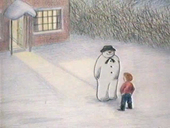 An early scene from The Snowman
 -
 Catherine Deneuve in The Hunger (Bowie in background)
 -
 David Bowie introducing The Snowman
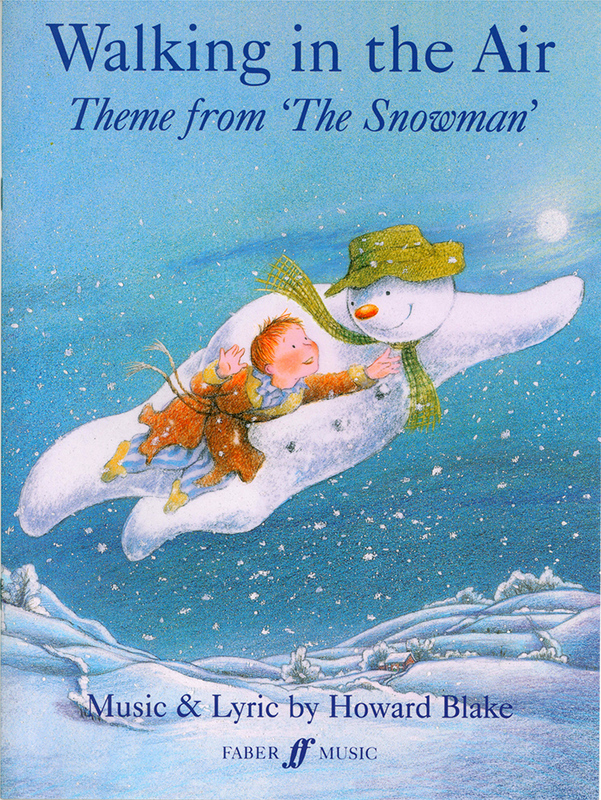
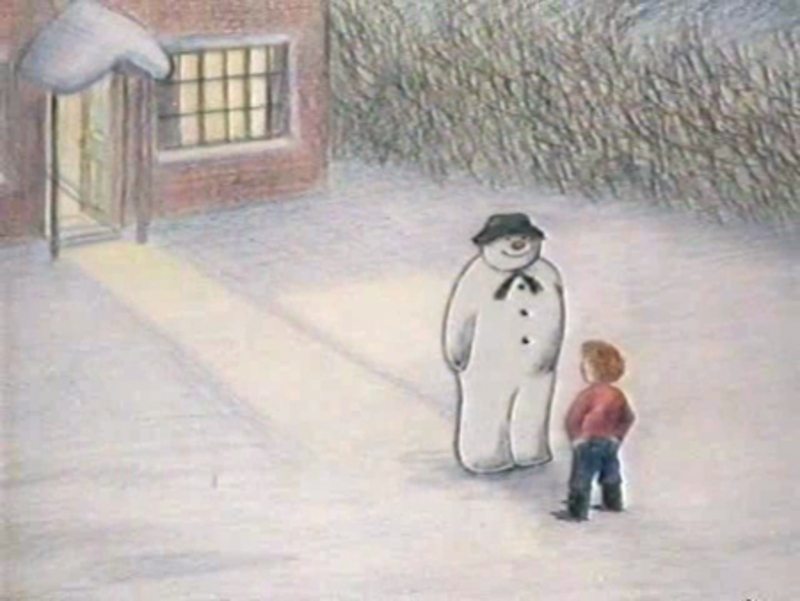
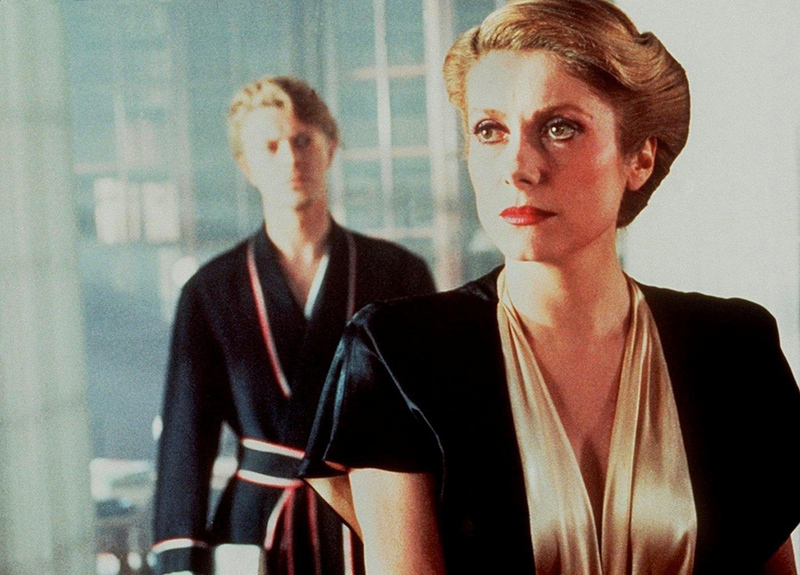
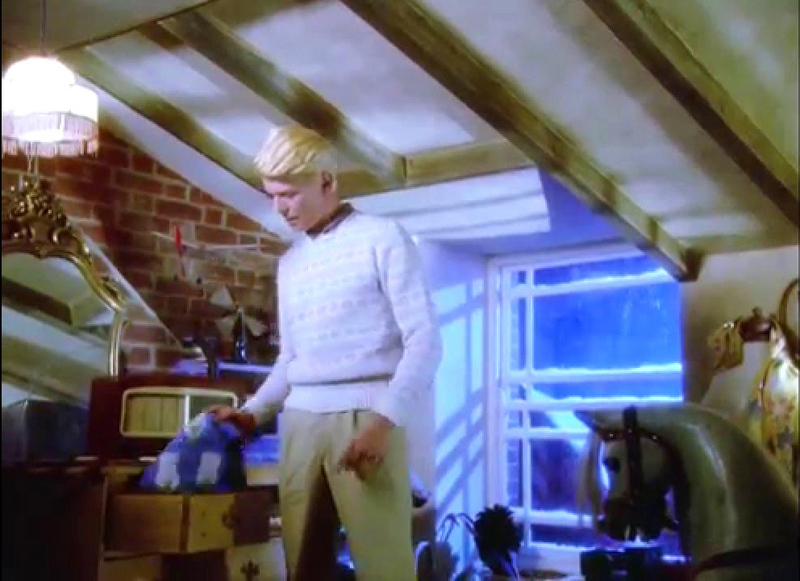
'BENEDICTUS' IN AUSTRALIA. SNOWMAN CD ON CBS MASTERWORKS (1983)
Film: AMITYVILLE 3-D. Anim: ERNEST AND CELESTINE.
When I did get back to London 'The Snowman' was causing a stir. Nigel Britten had made contact with Ray Burford at CBS Masterworks, who was considering an album. I asked Nigel if he could make a deal and also try to find a publisher for the song. But Nigel had other ideas and persuaded me to accompany him back to Hollywood to 'promote me with the studio music heads'. I thought this was a pretty silly idea, but agreed to it in order to please Liz (who had found him as an assistant and possible future replacement for herself at London Management). However, when we arrived in Hollywood, the production team there asked me who Nigel was and why he was there and were in no way convinced that he was necessary.
Meanwhile the CBS deal in UK was not coming to fruition. On returning to London I rang Ray Burford who said he hadn't heard anything further from London Management but was still very keen to do an album of Snowman. I decided that I too must part company with Nigel and London Management. I just had to work on Snowman myself or nothing would happen. It was too great an opportunity to miss and I now made endless phone calls and had many meetings. CBS wanted a spoken commentary but Raymond Briggs preferred not to do it, but, with his permission, I wrote a narration myself which I tailored to fit exactly to the music. I asked John Coates if he would like to collaborate on a record album, but he declined, thinking it would cost a lot to make and not cover its costs. I asked him if he would sell me the rights and he immediately agreed to do so. After much discussion with CBS about a big-name narrator, I asked Bernard Cribbins, who recorded a fabulous commentary and the album was all set for a Christmas release. I seemed to be progressing better without an agent. My long-time accountant, Frank Dunphy, agreed to act as my business manager, and we visited CBS Masterworks together and concluded a deal. I believe this was Frank's first venture as an agent and he carried it off most succesfully. He also negotiated my music-publishing deal with Faber Music and oversaw the creation of Highbridge Music as my own limited company. All these deals were to see me in good stead and I greatly appreciated his work and friendship. In the nineties he was to re-use this talent to colossal effect as the high-profile business manager for Damien Hirst.
AMITYVILLE 3
It happened that at this moment I was offerred a horror film to score for Dino de Laurentiis. I flew to LA to view it on 24th June , returned to London and recorded it on July 25-27. It was called 'Amityville 3-D' and the director was the brilliant veteran film-maker Richard Fleischer, a director whom I had long held in the highest esteem.
In general however the flow of film commissions started to declineprobably mostly due to my breaking off with London Management. It was not something that disturbed me since I was already so busy in many directions that I hardly had the time to undertake more film scores.
FABER MUSIC
I received an invitation to dinner at the Garrick Club with Dr. Donald Mitchell CBE, Life-President and Director of the Britten Estate, Britten Trust, holder of the Mahler Medal, Chairman of Faber Music. I had got to know him on the board of the PRS of which I had been first a director and then an executive director since 1978, working in the interests of composers. Donald had taken an interest in my progress and we discussed my struggle to find acceptance as a composer, to achieve a style; how I had studied at the RAM 1957-60 and gradually became successful in London as pianist, conductor and composer; how in 1971 I took time off to rethink and study in an attempt to find my own true 'voice' and so on up to the present day. Some days later he said that he and his colleague Martin Kingsbury, Director of Music Publishing, would love to come over and hear 'The Snowman' - 'they had heard so much about it'. I said that I thought it was a pop song and he was an avant garde serious publisher and it wouldn't really be for him, but he said: 'we are broadening out'. They came over, listened to The Snowman, asked to hear what else I had composed and, after a mammoth listening session of more than three hours, declared that 'they would like to publish everything I had ever written!'. I was completely overwhelmed by this and thought it the most marvellous moment of my whole life. They would publish 'The Snowman' in printed full score and piano score and sheet music and then they would publish everything else - and promote it - with Faber Music, the firm that Donald had founded in 1965 exclusively to publish the works of Benjamin Britten. There was a press conference on November 9th 1983 for which he wrote:
A new star in the Faber Catalogue:
'movie scores, music for TV, for the ballet, opera, chamber music, songs...there could be no end to spelling out the diverse attainments and achievements of Howard Blake. The exciting mix and spread of his gifts (he is also a first-class conductor and pianist), which are winning increasing renown and recognition throughout the world, pose a challenge to any publisher, but it is one that Faber Music, with its own diverse range of interests, is especially well-equipped to handle.
This highly complimentary treatment not surprisingly encouraged me to see myself as something of an heir to the great man, Benjamin Britten. Faber had a stable of composers, but apparently nobody who crossed over so many genres and had appeal to such a wide public as myself. Some press were later to find stylistic similarities:
'there are inevitable echoes from Britten'
'...the odd faint passing hint of Britten in some of the textures, and the more obvious debt of Stravinskian neo-classicism'
'Britten (in his Serenade style) seems to have been a particularly strong influence'
Donald pushed through the handsome publication of scores and recordings of my work, which, apart from a staggering 48 different editions of 'The Snowman', later included the concertos for clarinet, cello (Diversions), piano and violin, the Sinfonietta for Brass, 'Toccata, a celebration of the orchestra' and much else.
(It was to be a disappointment and a very considerable surprise to me when Donald suddenly relinquished control of Faber in 1988 to become 'non-executive President'.)
However, for the moment Donald Mitchell and his publishing firm Faber Music began doing a tremendous job on 'The Snowman', printing the full score and piano/vocal score and song-sheet with a coloured picture from the film on the cover, later preparing an 'easy piano picture book' and all sorts of simplified arrangements for children and amateurs. They hired a promoter, Dave Dee, to promote 'Walking in the Air' as a pop song, which quite surprised me, but they didn't ask me to do the arrangements, which rather puzzled me. I didn't complain because I was so desperately eager to please them and encourage them to start to publish my serious work, which they did fairly quickly, starting with 'Sinfonietta for Brass'.
THE SINFONIA OF LONDON
Sometime in the summer Peter Willison, my cellist in the piano quartet, suggested we form an orchestra of the Snowman players since now it had made an outstanding recording on a CBS Masterworks album. He had been offerred the name 'The Sinfonia of London' and we could use this on the album. We met up with the owner in an interval at the Royal Albert Hall during a prom. Flute player Eddie Taylor, the partner of conductor Muir Matheson, offerred to sell us the name, which seemed a good idea. I thought it would be wonderful to have my own orchestra, on the one hand to do concerts and record all my classical work, and on the other hand to provide a great orchestra for the recording of film scores.
RAYMOND GUBBAY
With our own prestigiously-named orchestra, Peter Willison and I went to see impresario Raymond Gubbay and suggested he do 'The Snowman' as a concert work. The first concert at The Barbican Concert Hall sold out, and with time persuaded pretty well every other hall and school and orchestra in Britain to do it as well. By 1985 there were something like 150 concerts of it in Christmas week in England alone.
QUEENSLAND UNIVERSITY
Four days later I left for Australia. Michael Leighton Jones was now vocal professor at Queensland University. He had arranged to put on 'Benedictus' in Brisbane so that I could revise the work, get it into shape and conduct my own first performance of it with the student chorus and orchestra. He ingeniously made it the 'set work' for the term. I was thrilled by this, and took the work out of mothballs. Through August I had worked on rescoring and revising it. I went to Australia on September 9th. At 'the uni' they performed all sorts of pieces of mine and I conducted 'Benedictus'. I wrote a jazz a cappella version of 'Waltzing Matilda' for 8 voices and suggested Michael start a vocal group, which he soon did, very succesfully (called 'Jones and Co'). It was a sort of miniature Howard Blake festival. 'Benedictus' was a terrific success and I believed in it as a work once more. I knew that I must try to get it published and recorded and this would be a priority with Faber when I returned.
But while I was in Brisbane I had my first 'sour' experience of being published. Faber sent me proofs of a piano/vocal score of 'The Snowman' arranged by another composer, Marc Anthony Turnage. Why such a composer, and why, when I can do it myself? The version produced was unplayable and I phoned Martin Kingsbury and asked if I might rewrite it. I did so sitting in a guest house in the suburbs of Brisbane, warned of strange deadly snakes and spiders, posted it back complete to England within a week and, by the time I returned on November 1st., Faber had printed it!
ERNEST AND CELESTINE
Just after my return from Brisbane, and suffering from severe jetlag, on 14th. December 1983, I somehow managed to write and record a little violin and piano score for a 5-minute Christmas animation film produced by John Coates, called 'Ernest and Celestine'. It was shown on Channel 4 TV on Christmas Day morning and very well received.
MUTINY ON THE BOUNTY
Liz Keys and Nigel Britten at London Management, without much prior discussion, suddenly arranged for me to start work as musical director on 'Mutiny on the Bounty' which was apparently all set to be shot with an apparently great cast of Anthony Hopkins, Mel Gibson, Edward Fox, Daniel Day-Lewis and Sir Laurence Olivier. But although I set the film up in regard to some of the source music, I didn't remain with the production long enough to compose the score.
When I talked to the script-writer and some of the production team I had doubts that I could either follow their line of thinking, or set about writing a great score. Somewhat curiously, the great Sir Laurence only had a very minor role in the film and after some deliberation I decided to turn the offer down, a decision that turned out to have been well-advised. Anthony Hopkins was later to say:
"Mutiny on the Bounty' was such a sad mess of a film, such a botched job. I'd put so much time and effort into the role and right then and there I decided: "I will never again invest so much effort into something over which I have no control. It is too frustrating. That film was a sort of turning point for me. For years I'd been trying to cultivate a don't-give-a-damn attitude. But after watching `The Bounty' I knew I had had it."
I too could not link my sympathies with the production and believe that I made the right decision by leaving it and moving in a different direction - a direction which turned out to be the creation of the Clarinet Concerto, which I would probably have lost!
-
 Outside Chateau Marmont with a poster of 'The Lords of Discipline'.
 -
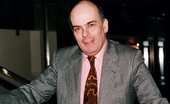 Raymond Gubbay and concerts at the Barbican
 -
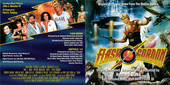 Amiyville 3D and Flash Gordon
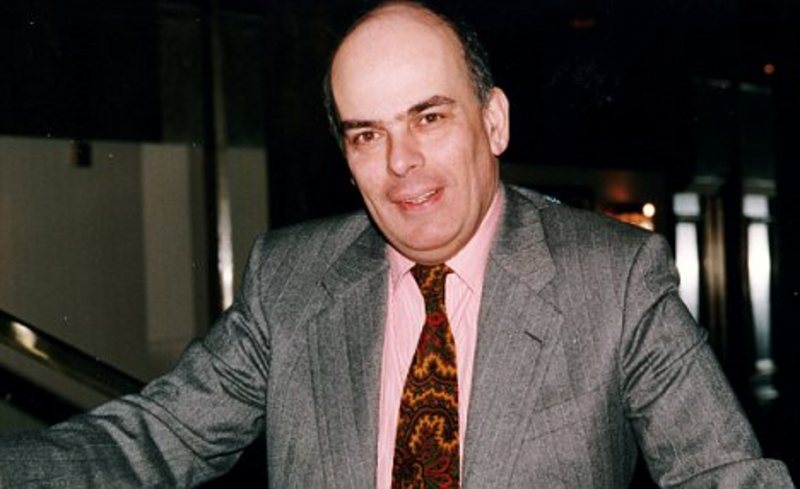
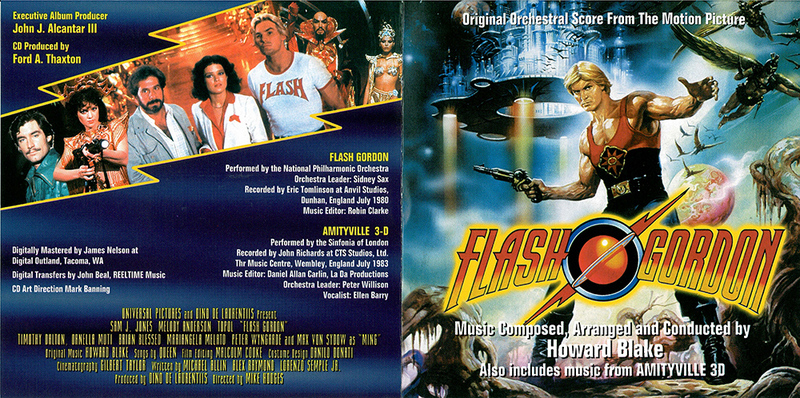
CLARINET CONCERTO, NURSERY RHYME OVERTURE, 'WRECK OF THE JULIE PLANTE' (1984)
Theatre: Henry V at Stratford. TV: British Airways 'Lakme'
CLARINET CONCERTO
In January I was asked to write a Clarinet Concerto by Thea King, my dear friend whose playing to me excelled all other clarinet players I had heard. I started work and took it very seriously. It must be the best I can possibly do! When it was completed Thea gave the premiere in a concert at the QEH with the English Chamber Orchestra, recording it the following day. Both were conducted by myself. (on 30th May, and 1st. and 2nd. of June 1985) She played exquisitely. Ted Perry at Hyperion was delighted with it and it was released with works by Lutoslawski and Seiber. The CD later won a prize.
LAKME AND BRITISH AIRWAYS
In 1982 the film director Tony Scott had taken me on as musical director for the feature film 'The Hunger', a stylish contemporary rethink of 'Dracula' starring David Bowie, Catherine Deneuve and Susan Sarandon. He'd had the interesting idea of constructing most of the score from existing classical music, but it had to be very carefully chosen to fit each scene and I was given the job of finding it. I started to go to his house in Wimbledon with case-loads of recordings to play to him, mostly at 8am before he started the day's filming. Together we chose excerpts and I would then rerecord them with the finest musicians. Between them, Howard Shelley, Ralph Holmes and Rafael Wallfisch played excerpts from Schubert's E flat Trio, Bach's solo cello Partita in G and Ravel's 'Le Gibet. There was also a recording of some Lalo with violinist Madeleine Mitchell with whom I was to record a Naxos album of my music some years later (Music for strings and piano) and my own solo piano recording of 'Le Gibet' which was the version eventually used.
Tony wanted music for a strange erotic scene played between Deneuve and Sarandon in a set like an Egyptian temple. The script suggested the soprano duet from Lakme called 'Viens O Mallika' and I found an old Fifties recording of it. Tony liked it but didn't like the wobbly sopranos. I suggested we use two 'early-music' sopranos, Elaine Barry and Judith Pearce from 'London Voices' whom I conducted several days later singing magnificently with The Sinfonia of London. On the same recording session I improvised a piano version of the song and in the film we see Deneuve apparently playing it until sopranos and orchestra take over, cross-fading into the next scene. Tony loved it and two years later he rang me again:
'I've shot a commercial for British Airways with the shadow of a 747 going up the Empire State Building. Do you think you could get that opera piece we did to fit it?'
'I'll have a look at it.'
I arranged a special version of 'Viens, Mallika' from 'Lakme' and recorded with the girls for a second time. British Airways loved it and decided to use it as their global signature-tune, something that still happens at the time of writing this 24 years later. It quite possibly makes this theme the most long-running piece of ad music in history. The incessant airplays of it at the same time caused it to be an all-time operatic hit which sopranos all frequently perform and record. Tony also used it incessantly repeated in the feature film 'True Romance', and Brian de Palma used it in his 'Carlito's Way.'
Five years on from the recording Saatchi and Saatchi invited me to meet the President of British Airways, Lord King at a celebratory drinks party. It was quite noisy with chatter and clinking glasses:
'Marvellous piece you wrote for us.'
'I didn't write it, I arranged and recorded it. It's from an opera by Leo Delibes called Lakme.'
'Yes terrific, but I often wonder why you wrote it in French.' (He obviously couldn't hear me.)
'Errr, well it's in French because it was written by a Frenchman -Leo Delibes.' (He gazed into the distance.)
'Marvellous piece. I've invested over nine million pounds in the advertising using it. I've often wondered what the French words actually say.'
'Oh I can tell you that. They say FLY AIR FRANCE!' (but I don't think Lord King found it so amusing!) In April I orchestrated 'Dances for two pianos' as Concert Dances for Orchestra.
HENRY THE FIFTH
I got a call from Adrian Noble, Director of The Royal Shakespeare Company.
'I love your Snowman music. Have you ever composed incidental music for the theatre?'
'No'
'Would you like to score Henry V for the opening of this year's season at Stratford? We have a new boy called Kenneth Branagh. Could you write the music like a film score?'
I thought how exciting this would be and wrote an unusual score. It featured in a Stratford seminar on theatre music and received excellent critical attention, later transferring to The Barbican.
NURSERY RHYME OVERTURE
In May, at the request of Raymond Gubbay (whose Snowman concerts at the Barbican had been a great success) suggested that I compose a 'Nursery Rhyme Overture'. I wrote this, and conducted the premiere in St Albans. It was also a guessing game for children and has been a success with audiences, used as the Overture in many Snowman concerts.
GEORGINA IVOR
I meet Georgina Ivor who has had excellent past experience working as an artist agent for Ian Hunter at Harold Holt Ltd. I play her 'Benedictus' on the Australian student tape and she thinks it is marvellous. She is interested in working in promotion for me. We start to plan a new 'professional' premiere of Benedictus. In October I picked Adrian Noble's brains and asked if he would research cathedral locations for a 'Benedictus' premiere. We chose St Albans Cathedral and plans began to shape.
I'M ALL RIGHT JACK
In September I get a call from Alan Hackney, who is author of the book from which the Peter Sellers hit film of the fifties was made - 'I'm All Right Jack'. He comes to see me and suggests we write a musical. I think this is a great idea and start at once. I write most of the lyrics and the music and Alan writes the script. The first draft takes about 2 months.
THE WRECK OF THE JULIE PLANTE
In December I write a folky song for a prize-winning short animation film 'The Wreck of the Julie Plante' made by Taylor Grant, my excellent and devoted music editor on 'The Snowman' and other TVC animated films.
-
 Clarinet Concerto with Thea King on Hyperion
 -
 The Wreck of The Julie Plante
 -
 Clarinet Concerto, Thea King, Hyperion ECO Blake
 -
 Adrian Noble's Henry V with the Royal Shakespeare Company
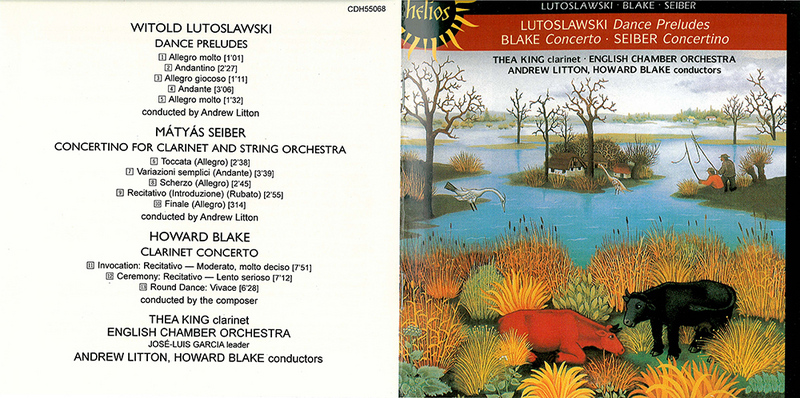
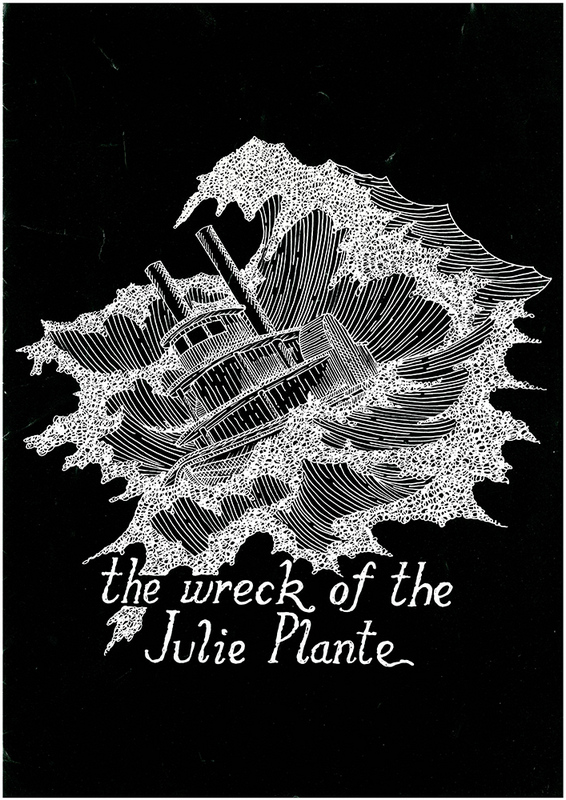

'DIVERSIONS' FOR CELLO AND ORCHESTRA , 'FUSIONS' FOR BRASS (1985)
AS YOU LIKE IT - ROYAL SHAKESPEARE COMPANY
MAURICE GENDRON
Georgina had heard the 'Diversions' for cello and piano and suggested that they might be orchestrated and made into a cello concerto. She asked if I would like her to approach the great French cellist Maurice Gendron, for some years cellist with the Yehudi Menuhin trio. I was thrilled by this and travelled to the department of Seine-et Marne in France to work on it with him in Grez-sur-Loing, not far from the house of Delius. He was a musician and artist of the very highest calibre. He asked me to write a new finale, to extend some of the movements, to orchestrate it for medium-sized orchestra and to write a cadenza. I stayed with Maurice and his charming wife in their beautiful little chateau on the river, once the property of the novelist Balzac. Maurice and I played some cello and piano together and amongst other things we looked at a prime example of virtuoso cello writing in the Tchaikovsky Rococo Variations. After lunch one day he suggested I take a boat from the jetty and skull down to the Delius house. It was a beautiful sunny day and I rowed down the stretch of river made famous by Sisley with his impressionist paintings of it and by Frederick Delius with his 'A summer night on the river', pulling into the mooring at the bottom of Delius' garden, still looking beautiful and very much as he had left it. Back home I worked at the new material, meeting up with Maurice at the Ravel Festival in St Jean de Luz and again in London where he finally pronounced himself satisfied with the work. A premiere was proposed with the BBC Symphony Orchestra and Maurice as soloist in the Brighton Festival but sadly he became ill and the management thought it too big a risk to proceed. The first performance was instead given by Steven Isserlis and the RPO on 29th March 1989 when it was conducted by Sir Charles Groves. Maurice was broken-hearted at the decision to exclude him and died in the following year. From my point of view he contributed a very great deal to the work since he showed me how to achieve the maximum effect and virtuosity from each aspect of the cello. I would like to hope that 'Diversions' will be seen as a reflection of his genius as one of the greatest of all cellists.
AS YOU LIKE IT
In March Adrian asked me to score 'As you like it' for the RSC at Stratford and he asked if I could write a score for it set in 1920 Chicago. Howevever when I arrived there it had suddenly become turn-of-the-century impressionist! I wrote a new score sitting up in the circle bar while the cast were rehearsing. I was not too pleased at this volte-face, but liked writing the songs and later adapted some of them for string quartet and tenor as Shakespeare Songs.
ALED JONES
In the autumn of 1985 my publisher at Faber Music, Martin Kingsbury, rang to tell me that via the Saatchi and Saatchi ad agency in London the American toy firm 'Toys 'r' us' wanted to use 'Walking in the Air' for a TV commercial launch for six new superstores, to run six or so times a night on ITV through to Christmas. This was obviously a 'gift' in terms of promotion and I suggested that he contact Alan Street at CBS and ask if they could use the existing Peter Auty version which was on both the animated film and the record album, but Kingsbury said:
'..no, they want a new shortened version adapted specially and CBS wouldn't want to make a new single...'
Had CBS Masterworks taken this opportunity it might have boosted our 'Snowman' album, but then nobody could have guessed just how big it would be. I rang Peter Auty to see if he would be able to re-record the song, but as soon as he spoke it was clear that his voice had broken. A new treble had to be found and it happened that I had heard a boy singing on TV in a concert from St. David's Hall Cardiff a few days earlier. I didn't know his name but suggested that Saatchi and Saatchi try to trace him. They did. His name was Aled Jones and it was suggested he should record 'Walking in the Air' at Abbey Road Studios as soon as possible. Under the terms of my contract with CBS Masterworks for 'The Snowman' LP I was not permitted to conduct another version of the song for another two years or so and the orchestra put together for the recording was in fact directed by my friend John Altman. I had happened to mention the session to producer Simon Foster at EMI and casually suggested that it might be worth recording the entire song with a view to possibly putting out as a single. That is exactly what happened. The single went to number three in the hit parade and made Aled and 'Walking in the Air' famous overnight.
HARRY MORTIMER
In November The Philip Jones Brass Ensemble gave the London premiere of Sinfonietta for Brass (re-instating the MS full version!) for their farewell concert in The Queen Elizabeth Hall. The great father of brass-playing, Harry Mortimer, was sitting just behind me and tapped me on the shoulder. 'By gum' he said, 'if I could write for brass like that I'd never have bothered to play the bloody trumpet!' He asked if he could make it the set piece for the next Open Brass Championships in Manchester, and it was specially adapted for the occasion by expert brass arranger Bram Gay and re-titled 'Fusions'.
-
 Board of the PRS with Don Black, Andrew Lloyd Webber, Tim Rice, Vivian Ellis, Mike Batt, Chris Gunning and others
 -
 Maurice Gendron and Mme Gendron in Jelka Delius's Studio
 -
 Maurice Gendron
 -
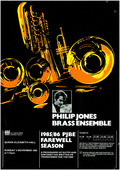 Sinfonietta for Brass
 -
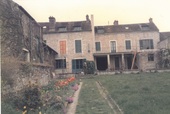 Delius's house at Grez Sur Loing
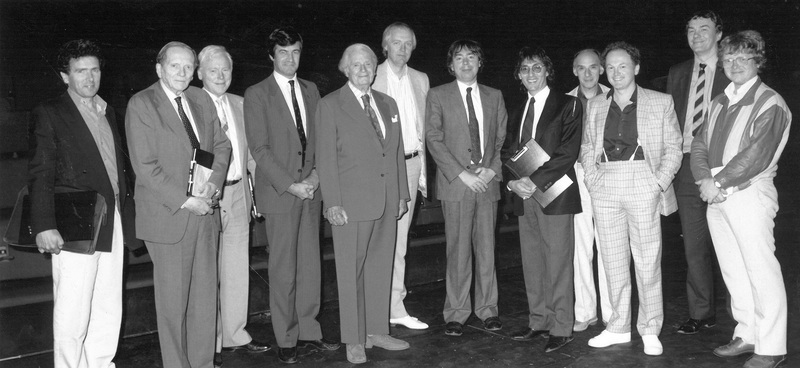
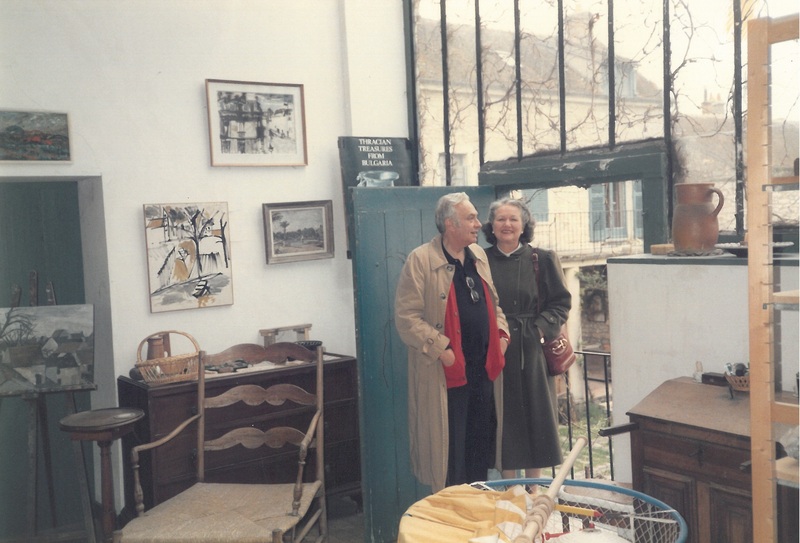
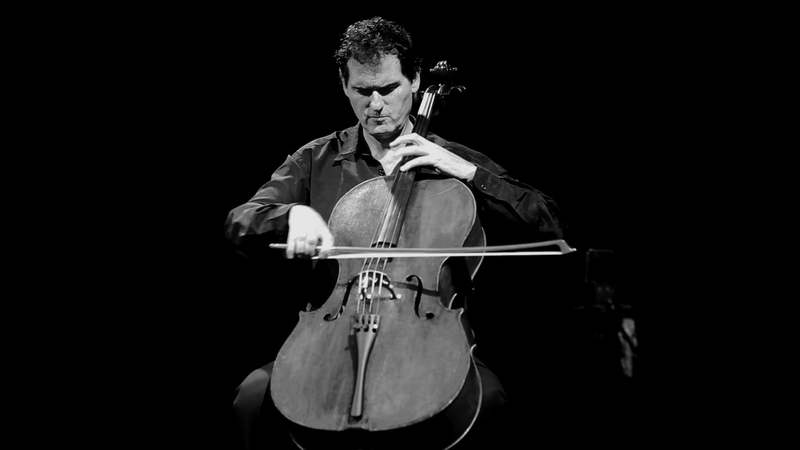
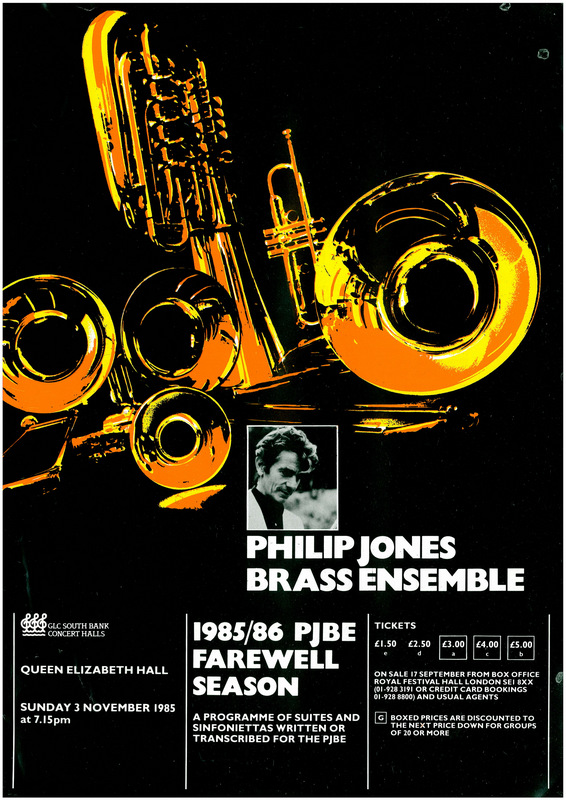

'GRANPA',Prix Jeunesse:'Honeybee and the Thistle' for Prince Andrew & Fergie (1986)
'A MONTH IN THE COUNTRY'-Asquith award for musical excellence,'CANTERVILLE GHOST
GRANPA
The huge success of Snowman prompted Channel 4 to ask TVC to make another music-based animation film by the same team. John Coates showed Diane Jackson and I a book called Granpa by John Burningham, but our mutual reaction was that it was a difficult subject and the fact that Granpa dies at the end too sad. We turned it down. However in 1985 my own father was aged 88 and the relationship that he had with my 6-year old daughter Catherine was very similar to that of the book. He and my mother lived in a similar sort of house, my father spent much of his time out in the potting shed and he loved telling stories. At Christmas he was in Brighton General Hospital and it happened that on New Year's Eve I took Catherine to visit him. The doctor in charge of him took me aside. He was suffering from kidney failure and would not last the week.
'I'm afraid he's going to die, Catherine.'
'Will he go to Heaven?'
'I hope so.'
With the wondrous insouciance of youth she said: 'Can I come and watch?'
This somehow touched me far more deeply than tears might have done. I took Catherine back to Mortlake and tried to call a taxi. This proved difficult and while I waited I sat at the piano, feeling extremely sad. For no particular reason I played 'Auld Lang Syne' through to myself, a song of both parting and remembrance. I wondered if one could write a counter-melody to it and jotted down the lyric 'Make-Believe'. It seemed to express the poignancy of the grandfather/granddaughter relationship. Catherine would always have memories of her grandfather and those memories would be happy. In that way he would remain in her mind and spirit.
Leaves are green and the grass it is growing Flowers bloom and the wind it is blowing Weave worlds of make-believe See to eternity Leaves are gold and the grass it is going Flowers fade and the wind it is blowing
Breathe no sigh for the day that is parting Welcome spring and the year that is starting Leave worlds of make-believe See to eternity Leaves are gold and the grass it is going Flowers fade and the wind it is blowing
A few days later, having written the song, I felt that I knew how I could set about a film score of 'Granpa'. I would make it a sort of children's opera, with solos, duets, trios choruses and even a coloratura soprano when the little girl dreams of being one when she grows up.
I met with John and Diane and they agreed to go forward with me.
'Who shall we have to play the part of Granpa?'
One of the names we thought of was Peter Ustinov.
CBS MASTERWORKS GIVE ME MY OWN LABEL
'Granpa' got under way and CBS Masterworks got very interested in it as a follow-up to Snowman. Joe Dash came over from New York. He wanted CBS to finance the recording and have big stars and started discussing the idea of signing me as a CBS artist. Joe agreed on Peter Ustinov to voice the part of Granpa and Sarah Brightman to record the song 'Make-Believe'. On 26/27th September I was invited to the Royal Bath Hotel, Bournemouth for the annual CBS conference. They discussed their other artists like Leonard Bernstein, Pierre Boulez, Barbra Streisand, Julio Iglesias and Julie Andrews and then came to the climax. Snow fell from the ceiling and a sledge flew down from the ceiling with a Snowman on it. The whole conference chanted 'CBS 7116!' (serial number of my album). In the bar I met MD Paul Russell and senior marketing executive Ian Groves. They offered me my own CBS recording label HB, up to 8 albums of my own music with an open budget and ability to renew. I was most impressed. We got into negotiations. Ian Groves was to look after me, but sadly my excellent man within CBS, Alan Street, disappeared from the team. By November I had finished the vocal score of Granpa. CBS were ready to make arrangements for an album plus a video and to be part of the promotion plan. Peter Ustinov and Sarah Brightman were happy to participate, my orchestra 'Sinfonia of London' would record the music and Terry Edwards' London Voices would take part along with The Wroughton Middle School Choir from Norfolk, who had won the BBC choir of the year award.
(Clare Kitson, who was head of animation for Channel 4 was writing a book on their body of work. She told me she believed Granpa was by far the most interesting of the TVC films and trail-blazing in its use of voices and music.)
SIR DAVID WILLCOCKS
The premiere of Benedictus in its final revision took place in St. Alban's Cathedral, masterminded by Georgina Ivor working in conjunction with an excellent colleague, David Laing. The choice of performers was outstanding: Robert Tear (tenor), Sir David Willcocks (conductor), The English Chamber Orchestra led by Joseph Froelich, The Very Rev. the Dean of St Albans (narrator), Frederick Riddle (solo viola), The St Albans Bach Choir, The St. Alban's Cathedral Choir, members of the Royal College of Music Chamber Choir and organist Andrew Parnell. Sir David with wonderful generosity spent innumerable hours checking and editing both vocal and orchestral scores. In a BBC interview on the day Sir David declared it a 'work for all ages'. I had been able to present the work as I wished it to be presented, and this magnificent performance will always remain with me as one of the supreme highlights of my life.
Frederick Riddle was now 74. I asked him if he would climb up to a high gallery at the West end of the nave to play the Prologue. He did so and it sounded ethereal and wonderful (representing everyman coming in from the outside world). Unexpectedly the Interlude before part 2 sounded from the South Transept (the aspirant in the midst of the community?) and the Epilogue sounded from the East end ambulatory (the novice having entered in to the monastery?}. I congratulated Fred on this brilliant piece of stagecraft but he denied it:
'I was trying to find a really warm radiator. My hands were too cold to play.'
God moves in mysterious ways.
THE CANTERVILLE GHOST
In May 1986 I was asked if I want to write a score for 'The Canterville Ghost'for Harlech/Columbia TV (UK/USA) , starring Sir John Gielgud and directed by Paul Bogart. I enjoy writing it and record at CTS on June 30th.
A ROYAL WEDDING AND A POET LAUREATE
In the summer of 1986 the celebrated book publishers Faber and Faber asked their most distinguished writer, the Poet Laureate, Ted Hughes, if he would write the lyric for a song to celebrate the wedding of Sarah Ferguson and Prince Andrew, third offspring and heir in line to the throne of Her Majesty Queen Elizabeth II. I, at that time a prominent composer with Faber Music (Faber Books sister company) was similarly asked if I could set such a lyric to music - by no means such an easy task. Ted and his wife visited me at the studio. He sat down on the sofa and looked around saying nothing. I thought he would surprise us with some sort of fantastic poetic comment. In fact he said: 'There's a lot of stuff in here.' Rather a disappointment! We discussed the royal commission at some length and Ted went away and painstakingly researched heraldic and historical sources relating to the wedding couple's heredity. He came up with a song-lyric for which I composed the music. It was called 'The Honeybee and the Thistle'and it was given its first performance on July 28th 1986 at BBC Maida Vale as part of the Terry Wogan Show, with Aled Jones solo treble, the Finchley children's choir conducted by Ronald Corp, David Snell harp, Gary Kettel percussion and myself piano. The studio audience clearly loved it and the BBC producer of the show got quite excited, suggesting that it could become as famous as 'Walking in the air'. We should record it and make it succesful. However, rather sadly, neither Ted nor I received any thanks for our efforts either from the royal couple or the palace. Did they ever hear or see it? We don't know, but since there was no interest of any kind, the project was taken no further, perhaps a harbinger of behaviour to come?
A MONTH IN THE COUNTRY
In the Autumn I was asked if I would score the film 'A Month in the Country' with Kenneth Branagh and Colin Firth . I was busy on other projects at the time and wasn't at all sure I could fit it in. I went to a viewing and saw that the film was very profound, with a serious anti-war theme, but a certain amount of 'found' choral music had already been laid in by the editors. Pat O'Connor the delightful Irish director seemed keen for me to do it but I said I needed to think about it. He rang a couple of days later and asked if I'd decided. I replied that due to the use of choral inserts I could only see the score working as an elegy for string orchestra and I rather doubted that the producers would agree to such a thing. Pat insisted on seeing me and came over to my studio in Kensington that evening. 'Explain what you mean' he said and I explained that I loved the film and I thought the choral/orchestral music worked brilliantly but it was very big and rich and I felt a score would have to emerge from it and be very pure and expressive and quite small and that I could only hear this in my head as done by strings only. 'Play me something to show me what you mean' he said so I talked the film through and imrovised on the piano something of what I had in mind and ended by saying: 'It's probably not what you had in mind at all?' At this point to my great surprise Pat knelt on the floor and implored me to do the score. He said: 'It's exactly right, I can hear everything your suggesting and I just love it, please please do it!!'
How could I possibly refuse?
I recorded the score at CTS Studio 1 in November, conducting the strings of my own orchestra, The Sinfonia of London and went on to win the Anthony Asquith Award for musical excellence.
-
 Granpa on a donkey
 -
 Granpa
 -
 'Benedictus' with the Bach Choir
 -
 Kenneth Branagh in 'A Month in the Country'
 -
 'When The Wind Blows' premiere with Frank and Lorna Dunphy
 -
 Ted Hughes, Poet Laureate
 -
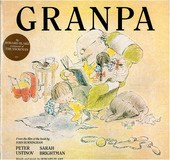 Granpa
 -
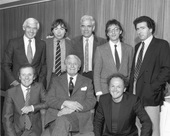 Directors of the PRS: John Gardner, Andrew Lloyd Webber, Don Black, Vivian Ellis, Mike Batt, Roger Greenaway
 -
 Receiving the Anthony Asquith award for musical excellence - Topol and Gemma Craven
 -
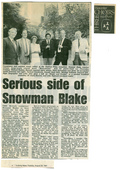 'Benedictus' and Sir David Willcocks at St. Alban's Cathedral
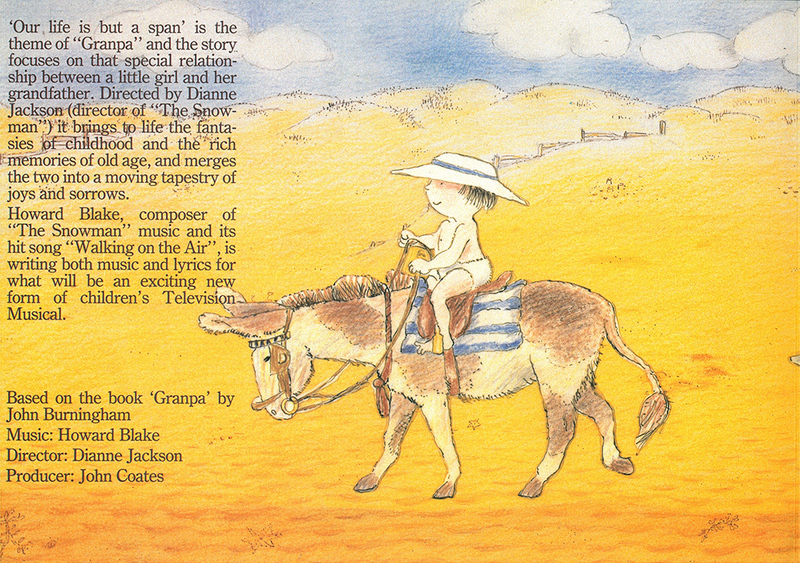
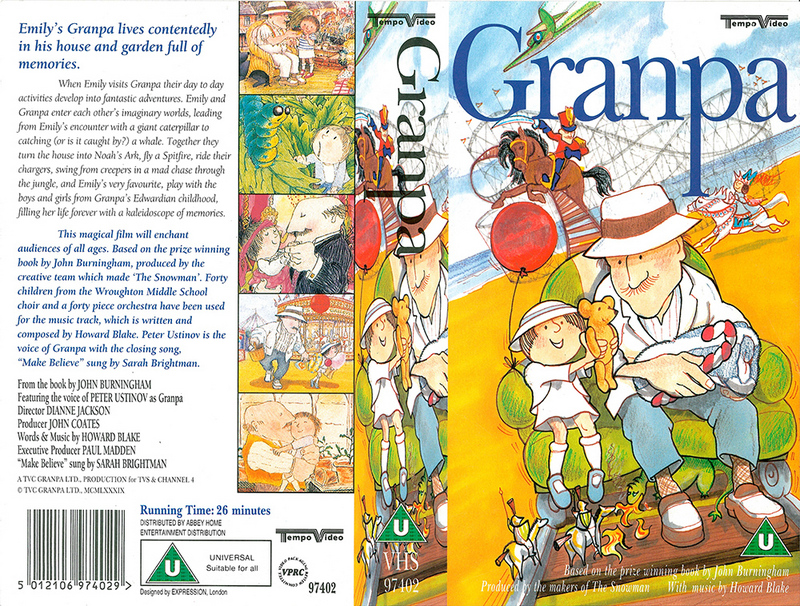
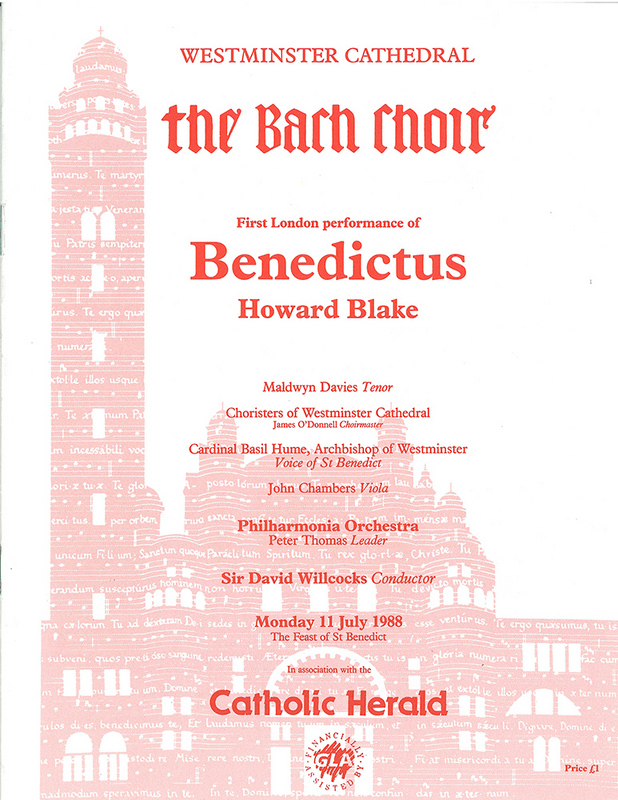
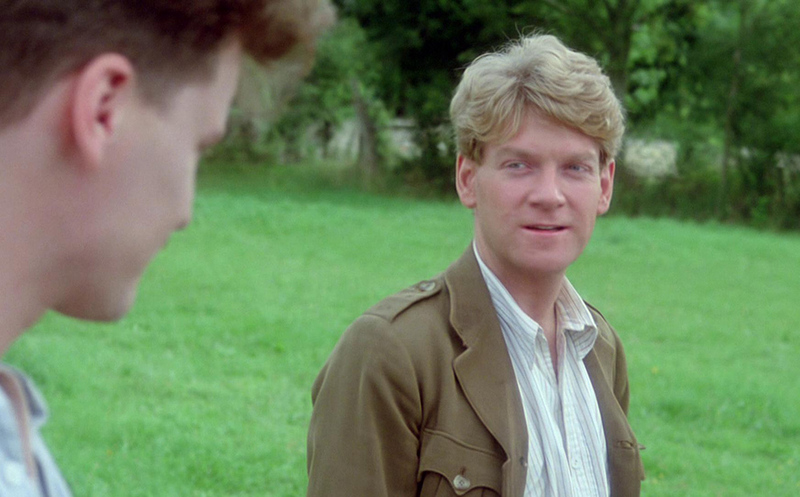
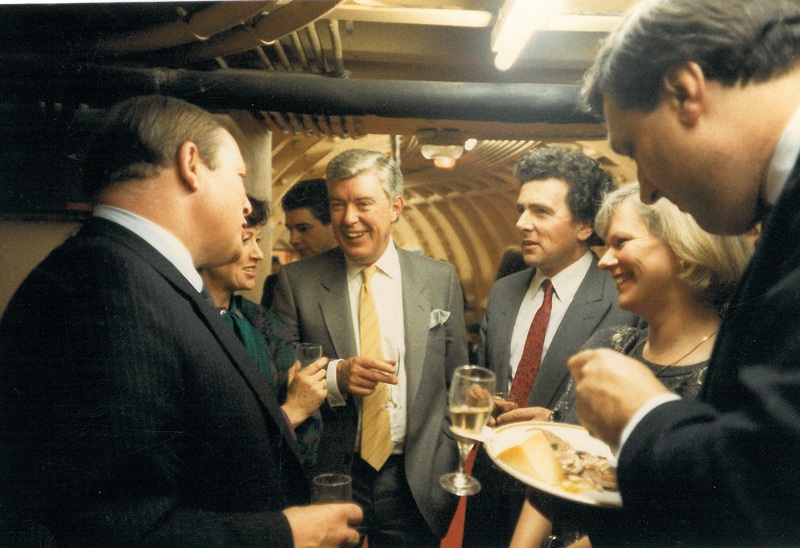
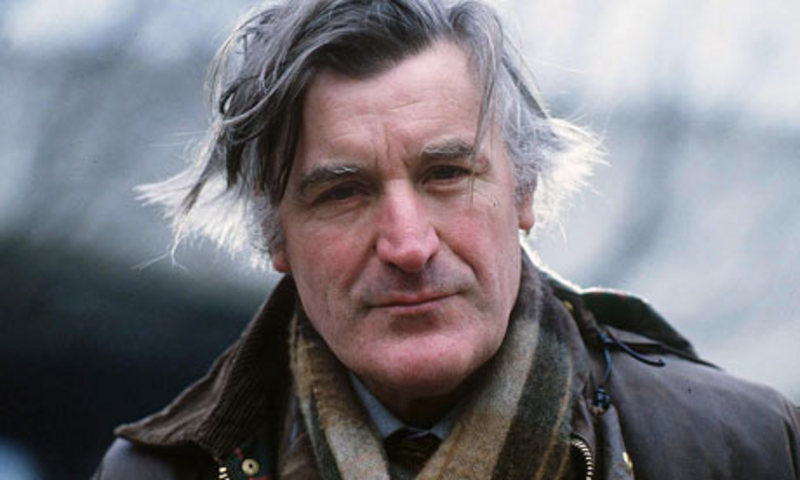
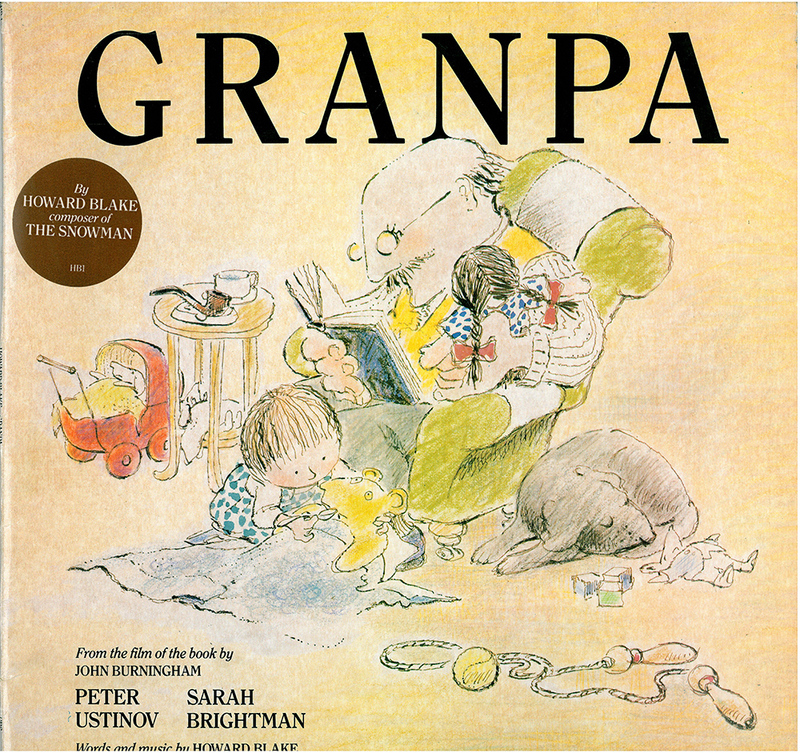
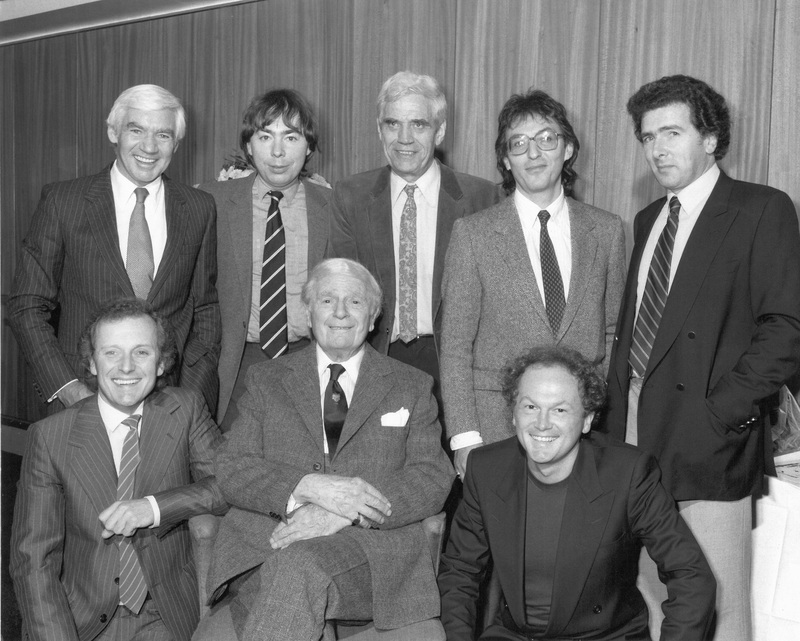
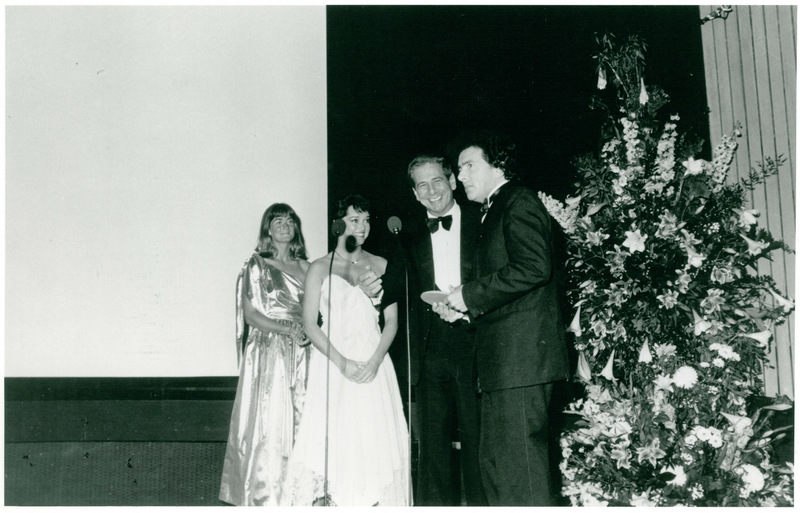
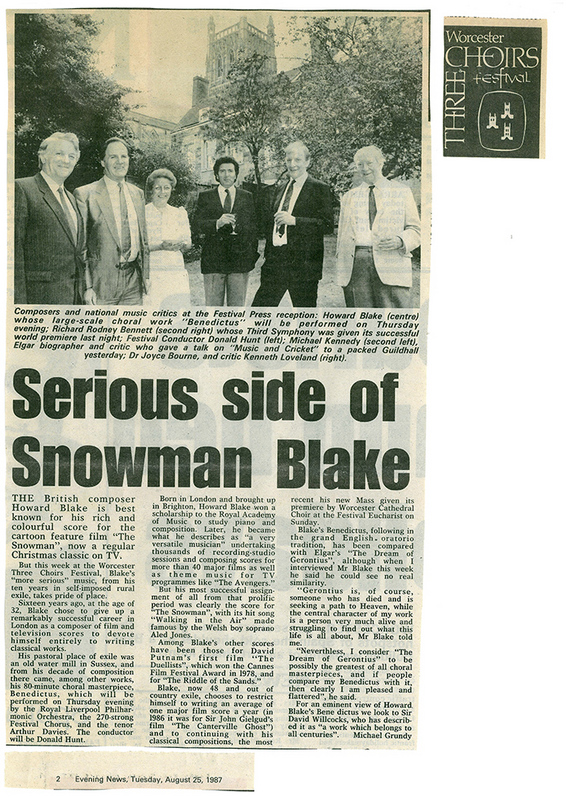
Three Choirs Festival commission, 8-part FESTIVAL MASS a cappella. (1987)
'SHAKESPEARE SONGS' tenor/string quartet.Essay:Schoenberg's cosmic blunder
FESTIVAL MASS
Georgina began to find me commissions and set up performances. The Three Choirs Festival scheduled a performance of my dramatic oratorio 'Benedictus' in Worcester. The cathedral choir was in particularly fine form with a wide vocal range and advanced standard and the musical director, Dr. Donald Hunt, who knew that I was coming down for the performance, asked if I would be interested to compose a new setting of the communion service for the ambitious medium of a cappella (unaccompanied) double choir. I asked the Dean if the work should be in English or Latin but he said he would leave the decision to me. Several nights later I virtually dreamed the intense opening Kyrie in Latin and this decided me. The four further movements followed soon after - an ambitious virtuosic 'Gloria' , a solemn antiphonic 'Sanctus', a flowing contrapuntal 'Benedictus' in eight really separate parts (of which I'm particularly fond) and a minor-key Agnus Dei of great sadness which is redeemed by a move to the major only in the last four bars on the words 'donna nobis pacem'.
Festival Mass was commissioned for Three Choirs Festival with financial assistance from West Midland Arts and given its first performance at the opening service of the festival in Worcester Cathedral on August 5th 1987 by the Cathedral Choir trained and conducted by Donald Hunt. I went down to Worcester Cathedral for the first performance within the opening festival thanksgiving service and later Donald Hunt conducted a beautiful recording of it for Abbey Records in the awe-inspiring acoustic of the Chapter House.
LORIN MAAZEL
On January 24th I hear that the Pittsburgh Philharmonic are performing The Snowman with Lorin Maazel. (Later, in the nineties, I am guest of honour at his wife's birthday party in Salzburg.) Snowman is being performed everywhere.
SHAKESPEARE SONGS
Georgina got me another commission that year at Chester Festival to write a song cycle for tenor and string quartet. I adapted and re-worked one or two of the Stratford songs for concert performance and added other new ones to create 'Shakespeare Songs'. They were premiered superbly by Martyn Hill and the Medici String Quartet on May 22nd and got a terrific reception.
BENEDICTUS TOUR
Georgina arranged for Benedictus to be performed in Manchester Cathedral with Martyn Hill; the John Knox church in Perth with Robert Tear and Sir David Willcocks; Llandaff cathedral with Maldwyn Davies; Chester Cathedral with Martyn Hill; Worcester Cathedral (3 Choirs Festival) with John Davis.
PLACIDO DOMINGO AND IRVING KERSHNER
Margherita Stafford rings to ask me if I would be MD for a film of the life of Puccini with Placido Domingo. I meet director Irving Kershner ( Empire strikes back) who is very entertaining and we meet several times to discuss operatic film projects, but 'Puccini' does not go forward.
ROBOCOP
By May 1987 Peter Willison and I had somewhat drifted apart. In 1982 we had been presented with the prestigious orchestra name 'The Sinfonia of London', the famous English orchestra that had been directed by Muir Matheson. My ambition was to use it to record predominantly classical but also film music by myself and other composers, but Peter was entirely focussed on fixing lucrative and mostly American film recording sessions ('Batman' was one of them). He rang me one day and asked if I would conduct a new film called 'Robocop' at Abbey Road. Its composer Basil Poledouris was ill and not up to doing it. When I arrived I found out what I was in for. The recording occupied no less than 3 complete studios, No. 1 holding a large orchestra of maybe 90 or more, No. 2 holding banks of synthesizers and No. 3 holding banks of computers. Mountains of cable connected the three studios together and the sound all fed through the Studio 1 desk presided over by Eric Tomlinson. As I said hello he screamed with pain as the whole mix suddenly blasted through his headphones. 'For God's sake don't do that to the orchestra' I said, knowing how string players in particular hate this more than anything in the world and that we had over 60 of the finest in London. 'Of course I won't' he said, 'what do you think I am, an amateur?' We started recording, a huge and terrifying sound for this dark and extremely violent film. I did not like the look of it or the meaning of it and it terrified me to think that one day we might have robots as policeman against which everybody would be utterly powerless. Suddenly the sound blasted again, but this time through the cans of the entire orchestra. They screamed at me to stop it and I walked into the box to see Eric. 'Where is the fader for the monitor?' I asked. 'Sorry I won't do it again' he said. 'Put some masking tape over the fader and label it so that you can instantly see it' I said. Eric repeated his line about not being an amateur and I went back onto the rostrum, saying to the band 'what shall I do with him?' 'Kill him!' they shouted. Five minutes later Eric did it again. This time I ran toward the control box and half the orchestra ran with me. Eric was so scared he ran out into Abbey Road with all of us in hot pursuit and screaming. It took me a good 100 yards to catch up with him. I picked him up and hugged him. 'Please don't kill me!' he said. I roared with laughter and dropped him. 'I will stick some tape on it' he said. He was as good as his word and it didn't happen again. There were altogether 5 sessions of which I think we had completed four, but I asked if someone else could take over. Tony Britten was available and he completed the job for me. I had nothing whatsoever against Basil Polodouris's music which I had always greatly admired, but I had had just about enough of this awful day and this film with its terrifying violence. I went home.[The film credits read: 'Basil Poledouris's music conducted by Howard Blake and Tony Britten.]
Pondering on the state of classical music with Stanley Myers one he came up with the following phrase, on which I based a light-hearted appraisal:
SCHOENBERG'S COSMIC BLUNDER op.375 (1986) A satirical socratic dialogue
'Schoenberg, Webern and Berg stand like three bollards at the end of a one-way street'.
'Who are they?'
'They are the Father, Son and Holy Ghost of serious twentieth-century music.'
'Are they fun to listen to?'
'No.'
Is their music profoundly moving?'
'Certainly not.'
'Does it give spiritual enlightenment, uplift the heart, stir the finest feelings of which mankind is capable? Does it shine forth like a good deed in a dark mistrustful world?'
'None of those things, no'
'Is it intellectually stimulating- does the mind race with cerebral excitement at its phenomenal ingenuity, its quicksilver brilliance of ideas controlled with dazzling mastery? Is it in fact FRIGHTFULLY CLEVER?'
'It's like this: you regard each note of the chromatic scale as an integer, as a disembodied object.'
'What does that sound like?'
'Please, please-it's not what it sounds like that is of prime importance, in fact it's probably of no importance at all. What is important is the manipulaton of these integers in a very complex and highly ordered way, for instance you can put the twelve notes of the chromatic scale into a row in any order you like and call it a row'.
'Well it would be a row wouldn't it...if you put them in a row?'
'Yes. Well it sounds more important if you put it in German. TONREIHE. That means 'tone-row.'
'Alright and then what do you do?'
You see then the tonerow applies to everything, you always keep to that sequence, in that order- the line, chords even the dynamics, everything can follow this pattern.'
'Why would you want to do that?'
'Because it liberates music from outdated structures and preconceived ideas. It is the NEW MUSIC.'
'So they're young these chaps, are they?'
'No, they're all dead.'
'Good God, that's tragic.'
'Well no, Schoenberg lived to a ripe old age. What I'm talking about is the fact that the music is something totally new and eventually, when people get to understand it, it will be regarded as the classical music of the twentieth century. This is why the entire cultural establishment world-wide in all civilised countries subsidise this music very heavily knowing that eventually it will be accepted and revered and pondered over and considered ENORMOUSLY WORTHWHILE.'
'How long has this been going on?'
'Well, some people would say that its roots are found in the later operas of Richard Wagner, the strong hints of atonality in 'Tristan and Isolde' often being mentioned.'
'When was that?'
'Well around about 1865.'
'But that's more than 100 years ago!'
'Roots I'm saying, Schoenberg didn't develop his uncompromisingly mature style until at least 1909 or so.'
'Oh I see. so it's only really been going for about 108 years?'
'Yes'
'And how's it doing?'
'The education of the public is a painstakingly laborious task.'
'You mean it's not doing too well?'
'We don't give up merely because people say they don't like it. We're not defeatist about it.'
'One hundred and eight years seems an awfully long time for people not to actually like something. Suppose the public is actually RIGHT? Everyone says that critics in the past have always been wrong.'
Yes that's perfectly correct. At the beginnings of the new music critics attacked it unmercifully and declared it incomprehensible. Then later they decided that it was enormously worthwhile and have spent the last 100 years at least on spreading the gospel.'
'So you think that for the last 100 years or so they've been right and before that they were wrong? But suppose they were wrong in both instances. Suppose that at its start the new music was interesting just from the point of novelty value and a bit of a change. That's when they attacked it when they shouldn't have done, and then the novelty quickly faded and they supported it- also when they shouldn't have done-and now they now they seem to have got stuck with it, and no-one dares to upset the apple cart since it's been sitting there such a long time and to admit that the apples are rotten would be to look very silly.'
'Yes, well the view that you are propounding is the normal, reactionary, widely-held, boring view of the average Joe Public. If I were to concede to that view I might have to concede that say Paul McCartney is a greater composer than Alban Berg.'
'Well he writes nicer tunes.'
'Tunes? You think writing music is about TUNES?'
'Well isn't it? If you took away all the tunes from Beethoven, Schubert, Mozart and so on nobody would listen to them. Surely the heaven-sent gift of melody is what distinguishes the great composer or song-writer from the mediocre or boring?'
'You don't listen to J S Bach because of the tunes.'
'But of course I do. I listen to the Matthew Passion for precisely that reason-and the Brandenburg concertos- and the two violin concertos-the suites-they're all infused through and through with melody. In fact the art of polyphony is the art of interweaving MELODY- a living, breathing thing.'
'Well the 12-tone system of Schoenberg is polyphonic, so what's the difference?'
'The difference is that you couldn't sing one single melodic line of 12-tone Schoenberg, whereas I could sing you a lot of tunes by Bach. I'll start with Air on the G-string...'
'I'd rather you didn't. Hackneyed and commercialised. Just what I'd expect you to come up with.'
'Oh I see. So you mean that if a piece of music is really adored by the public then you find that suspicious-in fact you don't have any faith in the public?'
'Exactly.'
SELFRIDGES
At Christmas Selfridges mounted a 'Snowman wonderland' covering their top floor. It was later packaged and sent to Tokyo. There was a lot of merchandising, more each year - 150 firms making Snowman products.
-
 RoboCop Poster
 -
 Worcester-Cathedral-3723
 -
 'Shakespeare Songs' with Ian Partridge at the Royal Philharmonic Society
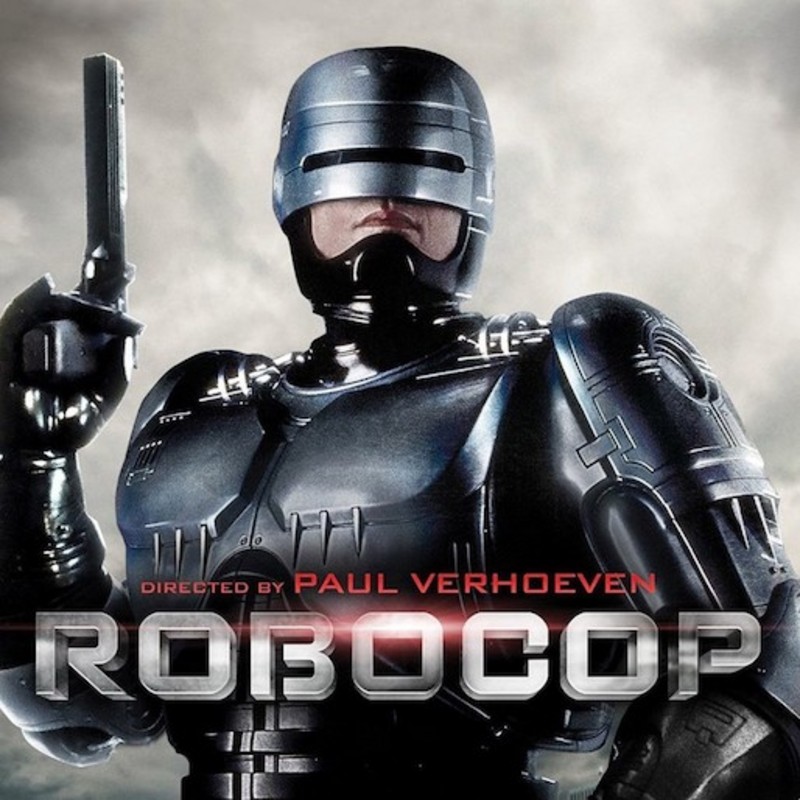
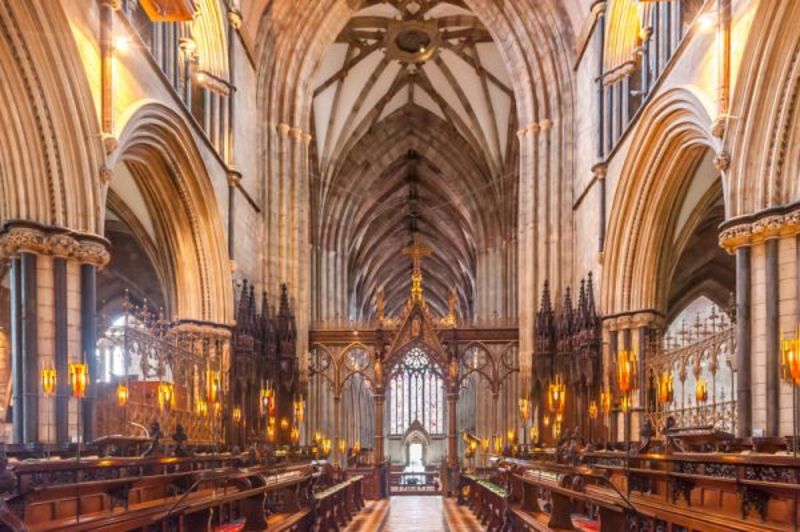
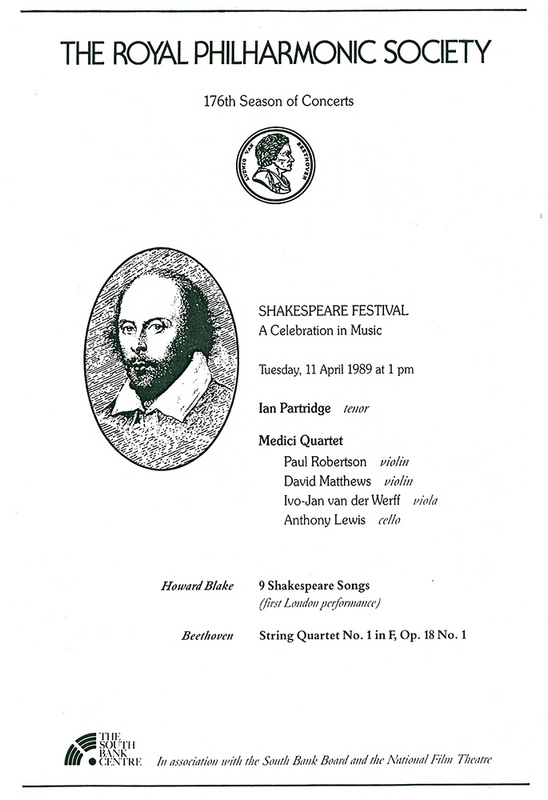
Overture: 'THE CONQUEST OF SPACE' - to launch the European Astra satellite (1988)
Problems with Faber Music
LARRY ASHMORE
I was so busy that for a while I was persuaded to take on a full-time assistant. Larry Ashmore was a freelance arranger and orchestrator whom I had met once in the late sixties when he had the highly lucrative but somewhat dubious distinction of being in-house arranger for 'Top of the Pops' for BBC TV. John Richards rang one day as I was about to conduct my new score for 'Amityville 3' and asked if it was all right for Larry to attend the orchestral sessions at CBS Wembley. Of course I agreed and afterwards John treated the three of us to dinner in Notting Hill. Larry told us that he was really 'down on his luck'. He had been living in Majorca for about 10 years but now his wife had eloped with a millionaire Irishman, he was completely broke and he would have to sell the house and come back to London. After many stories of his misfortune he summoned up the courage to ask if I needed any assistance and I suggested that if he were to return to the UK he might be able to give me a hand.
'COMPOSERS DINNER'
And of course Larry did return to England and I did take him on and for a while everything seemed to be swimmingly succesful. Photos below capture the effervescence of a gloriously happy dinner party with my dearest and closest friends from the film and music world of that moment: Stanley Myers who composed the marvellous 'Cavatina' for 'The Deerhunters', his partner Monika who went on to create Woodhouse Opera: Christopher Gunning the composer of innumerable scores for TV including 'Poirot' while Annie who ran studios for George Martin. Since recording 'The Duellists' and 'Riddle of the Sands' for me John Richards had gone to Hollywood and succeeded hugely as a recording producer and engineer whilst his wife Gail was harpist for the Oscars and manager of Evergreen Studios. The dinner took place in my favourite restaurant 'Spumante' opposite my apartment. I was myself still signed to the publishers Faber Music, still signed to Sony the record Company with my own label and still inundated with commissions for film scores and concert works and apparently everything else in sight!
A PICCOLO TOO FAR
But perhaps things were just a litle bit too good and perhaps I had started to be just a little too complacent. In the long run taking on Larry Ashmore turned out to be a mistake, although it had started seemingly so very well, He orchestrated Concert Dances for Wind Orchestra, an arrangement of the Dances for two pianos for wind orchestra, and these were played (once)by BASBWE in the Buxton Festival. I was too busy to go! I lengthened 'The Song of Saint Francis and he scored it for larger orchestra for a performance at the Three Choirs Festival. But the work that Larry assisted me most on was Toccata-a Celebration of the Orchestra. I had written this back in 1976 as just 'Toccata' for the RPO's 30th birthday, but Larry thought it would be worth substantially revising and I thought that if I got it into shape CBS might possibly sponsor a recording. In between innumerable business calls about Granpa the film, Granpa the CD, Granpa the contract, Benedictus concerts and Benedictus the CD, its publishing and promotion I rescored Toccata for large orchestra, writing 2 or 3 pages a day in my room in short score while Larry wrote them out in full score in the other room. At the fortissimo recapitulation of the main theme I pitched a lyrical piccolo solo against the entire orchestra fortissimo and at the end of a wearing day I went to see what Larry had done with it.
'Where's the piccolo solo Larry?'
'You'll never hear it.'
'But where have you put it?'
'I haven't. It won't work.'
'Don't tell me it won't work! I play the piccolo!'
'Oh you play the piccolo do you! Are you telling me how to orchestrate?!'
'Yes I suppose I am!'
'Well that's it!'
The piccolo solo went back in, but Larry marched out. We had finished the work just in time before our sell-by date!
I completed the orchestration myself and a year later conducted 'Toccata- a celebration of the orchestra' with The Philharmonia to accompany the Piano Concerto and Diversions on a new CBS album of my work.
FABER MUSIC TURNS OUT TO BE A DISASTER
Back in 1981 when I had composed 'The Snowman' to tremendous acclaim, I was offerred a comprehensive publishing deal by Faber Music and was absolutely thrilled to accept it. Not only had Faber Music been the publisher of Benjamin Britten but they were linked with the world-famous book-publishing firm of Faber and Faber. How could I go wrong with such a wonderful offer?
For a while all went well. Martin Kingsbury, who had been part of the Faber and Faber book firm, volunteered to manage me and became my amiable director for day-to-day matters, with which he mostly dealt. There was a splendidly flamboyant publicity lady Sally Cavender, whom I got on with well, and there was the highly-distinguished, learned and experienced Chairman, Donald Mitchell, who had managed the great Benjamin Britten in person, not to mention Snape and The Aldeburgh Festival. He had whisked Britten away from Boosey and Hawkes (who in fact had been largely responsible for creating his worldwide reputation} and he had set him up in the basement of Faber and Faber all on his own, saying: 'This will be your own, personal music publishing house - just simply for you!' This sounded good and looked good in the press perhaps, but one has much reason to believe that Britten regretted the move. He was not alone for long, since Donald discovered that the establishment of a worthwhile and respected music publishing firm was not at all easily achieved - and needed quite a lot of staff!
(What Dr.Donald Mitchell did not realise was that the staff needed for his new creation - Faber Music Ltd.- needed to be a staff of qualified musicians. Faber and Faber were exclusively a publisher of books, not of music, and that is why the new firm was a failure.)
By early February 1988 some very strange things were happening to the firm. Doctor of Music, Donald Mitchell, had relinquished his post as Chairman of Faber Music and handed control to a musically-unqualified, dubious business-duo consisting of a Mr.Robin Boyle and a Mr.Tom Pasteur. These two impostors had not long previously offerred their non-existent musical publishing services to the well-established publishers Chester/Novello - and been almost immediately dismissed! Martin Kingsbury, who had run Faber Music with Donald from its very beginning, was curiously not now invited to become Chairman of Faber Music Ltd., but was asked to continue as 'Director of Publishing' - somehow without the power to appoint or dismiss anyone. A few days later I was invited to the lounge of the Russell Hotel, not far from the Faber offices, to meet the newly-appointed 'company chairman' of my music publishers, Faber Music - Mr.Robin Boyle, onto whom seemed to have been devolved all the power to appoint or dsimiss! He got straight to the point and said to me:
'You have too good a deal. Your percentage of royalties is far too high and unless you are prepared to change the percentage radically we will be forced to 'go slow' on you!'
I said: 'But it was you who offerred the percentage and I never disputed it.
'Your percentage is too high and we can't pay for promoting you unless you change it'.
'OK, but you are taking 35% of my income already and I'm myself paying Georgina Ivor £10,000 per year to do promotion for me - because you don't do any!'
Mr.Boyle ignored this and went on:'You must realise that there are literally hundreds of brilliant composers (sic) queuing up in the street for the privilege of being published by Faber, which is the most prestigious classical contemporary music publishing firm in the world (sic). All I have to do is go to St.John's College Cambridge, find the best-qualified young composer that they have had recently, sign him up and make Faber financially succesful from the proceeds. Composers don't succeed because of their talent, they succeed because we the publisher promote them and make them succeed.'
I said: 'Well why don't you sign one up and I'll leave?'
I made briskly for the door. Not briskly enough, because just as I got to Holborn tube station they caught up with me, panting.
'No please, please Howard, we don't want you to leave, we didn't mean that at all. We will get our promotion department to really promote you as never before, Sally Cavender will do everything in her power, please give us another chance, it would be terrible if you left!'
What on earth were they playing at?
I thought of all the work I'd done for them over the six years I'd been with them, all the proofs I'd read and painfully corrected for hours and hours on end, all the publication that was already in existence, and I remembered how thrilled I'd been when I signed. I had no idea how I could publish anything myself. Computerised music-writing had not been invented and promotion could only be done through a global network of related companies. I weakened, subdued by flattery, and went back to the hotel, which was a great mistake.
As my QC put it during the litigation that eventually took place: 'The management of Faber Music set out to achieve by stealth that which they could not achieve by honesty'.
What did they want to achieve? They wanted 'The Snowman', but preferably without me attached to it!!
They were as good as their word in one respect. They did 'go to Cambridge and ask who was the best recent student', the most suitable candidate seeming to be a Thomas Ades who they signed up and set out to promote with all the money and power and influence that they could possibly summon. (In fact the description of the young person they would find and appoint was so accurate to the boy found that it seemed must likely that they had found or known him long before! The thought crossed my mind that he could have been a friend, or perhaps a relation? Perhaps they were right and talent is not a 'divine and unusual gift bestowed by God' but a result of money and marketing! The intent was to create a younger, less-troublesome, simplified version of me, Howard Blake, a brand who would be in every way acceptable to the BBC, the Arts Council, the music-publishing, recording and media world and the opinion-formers of the 'cutting edge', a cost-effective brand which they would comfortably control. The existing Howard Blake was too opinionated and wrote embarassingly popular music which accorded with none of the establishment criteria. How would they set about it?
Martin Kingsbury had always, rather curiously, complimented me on my 'dress-sense', but now he could use what he'd learnt to the firm's advantage. He got Thomas Ades rigged out in clothes exactly similar to my own - casual jackets, open-necked blue shirts, corduroys and loafers, with tousled hair and smile. He rang one day and asked me if he could borrow a copy of Irene Samuels' 'Musical Maestros', a book in which I'd meticulously laid out my musical beliefs. He then grafted these beliefs of Howard Blake onto his new creation, Thomas Ades, word-for-word and briefed this creation, Thomas Ades, to create similar works as those that the original model, Howard Blake, had waiting in the pipe-line: a choral-orchestral work about Saint Julian of Norwich, a violin concerto with very high notes in it, an opera of 'The Tempest' for Covent Garden etc. At the same time he was instructed (presumably by Faber and Faber, or Faber Music Ltd., or both?) to dismantle the original, Howard Blake, without giving the game away - appearing to be supportive but not allowing anything of his to come to fruition. All must now be transferred to the new brand (Thomas Ades).
So I didn't leave them, but I should have done! I hoped things would somehow come right, but they went staggeringly wrong. They were out to demolish both me and my music - and in 2022 they still are persisting, even though their plan has substantially failed!
SYMPHONIC POEM:'THE CONQUEST OF SPACE'
Despite Faber Music's curious behaviour, offers continued to pour in and swell our coffers. A work came about through my recording contract with Sony. Executive Ian Groves, my recording manager within Sony, suggested to Astra Communications that I might write a huge orchestral piece to accompany the actual launch of the space-rocket from Nassau to be watched worldwide by satellite links. Directors of Astra came over from Luxembourg to visit me in my studio in 1987 and a work for large orchestra lasting about fifteen minutes was agreed upon. Ian negotiated a generous fee for what Larry Ashmore called 'the biggest commercial ever written'. In fact I was asked to compose a large-scale overture - 'to celebrate the launch of the Astra communications satellite'. I was very excited about this as I had never written a big-scale overture and was interested in the form. When I was younger every orchestral concert had an overture, but gradually the idea had faded out as tastes changed and programmes got shorter. Overtures are really like one-movement symphonies, often in sonata-form. They derive at first from overtures for operas, Rossini's being splendidly rumbustious examples. Beethoven took them up to a new level of importance and re-wrote one for 'Fidelio' no less than three times, coming up with Leonora 3 which has to be the ultimate role model. Tchaikovsky, Dvorak, Sibelius and many other composers followed in his footsteps. I now hoped to follow them.
When I had completed the work, the directors of Astra flew over from Luxembourg again, joined by an affable London advertising man, David Pilton, my director of publishing at Faber Music, Martin Kingsbury and Ian Groves my representative at Sony. I had completed an ambitious 15-minute work for large orchestra with Ondes Martinot solo and optional choir called: 'The Conquest of Space'. I played it through to them on the piano:
'It's terrific! We shall play it all over Europe'
A recording was undertaken for Sony on 23 July 1988 at Abbey Road with my own orchestra The Sinfonia of London, myself conducting. The recording was now ready to be played in synchronisation with the great take-off, watched by millions word-wide.
On December 8th Ian accompanied me to Astra's starry party in The Queen Elizabeth Hall, Westminster, where we would watch the rocket launch from Nassau, linked by satellite TV. CBS had the recording at the ready and 'The Conquest of Space' was ready to be played on a huge sound system as the rocket took off. A lavish dinner was provided at The Queen Elizabeth Suite Westminster with distinguished invited guests interviewed for TV by Angela Rippon. A flowery programme-note was issued:
'The Conquest of Space' was commissioned by ASTRA, Europe's first 16-channel satellite TV station, to celebrate the launch of the Astra satellite. The music evokes the immensity of space, the excitement of the rocket launch and an expression of hope for universal peace.
The composer Howard Blake decided to adopt the formality of sonata form to reflect the global importance of the occasion, but the overture also has an underlying scenario rather in the manner of Tchaikovsky's 'Romeo and Juliet' or Mendelssohn's 'Fingal's Cave'.
The work begins with a great fanfare depicting a space rocket against a dramatic, cosmic sky. The fanfare subsides to a mysterious stillness evoking a silent night full of stars and a rocket launch pad silhouetted against the pale light of dawn. A pulse indicates time passing and the approaching countdown.
The music surges and quickens, as if scientists are assembling and preparing for the launch. The signal to commence is given and the countdown begins with its crescendo of anticipation and excitement. The first theme represents the launch of the rocket ascending at huge velocity. The rocket casts off its various stages and slows, settling into an orbit which gives it a view of Europe and the whole universe. The second theme is a 'song' played on the Ondes Martenot accompanied by three solo strings, cello and contrabass clarinet. Its eery electronic 'voice' represents a voice from outer space and yet has a feeling of humanity - like the voice of a child.
Staccato brass chords suggest beams from the satellite being cast across the countries of Europe one after another. Gradually the whole of Europe is filled with light. The themes change and sweep and intermingle, building together into another great crescendo.
The rocket theme returns in a shortened version, then the 'song', but this time the full orchestra adopts it like a massed choir joining in an anthem. It builds to a massive finale with a great 'Chorus of the Universe' bringing the work to a thrilling conclusion'.
But a little cloud was hanging over the launch pad out in Nassau. We waited and we waited. Minutes went by, an hour went by, people started to leave. The launch was postponed. It could not happen.
They did not play the music and some time around midnight everyone straggled home. Everything seemed to be jinxed and the piece was never played. It was, to say the least, disappointing.
The recording of 'Conquest of Space' was eventually issued by Sony somewhat inappropriately on a children's album called 'Granpa' which followed up 'The Snowman' which had been such a great Sony album success.
It was also once programmed for a Kenwood outdoor concert 'with synchronised fireworks'.
COMPOSER'S FOOTNOTE 2019 After listening to a recording of this performance I entered the suggestion into the score that the solo part written for Ondes Martinot might be replaced by high soprano voice.
-
 A chart of 'Toccata' drawn by Tony White
 -
 Composers Dinner at Spumante: Larry and Suzy Ashmore, John and Gail Richards, Chris and Annie Gunning, Stanley Myers and Monika Saunders. maitre D' - Valerio
 -
 Composers dinner - Stanley Myers and Larry Ashmore
 -
 Composers Dinner - Howard and Chris Gunning
 -
 Composers dinner - Gail, Howard and Chris
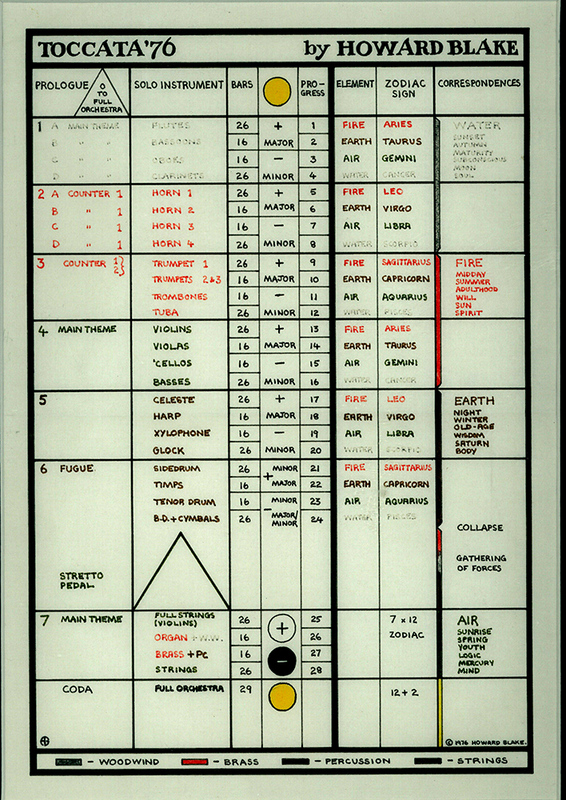
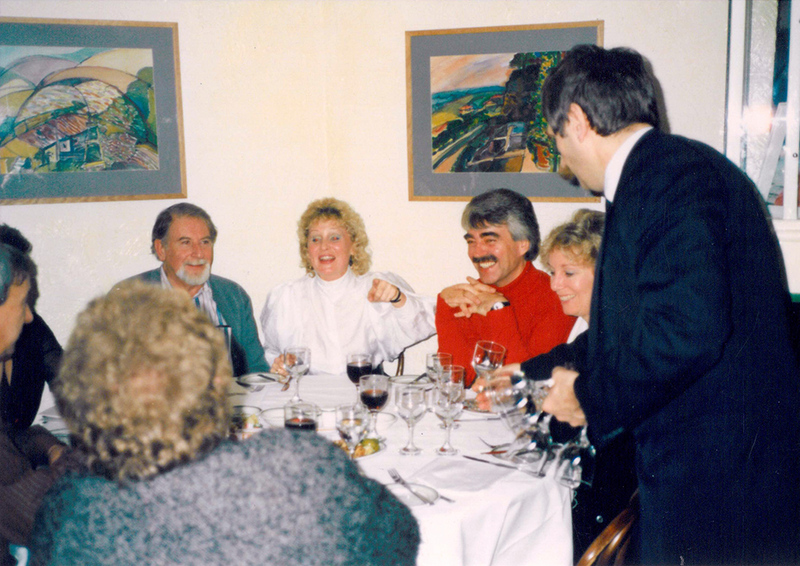

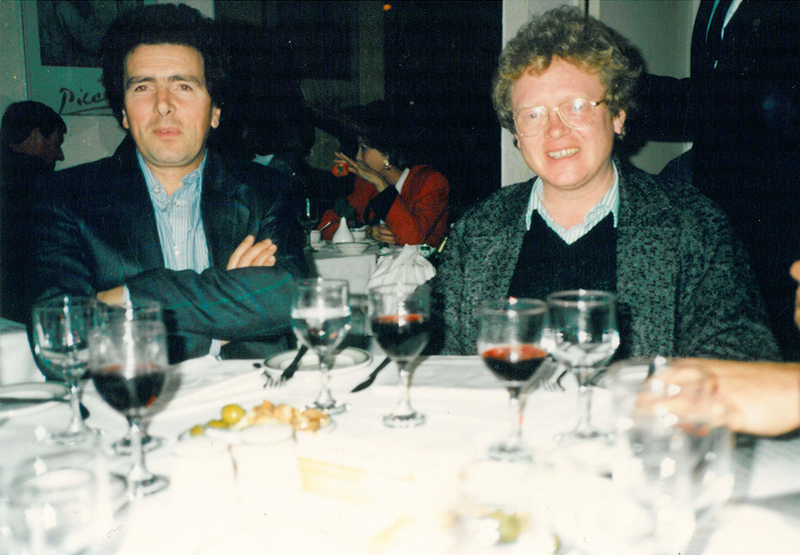
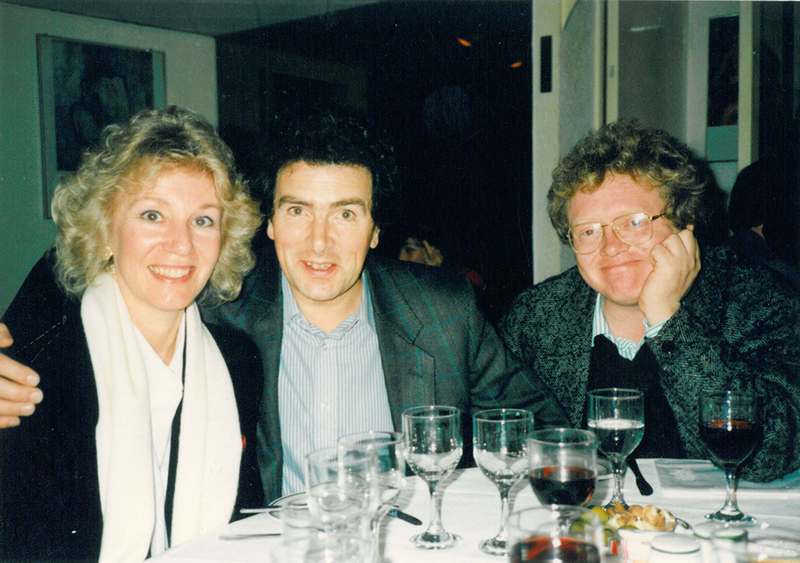
Concert premiere: 'GRANPA' with The Philharmonia and London Voices (1989)
'HEARTBEAT' for tenor sax,big band and orchestra commissioned by BBC radio 2
DIVERSIONS FOR CELLO AND OrCHESTRA
On 26 March the RPO premiere 'Diversions for cello and orchestra' at the Fairfield Hall in Croydon with Steven Isserlis as soloist and Sir Charles Groves to conduct it.
SHAKESPEARE SONGS On April 6th Ian Partridge performs Shakespeare Songs at the QEH with the Coull Quartet. This is a good performance by a very good artist and later they record it for the BBC. It is broadcast on radio 3 with Vaughan Williams 'On Wenlock Edge' as BLAKE AND VAUGHAN WILLIAMS.
13th May there is a performance of Song of St Francis in Leyden, Holland, and Benedictus in Manchester Cathedral.
On June 2nd at the RFH there is an all-Howard Blake concert given by The Philharmonia and The Bach Choir. Steven Isserlis plays Diversions and I conduct, and Sir David conducts Benedictus with Robert Tear as tenor soloist. On June 8th I meet Joshua Bell with Steven Isserlis and talk about a violin concerto, and on another night Steven brings Nigel Kennedy over to my studio. Kenneth Essex comes as well and we play my piano quartet and some Schumann and go on to a jazz club in King's Cross. A great evening.
FELICITY LOTT AND JOHN TAVENER
On July 5th I was made a Fellow of the Royal Academy of Music jointly with Felicity Lott and John Taverner who for some reason wouldn't speak to me (embarassment perhaps?) The Principal of the RAM Sir David Lang was very flattering and said I should be a Visiting Professor. 'How would that happen?' I said. 'Consider yourself one' he said. The following year I was asked to be Chairman of the Society of Fellows of the Royal Academy. I gave three lectures, one in each term, also giving master classes to students. I talked about Writing for cinema, Writing Concertos, Writing as a profession.
GRANPA
On July 9th there was another all-Blake concert at the RFH with The Philharmonia. This happened through the flamboyant modern art collector and prodigious social events organiser, Belle Shenkman. Belle introduced me to Ann Sirkett of the Book Club which led to a children's concert consisting of: The Nursery Rhyme Overture, The Snowman and the concert premiere of Granpa (with London Voices). I conducted and Bernard Cribbins narrated The Snowman as he had done so many times before.
THE STEPHEN HILL SINGERS AND HELEN GLOVER
My friend David Kingsley was 60 and giving a huge bash on HMS President on the Thames by the Guildhall. He invited me to play my Piano Quartet and to perform 'The New National Songbook' at the party. The excellent Stephen Hill Singers came to my studio to rehearse with me and with them was soprano Helen Glover. She was young and attractive and had an enchanting voice. I had just been invited to a wedding in a chateau in France, and I asked her if she would like to come and sing there. I would compose a song for her to sing at the wedding and perhaps we could even do a recital together. The bride was Isabelle, the only daughter of my old friends the Deschamps. I wrote a song called 'Isabelle' and everyone was enchanted. The wedding was in a tiny village in Lozere in a turreted manoir - 'La Roche'. Too romantic for words! Soon after I proposed and Helen became my third wife.
GORLESTON CHILDRENS CHOIR
Following up the success of the boat party and Radio 2, I planned a concert for The Stephen Hill Singers as part of The St Andrews Festival in Gorleston, Yarmouth. How this came about was that when I had needed a children's choir for the film soundtrack of 'Granpa' I had chosen the Gorleston Children's Choir who had just won the BBC top prize for Youth Choir 1990. For the concert in addition to a complete performance of 'The New National Songbook' I had made special arrangements of The Christmas Lullaby, The Wreck of the Julie Plante, Love-a-Round, So we'll go no more a-roving and Walking in the air. Helen sang soprano and I played piano and introduced and directed and we did a most enjoyable concert version of 'Granpa' with the Gorleston Children's Choir joining with The Norfolk Youth Orchestra.
ADRIAN NOBLE AND EVELYN GLENNIE
I met Adrian Noble and composed some music for Ibsen with the RSC at the Barbican - 'The Master Builder' - a 'Troll Dance' for brass quartet. Evelyn Glennie visited me with her agent Sarah Dyckhoff and we talked about my writing a concerto for her. One day I realised that 'Diversions' would arrange extremely well for Marimba and I scored Diversions for Marimba and Orchestra as a re-arrangement of the work originally for solo for cello. But Evelyn said she had not asked for a marimba concerto or a re-arrangement and it was put to one side. It was a pity because several years later I did a very succesful performance of it with percussionist Heather Corbett at the RCM. Perhaps the collapse of this idea of a concerto for percussion was fortuitous since I was suddenly asked if I could write a BBC commission - a concerto for tenor saxaphone.
HEARTBEAT op.404 (December 1989)
Concerto for tenor saxophone, big band and orchestra commissioned by BBC Radio 2 Instrumentation: 2 alto sax.2 ten. sax. 1 bar. sax - 4 tpt.4 trbn - pno - string bass - drum-kit, plus orchestra consisting of woodwinds, 4 horns and strings, Duration: 15 mins The first performance: was given at The Hippodrome, Golder's Green.in a BBC invitation concert on 26th February 1990, the BBC Big Band and the BBC Radio Orchestra, Ian Dixson, (solo tenor saxophone), conductor Grant Hossack, The work was an enlarged and extended version of 'Heartbeat, a concert piece for tenor saxophone' (1982, op.319), commissioned by producer Jim Parr for BBC Radio Brighton for National Arts Day and first performed by Danny Moss and his quartet with the strings of the BBC Concert Orchestra on 24th June 1982 in the Gardner Centre, Brighton University. I made two arrangements of this, one for cello and one for violin but at this time all other versions were withdrawn in favour of this big band plus orchestra version (op.404).
'SNOWMEN'
At Christmas there were 'Snowmen' with the CBSO and Simon Halsey, with Roy Castle, with the Bournemouth Sinfonietta, with The Sinfonia of London at the Barbican and with many many more.
-
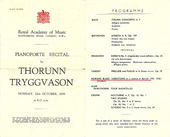 RAMbartok
 -
 Fellow of The Royal Academy of Music
 -
 Steven Isserlis and Howard - premiere of 'Diversions' with RPO and Sir Charles Groves
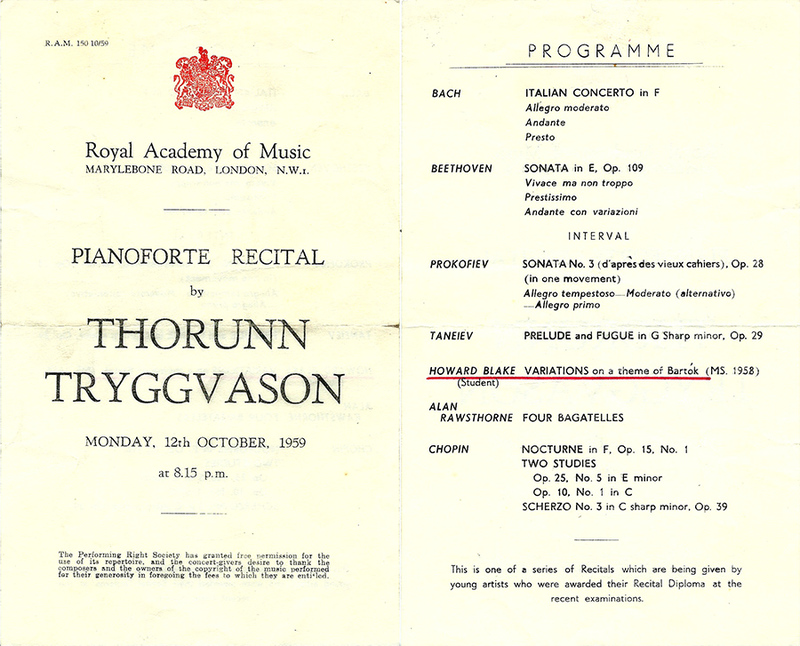
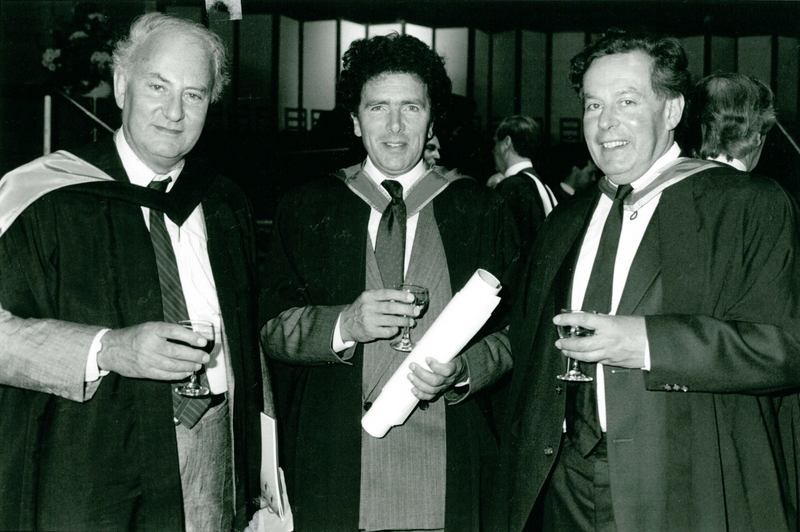
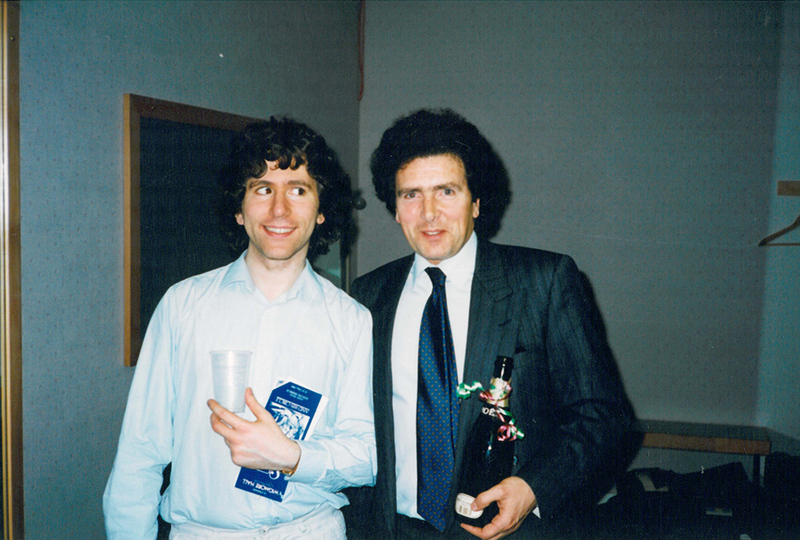
CHRISTMAS LULLABY for 2 sopranos and ensemble. JUBILATE DEO for choir and organ (1990)
FOUR SONGS OF THE NATIVITY for chorus and 8 brass, SERENADE for eight woodwind
PAEAN FOR SOLO VIOLA
I composed a tribute to Martin Kingsbury a Paean for solo viola for his 25th anniversary as publishing director of Faber Music.
JUBILATE DEO
I wrote a Jubilate Deo for a Presbyterian church in Abington, Pennsylvania, where Sir David Willcocks had already given a performance of 'Benedictus'. I wrote 'Six Romantic Pieces' for clarinet for Thea King, arrangements from various sources. I wrote some solo horn music for a Jonathan Kent theatre production of Ibsen at the Almeida with Claire Bloom and Espen Skjonberg- 'When we dead waken', and an arrangement of one of my Shakespeare songs for an icelandic counter-tenor, Sverrier Gud-Johannson, to sing at Ruskin Spear's funeral: Fear no more the heat of the sun. Ruskin Spear was a great portrait painter and had been a great friend of mine.
CHRISTMAS LULLABY
At Easter I wrote words and music for a Christmas Lullaby. It was recorded later by a student ensemble which I conducted at the RAM and then broadcast on Classic FM on Christmas Day. The soprano soloists were Emma Bell and the mezzo-soprano, Helen Glover, who had recently become my young and very attractive third wife. The duet had several later transformations - notably becoming the carol in the Snowman Stage Show when later re-arranged for choir and small orchestra.
FOUR SONGS OF THE NATIVITY
Through the good offices of the wonderful Belle Shenkman, Ann Sirkett of The Book Club commissioned a Christmas work for The Bach Choir and London Brass to be first performed in St. Paul's Cathedral. I arranged two of the solo Songs of the Nativity for chorus and 8 brass and composed two new ones, making Four Songs of the Nativity. Sir David Willcocks rehearsed them in the extraordinary acoustic under the great dome but at the performance, unexpectedly and most graciously, he handed over the baton allowing me to conduct his superb Bach Choir for the premiere.
SERENADE FOR WIND OCTET
I created Serenade for Wind Octet as a commission for The Seaton Festival for The Camerata and clarinettist Janet Hilton. The first movement was derived from an early wind quartet, the first piece I wrote on arriving at the mill, the second from 'Come una marcia lente' in 'Lifecycle', the third from an incomplete early flute concerto. But I was frantic with preparations for the CBS album and didn't have time to go down to Dorset to hear the premiere. Very kindly my father-in-law John Lloyd travelled down there and made a recording, which was splendid.
-
 Four Songs of the Nativity Bach Choir St. Paul's Cathedral
 -
 Benedictus Bach Choir Westminster Cathedral
 -
 'Four Songs of The Nativity' in St. Paul's Cathedral Bach Choir
 -
 David Willcocks and the Bach Choir
 -
 St Paul's Cathedral
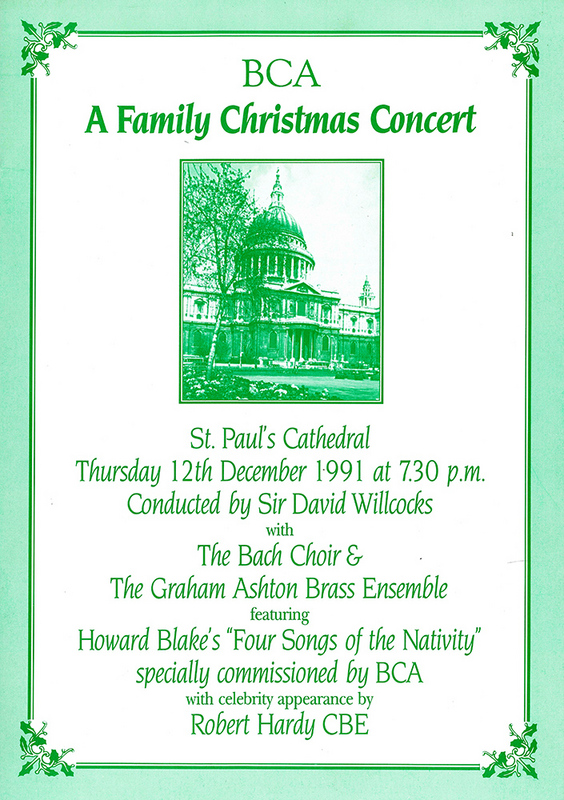
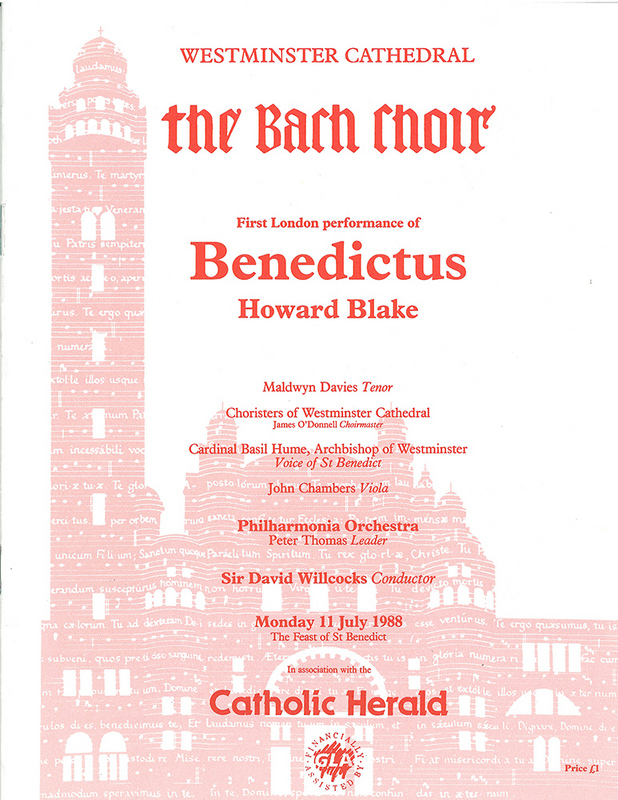
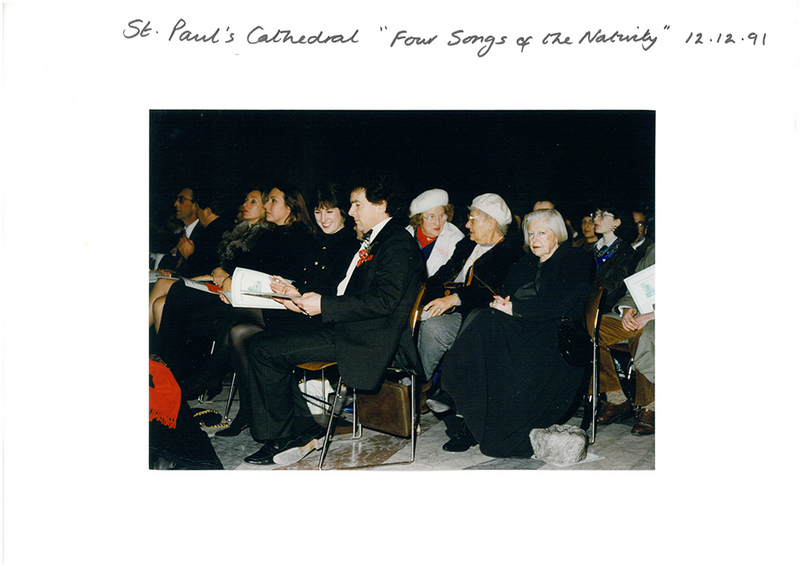
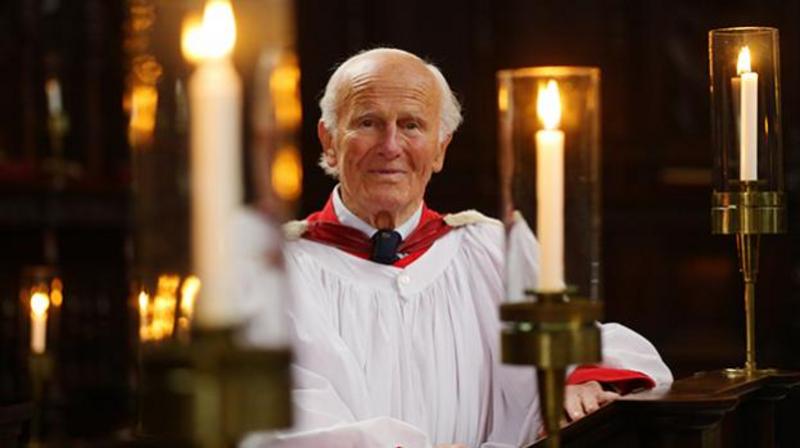
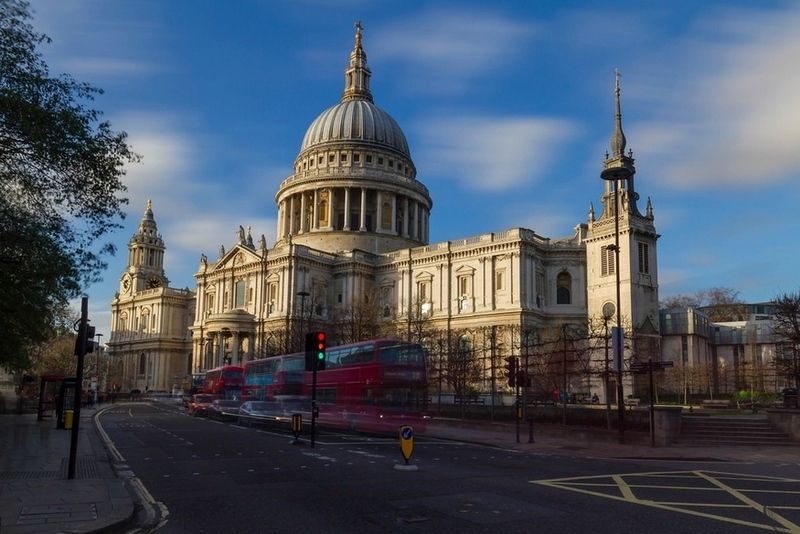
PHILHARMONIA ORCHESTRA - HRH PRINCESS DIANA'S BIRTHDAY COMMISSION (1991)
PIANO CONCERTO PERFORMED BY THE COMPOSER IN HER PRESENCE - ROYAL FESTIVAL HALL
Just before Christmas 1989 Rodney Stewart, the chairman of The Philharmonia rang me and asked if I would compose a Piano Concerto for Princess Diana's 30th Birthday. A full-scale commission. What a wonderful thing to happen! What a marvellous offer! I immediately started sketching ideas - but they were less than inspired. Nothing but the best would be suitable for Diana, the People's Princess. I adored her. I started looking at scores of the innumerable great piano concertos by all the great composers, and wondering if I dare write one at all. It was a very daunting prospect.
On Valentine's Day 1990 it happened that Robin Boyle and his wife Ruth come to dinner at the studio. It was a happy evening and we talked a lot about the Princess and what a delightful person she was. I remember saying:
'I would like the concerto to be a portrait of her and the opening motif should somehow contain the possibilities of a complete picture within it'.
'How would you do that?'
'There should be a very simple motif that is innocent and gay and full of life and compassion and joy all at once. Like her.'
There was a piano in the dining room and I got up from the table and spontaneously played a simple 4-note motif that came into my head from nowhere at all. I immediately felt that it would be the basis of the work and kept hearing this opening in my head, but although I continually wrote sketches I could never seem to get any further to my satisfaction. But one afternoon after lunch I dozed off and dreamed of a counter-melody set against it, sounding unbelievably high up. I wrote this down for high violins and the combination of the two strands worked wonderfully. From that moment the whole of movements one and three were derived from it. It was a big first movement lasting about twelve and a half minutes and I was delighted with the form, which was brought to a close by a quiet cadenza. I rang The Philharmonia and asked if they had yet found anyone who would agree to play it.
Rodney told me that he was having difficulty. Evgeny Kissin had been proposed but now said that he hadn't the time and all the other big pianists seemed to be engaged for years in advance or didn't have time to learn a new work. Then Rodney said to me: 'the boys all say you could play it yourself' - 'boys' being the members of The Philharmonia. I considered this. I said that I would have to practise extremely hard. This didn't seem to bother Rodney but it certainly bothered me. As I wrote the second and third movements I started to practise them at the same time. Meanwhile CBS/Sony seemed to be delighted by the idea of an album: 'Concerto for a Princess'. With it we could record the cello concerto Diversions and the concerto for orchestra, Toccata and dates were fixed for a recording in December.
I practised the concerto like mad once I'd finished it. The recordings took place on 19-21 December and went wonderfully, with Sir David Willcocks conducting the concerto and myself conducting Diversions and Toccata. Robert Cohen was the soloist in Diversions and my dear friend Christopher Palmer produced the album. I played the solo piano part from memory on the brand-new £90,000 Fazioli concert grand which Sony studios had just bought. It felt as if I'd done it all my life. For me these recording sessions were like going to heaven.
Not so for Ian Groves, my representative at Sony. He came to hear 'Toccata' and was scared stiff. He was unused to classical orchestral sessions and thought I was bullying the players. In fact everybody was enjoying themselves immensely even if it was exacting. I started to wonder how he would manage with the Royals.
The concert at the RFH with Princess Diana was due to take place on 19th May. We had recorded in December to give plenty of time to get the album out. To me it seemed as if the offer of a piano concerto commission for Diana was the greatest opportunity for a record company that one could possibly imagine. But then I was told that the Palace did not want to have publicity in regard to the concerto, which was a great disappointment.
The RFH concert on May 19 was wonderful. I had considerable nerves. I lay on the couch in the solo artists dressing room and thought the concerto through to check memory. Half way through the first movement I couldn't remember what should happen next. I began to sweat. Then I thought: I just have to go out there and trust. Jump off the cliff. I walked out onto the platform looking up at HRH Diana, The Princess of Wales in the Royal Box looking magnificent in a blue dress with a diamond tiara. I sat down with the orchestra and the minute I began all was magical. I thought: this is the most marvellous thing one could do in this world. To play my own music supported by an orchestra of 'angels'. We invited many friends to the dressing room for champagne, among them Vivian Ellis and Harvey Goldsmith. The artists were invited to meet the Princess . I spoke to her for quite a while and was utterly charmed. She was well-informed on music and radiated interest and delight in life. Jonathan Morrish who ran PR at Sony managed to get a photo of me with Diana and I gave her a copy of the new CD with the concerto and a score of it that I had had bound in silk at Asprey's. I received a lovely letter from her, thanking me:
.........................................................................................................
Kensington Palace, 20th May, 1991
Dear Mr.Blake,
I just wanted you to know how very touched and grateful I am for your kind thought in giving me last night's score. I thoroughly enjoyed the performance - to receive such a beautiful concerto as a birthday present is a very special honour and I deeply appreciate it.
Thank you also for giving me the compact disc of the music, which I shall certainly enjoy. Together with the score, it will be always be a happy reminder of a lovely evening at the Royal Festival Hall.
With all good wishes,
Yours sincerely,
Diana
..........................................................................................................
CHALLENGE ANNEKA
Anneka Rice called me one day in April and asked if I would 'Challenge Anneka'. The challenge was to write a piece of choral music for a one minute film to support the 'Paralympics'. The film would be shot simultaneously at the White City Stadium and while it was being edited I could take timings, then orchestrate and record. All to be done in 24 hours and shown on TV at 11. 00 pm. I thought this would be fun. I wrote 'Dare All!' for large chorus and orchestra. We booked St Johns Smith Square and Orchestra and asked as many of the LPO and London Symphony Chorus to get there as were able. They responded maginificently. I wrote the parts out myself, copied them on my Xerox machine and whizzed down there in Anneka's 'batmobile'. The film was wonderful and very moving. I went to ITV at 11 to see the broadcast go out, with many paraplegics present who thought it was a great thing for them. While we were waiting I talked to Bernard Atha who thought it was amazing that I could do such a thing. He turned out to be in charge of arts for the City of Leeds, who were about to have a centenary. Could I write a violin concerto 'where everybody would stand up and cheer at the end?'. Perhaps for Nigel Kennedy?
THE BELLS
The first result of this was that Brighton Philharmonic rang to ask if I would put together a complete Howard Blake concert for their next season in The Dome. Could I also write a choral piece for 'all the children in Brighton to sing with the symphony orchestra'? We could do The Snowman, the Piano Concerto and Concert Dances. Could I both play and conduct? I composed a piece called 'The Bells' on the poem by Edgar Allan Poe. It was distinctly spooky, with screams and hisses, but the children enjoyed it enormously.
On June 23rd there was a performance of The Shakespeare Songs at the Charleston Festival by Martyn Hill and Robert Cohen's String Ensemble.
LET MUSIC LIVE
Larry Westland of Music for Youth , another contact of Georgina's, asked me to write a piece to save school music and the teaching of music to the young. We evolved an idea to have the whole of the RFH filled with young musicians and singers, to invite arts persons from the major political parties and make a statement.
I wrote words and music of 'Let Music Live!' for 1,600 players, chorus and organ. We did it on July 7th with Sir Simon Rattle conducting and myself playing the organ. There were 200 cellists on the stage and there was literally not an inch of space left to accommodate the conductor. Sir Simon solved the problem by offerring to stand on top of the organ console! The hundreds of other players found where to sit or stand in the hall with the use of coloured balloons and to save space pinned their music parts to the back of the player in front. Sir Charles Groves attended and said it was 'the greatest event in the history of youth music'. It was a huge success with the media and in all the papers, featuring on nine different front pages in colour.
CHRISTCHURCH MASS
I was commissioned to write Christ Church Mass for 5 voice-parts for nearby Christ Church, Kensington and it was performed there on July 21 and October 18/19.
VIOLIN CONCERTO 'THE LEEDS'
I had been thinking about the Violin Concerto commission and had written to Nigel Kennedy's agent asking if the famous violinist might be interested. But I hadn't had a reply. Apparently he wasn't interested and this upset me because I was most eager to start work on something and excited by the thought of writing. Meanwhile I had been invited to Steyr in Austria to stay with my dear friend Ilona von Ronay and her family who owned an enchanting castle by the river Steyr called Schloss Rosenegg ('Rose Corner'). I arrived there quite late and was shown up stone steps to a turreted room where I settled down for the night. Next morning I unexpectedly woke to the sound of wonderful violin playing echoing down from another nearby stone room and was completely enchanted by the sound of it. When the playing stopped I could hear the player leave the room and set off down the stone steps. Peering out of my window I could see a lady emerge and head for a table laid for breakfast on a garden terrace. As I watched her I for some reason remembered a theme that I had written several years earlier and I thought how marvellous it would sound played by this violin of hers. I rapidly wrote the theme out with a rough piano part and took it out onto the terrace where she was now sitting. She told me that her name was Christiane Edinger, that she was from Berlin and was in the castle to play the unaccompanied Bach 'Partitas'. I told her I'd heard her playing in the castle and showed her the sketch I'd just written. I asked her if she thought it might make a good start to a violin concerto. Instead of dismissing the idea she looked at my manuscript carefully for a while and unexpectedly declared 'Let's try it! Is there a piano somewhere we can use?' I went up to the castle, found Ilona and asked her, but she was most apologetic. 'I'm afraid the Steinway hasn't arrived for the concert yet' she said. The only place I can think where you could use a piano would be in Bruckner's house'. 'Where's that' I asked 'At the bottom of the hill, just a short walk'. 'Marvellous!' I said and off Miss Edinger and I trotted down to the one-time home of the great composer. She played my theme on violin with myself on Bruckner's own piano. She said she would love to perform the concerto if I were able to complete it and when I told her about the commission offerred by the City of Leeds, the concerto seemed as if it was already under way!
-
 Diana and Howard in the royal box after premiere of piano concerto
 -
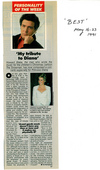 Tribute to Diana 16th may
 -
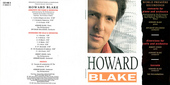 Sony album
 -
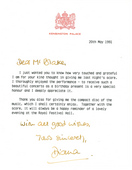 Princess Diana thank-you letter
 -
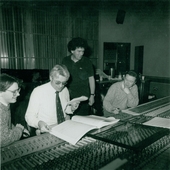 Christopher Palmer supervising the recording of the piano concerto at Sony Studios
 -
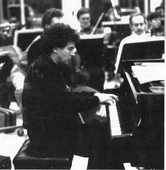 Rehearsing the piano concerto with The Philharmonia
 -
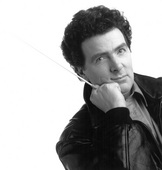 Piano Concerto CD
 -
 Princess Diana and Howard featured in 'Hello' magazine
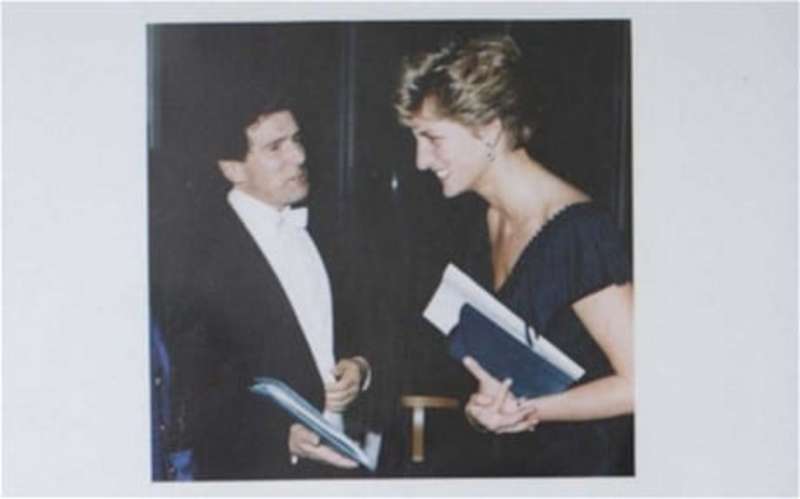

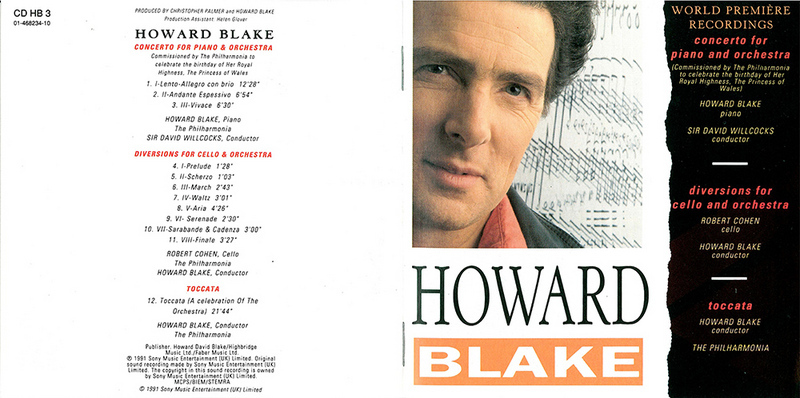
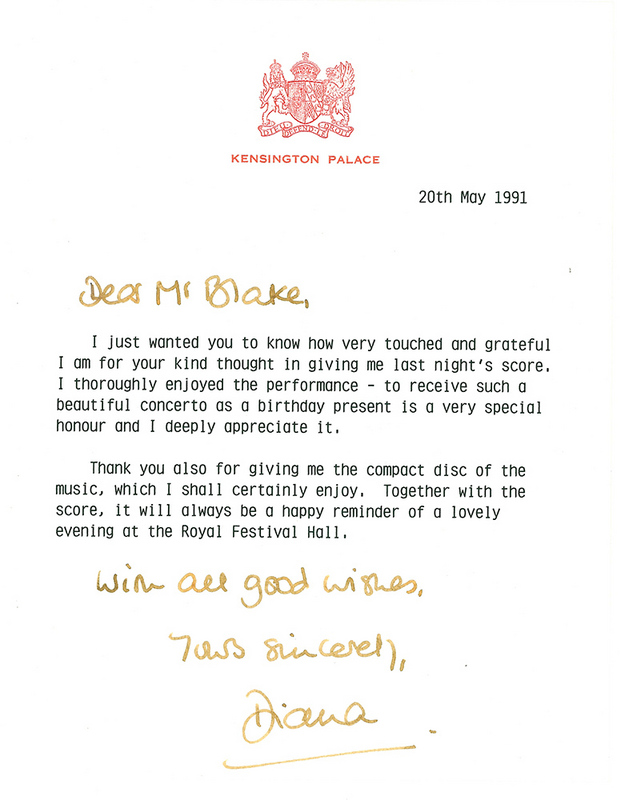
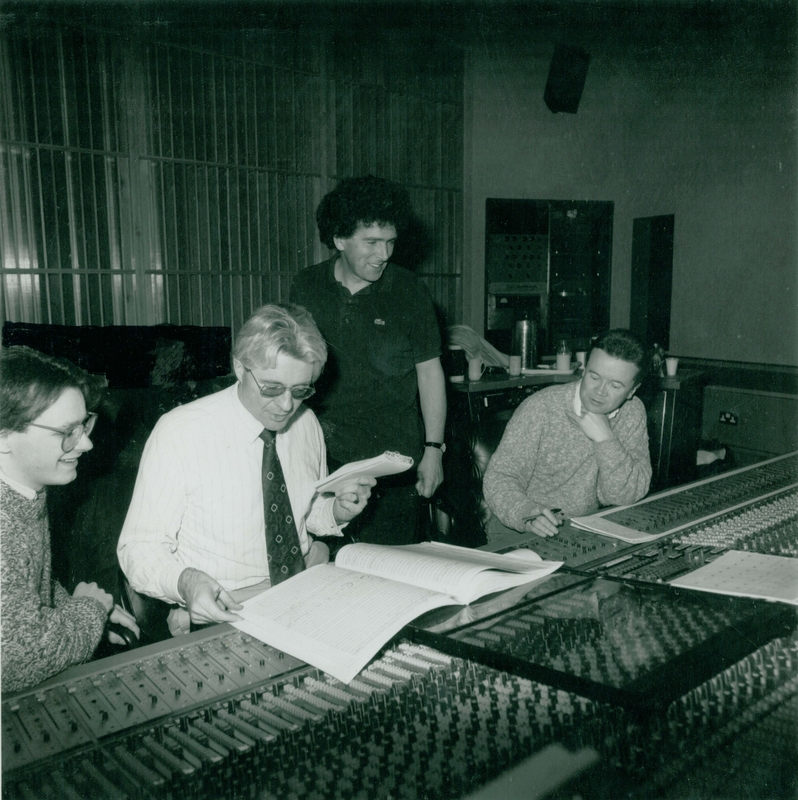

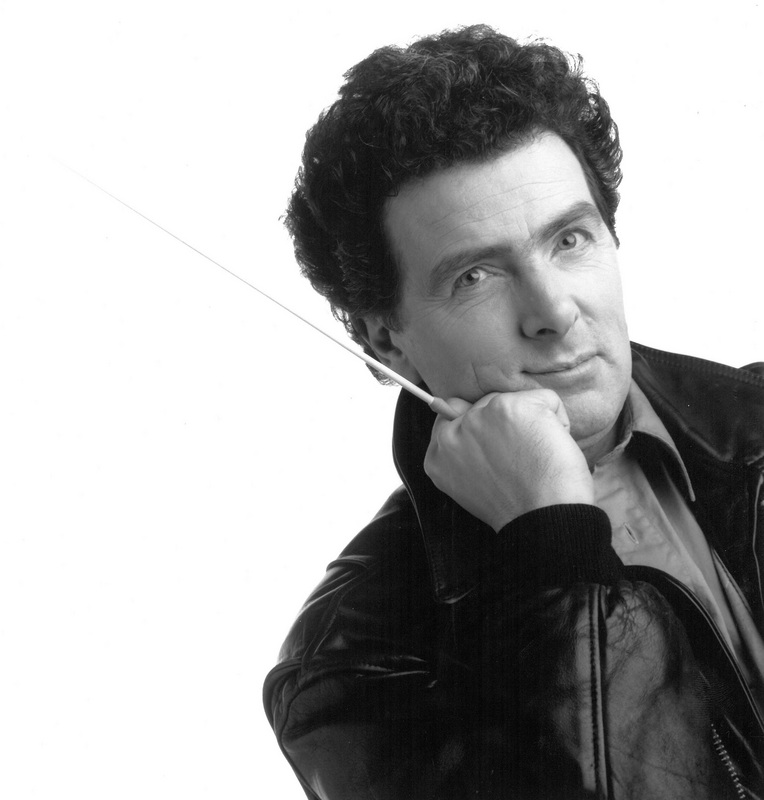
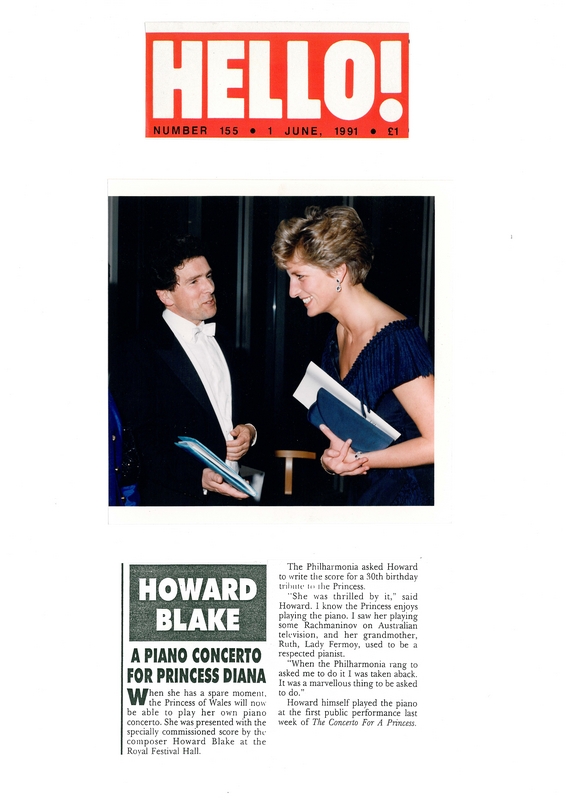
VIOLIN CONCERTO (1992)
ARCHANGEL'S LULLABY, FAITH ALONE
ARCHANGEL'S LULLABY
In January Steven Isserlis asked me to compose something to celebrate the birth of his son Gabriel and I wrote Archangel's Lullaby, a trio for a very young cellist and two grown-up cellists.It was premiered by Steven Isserlis, Raphael Wallfisch and his 7-year old son at Barnes Music Club, January 1992.
FAITH ALONE CAN BUILD A CITY
In December I'd been asked by The Archbishop of Canterbury, George Carey, to write words and music for a hymn for the Church Urban Fund, to 'revive the Church of England!!'. I write 'Faith alone can build a city' and after the performance I was most honoured to have lunch with both of the Archbishops of England. We talked about George Herbert and hymns and William Blake.
I was asked to review a superb art book called 'Music: passion for an art', which was published in Arts Review. I enjoy doing this, almost as much as I enjoy writing music.
THE VIOLIN CONCERTO
I gradually start to work on the Violin Concerto down in Brighton. I am consumed with it as I once was with Benedictus back in 1979. It takes me until July to compose the piano score. The first movement is the biggest single movement I have written, lasting 20 minutes. The second movement is a requiem to my mother. The third a set of brillante variations after two deeply serious movements. The whole work is about 35 minutes long and I finish the orchestration on the 30th.
The premiere of the Violin Concerto took place on February 6th 1993 and was conducted by the excellent Paul Daniel with the Northern Phiharmonic Orchestra in Leeds Town Hall. I gave talks and did press, TV and radio interviews with Christiane Edinger. She performed it magnificently and the audience gave a tremendous ovation.
But as the ovation rolled round the auditorium, director of Faber Music, Robin Boyle rose to his feet, turned his back on me and walked out of the hall. I should have seen this as an indication of the nightmare that was to come.
On the other hand my friend Michael Webber, who directed the English Heritage concerts, was present in the audience and loved it and immediately decided to programme it at a Kenwood Lakeside Concert.
All sorts of performances and events happened through this year of composition: Benedictus in cathedrals, The Song of St Francis, the Serenade, Diversions, a jazz piece called Passing Time, (with a theme derived from The Lost Continent film of many years earlier), the Piano Concerto at Kenwood, but the violin concerto tending to take pride of place over everything else.
THE STATION
The one-act comic opera 'The Station' was mounted November 18-21 1992, very appropriately at The Platform Theatre, Haywards Heath, the town of its inception. Jacqueline Barron was the soprano, the distinguished Susan Bickley the contralto,Paul Agnew the tenor, Don Greig baritone and Simon Grant bass. Penny Jenkins and Juliet McKinnell extracted great fun from the parts for the two tea-ladies (mezzo-sopranos)whilst The Duke String Quartet was directed from the piano by the composer.
It was an excellent cast and received an encouraging review from 'The Stage':
Joan Thaxter, The Stage and Television Today, 28/9/1995
... a gently satirical and witty piece. Blake's libretto is sharply perceptive, encapsulating the humour of the mundane. His lyrical score is vividly pictorial. Modern rhythms sit easily with more classical elements, all beautifully worked ... The Station makes music theatre enjoyably accessible.
More performances were to follow and reviews of the work were to speak even more enthusiastically:
'Blake is an experienced composer for film and television and he shows his understanding of dramatic pacing in this piece staged by the Opera Studio of the State Opera of South Australia. The piece is really a short encapsulation of what makes opera work: the search for love, conflict, anger, frustration. In less than an hour it was quite amazing just how much ground Howard Blake had been able to cover without the train ever leaving the station.
Tom Sankey, Opera, 15/8/2006
Howard Blake's 'The Station' employs traditional harmonies and well-established operatic conventions to create a 50-minute send-up of the medium. With classic romantic soprano/tenor duets (albeit about Maseratis and Dartford Warblers!), barbershop quintets, dramatic arias, clever ensembles and even an Elvis Presley take-off, the work takes us from Bel Canto to Can-Belto and back. It is a work that intentionally doesn't take itself seriously- a welcome respite in today's post-9/11 world.
Timothy Sexton, State Opera South Australia, 29/6/2006
'The Station' explores the inner thoughts of four commuters on a typical British train platform , forced to wait for a series of delayed trains...Director Sam Haren has ensured that 'The Station' is engaging entertainment from the first note to the last and the creative team has captured memorable images, but none more so than the young man appearing to face his destiny in the light of an oncoming train....this very interesting opera moves from the traditional to the satirical.
Greg Elliot, Independent Weekly, 30/2006
Purcell Room, London's South Bank Sep 18/20 1995
..the piece turns those stiff encounters between frustrated travellers, waiting on the platform for their morning train, into beguiling duets and quartets. Sarah Jenning's London premiere for Jigsaw Music Theatre proved a real crowd-pleaser, touching a chord in an audience only too familiar with the daily hazards of points failures, work to rule and the wrong kind of snow.
As Station-master Dean Robinson's resonant bass-baritone over the intercom had just the right note of British Rail regret...Lisa Tyrrell's bird-spotting secretary spies a Dartford Warbler on the line, while tenor Vernon Kirk's time-obsessed executive tries to impress her with his talk of fast cars and all the business appointments he may have to miss. Their back-to-back coloratura duet won a special round of applause on the second night.
Stranger still is Dennis Schiavon's shabby drop-out, with pop-tune chatter to match his copy of The Melody-Maker, clowning about on the track. He responds to the pleas of Janet Shell's feminist business woman to join her in a cup of coffeee. But though they find the buffet closed, their duet combining his musical theatre vocal with her delicious mezzo made for a standout musical encounter.
DAVID MELLOR AND ADMINISTRATION OF THE ARTS.
At one point I nearly entered politics. Conservative politician David Mellor adored The Snowman and his son sang the treble part in a concert at The Barbican. Later David narrated it at St John's, Smith Square and I become acquainted with him. He was Minister of The Arts and appointed me to his government steering committee on The Arts. But as I set off to the very first meeting in Whitehall I opened the paper and saw that he had been well and truly destroyed (or framed) by the Antonia de Sancha scandal. We had the first meeting in Whitehall, but everybody knew that it would be the only one. A great shame for the Arts because David had a wide and informed knowledge of music and would have been more than excellent.
-
 Brighton Philharmonic Orchestra - Blake concert
 -
 Faith alone can build a city - a thank you letter from the Archbishop of Canterury
 -
 Childrens Cello
 -
 Childrens Cello Stephen Hough and Steven Isserlis
 -
 The Station opera
 -
 An all-Howard Blake Dome concert with the Brighton Philhamonic
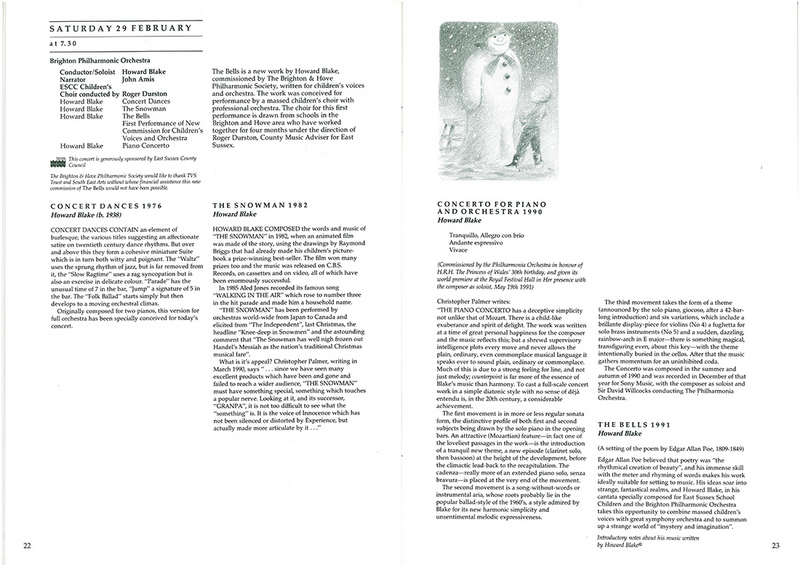
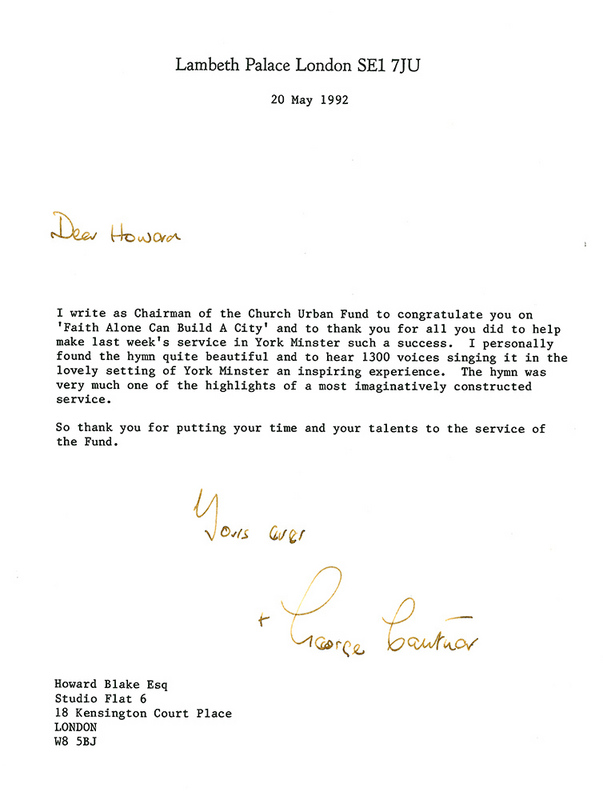
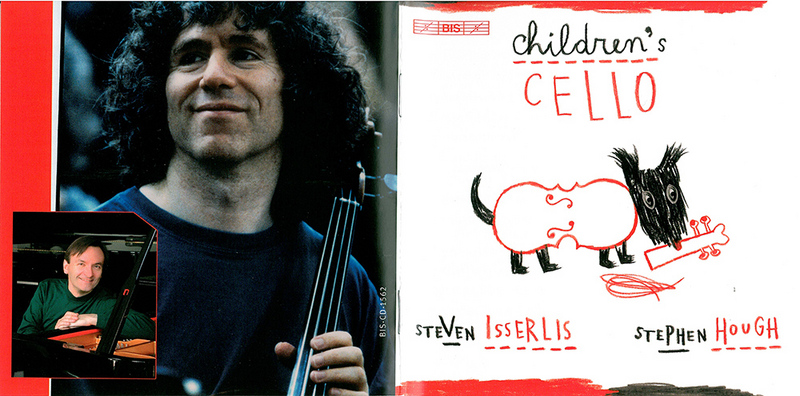

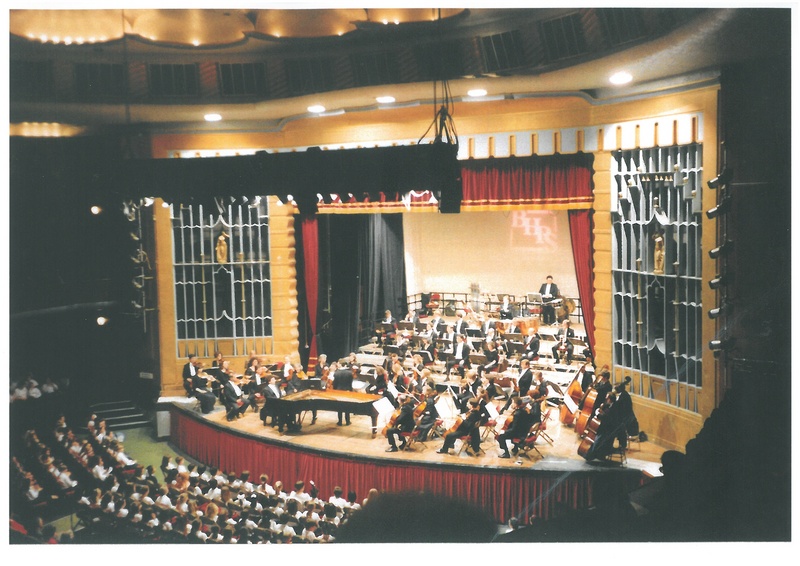
'THE LAND OF COUNTERPANE' (1993)
The Snowman Ballet and The Snowman Stage Show
MORTALITY
The early part of the year was full of tragedy and I started to experience symptoms of stress again, with visits to Dr. Sharma, vitamin transfusions, meditation therapy and periods of bronchitis on anti-biotics.
In January my dear friend Dianne Jackson, who directed both Snowman and Granpa, died of cancer at the age of 50 - a tragedy.
In May my dear friend Christopher Palmer who was for me the greatest and most passionate writer and champion on film music and English music, was taken ill and died in a nursing home. I learned later that he had asked Faber for a study score of 'Granpa' to read on what turned out to be his deathbed. He was a very great loss to the world of music.
In July I met Stanley Myers for dinner and he asked me if I still went to Dr Sharma and did I think he was good. I asked why, but he said nothing. He had contracted leukaemia and died three months later. At his memorial service I conducted a movement of his Concerto for Saxaphone with John Harle as soloist. Stanley will be remembered for ever for his theme 'Cavatina' and I was fortunate to have played on the first recording of it in the sixties. We would often work together on some of the 120 or more film scores he created - a great talent and a great friend.
The fourth of my close friends, Alan Clare, also died in 1993. A ballad pianist, beloved by Frank Sinatra, who used to invite him out to Palm Springs every year to play at his week-long house parties, he was beloved by all musicians who love wonderful harmonies. Often he would drop by just to show me a new chord or say 'listen to this progression' in a work of Bartok or Ravel- or more often Duke Ellington or Harold Arlen.
THE SNOWMAN BALLET
On April 17th Robert North invited me to Gothenburg in Sweden to talk about a Snowman Ballet. He had taken over a full-scale ballet company there and we could put this new ballet on in the beautiful Stora Teater. We begin to create a scenario and discuss the idea of new dances to add to the existing music of the film score. I begin to sketch ideas: a Footprints Dance, a Calypso, a Reindeer Dance, a Robot dance, a Pas de deux and perhaps an adaptation of 'Toccatina' from 'Lifecycle' to make a 'Dance of the Three Tops.' I returned to London to settle down and write but on Tuesday June 8th Robert North rang to say that our ballet 'The Annunciation' was on in the Teatro San Carlo in Naples. When? Tonight! Can you come? I welcomed the opportunity to escape from London and from my despair about Helen and later the same day found myself in a huge basement hall peopled by mafia-looking men in black shirts and white ties. I was playing pool with Robert and his associate choreographer Julian Moss who was accompanied by his beautiful blonde Swedish fiancee Scylla. She was wearing very brief denim hotpants and every time she leant forward to make a shot there was a sharp intake of breath and a sigh as all the men playing paused and stared! Robert and I discussed the Snowman and the new dances and we also discussed 'Doktor Faustus', a ballet on 'Casanova' and a ballet on 'Nelson and Lady Hamilton'. We were both absolutely bouncing with ideas! One evening we went to a dance school gala in the open air miles from the centre which went on till 1 or 2am in the morning. Our hosts then woke up an entire restaurant and guitarist around 3.00 am with a party of 30 to eat magnificent pasta and listen to Neapolitan songs to a guitar until daybreak. This could only happen in Naples! On Friday I went by hydrofoil to Ischia for lunch with Lady Susanna Walton and Lord Goodman in the miraculous Walton villa overlooking the bay of Naples. Christopher Palmer had given me an introduction. The three of us discussed the Arts Council, the PRS, and the wonderful music of Sir William.
THE SNOWMAN STAGE SHOW
Back in London Martin Kingsbury had somehow arranged for me to meet theatre director Bill Alexander at The Barbican where he was directing Shakespeare for the RSC. He told me that he was intending to revive the Tony Clarke pantomime version of Snowman at the Birmingham Repertory Theatre where he was now artistic director. Tony Clarke was now his assistant there and they had already booked the choreographer Pat Garrett and the designer Rouari Murchison. He himself would direct it and they were already advertising it for Christmas. I was horrified by this since Martin Kingsbury knew very well that I would not allow permission for my music to go forward with this production which I had seen and thought appalling. I explained this to Bill and said he would have to do it without my music.
'But the music is the entire reason it's a hit' he said 'What on earth can we do?'
'Well' I said, 'I've just completed a ballet of it in Sweden. Why don't you ask Robert North if he'd let you do that?'
We are not a ballet company, Howard! How are we going to do it?
You can audition for dancers who can act and mime. We can create new characters and add extra mime scenes and I will write a whole lot more music.
What about words?
You don't need words in a ballet and there weren't any words in Raymond's book. Anyway, who ever heard of a talking snowman?!'
Bill became fired by the idea:
'As soon as people walk into the theatre the whole stage must look as if it is snowing. At the end when the boy sees that the Snowman has melted he looks up and it starts to snow again. He realises that the Snowman can be built again. Then we can have the longest and most joyous walk-down in history!'
It was decidedly touch-and-go. John Stalker, executive producer for the theatre, had misgivings but bravely gave it the go-ahead. I moved into a room in the theatre to work on it with Bill right up to the opening night. We just about made it. It was a bit rough in places but it looked great and the audience seemed to love it.
I said: 'Pat could choreograph it and I could write some more plot and music.'
I worked on this version and ended up in November scoring a further 30 minutes of show in about two weeks, working in a studio flat in the theatre right next to the rehearsal room. Everything was late and rather disorganised. The copyist told me on the day before the band rehearsal that he had only copied the first act. John Stalker the theatre manager phoned up music students who sat up all night in the attic copying. Despite all this the show was a huge commercial success and ran for about 90 performances.
THE LAND OF COUNTERPANE - A SONG-CYCLE
The marriage to Helen had petered out. She had told me that she would be happier with a naval officer or a doctor or an airline pilot or even a concert pianist and by some miraculous synchronicity had now met a naval doctor who flew helicopters and played the piano. 'No hope for me at all!' I thought. 'She has gone'. But I was still talking to her on the phone although she had left me, even though she was still saying that she would never come back if I went on writing music. I was once again confronting the problem of Orpheus, torn limb from limb by the Maenads. I said that I would never write another note - and at that moment meant it. But I had been asked repeatedly if I would compose a work for the tercentenary of the Mary Erskine girls school in Edinburgh and had spoken to the head of music, a wonderfully forthright and energetic musician called Helen Mitchell. I had suggested a Robert Louis Stevenson song-cycle or some songs on classic Scottish poems. I had already written two of these: Two Scottish Songs: Coronach and My Peggy.
It happened however that some friends of Helen's in Edinburgh were having a birthday lunch there and she asked if I would accompany her - in a final attempt at our getting back together. At the same time I could drop in at the school and tell them that I had stopped writing music and wasn't able to carry out the commission. I got to the school and played through the two Scottish Songs in a somewhat desultory fashion, saying that I didn't really believe them to be very interesting. The headmaster, Patrick Tobin, whom I had not met previously, asked about the Robert Louis Stevenson idea. I said I thought RLS was pretty old-fashioned and the girls would think it a bit twee. But Tobin said he was not at all interested in what they thought - he wanted to hear what I would compose! I said rather nervously that the only way such a piece might work would be to write very simple voice lines and put all the colour in the orchestra. He glared at me and said: 'Well that didn't put Mahler off!' As he said this I could suddenly hear the whole thing. I thought: 'I could write it in three days. Why not, I don't even have to tell Helen that I'm doing it.' The school were delighted. I went off to meet Helen for lunch and she asked me immediately if I had cancelled the commission. I said:
'It will only take me three days, it won't trouble you at all.' I called the piece The Land of Counterpane and wrote the vocal/piano score between May 9th and 14th. But Helen was not going to forgive me for this. She went completely crazy, saying that it was the absolute end of our relationship.
A third divorce started to look inevitable.
LAND OF COUNTERPANE - THE FILM
An arts film producer called Chris Hunt came to see me to suggest our working together on a BBC TV film which was requesting submissions. However when he walked into the room he immediately saw the manuscript of 'Land of Counterpane' which was lying on the piano. He became very excited about it and wanted to make another 'Snowman' out of it - an animated film. It encouraged me to wrote a script, turning the song-cycle into a story of RLS's sickly childhood and how his Imagination caused him to live and fight for recovery. Chris Hunt contacted Pat Gavin, designer of the South Bank Show who set out on a 500-page storyboard. BBC 2 Music and BBC Enterprises and Scottish Film Fund together proposed to put up £1,000,000 to make it. I added an overture and we did a demo with Ron Corp and his children's vocal group. But suddenly Pat decided not to 'hand -draw' it but to make statues and animate them by computer technology. The result was less than astounding. Tempers started to fray. Scottish Film Fund pulled out because nobody was Scottish, although Pat Gavin 'thought his grandmother might have been!' That didn't go down well but in any case he was suddenly struck down with a rare blood disease which brought our project grinding to a sad halt.
TRUE ROMANCE
Englishman Tony Scott made this violent Hollywood film to a script by Quentin Tarrantino. In an early part of the film he strangely used my Lakme track from The Hunger, the slow version that I improvised on piano merging into the vocal/orchestral version that I conducted. Watching this gratuitously violent film in 2012 I thought about my idyllic life in Sussex from 71-81 and its abrupt end due to local enmity and aggression. Because of that aggression I felt impelled to leave Sussex, I accepted Liz Keys' offer of musical directorship for MGM on 'The Hunger' and I was instantly plunged back into this seediest of all worlds. Thank God I had already completed 'Benedictus' and thank God that I was coincidentally offerred the opportunity to compose 'The Snowman' - like some sort of antidote to evil, an incredible purity in the midst of carnage.
-
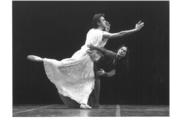 Annunciazione - Teatro di San Carlo Napoli
 -
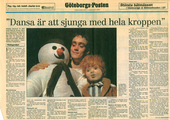 The Snowman ballet - Gothenburg Post
 -
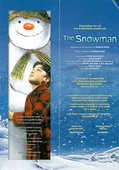 The Snowman Ballet in Sweden
 -
 Violin Concerto English Northern Philharmonia
 -
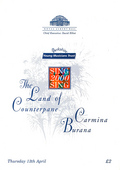 The Land of Counterpane Royal Albert Hall
 -
 The Snowman ballet premiere - Stora Teater Gothenburg, Sweden

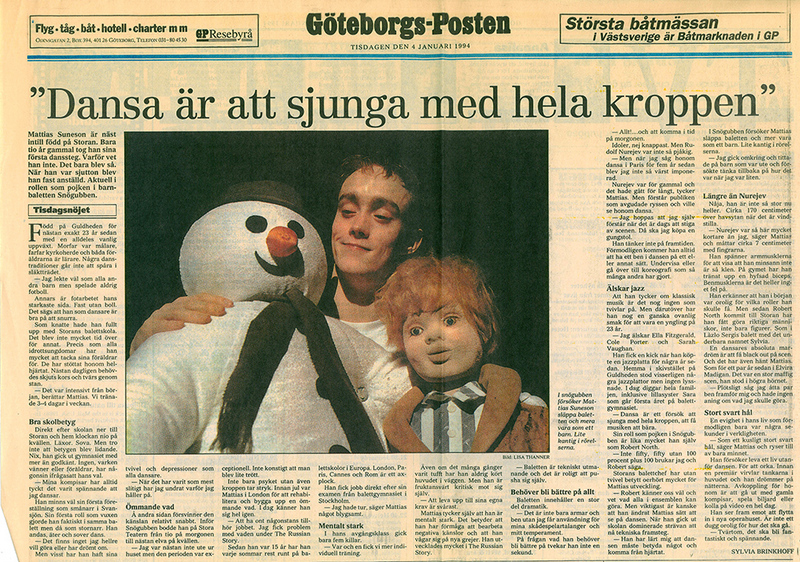

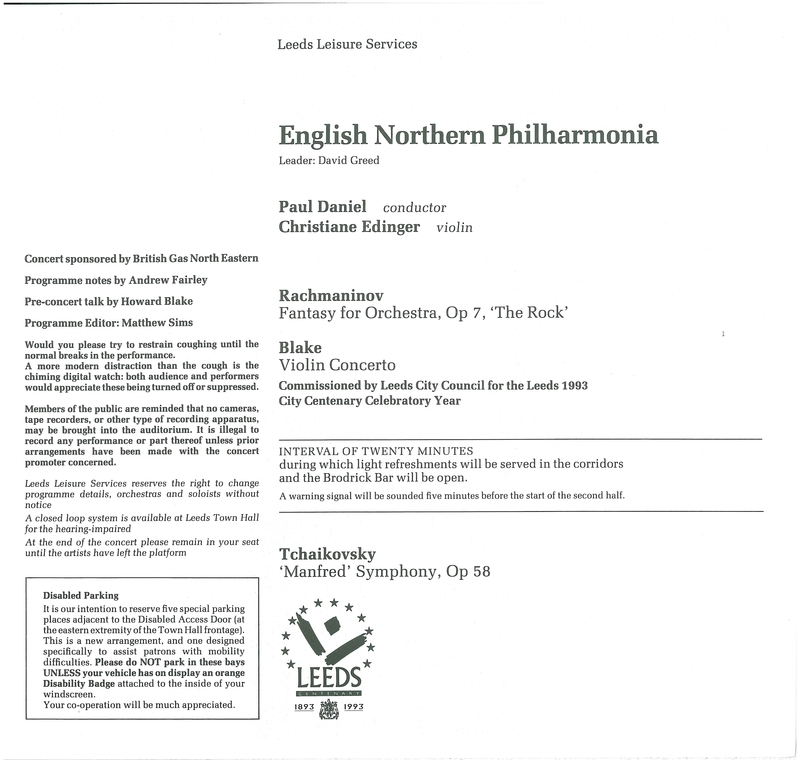
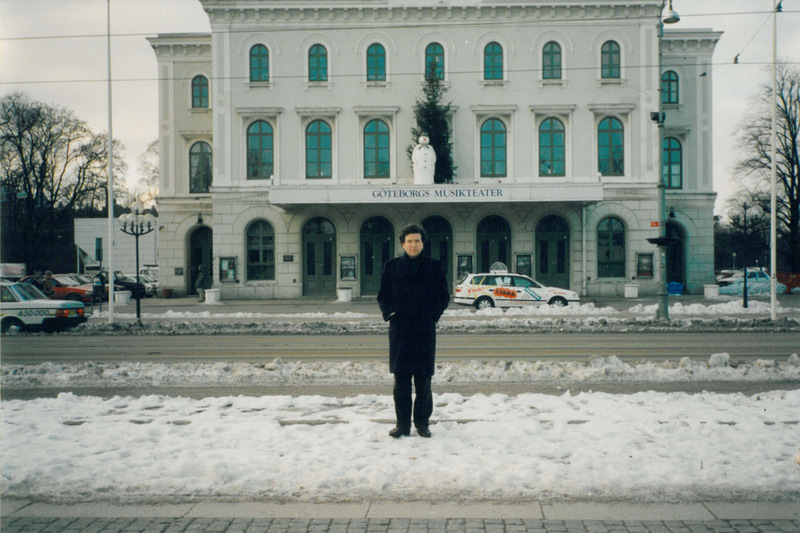
ALL GOD'S CREATURES, LA BELLE DAME SANS MERCI, LE GISANT (1994)
OBE presented by HRH Queen Elizabeth II at Buckingham Palace
LA BELLE DAME SANS MERCI
At the start of 1994 I had still not got over Helen leaving and was still pondering over the enigma of The Muse and why women cannot live with artists (or artists with women). Michael Webber asked me if I would compose a piece for the 10th anniversary of English Heritage to be performed at Lakeside on Hampstead Heath that summer. Hampstead was where Keats lived and where he wrote the ultimate poem about 'The White Goddess', 'La belle dame sans merci'. I got out the collected works and found - Lo and behold! it had been written exactly 175 years before the date of the concert, in 1819. This coincidence somehow inspired me to the idea of a tone-poem on the subject and I set to work to create the piano score. As I finished it I found that it was exactly 175 bars long. Miranda Jackson wrote: 'The work reflects the varying moods of the poem, with the siren's song represented by the flute and the knight's leit-motif on the cellos leading to a terrifying portrayal of the knight's nightmare scored for full orchestra. It received a thundering premiere by the Wren Orchestra conducted by Hilary Davan Wetton on 2nd July somewhat marred by a firework and rocket display mistakenly let off in the middle!
ORDER OF THE BRITISH EMPIRE FOR SERVICES TO MUSIC
A letter arrived on my desk with the insignia of 10 Downing Street. I was so nervous about what it might be that I didn't open it for a week. Could it be a tax problem or an investigation of some sort? I opened it. It was to ask if I would accept an OBE I breathed again. At Buckingham Palace a military man instructed me how to bow and walk backwards from the throne.
'I understand you write music,' said Her Majesty.
'Yes, for instance I composed a piano concerto for Her Royal Highness The Princess of Wales - on her birthday.'
This was perhaps the wrong thing to say.
'So you keep busy then' she said and pressed my hand. I started to turn round, then remembered I should be walking backwards, tried to do so and went in the wrong direction - most embarassing!
ALL GOD'S CREATURES
The Guildford Philharmonic Orchestra were about to celebrate their 5oth anniversary and Kathy Atkins, their manager, rang me one day asking if I would be interested to create some sort of a song-cycle for mass children's chorus and symphony orchestra. I liked the idea and suggested settings of classic texts on the subject of animals. I called the work 'All God's Creatures' and when I'd got the idea under way I proposed to Katy that we ask children from all over Hampshire if they would like to audition to sing in the first performance in the cathedral. There would also be an art competition for the best paintings of the animals depicted in the songs. The response was colossal and we ended up with such a large choir (1,700) and such an application for tickets that we had to perform it two nights running!
The work begins with an excerpt from William Blake's 'Auguries of Innocence' spoken by children over the sound of the orchestra, leading dramatically into the first song. 'The Tiger' and then to a gentle setting of his 'The Lamb'. Tennyson's 'The Owl' is treated sardonically ('warming his five wits') and 'The Snail' of John Bunan very smoothly, featuring a solo violin. 'Rats' are squeaky, noisy and rumbustious, but 'The Swan' follows with grace and peace, led by the harp. The seventh song takes a passage from the Book of Job - 'Leviathan'. Is it a whale or a sea-monster or a dragon?. The music conjures up a picture of a giant whale, using organ, full brass and even a thunder sheet! The eighth song summons up Lewis Carroll's smiling crocodile of the Nile, using conga drums and marimba; then follows 'The Swallow' by Christina Rossetti, a swooping evocation of flight and sun, and 'The Oxen' by Thomas Hardy. The work ends as it began with children speaking over orchestral sounds, now very quiet, the words again by Christina Rossetti, 'Hurt no living thing'.
When we came to rehearse I found it impossible to see the whole choir and had to conduct from the top of a ladder, but it was a howling success and both children and parents loved it.
But Robin Boyle once again performed his back-turning routine. The love of animals shown by Blake's poems, the antipathy towards killing harmless ones shown by Christina Rossetti, perhaps none of this agreed with his outlook. Nothing was done to promote it.
JOHN WILSON
In 1994 I was so busy on so many projects that I rang my old friend from my years on the board of the PRS,Jo Horovitz, professor of composition at the nearby Royal College of Music, to ask if he had any bright students who might be interested to work as my assistant. He recommended a 23-year old composition student named John Wilson and sent him over to see me. We got on like a house on fire and over the next four years or so he was of the greatest assistance to me - copying parts, making arrangements, scoring and sometimes acting as my alter ego, on one occasion flying to Verona to organise a cut-down orchestration of the Snowman ballet taking place at the Teatro Filarmonico. Few could have foreseen his astronomical rise to prominence as a conductor with his own hand-picked orchestra at the Proms. A quite remarkable talent!
DIAHANN JOSEPH
At a birthday party in Sussex for friend and poet Peter Jeeves I met eminent photographer Tim Motion, notable for his wonderful portraits of great jazz musicians - Miles Davis, Charlie Parker, Chet Baker, Dizzy Gillespie and Ray Charles among them. He offerred to do a portrait for my new ASV album and we met up on June 22nd in his Notting Hill artist's studio, where stood a grand piano and double-bass. He asked if I'd like to stay on and play a bit of jazz, mentioning that two Swedish girls were coming round for drinks around 6. We were playing when two tallish girls came in, one dark and one blonde, Diahann and Anna-Karin. When I was introduced to Diahann something extraordinary happened to both of us. We were quite simply transfixed - like Donne's poem: 'our eye-beams twisted and did thread our eyes upon one double string'. It was embarrassing since Diahann could well have been Tim's partner and I had no wish to cause trouble. However we talked and all was happy and amicable and I invited them both over to my own artist's studio the following day. Thus began a love affair of great passions, great joys and great despairs.
Samuel H. Weir in his extraordinary astrological divination of my life in 1976 wrote:'When you choose a mate, she must be equally gregarious and interested in widening mental horizons, either by travel or reading, someone who is sufficiently broad-minded to allow you the freedom she herself desires. Choose a mate with a mind to match yours, an equal liking for the good things in life, one with wide interests. More than one marriage is certain for you and a very happy one there will be.'
Diahann does not believe in astrology, and I try not to, but this analysis chimes so uncannily with both our views of what both of us would like that it seems churlish to ignore.
Writing this in July 2017, the relationship has existed for 23 years. Diahann understands my music, understands which works are sublime,which trivial, which great, which tawdry, which life-affirming and wonderful, which dangerous and subversive. She understands that I am inspired to write and that to be able to do so I must have silence and be left alone. These abilities are of tremendous value to the creation of my music and thus ultimately conceivably to 'the world' generally. On that matter only time can tell. Apart from the Diahann possessing such highly sensitive instinctive antennae in determining the innate spiritual value inherent in music, there is another Diahann, a university-trained lawyer with a thorough knowledge of the ways of business and the world. For both of these sides she has been of inestimable value to me. I have never married her because I do wish to 'give her the freedom that she herself desires' (vide Samuel Weir, above) and she seems content with this situation. Our life is beset with rows, debates, arguments, tragic partings and sublime reconciliations, darkness and light. Diahann is with me for better or worse. She is without doubt Robert Graves' White Goddess, the Jungian anima muse who chastises the failings of the artist with ferocity, but rewards his triumphs with miraculous love.
[Vide: 'The White Goddess', a historical grammar of poetic myth, Robert Graves 1961, Faber and Faber.]
-
 christine edinger article
 -
 Sinfonietta for 10 brass in Leeds Town Hall
 -
 All Gods Creatures
 -
 Tiger drawing for 'All God's Creatures' by a pupil of Mary Erskine's
 -
 The Violin Concerto, Leeds Town Hall, English Northern Philharmonia



'CHARTER FOR PEACE', 50 years of The United Nations in the presence of The Queen (1995)
PRELUDE, SARABANDE AND GIGUE for solo guitar
'CHARTER FOR PEACE' A commission for the 50th anniversary of the United Nations
I was contacted one day by Glynne Evans, a beautifully-spoken lady from the British Foreign and Commonwealth Office. She was empowered to commission a work for the occasion of nothing less than the 50th Anniversary of The United Nations. An event was to be held at Westminster Hall, within the Houses of Parliament, and it would take place in the presence of HRH The Queen,The Duke of Edinburgh, Prince Charles, John Major The Prime Minister, members of the House of Commons and House of Lords and many executives and high-ranking military from UNO. The whole ceremony was to be televised by BBC and broadcast globally.
I was summoned to a meeting in Whitehall and asked if I could write not only for choir and orchestra but also for the state trumpeters of the Household Cavalry who would be there up on a balcony behind the Royals. I was informed that these fanfare trumpets could be pitched in either B flat or E flat. I decided to pitch the whole piece in B flat and therefore to write for B flat trumpets. I asked:
'What should the text be?'
'It should be from the Charter of the United Nations and we'll give you a copy. It was written by Field-Marshall Smuts and Winston Churchill in 1945.'
I took it home and decided that I could use words from the preamble, but interspersed with some Latin words which would sing well and give a feeling of gravitas: 'fides! libertas! pace!'
A few days before the event Glynne Evans came over to my studio with Martin Kingsbury and we discussed a title for the piece. Martin suggested 'Charter for Peace' and Glynne agreed. It seemed appropriate - surely the idea of the United Nations was to preserve peace?
However, shortly before the date a complication arose when it was found that the state trumpeters would only have E flat instruments in the musicians' gallery where they were positioned. I was summoned to an urgent last-minute meeting and told that the Queen was not happy with the change from E flat to B flat since it would involve her trumpeters marching to the back of the hall, putting down their E flats and picking up their B flats. This would not only take up time but also the noise of their heavy boots marching on stone floors would be upsetting to The Queen and if I wished to pursue this path the whole hall would need to be re-carpeted. Accusing fingers seemed to be pointing in my direction and I even felt that perhaps I was going to be asked to foot the bill! I explained that I'd already written and rehearsed the parts and it would be difficult to change. We seemed to have reached an impasse when a Colonel of the Welsh Guards sitting at the end of the table piped up:
'My boys'll be there and they can blow the f*** out of it!'
It was resolved!
The day of the great event I felt unusually nervous - in fact I experienced panic on the way to Westminster, stopped the taxi and was violently sick in St. James's Park - something I hadn't been for many years. I rushed home and changed and pulled myself together, but when I got into Westminster Hall I found myself shaking with fear. Why? I couldn't imagine. I never had nerves at concerts or on TV or anywhere anymore. It was as if the concatenation of all these political and military people were generating some sort of atmosphere of menace and I was picking up on it.
Everybody filed in, The City of London Sinfonia took their places, The Joyful Company of Singers (looking extraordinarily unjoyful!) and the conductor Steuart Bedford. All the dignitaries were there save the Royal Family. We waited patiently and the hall began to heat up with the vast crowd within it.
The band played selections from Richard Rodgers and time went by. Twenty minutes, forty-five minutes...we waited...it was becoming unbearably hot. A rumour went around that the BBC were not to film the ceremony after all.
What was wrong? At last after about one hour The Queen and her Consort appeared followed by a somewhat sullen-looking Heir to the throne. The service commenced.
The Band of the Welsh Guards saved the day as we hoped by playing their own B flat instruments, but the sound of their brilliant trumpets came from the side of the throne rather than from behind Her Majesty, causing her considerable surpise. She looked round sharply and almost jumped into the air (the sound had clearly never come from there before!) In fact it was the first time for a number of things, since a full orchestra had apparently never played in Westminster, the state trumpeters had never joined with an orchestra before, and the 'reserve' band had never produced and sounded their fanfare trumpets before! Protocol was disturbed.
At the end the parliamentary officer 'Black rod' summoned me from my seat to drive with three ex-heads of UNO to Buckingham Palace in a Rolls-Royce with outriders. I believe my three companions on this drive were Kulfi Annan, Perez de Cuellar and Boutros Boutros-Gali. I was the first person to be ushered into the private drawing-room where the Queen met me and said quite effusively:
'I liked it!'.
'Thank you Your Majesty.'
Prince Philip did not agree.
'Too many words Court Composer! Too many words!
'They are words from the Charter of the United Nations, Your Highness.'
'Good Lord are they really?'
Of course all of the words had been printed in the programme and had been scrutinised and approved. This was something else. I realised that Philip had seen 'Amadeus' and borrowed the line:
'Too many notes Court Composer, Too many notes!'
But I couldn't say this.
'Too many words Court Composer! piped up Charles, not to be outdone.
I don't think there was a problem with the music. Many of the attendees expressed their approval and enjoyment of it, especially Lord Howe and the Welsh contingent. Why had the BBC not filmed the event? Why had their been such a huge delay? Why didn't they like the words? The only conclusion I've ever come to is that the title 'Charter for Peace' was not a suitable name to give to an event employing thousands of military. Silly of me!
Could Kingsbury have set this trap deliberately? It's possible. He was somehow present, envious of a pale grey suit I was wearing and somehow excluded from the drawing-room. He had reason to feel aggrieved. Somebody was feeding the idea around that the music 'sounded like Schoenberg'. Nobody else could possibly have come up with such a ludicrous analogy other than Kingsbury. He would see it as a piece of spiteful poetic justice which only I would grasp.
At the 60th anniversary of The United Nations Organisation in 2005 and for my own amusement I revised the orchestration for standard orchestra with trumpets and horns and created a new and more thoughtful ending.
PRELUDE, SARABANDE AND GIGUE A suite for solo guitar
Three piano pieces sketched when I was writing virtually nothing in 1959 suddenly suggested themselves for a suite for guitar. A brilliant guitarist from Brighton called Richard Durrant approached me and 'Prelude,Sarabande and Gigue was the result, which he premiered at St John's Smith Square.
AGATHA
A BBC programme called 'Lost film scores' produced from me a sudden revision of 'Suite for orchestra from the film Agatha' which was premiered at The Barbican by The BBC Concert Orchestra and broadcast on Radio 3 on 20th May conducted by Carl Davis.
Another lost piece from the past 'Sonata for two pianos'(first sketched in 1971) was given its first ever performance by Wayne Marshall and myself in a concert at The King's Lynn Festival on July 28th. We also played theDances for two pianos and Rachmaninov's Suite opus 17.
Kingsbury was present, but not supportive. Some baracking took place both before and after the concert and the affable vicar suddenly became most unaffable - who knows what mischief had been poured in his ear.I would have loved to give further concerts with Wayne but this possibility was blocked, as so many others.
WAYNE MARSHALL, A PROGRAMME OF TWO-PIANO MUSIC
On Friday 28th July 1995 as part of the King's Lynn Festival, the brilliant pianist and improviser Wayne Marshell joined with Howard to give a two-piano recital in St. Margaret's Church. The programme consisted of the world premiere of Blake 'Sonata for two pianos',the op.17 Rachmaninov Suite for two pianos, Blake 'Concert Dances for two pianos' and a monumental 4-handed improvisation of considerable length! The local press commented:
'Two pairs of hands sounded like hundreds as the pianists kept the audience on the edge of their seats!'
A MAGICAL EVENT IN THE SALZBURG MOZARTEUM
I went to Austria on 25th August to visit my very dear friends the von Ronays in Schloss Rosenegg. Ilona and I had tickets for the Salzburg Festival and off we went to see Don Giovanni with Placido Domingo and the following night Bluebeard's Castle/Erwartung with Jessye Norman, joined seemlessly to prevent the audience from leaving after the Bartok in order to miss the Schoenberg! On the third night we stayed home and I played the piano for a while including some of my 12 Preludes, originally written for Ashkenazy, and on the Friday I accompanied Ilona to a song recital by Frederika von Stade in the Mozarteum. At the end of a wonderful concert we went backstage and drank champagne with the artists and with an amazing assembly that included the Furstenburgs, the Hapsburgs, the Prince of Bavaria, the Hohenzollerns, extraordinary aristocratic family names that I had learnt about in history classes at school. I was talking to Camilla von Hapsburg-Lothringen and her father Maximilian when suddenly Ilona interrupted the festivities, calling for silence:
'My dear friend Howard Blake the English composer and pianist has written the most lovely set of Twelve Preludes which I would like to request that he plays for us - now!'
'But where Ilona? The hall's closed.'
'Don't worry about the hall, we own the hall! You go in and start playing and we shall all take candles and creep in to hear you.'
Had I not drunk a considerable amount of champagne I would have refused on principle. Could I even remember them all?
I sat down at an enormous shiny 10-foot Bosendorfer and played the whole set to the candle-lit elite of Salzburg in the hall built for Mozart himself. Ilona came up onto the platform:
'I know that Howard has always intended to write a second book of twelve pieces. I'm taking this opportunity to ask him to do so by next summer and to give the premiere in my little festival in Schloss Rosenegg. Will you do this for me Howard?'
How could I refuse such a request in front of such an extraordinarily illustrious gathering - and in Mozart's own concert-room! On the other hand, when would I find the time to write it?
LORIN MAAZEL
Next day I was invited as guest of honour at Dietlinde Maazel's birthday party and placed between her and her husband Lorin, music director of the Vienna Opera and the Vienna Philharmonic Orchestra. It transpired that Dietlinde loved my music for The Snowman 'more than anything in the world' and that her father narrated it every Christmas with the Pittsburgh Symphony Orchestra. I was most honoured.
HELEN GLOVER
On 25th. October 1995 I was divorced from my third wife,Helen, although we had split up as far back as 1993. Helen was the daughter of a famous and popular soprano, Cynthia Glover, perennial star of 'Friday Night is Music Night' on BBC. Helen was a talented soprano herself and I met her in 1989 when she came to my studio, as a member of a vocal quintet, to rehearse 'The New National Songbook.' She was charming and glamourous, played piano and oboe, and was in all ways informed on music and the ways of the musical world. She seemed a perfect partner and seemed thrilled at the idea of meeting celebrities and being part of my hectic and exciting life. At the start all went swimmingly well, but, as I gradually got to know her, she confided that to have a famous parent was horrible - Cynthia Glover was never at home, she was always off to do concerts, driven to them by her father and, as an only child, she was always left alone at home. Nobody ever wanted to meet her, they wanted to meet her mother. Her mother was a celebrity and she was not! Unfortunately she soon discovered that being with me was pretty much the same. In May '91, accompanying me into The Royal Festival Hall for Princess Diana's Piano Concerto, I was greeted effusively by the President:
'Oh, Howard! The princess would just love to meet you in the Royal Box for champagne!'
'Oh thank you - may I introduce you to my wife? We'd love to come!'
He looked at Helen and blurted out: 'Is that really your wife? I think the Princess would prefer to see you on her own!'
After I'd played the concerto I took Helen up to see Diana, who was absolutely delightful and gracious. But the damage had been done and there was no way of undoing it.
-
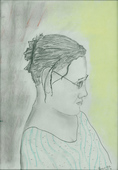 Diahann Joseph - pastel drawing by Howard Blake 1995
 -
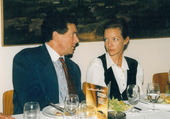 Guest of honour at lunch in Salzburg with Dietlinde Maazel
 -
 charter for peace
 -
 Eva a ballet about woman Goteborgs Operan
 -
 Sadlers Wells Poster
 -
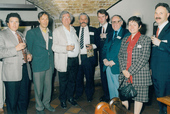 Malcolm Smith retires from Boosey's, Oleg Prokofiev, Ted from Hyperion
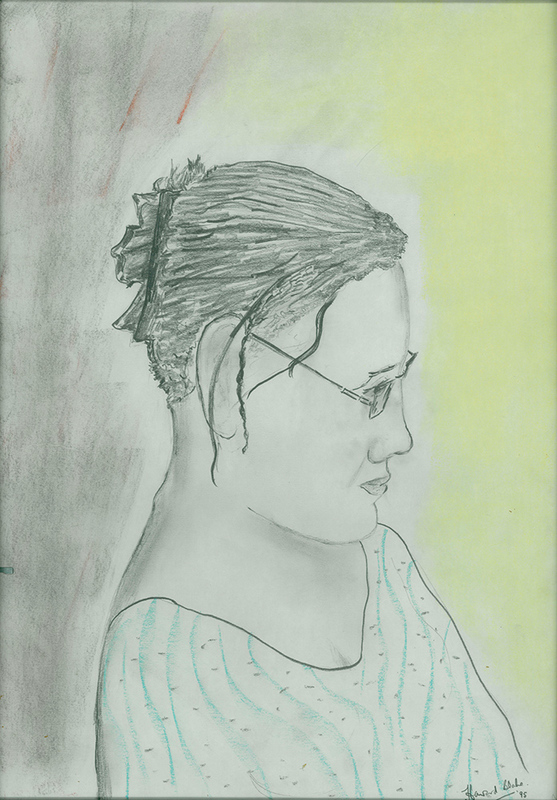
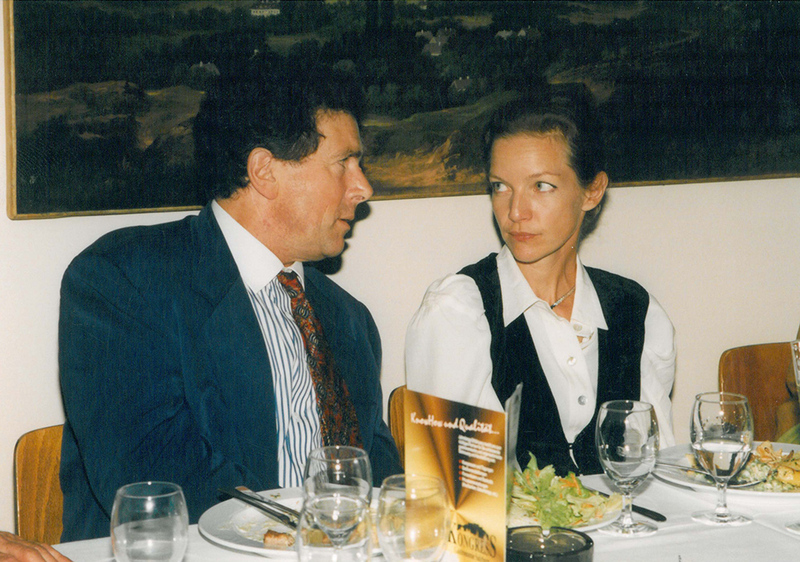
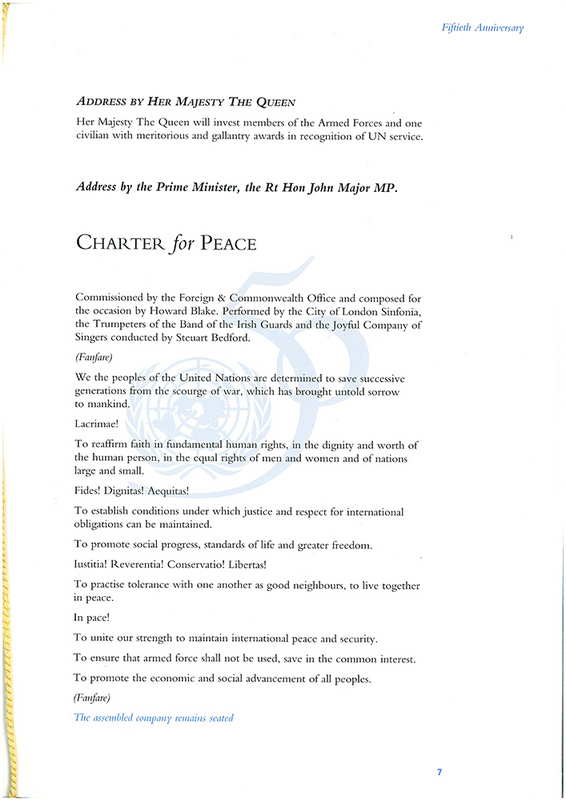

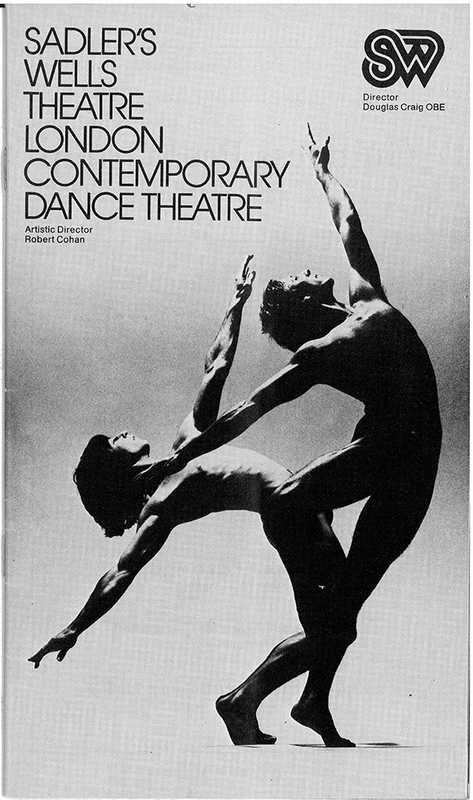
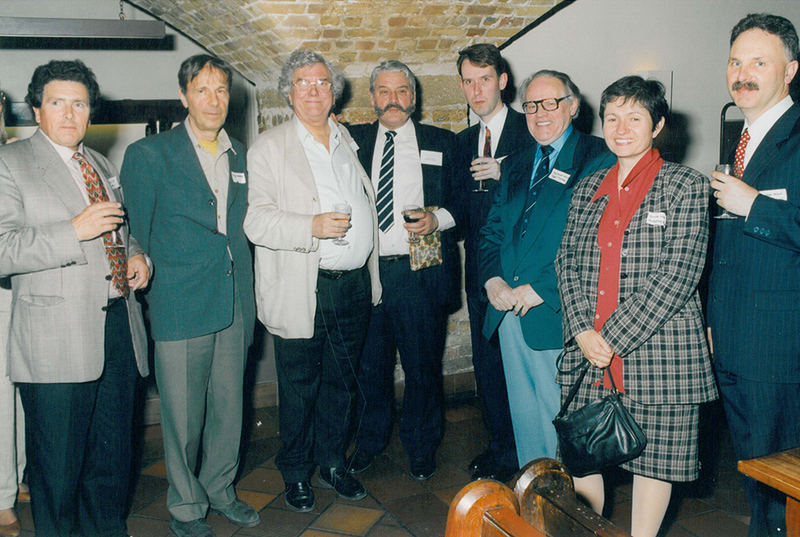
EVA - A BALLET ABOUT WOMAN, film: 'MIDSUMMER NIGHT'S DREAM' (1996)
'LIFECYCLE' BOOK TWO, FLUTE CONCERTO, 'LET MUSIC LIVE!'
SHAKESPEARE'S 'MIDSUMMER NIGHT'S DREAM'
In November 1995 I was appointed music director for a film of A Midsummer Night's Dream being made by the Royal Shakespeare Company film for Channel 4 and directed by Adrian Noble with whom I'd so so much enjoyed working in the eighties. It featured Alex Jennings and Lindsey Duncan and on returning from Gothenburg I started work on the orchestral score. The decor was a highly original design, where the forest consisted of electric light bulbs, and the rumbustious Bottom (played with brilliantly humourous vulgarity by Desmond Barrit) rode in on a vintage motor-bike. I characterised this with a raucous trombone solo. The costumes were slightly twenties or thirties and somehow this surreal mixture worked well for me, since I was able to use the music to provide the atmosphere and sounds of a forest and to invest the overall production with the feelings and emotions of the characters. I conducted a scaled-down Philharmonia Orchestra and Mike Ross-Trevor recorded it at Whitfield Street Studios between May 31-June 2nd. For 'Ye spotted snakes'and (Philomel's Lullaby) I used a trio of three superb female voices: Mary Hegarty and Yvonne Howard (sopranos) and Susan Bickley (contralto).
'EVA' - A 3-ACT BALLET FOR THE NEW GOTHENBURG OPERA HOUSE
Robert and I had done well with The Snowman ballet which had transferred from the Stora Theatre to the new Gothenburg Opera House and run there each Christmas for 3 years. They now proposed to commission a 3-act ballet. Robert and I saw the chance at last to create our 'Doktor Faustus', based on the great Thomas Mann novel. We set to work and I made frequent visits to discuss it. Robert and Sheri's flat started to fill with books related to Mann, Faust, magic, Hitler, Germany and all sorts of related topics. But whilst this seemed very exciting to Robert and I, it by no means enchanted Sheri in the same way. I arrived one evening to meet Robert at the Bommen bar opposite the opera house. Robert was in a sad state:
'Sheri would prefer us to abandon 'Doktor Faustus'. She thinks it's spooky and that the ballet should be about a woman rather than a man. I was somewhat devastated by this, having saved up the project in my mind for something like 25 years and finally been presented with a perfect opportunity to do it. We talked at length but Robert was decided. I suppose that really his private-life was affected, so strongly do emotions and careers and allegiances entwine in the ballet and theatre worlds.
We completely changed track and Robert came up with a ballet called 'Eva', described in the eventual programme-note as:
'A ballet about woman. The myth, instinct and tradition she is carrying, her earthbound journey during life and the inheritance she passes on.'
The first act was to be called 'Birthrite' and gave impressions of woman from the age of the hunter through the ages of myth and paganism, emerging at last towards the present. It needed new music and I composed an act called 'Foedelserit' ('Birthrite'), for large orchestra including six percussion, with log and skin drums, bull-roarer, bean shaker and jawbone - some very exciting sounds. The second act was called Livets smarta (Life and its troubles) and Robert decided he would like to use existing works of mine - the first movement of the violin concerto; the Adagio from 'A month in the country'; a section of the piano quartet orchestrated; and a section of 'Toccata'. The third act would use the slow movement of my violin concerto and Part Three of 'Benedictus' with full SATB chorus added to the orchestra.
On Friday March 8th I conducted a wonderful premiere with the orchestra responding to me magnificently and on returning to the podium after the second interval I received a standing ovation - a fairly unusual event which thrilled me. The principal Gothenburg newspaper wrote next day: 'Howard Blake has created hauntingly original music. His style is tonally rich, dramatic, rhythmically focussed. The orchestra sounds marvellous under his baton.' Martin Kingsbury had invited himself over for the weekend and came to my dressing-room at the end of the first act, seemingly delighted. Maggie Rodford my current London agent and her husband were there, as was Sean, and Manuela had come from Austria, the film director Graham Baker and his wife Annabelle had come from Suffolk, two old friends David and Esther had arrived unexpectedly from Peckham, South London, and my Swedish girl-friend Diahann Joseph and her mother, Marie-Louise, had arrived from Uppsala. There was a great reception backstage afterwards and on the Saturday night Robert and Sheri joined with all of us for a dinner party in a splendid harbour-side restaurant. Rather belated snow began to fall.
The dinner was splendidly enjoyable and, mimicking the Swedish way, each of us tapped on a glass, then stood and made a speech. We heard splendid jokes and splendid stories and everybody joined in - except Martin Kingsbury, who remained aloof and apparently unamused. Late on in the evening we left the restaurant, Diahann, Robert, Sheri and I in one car and Martin with all the others in a big people-carrier. According to Maggie they had only driven for about half a minute when Martin screamed:
'Let me out! Let me out!'
The people-carrier was now in the middle of a deserted dockland area and thick snow was falling. Maggie remonstrated, saying how dangerous this was but Martin was hysterical:
'Let me out now! Right now!'
He had had enough for some reason. Diahann's mother described his behaviour as 'socially handicapped'. Others described it as 'manic'.
On the following Tuesday I mounted the podium at the Opera House for the second performance of 'Eva'. I began to conduct exactly as I had on the first night - but something had gone drastically wrong. The rave review for my music and conducting had clearly not pleased everybody for now the orchestra would not follow me. The first act is totally based on rhythms and percussion and it is vital both for dancers and for the music that the tempi are absolutely correct. But they were not. I tried every trick I knew to get the orchestra, and in particular the percussion, to follow me. They simply refused!
At the end of the act I went backstsge to see the embarassed lead percussionist who was trying to sneak away.
'Why aren't you following my beat?!'
He looked terrified.
'He told me not to follow you! He told me!'
'Who told you?'
'I can't tell you!'
'What do you mean you can't tell me?'
I tried to grab hold of him to stop him running away, but he was plainly scared out of his wits. I had to leave it and I had to conduct the rest of the evening. Due to somebody's very deliberate interference the ballet was a virtual flop. Due for eighteen performances it was fairly soon taken off. Another disaster presided over by Faber Music - plots and subterfuges.
I didn't blame this plot on the opera house and I believe I was right not to, since shortly afterwards they asked if I would like to compose a full-length opera for them. During the run-up to the premiere people had all been very friendly and on one occasion the editor of the local Gothenburg newspaper had taken Diahann and I for a car-ride out into the beautiful surrounding countryside. We talked about how reasonable property was and how easy it was to fly to and fro to London.
DIAHANN AND LIFECYCLE BOOK 2
At the end of June I still hadn't started on the second book of piano pieces, but had agreed to play the first performance in Austria on August 6th! This gave me under six weeks. I didn't really want to do it and to be honest was looking for a way out. It was Diahann who persuaded me, saying,'You must not let Ilona down'. I had keys to our nearby Christ Church Kensington where the friendly organist had encouraged me to keep up with my organ playing. It was a fine instrument to play and I had entertained Diahann there once or twice with some Bach or Cesar Franck. It also harboured my friendly old Baldwin grand and Diahann suggested I could try the new pieces out there, where she could come and listen. I realised gradually that she had become the second important Muse in my life. She wouldn't marry me but she would be my constant companion for many years and give birth to my second son, Robert William Blake.
How would I set about Part Two of 'Lifecycle'? Due to lack of time I decided the best solution was to use certain existing pieces that I could adapt and transpose in accordance with my complicated key-structure. I tried out a number of possibilities with Diahann and came up with: Prelude in F minor 1978 ; 'The Music Box Lullaby' from the film 'The Changeling' in F major 1979; the 'Romanza' in B flat minor composed for the Ashkenazys arrival in London in 1963. Some piano arrangements of orchestral pieces - 'The Dance of the Hunters' from 'Eva' in B flat major 1996; 'The Dance of the Sun and the Moon' in E flat minor 1996; the song 'Isabelle' composed for Isabelle Deschamp's wedding (E flat major)in 1989; 'Serioso , come una marcia lento' from the Serenade for Wind Octet in A flat minor 1990; 'Jump' from Dances for two pianos in A flat major 1976; 'Walking in the Air' from 'The Snowman' in C sharp minor 1970; 'Night and Day' from the children's song-cycle 'The Land of Counterpane' 1993; 'Oberon' from the film I'd just completed for Adrian Noble and the RSC (Midsummer Night's Dream')1995 and finally 'Make-believe' from the Channel 4 animated film, 'Granpa' 1989. Thus came into being the second book of piano pieces, making a set of 24 in every major and minor key, a work that, once completed, I christened Lifecycle, since it had taken the best part of my creative life to write it! My earliest piano piece was from 1956 or even earlier, the last one from 1996.
The key structure is as follows: 1. B minor. B major. fall a fifth to
2. E minor. E major. fall a fifth to
3. A minor. A major. fall a fifth to
4. D minor. D major. fall a fifth to
5. G minor. G major. fall a fifth to
6. C minor. C major. fall a fifth to
7. F minor. F major. fall a fifth to
8. B flat minor. B flat major. fall a fifth to
9. E flat minor. E flat major. fall a fifth to
10.A flat minor. A flat major. fall a fifth to
11.D flat minor. D flat major. fall a fifth to
12.F sharp minor.F sharp major.
From F sharp major one could fall a fifth to C flat minor, which does not exist as a key, or rather is not used as such, since when the well-tempered scale system was adopted at the time of J.S.Bach it automatically became enharmonically B minor. Thus one can begin the whole cycle again by falling a fifth into B minor as written.
If one were to play this cycle on a keyboard not obeying the well-tempered system the entire work would ultimately cover every minute gradation of pitch over a monumental number of pitch variants, eventually coming to rest an octave lower - or continue forever into infinity.
Another characteristic of this cycle and its key relationships based on the falling fifth means that one can start to play the whole cycle from the start of any one of the pieces either major or minor and one will eventually return to base. If one starts on a major key Lifecycle will tend to sound predominantly major If one starts on a minor key Lifecycle will tend to sound predominantly minor. I told Martin Kingsbury of the forthcoming first performance of this in Schloss Rosenegg but he seemed uninterested. I was becoming sick to death of Faber who seemed to be doing everything in their power to destroy me. I was sick to death of being in London because they were in London. They not only did not promote my work, they used every possible method of bringing it down, with slander and innuendo, the creation of abusive claques at concerts and events, and now finally deliberate sabotage of an opera house performance, right at the highest level of the profession. Why was this ? It was very hard to understand, although much later when I read Frances Stonor Sanders book 'Who pays the piper' the light slowly began to dawn. For me it was unthinkable to leave Faber because I had a publishing contract with them and they ran and had control of my catalogue. But they had never got me commissions in an opera house such as this in England and Sweden suddenly seemed to be very interested.
THE MOVE TO STOCKABACK SCHOOL HOUSE
It was difficult to leave London completely however, since I had so many musical and business contacts there.The London studio was too small for more than one person and I was loth to give up the quietness and concentration I achieved there by being alone. Diahann and I decided to search for a big house in Sweden. We could live together there and I could fly to London for business when necessary. Our friendly newspaper editor introduced us to an excellent estate agent and we explained what we were looking for.
He came up with several 'finds', two of them fairly moderate in size and one very large: a school-house of 450 square metres, with a huge beech tree dominating a big garden, not far from the airport but very quiet with beautiful views and a nearby lake. It had an enormous school-room which would easily take two or more grand pianos, another room that would make a superb library and about 6-7 bedrooms. It was somewhat neglected but therefore cheap and well worth spending time and money on to decorate. Both of us fell in love with it at first sight and on September 27th we moved in; The School House, Ravlanda. We had driven from England with the bare necessities and at the last moment had decided that futons were too big to go in the car. We spent a couple of pretty uncomfortable nights until a vanload of splendid Ikea furniture solved our problems and the move to Sweden and the old school house started a whole new lease of life and of creative energy.
THE FLUTE CONCERTO
Gabrielle Byam-Grounds was flautist and director of an ensemble called The English Serenata and right at this moment she asked if I would be interested to write her a work for her to play with string quartet. I agreed and she secured a commission from Wolverhampton University. Even before my piano arrived at the house I started to write. The first movement was quite simply a long-drawn-out melody which the flute 'sings' and then elaborates expressively. Like many of my works this theme had been in my head a very long time and I simply wrote it down. The second movement was a scherzo and the 'trio' just 'floated' like snow falling, for this is indeed what happened as I looked out of my windows to distant hills. Sweden and its silence and landscape affected my writing from the very first moment.
A MOTET FOR ST. MARGARET'S, WESTMINSTER
Immediately following this I wrote an unaccompanied Motet for St. Margaret's Westminster with the title God be merciful unto us and bless us
SIR SIMON RATTLE
I was in Birmingham on 28th November for an even more monumental version of Let music live! when Sir Simon Rattle conducted it in The Symphony Hall with no less than 2,500 performers.
THE DANGERS OF PUBLIC PIANO-PLAYING!
The opera house orchestra were meanwhile offerring to do a concert of my orchestral music, but in the event they weren't prepared and they offerred me instead a piano recital of my new work 'Lifecycle, 24 pieces for Piano'. Both Ilona had insisted I finish it that summer and I had duly given a first performance in the castle as planned - quite a small and intimate event which I was keen to try out again in a bigger space. I was offerred the new recital room of the Opera and a brand new Steinway, which seemed splendid. I had some qualms about doing it since I had only about two weeks to practise and I intended doing it from memory. I was fine through the first 22 pieces and forgot any qualms. But no. 23 'Oberon' is technically difficult and about half way through something in my back clicked. I wouldn't stop but continued to the end in extreme discomfort and next morning I woke unable to move as much as a millimetre. I had dislocated a vertebra, I had a frozen shoulder and I had a tennis elbow. I had no idea that playing the piano could cause such extreme pain! Fortunately the pain subsided after a while and I was back to normal.
Robert Matthew Walker was later to describe the work as follows:
Lifecycle is a brilliantly conceived piano cycle of imagination and reflection, combining teaching pieces (the Chaconne and Toccatina were placed in the Associated Board Diploma syllabus) with recital- works ranging from the uncompromising technical demands of 'Scherzo' and 'Oberon', to the outstandingly sublime yet musically powerful Prelude and Nocturne.
'Lifecycle' covers the composer's creative life with an extraordinary number of musical connections running through the set, namely the melodic importance of the interval of a third - most often major and rising, the second being the harmony of a bare fifth, again often rising, but equally heard as a chord.
Blake conceived the idea for 'Lifecycle', a sequence of 24 pieces for the piano, after a conversation with world-renowned pianist Vladimir Ashkenazy in 1962 and dedicates the cycle to this wonderful musician. Although 24 works in the set, it is not a set of Preludes as written by Chopin, Scriabin and Rachmaninov, but there does appear within the cycle one piece in each of the 12 major and 12 minor chromatic keys.
-
 Diahann and Howard in the Kensington studio
 -
 Music room of The Schoolhouse Stockaback
 -
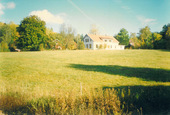 View of The schoolhouse Stockaback
 -
 A Midsummer Nights Dream CD cover 1996
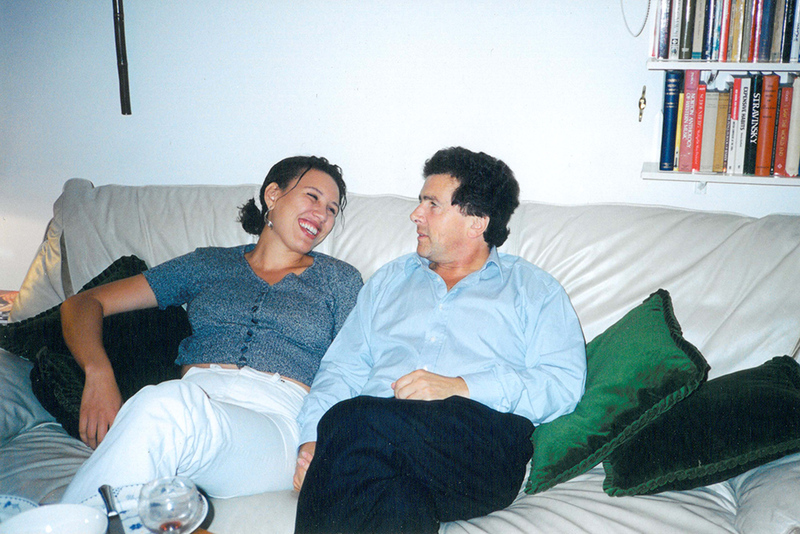
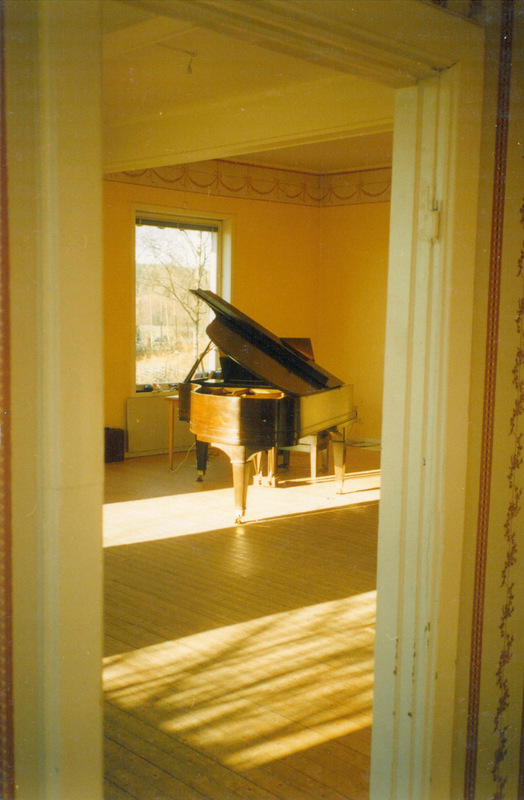
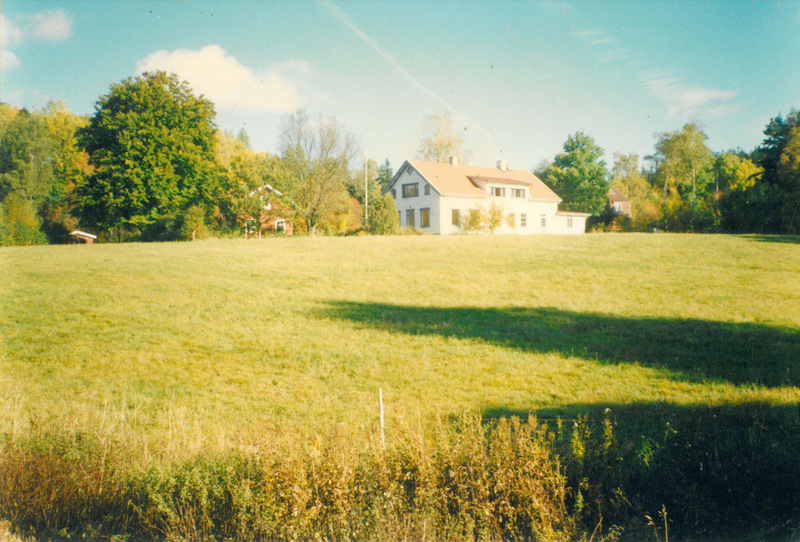
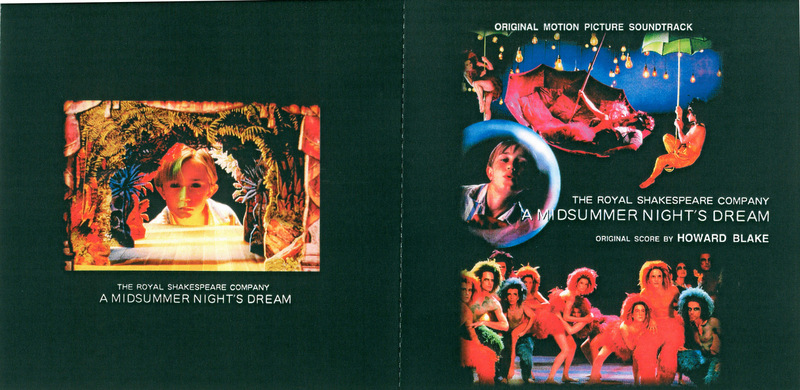
THE BEAR - 'SOMEWHERE A STAR SHINES FOR EVERYONE' - CHARLOTTE CHURCH (1997)
'STILL FALLS THE RAIN' FOR SOLO TREBLE CHORUS AND ORGAN
OSTEOPATHY TRIUMPHS
1997 started very painfully since I could hardly move. I tried various osteopathic practitioners without success until I was recommended to a blind doctor at the Hale Clinic in London. He rummaged amongst my bones for some considerable time then told me to stand.
'Stretch with all your might. Stretch up and right back and down. Stretch..come on with all your might!...'
Suddenly a great scrunch and I was back to normal. My piano-playing days were not over after all!
'STILL FALLS THE RAIN'
A miracle. And a new commission from Chester Bach Singers to celebrate it. I chose a text of Edith Sitwell ,perhaps her most famous poem: 'Still falls the rain' for solo treble, chorus and organ to be sung in Chester Cathedral. Her son came to see me, an advertising man from Notting Hill. He wondered if 'Facade' could be re-written and modernised. I explained that I thought Wlliam Walton's score was a masterpiece and in my opinion it should be left well alone.
'THE BEAR'
Next what someone described as a 'bear-shaped sequel to 'The Snowman' presented itself. John Coates had contacted me after more then ten years. Perhaps he wanted me to forgive him for the shenanigans on 'Granpa'. Raymond Briggs had drawn a new book and Channel 4 were eager to have a new animated film. They insisted I did the score. Would I do it? I looked at the book which was smothered in dialogue, which is not Raymond's forte. The drawings of course were divine and the story of a little girl keeping a polar bear in her bedroom was cute and cranky. I said I'd compose the score providing there were no words in the film, like 'The Snowman'. Everybody agreed and I started work on 'The Bear' spotting it on March 11-15. What I didn't know at that point was that Harvey Weinstein (which also meant Miramax and Disney) were involved and that became the seismic fault in the pyramid. The first piano score was complete by April 17th and a revised version by May 15th. As with Granpa I took a hand in the script and story. I felt strongly that the episode of the little girl skating down a frozen Thames with The Bear and The Star-Bear accompanying her was by far the most magical sequence. It had been dropped for some ludicrous 'health and safety' reason. It was put back at my request and I now felt it would be a great place for a song. However as before John did his best to temper its success - he did NOT want another 'Walking in the Air'. This may seem strange to understand but in his view the film was the thing to watch and the music must not 'steal his thunder'- even though Channel 4 clearly wanted such a thing to happen. I also suggested the scene of a merchant ship cutting its way through the ice and The Bear rescuing Tilly. I had a musical skating theme but didn't think about lyrics or a singer until the animation was assembled and I'd completed the orchestration.
A SONG FOR 'THE BEAR'
When we got to the point John seemed to have a change of heart. A song might be a good idea after all. He suggested a lyric that said something like 'maybe everybody has a star that shines only for them'. Not the first time it's been thought of but it would suit the film perhaps. I wrote the song and the lyric 'Somewhere a star shines for everyone' and thought about who could sing it for the recording, set for 30th March at Whitfield Street. It was to be sung first as Tilly skates down the frozen Thames accompanied by the Star-Bear from the skies and the Polar-Bear from the North Pole, which was a delightful idea for a setting.
We needed a girl singer to record it and I rang Roxy Bellamy at Sony Classical. She said: 'We've just signed a 12-year old girl called Charlotte Church. We'll send a demo over.' Charlotte recorded it beautifully, at the same time becoming the star of a one-hour documentary on the making of the film made by 'Screen First' and called 'The Bear's Tale', produced and directed by Paul Madden, the commissioning editor for Channel 4, as he had also been on 'The Snowman' and 'Granpa'.
Unfortunately, when it came to dub the song onto the lovely skating scene, John suddenly insisted there should be no words and the film was released at Christmas with la la la, la la la, la la laaa.. Worse was to come because when a marketing executive of Sony enthusiastically rushed round to see us with a similar record deal as the Snowman had enjoyed, the producers, John Coates and Paul Madden refused point-blank. For this reason there has never been an album of 'The Bear' - or a success. I should have known better than to work with John again.
THE SNOWMAN STAGE SHOW OF 1997
Whilst I was working on this John Stalker rang from Birmingham Rep to say that they wanted to put on The Snowman Stage Show again for a Christmas season. I was delighted but I had a major proviso: I wanted Robert North to bring his own brilliant choreography to the show and cooperate with myself and director Bill Alexander. It was amicably agreed and when rehearsal started in the Autumn the three of us worked wonderfully and delightedly together. New scenes and music revisions appeared and the show moved forward into its second incarnation opening at The Rep to huge acclaim. Neil Mundy of Reiner Moritz came to see the opening night and agreed to film the production for BBC television, whilst London theatre producers started to offer venues.
-
 An animated Howard composing 'The Bear'
 -
 Edith Sitwell
 -
 Raymond Briggs
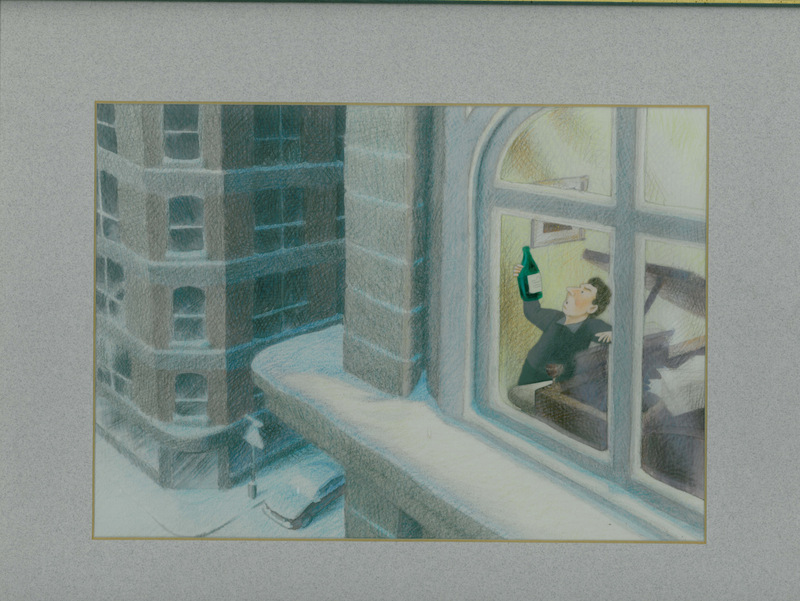
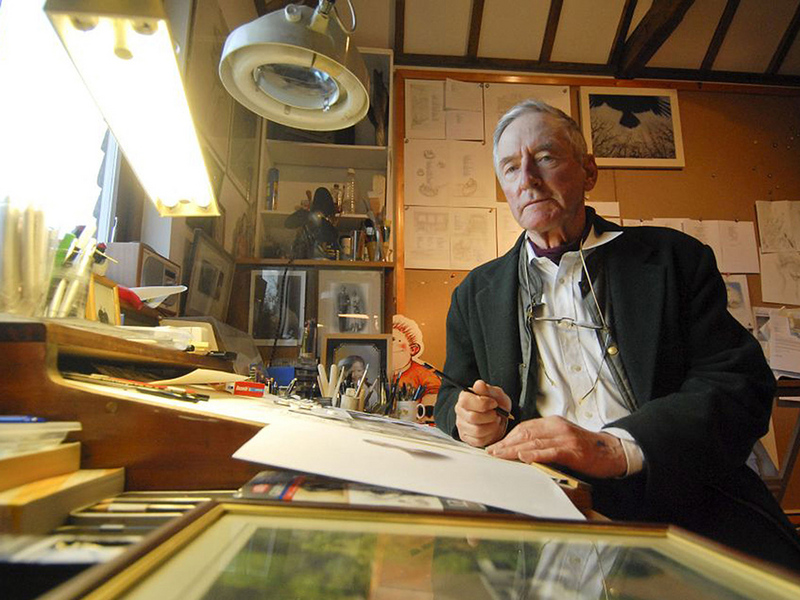
'IF' - RUDYARD KIPLING'S POEM WITH MASS CHOIR,ORCHESTRA,BAND OF THE GHURKAS (1998)
SLEEPWALKING - VOCALISE FOR SOPRANO AND EIGHT CELLOS
SLEEPWALKING - a vocalise for soprano and eight cellos
While waiting for the recording I turned to another commission. Richard Phillips at the Warwick and Leamington Festival asked me if I would like to compose a work for soprano and 8 cellos, the combination used very memorably by Villa-Lobos in his Bachianas Brazileiras no.5. I began to think and dream about the sound of cellos, which itself seemed to conjure up the world of dreams, effortlessly evoking the surreal landscape of the unconscious:
(A woman walks, singing wordlessly with closed eyes, like a painting by Fuseli or Delvaux. As the music begins she lies in a deep untroubled sleep (Tranquillo). Images of childhood (Allegretto) give way to memories of a great occasion -perhaps a marriage (Maestoso). A crazily-animated helter-skelter of notes suggests laughter and gaiety, yet with fears and dangers (Vivace). There is a memory of tragic , yearning love (Adagio) but the memory is broken by nightmare images of vengeance and death (Allegro Furioso). There is a waking moment, then return and sleep (Tranquillo).
I finished it by 15th March and named it:'Sleepwalking. It was performed in St. Mary's Warwick, beautifully sung by Mary Nelson and finely played by Red Barn Cellos who were the augmented Coull String Quartet.
CHARLOTTE CHURCH
At the end of March we were all set to record 'The Bear' but needed a good young girl singer. I rang Roxy Bellamy who was now head of the classical department at Sony:
'Chris Black has just taken on a 12-year-old girl. Why don't you speak to him?'
He was more than anxious to speak to me:
'Where are you?'
'We're sitting outside a restaurant just off Tottenham Court Road.'
He must have run all the way since he appeared breathless and red in the face after not more than 10 minutes.
'You must have a look at this video!'
'Yes all right, we will in a minute. What's the girl's name?'
'Charlotte Church'
So Charlotte was discovered and sang the song while at the same time Channel 4 filmed a documentary of our recording it at Whitfield Street. She was very assured and charming and I was delighted with her performance. John Coates intervened only once:
'Could we do a version of the song without the words?'
'Why?'
I realised later it was because John had no intention of having words on the skating scene. I suppose he thought that as with 'Walking in the Air' it might 'steal his thunder'. On the finished film the skating scene has no words.
There was also a confusion about the vocal lines sung by the two bears. A year or so earlier I had met with Peter Gelb, head of Sony in New York, (later the director of The Met), and he'd asked if I had anything for two tenors, since he represented both Placido Domingo and Jose Carreras. When The Bear came about I had thought it could be an ideal vehicle for them, but for the first demo in 1997 I had used a tenor (Philip Sheffield) and a bass (Peter Knapp). Director of the film Hilary Audus and the producers were undecided about which was best but for the final recording we had decided to use two tenors (Rufus Muller and Martyn Hill) keeping Peter Knapp the bass in the wings in case we changed our collective mind. We heard the two tenors on the day of the recording and I was interrupted in mid-record (and in mid-filming of the documentary) by Hilary who said;
'No I prefer the tenor and the bass.'
Accordingly the tenor and the bass on the film were sung by Martyn Hill and Peter Knapp, but once again John Coates insisted on a 'song without words' for the final print. This for me ruined the film, since the words of the songs carried the story and now it didn't altogether make sense. Later John allowed Harvey Weinstein to add a wall-to-wall narration by Judy Dench 'for the US market' which made it considerably worse. So another 'Snowman' was just not going to happen. Mistakes which ensured rapid oblivion for the film and plunged the entire creative team into depression.
FILMING 'THE SNOWMAN STAGE SHOW'
We started recording the sound track for the Reiner Moritz film of The Stage Show of the Snowman in BBC's Pebble Mill Studios in early August 98. I was conducting the 12-piece ensemble, The English Serenata, and we had had the score and parts carefully checked and updated by Nic Raine. David Hill, then music director at Winchester Cathedral had selected an excellent boy soprano called Toby Gunn and they had come up specially for the recording of 'Walking in the Air'.
The recording was achieved and the filming was able to start on time while Birmingham Rep was black. We had selected a very experienced Danish ballet film director in Thomas Grimm and all went swimmingly well.
THE BIRTH OF ROBERT WILLIAM BLAKE AND FABER MUSIC BEGIN THEIR ATTACK
Meanwhile a time-bomb had been set for me. Escaping to Sweden had served no purpose at all as far as Faber were concerned. They wanted to acquire 'The Snowman' rights at any cost. They administered it for me but were not really interested in the rest of the catalogue. They proclaimed themselves the leading 'cutting-edge' publishers of 'contemporary' music and although the whole world proclaimed 'The Snowman' as a 'masterpiece', they did not take its composer seriously, even if he had written a major oratorio championed by Sir David Willcocks or a clarinet concerto commissioned by Thea King. What they did need was the income from 'The Snowman' because their own line of serious music no doubt made little money in comparison. When Robin Boyle and Thomas Pasteur had taken over Faber Music they had at first tried to achieve their objectives legally, but having failed to do so had now resorted to trying 'to achieve by stealth that which they could not achieve by legal means' - as my QC was to express it at the conclusion of the forthcoming litigation.
A fax appeared on my desk about a deal with a company called G&J, one of the theatre production companies who had been trying to secure the rights of The Snowman Stage Show. We had also been approached by other very reputable companies: Peter Hall for one, and Apollo Leisure for another. In comparison I was extremely dubious about 'G&J'.
I rang Martin Kingsbury and asked what it was about. He replied:
'It's none of your business.'
'Well you administer my catalogue with my approval, so it definitely is my business.'
'If you read the last renewal of your contract with us you will find that you have no rights at all.'
So that was it.
I was so shocked that a company like Faber would do this that I was unsure how to react. To create the minimum disturbance I went to see Richard Dyson, my local family lawyer in Brighton, a firm we'd dealt with for many years. I showed him the letter and explained the situation:
'What should I do?'
'We'll write a letter explaining that you don't approve of the deal and that you believe you have the right to veto it'
'Should I make it a 'without prejudice' letter?'
'No that's not necessary'
He was wrong, it was necessary. Faber immediately said that they were considering suing me for 'breach of contact.' I hadn't done anything however, merely expressed the opinion that G&J was not a good idea. What on earth were they up to?
The 10-day rehearsals and shoot of the Stage Show went well enough up in Birmingham but in the last days this legal dagger hanging over me caused me to be taken ill with acute bronchitis.
Diahann was about to give birth and I raced back to Sweden for the birth of my son on 24th September. Diahann went into labour in late evening and I drove her to the modern, efficient and wonderfully friendly Swedish hospital in Boras not too far away from our house in Stockaback. She wanted me to be with her all the time and I stood and held her hand for pretty well the whole night of the great event,which was long and difficult but finally succesful. Robert was delivered early in the morning and unlike English practice the midwife handed him to me whilst he was still connected by the umbilical cord. I held him and he gazed at me with the most brilliantly bright eyes I have ever seen. For all three of us it was a moment of true wonderment at the miracle of life. A bond created for eternity.
I returned to the school-house exhausted and crashed into bed. Two minutes later Martin Kingsbury, who had known that the birth was due, rang to say that litigation had been taken out against me by a London city firm of corporate lawyers - Biddle and Co.
I flew to London to see Andy Stinson, who was the leading lawyer for Harbottle and Lewis who had represented me legally in my profession as composer for some 15 years. He met with the directors of Faber three times over the following weeks, each time giving them the message that I had no wish whatsoever to break the contract. Three times they said they would not discuss it, one of the directors adding:
'I don't believe that Mr.Blake has either the resources or the stamina to take on an important firm like ours.'
Finally there was nothing left but to counter-sue, which Lawrence and Harbottle duly did for me, and a horrifying course of litigation against me by my own publisher ensued, putting an end to my idyllic life in Sweden, putting my relationship with Diahann under huge pressure and surrounding the early years of my dear little son Robert with tension.
Faber Music clearly believed in 'timing' and they waited until 28th October, the morning of my 60th birthday, to deliver the high-court writ of breach in respect of 64 of my musical works to me in London. It took a while for me to grasp what an unpleasant business such litigation is and how much time and angst it would force upon me. I believed at first that Andy would be able to deal with it easily.
'THE SNOWMAN STAGE SHOW' OPENS AT LONDON'S PEACOCK THEATRE
In December The Snowman Stage Show opened in London at The Peacock Theatre for a scheduled 55 performances. I wasn't too keen on the theatre at first. It was little known because it belonged to the London School of Economics who leased it out for certain times to Sadler's Wells Dance Theatre but also kept it shut some of the time for lectures to their students. Sadler's Wells called it their 'theatre in the West End' and what was good about it was that ours was a big show and needed a largish stage and a biggish audience capacity. The Peacock, known for its ballet and dance programmes had plenty of front-of-house space for a young audience and in some ways seemed ideal. Trucks brought the show down to the Peacock from Birmingham but unfortunately arrived nearly a day late, while adjacent university-folk did not seem too happy about the invasion of their space.
The first night opened badly. A full house waited nearly two hours. In desperation I went up onto the stage and said: 'Good evening!'
'What's good about it?' someone shouted, but at that precise moment by some sort of miracle the curtain went up - as it has gone up every season for 22 years thereafter (writing in 2020), becoming the longest-running Christmas show ever to be put on in London.
-
 Placido Domingo - Christmas in Vienna
 -
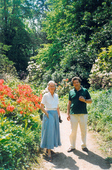 Minterne gardens with The Lady Dione Digby
 -
 Snowman and The Bear in Hong Kong
 -
 The Bear at the National Concert Hall Dublin
 -
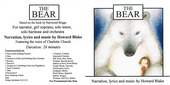 The Bear CD
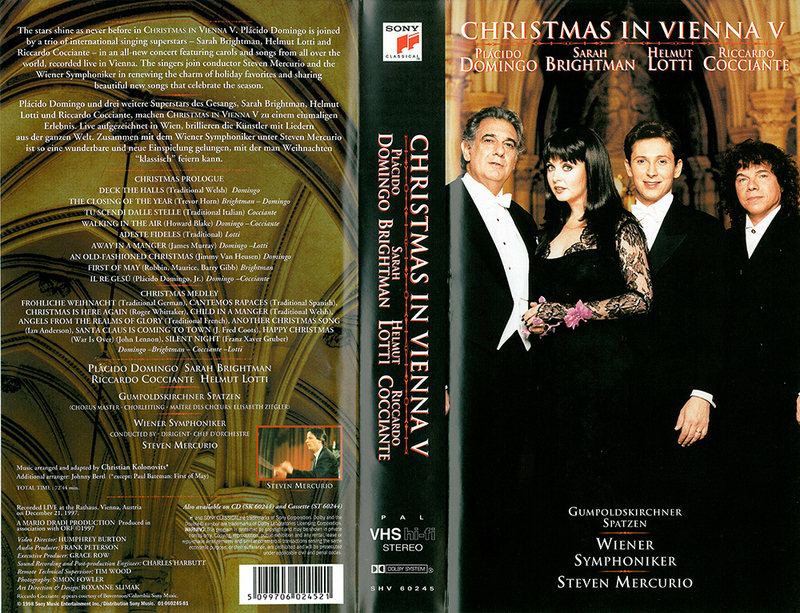
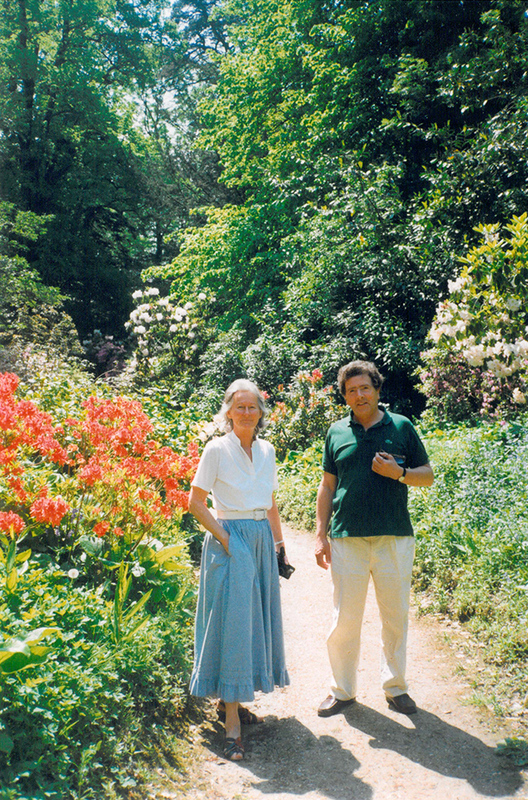
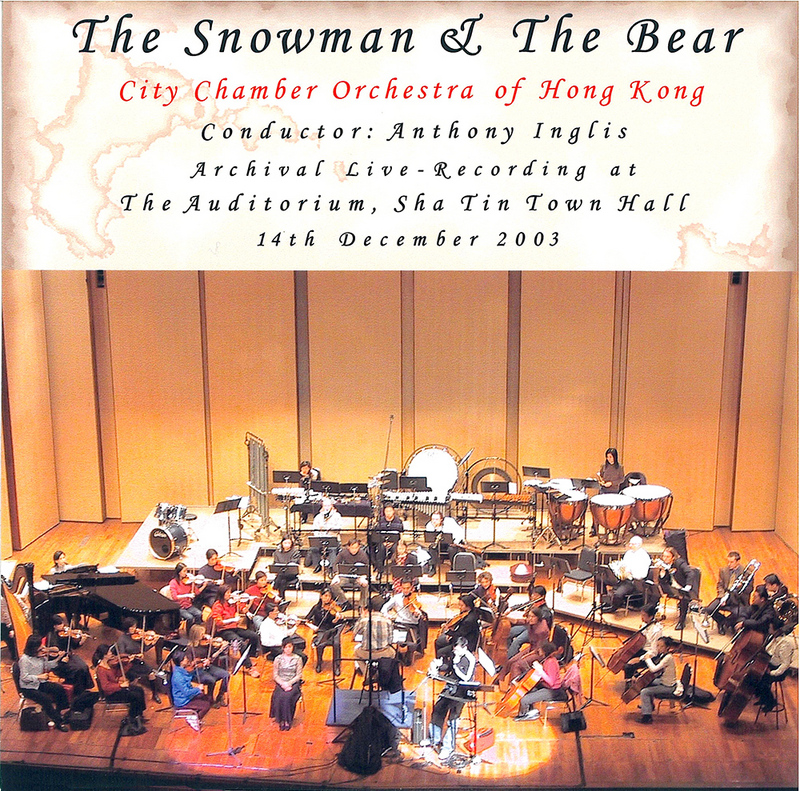
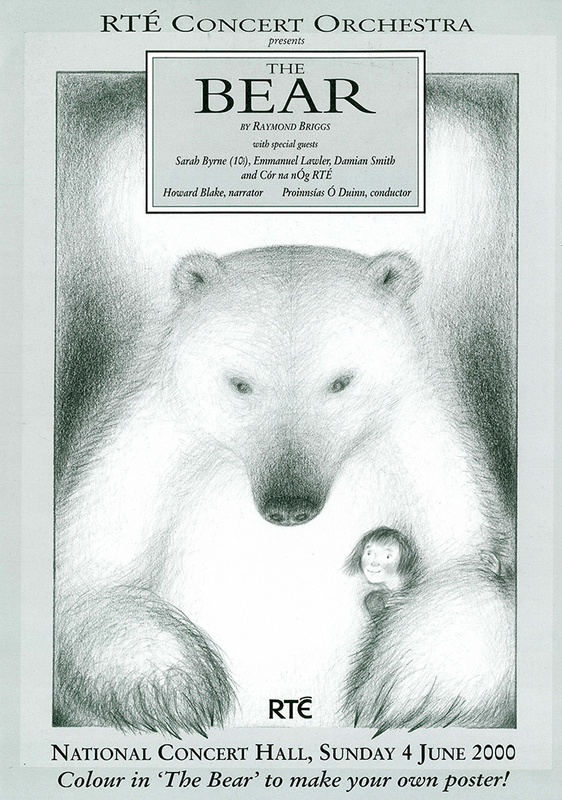
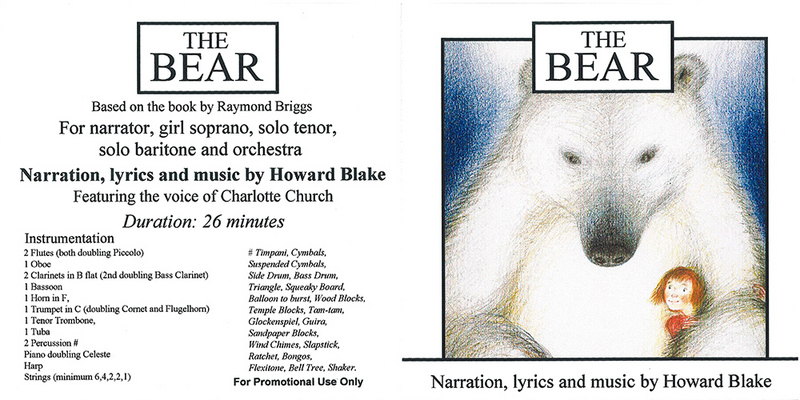
'MY LIFE SO FAR' - (1999)
string quartets: DISGRACED, FORGIVEN
When David Puttnam had rung me in early November 1998 asking if I could help him out with a film score, I accepted cheerily. David had produced a film called 'My Life so Far', a gentle 'coming of age' story built on the bucolic Scottish childhood of Granada TV-founder Dennis Foreman. The director had been Hugh Hudson and it had featured an all-star cast, including Colin Firth, Malcolm MacDowell, Rosemary Harris and others. Dennis the boy had had a very strict Presbyterian father (Colin Firth) who was passionately addicted to the music of Beethoven, but he also had a slightly louche Paris-based uncle (played by Malcolm MacDowell) who was addicted to Louis Armstrong and jazz. These two influences were fighting for supremacy in the young boy's sensibility. Miramax in the person of Harvey Weinstein had now become involved with David Puttnam, taking the view that there was a considerable problem with the music score and wishing to change it, without being at all sure how. I went to a cutting-room conveniently close to the House of Lords (David was now a Lord)and watched the whole existing film with him:
'What do you think, Howard?'
'Well what you've done is take the father's Beethoven obsession and create a total Beethoven background score, correct?'
'Yes, correct. We spared no expense, getting Sir Simon Rattle to record the 5th Symphony and the Choral Fantasia and Imogen Cooper to record the Appassionata and For Elise. We also had a real classical composer called Colin Matthews who wrote additional score and was recommended by none other than Faber Music. I thought it would be a wonderful thing to have great classical music on a cinema feature film.'
'It's a noble idea David but I think the problem is that what motivates the film story is the conflict between classical and jazz cultures, European and American, 19th century and 20th century, and the Beethoven can't possibly reflect this on its own. There's one scene where the famous first movement of the 5th counterpoints the father's tyrranical insistence on his son's diving into a freezing-cold lake, where it works perfectly and ironically. I'd keep that track and throw nearly all the rest out.'
'But Howard these Beethoven recordings have cost a fortune!'
'Well you're asking my opinion and I think you've been wrongly advised. You obviously have a problem with the film otherwise it would have been released two or three years ago'.
'Well you're right, we have got a problem. OK I'll give you a free hand to do whatever you think will make it work. Why don't you go and talk to Hugh?'
'Where is he?'
'He's in the middle of the jungle in Africa somewhere with Kim Basinger. I'll give you his mobile number.'
I tried ringing, but without much success. Hugh was heavily into a new movie and didn't want 'My life so far' mucked about with. Harvey Weinstein was more encouraging because he'd just seen 'The Bear' and loved the score. He called me:
'It's not just good, it's great. You are my man!!'
I settled down to write the score in the school-room in Stockaback, sending each finished chunk of score back to my brilliant assistant John Wilson in London by fax. At the end John had it copied, booked me excellent classical musicians {for the father) and excellent jazz musicians (for the uncle). I also wrote two short string quartet pieces called 'Disgraced' and 'Forgiven' to accompany both the sadness and the reconciliation of the final scenes. These were beautifully recorded by the Brodsky Quartet led by Andrew Haveron and I was later requested to publish them for concert performance (see opus 727a and 727b). The score conveys the tensions of the story and much else. I conducted the recordings at Air London and later a lovely viewing of the rescored film was staged at the Odeon Chelsea one Sunday morning, introduced by David in fine form. The audience that morning just loved it, but what has happened to the film? I really don't know, although I have reports of TV showings from around the world. The problem is that if a film is made and not released till 2 or 3 years later the word goes around that it is a failure and no amount of talking it up will cause 'the business' to re-assess it.
FEROCIOUS LITIGATION
The effect of litigation by lawyers Biddle & Co. began to bite into me. I had to produce every single relevant letter written between 1983 and 1999, list and relate every single relevant phone call and meet frequently with Andy Stinson to keep Biddle, Faber Music and the wolves at bay. I had been more or less forced to move back to London and this made all of us extremely unhappy. Faber Music's timing had been impeccable: Diahann had to stay in the schoolhouse with baby Robert while I had to leave her to be in London - perhaps they thought this would soften me up. In fact it did rather the opposite since I now knew exactly where my death-dealing opposition lay. I would fight it to the death.
I thought for a terrible moment that this would bring my writing career to an end, as was the intention, but at this precise moment by some superb synchronicity I came to write a setting of Kipling's 'If' - a most apt poem to be setting in the midst of 'war'!
RUDYARD KIPLING'S 'IF'
In Kensington I met the redoubtable Joanna and David Thomas who run a most succesful chain of independent primary schools. They wanted to celebrate Thomas's 25th anniversary in style by hiring the Royal Albert Hall and putting on a concert given by all their children and asked me what I could write for the event.
I asked:
'Do you have a favourite poem or a text that illustrates the school's outlook?'
David looked at me.
'I'm an old soldier who started in British India, in Nepal, attached to the Ghurkas. Because of that I've always identified with Rudyard Kipling who came from a similar background. His poem 'If' is virtually the school-poem.'
'Well why don't I set that to music?' I said 'and have all the children sing it. How many are there?'
'About 1500 altogether. Could they all sing along with it?'
'If I write it in a suitable range and style, certainly.'
'What about having the Regimental Band of the Ghurkas playing in it as well?'
'That sounds like a terrific idea. Could you arrange such a thing?'
'We certainly can!'
My sung version of Kipling's 'If' received its first performance at the Royal Albert Hall on March 23rd 1999, with 1,500 children of Thomas's Schools, the augmented English Chamber orchestra, The Regimental Band of the Ghurkas and organ. I conducted this vast array myself, although it was quite difficult to see and keep in touch with everybody. But it was well-received and well-remembered. Fifteen years later to celebrate the Thomas's Golden Jubilee it was dusted off and performed again.
If you can keep your head when all about you Are losing theirs and blaming it on you, If you can trust yourself when all men doubt you, But make allowance for their doubting too; If you can wait and not be tired by waiting, Or being lied about, don't deal in lies, Or being hated don't give way to hating, And yet don't look too good, nor talk too wise:
If you can dream - and not make dreams your master; If you can think - and not make thoughts your aim: - If you can meet with Triumph and Disaster And treat those two impostors just the same; If you can bear to hear the trust you've spoken Twisted by knaves to make a trap for fools, Or watch the things you gave your life to, broken, And stoop and build 'em up with worn-out tools:
If you can make one heap of all your winnings And risk it on one turn of pitch-and-toss, And lose, and start again at your beginnings And never breathe a word about your loss; If you can force your heart and nerve and sinew To serve your turn long after they are gone, And so hold on when there is nothing in you Except the Will which says to them: 'Hold onl!'
If you can talk with crowds and keep your virtue, Or walk with Kings - nor lose the common touch, If neither foes nor loving friends can hurt you, If all men count with you, but none too much; If you can fill the unforgiving minute With sixty seconds' worth of distance run, Yours is the Earth and everything that's in it, And - which is more - you'll be a Man, my son!
Rudyard Kipling
Spurred on by this I went back to work and wrote a narration for 'The Bear' (concert version) in April; I also managed to write and record an alternative opening sequence for 'My Life So Far', recorded at Abbey Road in June. The ferocious litigation took an unexpected downturn however when we got to the point of meeting my so-called 'QC'. Diahann and I went to see him in Lincoln's Inn. He'd been recommended by Andy Stinson but turned out to be a so-called 'junior-senior' and had no understanding of music rights whatsoever:
He said: 'It all turns on the difference between 'writing' music and 'composing' music.'
I said: 'They're exactly the same. That's absolutely ridiculous! I don't accept your judgement. You're fired.'
I rushed back in panic to see Lawrence Harbottle, the head of Harbottle and Lewis, and begged him to find me the best and most experienced QC in London as soon as humanly possible. He found me David Unwin QC who grilled me for a whole weekend, Saturday and Sunday. On the Monday he said:
'They are guilty of fraud on three counts. You have two options:
First option: if you took them to court for fraud you probably wouldn't get your music back. If you won you'd be in front of one judge who might or might not understand the intricacies of music copyright. The judge would probably fine them something, perhaps £25,000 at the most, you might get something in damages and they would probably have to pay most of your expenses. They would spin it out for as long as possible, which could be years. However your music would not be returned to you, it would stay with Faber Music.
Second option: I could ring the directors of Faber Music to say that you have substantial written evidence of three types of fraud and you have the intention of taking them to court, but that if they wished to settle out of court we would agree to their doing so providing all of your catalogue is returned. Their agreement to settle would prove their guilt, you would get back all of your music catalogue except 'The Snowman', but you would have to pay the costs.'
'Why 'except The Snowman'?
'They named 64 works as being in breach under the renewal of your original all-inclusive contract of 1983, but they issued a further separate contract for 'The Snowman' for 20 years in 1989, expiring in 2009. That would become the subject of a separate proceedings.'
PYRRHIC VICTORY
There was no option for me but to settle and I suggested that as my QC he phone them right away. The director of Faber Music asked for a few moments to consider, came back to the phone and agreed to settle. My catalogue was to be returned to me for the cost of my legal fees and their 'office expenses' over my 15 years with them.
This was a costly 'victory' but I regained my beloved music and in that sense I had resoundingly won!
THE SAD RESULTS OF FABER'S MALEVOLENCE.
Sadly, but not surprisingly, Diahann had gradually come to the conclusion that she must change her life and get back to some sort of career of her own, at least for the moment. As long as I had lived with her things had sailed along more or less satisfactorily, she had been happy to be with me and to share control of the business and legal side of my publishing as co-director of Highbridge Music. She was invaluable to me both in these roles and as loving companion, housekeeper and mother to our fine son Robert. But Faber and the court case had forced us apart, since I constantly had had to return to London, where I needed to be to save us and our livelihood. My whole career and income had been in mortal danger. Faber had control of my entire output and could bring the activity of all publications, recordings, theatrical and concert performances, sheet music sales, royalties to a halt. Everything would have come to a standstill. Diahann and I had together taken serious legal consultation in London about a way out, and come to the conclusion that Faber must be sued for gross fraud on three charges, not at all a pleasant or easy thing to do. We did it, but we also paid the price for doing it, since it put a great strain on both of us, particularly since it was launched at the exact coldly-calculated moment of birth of our one and only son. Diahann had come to realise that the music business was not the gentle, dedicated and honourable profession that she had supposed. She felt she could not continue as we had planned. Just before Christmas 1999 we sat down in front of a blazing open fire in our lovely school-room in Stockaback. She told me that she had been offerred a situation as an associate-judge in Kalmar on the South-East coast of Sweden, some 200 miles away. She could rent a flat there and we would probably need to sell the school house. We could put the furniture into storage except perhaps for the Baldwin grand, since if I 'visited' them I just might need it to compose on. She was leaving me.
-
 Malcolm McDowell
 -
 IF times article

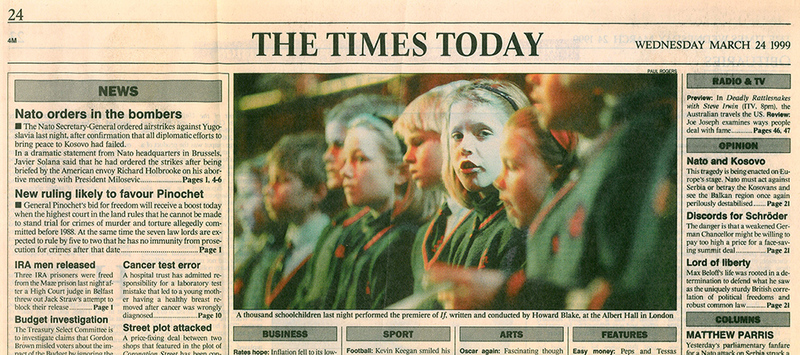
'JACK FROST AND THE ICE-PRINCESS', Snowman Stage Show triumphs with new Act 2 (2000)
VARIATIONS FOR HARP on a song from Henry V
RETURN TO LONDON
I set off sadly back to London where The Snowman Stage Show was about to run for its third Christmas season at the Peacock Theatre in Kingsway, courtesy of Sadlers Wells - a 1,000 seater which they call their 'theatre in the West End'. I had heard rumours that it might be taken off. The second act had originally been somewhat hastily cobbled together and there had been suggestions of an overhaul. I needed to talk to the director of Sadler's Wells, Ian Albery.
I'd never met him, but just happened to be invited to The Wells for the first night of a contemporary dance programme. I put on my Garrick Club tie because I knew that Ian Albery was a member. Sure enough I spotted a similar tie. Could it be him? I risked it:
'What's that funny old show you've got on in your Peacock Theatre?' I said.
Ian replied: 'Ah yes, 'The Snowman'. Well it could be a really great and successful show. It's got a fabulous first act - but the second act is not really up to it.'
'Well why don't you get someone to brush it up? Rewrite it? ' I asked.
'I'm sorry, who are you?' he said.
'I'm Howard Blake.'
'Oh my God', he said, 'I'm terribly sorry!'
'No don't apologise. I agree with you. Can I treat you to lunch and talk about it?'
We had lunch at the Garrick and Ian was amazingly helpful.
'The second act doesn't work because there's no tension, no story. All theatre needs some element of danger or threat which has to be resisted or fought and in some way resolved.
'I think I'd have to create a new character to do that.'
'Go ahead. See what you can come up with.'
JACK FROST AND THE ICE-PRINCESS
An offer for the house sent me back to Sweden and, whilst dismally sorting the place out, Ian Albery's words kept ringing in my ears. A whole new view of the second act of 'The Snowman Stage Show' started to take shape in my mind and I was dying to sit down and get writing. I took the train down to Kalmar on the Baltic and was so happy to be back with Diahann and Robert again. I started to create, conceiving the idea of a spectacular new dance for a character called Jack Frost. He would have a 'Storm-Dance'. At the same time I thought the 'Cindy Snow-Woman' must go and be replaced by an 'Ice-Princess' who should be a 'real' flesh and blood character without a mask. 'The Snowman' would fall in love with her and they would have 'The Dance of the Ice Princess and The Snowman'. 'Jack Frost' would compete for the attention of 'The Ice Princess' and, in what had been the 'Gaucho' tango, the Pas de Deux would be replaced with a Pas de Trois of 'Snowman', 'Ice-Princess' and 'Jack Frost' in which eventually the 'Snowman' would triumph. This would replace the now defunct divertissement scenes of the 'Robot' and the 'Sand Dancers' and a whole new second act with a strong narrative would come into being!
I sat down at the piano and rewrote the second act. My trusty Baldwin piano had come back into play sooner than expected!
In November 2000 we ran a new fully-casted second act for Ian Albery in the big rehearsal room at Sadler's Wells Theatre and he beamed with pleasure:
'You've cracked it!'
The millenium season saw this new improved version in place, producing packed houses every year till 2019.
WHAT EXACTLY IS 'THE SNOWMAN?'
Eminent music critic, Robert Matthew-Walker, compares it with 'The Nutcracker':
It is not exactly a ballet because it has singing in it. It is not exactly a musical because it has no dialogue. It is definitely not an opera, it is certainly not a play, and it isn't a pantomime. Yet it has elements of all these things in it.
'The world-famous song 'Walking in the Air' is used as the basis for a virtually continuous set of symphonic variations; a subtle and fully- wrought score which entrances the ears of all who are brought into the magical world it conjures up'
But The Nutcracker doesn't have a disco strobe and a working motor-bike in it! Or a principal dancer who is only 9 years old! Children love it because it inhabits a world like the one they live in. Every small child who sees it wants to be that child 'walking in the air.'
Raymond Briggs bemoaned the use of it for a TV advert, but what a compliment it was. Why? Because it showed what an icon it had become. If it wasn't famous one couldn't have satirised it and it's been satirised almost from day one. 'Spitting Images' lampooned it, 'Alias Smith and Jones' mocked it, French and Saunders sang and laughed at and with it. In December 1993 the cover of Private Eye was John Major in his Y-fronts hitting a pylon. 'The Snoreman' said the caption. In December 2002 the cover of New Statesman had a flying President Bush as 'The Snowman' in a Texan hat carrying a bag of missiles, with Prime Minister Blair in a dressing-gown delightedly grasping his hand! Icons will always have tomatoes thrown at them - but how they thrive on it! The image becomes ever more enduring.
Each version of a brand helps every other version. The success of the book meant that we could make an animated film. The success of the animated film meant that we could release a record album. The success of the record album led to an advertising campaign for Toys R Us sung by Aled Jones. The success of that generated Aled Jones's single which went to number 3 in the hit-parade and 'Top Of The Pops'. That in turn boosted the film, the book and the album. The success of all of it meant that we could create a succesful theatre-show.
A COMMISSION FOR DORSET SUMMER MUSIC
In 1998 there had been a highly succesful performance of my dramatic oratorio 'Benedictus' in Sherborne Abbey as part of the Dorset Summer Music Festival and The Lady Digby was so taken with it that she asked me to create a new work as a companion-piece. Conversations were pursued and the idea evolved of a work for soprano soloist instead of tenor. The theme decided upon was a 'Stabat Mater.' The Faber litigation had however prevented me from writing anything substantial for well over a year and I had abandoned the possibility of celebrating the Millenium with it, but with the settlement made I offerred to try again and Dione graciously suggested that we could celebrate the 40th Anniversary of her festival instead of the Millenium as intended. I agreed to this and started work. The 'Benedictus' of 1998 had been performed by The Winchester Cathedral Choir with The Bournemouth Sinfonietta conducted by David Hill and the same forces were agreed for the projected premiere.
THREE TONS OF MUSIC!
An employee from Faber rang to say that they had put all my manuscripts together along with printed works and orchestral parts and asking where I'd like it sent to. I said they could send it to my studio flat in Kensington and there was a long pause.
'Do you know how much there is?'
'No, how much?'
'Three tons.'
I was flabberghasted.
'Wait a day or so and I'll let you have an address'
Where on earth should I put it? I needed access to it all if I was to start supplying customers with my music whilst I tried to find a new publisher. I was talking to Weinberger, Boosey, OUP, Chester, Novello but nothing was decided yet and I had to accommodate it immediately.
Not long before the nightmare happened I had given a charity piano evening at 'Bellini's' restaurant and had met Sid Creamer, the friendly owner of the Jaguar showrooms in Drayson Mews, not far from me. I asked him if he had any space and by good chance he had a flat available very reasonably over a garage in the mews, waiting to be renovated. A lorry arrived and my assistant David Shenton, my grown-up son Christopher and I hefted this mighty collection of paper up the stairs and arranged it in huge piles. Fortunately the flat was on the first floor!
-
 The Snowman Ballet
 -
 Snowman Ballet
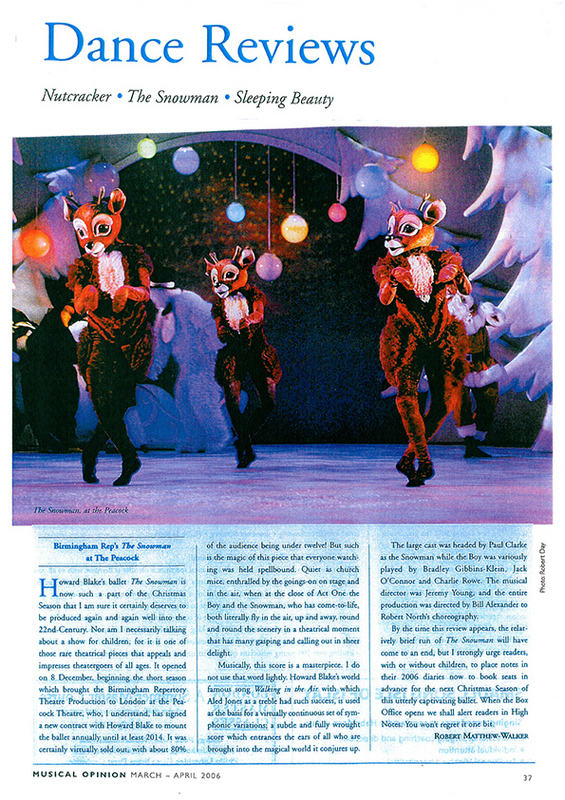

STABAT MATER (later renamed 'The Passion of Mary') (2001)
Lady Digby's Dorset Summer Music - BENEDICTUS in Sherborne Abbey
On February 27th I was happy once more, as I hadn't been for a long time. A deal had been made with Chester/Novello /Music Sales and on February 27th I signed with owner Bob Wise who furnished me with a most generous advance to cover my overdraft. I thought that at last my troubles had ended. I went round to check the stock in Drayson Mews. I went round several times a week and I was sure all was well but I'd better check..
Horror!! Outside the flat was a demolition truck with a huge lead ball about to knock the flat to bits.
'Hold it, hold it, please! All my life's work's in there. All my music!'
'All right mate, we'll have a break.'
A very, very narrow escape. Why had nobody told me? We moved the whole 3 tons all over again, this time to Bury St.Edmonds and the warehouse of Chester/Music Sales.
SCOTTISH BALLET
Chester started publishing and at long last got my 24 piano pieces called 'Lifecycle' into print. I completed 'Stabat Mater' and David Shenton set it up for me on Sibelius computer. In the summer I revised the Snowman Ballet to try and incorporate some of the new material (but unfortunately not all of it) ready for a season with Scottish Ballet. There were 43 sold-out performances from Glasgow to Inverness and a record number of 54,000 saw it. The Snowman Stage Show did well in London in its second revised year with 55 performances. But there were problems in Scotland. It seemed that the governing board took exception to The Snowman's success. I read the chairman's introduction to the season where he wrote:
'Every Christmas since I was very young I have been to see 'The Nutcracker' and I look forward to this event as the high-point of my family Christmas.' No mention of Snowman at all!
Although the Snowman Ballet went on again the following year there were almighty ructions and disagreements, even questions asked in the Scottish Parliament. The Scottish Ballet company was closed down and the Snowman with it. Robert resigned and moved to run an opera company in Germany. I had survived the litigation ordeal but found I was still constantly having problems. Partly as a way to understand why, I started to write this present autobiography.
-
 The Lady Digby, Minterne in fhe Spring
 -
 The Snowman at the Scottish Ballet
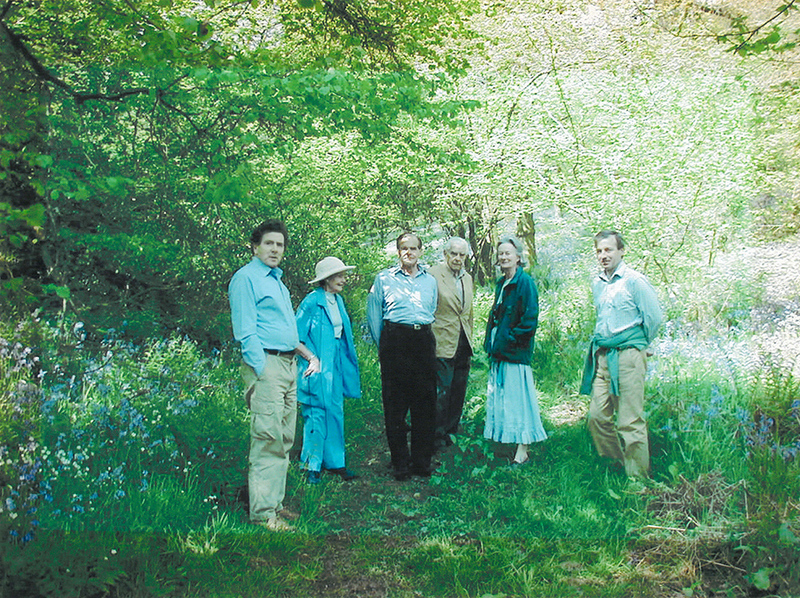
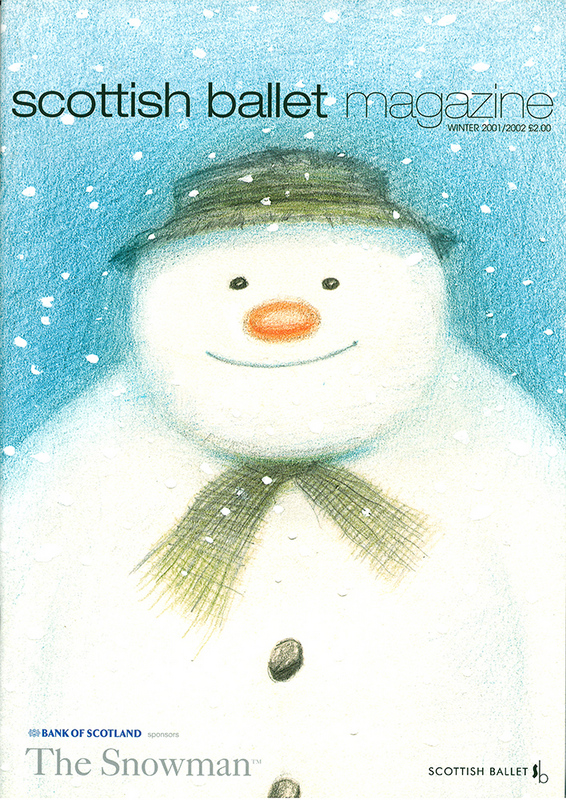
'THE RISE OF THE HOUSE OF USHER', a mighty organ piece for Dame Gillian Weir (2002)
Snowman stage show in Tokyo; Hollywood film interview with Ridley Scott
'THE RISE OF THE HOUSE OF USHER'
In June I was in Edinburgh working on plans for my festival. Peter Hamblin the then manager of the Usher Hall told me of the refurbishment of the mighty Father Willis organ. He asked:
'What would you write if asked to create a piece to launch the rebuilt Usher Hall organ?'
'Well I'd call it 'The Rise of the House of Usher!'
'What a great title! Will you do it?'
'Of course - I'd love to.'
Peter Hamblin secured an arts council commission for 'The Rise of the House of Usher'for organ. It so happened that shortly after this choreographers Robert and Sheri North invited me to Turin where it so happened that I conceived the musical idea of a sort of gargantuan fugue starting pianissimo - to mirror the depths of 'the deepest lake in the world' - the idea of Edgar Alan Poe's 'The Fall of the House of Usher' - and slowly winding its way up from the depths to the reconstitution of the house in a blaze of triumphant glory (and organic organ splendour)to completion. 'The Rise of the House of Usher' was first performed by Dame Gillian Weir at the inaugural recital in the Usher Hall on the rebuilt Willis organ June 2003.
RIDLEY SCOTT
On 22nd May I flew to Los Angeles to record a DVD commentary on the music of (0pus 247)'The Duellists' (/opus) with Ridley Scott. We discussed 'Doktor Faustus' as a film opera, I was offerred 'Terminator 3' by Joel Sills and 'Tristan and Isolde' by Kevin Reynolds! But I returned once again to continue my life in London, having accepted nothing.
DAVID SHENTON
In January my brilliant assistant David Shenton decided to move to New York. He had been my great support from 1999 onwards and I was very sad to lose him.
TOKYO
March 23 A 2-week run of The Snowman Stage Show in Tokyo managed by a flamboyant and perhaps over-ambitious Dutch impresario. I flew over and stayed at the Tokyo Dome Hotel. It was cherry-blossom time and I took many photos.
A PERFORMANCE EXPERIMENT
May 2 Twenty four students played (opus 489)'Lifecycle' (/opus) in St Stephen's Church, Gloucester Road, more or less playing one each.
'STABAT MATER'
17th May There was a packed world-premiere of STABAT MATER in Sherborne Abbey. Patricia Rozario,(soprano), Neil Jenkins,(speaker) David Hill,(conductor) Winchester Cathedral Choir and The Bournemouth Symphony Orchestra. I gave a lecture beforehand in Sherborne school.
LONDON PREMIERE OF 'LIFECYCLE'
July 4 The 'London premiere ' of Lifecycle was performed by Yu Chion Lin, one of the students who had taken part in the 24-player extravaganza in Kensington. It took place at the lovely 'Luke and A Gallery' in Hanover Square, who were mounting an exhibition of Russian photography. At the end of the recital I was approched by the young Chinese-Australian pianist William Chen who seemed overwhelmed by the music and asked if I would consider giving him a 'master-class' on it.
'LIFECYCLE' IN LANGUEDOC
Diahann, Robert and I flew to Aigues-Vives at the invitation of Georgina Ivor. I introduced 'Lifecycle' in French and performed it in the house of The Baron and Baroness Jan-Otto and Jocelyn Boetzelaer. Marc-Andre Hamelin was represented by Georgina at that time and being a great admirer of his virtuosic piano-playing I was somewhat daunted when I saw him sitting in the audience.
TOCCATA WITH THE RPO
Oct 29th The RPO perform 'Toccata - a celebration of the Orchestra' at St John Smith Square. Nicholas Cleobury conducted excellently.
SWEDEN AND THE SNOWMAN
Diahann was now living with Robert in Sodertalje some 50km SW of Stockholm.I suggested that it might work for us to have a summerhouse in the country not too far away where we could spend time while Robert was growing up. We decided on a little summer house in the forests about 50k. inland from Stockholm, a cluster of houses called Molstaberg, a wonderful place for walks and lake-swims.
Our friend Katerina Andriessen was now director of The Swedish Chamber Orchestra in Orebro and on 30th November they performed 'The Snowman' in its concert version at which (somewhat unwisely!) I attempted to make a speech in Swedish.
Sadlers Wells Stage show started its fifth season at The Peacock in London's West End (60 perfs.)
Scottish Ballet started its second season (60 perfs.) Theatre Royal,Glasgow, Edinburgh Festival Theatre, and theatres in Aberdeen, Inverness and Hull
THE BEAR
The Bear played in Dublin with the RTE orchestra with Gareth Hudson
-
 Tokyo weeping cherries
 -
 Tokyo Dome
 -
 Tokyo lake
 -
 Tokyo garden
 -
 The garden at Skogsfrid

75th birthday concert in the Wigmore Hall (2003)
William Chen records 'Lifecycle' in Sidney; 'Granpa' visits Hong-Kong
Back in 1962 I had been so thrilled to have met the great pianist Vladimir Ashkenazy that I wrote a piece to celebrate the event. It was for piano, romantic and decidedly Russian and I called it Prelude in B minor. How exactly did 'Lifecycle' come about?' Well, after that first meeting with 'Vova' I would sometimes attend his concerts and go back-stage to say 'hello' afterwards. It so happened that in 1974 I went to his brilliant all-Scriabin recital at the Queen Elizabeth Hall and after offerring him my congratulations he said to me quiet casually: 'Why don't you write some 'entertaining' piano pieces that the public would enjoy?'
I went home back to the mill fired up with the idea of a book of piano pieces, which I called simply 12 piano pieces. Much later (in 1995) I added a second book of twelve and named the whole collection of 24 pieces in all the major and minor keys: 'Lifecycle'and the circumstances of how that second book came about are described in the 1995 chapter. The B flat minor 'Romanza' is in fact a re-working of that Prelude in B minor from 1962 which became one of the pieces in Lifecycle. Because of these occurrences I asked Vova if I might dedicate 'Lifecycle' to him and he kindly agreed.
By 2002 the cycle had still not received a proper recording but a pianist friend of mine, Alberto Portugheis, had organised a complete performance in a church in Gloucester Road, with his students all taking different pieces. We had then asked the girl whom we thought the best performer, You-Chiong Lin, if she would like to perform the entire cycle and she did so on 4th July 2002 at The Skryabin Space in Hanover Square London. Present at this concert was the Chinese/Australian pianist William Chen Wei-Ling who was completely bowled over by it. He asked me if I would coach him with it and we began a series of master-classes where I was able to tell and show him how I would like to have it played. Soon after this he walked into the offices of ABC Sydney, sat down and played the whole work, as a result if which I was invited out there to supervise a recording with William in the Eugene Goossens Hall. He played it better than I could ever have believed it could be played and it is the most wonderful recording.
ABC SYDNEY
As a thank you present to the ABC producers of 'Lifecycle' I wrote 'Three Short Pieces for Oboe'
RPO
On July 3 at the RFH I conducted music from The Duellists and Riddle of the Sands with the RPO at the RFH
BIRTHDAY CONCERT
The Wigmore Hall celebrated my 65th birthday with a concert on October 28th generously sponsored by Chester Music. Soprano Patricia Rozario sang the 'Three Sussex Songs' and the 'Shakespeare Songs' with myself accompanying and the Schubert Ensemble gave a fine performance of the 'Piano Quartet'. Also specially for the occasion I made a new arrangement of 'Sleepwalking' for soprano and piano quartet, which received its first performance.
BENEDICTUS IN SALISBURY
On 13th December 'Benedictus' was given a fine performance in Salisbury Cathedral conducted by its music director David Halls
-
 65th Birthday Concert at the Wigmore
 -
 Conducting in Hong Kong
 -
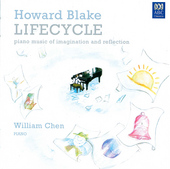 Lifecycle CD
 -
 City Chamber Orchestra of Hong Kong
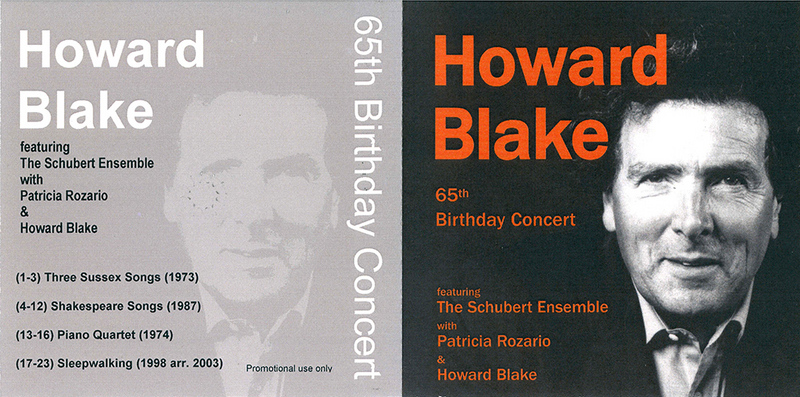
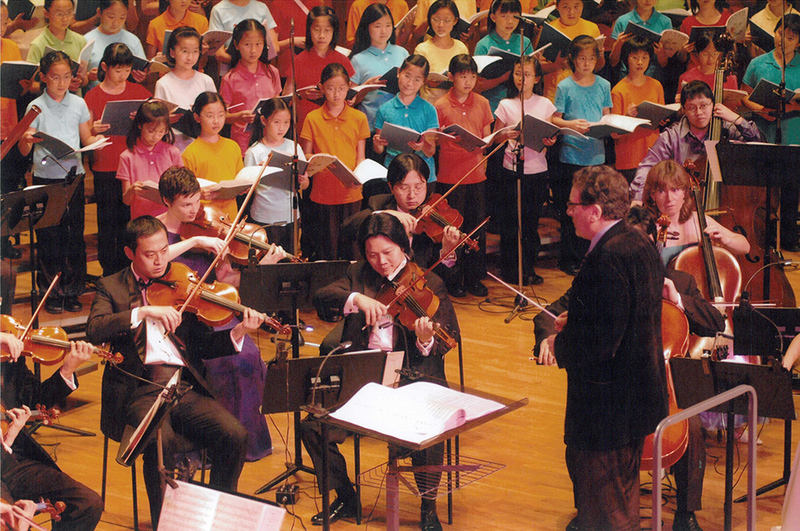


'SONGS OF TRUTH AND GLORY' for Three Choirs Festival, 'Benedictus' in Stockholm (2004)
Radical change in publishing - Sibelius and Internet
A MAJOR DECISION AND WHY IT WAS TAKEN
I was now in despair at the lack of progress with my new publishers. After three years they had not found me a single commission and had arranged hardly any performances. One morning at about eleven I went out for a coffee in 'The Palms' near my flat. I sat and thought of all the awful trials I had been through over the previous six years in trying to prevent the loss of all my music. What had I gained from all this stress and torture? Apparently very little. Apart from 'The Snowman', very little of my music was being performed. When I had achieved a premiere of the 'Stabat Mater' in 2002 in Sherborne Abbey with The Bournemouth Symphony Orchestra, whilst the audience had clearly enjoyed it, my new publishers Chester Music, in the persons of chief editor Howard Friend and publishing director James Rushton had casually dismissed it. It was a substantial work which had taken me four years to complete and I did not take kindly to this, believing that it was a work of some value. How could they treat it in this way? If they had given an intellectual reason for their reaction, or a view based on some political, philosophical, religious, artistic, aesthetic or personal predeliction, I would have have listened to their views with interest. What one cries out for as an artist is reaction. It can be negative, laudatory, abusive or downright rude, but as long as it is a genuine reaction it is something tangible to consider, to mull over, to help one look at oneself and say: 'I am wasting my time' or 'I need to work harder' or 'I need to develop the idea further' or 'I should simply give up.'
To receive no reaction at all is like death.
I remembered stories of the great inspirational publishers of past days: Erwin Stein cultivating Benjamin Britten at Boosey and Hawkes; Jaeger stimulating and encouraging Elgar; Weinberger and his immense campaign for the popularisation of Dvorak. Did such people still exist? If so, I had not found them. The nearest I had come to it so far was Richard Frank, long since dead and buried. He had tried over and over again with the BBC, and orchestral managements, and record companies and the whole paraphernalia of the music world - but had not got very far. I had by now written so much music and I so much wanted it to be heard. Was it really true that nobody wanted to hear it? I didn't think so. I knew that they did. The problem wasn't the public, it was the all-powerful publishing and broadcasting hierarchy - a small number of firms and organizations, and a small number of people, wielding power over what was played and what wasn't played. I didn't understand why this was, even though I had been active in the music world for some 35 years. I started to grasp it when I suddenly discovered Francis Stonor Saunders' book 'Who paid the piper' (published in 1999.) Until reading this it had never occurred to me that the problem might be political.
But sitting in the coffee shop all that day it seemed that the problem was primarily a business problem. The people who had gained jobs in the publishing business were not concentrated on music 'as an art-form'. The elite press always spoke about music as an art. But being inside the world of it I had come to realise that this was largely untrue. The whole of music (and indeed perhaps the whole of what we loosely call 'art'} had been gradually turned into a business. Tchaikovsky is supposed to have said: 'Music is the most noble profession, and the most horrible business.'
What was to be done?
I had recently learned to use the Sibelius music-writing computer programme whilst snowed up for a week in Stockholm. My first attempt was an arrangement of Stanley's 'Cavatina' for saxaphone quartet and it caused me untold time, trouble and frustration. After 50 years of writing with a pencil onto manuscript paper the changeover to the mouse and screen was a huge shock. But the way to do it suddenly dawned as did the realisation that the computer would save endless time and open innumerable doors. I realised that it would be possible to print and publish my own music myself.
I had sat all day and all the evening in 'The Palms', drinking coffee and having occasional snacks. Just before it closed for the night, about midnight, I decided that, for better or for worse, I would see if I could buy my music catalogue back and go it alone. There seemed no other possible way.
I had registered the name Highbridge Music as my own publishing company name as far back as 1974, when I lived in Highbridge Mill, Cuckfield, Sussex. I had incorporated it into a Limited Company at the instigation of Laurence Harbottle in 1983 ready for the launch of 'The Snowman'. Now I would reactivate the name for all of my music, which I would make available worldwide via the internet. The next morning I started to put this into action.
LUNCH WITH THE ROTHSCHILDS AND A CHANCE CONVERSATION WITH DAVID HILL
At a lunch with Leo Rothschild and other members of the Rothschild family, given at their estate in Hampshire to celebrate an anniversary of the Bach Choir,I fell into conversation by chance with David Hill the musical director of the choir, who had conducted the original 'Stabat Mater' in Sherborne Abbey. I had in fact not been over-pleased with that performance, since one couldn't hear the spoken words of the prophet or of Jesus in this echoing acoustic and I had recently decided that I should create sung roles to remedy the situation for a possible future for the work. When I told David that I was doing this he made the suggestion that a setting of the 'Salve Regina' could be an effective addition and offerred to send me one or two early plainchant settings, which perhaps I might use or adapt. He was as good as his word and I adapted one of them to provide a splendidly jubilant finale to the renamed 'The Passion of Mary', completed ready for performance in 2006.
FOUR SONGS OF THE NATIVITY
One of the first ventures in publishing was to arrange 'Four songs of the Nativity' for choir and woodwind for what used to be The Ditchling Choral Society, now renamed The Sussex Choral Society
CARLO CURLEY
Creation of 'Fantasia on Walking in the Air' for organ
GROUCHO'S
I told Guy, the manager of Groucho's, of my trials and tribulations and he invited me to play piano on Thursday evenings as a sort of therapy whilst I sorted myself out. It was like going back to my first moments playing in a bar and for some weeks I found it strangely enjoyable. Nostalgia perhaps?
-
 The first complete performance of 'The Passion Of Mary' conducted in Stockholm by Olov Risberg
 -
 Lunch with the Rothschilds
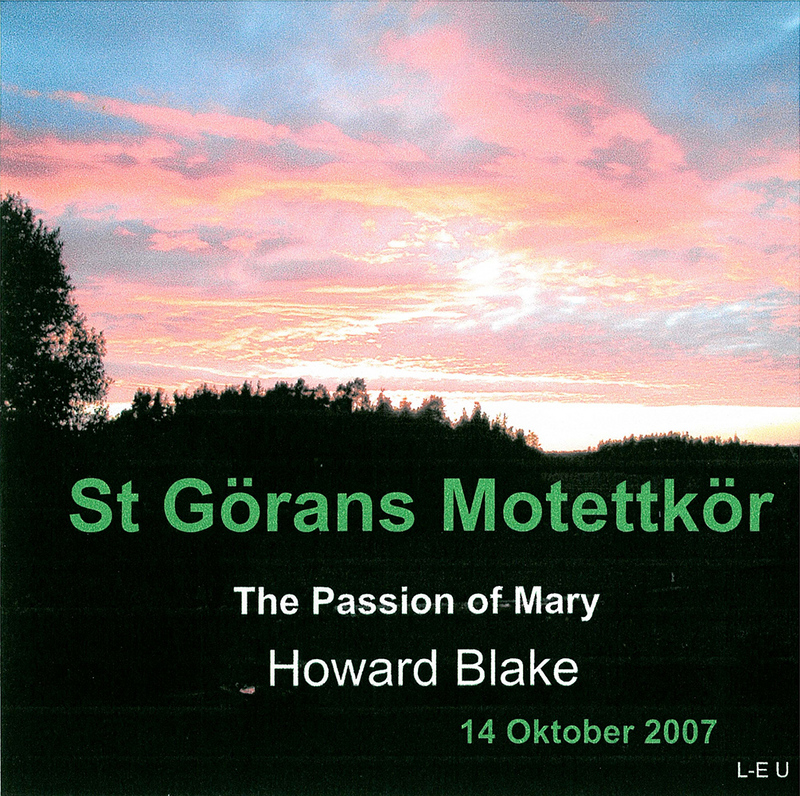
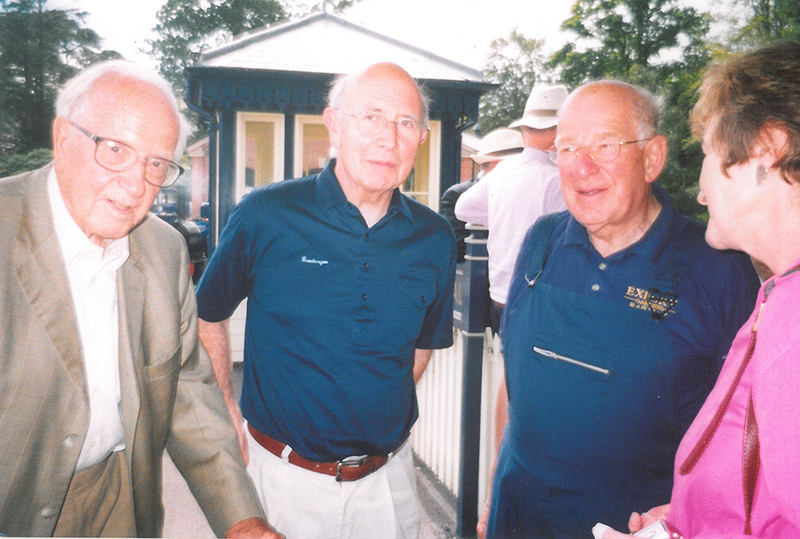
HRH Sultan Idris of Selangor, Kuala Lumpur and SULTAN'S SONG (2005)
Some cartoons for New York - 'Hospital for Special Surgery'
My Kensington neighbour, Malaysian classical art expert Yu-Chee Chong, invited me one evening to meet HRH Sultan Idries of Selangor. I was instructed to behave with great decorum since he was one of the nine Sultans of Malaysia who would also at some time be king. However he seemed very relaxed and happy to meet me and when I told him I was a composer with a Steinway piano and music studio next door he was eager to visit. I played some of my music, we talked a lot and the outcome was an invitation to Kuala Lumpur, to enjoy some sight-seeing tours guided by his able and entertaining aide de camp James Curtis and to give a piano recital in one of his palaces. I stayed in a splendid penthouse apartment of the Concordia Hotel, a suite that had been created for a visit of the rock-star Michael Jackson and whilst staying there I wrote a piece called 'Sultansong' for soprano, mezzo, tenor, specially in honour of the Sultan. I also flew over to Hong Kong for two days to see the City of Hong Kong Chamber Orchestra perform both 'The Snowman' and 'Granpa'. Back in the UK other pieces soon followed:
Songs of truth and glory: The Elgar commission for the Three Choirs Festival, here conducted by Donald Hunt. I give a joint speech at the festival with Dame Janet Baker
'Hospital for special surgery' New York - an amusing animation idea for jazz quartet
Three's Company for piano trio
Le basson qui danse for bassoon and piano
Kneel Jenkins Kneel a glee for vocal quartet
'Winterdream' for children's choir and piano. setting of 'La belle dame sans merci'. A premiere at St' John's Smith square in the presence of Princess Alexandria
'Club-song' - a request to write something to celebrate 20 years of the Groucho club.
'Trio for flute, cello and harp' an arrangement of the trio originally for flute, clarinet and harp
'Charter for peace' a revision of my piece written for UNO 10 years earlier.
'Cradle song' , a secular lyric for the 'Christmas Lullaby' prompted by a commission from Anglesey in North Wales. For two trebles and orchestra.
MONSTER-IN-LAW
During 2005 USA girl-singer Jem somehow discovered 'Elephant rides again' from my 'Elephant Called Slowly' album and conjured up from it a succesful chart-topper which featured in the starry cinema film 'Monster-in-Law: 'The love life of Charlotte is reduced to an endless string of disastrous blind dates, until she meets the perfect man, Kevin. Unfortunately, his merciless mother will do anything to destroy their relationship.' Director: Robert Luketic. Writer: Anya Kochoff. Stars: Jennifer Lopez, Michael Vartan, Jane Fonda. Song: 'Just a Ride'. Written by Jem, Mike Caren and Howard Blake. Performed by Jem (as Jem). Courtesy of ATO/RCA under arrangement by Zync Music Inc. Contains a sample of "An Elephant Called Slowly" performed by Howard Blake.
-
 Michael Jackson Penthouse Kuala Lumpur
 -
 Sultan's Gamelan orchestra
 -
 Petronas Towers
 -
 Throne room - palace of Selangor
 -
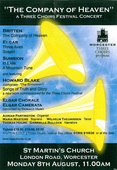 Songs of truth and glory' at Three Choirs Festival
 -
 Michael Jackson shrine in the Concorde
 -
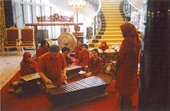 Gamelan
 -
 City Chamber Orchestra of Hong Kong
 -
 Lifecycle for the Sultan
 -
 Conducting in Hong Kong
 -
 Inside the palace of Selangor
 -
 HRH The Sultan Idris
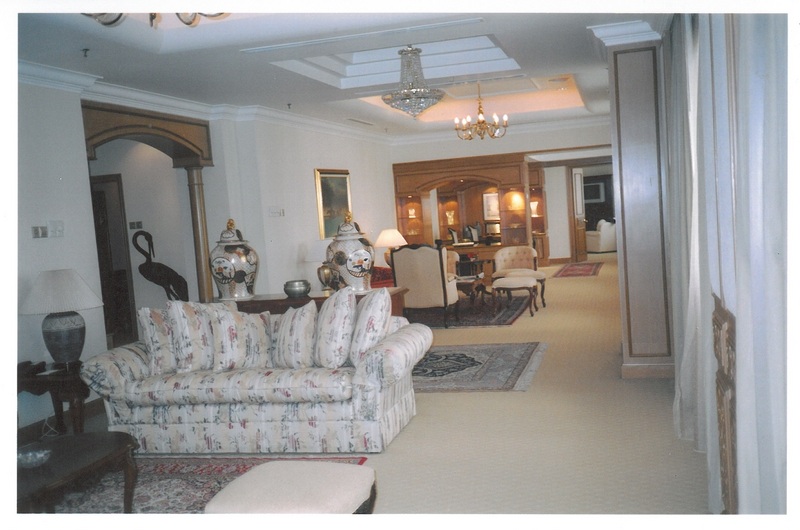
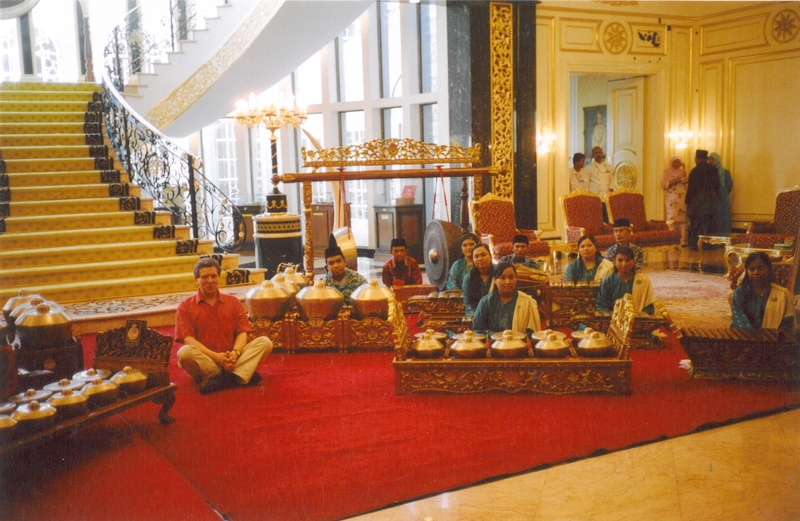
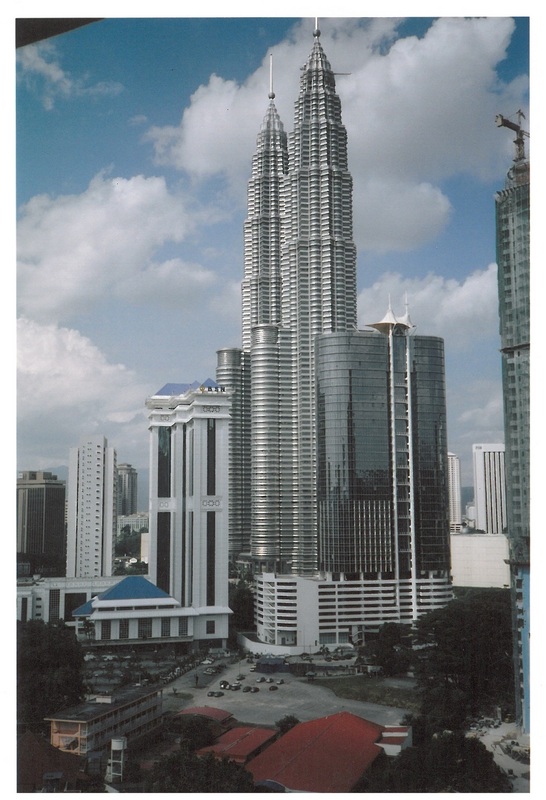
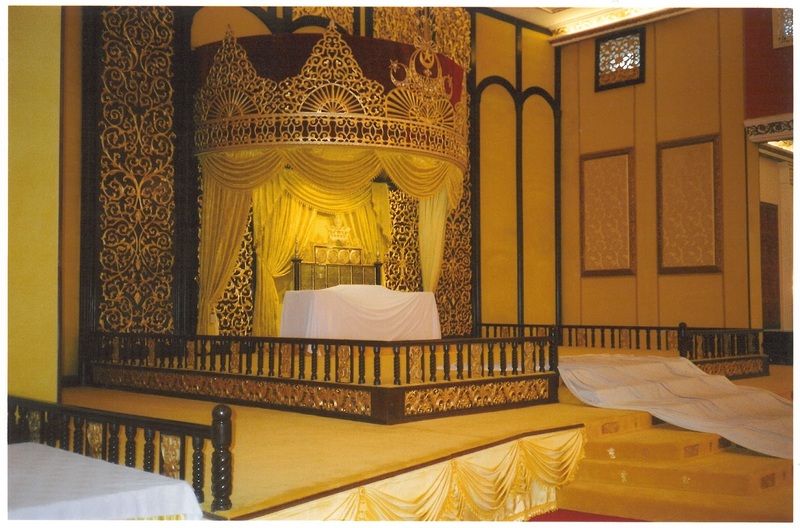
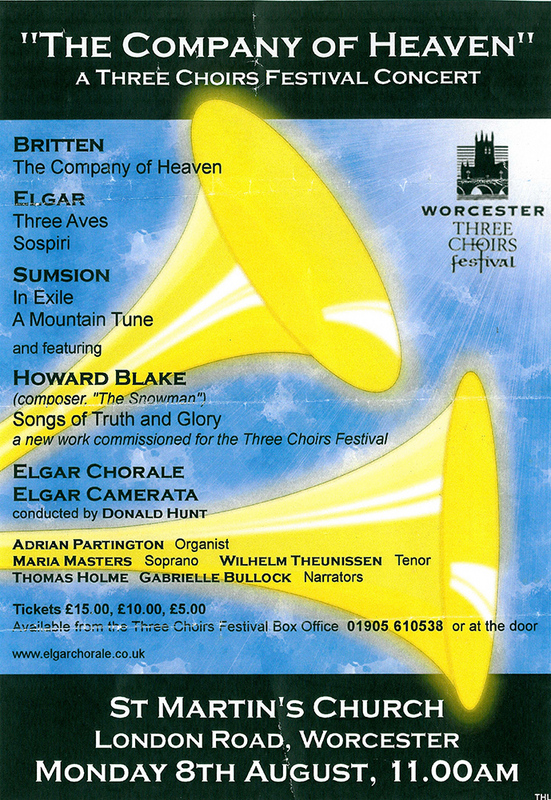
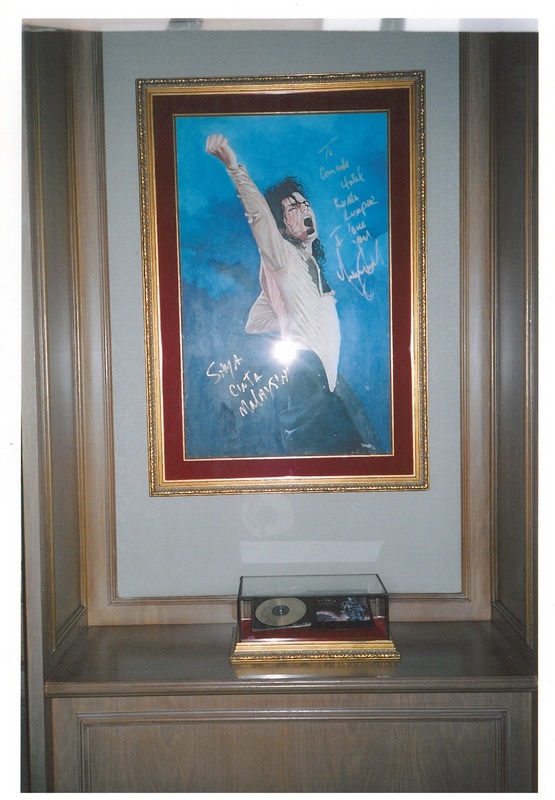
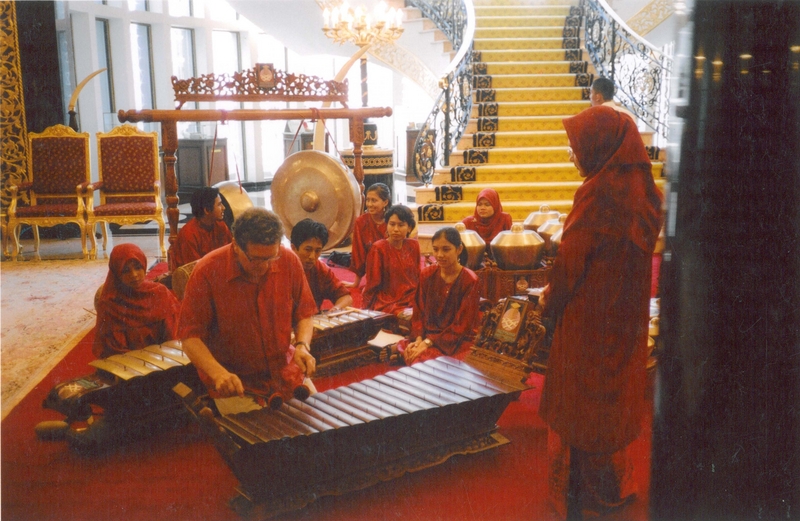
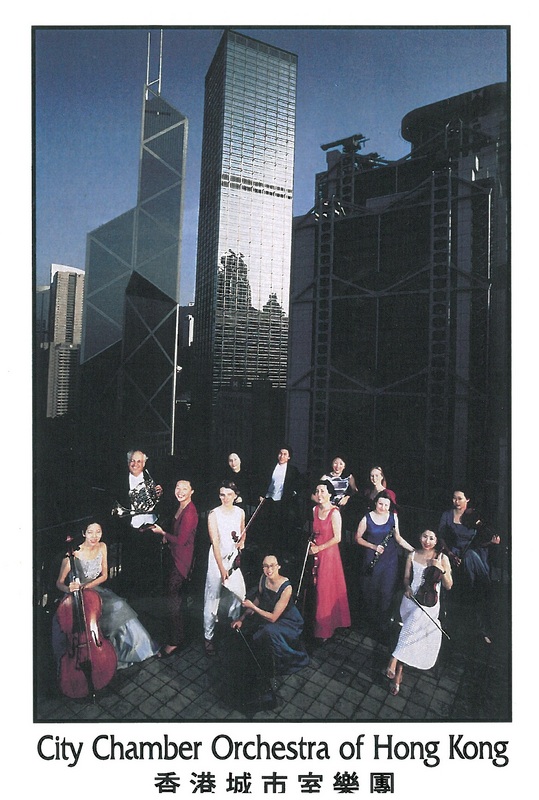
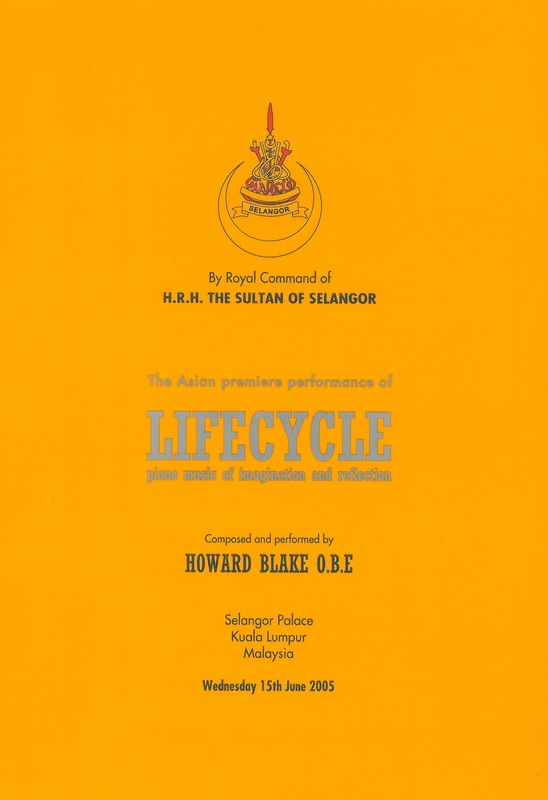
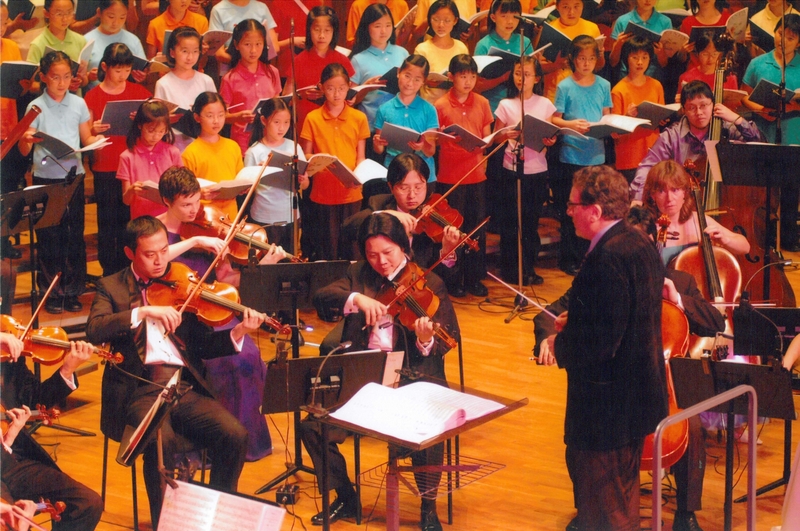
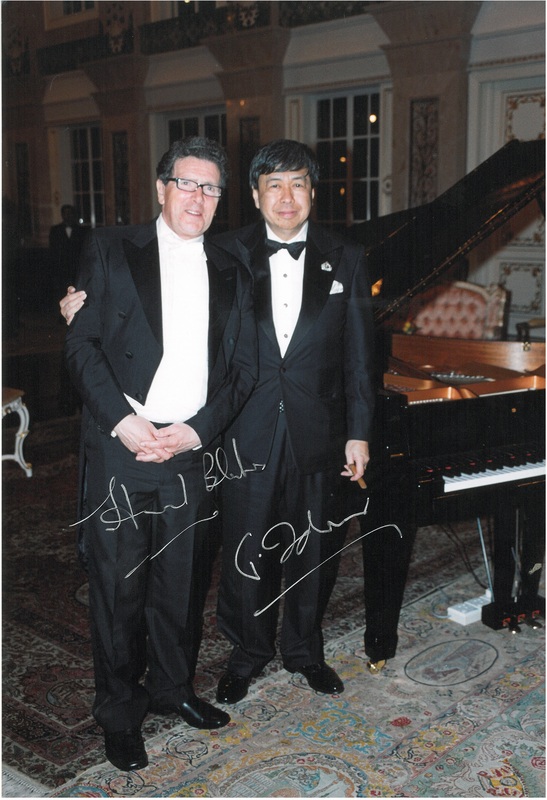
oratorio 'THE PASSION OF MARY', soprano 'ODE TO SLEEP', piano 'HAIKU' (2006)
basset cl/pno. 'THE ENCHANTMENT OF VENUS', cl/pno. 'SIX ROMANTIC PIECES'
I finished my revisions of what had started as 'Stabat Mater', renaming it 'THE PASSION OF MARY' a dramatic oratorio. Later on release of the record Robert Matthew-Walker (Editor of Musical Opinion) wrote the following appreciation:
'The Passion of Mary' is a profound study of, and meditation on, Mary, the mother of Jesus. The text, adapted from biblical and other sources, falls into four main parts: Part 1 deals with the Annunciation, birth and early life of Jesus as seen through His mother's eyes, incorporating texts from the Magnificat, William Blake and the Apocrypha as well as the Old and New Testaments. Part 2 is concerned with the Temptation of Christ, the Beatitudes and Christ's Crucifixion. Part 3 is the Stabat Mater, a Latin hymn on the seven aspects of grief of the Virgin Mary (the prophesy of Simeon, the flight into Egypt, the three days, loss of Jesus, the meeting of Him on the way to Calvary, the crucifixion, the descent from the cross, the entombment); Part 4 is the promise of Christ of the Holy Spirit ('Let not your heart be troubled') and the Salve Regina ('Hail, Holy Queen' - i.e. Mary). Clearly, The Passion of Mary deals with matters at the very heart of Christianity, and the subtitle 'a dramatic oratorio' is nothing more than the plain truth with regard to the text Howard Blake compiled and has chosen to set. It might be thought that with such a text, the music itself must move at a consistently slow pace, but this is not borne out by the work. Naturally, there are parts in which the meditative aspects of the subject demand a slower inherent pulse to the music, but these are very carefully controlled and juxtaposed with others that demand more power and inner movement. One of the more impressive aspects of the work is the cumulative sense of forward momentum it possesses; this is not a disembodied sense of movement but, in purely musical terms, a certain 'journey' if you like, towards the brilliance of the dazzling A major triumphant ending, in which the certainty of belief is conveyed with great simplicity and immense inner strength. The Passion of Mary makes an immediate and lasting impact on the attentive listener, and there is no doubting the conviction of the composer and the directness of his musical utterance.'
A PIANO PIECE FOR JAPAN
'HAIKU' composed for William Chen for a recital in NAGOYA, JAPAN
'TO SLEEP' a setting of Keats' Sonnet 'To sleep' for soprano and piano
ALED JONES SINGS A DUET WITH HIMSELF
Walking in the air, for treble and tenor duet A duet arrangement for Aled Jones to sing with his own recording of it as a boy soprano in 1985
WOODWIND CONCERT
A concert of music of mine for woodwind was performed at Vernon Ellis's music room 49 Queen's Gate Terrace, Kensington. Pieces included: SIX ROMANTIC PIECES FOR CLARINET originally written for Thea King and revised for the occasion. Thea was there and was very pleased; 'THE ENCHANTMENT OF VENUS' FOR BASSET CLARINET AND PIANO which I composed specially for Colin Lawson on his appointment as director of the Royal College of Music and which he himself performed; 'BURLESQUE SUITE FOR CLARINET, BASSOON AND PIANO' which was written as a new arrangement of 'The Up and Down man' suite.
-
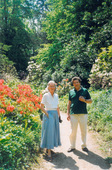 Lady Dione Digby and I at Minterne
 -
 'The Passion of Mary' - Naxos CD
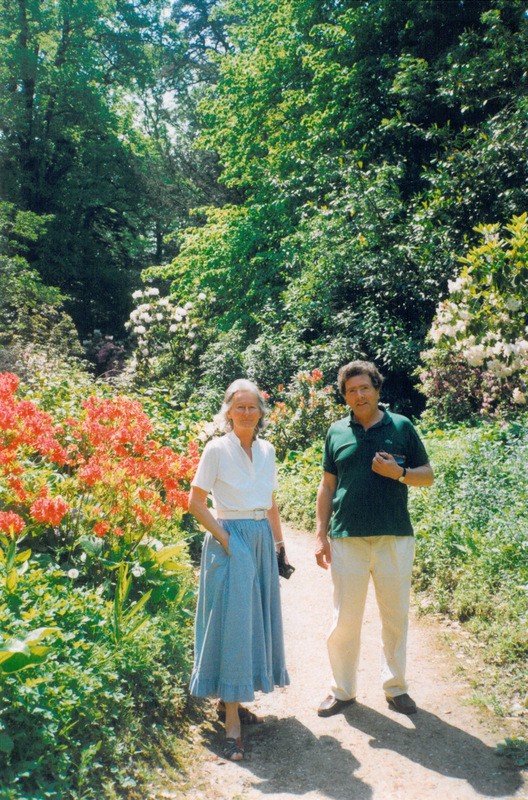
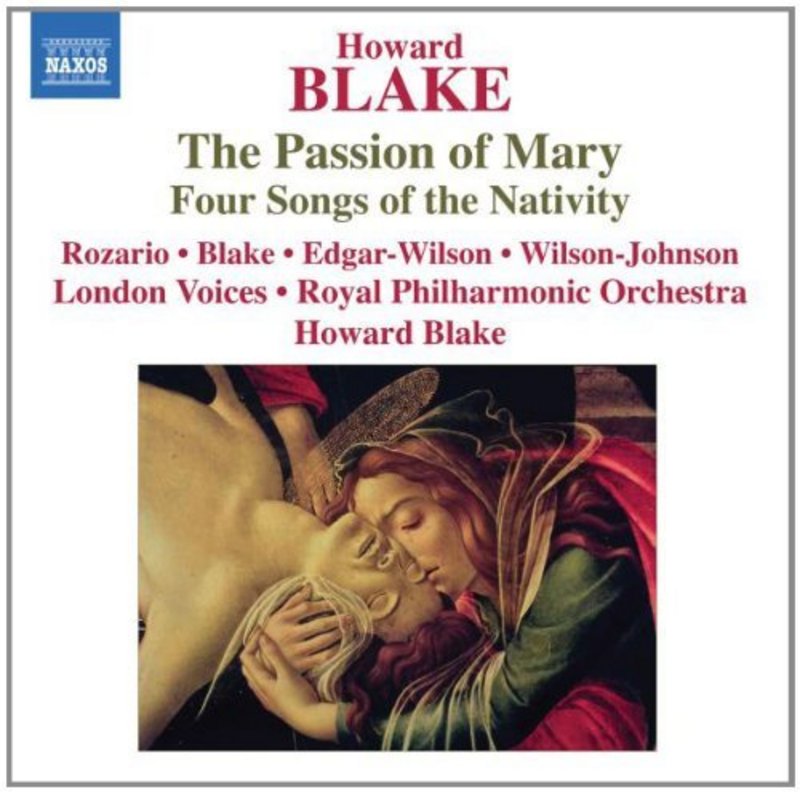
MADELEINE MITCHELL (VIOLIN) AND HOWARD BLAKE (PIANO) RECORD AN ALBUM FOR NAXOS (2007)
VIOLIN SONATA,PENNILLION,JAZZ DANCES (plus classic recording of PIANO QUARTET)
A chance meeting with the violinist Madeleine Mitchell at a Chester Music Christmas party encouraged me to revisit the violin sonata which I totally revised and rewrote for a recording which I played with her for Naxos. The completed album included Pennillion and Jazz Dances, both re-arranged for violin and piano and a vintage recording from 1975 of the Piano Quartet. The album comprised: Violin Sonata (1973 revised 2007) 23' 26 1. 1. Allegro 7'22 2. 2. Lento 7'04'' 3. 3. Presto 9'00'' Premiere recording by Jeremy Hayes, Potton Hall, Suffolk. Madeleine Mitchell (violin), Howard Blake (piano). Dedicated to the memory of Miles Baster
Pennillion for violin & piano(1975 revised 2005) 9' 24'' 4. 1. Theme - Moderato 1'42'' 5. 2. Var. 1 - Vivo 0'35'' 6. 3. Var. 2 - L'istesso tempo 0'37'' 7. 4. Var. 3 - Meno mosso (ritmico) 1'01'' 8. 5. Var.4 - Allegro 0'54'' 9. 6. Var. 5 - Lento (misterioso) 1' 16'' 10. 7. Var. 6 - Moderato (grazioso) 1'45'' 11. 8. Theme - Tempo primo (tranquillo) 1'34'' Premiere recording by Jeremy Hayes, Potton Hall, Suffolk. Madeleine Mitchell (violin) Howard Blake (piano)
Piano Quartet for piano, violin, viola, cello (1974) 27' 07'' 12. 1. Allegro 7'15'' 13. 2. Presto (scherzo) 5'23'' 14. 3. Lento 7'39'' 15. 4. Allegro ritmico 6'50'' Vintage recording made by Adam Skeaping in the Aeolion Hall in 1975 played by Jack Rothstein (violin), Kenneth Essex (viola), Peter Willison (cello) and Howard Blake (piano)
Jazz Dances for violin & piano (1976/2008) 13' 33'' 16. 1. Parade (allegro molto ritmico) 1'01'' 17. 2. Slow Ragtime (larghetto) 1'24'' 18. 3. Jump (molto animato) 0'54'' 19. 4. Medium Rock (tempo giusto) 1'55'' 20. 5. Folk Ballad (lento) 2'08'' 21. 6. Boogie (presto) 1'4'' 22. 7. Jazz Waltz (allegretto triste) 2'10'' 23. 8. Cha-cha (moderato) 1'47'' 24. 9. Galop (presto) 1'05'' Premiere recording by Jeremy Hayes, Potton Hall, Suffolk. Madeleine Mitchell (violin) Howard Blake (piano)
PROGRAMME NOTES FOR 'MUSIC FOR PIANO AND STRINGS'
'As a student at the Royal Academy of Music I formed a duo with violinist Miles Baster, performing concerts of the standard repertoire: Mozart, Beethoven, Franck, Faure, Brahms, Ravel and so on. I adored this repertoire and the extraordinarily direct and passionate music that the combination of these two instruments engenders. Miles suggested that I compose a sonata, but I had produced nothing more than a sketch when he left London to found The Edinburgh String Quartet and our partnership came to an abrupt end. I changed direction, turning towards playing, arranging, composing and conducting music for the media and becoming unbelievably busy and in demand. By the early 1970s I had overdone it. I retreated to a watermill in Sussex, determined to work again at the basic pillars of harmony, counterpoint and form and to further develop my own style of classical composition. I began to play chamber music again with violinist Jack Rothstein and cellist Peter Willison, who asked if I would write him a cello piece. I responded with Diversions for cello and piano. Jack asked if I would write a Violin Sonata, and I wrote the first version of the one here recorded. Jack then suggested that the viola player Ken Essex might join us if I wrote a Piano Quartet and I (somewhat foolhardily!) turned down Kubrick's 'Barry Lyndon' in order to work at it. But we were pleased with the outcome and a concert of the three new works was given, followed by what we all felt to be an inspired demo recording of the Piano Quartet, here on professional release for the first time. I later expanded and orchestrated Diversions into a concerto with the help of Maurice Gendron and a fine recording of it was made by Robert Cohen and The Philharmonia, but I was not satisfied with the Violin Sonata and withdrew it from circulation. In February 2007 I found myself conducting the SCO in Edinburgh and the cellist from The Edinburgh Quartet, Mark Bailey, who was playing in the orchestra, approached me and we reminisced a little. Miles had spent his entire life playing with the quartet and had died in rather sad circumstances and we talked about some sort of musical tribute to him. During last summer I dug out the material from all those years before and looked at it again. Suddenly I conceived a new opening and this set me on the path of extensively and ferociously revising the entire piece. Whilst writing I constantly remembered Miles' virtuosity and artistic punctiliousness, his views on music and his extreme conscientiousness as regards to markings, tempo and dynamics. I marked it: 'Dedicated to the memory of Miles Baster.' The slow movement Lento might seem to have a requiem-like quality, although the work is of a virtuoso nature throughout. I can only hope that he might have approved. It would have meant a great deal to me.
'Pennillion' was another of Jack's requests. He arrived at the mill one day in 1975 with Annabel Etkind, a beautiful 18-year old harpist who wanted a piece for them to play at a Grosvenor Square banquet. I thought: 'Where would one encounter such a combination? Perhaps a Welsh Eisteddfodd?' The name 'Pennillion' is the Welsh custom of singing (or playing) improvised verses on a given theme to a melody either well-known or taught by the harper. I composed my own folk-like and (what I thought to be) Welsh-like theme and seven variations on it. Years later when working on my violin concerto with the Berlin-based violinist Christiane Edinger I arranged the harp part for piano: 'One listened to this concisely constructed work with its astonishingly inspired melody as if the name of the composer were not Howard Blake but Antonin Dvorak. The Slavic-sounding tonality of this poignant piece makes one curious to hear the Violin Concerto that Blake has composed for Christiane Edinger.' (Berliner Tagespiegel) This is the first recording of that version, created for her in 1994.
The deeply reflective E major slow movement (Lento) of the Piano Quartet has always been particularly dear to me. I wrote it one beautiful Spring afternoon in 1974 at Highbridge Mill, with sun streaming through the window and total silence. It begins with a major third repeated on the piano acting as a bell-like accompaniment to 3 statements of a 4-note rising phrase, first on violin then imitated by viola and cello. When I was writing the Piano Concerto some 16 years later it occurred to me that its first movement also revolved around a four-note theme and that this Lento could be further developed in an orchestral concerto context. It is transposed to F major rather than E and the theme is first stated by the piano soloist, yet the special atmosphere remains. I can never decide which version I prefer.
Jazz Dances was the only piece on this album not suggested by Jack Rothstein. Sussex pianist and conductor, Janet Canetty-Clarke, had attended the first performance of the Piano Quartet and determined to build an entire choral and instrumental concert of my recent music around it. She got things rolling by commissioning a cantata:'The Song of Saint Francis' for her own choir (The Ditchling Choral Society) and invited us to play 'Pennillion' and the Piano Quartet. However the concert wasn't quite long enough and she wondered if I had a piece for two pianos. I didn't and there was very little time but I 'dashed off' these little dances and performed them with her to hearty applause. They are not really 'jazz' but, as I wrote in the program-note: 'pay mischievous but affectionate homage to the rhythmic intracacies of popular dance forms.' I called them 'Dances for Two Pianos', later scoring them for orchestra as 'Concert Dances'. In 2001 I created a string solo version for the cellist Martin Rummel giving them the more apt title 'Jazz Dances' from which this violin version derives.
In a Sony sleeve-note of 1991 music critic Christopher Palmer wrote: 'What is particularly unusual in Howard Blake's case (as a composer) is that, far from disowning his alter ego, the kind of musician he was and the kind of music he produced in the first 10 years of his professional life, he has found in them the mainspring of a remarkable personal renaissance. Much of the raw material of his most significant recent works derives from this source, but so refined, processed, enhanced, even sublimated, as to be scarcely recognizable.' 'Jazz Dances' clearly demonstrates the beginning of this curious alchemy.
I met Madeleine Mitchell last December at London music publisher Chester Music's Christmas party and she asked me if I had written anything for violin. I told her I had just finally completed a violin sonata after about 35 years (!) and typically she said: 'When can we try it?' We got together and gradually explored the other works now featured on this album. I realized much to my surprise that there was in existence more than 70 minutes of music for piano and strings. Even more surprising was the fact that all of that music had begun its journey during the same time slot, from 1973 to 1976. We approached Naxos who were very supportive of the project and we set about learning how to play the music. In some cases I undertook considerable revisions of both violin and piano parts so that now all the pieces are eminently playable (if not exactly easily playable!) I cannot thank Madeleine enough for her enthusiasm and immense hard work in putting this together and I hope, as she does, that it will give as much pleasure to those who get to hear it as we got from playing it.
Madeleine Mitchell is one of England's most celebrated violinists, with an extensive repertoire at her command. She has performed in over forty countries as a soloist, both with major orchestras and in recitals, broadcasting on radio and television and frequently recording. She has been Professor of Violin at the Royal College of Music since 1994 and also directs her own 'Red Violin Festival' of which the founder patron with her was Yehudi Menuhin. She has championed much new music and this album was undertaken very much as the result of her initiative.
Jack Rothstein came to London in 1947 to study with Max Rothstal but such was his talent that within a remarkably short time he was offered the position of leader of the prestigious Boyd Neal Chamber Orchestra. He went on to lead orchestras such as The Philharmonia, The London Mozart Players, The Northern Sinfonia and later Howard's own orchestra, The Sinfonia of London. A brilliant and multi-lingual musician of great charm and humour, he took a delight in Howard's music and enjoyed recording with him.
Kenneth Essex studied at The Royal Academy of Music where he won the viola prize in his first term. He was for a number of years a member of the Hurwitz Quartet and later principal viola of the Goldsbrough, Boyd Neal, RPO and LSO orchestras. He always much enjoyed playing string quintets as additional viola and acted in this capacity with the Gabrieli, Haffner, Georgian, Aeolian and even on occasion the Amadeus. He and Jack Rothstein greatly enjoyed playing together and their rapport is strikingly evident in this recording.
Peter Willison studied with Douglas Cameron at The Royal Academy of Music where he won the Suggia Scholarship to study with Paul Tortelier. He became principal cello of the LSO when Neville Marriner was a principal violinist and they undertook chamber music engagements together. When Howard composed his famous score for 'The Snowman' in 1982 he asked Peter to create a hand-picked orchestra with Jack Rothstein as leader, Kenneth Essex as principal viola and himself as principal cellist. Such was the quality of this orchestra that it was offered the cherished brand-name 'Sinfonia of London'.
THE SNOWMAN BALLET SUITE FOR ORCHESTRA - CAMBRIDGE PHILHARMONIC
WALKING IN THE AIR A CAPPELLA for the Stockholm Boys Choir
'SCOTLAND': an anthem for the new West of Scotland University, Paisley
-
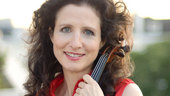 Madelaine Mitchell
 -
 'Music for Piano and Strings'
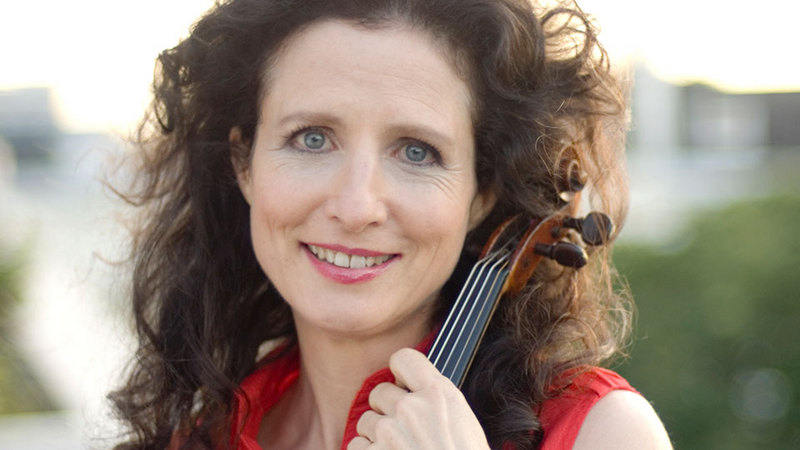
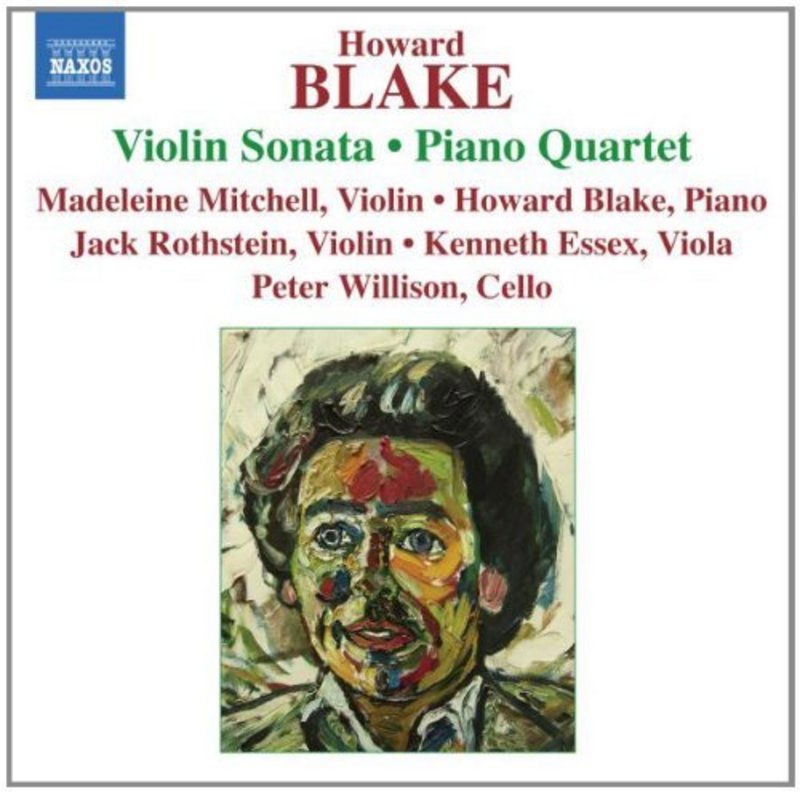
'SPIELTRIEB' A STRING QUARTET IN FOUR MOVEMENTS (2008)
70th BIRTHDAY WITH LONDON VOICES AND THE ROYAL PHILHARMONIC AT THE CADOGAN HALL
28th October 2008 was my 70th birthday and I celebrated it with a concert at The Cadogan Hall which included the work that had taken me such pains to write - 'The Passion of Mary'. It was given its first London performance by Patricia Rozario (soprano), Martyn Hill (tenor), Lars Arvidson (bass), London Voices and the Royal Philharmonic Orchestra which I myself conducted, and wonderfully by my ten-year old son Robert Blake whose solo treble voice was at its peak. The programme also featured performances of The Snowman and the Piano Concerto.
PROGRAMME NOTES FOR THE CONCERT
The three works in tonight's programme with the Royal Philharmonic Orchestra, which celebrates the seventieth birthday of Howard Blake, together demonstrate the wide range of his activities - for he is one of the most successful of all living composers for the theatre, film and television, the recital room and the concert hall. On the one hand, you might think that a composer who has completed around 600 works must have been writing music all his life. But on the other hand, on meeting him, you may well be surprised. The first difficulty is in believing his age, for he doesn't look seventy - twenty years younger is more likely. Nor has he been writing non-stop, for in the early 1970s he gave up for a number of years. After leaving the Royal Academy of Music, in the 1960s he wrote much music for television and films. He also became a session pianist at Abbey Road, but none of these were areas on which Howard Blake wished to concentrate. As musical gifts often appear early on in life, I asked him - when did he realise he wanted to write music? 'I had a local piano teacher, and I'd make up tunes for my family at Christmas and birthdays. Nobody told me to do it, I just wrote tunes, and when I was about eleven I wrote a march and took it to my teacher who said, 'Where did this come from?' I said, 'I wrote it'. At first he didn't believe me. But then he realised ir was true and I was serious, and he took me through all of Percy Buck's Practical Harmony Book and the J.Frederick Bridges Counterpoint. I loved it.' From then on, Howard knew he liked writing music more than anything, although his father 'would not have entertained the idea that I could become a musician'. His mother was musical however and played the piano and violin well. 'She encouraged me, and through her I started the piano with a teacher and also I started wrote music, which I've always loved doing'. 'And you've never stopped?' 'Well, I did stop. I worked hard at playing the piano, getting grade VIII with distinction and then entering The Hastings Competitive Festival - the only Southern England festival offering a Royal Academy of Music scholarship/ It was the first time I entered any competition but my teacher put me in for the Bach Prize, the Beethoven Prize, the Chopin Prize and the Academy Scholarship Prize - and I won all four.' What happened to composition? 'Although I thought I might make a concert pianist, I still wrote music, but nobody encouraged me much. At the Academy I chose organ as a second subject, but during the entrance interview the subject got round to harmony, and I'd been told to bring in some original work. I brought a four movement orchestral suite, and The Warden Myers Foggin said, 'Shouldn't you be studying composition?' 'It had never occurred to me!' Whether it had occurred to Howard Blake or not, we should be glad that someone was able to push him in the direction of where his undoubted talents have now led him. We should be grateful that he has found his true vocation: 'I just like writing music', he says - and aren't we glad that he does?
THE SNOWMAN The story is very simple, and very effective; it is Christmas-time, and a young boy wakes up to see the ground covered in deep snow. He goes out and decides to build a big snowman. It takes him almost all day to finish it, and at last, tired out, he goes to bed and falls asleep. During the night, he wakes up and, looking out of the window, sees the snowman come to life. Joining him, he and the snowman have a series of wonderful adventures, and, realising they can fly through the air together, they travel north to where Father Christmas is. After further adventures, Father Christmas gives the boy a scarf; he and the snowman fly back home, and, once more in bed, the boy is soon fast asleep. In the morning, after breakfast, he runs outside, but the morning sun has melted the snowman - it has all been a dream, the boy thinks, until he finds the scarf in his pocket. [Robert Matthew-Walker, 2008]
The theme of Walking in the Air entered my mind as long ago as 1970 whilst walking on a Cornish beach. I thought it might be the opening of a symphony but abandoned it. Eleven years later I happened to walk into a London film production company and see a nine-minute pencil sketch based on Raymond Briggs' picture-book The Snowman. I felt instantly that this was where the theme belonged and said: 'I would love to set this whole story to music. It wouldn't need any words and I have a song that would work with it like a dream.' Jeremy Isaacs agreed and the twenty-six-minute animated film was made by Channel 4. While it was being drawn I worked on the lyrics and orchestration, conducting the complete orchestral score in July 1982 with The Sinfonia of London and the superb treble voice of Peter Auty, a treble in St. Paul's Cathedral Choir. The film was first shown at Christmas 1982, was nominated for an Oscar and won many prizes. The CBS Masterworks album was released the following year with Bernard Cribbins speaking my specially-written narration over the existing film score, and a first concert performance of the work in this form took place at the Barbican that December with the same personnel. The album 'went platinum' and concert performances of it sprang up all over the world, and have continued to do so. More than a hundred cover versions of the song have been released over the years, not least Aled Jones' memorable 1985 recording. However, the version which we perform tonight is just as it first was with Bernard speaking the lines, myself conducting the orchestra, but instead of Peter Auty (who is now a most successful tenor with Covent Garden) the part of the boy treble will be sung by my ten-year old son, Robert Blake [Howard Blake}
CONCERTO FOR PIANO AND ORCHESTRA Commissioned to celebrate the 30th birthday of Diana, Princess of Wales, this, Howard Blake's most recent large-scale work and his only major composition for piano and orchestra to date, was commissioned by the Philharmonia Orchestra in honour of The Princess of Wales' 30th Birthday. It has a deceptive simplicity not unlike that of Mozart. I mention Mozart advisedly since the classical qualities implicit in scores like 'The Snowman' and 'Diversions' are on full frontal display in the Piano Concerto. There is a childlike exuberance and spirit of delight. The work was written at a time of great personal happiness and the music reflects this; but a shrewd supervisory intelligence plots every move and never allows the plain, ordinary, even commonplace musical language it speaks ever to sound plain, ordinary or commonplace. Much of this is due to a strong feeling for line, and not just melody: counterpoint is far more of the essence of Blake's music than harmony. To cast a full-scale concert work in a simple diatonic style with no sense of deja entendu is, in the twentieth century, a considerable achievement. The first movement is in more or less regular sonata form, the distinctive profile of both first and second subjects being drawn by the solo piano in the opening bars. An attractive (Mozartian) feature - in fact once of the loveliest passages in the work - is the introduction of a tranquil new theme, a new episode (clarinet solo, then bassoon) at the height of the development, before the climactic lead-back to the recapitulation. The cadenza - really more of an extended piano solo, senza bravura - is placed at the very end of the movement. The second movement is a song-without-words or instrumental aria, whose roots probably lie in the popular ballad-style of the 1960s, a style admired by Blake for its new harmonic simplicity and unsentimental melodic expressiveness.
HOWARD BLAKE AT THE PIANO. The third movement takes the form of a theme (announced by the solo piano giocoso after a forty-two-bar-long introduction) and six variations, which include a brillante display-piece for violins (No.4), a fughetta for solo brass instruments (No.5) and a sudden dazzling, rainbow-arch in E major - there is something magical, transfiguring even, about this key - with the theme intentionally buried in the cellos. After that the music gathers momentum for an uninhibited coda. The Concerto was composed in the summer and autumn of 1990 and was first heard in December of that year, when this recording was made. Its world premiere public performance took place on 19th May 1991, the day preceding the release of the album. [Christopher Palmer, 1991]
THE PASSION OF MARY [London Premiere] This work is the second of Howard Blake's two large dramatic oratorios. The first was Benedictus, for solo tenor, solo viola, speaker (taking the part of St Benedict) SATB chorus, chamber choir, boys choir and orchestra. This was composed in 1986 and first performed in St Alban's Cathedral conducted by Sir David Willcocks, who also conducted the first recording of the work for Sony. The fifty-minute Passion of Mary was commissioned as a Stabat Mater in 2001 and was revised, extended and renamed in 2006. Blake compiled the text himself on the subject of Mary, the mother of Jesus, from biblical and poetic sources. In its new form, and bearing the impressive opus number 577, it calls for soprano, treble, tenor and bass-baritone soloists, chorus, boys voices, organ and orchestra. It was premiered in St Gorans Kyrka Stockholm last October, with Patricia Rozario and the Swedish bass Lars Arvidson - both of whom appear in tonight's performance, which will be the London Premiere of the complete score. As mentioned above, The Passion of Mary is a profound study of, and meditation on, Mary, the mother of Jesus. The text, adapted from biblical and other sources, falls into four main parts: Part 1 deals with the Annunciation, birth and early life of Jesus as seen through His mother's eyes, incorporating texts from the Magnificat, William Blake and the Apocrypha as well as the Old and New Testaments. Part 2 is concerned with the Temptation of Christ, the Beatitudes and Christ's Crucifixion. Part 3 is the Stabat Mater, a Latin hymn on the seven aspects of grief of the Virgin Mary (the prophesy of Simeon, the flight into Egypt, the three days loss of Jesus, the meeting of Him on the way to Calvary, the crucifixion, the descent from the cross, the entombment); Part 4 is the promise of Christ of the Holy Spirit ('Let not your heart be troubled') and the Salve Regina ('Hail, Holy Queen' - i.e. Mary). Clearly, The Passion of Mary deals with matters at the very heart of Christianity, and the subtitle 'a dramatic oratorio' is nothing more than the plain truth with regard to the text Howard Blake compiled and has chosen to set. It might be thought that with such a text, the music itself must move at a consistently slow pace, but this is not borne out by the work. Naturally, there are parts in which the meditative aspects of the subject demand a slower inherent pulse to the music, but these are very carefully controlled and juxtaposed with others that demand more power and inner movement. One of the more impressive aspects of the work is the cumulative sense of forward momentum it possesses; this is not a disembodied sense of movement but, in purely musical terms, a certain 'journey' if you like, towards the brilliance of the dazzling A major triumphant ending, in which the certainty of belief is conveyed with great simplicity and immense inner strength. The Passion of Mary makes an immediate and lasting impact on the attentive listener, and there is no doubting the conviction of the composer and the directness of his musical utterance. [Robert Matthew-Walker]
EASTER ANTHEM IN SWEDISH FOR ST GORANS CHURCH STOCKHOLM
THE DUELLISTS - SECOND SUITE FOR ORCHESTRA
SPIELTRIEB a new string quartet commissioned by The Edinburgh String Quartet and first performed in the Queen's Hall to celebrate their 50th anniversary
PIANO CONCERTO WITH WILLIAM CHEN, THE SNOWMAN NARRATED BY BERNARD CRIBBINS WITH ROBERT AS TREBLE SOLOIST
SONY RERELEASE OF THE PIANO CONCERTO ALBUM OCTOBER 28TH
NAXOS RELEASE OF 'MUSIC FOR STRINGS AND PIANO' OCTOBER 28TH Violin Sonata,Pennillion for violin and piano, Piano Quartet, Jazz Dances for violin and piano
'I'M ALL RIGHT JACK' REVISED AND ENLARGED
-
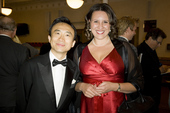 Diahann with William Chen after the concert
 -
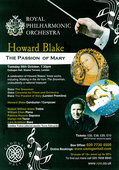 70th Birthday with the RPO at Cadogan Hall
 -
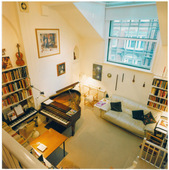 The Studio Kensington
 -
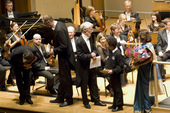 70th Birthday Concert
 -
 William Chen takes a bow for the piano concerto
 -
 Bernard Cribbins
 -
 Patricia Rozario takes a bow
 -
 70th Birthday Concert
 -
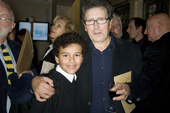 Robert and Howard after the birthday concert
 -
 70th Birthday Concert
 -
 70th Birthday Concert
 -
 70th Birthday Concert
 -
 My son Robert Blake, the fabulous treble soloist, takes a modest bow with Bernard Cribbins
 -
 Diahann talks to William Chen about the concert
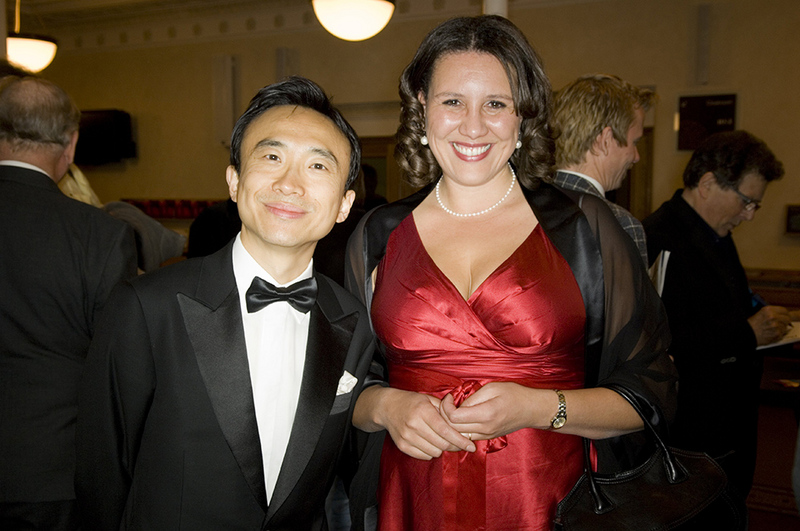

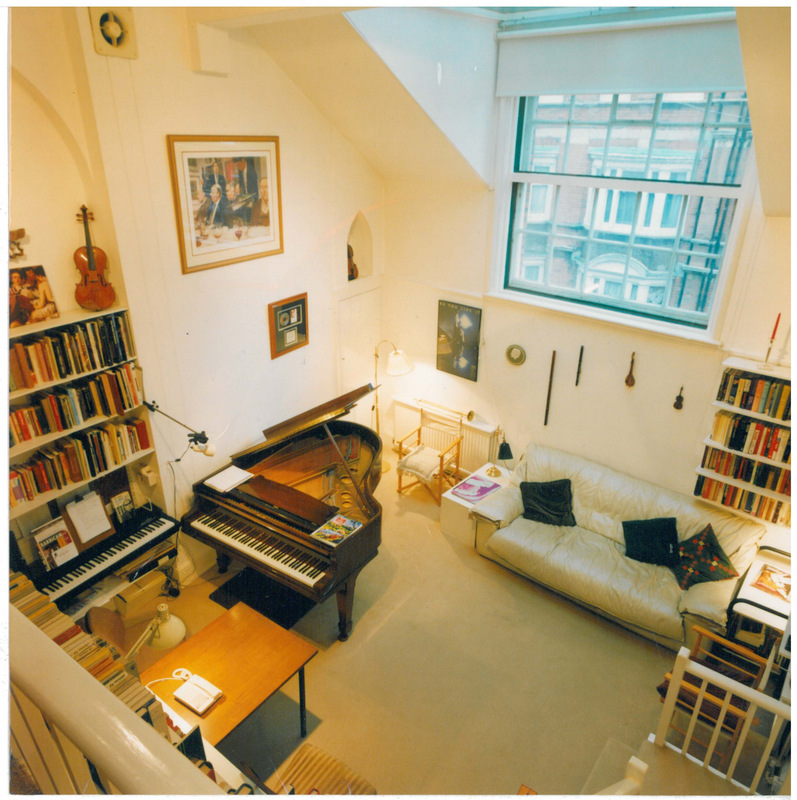
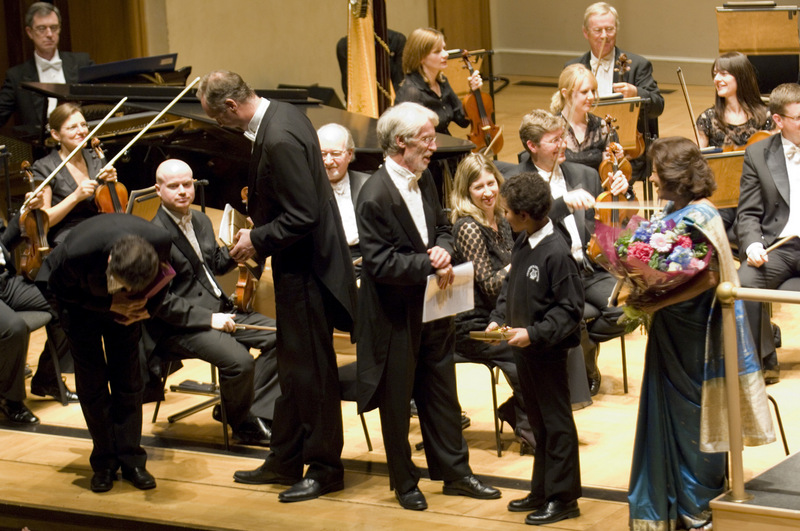
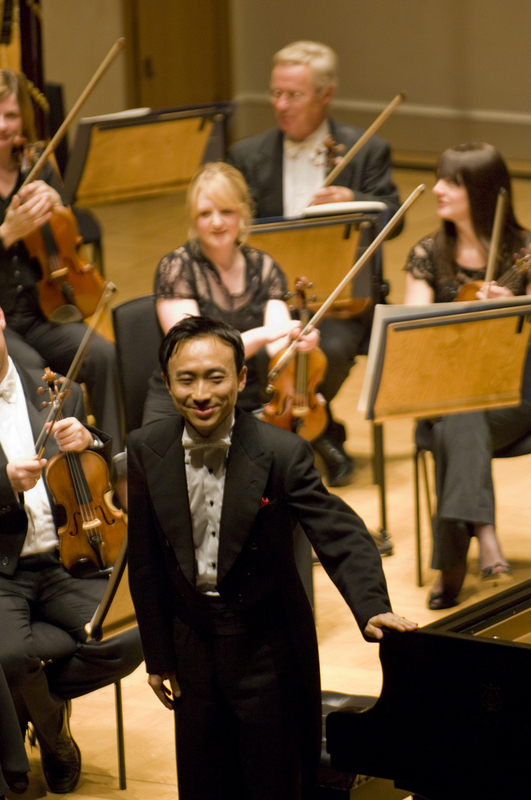
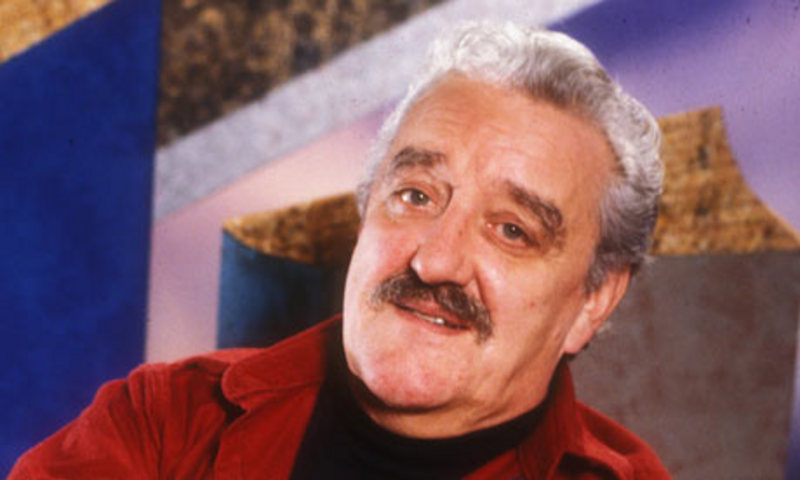

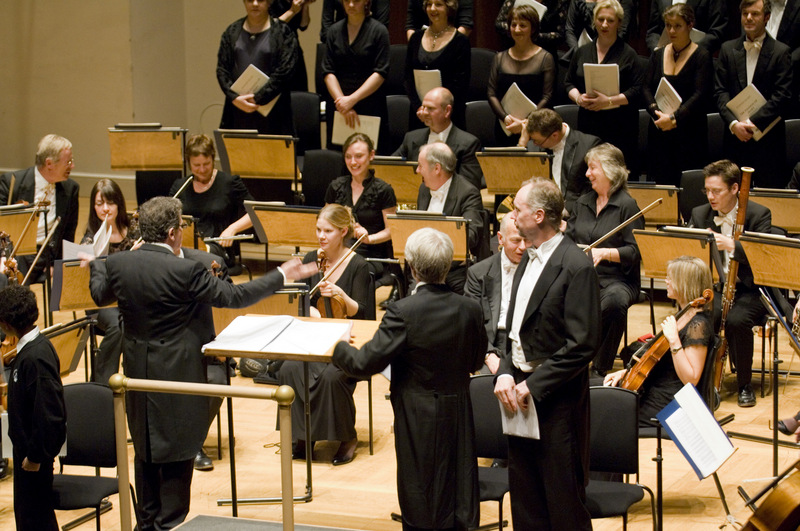
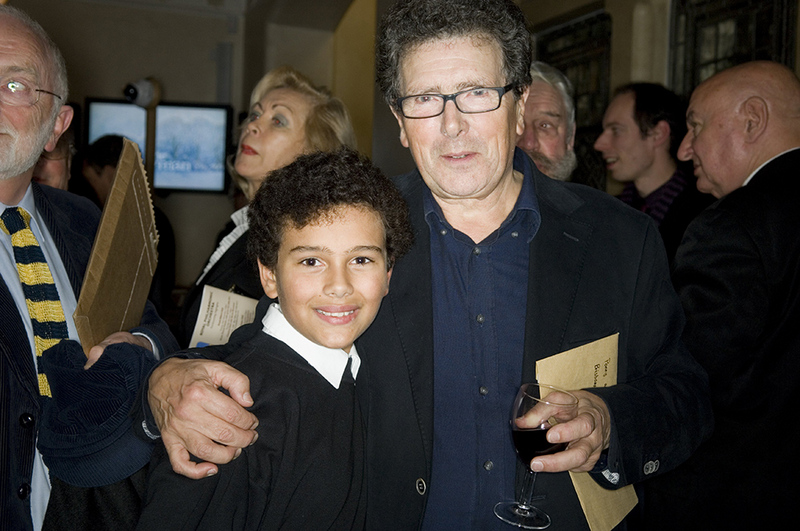
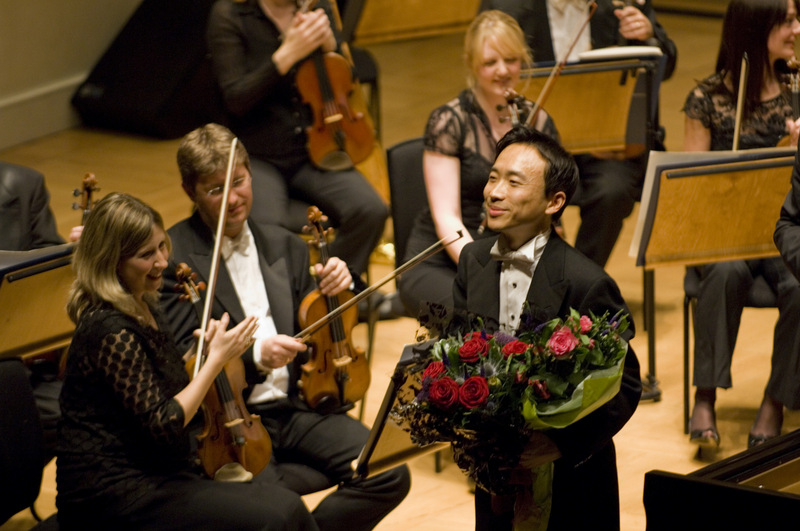
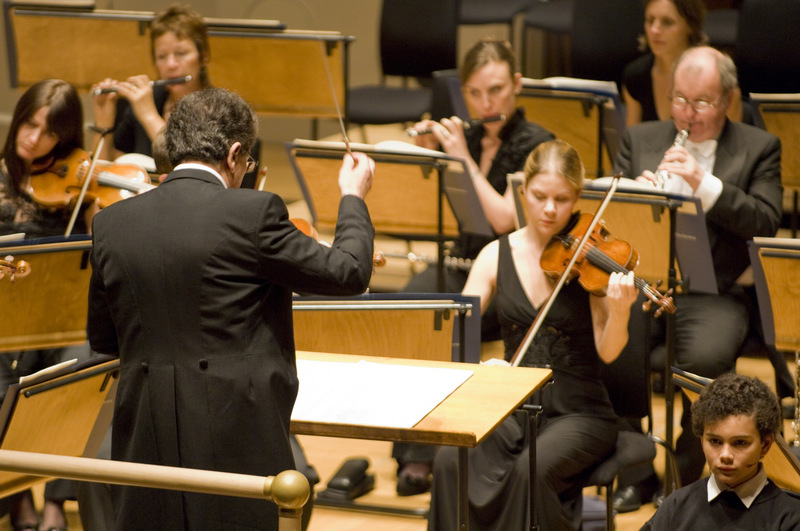
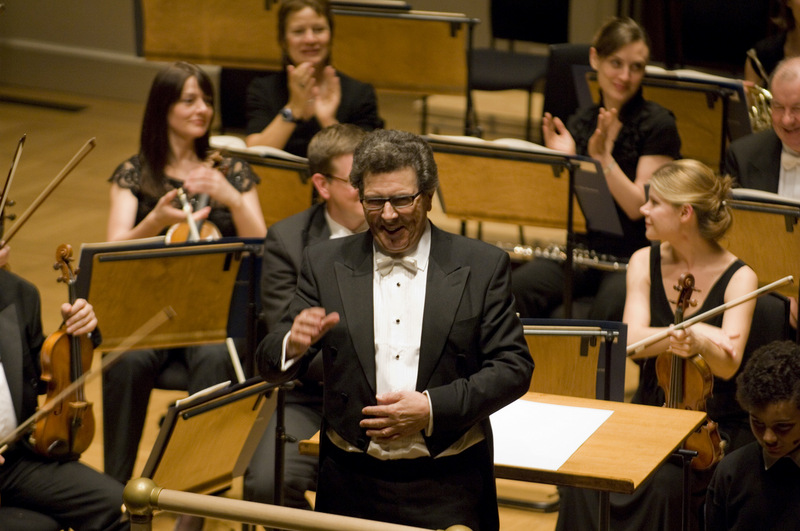
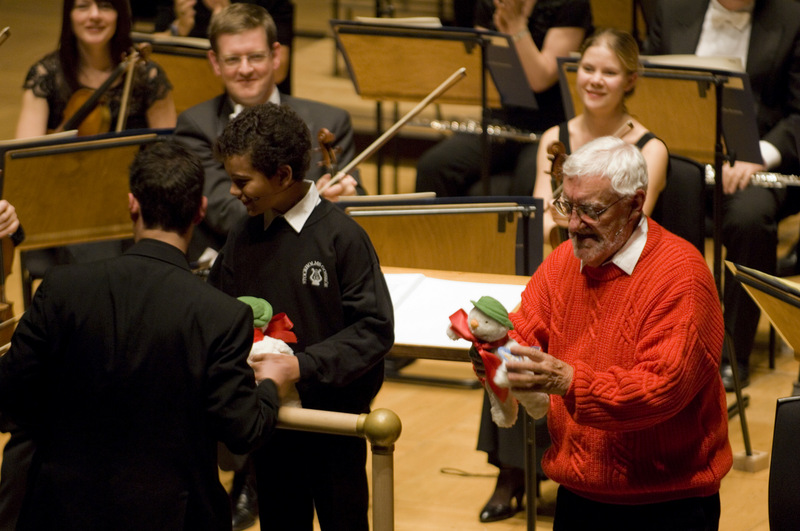

'SPEECH AFTER LONG SILENCE' (2009)
BASSOON CONCERTO
ROBERT WILLIAM BLAKE SOLO TREBLE ON THE NAXOS RECORDING OF 'THE PASSION OF MARY' SOLO CHOIRBOY AWARD IN RATTVIK BOYS CHOIR FESTIVAL, SWEDEN
[Quote from the Naxos CD cover]
Robert William Blake is Howard Blake's eleven-year-old son. He attends the Adolf Fredrik specialist music school in Stockholm and is also a member of the Stockholm Boys Choir. In 2008 he won the competition for best solo choir boy at the Rättvik Boys Choir Festival.
Robert William Blake Role: Classical Artist Album Title: BLAKE, H.: Passion of Mary (The) / 4 Songs of the Nativity (London Voices, Royal Philharmonic, Blake) Naxos Catalogue number: 8.572453 Work Category: Choral - Sacred Recorded at Abbey Road Studios London 12th. and 13th. August 2009.
(What a wonderful tribute both to Robert's superb natural gift of a truly beautiful voice, and also to the coaching he received from the excellent Adolf Fredrik music school. His father and mother and all the family are very proud of him.)
SOUTH KOREA
After years of negotiations the South Korean stage and music impresario Jae-Och-Chong decided to mount a full production of The Snowman Stage Show exactly as it plays in London and took the entire technical and artistic team out to the superb contemporary dome-shaped opera house in Seoul. The cast and band were Korean and excellent. I had qualms that South-East Asia might not take to our modern Christmas legend, but as I walked towards the opera on the opening might I could hear the long-familiar sound of many children chattering and laughing with delight. One thing we had organised to make the show friendly was the idea of quoting a fragment of a well-known Korean folk tune and dress one of the 'snow-women' in a national costume. At the end of the show our manager asked if I'd take a bow and I willingly headed for the stage. He said:
'There's one snag'
'What's that?'
'The Korean snow-woman would like you to dance with her on stage!'
I obliged - to tumultuous applause.
SPEECH AFTER LONG SILENCE - a virtuoso piano piece
Vladimir Ashkenazy rang me one day in 2009 and asked if I would consider composing a competition piano piece for the Chopin Society of Hong Kong's International Piano Competition 2012 of which he was musical director and chairman of adjudicators. Previously there had been a Mozart piano concerto section but it had just been decided to drop this and replace it with a newly-commissioned work to be specially written for the occasion.
I pondered over this and awaited further information and a contract, but at about this moment William Chen rang and told me that he was to give a private concert on behalf of Stuart Pianos at the Shanghai Expo in 2010 and wondered if I had anything he could play. I told him that I had been asked to write the Hong Kong piece and he asked if when I had completed it he could try it out for me. The conversation with him and the thought of this immense festival being staged in China, which had been so isolated from the world for so long, gave me an idea and I thought of the title 'Speech After Long Silence', music starting from the most still and quiet motif, like somebody unable to speak, and then gradually finding their voice and bursting into song and dance, life and joy - like a carnival. It would be in any case vital for me to test the piece and I knew that William would help me in this. I flew to Shanghai, worked on the fine-tuning of the score in the Chen family's beautiful apartment into which a Stuart piano had been delivered from Australia and then heard William play a splendid performance of 'Speech' on another special Stuart piano with its extraordinary nine octaves instead of the usual seven. I made a special arrangement to accommodate the extra notes as an interesting experiment.
My great friend, music critic Bob Briggs, invited me to the opening Prom in July at the Royal Albert Hall 'because he wanted me to hear someone play'.
'There's this 18-year old girl from Glasgow called Karen Geoghegan and she's going to play the Mozart bassoon concerto and she's terrific.'
We listened and I agreed.
'Would you like to meet her and maybe you could write something for her?'
So we met Karen outside the hall and Bob asked if she'd like me to compose her a concerto. She was thrilled to bits at the idea and said she'd love to.
'Now the only snag' said Bob 'is that we need it right away, because you've made a huge sensation and International Music Web would be prepared to commission a piece if they can get it out on disk right away and publicise it on their website.'
This was a bit of an undertaking, but I remembered an early Oboe Concerto I'd written and long-since discarded. I thought maybe it could be completely transmogrified with my added years of experience with concertos and I was willing to have a go right away. Only weeks later I rang Karen and she came over to the studio and played it through.
'I love it' she said, 'but I must just ask my new recording manager at Chandos if he'd agree to letting me play and record it.'
He didn't - and the poor girl rang me in tears, not believing anybody could be so mean.
The Bassoon Concerto had in fact worked out splendidly but it went into a cupboard as its Oboe Concerto predecessor had so many years ago. However it didn't stay there so long. Talking to producer Job Maarse in 2012 about repertoire for a woodwind concerto album with The Academy of Saint Martin in the Fields he said:
'Pity you haven't got a Bassoon Concerto'
'I have'
It was recorded magnificently in September at St. John's Smith Square played by principal bassoonist of the Concertgebouw, Amsterdam, Gustavo Nunez and conducted by Sir Neville Marriner
THE 150th ANNIVERSARY OF BRIGHTON, HOVE AND SUSSEX GRAMMAR SCHOOL
On July 4th 2009 I was most proud to have been invited to give the celebratory speech for the 150th Anniversary of the founding of my school, the Brighton Grammar School in 1859. It took place in the beautifully-muralled school hall after the annual old boys reunion lunch. My son Christopher drove down with me from London and he managed to discreetly film the event on a Sony Handicam. For some reason I wasn't invited to speak until well on into the afternoon and because of this my Chelsea Arts Club friend Noel Bennett signalled me to cut it short. A shame since I could have carried on indefinitely! As I spoke the memories came flooding back to me of all the wonderful teachers and fellow-pupils who had contributed to this great period in my life. One such friend and fellow-pupil was Andrew Henderson who took great trouble to give an excellent, thoughtful account of my speech for the school magazine 'Past and Present:
Andrew Henderson recalls the Reunion Lunch address and appraises a highly distinguished career.
Howard's genuine wealth of experience, range of talents and international spread of friends gained during an intensely active career prompts the question: has any 'Old Boy' taken the meaning of our motto Absque labore nihil more seriously?
He ascribed the ploy of renaming the School to that well known Transylvanian composer Vladimir Bhasvic and then set the scene by narrating some chats with Harry Brogden.
What team sports are you doing now Blake? I've just won the 5th form doubles tennis, Sir? That's not a team sport, Blake. I won the long plunge, Sir, because I hold my breath for more than three minutes due to singing, Sir. That is not a team sport either, Blake. No Sir.
As well as piano playing, contemporaries recall his soprano lead in school operas - Ruddigore - Rose Maybud, Merrie England - Bessie Throckmorton and Josephine in HMS Pinafore. Over five hundred societies staged Merrie England in that 1951 Festival of Britain year but few had a top E flat sung with such assurance as Howard's Bessie. He mentioned Mr Milton's reaction, a man with slight Hitchcockesque mannerisms.
What note did you sing there, Blake? A top E flat, Sir. That is not normal Blake. No boy can sing to that note. Well Sir, I just did. I think it is not only unhealthy Blake; I think it is probably reprehensible.
Different opportunities could have seen Howard selected for a great cathedral choir and what course then might his career have taken?
In 1989 The Philharmonia Orchestra commissioned a Piano Concerto in celebration of the 30th birthday of Diana, Princess of Wales. 'I am glad that I am not playing this' he muttered, an ingrained modesty denying his own talent. His concerto is a demanding virtuoso work which former child prodigy and Russian pianist Evgeny Kissin was due to play. Overcrowded schedules prevented it so they turned to Howard. Thus began a rigorous regime of long daily practice to hone technique. The May 1990 concert was a triumph and at the Royal reception Howard presented a bound copy of his score with CD to Princess Diana; surely another peak of a great career.
Piano-playing began at the age of six with Bonney Churcher, a well-qualified organist who ran Preston School of Music nearby. His forte was not really piano technique but he took Howard through the grades of Trinity College and proved to be of inestimable value when it came to theory, harmony and counterpoint. After winning a scholarship to Brighton Grammar School Howard was taken on for a while by the resident music master, Albert Chapman, gaining a distinction in Grade 8 piano, but a real dedication to serious piano study didn't really begin till he was introduced to the distinguished teacher Maud Hornsby in Rottingdean, who had taught the likes of Ronald Smith and Kyla Greenbaum. She took him under her wing at sixteen but on retiring some months later passed him on to a new young teacher Christine Pembridge, newly-appointed head of piano studies at Roedean and Royal Academy of Music piano prize winner. She put serious demands on Howard, spotting talent, but was unaware that his Headmaster's priorities did not embrace such ability.
'What do you hope to study in the VI form Blake?' asked Brogden. 'Music and Philosophy, Sir' 'We don't do Philosophy here Blake. How about History?' 'It is not the same Sir.' 'How about Philosophy of History. Leave out the music.' 'I will certainly think about it, Sir' 'That's the spirit Blake. I think that we would all much prefer it to your playing the piano.'
Howard later might say: 'Christine Pembridge bullied the hell out of me', but the reason she did so was because she profoundly believed that he could become a great concert pianist and she wanted to make him aware that he had to catch up with piano students who had had many years of rigorous coaching. Her energetic dedication paid off at the 1957 Hastings Music Festival where under a competitive structure, with a Royal Academy of Music scholarship on offer, Howard was entered for four different classes: Bach, Beethoven, Chopin and John Lockey Memorial Scholarship. He won all four! At Brighton Grammar School assembly the following day one might well have expected that his triumph would have been mentioned at 'Prayers' by the head master, along with the usual, routine announcements of football scores and running standards. Howard had managed to mention his achievement to headmaster Brogden before 'Prayers' began, but the only reaction he got was: 'I still do not see you doing much in the way of team sports, Blake.' His astounding scholarship was never mentioned and to this day does not appear to be posted anywhere within the building or archives.
However Howard did greatly appreciate what was now on offer, having learnt the disciplines instilled within the traditions of the school. The excellent senior history master, Steve Pratt, encouraged awareness musically and academically and, with others, extended his intellectual curiosity. The school ethos gave much. But the Honours Board records no RAM scholarship. He was on collision course. Brogden wanted Oxbridge scholarships. Howard was off to the Royal Academy.
There, while studying piano and composition under Harold Craxton and Howard Ferguson, the idea of combining music and image developed in his mind. But 'how to make a living' was the conundrum. As a pianist who could play by ear, playing in clubs and pubs was an option and he felt he might be able to develop a range of musical styles.
Talent-spotted by David Paramor whilst playing keyboards in Soho's 'Ad Lib' club, he was offered a role of 'recording session pianist' at EMI's Abbey Road Studios. His pace of life ramped up and by 1966 he was among the first to have worked on multi-track recording techniques. He progressed to TV and cinema, working as pianist, arranger, orchestrator, composer and conductor. Bernard Herrmann encouraged his composition, steering him towards Laurie Johnson at Elstree Studios where by 1967 he was both composing and conducting episodes of 'The Avengers'. Conducting really took him into the deep end when he was asked to conduct an orchestra of one-hundred and twenty players to record the feature-film album sound-track of the Cinerama Hollywood epic 'McKenna's Gold' for the great Quincy Jones. Film-score commissions started to flood in and one terrific score he wrote was for Ridley Scott's masterpiece 'The Duellists' with David Puttnam as producer, the film receiving the Special Jury Award at the Cannes Film Festival in 1977. 'The Snowman' was finalised in 1982. Concert versions are seen worldwide and a stage version runs annually at Sadlers Wells Peacock Theatre, but biographical notes rightly stress that there is more to Howard than 'The Snowman'. Music that he wrote somewhat secretively whilst at school was all subsequently published. The 'Piano pieces of imagination and reflection' that form his 'Lifecyle' CD include a 'Toccatina' written as early as 1957.
Choral Societies worldwide perform his dramatic oratorio 'Benedictus' described by Sir David Willcocks as 'a work for all centuries'. Recent press comment refers to a master-musician from whom our church and cathedral organists should commission anthems and canticle settings: for 'he has inspiration on his side'. His affinity with choral music is clearly marked: a commission for the opening of the Three Choirs Festival in 1987 produced his Festival Mass followed by Four Songs of the Nativity for the Bach Choir in 1990 and Charter for Peace in 1995 commissioned by The Foreign and Commonwealth Office celebrating the 50th Anniversary of the United Nations and performed at Westminster Hall in Parliament.
In The Encyclopedia of Contemporary Composers it reads: 'Blake is that rarity...a genuinely popular composer. If he has a recent parallel, it is probably Leonard Bernstein, though he is an altogether more natural, less troubled composer ... Blake is unembarrassed and unhindered by his popularity. It is, as it was with Mozart, simply a response to a spontaneous melodic gift underpinned with considerable technical skill'.
Despite his confounding creative schedule which must have seemed at times a medley of mayhem, he paid full professional dues as an executive director of the Performing Rights Society (1978-1987) and co-founder in 1979 of the Association of Professional Composers. Awarded the OBE for his services to music in the 1994 New Year Honours list, Groves Dictionary of Music and Musicians reads 'Howard Blake has achieved fame as pianist, conductor and composer.' Some 'son of the school' as our song has it.
BIRTHDAY RECITAL OF MUSIC FOR PIANO AND VIOLIN
A recital of all-Howard Blake music for violin and piano took place at Barnes Music Club on October 28th with Madeleine Mitchell as violinist and the composer as pianist, in effect being the first live performance of the repertoire featured on the Naxos disk.
-
 Seoul Opera House
 -
 TV Interview Seoul
 -
 Atrium
 -
 Robert William Blake

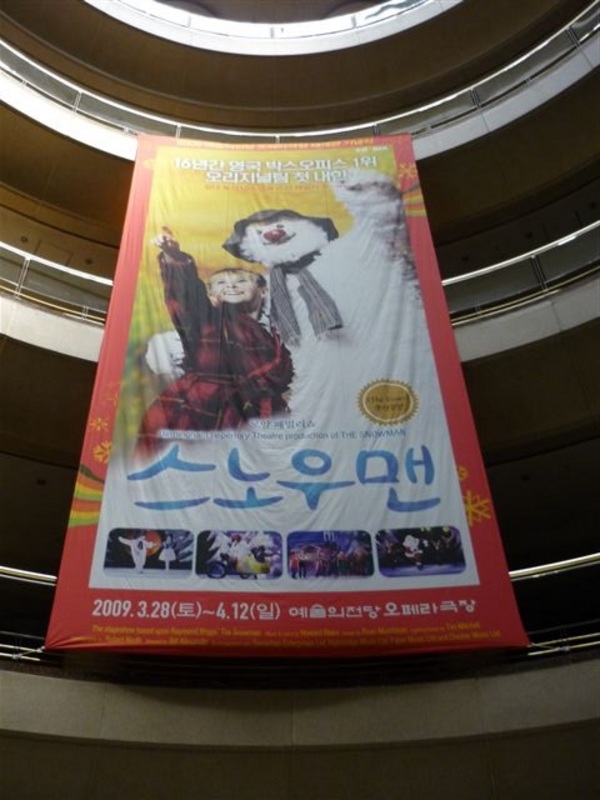
'DIVERSIONS' FOR CELLO AND PIANO (2010)
BENEDICT KLOECKNER WINS EUROPEAN BROADCASTING UNION YOUNG MUSICIANS PRIZE
On January 21st the 21-year old cellist Benedict Kloeckner (b.1989) and his Spanish pianist Jose Galliardo visited me to play 'DIVERSIONS FOR CELLO AND PIANO'. Benedict had learned of the piece through one of his mentors, the cellist Martin Rommel with whom I had once played it in London. I was much impressed by Benedict's playing and gave quite a master-class, playing and explaining some of the rhythmic intricacies, dynamics and so on. Later in the year I was amazed to learn that he had not only entered the piece for the EBU Young Musicians prize but was actually among the 7 finalists, competing for the prize in Bratislava on 26th November. I thought this was something I could not miss and asked Chris if he'd organise travel arrangements and fly over with me. We arrived in the beautiful old town of Bratislava on Friday November 26th and were delighted when Benedict, playing 'Diversions', was selected as one of the three finalists. Then on the following day, playing the Elgar Concerto, he was awarded the overall first prize! In the hope that this might happen I had rapidly prepared a transcription of the Violin Sonata (the wonders of Sibelius software!) and presented the 'Cello Sonata' by way of congratulation.
A String quartet commissioned by The Edinburgh Quartet to celebrate their 50th Anniversary (1960-2010)
Back in March 2007 I had conducted a recording of 'The Land of Counterpane' with the Scottish Chamber Orchestra. The lead cellist was Mark Bailey, cellist of the Edinburgh String Quartet, and he told me that the quartet were to celebrate their 50th anniversary in 2010. Would I like to compose a work for their Anniversary? My relationship with the Edinburgh Quartet goes back to 1960, the year it was formed, when as a piano student at the Royal Academy I gave a concert in the Leith Hall with violinist Miles Baster. As a result of this concert Miles was presented with the great opportunity of creating a brand-new string quartet and he devoted virtually his whole life to it, leaving behind a great legacy of performances and recordings. I was much honoured to be asked to compose a work to celebrate the 50th anniversary and thought a lot about what form it should take. Beethoven had been much associated with them and is often considered the weightiest of quartet creators, with the last quartets seeming to move away from sonata form into some sort of freer space where he seems to be playing with ideas more than working with them. I remembered the remark attributed to Mozart when accused of not taking music seriously enough: 'The verb that qualifies music is to play'. Beethoven's near-contemporary, Schiller, in fact developed a theory that there is within all of us an 'urge to play' and this urge if followed can take our minds and ideas to the highest possible level. Present theories in regard to 'lateral thinking' are saying the same thing. Schiller called it 'Spieltrieb' and it is by no means impossible that Beethoven was aware of it. I decided to write 'whatever came into my head' and to allow the form to go wherever it felt like going. The beginning is furious, if not thoroughly bad-tempered. (moderato risoluto) Where to go next? Straight to a slow and poignant canon in four parts (lento espressivo). How boring, what about some furious fun and high spirits (Presto). It has to stop for a breather. Out of nowhere comes a sort of cradle song with a very high harmonic on the first violin (lento triste), but its innocence doesn't last and a feeling of fear develops. Enough of that, here's a little D major dance played pizzicato (Moderato a giocoso). Against the dance the cello plays a fast reiterated note almost like a drum - where can that take us? Amazingly we burst back into the bad-tempered opening on full throttle, violins doubling at the octave and fierce rhythms in viola and cello at the tenth (Moderato appassionato). It seems absolutely logical and somehow absorbs our poignant canon into it as well (Moderato piu sereno). It comes to a second point of repose and half-way through the piece, but it's definitely not the end. I hear a fast, insistent leaning semitone idea (Presto) and feel it needs virtuoso variations against it for each player: cello, second violin, viola, first violin, whose variation is in G sharp minor and ferocious! But it slows down- and comes to a third point of repose. And what comes out of that? Surprisingly the cradle song, now very serious and in B flat minor. It feels that it must go to D flat major and Lo! And Behold it turns into an instrumental transmogrification of the nativity song from my oratorio 'The Passion of Mary', seeming utterly inevitable and moving to an ending of complete serenity. A preview performance by the Edinburgh Quartet took place at Alfriston Summer Music on July 29th in a programme celebrating two other anniversaries (Haydn's 200th death-day and Howard Blake's 70th birthday). The world-premiere of 'Spieltrieb' took place at the Edinburgh Quartet's 50th Anniversary Concert in The Queen's Hall Edinburgh on 19th February 2010. Other quartets came to mind and Naxos offerred to create a CD. It was recorded in the Reid Hall Edinburgh 5-7 June 2010 and consisted of: 'Spieltrieb';'A month in the country' for string quartet; Leda and the Swan; String Trio 'Walking in the air' extract from the Suite from The Snowman for string quartet
THE SNOWMAN STAGE SHOW AT THE CARDIFF MILLENIUM THEATRE
THE SNOWMAN STAGE SHOW AT THE SEOUL OPERA HOUSE, S. KOREA
THE SNOWMAN STAGE SHOW AT SADLER'S WELLS LONDON PEACOCK THEATRE
THE SNOWMAN - THE LIVE STAGE SHOW A new full-scale DVD film of the two-act stage show Polly Gunning my A&R executive at Sony approached me with this idea. Sony Entertainments wanted to have an optional commentary and had decided on Joanna Lumley, who was much in the news and very popular at the time. An excellent location film company was taken on - Splinter Films - and the splendid director was Nick Wickham. We had intended to film in The Peacock Theatre but logistics proved it far easier to film up in the Birmingham Repertory Theatre, where it had of course been originated. On this occasion I acted as joint executive producer of the project along with Stuart Rogers. We both strongly felt that it should be filmed with an audience who are so much an essential part of the show, with the children shrieking with exclamations of delight and clapping along with the music. One child in the front row was only 12 months old but remained riveted from beginning to end - entranced. The DVD film was released for Christmas and proved a great success
In 2009 Vladimir Ashkenazy had rung me one day and asked if I would consider composing a competition piece for the Chopin Society of Hong Kong's International Piano Competition 2012 of which he was musical director and chairman of adjudicators. Previously there had been a Mozart piano concerto section but it had just been decided to drop this and replace it with a newly-commissioned work to be specially written for the occasion. I pondered over this and awaited further information and a contract, but at about this moment my friend William Chen Wei-Ling rang and told me that he was to give a private concert on behalf of Stuart Pianos at the Shanghai Expo in 2010 and wondered if I had anything he could play. I told him that I had been asked to write the Hong Kong piece and he asked if when I had completed it he could try it out for me. The conversation with him and the thought of this immense festival being staged in China, which had been isolated from the world for so long, gave me an idea and I thought of the title 'Speech After Long Silence', music starting from the most still, quiet motif, like somebody unable to speak, and then gradually finding voice and bursting into song and dance, life and joy - like a carnival. It would be in any case vital for me to test the piece if the commission were finalised and I knew that William would help me in this. I flew to Shanghai, worked on the fine-tuning of the score in the Chen family's splendid apartment into which a Stuart piano had been delivered from Australia, and then heard William play a splendid performance with the extraordinary 9 octaves instead of the usual 7. I had made a special arrangement to accommodate these extra notes as an interesting experiment. When the commisssion was in fact finalised (in October 2011) I flew to Hong Kong to coach the contestants and act as an adviser to the jury. However, the unexpected happened. When Vladimir heard the piece he virtually fell in love with it, and with more and more performances, his admiration increased. On the last day he invited me to lunch at The Peninsular Hotel and told me he'd like to record it. What else did I have? I reminded him of 'Lifecycle', the 24 pieces dedicated to him and then he said: 'Could you make a piece out of my initials - like Liszt did with B.A.C.H.? We pondered over this. V.L.A. wasn't much good and nor was A.S.H. I thought. But Vova cracked it. A was fine, As or S is German for A flat (enharmonically G sharp) and H is German for B natural - ASH - Ashkenazy. I called the piece 'Prelude for Vova' and the conversation led to the realisation of a whole life's dream coming true, since in June 2013 Vladimir was to record an entire album of my piano music.
-
 Howard and Benedict Kloeckner
 -
 SpieltriebCover
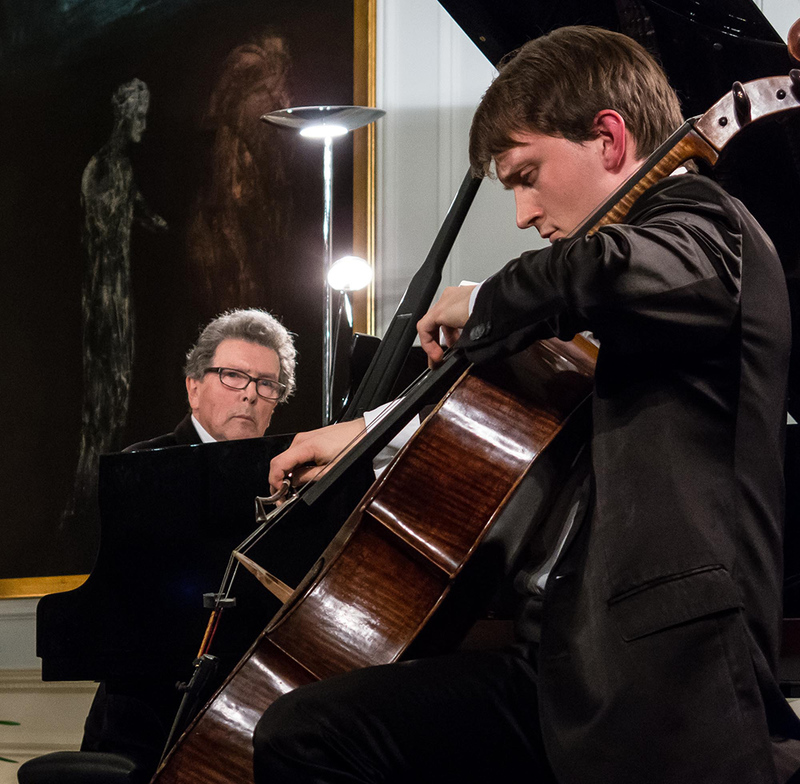
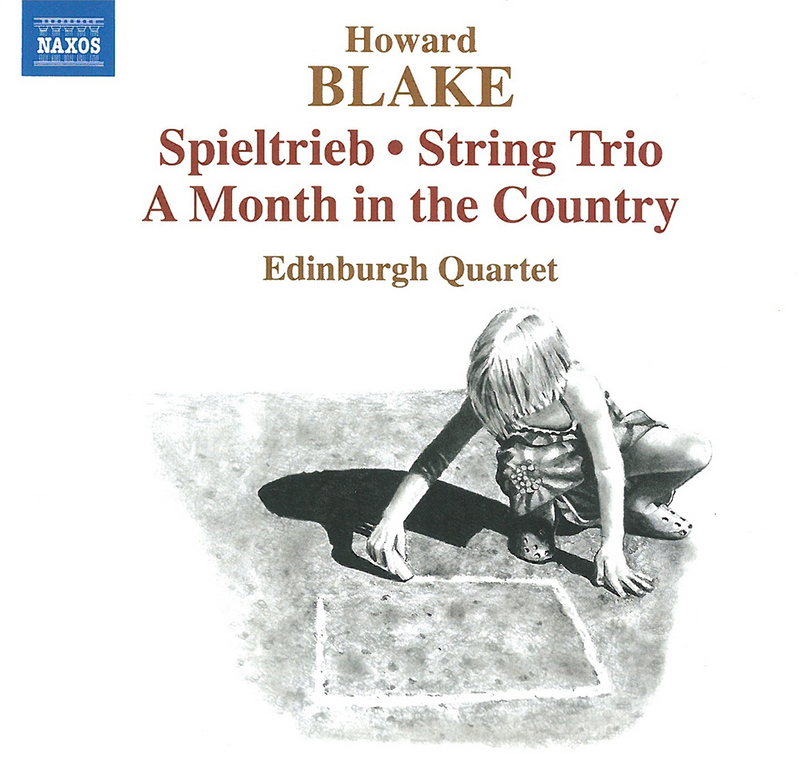
'SPEECH AFTER LONG SILENCE' (2011)
Test-piece for The World Piano Competition
In January a contract was forthcoming from the organisers of the Hong Kong piano competition and I agreed happily to supply the music and to fly to Hong Kong in October in order to coach the competitors and to act as adviser to the jury - a most distinguished jury which was to include Peter Frankl, Gary Graffman, Garrick Ohlsson, Cristina Ortiz and Pascal Roge. Between October 25th-November 3rd The 3rd Hong-Kong International Piano Competition was held in the City Hall, Hong-Kong with 'Speech after long silence' as the test-piece and the first public performances were by contestants Elmar Gasanov, Min Hao Tsai, Keina Sato, Han Chen, Soo Jung Ann and Giuseppe Andaloro from Sicily who won the first prize. It happened by chance to take place on my birthday. When the bus full of adjudicators pulled in at the Peninsular Vladimir Ashkenazy, the chairman of the jury, stood up to say:
We have to thank Howard Blake for a great test-piece and also to sing (and he began conducting)'Happy Birthday to you...'
'The World Premiere of Blake's 'Speech' was given by the first finalist, Russia's Elmar Gasanov. Unlike most new works, whose fate is to be played on multiple occasions ad nauseam at a competition and then shelved for eternity thereafter, this one promises to be heard rather often. Blake's partiality for tonality and emotional connection (unsurprising for the composer of the children's favourite The Snowman) makes this a most accessible work. At about 8 minutes, its Romantic gestures replete with lush harmonies and crashing chords resemble an updated and extended version of one of Rachmaninov's Etudes-tableaux. The key of E flat minor is also telling. Gasanov performed it with a score, but no matter, the performance brought out its colours, and for a Russian who might already be familiar with this idiom, the bell-like sonorities came out trenchantly. Giuseppe Andaloro, winner of multiple first prizes, would have performed at the First Hong Kong Competition in 2005, but had pulled out at the last minute having won First Prize at the Busoni Competition in Bolzano the week before. Under the HK competition's new rules which forbid participation in other competitions three months before or after, he would have been disqualified and barred instead. Anyway, at 29 this would be a last hurrah. I had heard him perform in 2002, when he made a big impression winning 1st prize in the London International Piano Competition. In Hong Kong, he did not disappoint. First he performed the Blake work from memory, which immediately gave positive vibes. His was a more nuanced performance, perhaps a little slower than Gasanov's but far more ruminative. Displaying more shades of colour, it opened more possibilities for imagination. This was not a merely memorised 'Speech', but one imbued with much thought, probing and ultimately revealing a slew of emotions. Even the tintinnabulation dazzled, and with a more volatile finish, had a sense of improvisation. My verdict: Magnificent performances of Blake and Rachmaninov from Andaloro'. [Chang Tou Liang, Hong Kong, November 2011]
LINCOLN CATHEDRAL
On January 29th Anna Menzies drove me up to Lincoln for a delightful event. Some works of mine for choir and organ had been selected by Aric Prentice, the music director of Lincoln Cathedral with a view to possibly recording them for Naxos or Abbey Records. Within the Evensong service they performed 'Still falls the rain' as the anthem, (opus 438]'Faith alone'[/opus] as a hymn and 'The Rise of the House of Usher' as the final organ voluntary. They didn't sit too well together, since 'Still falls' is a very dark and somewhat obscure anti-war poem whilst 'Faith alone' is an innocent congregational hymn. I would not describe 'Rise of Usher' as exactly liturgical - or even suitable for a church performance. It was written as a virtuoso concert piece to display the new organ in Edinburgh, the title being a play on words with Edgar Allen Poe's 'The Fall of the House of Usher'. However the organist played it quite magnificently on the superb Father Willis organ. It was left with me to decide a way forward, but the evening showed to me the considerable disparity in this juxtaposition of various occasional works and I wasn't convinced it would work as an album.
THE LAND OF COUNTERPANE
On February 5th I was all set to go to Edinburgh for a prominent performance of The Land of Counterpanein 'The Voice of the City' Concert , the first Provost's Concert also set in the Usher Hall. Unfortunately a heavy cold kept me away.
THE JERSEY LIBERATION FESTIVAL
By February 11th I'd recovered and Chris and I set off for a day out in Jersey. I'd been commissioned to compose a brass band piece(and possibly national anthem!) for the Jersey Liberation Festival. The festival organisers were most hospitable and their director James Mews had very kindly offerred us the use of a house along the coast from St. Helier. We had walked along the glorious beach and then researched and found a perfect poem in the town library. Back at the house I'd jotted down a melody while Chris had a nap and back in London I developed it into an instrumental piece Liberation of Jersey. On May 6th Chris and I set off again for Jersey, but this time only for the day and with Anna as well. A crowd assembled in Victory Square and the splendid Premier Brass gave Liberation of Jersey such a rousing performance that it was received an enthusiastic encore. A mass choir of young Jersey children then appeared on a balcony above the band and sang a version of 'Walking in the Air'. A huge thunderstorm held up our departure - but apart from that a fabulous day.
BERNARD HERRMANN
On March 12th BBC radio invited me to Broadcasting House to talk about Bernard Herrmann. I talked for nearly an hour about my close friendship with him back in the sixties, but only a sentence was used in the programme. I owed him a great deal and would have liked people to know that.
THE PASSION OF MARY
March 26th brought a surprisingly good performance of The Passion of Maryin a church in Coggeshall, Colchester with excellent acoustics. A statuesque young soprano called Beverly Lockyer sailed effortlessly through the coloratura role of Mary and I heard the work with a big choir for the first time, about 80 singers from the Lexden Choral society, ably conducted with orchestra by the (non-related) Sara Blake. The big choir gave the work a devastating impact and I realised that this must remain a feature for all future performances.
10 YEARS MORE AT THE PEACOCK
My contract for the Snowman Stage Show to run at The Peacock had expired but the press had provided us with a quote; 'The longest-running Christmas show of all time'. On March 31st I signed a new contract at the Peacock for a further 10 years - an unheard of amount of time in the theatre world. Those who signed with me were Stuart Rogers from Birminghan Rep, Alistair Spalding from Sadler's Wells and John Coates from Snowman Enterprises, who seemed unusually quiet.
BENEDICT KLOECKNER AND 'DIVERSIONS'
On April 3rd I flew to Berlin to hear Benedict Kloeckner play a new string orchestra arrangement of the Schumann cello concerto. We were wondering if a string arrangement of 'Diversions' might work and typically I couldn't resist starting work on it. I had finished it before I set off and was clutching it in my little hand as I was introduced to Benedict's agent. As it turned out he was not even interested to look at it. But at least I'd done it! Another work possible to perform, and whilst in Berlin we had cheery talks about an all-HB recital in Mainz in which everybody was most interested. On May 7th I left for the all-Howard Blake recital for cello and piano in Germany. Benedict and his friend Crissy met me at Frankfurt and drove us to Mainz, where we rehearsed in the splendid 'Villa Musica', a beautiful old mansion evidently used specifically for music students to rehearse in - a marvellous facility. The next day on to Schlangenbad, a resort spa with its 'Cafehalle', a charming little nineteenth century concert room. A great local audience filled the hall and that night Benedict and I gave a programme of Pennillion, Diversions, Jazz Dances, Cello Sonata and a large number of encores insisted on by the delighted and boisterous audience filling the hall.
June 7th Classic FM podcast
June 15th C Music TV promo film made
June 16th Funeral of Christine Pembridge in Brighton
June 26th 50th anniversary of The Avengers at Chichester University, release of HB double album on Silva Screen
June 27th Release of Edinburgh Quartet 'Spieltrieb' album on Naxos
June 29th Concert of 'Spieltrieb' at Vernon Ellis's concert room
July 1st BBC R2 live interview Penny Smith, Claudia Winkelman
July 17th BBC4 live newspapers discussion 'Broadcasting House'- News of the World hacking scandal.
September 11th Royal Albert Hall filming of the Big Sing with Aled Jones for Christnas Day BBC1.
September 27-October 4th Recital of Cello Sonata and Diversions at International Cello Festival, Kronberg, Frankurt with Benedict
October 17 In Tune BBC R3 Spieltrieb
October 21st Westminster Abbey Vigil 'Robert's solo' performed from Passion of Mary
November 23 Lowry Salford Snowman stage show opens
November 30th London Snowman stage show opens
December 8th Tempere Finland Snowman stage show opens
December 17th Birmingham ICC Snowman stage show opens
December 23rd Guest appearance on Eddie Mair show, BBC Radio 4
-
 Howard, Vova and William Chen at the Hong Kong piano competition
 -
 Howard and Vladimir Ashkenazy in Hong Kong
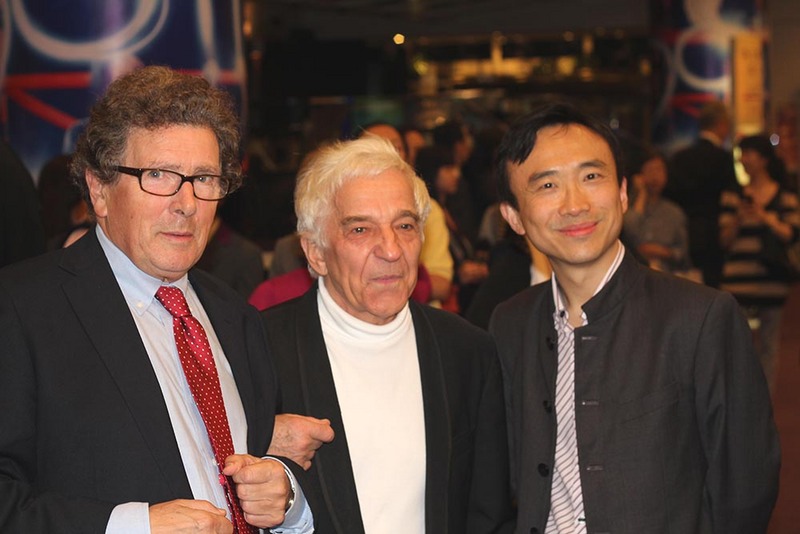
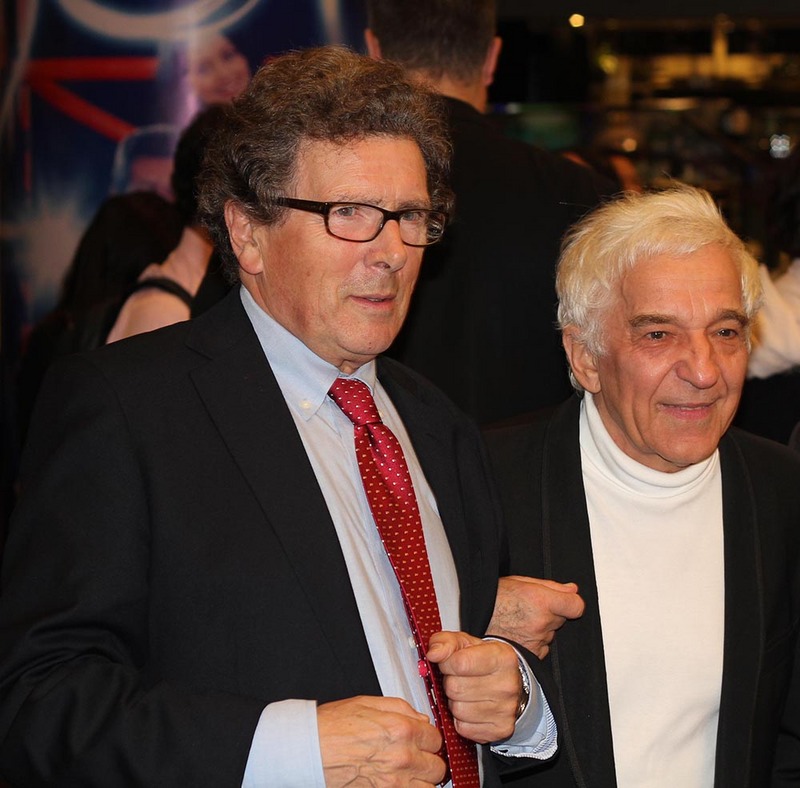
'JAMES JOYCE SONGS' - tenor Richard-Edgar Wilson (2012)
WOODWIND ALBUM - SIR NEVILLE MARRINER
Sir Neville Marriner conducted a woodwind album scheduled for release by Pentatone in 2013. Sir Neville's son Andrew, principal clarinet in The London Symphony Orchestra, played the Clarinet Concerto, which included a revised version of the first movement not heard before. The Flute Concerto was played by Jaime Martin principal flautist of the LPO and the Bassoon Concerto by Gustavo Nunez, principal bassoonist from the Concertgebouw in Amsterdam. The Orchestra was The Academy of Saint Martin in the Fields and soloists from their woodwind section gave a performance of 'Serenade for Wind Octet'
This new disc showcases wind concertos written by Howard Blake, but it also acts as an advanced celebration of Sir Neville Marriner's 90th birthday. Conducting the Academy of St Martin in the Fields, the ensemble he founded in 1959. On this disc they perform Blake's Flute Concerto, with Jamie Martin, Clarinet Concerto with Andrew Marriner, Bassoon Concerto with Gustavo Nunez and Serenade for Wind Octet.
The title of the album refers to the circumstances which brought the recording about. Without being aware of it Howard Blake, Sir Neville Marriner and his son Andrew all frequented the same hair dresser and it was through his good offices that they met and planned the programme.
Blake's Flute Concerto was written in 1996 and is for flute and string orchestra. In a very striking opening the flute sings over tremolando strings, with some lovely melodic writing for the flute. As the strings take over the musical theme the flute provides elaborate decorations. The scherzo (marked con spirito) is crisp and lively with, like much of the concerto, a neo-baroque feel. The movement has a lovely slow middle section, almost a cadenza and a rather perky coda. The Andante espressivo is a beautifully poised slow movement, the flute decorating the melody in a series of variations with a cadenza leading to the fourth movement, Marcia graziosi. This is a lively piece with a fluently personable theme. A cadenza leads into an atmospheric reminiscence of the opening.
As I have mentioned, the concerto has a somewhat neo-baroque feel, not that Baroque's style is aping the baroque, but the way he writes for the flute with it playing nearly continuously is akin to baroque concertos. Soloist Jaime Martin is the principal flute with the Chamber Orchestra of Europe, the Academy of St. Martin in the Fields and the orchestra of English National Opera. His playing is warmly fluent and poised throughout, giving the concerto a beautiful blitheness.
Blake's Clarinet Concerto has something of a history. It was originally written in 1984 for Dame Thea King (1925 - 2007). The publishers, Faber, insisted the composer re-write some of the passage-work in the first movement. Prior to a second performance in Vallencia, Blake supplied a revised clarinet part. But this was given to Thea King at the last moment by the publishers. This allowed her no time to study it, upset she put the work aside, never to perform it again. In 2010 Blake was persuaded to look at the addition he made, and he produced a new edition which re-instated them.
Thea King was taught by the clarinettist Frederick Thurston (1901- 1953), whose husband she became. Thurston gave the premiere of Gerald Finzi's Clarinet Concerto, a work whose influence seems to hover over Blake's concerto.
The opening movement starts with a short rhapsodic clarinet solo over sustained strings (the composer describes it as a recitative) Invocation , leading to the movement proper, marked Moderato molto deciso. The writing for clarinet very much evoked for me that of Finizi, but with an interesting rhythmic element to the accompaniment. The movement is a dialogue between the clarinet and the strings, rather perky in character but with hidden depths. A second recitative follows, Ceremony, another rhapsodic clarinet solo over sustained strings, this time leading to the slow movement, Lento serioso. This is the emotional heart of the concert, a rather intense movement full of English rhapsody. The finale, Round Dance: Vivace is a lively movement but hardly up beat, there is still a melancholic cast to the writing.
Andrew Marriner, former principal clarinettist with the London Symphony Orchestra and the Academy of St Martin in the Fields, responds fluently to the technical demands of the concerto, his playing sounding easy and flexible. He responds warmly to the autumnal glow of the concerto and helps bring out the intense, rather melancholic nature of the English pastoral idyll.
Blake's Bassoon Concerto was written in 1971 and revised in 2009, it is written for bassoon and strings. The opening Moderato starts with a gathering gesture from the string, followed by melancholy musings on the bassoon. As the accompaniment gets more developed, the bassoon writing becomes more elaborate. In this movement Blake deliberately utilises the instrument's ability to um large intervals. Soloist Gustavo Nunez plays with lovely chestnut tones. Like the clarinet concerto, despite the outward gaiety of the movement there is a sense of underlying melancholy. The slow movement, Larghetto, is a deceptively simple movement, with the bassoon line over a nicely discreet string accompaniment. The music develops that sense of intensely passionate English rhapsody which I heard in the clarinet concerto. The finale, Presto is a perky movement with an edgy interplay between soloist and strings, leading to a long imaginative cadenza.
Nunez is the principal bassoon of the Royal Concert Gebouw Orchestra. He plays with lovely smooth chestnut tones, without the slightest sense of comedy that can sometimes accrue to the instrument. He demonstrates that the bassoon can be a real romantic protagonist in a concerto.
Finally we hear Blake's Serenade for Wind Octet written in 1990. His writing for the wind group reflects the wind octets harmoniemusik origins, music written for outside. The Grazioso opening movement displays some lovely textures and introduces us to a distinctively fascinating sound world. The second movement, Seriosos come una marcia lente features a lovely long breathed oboe solo, playing an attractively meandering melody. The third movement Molto vivace is a delightful piece, full of high spirits.
Blake has a remarkable talent for melodic felicity, and many of the musical ideas are highly memorable but he combines this with strong musical structure and emotional depth. This is music which appeals to mind and emotions as well as tickling the ear. His debt to his teacher Howard Ferguson and to English music from the 1950's is strong. Blake's music is unashamedly tonal and his traditional style clearly different to that of many of his contemporaries. But in our modern plural world there is room for all styles, and this disc introduces us to four works which delight and fascinate.
Planet Hugill, Friday, 6 December 2013 cd review. The Barber of Neville - PTC 5186 506
IN MEMORIAM CHRISTOPHER GEER
My best friend from the age of 5 to the age of 73 was Christopher Geer, born February 17th 1939, died January 5th 2012. I met him on my first day at primary school in Brighton and he made me laugh. We became friends, playing football, cricket, tennis and swimming in the sea whenever possible. We vied for being top of the A -stream and developed over the years a great penchant for telling stories, jokes and limericks. Chris adored Shakespeare, making a fine schoolboy Corialanus. He had a photographic memory for verse, casually quoting from the Bible and the Bard, Dylan Thomas and T.S.Eliot as if it was the easiest thing in the world. When I needed someone to play the role of the saint in Benedictus , Chris was there to play it with gravitas; when I needed a German lyric for women's choir in 'The Riddle of the Sands' Chris nonchalantly created it. When 'The Snowman' took off he advised me to take on Lawrence Harbottle as a lawyer. When publishers and recording companies loomed he advised me to take on Georgina Ivor as agent and manager. A brilliant mind had won him an open scholarship to Magdalene Oxford and at the crisis-moments of my crisis-strewn voyage his intelligence and perception stopped me going overboard. A major influence. I played the organ at his funeral and delivered an oration:
Wisley Church 19th January 2012
It is somehow appropriate that the church door was too small to admit Christopher to his own funeral since he would have been the first person to find this hilariously funny. Delight in absurdity was the central plank of Chris's vast sense of humour, the quality by which above all we shall remember him. From his humour sprang the art of conviviality and that engendered the huge and generous hospitality by which he and Deirdre were known.
Chris even found his own funeral funny, as we've just heard, and chose his own hymns. He was not fearful of death. His family were not very noticeably religious. He started attending St. Augustine's in Brighton, I suppose because my family attended it, whilst I sang or played the organ - but also because of the attractive girls in the youth club! However, at St. Augustine's he got to adore the Church of England, with its King James Bible and its Hymns Ancient and Modern, and eventually could quote copiously from both. He very possibly believed in God but even found that notion quite funny too. After an evensong and its final blessing we bought fish and chips from a van. Chris said 'I believe this must be the piece of cod which passeth all understanding.' That is not to say that he didn't take things seriously. In a crisis he would rise to the occasion better than anybody I've known. Attending an IBM meeting in a high rise Croydon office block one day in the sixties from 20 stories up he saw a baby fall into a back-garden pond and a mother in total panic. With a brief 'Excuse me' he raced to the scene, gave mouth to mouth resuscitation and saved the baby's life. But receiving a medal for this prompt action he found ridiculously over-stated, shrugging it off with 'Well what else would you expect me to do?'
I met Chris on our first day at preparatory school. He was large with long spindly legs, white socks, sandals, baggy shorts and a huge padded lumber-jacket. He looked too old to be wearing this sort of get-up, but his grandmother who dressed him hadn't quite moved on from the idea that he was still a baby and she insisted on wrapping him up warmly and always calling him 'Tiny'. Tiny? He was immense!
His father Ebby was a giant of a man with fists the size of hams, army champion boxer, deep-sea fisherman, golfer, snooker player, mighty sportsman. He passed this physique and aptitude on to Chris, who excelled as footballer, cricketer, golfer and powerful swimmer. As teenagers we used to bike down and swim off the fishmarket late in the evening in the summer after finishing homework. On one occasion he'd dropped by to say that he was going down there, but I was out and only caught up with him half an hour or so later. I found a small pile of clothes and silence. Then at last far, far out in the darkness I saw a splash and swam out. He'd got cramp, couldn't move and was drifting out to sea. 'Good of you to come', he said grandly.
And he was grand. By the age of twelve he had great presence. We got on a 46 trolley-bus one day and the conductor asked if he was my father. We roared with laughter.
All memories of Chris revolve around laughter. Laughing about absurdity, incongruity, witty lines from Shakespeare, puns, word games, song lyrics and outrageously unrepeatable limericks, none of which I will quote here today. He had the most extraordinarily photographic memory and never ceased to surprise us with it. He loved Scrabble and on visits it became a sort of ritual for us to play and drink far into the night, the game constantly interspersed with humour, discussion and poetry. This could persist till morning, waiting until Chris would triumphantly place some brilliant word like 'quixotic' on a triple score when we'd collapse exhausted.
Chris loved words and loved language and it should have come as no surprise that he won an open scholarship to Magdalene and chose to read modern languages. Yet Oxford was a mighty jump for him to make. Ebby wanted him to be nothing more than a policeman like himself and I don't doubt that he would have made a very good one. (Or a major in the army come to that as his father also had been.) But a policeman who could quote entire epic poems by Victor Hugo in impeccable French or Goethe's 'Faust' in German? It didn't quite fit. Coming to Magdalene from Varndean Grammar School did not fit too well either and both of us found our academic passage as 11-plus 'boys from nowhere' often less than easy, both with those whom we'd left behind and those to whom we wished to aspire.
Where his outstanding intelligence came from we're unsure. Joan his mother was the antithesis of his father. Articulate and informed but reticent, sedentary and quietly amused to find herself with such a giant as a husband. She spoke beautifully and worked as Brighton's number one public announcer. Chris's superb diction without doubt came from her. I heard this first in primary school. We had a remarkable 4th form class-teacher called Dickie Webb, sometime footballer, RAF hero, poet, playwright and actor. 'The sky's the limit' he would say and we were utterly in awe. Both of us were given the encouragement to reach for the highest goals by his unshakeable belief both in us personally and in the new post-war welfare-state age of opportunity. Dickie Webb wrote us a play in Iambic pentameters which won a Sussex drama award. I was Burbage and Chris was the Bard. The next year at Varndean Chris played (a rather large) Rosalind in 'As you like it'. The school was famous for its Shakespeare, having recently given rise to the great Paul Schofield. Meanwhile at Brighton I played a (rather small) Rose Maybud in Gilbert and Sullivan's 'Ruddigore'. Chris went on to play a magnificent 'Coriolanus', a part with which he forever identified. Our mutual love of theatre and music dated from that time.
So Chris could have been a policeman, or an army officer, but I believe he might also have been a very fine actor. However on gaining his Oxford degree he was invited to join IBM and accepted. It was the start-moment of the computer world and it seemed a wonderful opportunity. Perhaps he could also have remained in academe and become a don, which I think could have suited him down to the ground. But IBM won him and, although many years later he confided to me that he was not really all that interested in the computer world, it was characteristic that he would accept his lot as a fait accompli and get on with it.
The age we now inhabit places fame and celebrity above all else. Chris had no truck with such nonsense. He did not like to travel for travel's sake, or to do things in order to make an impression, or to seek work for which he would be praised. Perhaps he was passed over for those who had gone to Eton or Harrow, but if this was so, he wouldn't have mentioned it and it wouldn't have bothered him. The hub of his life was home and the enjoyment of life and family and company. The job he had allowed him to do this, and he manifestly enjoyed the home and homes that Deirdre created for him. He married Deirdre in 1963 in the tiny Saxon church in Preston Park, insisting on the opening of Tchaikovsky's 4th Symphony as a wedding march. 'That theme is known as fate knocking at the door' said the perturbed organist. 'Perfect' he said. It was in fact a marriage robustly made in heaven, since somehow the sort of life they both desired seemed to coincide from the very beginning.
They started married life in a basement flat in Adelaide Crescent and entertained, but soon moved to a house near the sea-front - and entertained. Deirdre gave birth to her eldest son Sean and not too long afterwards to her youngest son Rupert. Chris adored them. The family moved to a house in Shirley, Croydon - and they entertained. But they found their first perfect place to entertain when they moved to Fitzgerald Avenue, Barnes at the end of the sixties. Here they found themselves surrounded by interesting and amusing professional people mostly with young families and more than delighted to be entertained not far from their doorsteps. Deirdre was an indomitable hostess. I use the word advisedly since quite frequently huge turbulence would erupt in preparations for festivity. Immense arguments would break out in which Chris would use every known form of rhetoric and hyberbole in the most forceful and vituperative manner possible. Deirdre, by some sort of supernatural inherited equilibrium, would allow all such tsunamis to flow peacefully over her - like water off a swan's back. On one momentous occasion we waited something like three hours for such a storm to blow itself out. Nobody left, we just waited. How was the dinner? Magnificent! There are many people here today who met Chris and Deirdre at that time and it says much that the move to the Surrey countryside in 1981 did nothing to impair those strongly-made friendships. Church Farm Wisley was a challenge that they accepted with great energy and imagination, creating a masterpiece of renovation, recognized as such by its demand as a location for filming. The huge kitchen, with its exposed beams, terra cotta tiles and its great fireplace and chimney at the centre, anticipated the fact that here would be conducted many dinners of 'comfort and joy'. And so they were for more than 20 years. With Chris's gradual immobility the time sadly came when a move was imperative. Deirdre uncomplainingly began work again and created an affectionate mirror of that great room in Rose Lane, Ripley, where we shall continue our celebration of Chris's life further today.
Why was Chris so much loved and admired? Perhaps he showed us how one could enjoy life and the good things of life without envying people, or hating people or demanding fame or money or gongs; by living one's life as best one can within a society to which one is happy to belong, to be content with that which one has. Because of this view one felt that one could always talk to him, share problems and express hopes, without a dwelling on regret for the past or a despair for the future. Not so long ago he quoted to me from TS Eliot, in the half-joking way that he had: 'Time present and time past are both perhaps present in time future, and time future contained in time past.' Let's hope so.
'WALKING IN THE AIR' REACHES OUTER SPACE
'Walking in the Air' and NASA - The National Aeronautics and Space Administration (NASA) is the agency of the United States government that is responsible for the nation's civilian space program and for aeronautics and aerospace research. The Commander of the International Space Station'had a vision that Howard Blake's 'Walking in the Air' song from 'The Snowman' animated film would be great to have in the background of one of the spectacular time lapse aurora videos he was working to capture' and Howard agreed with USA government authorities to proceed with this project. The amazing results of this collaboration can now be seen on You Tube. Dan Cook the mastermind of the project wrote: 'We have completed the ISS imagery time-lapse project with 'Walking in the Air' and wanted to share the feature with you. The imagery is absolutely stunning and coupled with the music, it becomes even more of a captivating experience.' Walking on Air (on NASA's 'ReelNASA' YouTube Channel)
SPEECH AFTER LONG SILENCE
'Speech after long silence' - a first UK performance of the piece written for the International Piano Competition in Hong-Kong. Howard Blake played it for the memorial concert of his teacher Christine Pembridge in Brighton on March 12th. (The Italian winner of the 2011 Hong-Kong competition, Giuseppe Andaloro, can be both heard and seen giving his prize-winning performance of 'Speech after long silence' on You-tube.)
PRELUDE FOR VOVA
'Prelude for Vova', a piano piece requested by Vladimir Ashkenazy amid preparations for a complete piano album for Decca. The album will include 'Dances for two pianos' and the 'Sonata for Two Pianos' which Vladimir will play with his son Vovka as well as a selection of solo pieces from 'Lifecycle'(which of course was originally dedicated to the Maestro). The recording of these pieces by Vladimir Ashkenazy will be the fulfillment of a dream held on to for many years.
'BENEDICTUS'
The dramatic oratorio Benedictus was performed in Salisbury Cathedral in 2003 with the tenor soloist William Kendall. Due to its success with the audience at that time it was given again on December 15th 2012 with William Kendall again as tenor,the superb young viola soloist Rosalind Ventris, The Orchestra of Chelsea Opera and the choruses of Salisbury Music Society conducted by David Halls.
SNOWMAN STAGE SHOW 2012
For this year's season of the Snowman Stage Show I revisited the enormous 82-minute musical score since there are now two Snowman companies in being in the UK, one appearing at Sadler's Wells The Peacock in London and the other at the Edinburgh Festival Theatre. This is less simple than it sounds, since the orchestra contains two highly-sophisticated Kurzweil synthesizers which between them sample real instrument sounds then amplified in a sound canvas mixed with live instruments. The changes of sound are pedal-cued in by the musicians from a computer programme constructed originally in 2000 by the brilliant Stuart Andrews whose credits include the sound-programming of most of the works of Andrew Lloyd-Webber and much else. All of the cues have to be entered into the score and parts, creating a new type of score heaving with technical information.
-
 The Barber Of Neville
 -
 Barber of Neville (with Jean-Marie, the barber!)
 -
 Sharing A Joke!


'ELEGIA STRAVAGANTE' (PIANO TRIO NO.3) (2013)
Vladimir Ashkenazy records Howard Blake piano music for Decca
A most interesting concert took place on March 8th 2013 in the Auditorio RSI Lugano, Switzerland. It featured Vladimir Ashkenazy and, as he put it,'the concert considers the problems surrounding composers who compose both film and concert music.' The composers represented were Dmitri Shostakovich (Trio in E minor), who wrote no less than 36 film scores, Modest Mussorgsky, whose 'Night on the Bare Mountain' was set to animated film by Walt Disney in 'Fantasia' and myself (so often referred to as a film composer), whose contributions to the programme were the early Piano Trio, played by Daniel Dodds and Antonio Lysy as violinist and cellist and Vovka Ashkenazy as pianist. The material of the trio was in fact composed for the little 20-minute film that I made called 'A Few Days'. Then Vladimir Ashkenazy joined Vovka to play Sonata for two pianos and Dances for two pianos, neither of which strictly-speaking had anything to do with films! I was delighted to be there and receive a joint ovation with them. The reason for the choice of works was explained by the forthcoming recording of my piano works for Decca as it acted as a good try-out for both players and audience. In a magazine interview just before the concert Vladimir was in discussion with the music critic Zeno Gabaglio to discuss the curious plight in which named 'film composers' can frequently find themselves:
'For a long time film soundtrack music has been surrounded by a strange double-sided paradox: first, that a good soundtrack should not be heard; second, that a good soundtrack does not exist.
This statement is not by made a 'parvenu' but by Signor Gianfranco Plenizio, a cinema composer and conductor who has worked with film directors such as Billy Wilder, Monicelli, Risi, Scola and Fellini. He explains the paradox like this: if we watch a movie and exclaim "what beautiful music!" it must mean that it is not such a good soundtrack since it has become more prominent than the movie itself, both its images and its dialogue. If on the other hand a soundtrack is not all that noticeable, it must mean that it has fulfilled its purpose by being subservient to the film and therefore cannot deserve to be listened to as "pure music".
I am wondering what Howard Blake's opinion is on this! It is thanks to his soundtracks (let's remember for example 'Flash Gordon' and the animated film 'The Snowman') that he has received worldwide fame, whilst at the same time not neglecting to write music for the concert hall and chamber music. In which genre is he a real composer? In which is he a real musician?
I would say in both, taking into consideration that his purest music, the concert music, has all the descriptive and communicating abilities and skills which has made him celebrated in the sphere of cinema. With his diatonic and tonal language he contributes a clear representation of our present-day complexity without being in any way "retro'".
Modest Moussorgsky wouldn't have understood this musical dilemma surrounding soundtracks, having lived many years before cinema was invented. However it is most likely that he would have appreciated knowing that in the 20th century he increased his celebrity with the use of his music in the animated Walt Disney movie "Fantasia" which in the 1940s gave colour and soul to one of his most beautiful classical works, the terrifying evocation of the 'witches sabbath' portrayed in his tone-poem 'A night on the bare mountain.'
Dmitri Shostakovich on the other hand said that he did not like cinema. According to his memoirs he appears to have genuinely disliked it. This strong dislike is quite surprising if we take into consideration the 36 movie scores which he wrote during his career... (translation from Italian)
'WALKING IN THE AIR' - THE MUSIC OF HOWARD BLAKE - ASHKENAZY
Two series of recording took place at Potton Hall, Suffolk, March 15-16 and June 10-11 2013 both produced by Jeremy Hayes. They cover Howard's piano music from as early as 1955 to as late as 2013. The repertoire recorded was as follows:
'WALKING IN THE AIR' (extract Lifecycle) from 'The Snowman' 1982 * 2'.59'' Producer of animated films John Coates invited me to look at a pencil animatic for a children's film. As I watched it I realised that the whole film could work miraculously with nothing but music - the music could be the script. I had a tune in my head that I knew instinctively would work and this made me confident enough to say that I would do the film provided it had no dialogue. I offerred to record a piano track to show what I meant and when I played 'Walking in the Air' against the boy and the Snowman flying everyone had goosebumps. 'The Snowman' was a colossal success. It was released on television for Christmas Eve 1982 and has run every year since. CBS Masterworks issued a soundtrack album and it went platinum, Aled Jones' single for EMI went to the top of the hit parade and the 2-act ballet version has been staged by Sadler's Wells in London for 15 years running. 'Walking in the air' was originally scored for treble voice and orchestra but is here arranged for solo piano.
MUSIC -BOX THEME from 'The Changeling' 1979* 3'.55'' Actor George C. Scott played the part of a bereaved concert pianist who moves alone into an old house in Vancouver and comes across an ancient music box in the attic. He becomes obsessed with the tune it plays and feels first compelled to play it himself on the piano and then to develop the theme into a concert piece. By doing so he is stirring up the spirit of a small girl whose music-box it once was and he gradually uncovers a dastardly crime of betrayal and false inheritance from the long-distant past. Film director Peter Medak asked me if I could compose music for George C. Scott to mime to. I wrote and recorded the theme, first very simply on celeste (to sound like a music box) and then on piano. This is the complete developed concert piece as I wrote it for the film.
LAURA from The Duellists 1977 2' 02'' In early 1977 I was visited by film director Ridley Scott and producer David Puttnam: 'We've made our first cinema feature film and we'd like you to do the score.' 'I'm afraid I'm busy writing a ballet for the Queen's Silver Jubilee.' 'Won't you just look at it?' I reluctantly attended a rough-cut and was utterly startled to find it the most beautiful film I'd ever seen. Somehow I had to do it! I was given a free hand to compose a classical orchestral score and ' 'The Duellists' went on to win the Special Jury Prize at the Cannes Film Festival. Set in Napoleonic France, French officer Feraud (Harvey Keitel) challenges D'Hubert (Keith Carradine) to a duel, but they are equally matched and though constantly promoted continue to duel right up to Waterloo! Laura is D'Hubert's woman and it is her theme which acts as a leitmotif of despair. We hear it first on solo flute, later on strings. After the third duel she can bear it no more and to this improvised and intimate piano version crayons 'Adieu' along the blade of D'Hubert's sword.
PRELUDE FOR VOVA 2012 (concert work commissioned by Vladimir Ashkenazy) 3'.02'' At the same lunch on the last day of the Hong-Kong competition Vova asked me something else: 'Could you make a piece out of my initials - like Liszt did with BACH, or Schumann with the letters ABEGG? We pondered over this. VLA wasn't much good and nor was ASH. But Vova cracked it. A. was fine. As. or S. is German for A flat (enharmonically G sharp) and H is German for B natural, so A.S.H. become the first three letters of Ashkenazy. The score is headed: Dedicated to Vladimir Davidovich Ashkenazy with the greatest respect and admiration
SPEECH AFTER LONG SILENCE 2011 (concert work commissioned by the Hong Kong International Piano Competition) 7'.51'' Vladimir Ashkenazy rang me one day in summer 2009 and asked if I would compose a competition piece for the Chopin Society of Hong Kong's International Piano Competition 2011 of which he was musical director and chairman of adjudicators. I thought of the title 'Speech After Long Silence', music starting from the most still, quiet motif, like somebody unable to speak, and then gradually finding voice and bursting into song and dance, life and joy. In October 2011 I was invited to Hong Kong to coach the contestants and act as an adviser to the jury. However, the unexpected happened. When Vladimir heard the piece he seemed to fall in love with it, and with more and more performances his admiration seemed only to increase. On the last day he invited me to lunch at The Peninsula Hotel and asked if I would like him to record it. What else did I have? I reminded him of 'Romanza', of 'Lifecycle' , the 24 pieces dedicated to him, and the works for two pianos. 'We could do a whole album of your work' he said, and in that moment the realisation of a life's dream came true. The present album is the tangible result and the performance of the work finer than I could have dreamed of.
'Eight Character Pieces' - and named as such on the album sleeve-note aka Twelve Piano Pieces numbers 1-8 1975 but now best known as the first eight pieces from: LIFECYCLE 22'02''
PRELUDE - Andantino* 2' 25'' NOCTURNE - Andantino* 3'15'' IMPROMPTU - Cantabile* 4'43'' TOCCATINA* - Vivo 1' 28'' MAZURKA* - Tempo di Mazurka 1' 29'' WALKING SONG* - Semplice 1' 54'' CHACONNE IN D MINOR* - Lento 3' 39'' SCHERZO IN D MAJOR* - Prestissimo 3' 05''
In 1975 Vova gave an extraordinarily brilliant Scriabin recital at the Queen Elisabeth Hall and I went back-stage to congratulate him. After talking about Scriabin for a few minutes Vova casually suggested I should 'write some piano pieces'. The conversation moved on and I went home to where I was now living, a converted water-mill in Sussex. But as soon as I got home I started writing: a Prelude in B minor, a Nocturne in B major...where should it go to next? Well, why not fall a 5th to E minor (Impromptu- a piece that flows like the mill-stream and is my favourite and Vova's )... then go to E major (Toccatina) and fall again by a 5th to A minor (Mazurka)... A major is an innocent 'Walking Song' which falls to D minor for the dramatic bell chime of 'Chaconne' with its constant new harmonisations over an endlessly repeated cantus firmus. Then to 'Scherzo' in the bright key of D major and an Oscar Peterson-inspired prestissimo quaver line for hands in unison at two octaves apart, a motif that I was later to develop for the finale of the piano concerto. It was the start of a plan for a sequence of pieces that would take in every key and eventually return whence it started. In 1975 I only completed the '12 Piano Pieces' and I was not to complete the entire 24 until 1995 when I named the complete collection 'Lifecycle'. Vova here plays the first 8 of the sequence.
DANCES FOR TWO PIANOS 1976 [ 11� 42��]
PARADE - allegro. 0' 49'' SLOW RAGTIME - crotchet equals 88. 1' 10'' JUMP - Allegro, crotchet equals 150 . 0' 47'' MEDIUM ROCK - crotchet = 96. 1' 48'' FOLK BALLAD - Lento. 2' 08'' BOOGIE - crotchet =132, tempo giusto. 1' 00'' JAZZ WALTZ - crotchet = 116. 1' 56'' CHA-CHA - crotchet = 88. 1' 26'' GALOP - crotchet = 112. 0' 38''
The nine pieces pay mischievous homage to the rhythmic intricacies of popular dance forms. Parade is in 8-beat rhumba rhythm, except that it is in 7! Slow Ragtime hints at Scott Joplin but sounds far more recent. Jump is in 5/4 and devilishly syncopated, Medium Rock unconventionally in 3. Folk Ballad starts like its title but works its way up towards a classically-inspired climax with a tiny allusion to Schoenberg. Boogie revels in fast jazz-inspired piano figurations (brilliantly played!), Jazz Waltz is wistful with a nod to Bill Evans, Cha-Cha its cheerful antidote, and Galop does just what it says.
SONATA FOR TWO PIANOS 1971 [15'.17'']
Allegro 4'58'' Lento 3'34'' Scherzando 2'16'' Presto 3'19''
In the summer of 1971 I visited my Brighton piano teacher, Christine Pembridge, who asked if I would write her a sonata. I thought it would be a useful exercise for me to take one by Beethoven as a model and at random selected the B flat op.22, but about the only thing they have in common is four movements. In any case the material l was inventing was far too difficult for one piano. I completed a two-piano manuscript and excitedly presented it, suggesting we play it together, but it was not at all what she had in mind and the work remained unrecorded and largely unplayed. This may also have been due to its ferocious virtuosic demands, none of which present any problems to the marvellous team of Vova and Vovka. It is in C major but fiercely chromatic, the first movement in sonata-form, the second an atmospheric slow movement with a surprisingly large climax, the third a playfully dazzling scherzo, the fourth a rumbustious, cross-rhythmed Rondo. PIANO FANTASY 1955 4'23'' Composed at 16 and rediscovered for this album, a D minor theme, both soulful and dramatic, is followed by a middle section of youthful bravura before the theme returns. FOUR EASY PIECES 1956 3'42''
Moderato 0' 41'' Valse triste 1'23'' Con Moto 0'38'' Andantino 1'00''
I hand-bound the manuscript of these short pieces and gave them as a birthday present to a girl-friend called Doreen. She was so incensed at the meagre gift of 'four pieces of paper' that she returned them, breaking off the relationship -- fortunately as it happened, since otherwise they would no doubt have been lost!
ROMANZA Andante con moto aka op. 5f 1963 2'23''
In 1963 I was at the National Film Theatre in London and happened to meet Vladimir (Vova) and Dody Ashkenazy, who as Thorunn Tryggvason had been a fellow - student of mine with Harold Craxton at the Royal Academy. They had recently arrived from the Soviet Union amidst great media excitement. Vova asked if it was possible to see Eisenstein's film masterpiece 'Ivan the Terrible' and I was able to arrange a 16mm viewing in my flat in the Hammersmith Road. At the end Vova played some of the Prokofiev score back by ear. I was so thrilled by the meeting and the event that I composed this Russian-tinged 'Romanza' in their honour.
Haiku for Yu-Chee. 1' 20''
I now live and work in two converted artist studios just off Kensington Square and my next-door neighbour and friend is Yu-Chee Chong, who is an art expert. She heard me practising a piece called Haiku which I was writing for my Shanghai pianist friend William Chen to play in a recital in Nagoya, Japan. She asked me 'What is a Haiku?' and I explained that it was a very short type of Japanese poem encapsulating a profound idea. 'Couldn't you write one for me?' she enquired. I did so immediately!
Parting 1' 21''
As we neared the recordings of this album it was not certain we had enough material. Vova asked if there were any more pieces and I unearthed the early Fantasy, Four Easy Pieces and other fragments. Notes were running through my head for no reason. They were poignant and pitched in C sharp minor. This happiest of moments in my professional life was mirrored by some of the saddest moments in my personal life as I was having to face up to the fact that, however hard my long-time partner and I tried to keep our relationship together, we could not. We were separating. I wrote down the notes I was hearing and they formed a piano miniature. Without thinking too much I included it in the sheaf of music sent to Vova and, just before I posted it, gave it a name - 'Parting'.
S.O.S. TITANIC - AN ALBUM OF VINTAGE FILM MUSIC
Following the five-star success of the vintage 'Avengers' CD Christopher Blake offerred to produce an 'S.O.S. Titanic' album from the music his father had composed in Hollywood in 1979, and Silva Screen Records agreed to the idea. There was a great deal of 'source music' of all sorts and the actual orchestral score although powerful runs for only about 20 minutes. Nevertheless it has made an interesting addition to the catalogue of films and musical works related to the Titanic tragedy. It was intended for release in the centenary year of 2012 but, due to some inexplicable prevarications on the part of the French publisher concerned, Kanal, was finally released in March 2013.
BRITTEN AND BLAKE AT ALDEBURGH
Soloists Patricia Rozario soprano, Jamie Goodwyn treble, Richard Edgar Wilson tenor and Oliver Morris bass with The Woodbridge Choral Society, Ipswich School Chapel Choir and Kingfisher Sinfonia gave a performance of The Passion of Mary for soloists, chorus and orchestra conducted by Andrew Leech at Snape Maltings Concert Hall, Aldeburgh on 16th March. 2013 was the year of Benjamin Britten's centenary and 'The Passion of Mary' was coupled with performances of his 'Spring Symphony' and 'Young Person's Guide to the orchestra.'
'DIVERSIONS' IN THE KONZERTHAUS BERLIN
On April 28th 2013 Benedict Kloeckner gave a magnificent performance in the Konzerthaus Berlin. The programme began with Igor Stravinsky's Concerto in D for strings and continued with Haydn's cello concerto, also in D. After the interval the first performance of my new arrangement of 'Diversions' - 'Diversions for solo cello and string orchestra' - was played by Benedict and conducted by Jordi Bernacer. The audience gave it a boisterous and lengthy ovation which culminated in an encore for which the two cellists in the orchestra joined Benedict in 'Archangel's Lullaby'.
EVGENIA STARTSEVA PIANO RECITAL
Three Blake pieces from Lifecycle,Nocturne, Prelude (Andantino) and Toccatina, were played by the Russian pianist Evgenia Startseva in a piano recital at St.James's Theatre Studio, 12 Palace Street, London SW1 on 19th May 2013, including works by Beethoven,Medtner,Schumann,Prokofiev and Chopin. Evgenia is notable for her performances partnering Maxim Vengerov. She visited me prior to the concert for some coaching and gave the piano pieces interesting and intense performances.
'IF' in the ROYAL ALBERT HALL
On 7th May 2013 to celebrate the Thomas's Golden Jubilee 'IF' was dusted off and played again in the Royal Albert Hall, this time with The Southbank Sinfonia and two conductors rather than one - Simon Over and Jane Hughes - ending the first half of a magnificent occasion with a capacity audience.It was well-received and well-remembered.
I was asked if I had anything suitable for a festival on the theme of 'Masquerades' and I came up with this piece where the cellist plays the part of a clown trying to walk a high wire and getting very nervous about it. I visited Boswil Festival in Switzerland not far from Zurich and gave a performance with Benedict Kloeckner on 28th June, provoking a lot of spontaneous laughter and applause - quite unusual for a chamber concert!
CD RELEASE: THE BARBER OF NEVILLE'
Pentatone released the album named THE BARBER OF NEVILLE (Woodwind concertos by Howard Blake) Conducted by Sir Neville Marriner. The joke is that Howard and Neville had the same barber in London for many years without realising it and it was their barber, Jean-Marie Provost, who introduced them. Another customer of Jean-Marie's was Neville's son, Andrew Marriner, principal clarinet of the LSO, whose long-standing desire to record Howard's clarinet concerto is now superbly fulfilled. The splendid cover photo was taken by Clive Barda in the actual barber shop. Released September 23rd 2013 by Pentatone Classics/hybrid multichannel/super audio. Link: http://onebitaudio/?cat=44
Recordings had taken place September 24-26 2012 in St. John's Smith Square with the Orchestra of The Academy of Saint Martin in the Fields. Clarinet Concerto perf. by Andrew Marriner with revisions previously unincorporated; Bassoon Concerto perf. by Gustavo Nunez (principal Concertgebouw Amsterdam); Flute Concerto perf. by Jaime Martin; Serenade for Wind Octet perf. by soloists from the orchestra. Music producer Andrew Keener, location sound engineering Erdo Groot and Roger de Schot from Polyhymnia, supervising producer Job Maarse for Pentatone. Editing Baarn Studios Netherlands.
BBC RADIO 3 'IN TUNE'
Howard Blake interview, The BBC invited Howard to feature on their popular afternoon music programme 'In Tune' to talk about events surrounding his 75th birthday, Benedict Kloeckner's London premiere and the release of the albums with Vladimir Ashkenazy and Sir Neville Marriner. BBC Radio 3 c.5pm 1st October.
HOWARD BLAKE FESTIVAL DUSSELDORF
BLAKE PRESENTS SCREENED EXCERPTS OF HIS FILM MUSIC, METROPOL, DUSSELDORF (Howard Blake Festival), As part of the festival and 75th birthday celebrations, Howard Blake introduces (in German) a programme of projected film excerpts featuring his film scores, Filmkunsttheater Metropol, Dusseldorf 7.30pm Die Filmmusik von Howard Blake Vortrag von und mit Howard Blake in deutscher Sprache mit Filmausschnitten
A FEW DAYS BLOOD RELATIVES MY LIFE SO FAR THE DUELLISTS THE REMARKABLE ROCKET THE RIDDLE OF THE SANDS
4th October 2013 STEINWAY DUSSELDORF, BLAKE (PIANO) & EBU PRIZEWINNER KLOECKNER (CELLO)
Kloeckner/Blake, Steinway House Dusseldorf
ARCHANGELS' LULLABY (for cello and piano) (Opus 0436A) CELLO SONATA (Opus 0619) DIVERSIONS FOR CELLO AND PIANO (Opus 0337A) PENNILLION (for Cello and Piano) (Opus 0525A) WALKING IN THE AIR FOR CELLO & PIANO (Opus 0620A)
5th October 2013 A concert of Howard's music for cello and piano with EBU prizewinner Benedict Kloeckner including the premiere of 'THE ENCHANTMENT OF VENUS' for cello and piano 'THE DUELLISTS' SYMPHONY and 'Diversions for cello, piano and string orchestra in the Beethoven Festival in Bonn. The first performance of 'The Duellists' (Symphony no. 3') was given by the Koenigswinter orchestra conducted by Tobias van de Locht in the Zehntschoene Kloster Heisterbach as part of the Bonn Beethoven Festival 2013. The concert began with Mozart's Symphony no. 39 and was followed by a performance of 'Diversions for cello and string orchestra' with Benedict Kloeckner as soloist. The concert which included encores received a stand-up ovation. Zehntscheune des Klosters Heisterbach:11.00-13.00
DIVERSIONS FOR SOLO CELLO AND STRING ORCHESTRA (Opus 0623) THE DUELLISTS SYMPHONY - Symphony number 3 (Opus 0642)
KENSINGTON BIRTHDAY
On Wednesday 16 October 2013 Kensington and Chelsea Music Society celebrated the 75th birthday of 'local composer' HOWARD BLAKE piano with MADELEINE MITCHELL violin: BLAKE Penillion FRANCK Violin Sonata SCHUBERT Notturno (played by graduates of the Royal College of Music) BLAKE Violin Sonata
GASTEIG MUNICH
On October 19th Benedict Kloeckner cello and Danae Dorken piano played a recital that included my Diversions for cello and piano and the first performance of 'Prelude for Benedict' for solo cello in an arrangement created specially for the occasion by the composer 'who was in attendance and introduced his own works'. The concert was a resounding success and, echoing the orchestral concerts with the Berlin Chamber Orchestra earlier in the year. 'Archangel's Lullaby' was done as one of the encores. The event was recorded by Bavarian Radio.
LONDON INTERNATIONAL ANIMATION FESTIVAL
Gala Opening of 'Persistence of Vision'. Film director Kevin Schreck presented 'Persistence of Vision', his documentary about the great animator Richard Williams with whom I was associated in the Seventies. My recollections of that time and my writing the script of 'Tin-Tack the Cobbler', which later became the ill-starred 'The Cobbler and the Thief', were featured in the film shown on Friday 25th October at the Barbican Centre's Cinema 1.
'LOOSE ENDS'
26th October at 6.15pm HOWARD BLAKE as one of Clive Anderson's Guests on BBC Radio 4's Loose Ends programme.
THE LAND OF COUNTERPANE
In late 2013 I was contacted by Taylor Grant who had worked as music editor with me on many different animation projects: The Snowman, Ernest and Celestine, Granpa , The Bear , and his own short: 'The Wreck of the Julie Plante' . He was still incensed by what he called 'the dog thing' and we met for lunch to let off steam about it. Suddenly Taylor said:
'What's happened to your Land of Counterpane project?'
I told him how once again I'd been let down by a production company and how I'd more or less given up on the whole idea.
'Well, why don't you direct it yourself?'
'Do you think I could?'
'Well of course you could. When we made all these films ('The Snowman', 'Granpa', 'The Bear') you wrote and laid down the sound-track first (music, songs and dialogue) and we the animators just followed you note by note. I then just put together the timing-charts for you to work from.'
This was a novel angle and I turned it over in my mind. In the new year I formed a production compamy 'Howard Blake Entertainmants Ltd' and took on the graphic artist Mark Reeve and his animator colleague Emmett Elvin. A production of 'The Land of Counterpane' was finally under way!
'Unfolding a dream, symphonic film' - an essay about the evolution of the animated film 'The Land of Counterpane' can be found on this website in Biography/Critical essay(2)
-
 Walking in the Air - VLADIMIR ASHKENAZY - THE MUSIC OF HOWARD BLAKE
 -
 Benedict and Howard at Vernon Ellis' concert room photographed by Clive Barda
 -
 Benedict Kloeckner and Howard play 'Diversions' at Vernon Ellis' concert room
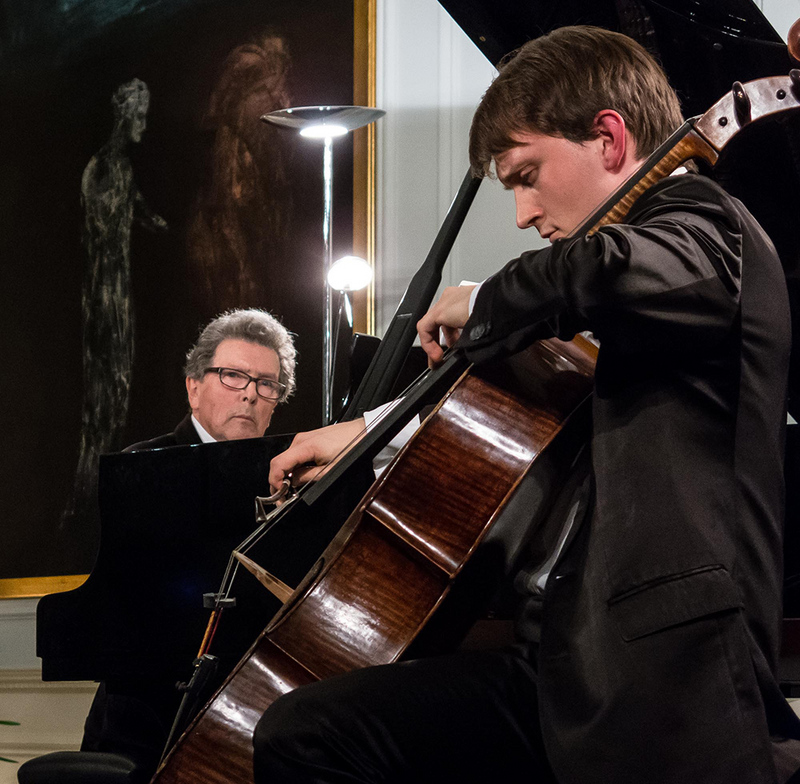
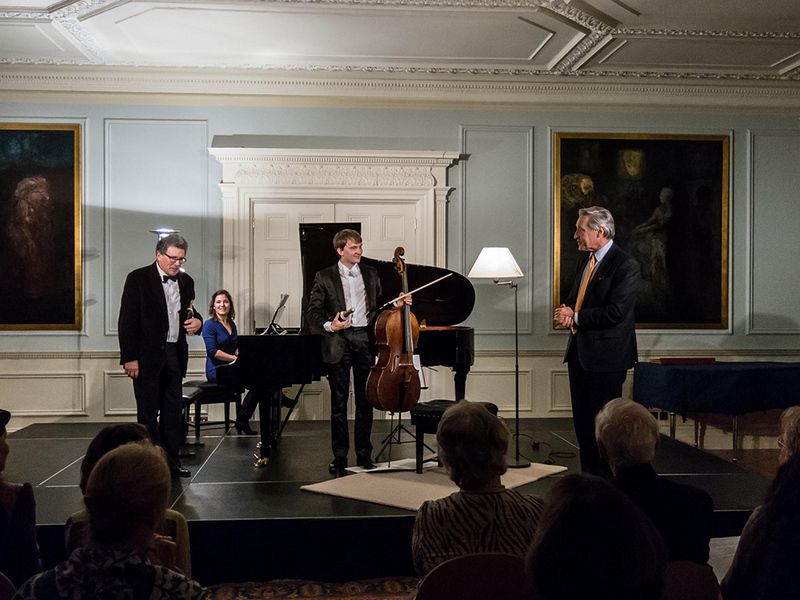
THE LAND OF COUNTERPANE - an animated film (2014)
Music of Howard Blake-Neville Marriner & Orchestra of St.Martin in the Fields
In late October 2013 Benedict Kloeckner had come to rehearse with me for a birthday concert we were to give at Vernon Ellis's and after lunch, while Benedict practised, I took a nap and dreamed an opening to something starting with a sort of 'trill-like flourish'. What was it? I went over to the piano and played it and wrote it down. We had been talking about a triple concerto and a couple of days later went to hear the notable example of the genre composed by Brahms, played by the brother and sister Tetzlaff. For some reason I'd never ever heard it live before and I found, as I suspect Brahms had, that the equation of two soloists with a large orchestra and huge string section was a very tricky one. I explored my little idea for a couple of pages with orchestral accompaniment in mind but suddenly conceived of the work as being with piano - the piano not as one instrument against violin and cello, but as two voices, (the two hands of the pianist!) equally interweaved with them. The opening places the voicing as Piano RH, violin, piano LH, cello and I was so delighted with this sound and concept that the piano trio began to evolve before my eyes. I struggled and struggled with the 'first movement' but then it became easier and more fluent. By this time it was nearly Christmas. A wonderful Christmas day was spent with Charles and Gail Garside comparing great jazz pianists on Spotify and there was a wonderfully convivial Boxing Day lunch with the Geers in Surrey, but for the rest of the time I just wrote, finishing the trio soon after the new year. It lasted a continuous 16 minutes but could be seen as more or less seven movements. What should I call it? I found an Italian literary phrase that somehow perfectly encapsulated the feeling of it - 'Elegia Stravagante'
Sudwest Deutsche Rundfunk
Benedict and I were invited back to the studios in Kaiserslautern to complete the callo and piano album, adding a new item 'The Enchantment of Venus' and dropping all but two of the Jazz Dances which didn't seem to fit into the overall tone of the disk. We rehearsed hard at the Kloeckner's home in Coblenz and got into very good shape. I still found the Steinway 'D' a bit powerful for chamber music, but it was a very fine instrument and we both enjoyed playing.
Lost soundtracks on Radio 4
BBC producer Mark Burman devised a stimulating interview with Christopher Cook in my studio on February 12th to talk about the difficulties experienced by film composers, focussing somewhat on my disaster with 'Agatha' and the extraordinary circumstances that caused me to score 'Flash Gordon' , but reminiscing too about Bernard Herrmann's disaster with Hitchcock (not to mention Hank Mancini's), Alex North's with Kubrick on 2001 (not to mention Laurie Johnson's) and in general investigating why such drastic events occurred within the hidden depths of film-scoring. I enjoyed doing the show as I rather pleasantly experienced the anguish of the past somehow dissolving into the laughter of the present.
Shakespeare's birthday
The Orchestra of The Swan conducted by David Curtis put on a series of concerts in Stratford-upon-Avon and pronounced me 'featured composer' for The Bard's 450th birthday (b.1564) causing the first performance of Midsummer Night's Dream - a Suite for Orchestra which I assembled from my score of 1995 written for Adrian Noble's brilliant conception of the play for the Royal Shakespeare Company feature film. Prior to this on 16th May Richard Edgar Wilson had performed the Shakespeare Songs with string orchestra and on the 23rd a performance of the Variations for Harp from Henry the Fifth was given.
British Isles Music Festival
The eminent flautist Susan Milan invited me to her most enterprising festival set in the beautiful Sussex location of Ardingly College from August 16-24. Students are given works to prepare and perform in concert and various chamber pieces of mine were chosen: The Flute Quintet , Piano Trio , Spieltrieb and Sleepwalking for soprano and piano quartet which Patricia Rozario as visiting vocal professor performed marvellously in the fine chapel.
Coblenz International Festival
2014 heralded the first season of Benedict Kloeckner's very own festival devoted to chamber music and held in the beautiful city of Coblenz, situated at the confluence of the Rhein and the Moselle. The festival featured a galaxy of the most brilliant young musicians and on September 27th the first performance of a new Howard Blake piano trio 'Elegia Stravagente' was given by Linus Roth violin, Benedict Kloeckner cello and Howard Blake as pianist.composer. The enthusiastic audience responded by demanding an encore.
In Memoriam Colin Wilson, philosopher and writer of 'The Outsider'
On October 14th a memorial service at St James's Piccadilly for the great philosopher/writer Colin Wilson at which I was pleased to be asked to play two of his favourite pieces with his niece, the excellent violinist Kerenza Peacock - Shostakovich's Waltz from 'The Gadfly' and Meditation from Massenet's 'Thais'. In the late fifties the whole world read 'The Outsider', myself included, but I encountered Colin whilst involved with the Medici Quartet many years later in the early nineties. He had written them a 'Mozart scenario' to be spoken with string quartet accompaniment. His book on music, originally titled 'The Brandy of the Damned' (feebly renamed 'Colin Wilson on Music' for publication) cogently expressed radical views and analyses of English Music, the Modernist Dilemma, Bartok, Jazz, Mahler, Britten and many other topics that had pre-occupied me and that most pundits had tended to steer away from. Several times he and Joy invited me down to their home in Cornwall and we would talk for the entire weekend - on Literature, The Occult, Crime, the X-factor (which he invented), psychology, cinema - anything and everything. The fields around their house were covered with huts, in each of which was a collection of books - a Jung hut, a Freud hut, a GBS hut and so on. He had a vast collection of records, some 20,000 I believe. I was most privileged to know him and was without doubt influenced by him.
Nov. 25th. Walking in the Air, an evening of music composed by Howard Blake, conducted by Sir Neville Marriner
An initiative of The Academy of St Martin in the Fields following the succesful release of their CD 'The Barber of Neville' the concert took place in the orchestra's original home, the church of St Martin in the fields, Trafalgar Square. It opened with Howard himself narrating 'The Snowman' in a completely new version for double string orchestra commissioned for the occasion by Sir Neville. Next the flute concerto was played both thoughtfully and brilliantly by the orchestra's principal flautist Michael Cox. After an interval the woodwinds of the orchestra featured in the bravura 'Serenade for Wind Octet' and the concert concluded with a virtuoso rendition of the Clarinet Concerto performed by James Burke. (Rather delightfully, the Academy strings ventured out to the Westfield supermarket in Hackney and played some of this new 'Snowman' in a Christmassy staging with Sir John Hurt.)
Dec. 4th. Gloucester Music Society, 85th Anniversary Season
An evening of music composed and played by Howard Blake piano with his own chamber ensemble consisting of Madeleine Mitchell violin, Rosalind Ventris, viola and Peter Adams cello. St Mary de Lode Church, Gloucester. Piano Trio no.3 'Elegia Stravagante' in one movement; 'Pennillion' for cello and piano (theme and variations); Violin Sonata; Prelude for solo viola (from the oratorio 'Benedictus'); 'Impromptu' for piano from the collection of piano pieces 'Lifecycle'; Piano Quartet in four movements.
Concert in Stapleford Granary Arts Centre, Cambridge Christine Talbot-Cooper organised a further concert on Dec.6th at the Stapleford Granary Arts Centre near Cambridge played by the Goldfield Ensemble which included the String Trio; 'Sleepwalking' for clarinet,cello and piano and the Piano Quartet. The audiences for both concerts were very enthusiastic.
Dec.6th. Howard Blake and the Snowman Two afternoon family concerts and an evening with Howard Blake at the Stapleford Granary Arts Centre near Cambridge played by the Goldfield Ensemble: String Trio; Sleepwalking for clarinet cello and piano; Piano Quartet; Mozart clarinet quintet
Snowman Stage Show 17th consecutive season
The long-established tradition of a Christmas seaon of the Snowman Stage Show clocked up 100 performances to packed houses in Leicester at The Curve, in Sheffield at the Lyceum, and in the Peacock, Sadler's Wells theatre in the West End, from Nov. 2014 to Jan. 2015.
-
 Sir Neville Marriner conducting
 -
 Colin Wilson in Soho
 -
 Land of Counterpane Cover
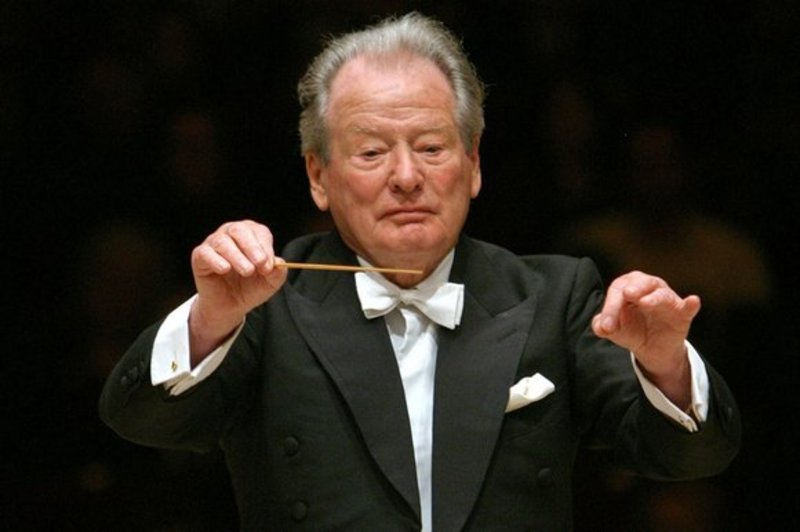
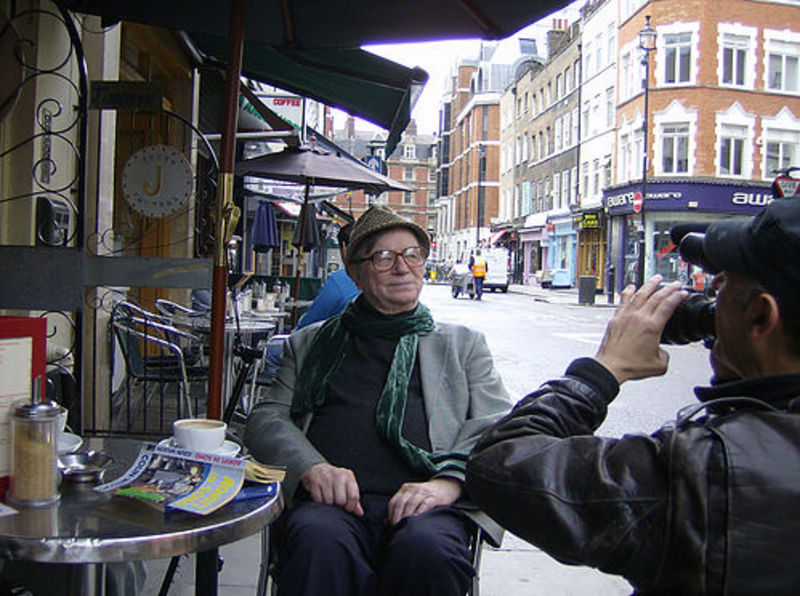
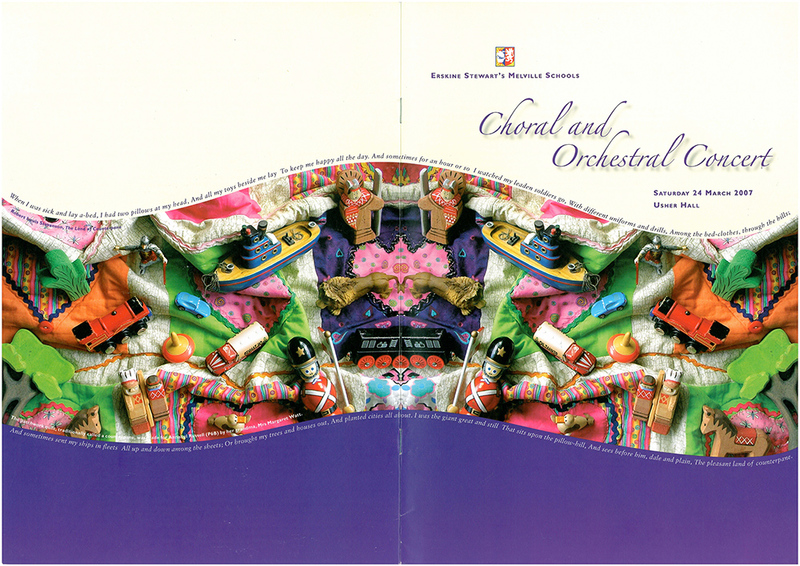
'PASSION OF MARY' IN SALISBURY CATHEDRAL (2015)
CHORAL WORKS - Canticum choir St.Paul's Knightsbridge
Concert for the Gloucester Music Society.
On December 4th 2014 Gloucester Music Society presented an evening of 'music composed and played by Howard Blake piano with his own chamber ensemble': Madeleine Mitchell, violin, Rosalind Ventris, viola and Peter Adams, cello at St Mary de Lode Church, Gloucester. It consisted of the Piano Trio no.3, Elegia Stravagante; Pennillion for cello and piano (theme and variations); Violin Sonata; Prelude for solo viola(from the oratorio 'Benedictus'); Impromptu for piano /opus] from the collection of piano pieces 'Lifecycle' and [opus 179] Piano Quartet in four movements.
Concert in Stapleford Granary Arts Centre, Cambridge Christine Talbot-Cooper organised a further concert on Dec.6th at the Stapleford Granary Arts Centre near Cambridge played by the Goldfield Ensemble which included the String Trio; 'Sleepwalking' for clarinet,cello and piano and the Piano Quartet. The audiences for both concerts were very enthusiastic.
Concert at Milton Court
Benedict Kloeckner was not available. I had been collaborating with him since 2010 when he chose to play 'Diversions for cello and piano' as test piece for the final of the EBU youth music prize, which he won. On doing so I presented him with 'Cello Sonata' (a transcription of the violin sonata) and we gave a joint recital in Schlangenbad (Mainz)and later at the International Cello Festival in Kronberg (2011). These led to the recording of an album called 'Diversions' by Genuin Records, recorded in the SWR studio, Kaiserslautern in 2013/2014 and somewhat belatedly released in March 2015.
At the beginning of the year to signal the release of the Genuin CD Benedict and I had planned to play two concerts in London, the first in March at Bob Boas' recital room on 25th March, the second in the new Milton Court Concert Hall on April 17th. Unfortunately and catastrophically, on March 19th I slipped on a temporary wooden walkway outside the Groucho Club and broke my wrist! It wwas too late to cancel the concerts. Benedict recommended the young Ukrainian Sasha Grynyuk, who amazingly learnt the recital at high speed and gave terrific performances: Pennillion; Diversions; The Enchantment of Venus and Cello Sonata. Sasha was also game to replace me in the Milton Court quartet concert and joined Madeleine Mitchell as violinist and Rivka Golani as violist in: Piano Trio no.2 Elegia Stravagante; Diversions [opus 525a]; Prelude for solo viola; The Enchantment of Venus and Piano Quartet in four movements. There was a good audience and the Piano Quartet astoundingly received ovations at the end of each movement - something I have never before witnessed.
Sasha and Alicya at The Dysart
Sasha's brilliant violin partnet Alicia Smietana attended the concert and soon after the two of them gave an impassioned performance of the Violin Sonata as part of a recital at The Dysart in Richmond. Sasha also played 'Speech after long silence',of which he had become very fond and the two of them planned to give further all-Howard Blake concerts.
A chamber music concert for the Brighton Philharmonic
The musical partnership with Benedict Kloeckner had in fact caused a rebirth of my interest in chamber music, primarily for cello and piano since I had a reason to compose and a great player to write for, but also for chamber music generally, the music that had really been the first great love of my musical life. It was somehow appropriate that I should unearth sketches for my very early piano trio and finally succeed in completing it to a concert standard - Fantasy-Allegro, Piano Trio no.1 a work in 3 movements whose themes dated from Brighton in 1956 when I was 17. The premiere of this piece was even more appropriate since it happened that The Brighton Philharmonic offerred a whole concert of my chamber music with members of the orchestra. The pianist should have been me but in fact was Sasha Grynyuk, since my arm was still not mended! I introduced the concert and a splendid 5-star review resulted from the players fine performances. The new season began brilliantly! Peter Adams, the Philharmonic's popular principal cello, was the virtuoso backbone of four chamber works covering the entire span of Brighton-bred Blake's distinguished career. From the re-worked teenage Fantasy-trio of 1956 to last year's 'Elegia Stravagante', each work was full of glorious melody and rhythmic complexity. The composer's amiable introductions and helpful programme notes illuminated these delightful works even more. Blake is still recovering from a broken wrist so the piano part was played, at just a few days' notice, by the excellent Sacha Grynyuk. Daniel Bhattacharya (violin) and Bruce White (viola) completed the ensemble. Unitarian Church, 21 June 2015, Andrew Connal.
'Heartbeat'
On 5th June an unexpected triumph! My old Brighton school-friend Peter Allan had told me that the excellent tenor sax player, Simon Bates, was shortly mounting a concert for big band in the Sussex village of Steyning, which boasts a well-supported jazz club. Peter asked if I had anything that could be performed and I thought of 'Heartbeat', originally experimentally commissioned by Jim Parr of BBC Brighton for the Danny Moss jazz quartet plus BBC string orchestra way back in 1982. This idea of combining jazz and classical instrumentation hadn't quite worked. In 1989 the BBC in London had another go at it, producer John Langridge asking me this time to expand it into a 'tenor sax concerto' for Ian Dixson, the BBC Big Band and the BBC Radio Orchestra. This heavily-conflated mixture again didn't really quite come off and I had for some time thought that the piece might well be better scored simply for tenor and big band. I set about it on Sibelius despite my still out-of-action right arm. There was no time for a rehearsal and I travelled down to Steyning rather nervously. In fact the big band consisted of top London session players who gave an amazingly good account of it at sight with Simon delivering an absolutely virtuoso performance as soloist, Heartbeat for solo tenor saxophone and big band receiving a thunderous ovation from a packed hall.
The evening gave me a sudden renewed interest in the sound of the big band and it brought to mind my score of 'An Elephant Called Slowly' of 1969. I started to create a big band concert suite deriving from its materials.
Rivka Golani, a wonderful violist
At the Milton Court concert the celebrated viola player Rivka Golani had given a quite sensational performance of Prelude for solo viola. She had been nervous to play it for the first time in public and asked if I would sit with her on the stage - which I did! Soon after, she succesfully submitted it to the Bartok Festival in Szombathaly, Hungary, where she performed it on July 16th.
Sieben zerschmetterten Violoncelli in Kronberg
The Kronberg Festival commissioned me to compose a solo cello work for Benedict to perform. It was to be inspired by a sculpture; 'Music Power' by Arman, Chicago, 1928. I was sent a picture of it by e-mail on which it appeared to consist of seven cellos, rather the worse for ware. I accordingly was inspired to write a piece called 'Sieben Zerschmetterten Violoncelli' and wrote it in seven short movements. I presumed 1928 to be the date of the sculpture's creation and it happened that I had bought a book called 'The Chronicle of Jazz' in which it said that the cello had first been tried out as a jazz instrument in that year. This prompted me further to write the piece in a Chicago jazz style. Also, because the seven cellos rose up to an apex I made a sort of mental connection to the seven Chakras and made each of the seven movements represent one of them, rising upwards to reach the crown at the top.
However, on the afternoon of October 2nd when I arrived at the Victoria Park and saw the sculpture I found that it in fact consisted of twenty-one cellos! Quite how this had happened I still don't know (although I suspect that somehow I'd received the wrong picture.) I made a speech in German to an amused crowd of music-lovers who followed me back to the hall where Benedict gave the piece a rapt and absolutely virtuosic first performance receiving rapturous applause. Everybody seemed very pleased!
Harp trio in The Boltons
The attractive young Russian harpist Valeria Kurbatova gave a lively performance of the Trio for flute, cello and harp which stood up well in a programme of largely French impresssionist works in the Church of St Mary's Kensington on October 29th.
'The Land of Counterpane' - premieres of the animated film
On November 4th and 5th two splendid showings of the just-completed film took place in the hall of The Mary Erskine School, Edinburgh. Bryan Lewis, the ever-resourceful headmaster and promotions manager of the school, conducted a brilliantly-illustrated interview tracing the highpoints of my creative life in music and films which had led to the fusion of my two careers now as both composer and film director. My brilliant animators, Mark Reeve and Emmett Elvin joined me on stage to answer questions from the enthusiastic audience which included members of the present family of Robert Louis Stevenson, still resident at 17 Heriot Row, Edinburgh.
A further event took place on the 13th when I was invited to be a guest speaker and panellist at The Robert Louis Stevenson Society's annual birthday celebration held at the Faculty of Advocates in Edinburgh. The film received a third splendid showing with lively ensuing discussion.
Canticum at St. Paul's Knightsbridge
On November 12th Mark Forkgen conducted his splendid 50-strong chamber choir in a carefully-selected programme which included a cappella works: Festival Mass [/], [opus 494] 'God be merciful unto us' and 'Walking in the Air' , works for choir and organ:'Still falls the Rain' 'Songs of Truth and Glory', an organ work: 'The Rise of the House of Usher' splendidly played by James McVinnie and 'A Toccata of Galuppi's' for the unusual combination of baritone and harpsichord - baritone Laurence Williams, harsichordist Howard Blake (my first attempt to play since the wrist-fracture!)
'The Passion of Mary' in Salisbury Cathedral
A splendid performance of 'the Passion of Mary' conducted by cathedral music director David Halls for the Salisbury Music Society on 21st November, with Patricia Rozario and Richard Edgar Wilson once again triumphing in their accustomed roles. The Lady Dione Digby was present for this performance of the work which she herself had originally commissioned for the Dorset Summer Music Festival and I was delighted when she pronounced it 'the best performance she had so far heard.'
Life after Flash
An excellent celebration of the 35-year existence of the blockbuster film 'Flash Gordon' was presented by the lovely Lisa Downs at BAFTA in Piccadilly on Saturday 28th November as an event for the charity MediCinema . I had really hoped that members of the rock-group 'Queen' might be there since I had not encountered any of them since I conducted the score at Denham all those years ago - perhaps at very long last I could suggest 'putting the record straight' regarding the score and credits, since interest in this subject continues to increase along with the cult status of the work. Freddie Mercury of course, with whom I had happily collaborated, was long since gone, but I was surprised not to see at least Brian May in attendance. Excitingly, Sam Jones (Flash) was there, and director Mike Hodges, and at the Q and A after a splendid screening of the movie I sat between Melody Anderson who played the lead role of Dale, and Peter Wyngarde who had played Klytus. There were many fascinating reminiscences of the production and at the conclusion a revealing letter from Dino de Laurentiis' widow was read out by Brian Blessed which revealed Dino's passion for 'Flash Gordon' going back to his childhood in thirties Italy. I contributed a pile of the Supertracks CD (Flash Gordon - Original Orchestral Score From the Motion Picture) and was delighted to sign them along with programmes for a host of enthusiastic aficionados. I learnt that Lisa Downs as film producer and director was engaged in completing a comprehensive documentary about the making of the film called 'Life after Flash' and we were privileged to watch an intriguing excerpt.
Artists in their studios
On December 1st at Chelsea Arts Club Phyllis Dupuy exhibited her wonderfully joyful oil-painting of me conducting my music from the balcony in my studio. I said to her: 'This is how I would like to be remembered!'
Two concerts in Spain
Patricia Rozario and I flew to Barcelona on November 4th to rehearse and perform 'The Passion of Mary', first in the Monastery of Poblet and secondly in Manresa Cathedral. There were excellent audiences in both venues and impresario Jorde Borras pronounced the concerts 'a triumph'. The programmes began with the Flute Quintet played by The Liverpool Quartet with flautist Nelia Sanxis who had recorded the work. There followed a performance of the string quartet version of 'The Snowman' with the distinguished Catalan actor Jaume Comas and an excellent boy soprano called Iker. The second half presented 'The Passion of Mary' which sounded magnificent in both great Gothic edifices. My old friend David van Asch sang the bass part of the prophet/Satan, Richar Edgar-Wilson once again sang the tenor part of Jesus the Man, with Patricia as Mary and Iker as Jesus the boy.
The Snowman String Quartet in Liverpool
Back on home ground The Liverpool String Quartet gave a third performance (in English this time!) of 'The Snowman with commentary', which took place at the attractive Nordic Church near The Albert Dock in Liverpool. We were afterwards interviewed in a rather uproarious late-evening BBC chat-show when many anecdotes of musical life were recounted and a good time had by all!
-
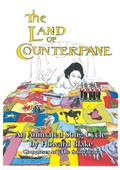 The Land of Counterpane - an animated film
 -
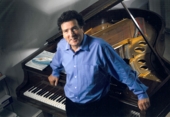 Piano portrait
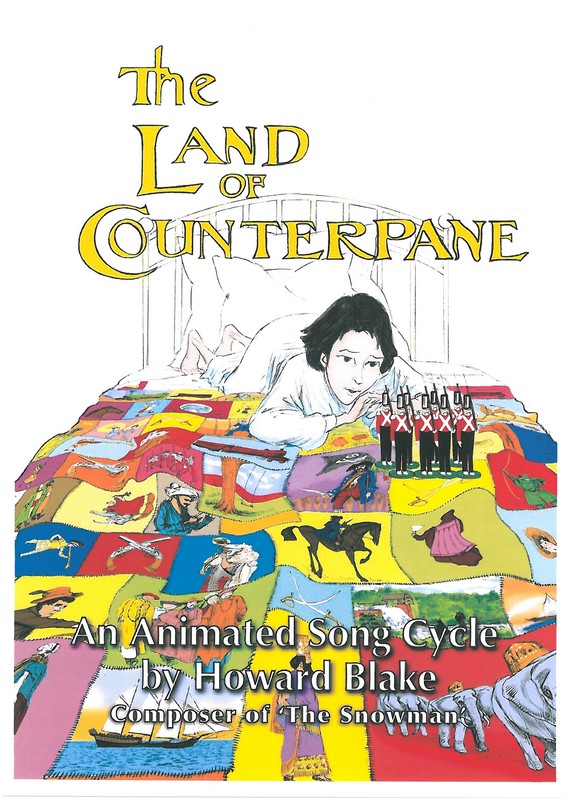
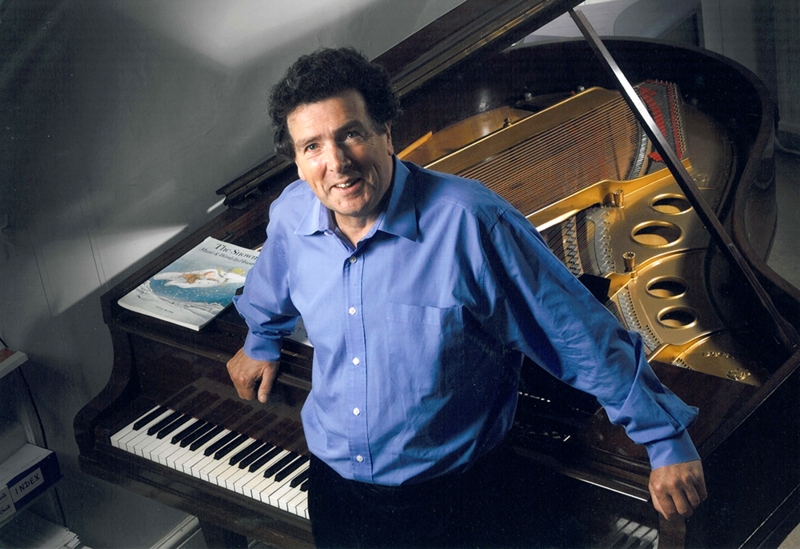
WOMAN WITHOUT A NAME - a full evening ballet in two Rheinland opera houses (2016)
HOWARD BLAKE SONGBOOK - tenor Richard Edgar-Wilson
[1] 'Woman Without a Name': May 14th saw the launch of a new full-evening ballet in Monnchengladbach Opera House, 'Eine Frau Ohne Namen', direction and choreography by Robert North, music by Howard Blake. Diahann and I flew to Dusseldorf where our dear friend Udo Heimansberg kindly met and drove us up to Monnchen Gladbach for the superb premiere and first-night party.
The origin of this huge ballet lay in an earlier work,'Eva', first staged at the new Gothenburg Opera House in 1996. Reviewing it twenty years on, Robert and I came to the conclusion that the original work in three acts had been over-long and the lengthy preamble of the first act - woman slowly emerging over aeons from pre-history - now seemed somehow less than appropriate. At that time I had composed new music for this 45-minute first act, but Robert was now proposing a different, shorter scenario and after discussions I suggested the use of 'Sleepwalking' for solo wordless soprano and strings to act as a Prelude to a newly-conceived Act 1. In another addition Robert chose 'Prelude to Benedictus' for solo viola to form an introduction to the new and final Act Two. With these structural changes the work proved highly engrossing and of a perfect length. The ballet was staged in the opera houses of both Monnchengladbach and Krefeld.
[2] A music festival in Catalanya Pinzelladas Musicals a la Fresca
Concert-organiser Jorde Borras who had so successfully mounted performances of 'The Passion of Mary' in 2015 pursued his enthusiasm for my work further with some summer chamber music concerts in venues around Tarragona. First in July a programme of string quartets which featured 'Spieltrieb' and 'Month in the Country' along with works by Shostakovich and Borodin. I was asked to fly over to act as host to my music. It was played by the Quartet 'Cum jubilo del camp de Tarragona' which included Daniel Sanxis and Sarah Hill as guests from the The Liverpool Quartet along with Raul Garcia, violin and Josep Oriol Miro, cello. In early August further excellent concerts were given by flautist Nelia Sanxis, Carlos Pertegaz, clarinet and Liana Baronaite, piano, which included sparkling trio performances of the Trio op.25, 'Pennillion' and Suite from 'The Duellists'. Liana Baronaite as soloist played some of the pieces from 'Lifecycle - 'Night and Day' in particular being played most movingly.
[3] The sad death of Diahann's mother, Marie-Louise Joseph.
On 11th July the funeral of Diahann's mother was held in Iggesund, Sweden, a tragically-unexpected event which at the same time as being very sad, in some strange way brought Diahann, Robert and I back together. Marie-Louise had played a most important part in both her daughter Diahann's life and in our son Robert's life. She was a quiet, charming and very well-spoken Swedish-born professor of languages, specialising in German and English, who had married a West-Indian professor with somewhat similar qualifications. However he had left her at just about the time that I met Diahann in 1996, and when Robert was born in 1998 the task of bringing up Robert fell largely between herself and Diahann, now fully employed in the world of banking as 'Head of Financial Crime' for Skandia, sometimes in Stockholm, sometimes in London or Luxembourg. At the funeral Diahann made an eloquent speech and I played the Impromptu from 'Lifecycle' as I had done several years before at the demise of her grandfather.
We were undoubtedly brought back together by this tragedy and we started to talk about getting together again and how best we might proceed. We eagerly perused property magazines, looked at houses and in the Autumn decided on a fabulous house and garden - Stenviksvagen 1, Uppsala Nas, Sweden. Robert had his qualms about it, since he had qualms about us! He was by now so very used to our falling out and quarrelling - but I would hear no negative thoughts. All would be wonderful and we'd all be happy. We took the two grand pianos out of storage, all of our furniture and a great many books, and we moved in. For a while all seemed well. The neighbours were delightful, we had a double garage, a beautiful large Citroen tourer, we were close to a bus-stop to Uppsala, near the airport, close to the train station to Stockholm, and last but by no means least, Diahann had agreed to marry me.
Back in London we visited St.Paul's Cathedral and enquired as to whether we could get married there. As an OBE I was entitled to do such an amazing thing and I gaily explained this to one of the staff clergy. Unfortunately there was a waiting-list of well over a year. Diahann and I mooched off somewhat disconsolately down towards the Thames.
'We can get married in a registry-office' I said.
At that moment perhaps we both knew that it was not going to happen. I had (perhaps we both had) that feeling described so well by Cole Porter: 'an icy finger crawling down my spine...'
But we also both knew that life carries on regardless. Diahann had her important job and I had booked a recording studio in which to record some of my songs. They would both have to go ahead.
[4] Howard Blake - Settings of classic poems for tenor and piano
From August 1st. to the 3rd. I recorded an album of my 'art' or 'classical' songs in a new recording studio at Aldeburgh with my favourite tenor, Richard Edgar Wilson and myself piano.
1: 'Earth and Air and Rain' - poem by Thomas Hardy. 2: 'Winter the Huntsman' - poem by Osbert Sitwell. 3: 'Shakespeare Songs' song-cycle. 4: A Toccata of Galuppi's - poem by Robert Browning. 5: James Joyce Songs song-cycle - poems from 'Chamber Music'. 6: 'La Belle Dame sans Merci' - poem by John Keats. 7: 'To Sleep' - poem by John Keats.
[5] Internationales Musik Festival Koblenz
September 30th- October 3 I was in Coblenz playing two concerts with Benedict, one containing a performance of 'Sleepwalking for Soprano, Cello and piano' with soprano Sophie Witte, the other giving the first performance of the 'Piano Quintet Fantasy on music from Midsummer Night's Dream', also with Sophie, plus French violinist Nicolas Dautricourt, Polish violist Lech Uszynsky and South American contra-bass player from the Berlin Philharmonic, Edicson Ruiz.
[6] The Snowman Stage Show in London, Birmingham and Canterbury
The 19th year at The Peacock was an unqualified success, with a fantastic cast and enthusiastic publicity surrounding Aled Jones's new recording of 'Walking in the Air'. His 'One Voice at Christmas' album rapidly made its way to the number one spot with Classic FM and the fact that we placed this recording in the flying sequence of the show caused a great stir.
As usual,from late November the 19th year of The Snowman Stage Show ran two or three times a day through Christmas, first in London, then in Birmingham and then in Canterbury at the excellent Marlowe Theatre, appearing more succesful than ever. 17th November was the busy first rehearsal for the band at Sadlers Wells when we tried out my new arrangement of 'Walking in the Air' as a duet newly-recorded by Aled Jones with himself as a choirboy of 12.
[7] Julian Trevelyan at St. James's Piccadilly
Also on december 17th. the brilliant 17-year old prize-winning pianist Julian Trevelyan gave the premiere of the hour-long 'Snowman Rhapsody for solo piano' in St James's Piccadilly. He did it quite brilliantly and rightly received a standing ovation.
[8] Snape Maltings Double-Bill
18th December was the much-anticipated double-bill concert of 'The Snowman' and 'The Land of Counterpane', both with projected film in the concert hall at Snape Maltings Aldeburgh, presented by Roger Wright, ex-Proms director and new director of the Aldeburgh Festival. It featured the National Youth Girls Choir and The Suffolk Ensemble with principal violinists Clio Gould and Kenneth Sillitoe conducted in two consecutive afternoon performances by Ben Parry to capacity houses.
-
 Krefeld opera'Eine Frau ohne Namen' a 2-act ballet
 -
 The original ballet of 'Eva' in Gotebrog
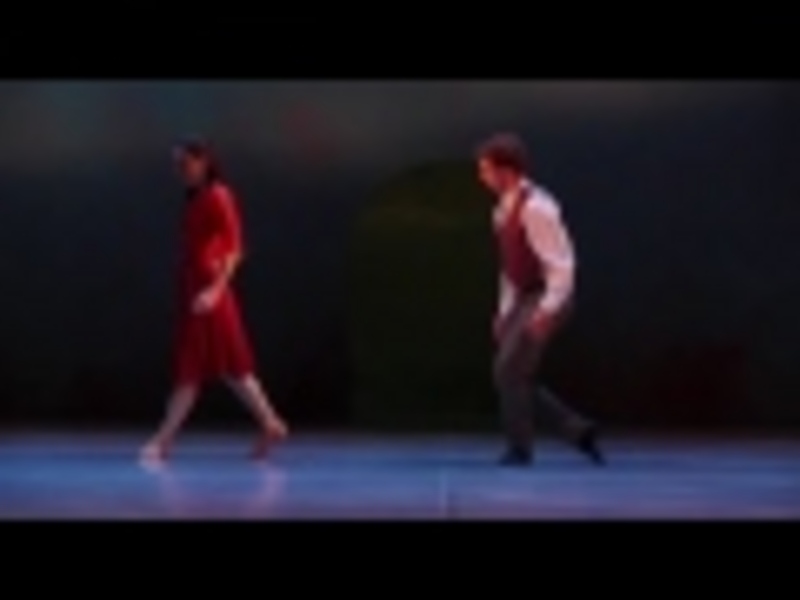
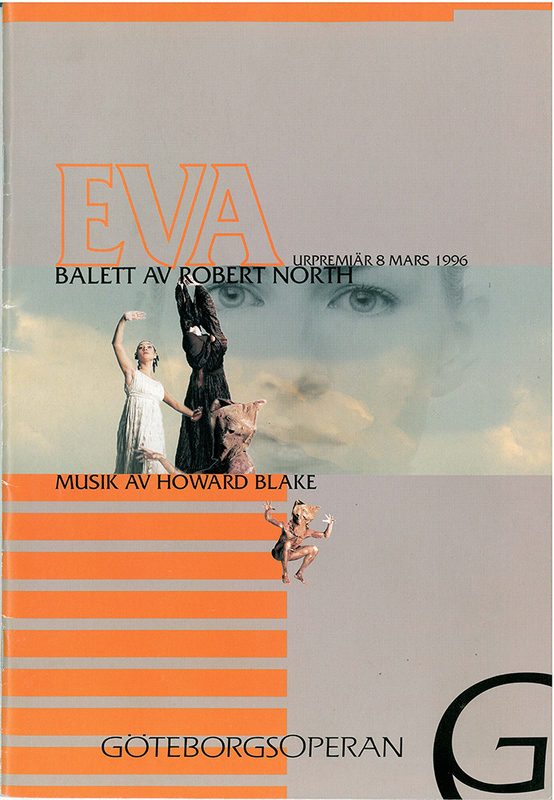
'SLEEPWALKING' WITH KATHERINE JENKINS (2017)
'ELEGIA STRAVAGANTE' FOR VIOLIN, CELLO AND ORCHESTRA
At the start of 2017 Diahann and I were in the new house in Uppsala Nas and were invited to a splendid New Year's party by our neighbours, Vandela and Orja. We had bought a notable house in this quite prized area and everyone seemed to welcome us and be glad that we had. I could live happily in Uppsala with Diahann since I had received an exciting offer from the new director of The Royal Philharmonic, James Williams - a commission for which I didn't need to be in UK. It had been agreed to mount an entire concert of my orchestral music with top soloists at the Cadogan Hall in September. I began work, rescoring 'Sleepwalking' for full string orchestra and soprano and scoring the existing piano trio no.3 'Elegia Stravagante' as a duo concerto for violin and orchestra. The title of the concert was at first proposed as 'A Tribute to Princess Diana' but after some discussion both within the RPO and the Palace, it became: 'A Celebration of Howard Blake'.
Concerts in Catalonya
January 6/7 A concert in MASPAJOLS CHURCH CASTELL DEL CAMP and SANT VICENC Tarragona, Spain. Organised by our friend Jordi Borras, an unusual programme including the Cesar Franck Piano Quintet with Martin Roscoe as pianist, the quartet suite 'A Month in the Country' along with songs and 'The Snowman' narrated by the distinguished Catalan actor Jaume Comas in a version played by the Liverpool String Quartet.
Diversions in Portugal
March 17th I attended 'DIVERSIONS' performed in Porto, Portugal by Benedict Kloeckner for the first time in the full orchestral version, conducted by Michael Sanderling. A work by Frank Bridge and a Shostakovich symphony were well-received, but 'Diversions' played by Benedict rightly received a stand-up ovation!
Piano Concerto in Karlsruhe
March 18th there was a performances of my 'Diana' Piano Concerto in Karlsruhe by Evelyn Hilschmann with conductor Nicolas Indlehofer and the KIT orchestra, but it proved difficult for me to get from Porto in time. I was sorry to miss it, since Evelyn organised this and other performances to commemorate the life of Princess Diana and her tragic death 20 years earlier. She performed it again on May 14th in Offenburg. I had coached her some time earlier in London and found that she is a very fine player who I'm sure did great justice to the work.
IN-TUNE BBC 3, 5th September 2017
On 5th September Benedict Kloeckner and I went up to the BBC in Portland Place with the splendid Karen Pitchford who had organised the broadcast. Pretty well on the spur of the moment we performed five of the 'Diversions for cello and piano' and 'Walking in the air' in the arrangement I'd made for Benedict at the time of Schlangenbad. With relaxed interviews the programme lasted half an hour.
A CELEBRATION OF HOWARD BLAKE
Howard Blake: composer/conductor The Royal Philharmonic Orchestra Cadogan Hall September 7th 2017 7.30pm
SLEEPWALKING FOR SOPRANO VOCALISE AND STRING ORCHESTRA Solo soprano: Sophie Witte. Sophie had been performing this piece in a special arrangement for the opera house strings made by conductor Alexander Steinitz and performed through 2016/17. It acted as the prelude to the Robert North/Howard Blake ballet: 'Eine Frau Ohne Namen' ('Woman without a name') alternating performances at Krefeld Opera House and Monnchen Gladbach opera house. It is a work in seven linked movements and was originally scored for solo soprano vocalise and eight cellos (see opus 505) I suggested to Robert that it would work well as a Prelude to Act One and Robert agreed. Having heard this arrangement Howard decided to follow a similar course for this concert veraion but scoring it up for a somewhat larger combination of 12 first violins, 10 second violins, 8 violas, 8 cellos and 6 double basses. The movements are: Tranquillo - Allegretto - Maestoso- Vivace - Adagio - Allegro - Furioso - Tranquillo
CONCERTO FOR PIANO AND ORCHESTRA Originally commissioned, composed and performed by the composer for Princess Diana's 30th birthday at The Royal Festival Hall 1991 Solo piano: Sasha Grynyuk Movements: Tranquillo-Allegro con brio; Andante espressivo; Vivace
INTERVAL
DIVERSIONS FOR CELLO AND ORCHESTRA Solo cello: Benedict Kloeckner
In 2010 Benedict won the top EBU young musician's prize by playing Diversions in its cello and piano version in Bratislava with Jose Galliano, but he later recorded the work in WDRF studios with Howard as pianist and this was released on the record label Genuin in 2015. Apart from performing it frequently with Howard, Benedict performed it in the Berlin Konzerthaus in an arrangement made for the Berlin String Orchestra and in 2017 performed the work in its full orchestral version in Porto, Portugal conducted by Michael Sanderling. Prelude; Scherzo; March; Waltz; Aria; Serenade; Sarabande; Cadenza and Finale.
ELEGIA STRAVAGANTE(DUO CONCERTANTE) FOR VIOLIN, CELLO AND ORCHESTRA World Premiere Performance A new double concerto 2017, based on a work originally scored for piano trio (2014). Solo Violin: Nicolas Dautricourt , Solo Cello: Benedict Kloeckner Andante (rapsodico) - Scherzo malizioso - Tragico - Grave, molto espressivo - Allegro furioso - Giojoso, estatico - Andante, come prima
Postlude:WALKING IN THE AIR a new arrangement for solo violin, solo cello and strings orchestra
A REVIEW BY PLANET HUGILL
Saturday, 9 September 2017 Bold romanticism: Howard Blake's Piano Concerto and Diversions Reviewed by Robert Hugill on Sep 7 2017 Star rating: 4.0 Howard Blake's piano concerto at the centre of an evening of his complex, and dramatic concertante works
The Royal Philharmonic Orchestra opened its 2017/18 season with a programme of music by Howard Blake, conducted by the composer. The centrepiece of the programme was Blake's Piano Concerto, originally commissioned by the Philharmonia Orchestra to celebrate the 30th birthday of Diana, Princess of Wales in 1991. Blake himself performed the taxing piano part at the premiere, this time he conducted with Sasha Grynyuk at the piano. Cellist Benedict Kloeckner was the soloist in Blake's Diversions for cello and orchestra (a work originally written for Maurice Gendron), and Kloeckner was joined by violinist Nicolas Dautricourt to give the premiere of Blake's Elegia Stravagante (Duo Concertante) for violin, cello and orchestra. The evening opened with a new version of Blake's Sleepwalking for soprano and string orchestra, with soprano Sophie Witte.
Sasha Grynyuk Howard Blake remains best known for his music for the animated film The Snowman, with the song Walking in the air remaining inextricably linked with the composer's name. But his career has been far wider and varied than this, encompassing film music including Ridley Scott's The Duellists as well as a substantial body of concert music. But if you only know Blake from The Snowman and the film music, his concert music can be something of a surprise. Tonal and approachable in a tradition that links Blake to his original composition teacher at the Royal Academy of Music, Howard Ferguson, Blake writes large scale pieces of great depth and complexity.
'Sleepwalking' was originally written as a companion piece to Villa Lobos' Bachianas Brasileiras No. 5, for the same forces soprano and eight cellos. In his programme note Blake talked about finding the idea of eight cellos conjuring up the world of dreams, and his piece posits a scenario of a young woman asleep who then goes sleepwalking through various traumas before returning to sleep. Starting from atmospheric high sustained strings with the soprano vocalise over the top (the whole piece is wordless) the piece moved through seven highly contrasting movements, finally returning to the tranquillo of the opening. We had a series of highly varied moods evoked by instrumental writing very much in the English tradition of string music, from lyrical through to darker dramatic episodes. Witte sang with a lovely even tone, and a beautiful freedom at the top. A well put-together piece which did not quite take me on the journey the composer intended, and I would be interested to hear the original version.
Howard Blake's 'Piano Concerto' is a large-scale dramatic work. It was in some ways the most conventional work in the programme, in three movements (the others were in seven or eight) and the only one to use classical sonata form. Christopher Palmer's 1991 programme note used the term Mozartian, but the composers who came to mind were Rachmaninov and Tippett; Rachmaninov for the big boned romanticism piece, particularly the piano writing, whilst Tippett for the way the piano texture sometimes eschewed showy bravura (but not complexity) and created a continuous texture which flowed over the orchestra.
The first movement started with an understated ear-worm on the piano alone, which Blake then developed into something more dramatic with tutti. Sasha Grynyuk was tireless, and indeed the piano solo got little rest in this movement. Even the cadenza eschewed virtuosity and was rather thoughtful and, unusually, ended the movement. The second movement started with solo piano chords accompanying solo violins and viola, until the tables were turned. The melodic piano line wandered expressively, but always with an elegant simplicity, and finally the whole ensemble moved the temperature up a notch and we got something richly romantic. The final movement started with a perky piano toccata, and developed into a series of variations with hints of jazz/blues. Often highly vigorous, the jaunty melody passed round the orchestra, but always with the piano to the fore over the top. Towards the end we had a simple return to the main theme in the piano before the big finish.
Blake's Piano Concerto is a terrific work, I enjoyed his recording of it (see my review) and I enjoyed this performance immensely. Sasha Grynyuk brought out the poetry in Blake's writing, and played the part with great flair. With longer rehearsal time, there would have been chance to iron out some of the issues of balance, Grynyuk's approach concentrated on poetry and nuance rather than sheer power, but overall he and the orchestra brought it off brilliantly and I hope it makes other orchestras interested.
After the interval the German cellist Benedict Kloeckner played Blake's Diversions. Originally written for Maurice Gendron (who encouraged Blake to add a cadenza and generally make the piece more virtuosic), the premiere was given by Steven Isserlis in 1989. But then it slept somewhat until Kloeckner played the version for cello and piano in the semi-finals of the European Broadcasting Union Awards in Bratislava (and went on to win the competition). Subsequently Kloeckner had played the work a number of times with Blake accompanying on the piano. But for this concert we heard the original orchestral version. It is based on an instrumental dance suite, with eight movements encompassing scherzo, march, waltz, aria serenade and sarabande, though in each Blake develops things in interesting ways. We started with Kloeckner's cello singing over an intense rather dark orchestral accompaniment. The scherzo was full of character, and toccata-like, whilst the march developed into a really big romantic solo for the cello (and Kloeckner really made the piece sing here). The waltz was wistful and rather sly, with the cello line weaving in and out of the orchestra, and the serenade had the solo duetting with the oboe before moving into the perky sarabande which developed into a cadenza which had orchestral comments (including not quite raspberries from the bassoons). The finale was fast and furious, and completely joyous. Kloeckner clearly loves this work, and the virtuosity of the piece seems to suit him, he made everything magically engaging.
The final work in the programme was a new piece, Elegia Stravagante (Duo Concertante) for violin (Nicolas Dautricourt) and cello (Benedict Kloeckner). In seven movements, it started with violin and cello alone playing a melodic motif that sounded suspiciously like noodling, but in fact proved a fertile source for the musical inspiration of the piece. For much of the piece, the two soloists play together (in unison in some movements), and the effect was more like the structure of a baroque concerto rather than the large-scale battle of a full blown Romantic concerto.
During the work's seven movements, Blake brings back the original motif repeated in vastly different guises, creating some intense and full blown romantic moments, interspersed with episodes using different material such as a 'jazz fugue'. The two soloists often soared in unison (at one point at a 16th) over the orchestra, and there was a notably intense solo moment for Benedict Kloeckner, whilst a rather threatening orchestral passage rather evoked Walton. For the ending, there was a sense of the piece gradually unwinding, a moment for violin solo turned into a duet with the cello and the piece ended with just the two of them returning to the original motif.
This was a long and substantial concert, full of dramatic and complex music. It was a great pleasure to finally hear Blake's Piano Concerto live, as well as to experience the full orchestral colours in Diversions. Throughout Blake was supported by the sterling players of the Royal Philharmonic Orchestra, playing nearly two hours of complex and unfamiliar music, whilst the soloists encompassed the taxing demands of the solo parts in brilliant fashion.
Of course, no Howard Blake concert would be complete without The Snowman and as an encore Dautricourt and Kloeckner joined Blake and the orchestra for a version of Walking in the Air specially created for the occasion
Robert Hugill 9th September 2017
KATHERINE JENKINS AT THE ROYAL ALBERT HALL
Anthony Inglis, musical director for the famous mezzo-soprano Katherine Jenkins, rang in the Autumn and asked if I would create a special arrangement of my song 'Walking in the Air' for a tour they were about to undertake. It was performed in several major venues outside London and evidently went very well, but I was amazed when Anthony rang again to ask if I would conduct it at The Albert Hall. I dressed up in full white tie and tails for the occasion and trotted off to the hall, not far from my studio. As I stood in the wings I was flabberghasted to hear Katherine relate my story of the taxi driver and 'Walking in the Air':
'It was 1985 when Aled Jones' version of the song was at 3 in the hit parade. One morning I had to catch an early flight from Heathrow and the taxi driver was playing the song very loudly on his radio. I asked if he'd mind turning it down a bit to which he replied: 'Listen mate, this is the best song you're ever likely to hear. If you listen to it you might learn something!' 'Yes' I said, 'I know it because I actually wrote it.' His reply to this was: 'Yes mate, and I'm Father Christmas!'
The audience roared with laughter and I walked on stage to huge applause. However it was nothing compared to the gigantic ovation that Katherine and I received after our performance together. A truly joyous occasion.
THE SNOWMAN AND THE BEAR AT BATH FORUM
The first performance of THE BEAR film with live orchestra took place at The Forum, Bath with the Bath Philharmonia conducted by Jason Thornton on the 22nd. December 2017 .
-
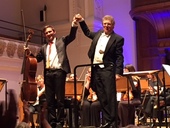 Benedict Kloeckner and Howard Blake receive a stand-up ovation for 'Diversions' at Cadogan Hall 7th Sept. 2017
 -
 Katherine Jenkins with Howard Blake at the Royal Albert Hall after performing 'Walking in the Air' Dec.18th 2017
 -
 'A celebration of Howard Blake' with RPO and soloists 7th September 2017
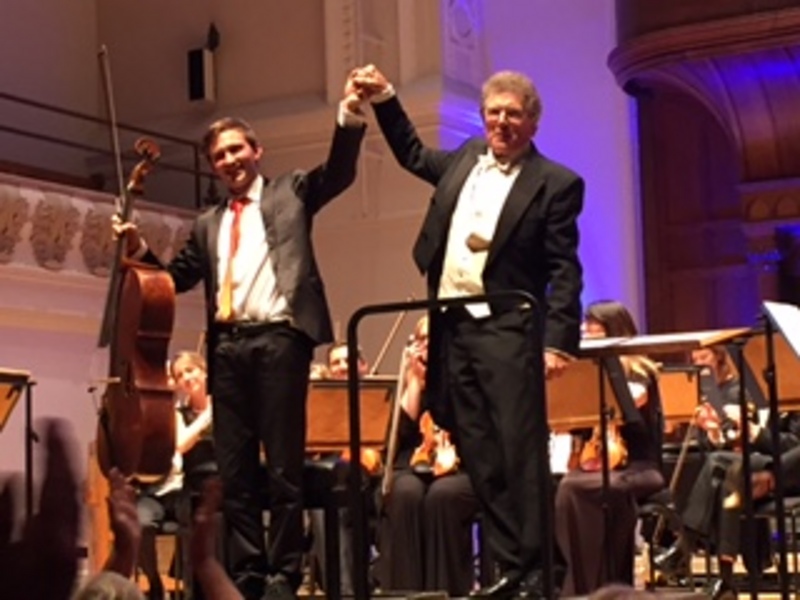
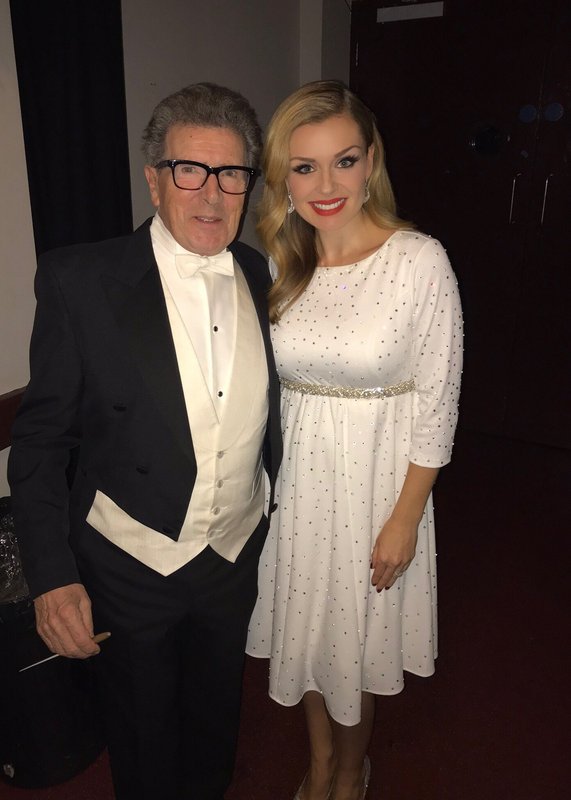
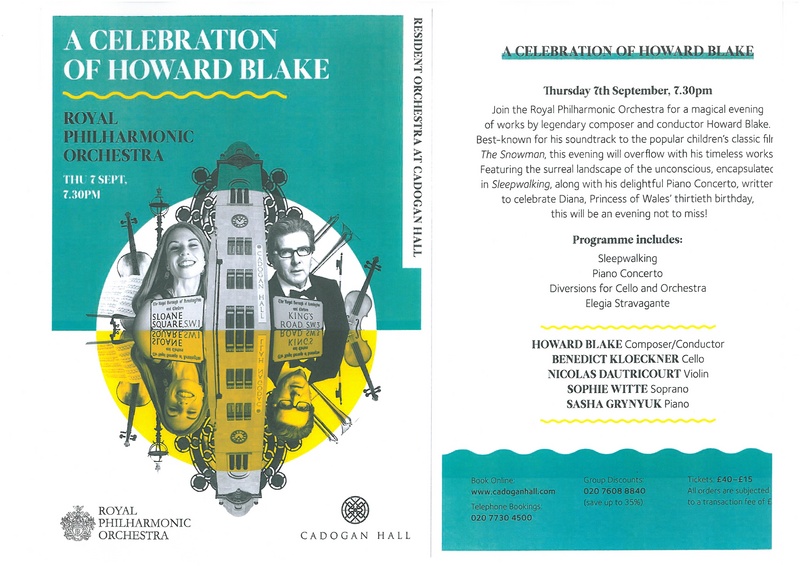
COBLENZ FESTIVAL CELEBRATES HOWARD'S MUSIC (2018)
Snowman Stage Show, Theatre Royal, Brighton
Brighton January 18th. I grew up in Brighton and attribute much of my success to what I regards as a wonderful city, always seething with music and theatre and cinema and robust liveliness. Leading up to the first performance in Brighton Theatre Royal of 'The Snowman Stage Show', I was invited to appear on-stage to talk about the creation of 'The Snowman' and its extraordinary trajectory from Channel 4 animated film in 1981 to its present world-wide celebrity in 2018. There was a good grand piano on stage and an enthusiastic local audience seemed charmed by my playing of themes from the film and the way that I developed them to accompany and enhance the wordless narrative.
Songs of Truth and Glory February 27th Dr. Joseph Fort conducted The Choir of King's College, London in a beautiful performance of 'Songs of Truth and Glory' - Evensong at King's College Chapel in The Strand.
St. George's Chapel March 17th. 'The Land of Counterpane' was given a fine performance in the superb St. George's Chapel, Windsor Castle, conducted by Lucy Joy Morris with The Taplow Youth Choirs and Orpheus Sinfonia. It was coupled with Britten's cantata 'St. Nicholas' with tenor Patrick Ashcroft and this and other shorter pieces were conducted by Gillian Dibden MBE, who had conducted the first London performance of the work at The Royal Albert Hall back in the early nineties.
The Other Palace March 27th Michael L Roberts gave an improvisatory virtuoso performance of a jazz vocal with words and music by HB - 'Let go, just let go!' as part of en evening for new songs (Other songs)put on by Andrew Lloyd Weber and his son Alistair at 'The Other Palace' theatre (near Buckingham Palace.)
Sussex Composers April 3 Recital at the Chapel Royal Brighton Madeleine Mitchell violin and Martin Butler piano played music by Sussex Composers: John Ireland - Sonata no.2; Howard Blake - Waltz from Jazz Dances, Pennillion and Folk Melody; Martin Butler - Scena from a ballet
'SNOWMAN RHAPSODY' AT THE KULTURKREIS GASTEIG MUNICH 7th July. The outstanding young English pianist, Julian Trevelyan, winner of many prizes including the coveted Marguerite Long in Paris, gave a stunningly virtuoso performance of the epic 43-minute Howard Blake piano work, of which he gave the UK premiere in 2017. Its material is drawn from Howard's music from both 'The Snowman' film and 'The Snowman' ballet and the work was honoured to share the bill with the most elevated company: Beethoven, Schubert, Chopin, Liszt and Rachmaninov, receiving nevertheless a thunderous ovation! Julian included a second European premiere in the programme by playing 'Prelude for Vova', a 3-minute piece commissioned by Vladimir Ashkenazy when Howard was in Hong-Kong in 2011 listening to the finalists of the world piano prize playing his own competition test-piece 'Speech after long silence'. The theme of the piece is built on three notes A (natural), S (A flat) and H (B natural)to honour the name 'Ashkenazy', just as Liszt wrote a theme based on BACH. The concert was sponsored by Highbridge Music Ltd. in association with the British Council and LfA Forderbank Munich.
COBLENZ INTERNATIONAL MUSIC FESTIVAL PRESENT A PROGRAMME OF MUSIC BY HOWARD BLAKE TO CELEBRATE HIS 80th YEAR. Der Alten Kirche, Spay, Coblenz, September 9th., 2018 at 17.00 pm
Speech after long silence for solo piano, a piece commissioned by Vladimir Ashkenazy for the Hong Kong International Piano Competition 2011 (Opus 610) solo piano: Florian Koltun
'Unlike most new works, whose fate is to be played on multiple occasions ad nauseam at a competition and then shelved for eternity thereafter, this one promises to be heard rather often. Blake's partiality for tonality and emotional connection (unsurprising for the composer of the children's favourite The Snowman) makes this a most accessible work. At about 8 minutes, its Romantic gestures replete with lush harmonies and crashing chords resemble an updated and extended version of one of Rachmaninov's Etudes-tableaux' Chang Tou Lang,
Diversions for cello and piano the work that in 2010 won Benedict Kloeckner the European Broadcasting Union first prize (Opus 337A) Piano Howard Blake, Cello Benedict Kloeckner
1: Prelude (moderato) 2: Scherzo (vivace) 3: March (tempo di marcia) 4: Waltz (vivo) 5: Aria (andante espressivo) 6: Serenade (allegretto) 7: Sarabande (lento non troppo) 8: Finale (vivo) minutes 27 seconds
'Diversions' was originally conceived as a suite for cello and piano as far back as 1973. In 1984 the great French cellist Maurice Gendron encouraged the composer to rework the piece for cello and orchestra, and he himself edited the cello part. The first performance of the work in this orchestral form was given by Steven Isserlis and The Royal Philharmonic Orchestra conducted by Sir Charles Groves at The Fairfield Halls Croydon on 29th March 1989. This transcription for cello and piano was made by the composer at about the same time
The work pays mischievous homage to instrumental suites of the past. The Scherzo is not quite a scherzo, the March more than a march. The Waltz has a wrong-stepping jazz tinge to it, the Aria a sudden profundity. The Serenade bursts into arrogant display, the guitar-like Sarabande becomes an eloquent cadenza. We are led back to the theme of the Prelude via a Finale of such bristling virtuosic energy that its simple melodic line assumes a far more complex character, having been well and truly 'diverted'. 'Diversions' is also the name of an album of music by Howard Blake for cello and piano played by Benedict Kloeckner and the composer, released in 2015 by the Leipzig label Genuin - Benedict Kloeckner plays the cello music of Howard Blake, with the composer himself accompanying - unfailingly attractive and often tremendous fun for both performers and lsiteners., THE STRAD, 2/2018
Piano Trio no. 3 - Elegia Stravagante (Opus 654) a trio in 7 linked movements, first performed at the Coblenz International Music Festival 2013 Violin Wolfgang Schroeder, Cello Benedict Kloeckner, Piano Howard Blake
Movements
1: Andante (rapsodico) (October 2013)
Composer's notes: On the afternoon of my birthday I went to sleep for a short while and dreamed up a septuplet 'trill-flourish' motif in C major and an ensuing 'upward-sweeping' melodic fragment of a minor 2nd and major 7th, both of which I immediately wrote down. This was to be the material on which the trio was based.
2: Scherzo malizioso
I was searching for a 6/8 allegro idea and worked at several until I suddenly remembered the 'jazz fugue' from 'Movement for orchestra' which I'd written way back in about 1963. It seemed to fit perfectly and work most effectively for piano trio, forming a perfect link between the Andante (rapsodico) and the next section Tragico.
3: Tragico
Tragico begins with the upward-sweeping motif, but now very slow and sad. This forms a bridge and modulation to E-minor where the cello enunciates the theme 'Parting', a fragment I had dreamt up whilst preparing the repertoire for Vladimir Ashkenazy's album of my piano works in June 2013. Here the 'Parting' theme develops greatly, leading quite rapidly and unexpectedly to a colossal climax, then falling down to a paused low chord of C major which begins section 4.
4: Grave, molto espressivo
Grave molto espressivo is a deeply-felt cadenza for violin and cello which then starts to accelerate (piu mosso) towards section 5
5: Allegro furioso
Cello and violin play in unison at the 16th against a constantly turning piano phrase using the ever-present 'trill-flourish' motif. Martial and tragic hints and twists are now overcome by massive upward scalic movements seeking a major key and suddenly triumphantly asserting that of E major.
6: Giojoso, estatico
Giojoso, ecstatico transforms and inverts the minor 'upward-sweeping' theme into a major 'hymn of triumph' punctuated with huge piano chords. The energy of this is so great however that it must inevitably sink down to regain stability and a hardly-moving harmonic 'thirds duplet' grows gradually quieter and slower until it sinks away to nothing without resolution.
7: Andante, come prima (January 2014)
The music of the opening returns but this time in the key to which the piece has ascended - E major, the final bar picking up the 'trill-flourish' motif and giving the whole work a resolution with a very short coda on violin and cello sounding alone - yet perhaps finally together. The piano is wise enough not to interfere
Piano Quartet (Opus 179) Xin Wang (piano), Wolfgang Schroeder (violin), Karolina Herrera (viola), Benedict Kloeckner (cello)
1: Allegro con anima 7 minutes 15 seconds
A dramatic theme A (and in A minor) is presented by unison violin and viola over a pounding rhythm that would be equally at home in rock. A second theme B is equally rhythmic on contrapuntal strings over hammering piano semiquavers but subsides into a lyrical C minor piano version of A against legato strings. This subsides further again into a Theme C (and in C major) announced by the cello. It is spread across the three strings against piano chords gradually dying down to a held F sharp unison. This kicks off the development by taking us back to the first tempo but this time featuring theme B with running semiquavers which build and build until a pedal pulls us back into a full-bodied return of our home theme A on full strings and rocking piano chords.
2: Presto 5 minutes 23 seconds Scherzo
A very fast tempo allows all instruments to fly through a Scherzo of heavily-syncopated rhythms and riotous escapades. It follows the scherzo form with a trio featuring predominantly piano against pizzicato cello, but they yield to questioning phrases on violin and viola before recapping to the scherzo and a noisy coda.
3: Lento espressivo 7 minutes 39 seconds
3. Lento espressivo The deeply reflective E major slow movement of the Piano Quartet has always been particularly dear to me. I wrote it one beautiful Spring afternoon in 1974 at Highbridge Mill, with sun streaming through the window and total silence. It begins with a major third repeated on the piano acting as a bell-like accompaniment to three statements of a four-note rising phrase, firstly started by violin, secondly by viola and thirdly by cello. The piano weaves intricate patterns around them until the four notes echo again in a diminuendo of violin, viola and cello to a close.
4: Allegro robusto 6 minutes 50 seconds
4.Allegro robusto
The fourth movement is pure sixties. A jig-like rhythmic theme A is presented in 3-part string canon in several transpositions against vibrant 'rock 'n roll' chording. A second theme B on the dominant is presented on the viola against rising minims. Theme A returns in a piano solo doubling at the 16th but stops abruptly to reveal very quiet slow piano chords. Against them is placed a mysterious theme C which builds to a surprisingly large climax. It does this again in a different key but at the height of the climax this time hurls us back into theme B. Cello begins a strict fugue which is joined by viola, violin and piano building into a powerful stretto which bursts straight back into the 3-part contrapuntal jig of the beginning and a unison accelerando coda.
Notes
The opening of the first movement is used as a signature theme by KUSC, the audience-supported classical music radio station of the University of Southern California. Its composer is delighted and honoured by this
-
 snowman stage show picture
 -
 The Royal Pavilion Brighton
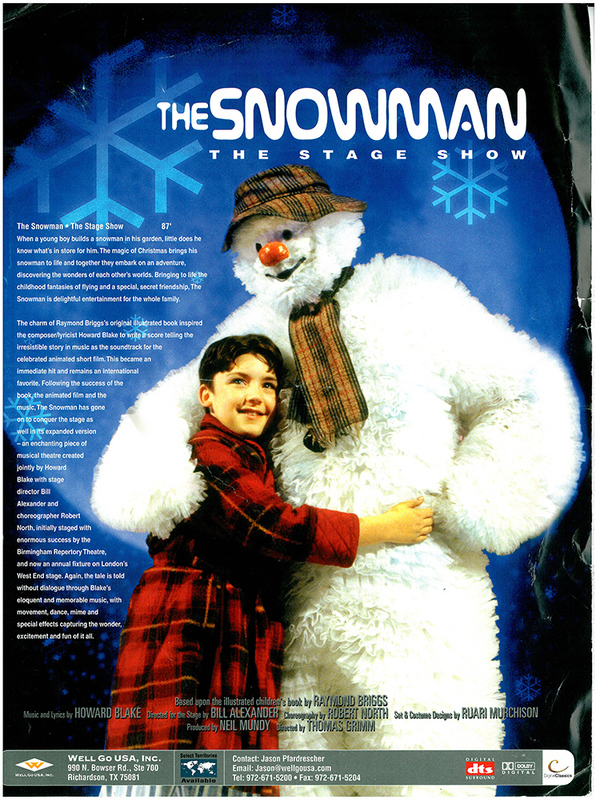
WALKING IN THE AIR FOR SOLO VOICE AND A CAPPELLA CHORUS (2019)
created for Peter Auty (tenor) and The St. Albans Bach Choir
A concert, firstly celebrating Howard's 80th year, secondly celebrating the opening of the 30th St Albans organ festival directed by David Titterington, and thirdly recalling that the world premiere of Howard Blake's oratorio 'Benedictus' had once been given in St Albans Cathedral by Sir David Willcocks (conductor), Robert Tear (tenor) and Frederick Riddle (viola) with The St Albans Bach and Cathedral Choirs and The English Chamber Orchestra. The speaker was the very rev. the Dean of Saint Albans, (25.01.86).
PROGRAMME: SATURDAY 13TH JULY 2019:
1. 'THE RISE OF THE HOUSE OF USHER' 6'00 (opus 532, 2003), solo organ Dong-ill Shin. A work originally commissioned by the Usher Hall Edinburgh to celebrate the restoration of the Willis organ in 2005 and first performed there by Dame Gillian Weir 10.06.2003.
2.'WALKING IN THE AIR' 3'30 in a new a cappella chorus arrangement specially created for Peter Auty (tenor), The St. Albans Bach Choir and for this occasion.(opus 706, 2019)
3. 'SPEECH AFTER LONG SILENCE' 8'00 (opus 610)a virtuoso piano work originally commissioned by Vladimir Ashkenazy for the world piano contest in Hong Kong 2009, here played by the brilliant young St. Albans prizewinner, Julian Trevelyan
4. 'SONGS OF TRUTH AND GLORY' 10' - Five poems of George Herbert, (opus 546) for chamber choir and ensemble, originally commissioned as The Elgar Commission of the Three Choirs Festival 2005, here performed by the St, Albans Bach chamber choir conducted by Andrew Lucas.
INTERVAL 5. 'BENEDICTUS - A DRAMATIC ORATORIO'(opus 282) 70'00, originally commissioned by the then Abbott of Worth, Victor Farwell to celebrate the 1500th birthday of St. Benedict in 1980, the work was revised by the composer in 1986 and given its world premiere in St Albans Cathedral by the St. Albans Bach Choir, Robert Tear and the English Chamber Orchestra conducted by Sir David Willcocks. This performance welcomes Peter Auty as solo tenor (who as a boy treble at St Paul's made the first recording of Howard's famous song 'Walking in the Air), Rosalind Ventris (solo viola), St. Albans Bach Choir (chorus-master Andrew Lucas), with The Orchestra of The Academy of St. Martin in the Fields conducted by the composer. Speaker: The Very Rev. Dr. Jeffrey John, Dean of St. Alban's.
A review of this concert by Roderick Dunnett in the Church Times, 30th.August 2019:
'Some of the most celebrated names in the organ world have passed through the St Albans International Organ Festival. Many have hailed from far afield. This year's entrants, including three from Korea and one each from Russia and Lithuania, spanned 11 countries.
The competition from which the festival grew was founded in 1963 by Peter Hurford, a superlative teacher and one of the most brilliant virtuosi of his day, who died, aged 86, this year. This is the festival's 30th anniversary. So there was sadness, but also a celebration.
Headed by the St Albans Bach Choir, an entire evening at St Albans Abbey was devoted to the music of Howard Blake. Blake turned 80 last autumn, and remains determinedly active as a composer in all genres, especially film music: his exquisitely sympathetic score for A Month in the Country remains a classic. His opus numbers exceed 700 and include The Passion of Mary. His music for The Snowman has charmed audiences for decades.
Central to this programme was Blake's wonderfully conceived 'Benedictus', which draws on 'The Rule of St Benedict', several Psalms, and a wonderfully Psalm-like swathe of mystical poetry by Francis Thompson (1859-1907). Of this, more below. The concert was enhanced by variety, with the interspersal of two solo pieces. One he calls a 'bravura work' for organ, reimagining Edgar Allan Poe's story 'The Fall of the House of Usher@, rechristening it 'The Rise of the House of Usher' and envisioning the tale emerging from suicidal gloom to optimism and normality.
A piano work, Speech after Long Silence, played with wondrous articulation by a multi-award-winning young soloist, Julian Trevelyan, seemed to leap effortlessly from one mood to another: here, temptingly Ravel-like, elsewhere dramatic. It seemed a model of how imaginatively the instrument can be used.
Songs of Truth and Glory, for chorus and orchestra, are five settings of George Herbert. Early on (The Call) Blake makes shrewd use of men's and women's choruses separately, with a kind of ground bass in the cellos and, later, a serene melody emerging. In the second, 'Vertue', a scherzo element in the strings is offset by the darkly repeated 'Thou must die' , except that the final stanza exudes optimism, enthusiastically proclaiming 'Then chiefly lives'. A striding bass line gives life to 'Praise' (King of Glory, King of Peace), which has a magical shift in mood at 'Thou grewest moist and soft with tears.' A violin solo reminiscent of Vaughan Williams's lark adds a final word.
If the second stanza ('Not rudely, as a beast') in 'The Elixer' makes for an apt dark opening, the last two lines are utterly subdued, and beautifully expressive. Indeed, Blake has a gift for turning simple harmonies to scintillating results. The last song, 'Antiphon' ,famously hurtled through by Vaughan Williams, receives an equally clever and original treatment here: resplendent bells, a finely light-stepped staccato splendidly achieved by the chorus ('The heavens are not too high'), a growing syncopated feel, and the choir women, who were excellent all evening, soaring rapturously for 'My God and King'.
Blake's inspired work 'Benedictus', for chorus and orchestra, filled the second half. The composer himself conducted, with calm and restraint; Andrew Lucas of St Albans had secured the pure-tuned, masterfully calibrated results earlier on.
The highlight here was a tenor solo, sung with passion by Peter Auty. He brought the whole work majestically to life.
One imaginative idea followed another in this largely penitential but also blazing cantata. The plangent opening viola solo (reprised at the end) set the pleading tone. Psalm 38 yielded drama galore: urgency in the strings ('Thy arrows pierce me. . .'); the aching central passage, akin to Psalm 22, which yields to growing optimism, harp in attendance, but finally crushed and mournful.
The next section, after an operatic clamour from the soloist, is an astonishing mixture of texts from St Benedict's Prologue; the mood shifts, often pleading, but overwhelmed by a brassy, forthright accompaniment. A sublime, moving pianissimo conclusion yields to a passage from Psalm 15, where simple snippets of contrary motion make for a striking effect. Judicious repetitions underlined the text's severe injunctions.
Psalm 84 reveals as much as any the intelligence of the orchestration. The interrelation of choir and soloist achieved powerful effects; and thunderous brass and cavorting woodwind added vivid colour.
Throughout the work, Blake's word setting stood out. The magically emblematic language from Francis Thompson's 'The Hound of Heaven' (1893), explored by the soloist, nudged close to the world of Stravinsky and even Schoenbergian Sprechstimme.
Much else remained: a dark, brassy dance for solo and animated chorus (for a fragment of St Benedict's Rule); a thunderous, Benedicite-like section based on Psalm 103, ushering in tenderness and forgiveness; and solo horn adding its commentary (the warm textures in an idiom reminiscent of Szymanowski's Stabat Mater). Bells, and again those pensive cellos and double bass, helped nurture the work to its close.
The finishing touch of the viola solo was one of genius.'
-
 Benedictus a dramatic oratorio, Diane Jackson's striking cover
 -
 Songs of Truth and Glory at its Three Choirs first performance
 -
 Sir David Willcock's Benedictus premiere at Cathedral and Abbey Church St Alban
 -
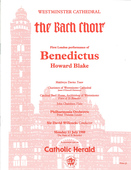 Benedictus at Westminster Cathedral with Cardinal Hume
 -
 Benedictus the Album released on Sony Records
 -
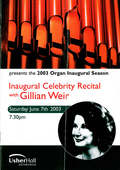 Dame Gillian Weir's premiere of The Riise of the House of Usher
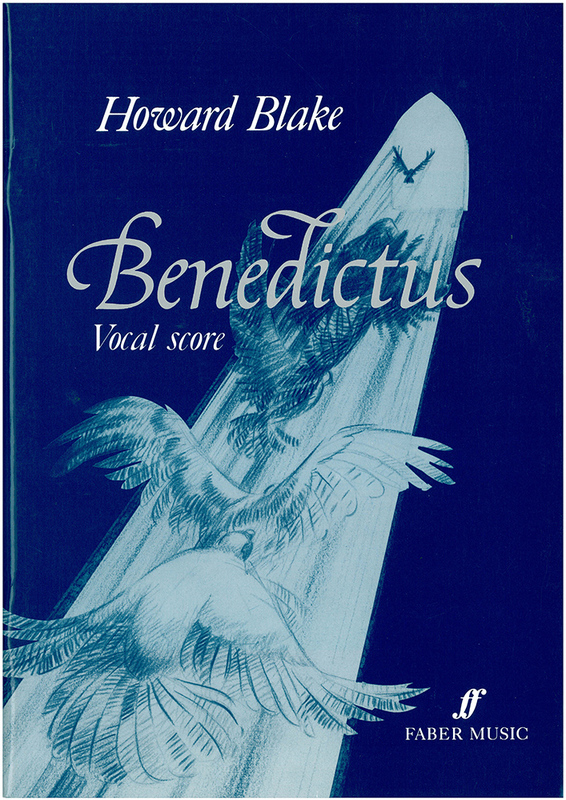
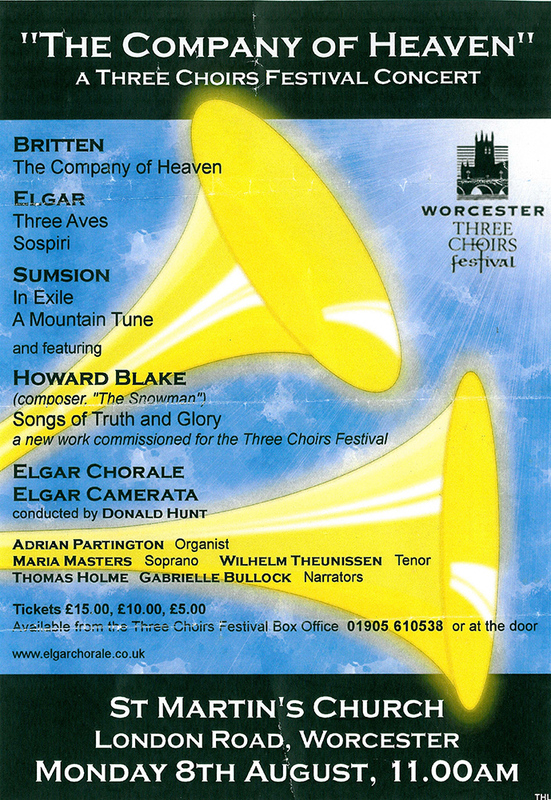
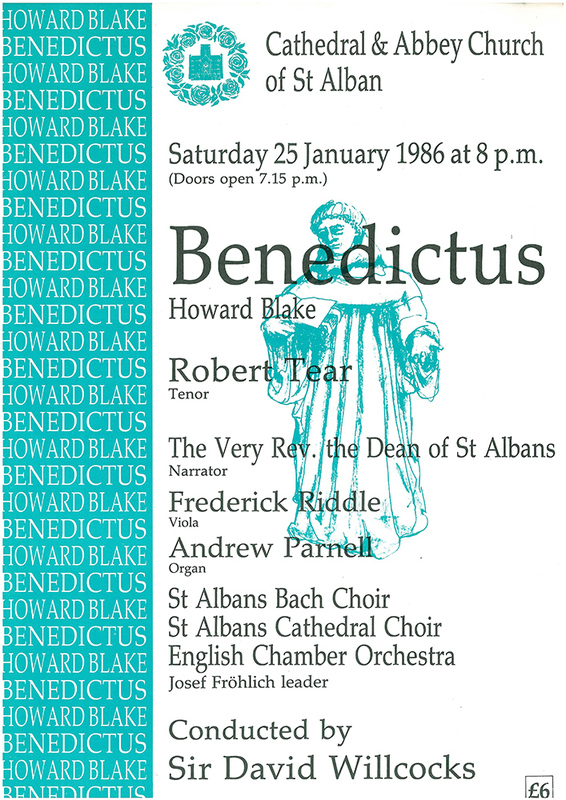
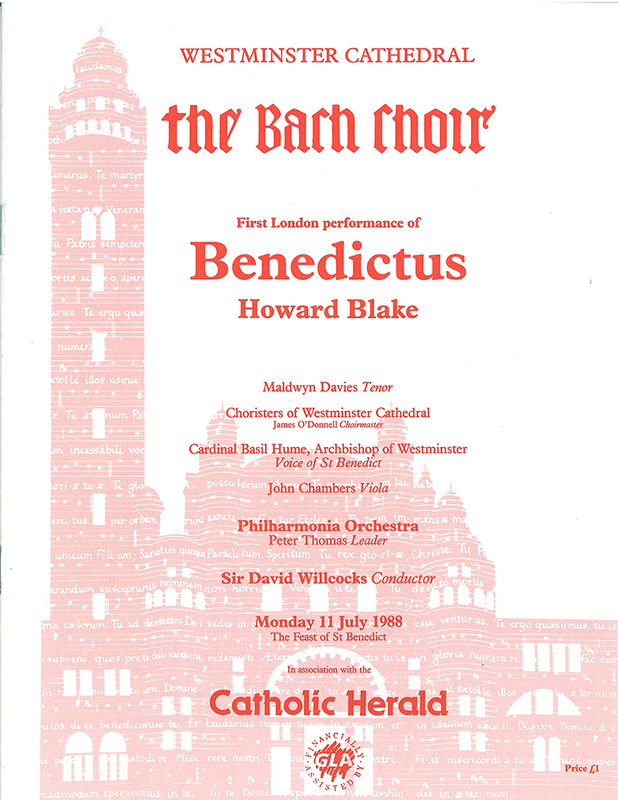
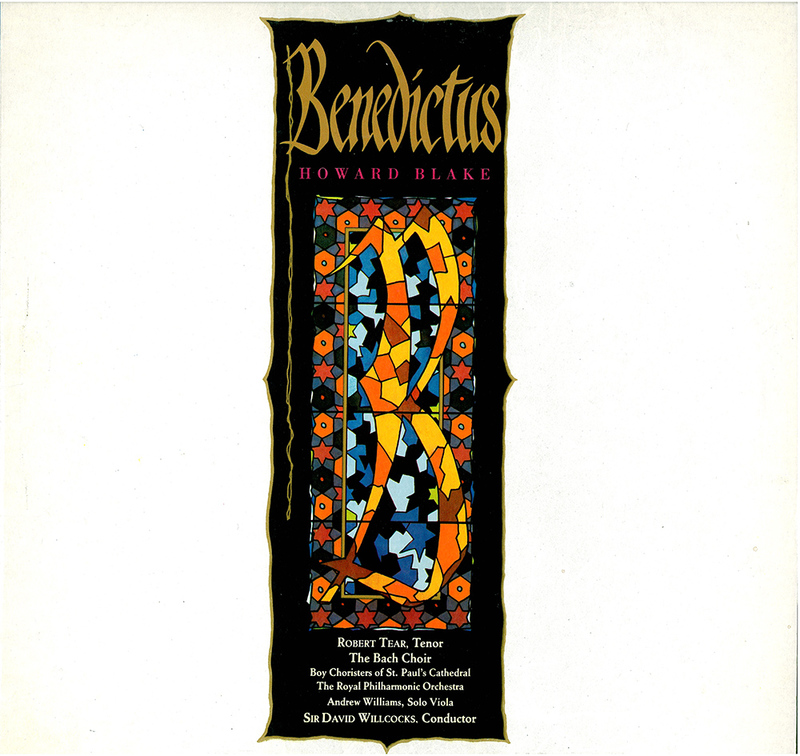
SOLILOQUY FOR SOLO CELLO (2020)
MEDITATIONS FOR TWO VIOLINS
Sadly, at Christmas 2019, Anna Menzies resigned and I had to urgently look for a replacement. I thought of concert violinist Alan Parmenter and was delighted that he agreed to come and work as my assistant. We had just started and it was working out marvellously when in early 2020 we,and the whole world, were stopped dead by the pandaemic corona virus. All concerts and public events were cancelled and London was spookily quiet. The only upside might have been that the air became slightly less polluted. My first thought was: 'What madness has it been for world leaders to have allowed constant air travel between every single nation with no health restrictions ever imposed?' I found it most interesting that they didn't have the virus in N.Korea. In London a complete block-down was announced and all restaurants, pubs and halls closed. One coffee bar remained open nearby with six foot social-distancing rules. Food shops and chemists and off-licenses remained open. Curious rules were imposed: 'one may only see one other person at a time and only go for a walk once a day'. I started to use the time to overhaul my catalogue, the scores and parts and all the great variety of materials accumulated over the years in my studio, something I'd meant to do for many years. The Snowman Show, preparing for a grand far-east tour at Christmas 2020, hovered on the brink of cancellation, but one didn't know what might happen since China was the one place where Covid-19 seemed to be subsiding. Snowman was booked for Beijing, Shanghai, Singapore and Hong Kong, but we'd wait and see. Meanwhile Taiwan seemed to be going ahead with a performance of 'The Bear'! Benedict Kloeckner rang me from Paris and asked if I could write him something for solo cello which he could send out solo on the web. I happily obliged and within a week sent off a new piece to him by PDF e-mail: 'Soliloquy for solo cello.' It was a piece that tried to spell out the anguish of the virus epidemic but at the end lifted up a fervent ray of hope for the future of us all. Benedict premiered it in Kloster Eberbach in the Rhineland and it was evidently much appreciated. Sadly I couldn't be there to hear it due to the travel restrictions. Towards the end of summer restaurants started opening again and it seemed as if one might be getting back to a usual life-style.
FORTY YEARS OF 'FLASH GORDON'
On September 5th my lovely daughter Catherine most pleasantly surprised me with an invitation to a midday viewing of 'Flash Gordon' at the Olympic Cinema Barnes, reminding me both of the many recordings I'd once worked on there when it was a recording studio and of the contribution I had once made to epic sci-fi, Dino, Queen and Freddie Mercury in this cheeky 'spoof on Star Wars', as somebody called it. I had found it hard to take a balanced, dispassionate view whilst in-fighting on credits went rumbling on. I suspected further tampering with this new release and maybe my score would be buried yet deeper. But no! It was all there, including my opening full screen credit. I was pleased to sit and enjoy it all the way through.
My music opens up the film in a small propellor-driven passenger plane with Flash and Dale amidst flaming moon-rocks. It establishes a light-hearted and deliberately period-infused sci-fi style to remind us that 'Flash Gordon' was in fact a Thirties black and white film series and comic-book for children. When I took part in the celebration of the film five years before called 'Is there life after Flash?' Mme. De Laurentiis wrote to us that Dino had been crazy about Flash Gordon as a little boy (in Italy in the thirties) and had resolved to climb up to the top of the cinema world and eventually make Flash Gordon as he had dreamed it, in wide screen and glorious technicolour. So Flash Gordon is in fact a 'period' film and this is what spasmodically gives it much of its charm - the crazy professor, Doctor Zharkov, Flash, the brawny ultimate all-American fullback, Dale the terrified little flapper sheltering in his arms, these are all Thirties stereotypes.
When we reach the main credit however we are brought back with a jolt into the early nineteen-eighties with a very loud and masterful chart-hitting song painstakingly created by the most famous pop group in the world,'Queen'. The song is the stand-alone 'Flash ah! hah!'
But the group had been asked 1. to create a hit and 2. to provide a complete soundtrack. 1.was not only possible but was done and dusted and extremely effective. 2. was impossible. Why was it impossible?
A film score has to be a partner in the telling of a story, not a stand-alone piece of music designed to attract total attention and applause to itself. A score should weave its way amongst the dialogue and sound effects, create atmosphere, enhance tensions and emotions and help the movement of the plot forwards. Sometimes a particular scene that is essentially static can be brought to life by music which does give it pace and tension. A case in point here is 'The Duel on the Sky-platform' for which I wrote a fast-moving, 8-minute score to give pace to an essentially static situation. Unfortunately these crucial eight minutes of score were removed at the dubbing stage and the scene played out on sound effects only and it is no coincidence that from this point on the film starts to become rather tedious. In the dubbing theatre hugely loud sections or derivatives of Queen's 'Flash ah! hah!' theme had been trotted out. They create noise but no pace. There is an extremely loud synthesized version of 'Here come the bride' from the opera 'Lohengrin' (1850) which would have had Wagner trembling with rage! It is intended to be an amusing comment on the unfortunate wedding taking place but it doesn't amuse. There are endless repetitions of the repeated single note used first in the 'Flash ah! hah!' and then in the Football Fight. But this one-note repetition as music is about as interesting as a nail being knocked in. After the viewing Catherine remarked to me that the music never really 'takes off' and never really becomes 'foot-tapping'. One suspects that goaded by their manager, Queen were harried to try belatedly to somehow create their own 'classic film score' at the dub - because the manager so much wanted to state: 'Music for Flash Gordon by Queen' in huge letters (and indeed did so.) However that contradicted my own full-screen credit of 'Orchestral score composed and conducted by Howard Blake.' The problem was about credits. Had their manager allowed me to fully collaborate with Queen , both in preparation for the recording sessions (as I did) and on into the dubbing studio (which I didn't), I might well have been able not only to rescue the situation, but arrive at a genuine 'ground-breaking fusion.'(Newspaper quote 2020). Perhaps I did, but it could have been better. There would still have been time, but I was not invited to the post-production dubbing sessions and I believe that was somewhat to the detriment of the film as completed.
A CONCERT IN ST.MARY'S PERIVALE
Notwithstanding the restrictions of 'lockdown' the great recital-music enthusiast Hugh Mather invited Madeleine Mitchell and Howard Blake to give a lunchtime concert without audience on 20th September 2020, a programme of Howard's music for violin and piano to be relayed on the net:
Pennillion op. 571- Variations on a folk-like theme Violin Sonata op. 566 - Allegro, Lento, Vivace 'The Ice Princess & the Snowman' op.557 'Jazz Dances' op.520a Folk Ballad, Jazz Waltz, Galop 'Walking in the Air', from The Snowman op.371a, arr. by HB for MM Composer's note for the concert: 'Pennillion' was originally composed for Jack Rothstein in 1973 when he also suggested the serious, full-scale, three movement Violin Sonata in G minor, composed in that same year. However, definitive recordings of these two works for violin and piano were not made at that time and when in 2005 Madeleine Mitchell suggested a piano/violin album for recording with Naxos, I decided to substantially revise the material, perhaps to suit Madeleine's own graceful performance style rather than try to re-emulate Jack's former rumbustious virtuosity! I composed completely new first and second movements for the sonata and added a complicated new fugato coda to the existing third movement, the CD of it being released in 2008.
On contemplating the situation in the year 2021 I have decided that there are two distinct works which should have two distinct, separate names and two separate opus numbers:
1.Rothstein Violin Sonata in 3 movements (G minor), Opus 169, for violin and piano, 24'05'' Composed by Howard Blake, dedicated to Jack Rothstein 'a great violinist and a great friend', ©Highbridge Music Ltd., Highbridge Mill, Cuckfield, Sussex, 1973.
2.Naxos Violin Sonata in 3 movements (G minor), Opus 586, for violin and piano, 23' 41'' Composed by Howard Blake, revised and dedicated to Madeleine Mitchell for a Naxos recording in September 2007, ©Highbridge Music Ltd.,Studio 6, 18 Kensington Court Place, London W85BJ, 2007.
Other works created for this disk:'The Ice Princess & the Snowman' op.557 was arranged for violin and piano at Madeleine's special request, as were the 'Jazz Dances' op.520a (three of which have been selected for this concert - Folk Ballad, Jazz Waltz and Galop - and a wordless version for violin and piano of the song from 'The Snowman' - 'Walking in the air', after which this book has been named. Here are my words:
Song: 'Walking in the Air' from 'The Snowman'.
We're walking in the air We're floating in the moonlit sky, The people far below Are sleeping as we fly.
I'm holding very tight, I'm riding in the midnight blue, I'm finding I can fly So high above with you.
On across the world The villages go by like dreams, The rivers and the hills, The forests and the streams,
Children gaze open-mouthed,taken by surprise, Nobody down below believes their eyes.
We're surfing in the air, We're swimming in the frozen sky, We're drifting over icy Mountains floating by.
Suddenly swooping low on an ocean deep, Rousing up a mighty monster from his sleep.
We're walking in the air, We're dancing in the midnight sky, And everyone who sees us Greets us as we fly.
-
 Howard with cellist Benedict Kloeckner
 -
 Diahann and Robert on a Swedish lake
 -
 Catherine and Christopher when young
 -
 The Snowman Flying Into Theatreland
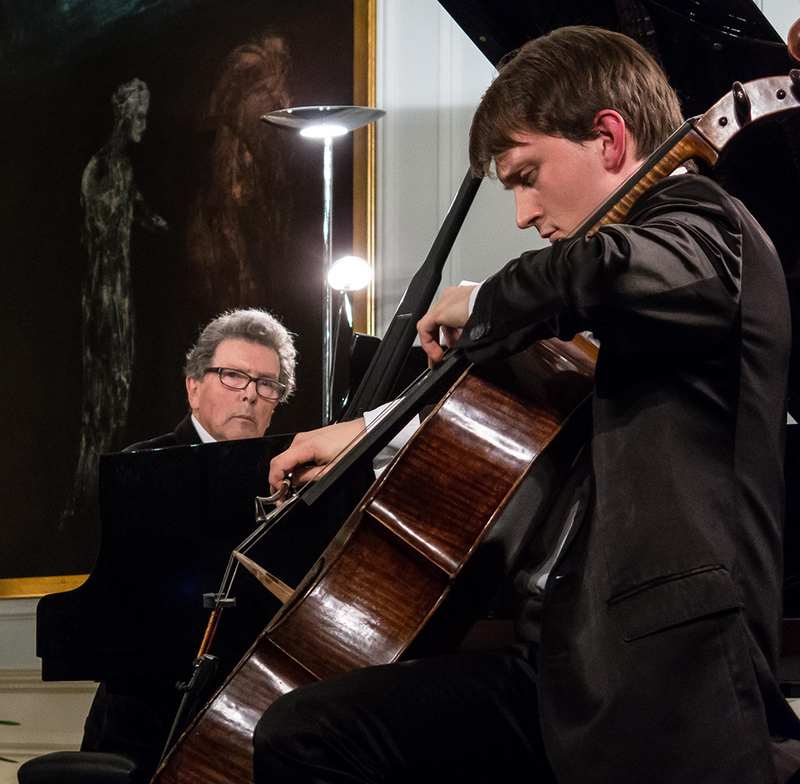
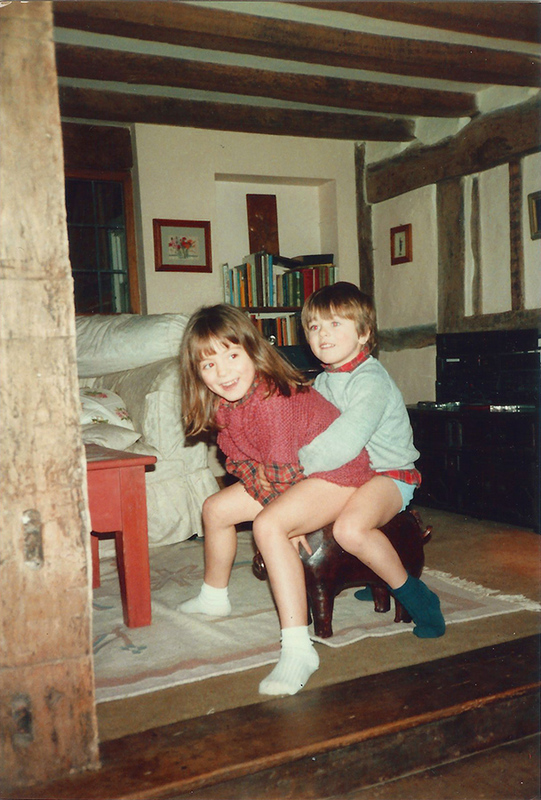
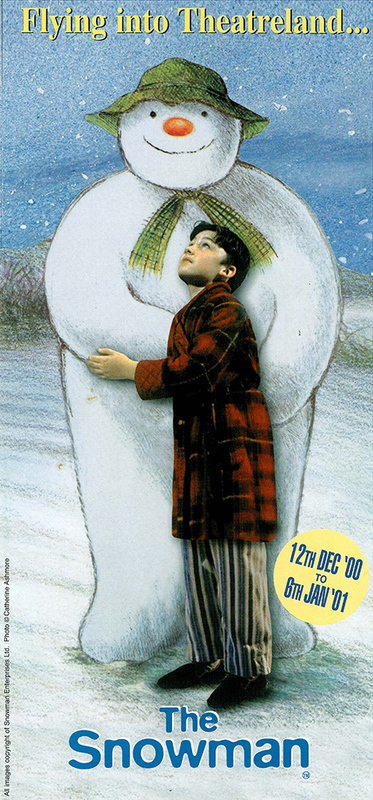
SCHERZO IN JAZZ, THE RISE OF THE HOUSE OF USHER (2021)
SNOWMAN VOCALISE
'Scherzo in Jazz'
An activity that seemed to suit the disastrous lockdown situation was to work on a You-Tube Site. My own 'Howard Blake Official You-Tube' had been moving steadily along, but early in 2021 my multiple-talented associate Emmett Elvin greatly impressed me by creating a brilliantly-coloured, short, abstract cartoon-film called 'Scherzo in Jazz'. He had discovered the thus-named music-track on an ancient and unusual all-Howard Blake Weinberger library-disk called 'Theme Music' dating back to 1967. My association with Weinberger in the field of orchestral music had actually begun even earlier than that, when as a young student in 1960, at the recommendation of the Royal Academy of Music warden, Myers Foggin, I had been invited by Weinberger to compose a 'Remembrance March' for a solemn royal occasion in Westminster Abbey and I was further requested to write an impressionistic piece that I named 'Blue Sea and Evening Sky' - to accompany one of the Duke of Edinburgh's yachting escapades. Both pieces were apparently highly succesful. The delightful Stephie Weingauer, excellent director of the Stuttgart library-music recordings, next requested from me a 'piece to convey very fast gainful activity'. I somehow found this rather funny, or silly, and jokingly wrote a piece called 'Faster than that', somewhat satirising the whole slightly dubious idea of library music. My composer friend Stanley Myers found this hilarious but Stephie took a rather dim view. It was of course her whole livelihood and I wasn't commissioned again for quite a while! By 1962 she had relented. I wrote an excerpt from a non-existent symphony calling it 'Symphonic Extract'; a festive piece for a non-existent festival called 'Happy Occasion'; a plaintive romantic waltz called 'Julie' for a non-existent lady-love; and a slightly sombre South American piece with rhumba rhythms for a non-existent 'Latin Moon'.
The music world had in fact been radically changing during this period. Expensive symphony orchestras were being replaced by rhythm-and-blues and rock'n'roll groups whilst live music was everywhere being replaced by amplifiers. Through the grapevine Stephie Lengauer had somehow heard that I had just recorded a 'Hammond in Percussion' album as some sort of jazz/rock/easy-listening/organist-cum-pianist with my own star-studded instrumental group in no less than Studio 2, EMI, Abbey Road - The Beatles studio! Star players in my group were Johnny McLaughlin guitar, Jim Lawless vibraphone, Ronnie Verrell drums, Dave Richmond bass, all excellent players with whom Stephie most definitely wished to be musically and professionally involved. She rang me with a terrific proposition. Would I like to compose, play and record a complete long-playing album of instrumentals written as if for feature films? 'My heart pounded and I leapt into the project with high energy, thinking of crazy titles for crazy imaginary films: 'Colt '45', 'March of the Grommets', 'They! are coming', 'High 'n Groovy', 'Kraken', 'Kill or be Killed!' - and 'Night Tapestry' which stood out amongst them as a gentle theme for an imaginary love-story with a Jacques Loussier/Bach-inspired piece for piano and jazz rhythm section'.(See 1967)
The album was to be called 'Theme Music', opus 27, 1967.
Through another grapevine, the topmost music-fixer for film and TV recording sessions in London at that time, David Katz, had somehow heard that I was recording this complete album of my own new music in a recording session at Lansdowne Studios, Notting Hill on the evening of 12th May. He asked if he could look in, and I was delighted that he did. When we played 'Night Tapestry' he was absolutely blown away.
He said to me: 'That is absolutely fabulous! I've got to get you writing and playing movie scores!'
He was as good as his word. 'The Avengers' was at that time the foremost TV series, said to be running in ninety-three countries. Laurie Johnson composed the scores and David fixed the players for the recordings, which took place every two weeks or so with top hand-picked session musicians at Elstree Studios just north of London. When it opened for its next season he booked me to play keyboards: piano, organ, vibraphone, marimba, celeste etc. This experience prepared me for the opportunity of taking over from Laurie Johnson as both composer and conductor, a step that I somehow believe Laurie had envisaged from the start. We were always on good terms both personally and professionally then and now and he never in any way envied my success. He had found it impossible both to score 'The Avengers' and write new theatre shows simultaneously as he wanted to do - there simply wasn't time! He was the guiding force behind all the great Elstree series and he wanted the music to be carried on in one hundred percent the way he had chosen and laid down. I was fortunate enough to be chosen for that role at that time and it was an extraordinary advancement for someone of my age. It established me in no uncertain terms as a top-level composer and musical director in the film and television world and led to many major scores in the years to come - from 'The Avengers' to 'The Duellists' to 'The Snowman!'
BBC SINGERS PROPOSE TO 'SING' THE SNOWMAN FOR CHRISTMAS
On August 23rd. 2021, Jonathan Manners, who introduced himself to me as director of The BBC Singers, visited me to ask if I would give approval for a new arrangement of the complete soundtrack that I had originally composed for the 1982, 26-minute animated film 'The Snowman' (op. 310) with the addition of my later-written narration. His wish was, most unusually, to turn the whole work into a 'vocalise', that is to say, a work performed by singers only, a cappella (unaccompanied)and sung to la,la,la or hummed or even whistled! I had quite recently made an a cappella arrangement of 'Walking in the air' as a self-contained song for tenor and SATB chorus which in June 2019 I'd conducted with the choir of St Albans Cathedral and tenor Peter Auty, now a tenor at Covent Garden, but back in 1982 the original treble soloist on the world-famous first recording of 'The Snowman'. This arrangement of 'Walking in the air' had sounded quite wonderful and might well have suggested to a listener the idea of further development for the entire work. Jonathan told me that he had studied my later arrangement of 'The Snowman' for string quartet and narrator (opus 612, 2015) and thought that this scoring for four instruments could also be employed with SATB vocal group. I did not wish to embark on such an arrangement myself, but gave Jonathan permission to experiment. I expressed the doubt that all the musical features of the score could be thus voiced and suspected Jonathan would have to employ other instruments along with the choir - which turned out to be true. The completed work by the BBC Singers was scheduled for a first performance on BBC Radio 3 on Christmas Eve at 7.30pm and a second performance on BBC Radio 4 on Christmas Day at 1.30pm. The narrator on both broadcasts would be Stephen Fry, but in the event the BBC decided to cancel it and I was very glad that they did!
AN ORGAN RECITAL IN THE MOST DISTINGUISHED COMPANY - BACH, MOZART AND MENDELSSOHN. 17th October 2021
Mozart at the Oratory. As part of the 5th Edition of the Canadian International Organ Competition, Saint Joseph's Oratory presents the concert: 'Mozart at the Oratory'. Organist : Dong-Ill Shin. Date and time: Sunday, October 17,2021 from 7 p.m. to 8:30 p.m. Place : Basilica, St.Patrick's 's Oratory, Montreal, Canada.
PROGRAM:
Johann Sebastian Bach (1685-1750) Prélude en mi bémol majeur, BWV 522/I Trio en ré mineur, BWV 583 Fugue en mi bémol majeur, BWV 522/II
Wolfgang Amadeus Mozart (1756-1791) Fantasia en fa mineur, K. 608
Howard Blake (né en 1938) The Rise of the House of Usher, op. 532
Felix Mendelssohn (1809-1847) Sonate n° 1 en fa mineur, op. 65
Allegro moderato e serioso Adagio Andante recitativo Allegro assai vivace
G 😇
-
 Gillian Weir Usher Hall
 -
 HowardPianoAbove
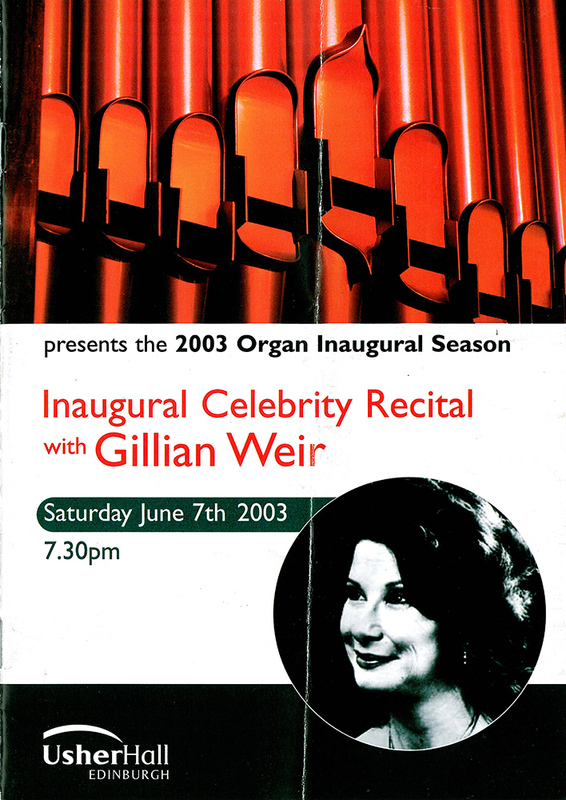
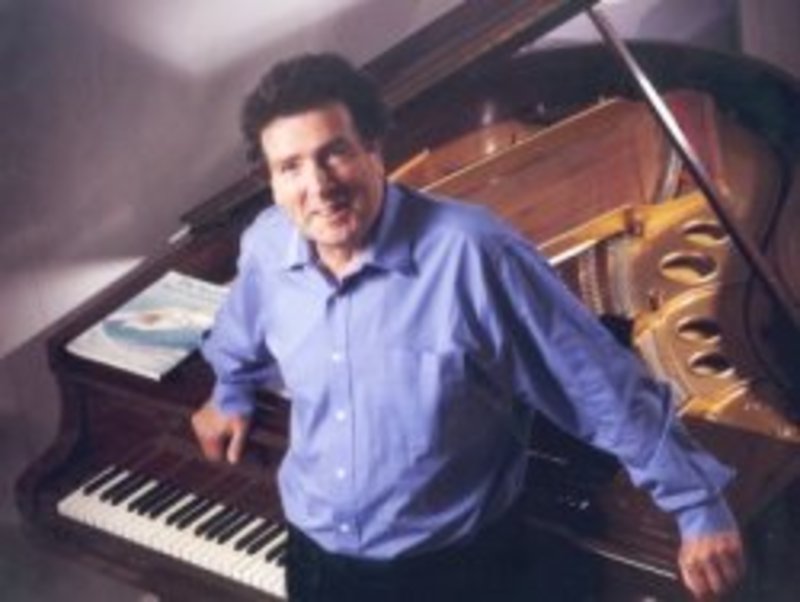
CONCERT WITH LANA TROTOVSEK (2022)
Coming out of lockdown
Around Christmas 2021 I was taken ill with the Covid virus which laid me decidedly low and unable to deal with things, in particular the great mass of cards and invitations that poured in. My children showed great kindness to me at this time - Catherine rushing up from Isleworth bringing medical and food supplies - Christopher unbelievably flying all the way from San Francisco and staying for twelve days until I recovered - Robert ringing me from Sweden to make sure I could manage and offerring his help. I felt well and truly cared for. Fortunately by January 27th 2022 I was also well and truly recovered and able to rehearse in my studio with the young virtuoso violinist Lana Trotovsek. We had been engaged by Paul Gregory for a recital in the Royal Chapel Brighton on April 26th. Both of us wanted to try out my early Violin Sonata opus 169 and when we started to rehearse it, something quite magical happened. Our feelings about the interpretation of my music seemed to absolutely coincide. I had initially thought of coupling my Sonata with the great Cesar Franck Violin Sonata but just before the rehearsal Paul had rung to say that a programme including the Franck would be far too long. We needed something else. We started to think again and one suggestion Lana made was that we play some of my film themes. On examining my library of original works I discovered that I had already in fact created exactly such a collection for violin and piano - and never played it! We had come up with a recital programme of the right length. (See lunchtime concert on 26th April 2022)
FLUTE CONCERTO IN ALL SAINTS, LEWES, MARCH 5th 2022
On Saturday 5th March, Emmett and I drove down to Lewes in Sussex to attend a concert given in St. Michael's Church by a fine string orchestra called 'Musicians of all All Saints' conducted by Nicholas Houghton. They opened with a splendid performance of my Flute Concerto opus 493a by Ann Hodgson which was warmly received by a packed church audience. I was surprised and delighted to meet the lead cellist Peter Copley who had been a composition student of mine many years ago in Brighton and it was hoped that this connection might lead to further performances of other of my works. The concerto is in four movements: Allegro cantando; Scherzo con spirito; Andante espressivo and Marcia giocoso. It has a duration of about eighteen minutes.
'PENNILLION' IN THE CHELSEA ARTS CLUB, MARCH 6th., 2022
On the following evening Sunday 6th March The Korros Ensemble opened a splendid concert in the clubroom of The Chelsea Arts Club with an excellent performance of 'Pennillion' for flute (Eliza Marshall), clarinet (Nicholas Ellis), and harp (Camilla Pay), all in great form. The concert celebrated the release of their new album 'Nostalgia' on the label 'Ambache' (a charitable trust). The club was packed and the audience most appreciative.
CONCERT IN THE CHAPEL ROYAL, BRIGHTON, TUESDAY, APRIL 26TH 2022
An 'all Howard Blake' lunchtime recital given by Lana Trotovsek (violin) and Howard Blake (composer and pianist):
!. Violin Sonata opus 169, in 3 movements,:1.Allegro Moderato,2.Lento Espressivo,3.Vivace c.24 minutes. (Originally composed in 1973 in Cuckfield, Sussex for the violinist Jack Rothstein (1925-2001) and first performed in Forsyth's Barn, Ansty, Sussex in 1973 by Jack and Howard.)
2. 'Film Themes for violin and piano' op.729, c.23 mins.,first concert performance (previously named as 'Six Romantic Pieces' opus 407b) 'Laura' - theme from Ridley Scott's film 'The Duellists' starring Harvey Keitel and Albert Finney 1977 'The Music Box' - theme from the Peter Medak film 'The Changeling' starring George C. Scott 1979 'Dulcibella' - theme from 'The Riddle of the Sands' starring Michael York and Francesca Annis 1978 'Romance' - theme from the film 'Agatha' starring Dustin Hoffman and Vanessa Redgrave 1979 'Gentlefolk' - theme from a BBC 'Play of the Month' starring Denholm Elliot and Rosalie Crutchley 1979 'Walking in the Air' – theme from Diane Jackson's Oscar-winning animated film 'The Snowman' 1982.
The concert was well-attended and it was filmed by both Emmett Elvin (on behalf of the composer) and Boris Bizjak (on behalf of the violinist). A comprehensive printed programme had for some reason been overlooked by the concert-giver, so the composer informally introduced the pieces from the platform - which the audience seemed to enjoy.
'WORLDHEARTBEAT' JUNE 21st 2022 [Edit] [Print] London's new music education centre
On Tuesday June 21st 2022 newspaper-man Charles Garside invited me and my old school friend Andy Henderson for a drive down to Nine Elms (Battersea) to visit a building-site. It was a very hot day and we wondered what on earth for! It turned out that a new music centre for children was in its last stages of completion and they wanted the world to know. A hand-painted upright piano stood out in the sun amidst vast surrounding building-works. Somebody started filming and I was asked to play 'Walking in the Air'. A crowd started to gather and I obliged. Then I went on to play more of my piano pieces and followed them with a speech about the importance of music to the world and to children in particular. I realised why I had been asked along. How could I have possibly refused such a worthwhile cause? I wished 'Worldheartbeat' every success!
THREE SAD OBITUARIES:
BERNARD CRIBBINS OBE Died at the age of 94 on 27 July 2022
A great and delightful English actor, singer and friend who, during the 1960s, became known in the UK for his successful novelty records "The Hole in the Ground" and "Right Said Fred" and for his appearances in comedy films including Two-Way Stretch (1960) and the Carry On series. He appeared often on stage with me as my first choice of performer to narrate 'The Snowman' in its often-staged concert version, mostly at The Barbican Concert Hall, an appearance which he made his own. His voice and his delivery of the text were loved by audiences, utterly unaffected and quite simply perfect. He will be greatly missed.
RAYMOND BRIGGS CBE Died at the age of 88 on 13th Aug.2022 (A tribute requested from me by the press.)
'Raymond Briggs was an artist of a most rare and wonderful talent, whose keenly-observant water-colour drawings magically revealed the diversity and wonder of the world without the use of words. This opened his appeal to all nations and ages but most of all to the very young. In his original story- book 'The Snowman' there was not one single written word, but everybody could understand the story! This was 1981 and Channel 4 TV was just opening. Its CEO Jeremy Isaacs asked Raymond if he might make a short test-film of The Snowman and it happened that I was asked to view it. It was a film of the picture-book and was just 9-minutes long. For me this was a dream come true. Would Raymond allow me to create music for it? He would! I recorded music on the piano which included 'Walking in the Air' and the film was shown to Jeremy Isaacs at Channel 4, the suggestion being made that I could extend 'The Snowman' to a Television half-hour – but on no account could there be any words! By agreeing to this Raymond had caused a whole new genre: A film whose dialogue is music. And a most wonderful success! I shall miss you Raymond - and so will all the children of the world.'
Further comment: My only real contact with Raymond Briggs was that I wrote the lyrics and music for the two animation films which were made by John Coates and his company TVC (Television Cartoons) in Charlotte Street, London. These were 'The Snowman', 1981 and ''The Bear' 1998, (both based on picture books by Raymond Briggs). However I had virtually no direct contact with Raymond Briggs, carrying out instructions as given me by John Coates on his behalf and directly by his team of animators, his editor Taylor Grant, and his brilliant director Diane Jackson. This curious failure of contact produced some odd results. For instance, in 'The Bear' when I suggested there should be a sequence of the girl and the two bears skating down a frozen Thames and wrote for it the song 'Somewhere a star shines for everyone', John Coates suddenly insisted that the lyrics be removed and Charlotte Church be asked to sing nothing but 'la la la......' Why? I believe he was instructed not to allow any words that might be deemed an author credit. Would this instruction have come from Raymond? Perhaps. On my website one can see and hear this song with my lyrics, added long after the film release, as originally recorded for the film by Charlotte Church whose debut record it would have been if release had been permitted. On my present website it has many fans and is still receiving a great many hits! What a shame and what a loss! Another inexplicable story, relating to the film of Raymond Briggs' book'The Bear': When I had written the duet for the two bears – one earthly, one heavenly – I had scored it for two tenors and – wonder of wonders- I was offerred the two greatest tenors in the world at that time: Placido Domingo and Jose Carreras – to sing and record it for our film, 'The Bear'. But John Coates (and presumably Raymond) refused this fantastic offer outright without any explanation. If it had happened it would without doubt have made 'The Bear' hugely famous world-wide overnight. What a loss! What a shame!
GERRY POTTERTON Dies at the age of 91 on 23rd August 2022
An English animator, artist, producer/director and dear friend of many years, Gerry was by nature a genuinely happy and considerate person, forever taking delight in jokes and stories and ideas and people of every kind. He was introduced to me in London back in 1973 by editor/producer/film-maker Katherine Reynolds when we were invited to visit Montreal, Canada, where Gerry lived and ran his own film company. There we worked on his full-length feature film, the hilarious and strikingly unusual 'Rainbow Boys', starring Donald Pleasance, for the score of which I was able to engage and conduct the splendid Montreal Symphony Orchestra and compose and record an ambitious orchestral score. It must have been well-received since the following year I was invited to compose a score for Gerry's charming, animated short 'The Remarkable Rocket' (1974), based on Oscar Wilde's short story of the same name.
SUSSEX CHORUS ELECT HOWARD BLAKE OBE FRAM AS THEIR VICE-PRESIDENT On Thursday, 6th. October news of my acceptance of the role of Vice-President of the Sussex Chorus was reported to members at their AGM and evidently received with approval. I was delighted to accept this role, which had been formerly held by Sir David Willcocks, a great friend and supporter of my music, in particular by his presentation of the first professional performance of the oratorio 'Benedictus' in 1988 and its ensuing tour. It was a work commissioned and premiered by Sussex Chorus in Worth Abbey under the able baton of Janet Cannetty-Clarke in 1980, coincidentally and amazingly celebrating the 1500th anniversary of Saint Benedict (b.480AD). At the time I composed the work I was living in a converted water-mill, Highbridge Mill near Cuckfield in Mid-Sussex, having previously completed 'The Song of Saint Francis' there, my first substantial choral work, which I had also dedicated to Janet Canetty-Clarke and the Ditchling Choral Society. Janet was instrumental in causing me to embark on choral composition as a major part of my compositional output at that time, a guidance and inspiration for which I have always been very grateful.
A SONG RECITAL AT CHELSEA ARTS CLUB. 23rd.October 2022 6pm-7pm
Charne Rochford, a fine tenor of the concert world, sang Schumann's cycle 'Dichterliebe' (in German) and Howard Blake's cycle 'Shakespeare Songs', a recital with the composer, who is a Chelsea Arts Club member, at the piano. The club's audience gave the concert a most enthusiastic reception, particularly to the Shakespeare Songs (in English!)
THIRTY YEARS OF 'THE SNOWMAN'
On November 19th 2022 Penguin Books, the publishers of the picture-book of 'The Snowman', laid on a cinema showing of the complete 'The Snowman' film at the Odeon Leicester Square, London, before an invited audience of mostly children. Way back in 1981 I had been delighted to compose and conduct the original score for the film with its song 'Walking in the Air', sung and recorded for the film by treble soloist from St.Paul's Cathedral, Peter Auty. Now a tenor star of Covent Garden Opera, Peter should have been invited to this showing, since in the splendid acoustic space of the Odeon, with a newly brushed-up recording made by Sony, his young treble voice sounded magnificent! Unexpectedly, The Snowman's virtually-unknown sequel,'The Snowman and the Snowdog', was also shown. Neither I, nor my two guests at the viewing, had seen it before, and we started to understand why. Instead of creating a new film with a new story for 'The Snowman', it seemed that the animators had set out to create their own 'Snowman', but in fact had made a second film which more or less relayed the same story as the first, whilst adding an animated dog character, whose role seemed somewhat unclear. The film at this showing did not reach out to the predominantly young audience. They had just cheered 'The Snowman' to the rooftops, but 'The Snowman and the Snowdog' was received in near-silence.
CELLO AND PIANO RECITAL BY BENEDICT KLOECKNER AND HOWARD BLAKE November 25 2022 A concert of HB music at the beautiful chapel of Spay on the banks of the river River Rhein near Coblenz: Diversions, Pennillion, Cello Sonata, The Enchantment of Venus, Walking in the Air, Archangels Lullaby.
VIOLIN AND PIANO PERFORMANCE BY ESTHER OBRAMI AND HOWARD BLAKE A concert at 2.30pm on 27 November 2022 at The London Palladium featuring 'Walking in the air' and celebrating 30 years of 'The Snowman'
KORROS ENSEMBLE PLAY HB PIANO TRIO NO.2 at Chapel of St.Bartholomews Greek Street, Soho Dec,5th 2022.
CHRISTMAS, CELEBRATIONS OF 30 YEARS OF THE SNOWMAN SHOW AND A SURPRISE CHRISTMAS VISIT BY MY SON CHRISTOPHER. The next days moving toward Christmas were packed with a remarkably wide variety of interviews generated mostly by the 30-year 'Snowman'celebrations - Scala in Golden Square - Radio London Live at Peel House - Sunday Mirror - BBC Radio 4 from the New Broadcasting House - The Michael Ball Show from Wogan House - Mail on Sunday with Donna Ferguson and a pre-recorded BBC interview in my studio with BBC's Ginka Biloka. On 17th the Snowman documentary was shown on Channel 4 TV and on the 18th I did a live phone interview with Al Ryan. I was exhausted and slept most of the 19th before receiving Christopher who, I was delighted to learn, had suddenly decided that he would like to join me for Christmas,arriving from San Francisco on the 20th.December.
We attended Christmas Day sung-communion in St.Mary Abbot's,Kensington, where, as a sermon, a somewhat oddball vicar extolled the virtues of bathing in a hot tub outside under the stars - to 'appreciate the concept of darkness' This sounded distinctly suspect! Where would he do this we wondered - and with whom? In my studio in the evenings we enjoyed watching various Laurel and Hardy films, which we found to be still standing up remarkably well after almost a hundred years! We also came across and played through some interesting piano jazz recordings of Dudley Moore, with whom I had once worked in recording studios in the late sixties and seventies. We were both impressed to be reminded what great and varied talents he had!
Sinfonietta for brass, The Avengers, The Duellists, Chamber Music (2023)
SINFONIETTA FOR BRASS
On January 27th 2023 a splendid performance of 'Sinfonietta for brass' was given in The Royal Northern College of Music, Manchester by the prize-winning Foden's band. Emmett and Howard travelled to Manchester to hear it and were delighted by the fine performance.
THE AVENGERS
On Friday 10th March 2023 a Howard Blake zoom interview was held from 12.OO-12.30am by BBC interviewer Philip Hawkins. Howard discussed the episodes for which he composed the music scores for Bernard Herrmann and Laurie Johnson from May 1968 to January 1969 - the episodes: 'My Wildest Dream', 'Whoever shot poor George oblique stroke XR 40', 'All done with mirrors', 'Super Secret Cyber Snatch', 'Game', 'Noon-Doomsday', 'Wish you were here',''The Interrogators', 'Take me to your leader' and 'Who was that man I saw you with?'
THE DUELLISTS
A screening of the cinema film 'The Duellists' was scheduled for a British Film Institute showing at the National Film Theatre on London's Southbank at 5.50 pm on Monday April 24th 2023, following which at 7.30pm composer/conductor Howard Blake would talk on-stage and answer audience questions about his composition and recording of the epic film score which he created for Ridley Scott's cinema masterpiece, which won the Special Jury Prize at the Cannes Film Festival of 1977 and has since gained ever-increasing acclaim. It was hoped that film director Ridley Scott and film producer David Puttnam would be present along with members of the cast and crew.
CHAMBER MUSIC
WEDNESDAY 10TH MAY 2023 ST.JOHN'S SMITH SQUARE 7.30PM MUSIC BY HOWARD BLAKE OBE FRAM Lana Trotovsek violin,Julian Trevelyan piano, Ian Byrne Viola, Benedict Kloeckner cello, Boris Bizjak flute, Andrew Marriner clarinet.
Piano Trio NO.1 'Fantasy Trio' Piano Trio NO.2 'A Few Days' Piano Trio no. 3 'Elegia Stravagante' Violin Sonata (piano Howard Blake) Piano Quartet
(Unfortunately this concert was cancelled due to a plane strike)
Autobiography Index - (subject location within chapter or chapters)
- 'Mutiny on the Bounty'
- 'Sleepwalking'
- 'The Bear'
- 'The Snowman'
- 'The Snowman' album
- A Few Days (film)
- Academy of St. Martin in the Fields
- Adams, Peter
- Ades, Thomas
- Agatha
- Agnew, Paul
- Agutter, Jenny
- Albery,Ian
- Alexander, Bill
- Alexandria, Princess
- All God's Creatures
- Allan, Peter
- Alldis,John
- Allen, Dave
- Allison, Reese
- Altmann,Robert
- Amityville 3D
- Andaloro, Giuseppe
- Anderson, Melody
- Anderson, Ross
- Anderson,Lindsay
- Andreassen, Katerina
- Andrew, HRH Prince
- Andrews, Dr.Ivan, Ph.D.
- Andrews, Julie
- Andrews, Leisa Lovely
- Andrews, Stuart
- Annan, Kulfi
- Annells, Richard
- Annis,Francesca
- Ansermet,Ernest
- Anthony Asquith Award
- Apted, Michael
- Armstrong, Sir Thomas
- Arnold, Sir Malcolm
- Arnold,Malcolm
- Ashkenazy, Dody
-
Ashkenazy, Vladimir
- PRELUDE, SARABANDE AND GIGUE (1959)
- PRELUDE IN B MINOR (1963)
- Move to the Sussex countryside (1971)
- THE SONG OF SAINT FRANCIS, STRING TRIO, THE STATION (1975)
- EVA - A BALLET ABOUT WOMAN, film: 'MIDSUMMER NIGHT'S DREAM' (1996)
- 75th birthday concert in the Wigmore Hall (2003)
- 'SPEECH AFTER LONG SILENCE' (2009)
- 'DIVERSIONS' FOR CELLO AND PIANO (2010)
- 'JAMES JOYCE SONGS' - tenor Richard-Edgar Wilson (2012)
- 'ELEGIA STRAVAGANTE' (PIANO TRIO NO.3) (2013)
- Ashkenazy, Vovka
- Ashmore, Susie
- Ashmore,Lawrence
- Ashton,Sir Frederick
- Astaire, Jarvis
- Astra Satellite
- Atha, Bernard
- Attlee, Clement
- Audran,Stephane
- Auty, Peter
- Bach Choir
- Bach, J.S.
- Bach, Johann Sebastian
- Badel,Alan
- Bailey, Mark
- Baker, Chet
- Baker, Dame Janet
- Baker, Graham
- Baker, Jim
- Baker, Kenny
- Ball, Michael
- Baronaite, Liana
- Barron, Jacqueline
- Barry, Elaine
- Bart, Al
- Bartok, Bela
- Bartok,Bela
- Basinger, Kim
- Bassey, Shirley
- Baster, Miles
- Bates, Simon
- Bathed in Lightning
- Battacharya, Daniel
- Beach, Jim
- Beatty, Warren
- Beckham, Steve
- Beddows, Charlie
- Beecham, Sir Thomas
- Beethoven, Ludwig van
- Bell, Emma
- Bell, Tom
- Benedictus
- Benison, Ben
- Benjamin, Arthur
- Bennett, Hywel
- Bennett, Rodney
- Bennett,Rodney
- Benson, Alec, Cissy and Peter
- Benson, Leader Funston
- Benson,Fred
- Berg, Alban
- Beriosova,Svetlana
- Berkeley, Sir Lennox
- Berlin, Irving
- Berlin, Mark
- Bernstein, Leonard
- Bernstein,Elmer
- Bickley, Susan
- Biddle and Co,
- Biddle and Co., solicitors
- Biloka, Ginka
- Bintley,David
- Bizjak, Boris
- Blair, Prime Minister Tony
- Blake, Catherine
- Blake, Catherine Grace
- Blake, Christopher
- Blake, Christopher James
- Blake, Doctor Harry (my uncle)
- Blake, Dr.Harry E.
- Blake, Grace Blackman
- Blake, Helen
- Blake, Horace Claude
- Blake, Howard
- Blake, Patricia
- Blake, Patricia ('Trisha')
- Blake, Philip Lawrence
- Blake, Philip Lawrence (my brother)
- Blake, Philip Lawrence (Zion)
- Blake, Robert
- Blake, Robert William
- Blake, William
- Blakey, Art
- Bligh, Jack
- Bligh, Jack and Mary
- Bloch, Ernst
- Bloom, Clare
- Boetzelaer, Jan-Otto
- Boetzelaer, Jocelyn
- Bogarde, Dirk
- Bogart, Humphrey
- Borodin, Alexander
- Borras, Jordi
- Boutros Boutros-Gali
- Bowie, David
-
Boyle, Robin
- Overture: 'THE CONQUEST OF SPACE' - to launch the European Astra satellite (1988)
- PHILHARMONIA ORCHESTRA - HRH PRINCESS DIANA'S BIRTHDAY COMMISSION (1991)
- ALL GOD'S CREATURES, LA BELLE DAME SANS MERCI, LE GISANT (1994)
- 'IF' - RUDYARD KIPLING'S POEM WITH MASS CHOIR,ORCHESTRA,BAND OF THE GHURKAS (1998)
- Brahms, Johannes
- Brambell, Wilfred
- Branagh, Kenneth
- Bricusse, Leslie
- Briggs, Bob
- Briggs, Raymond
- Brightman, Sara
- Brighton Grammar School
- Brisbane University
- Britten, Benjamin
- Britten, Nigel
- Britten, Tony
- Brodsky Quartet
- Brogden, Harry
- Brogden, Harry (Brighton Grammar School headmaster)
- Brogger, Fred
- Brook,Peter
- Brooking, Dorothea
- Brown, Dr. Philip
- Bruckner, Anton
- Buck, Percy
- Buckton, David
- Buerk, Ernest
- Burford, Ray
- Burke, James
- Burman, Mark
- Burroughs, Tony
- Bush, President
- Byam-Grounds, Gabrielle
- Canetty-Clarke, Janet
- Cannetty-Clarke, Janet
- Carl Rosa Opera
- Carmichael,Ian
- Carr, Vicki
- Carradine, Keith
- Carreras, Jose
- Castro,Fidel
- Cattini, Clem
- Cavender, Sally
- CBS Masterworks
- Chabrol, Claude
- Chaminade, Cecile
- Chaplin, Charles
- Chaplin, Charlie
- Chapman, Albert
- Charles, HRH Prince
- Charles, Ray
- Chelsea Arts Club
- Chen Wei Ling, William
- Chen, William
- Cherkassky, Shura
- Chester Music
- Chong, Jae-Och
- Chopin, Frederick
- Church, Charlotte
- Churcher, Bonney
- Churchill, Sir Winston
- Clare,Alan
- Clark, General Sir Mark
- Clark, Jim
- Clarke, Janet Canetty
- Cleobury, Nicholas
- Coates, Eric
- Coates, John
- Coblenz International Music Festival
- Cohen, Robert
- Collins, Joan
- Collinson, Lisa (Shane)
- Collinson, Peter
- Comas, Jaume
- Comas, Jome
- Concertgebouw Orchestra
- Conti, Tom
- Cook, Christopher
- Cook, Dan
- Cooper, Lord Duff
- Copland, Aaron
- Corbett, Ronnie
- Cotching, Leisa Lovely
- Cotching, Leisa Lovely (my grandmother)
- Coward, Noel
- Cox, Michael
- Cranham, Kenneth
- Craxton, Harold
- Creamer, Sid
- Cribbins, Bernard
- Curley, Carlo
- Curtis, David
- Curtis, James
- Curzon, Clifford
- Dalli, Tony
- Dautricourt, Nicolas
- Davis, Carl
- Davis, Miles
- Davison, Arthur
- Day-Lewis,Daniel
- De Cuellar, Perez
- De Laurentiis, Dino
- Dean, Syd
- Debussy, Claude
- Delfont,Bernard
- Delius, Frederick
- Delme Quartet
- Deneuve, Catherine
- Deschamps, Isabelle
- Deschamps, Jean-Claude
- Deschamps, Jean-Claude and Jacqueline
- Diana,Princess
- Digby, Lady Dione
- Digby, The Lady
- Digby, The Lady Dione
- Dino de Laurentiis
- Disney,Walt
- Ditchling Choral Society
- Dixson, Ian
- Domingo, Placido
- Donne, John
- Donne,John
- Donovan, Terry
- Downs County Primary School
- Downs, Lisa
- Dr.Harry E.Blake MD
- Dromgoole, Nicholas
- Duncan, Lindsay
- Dungate, Brian
- Duning, George
- Dunphy, Frank
- Durrant, Richard
- Dyson, Richard
- Eastwood,Clint
- Eckstein, Billy
- Edgar-Wilson, Richard
- Edinburgh String Quartet
- Edinger, Christiane
- Edwards, Blake
- Eisenstein, Sergei
- Eisenstein,Sergei
- Elgar, Edward
- Eliot, T.S.
- Ellis, Nicholas
- Ellis, Vernon
- Elvin, Emmett
- English Chamber Orchestra
- Eric Robinson
- Essex, Kenneth
- Etkind, Annabelle
- Etkind, Evelyn
- Eva
- Evans, Chris
- Evans, Glynne
- Faber Music
- Farr, Gary
- Farwell,Abbot of Worth, Victor
- Faure, Gabriel
- Fenoulhet, Paul
- Ferguson, Donna
- Ferguson, Howard
- Ferguson, Sarah
- Finck, Herrman
- Finney, Albert
- Finzi, Gerald
- Firth, Colin
- Flash Gordon
- Fleischer, Richard
- Fletcher, John
- Fletcher, Marlene
- Foggin, Myers
- Fonda, Jane
- Fonteyn,Margot
- Forsyth, James
- Forsyth,James
- Fort, Joseph
- Foster, Simon
- Fox, Edward
- Francis, Alf
- Franck, Cesar
- Frank, Richard
- Frankl, Peter
- Franz, Harold
- French, Baron Ypres, Sir John
- French, Eddy
- French, Lady Valerie
- Frey, Sammy
- Friend, Howard
- Fry, Stephen
- Fry, Tristan
- Gabrieli String Quartet
- Galliardo, Jose
- Garcia, Raul
- Garforth,Marjorie
- Garrett,Judith
- Garside, Charles
- Garside, Charles and Gail
- Gascoigne, Brian
- Gavin, Pat
- Geer, Christopher
- Gelb,Peter
- Gendron, Maurice
- Gentlefolk
- Geoghegan Karen
- German, Edward
- Gibson, Mel
- Gielgud, Sir John
- Gilbert and Sullivan
- Gillespie, Dizzy
- Gimbel, Norman
- Glennie, Evelyn
- Glover, Cynthia
- Glover, Helen
- Glover, Helen (Lloyd)
- Golani, Rivka
- Gold, Laurie
- Goldsmith, Harvey
- Goldsmith, Jerry
- Goodman, Lord
- Goodwin,Ron
- Gordon, Flash
- Gorham, John
- Gorleston Children's Choir
- Gothenburg Opera House
- Gould, Clio
- Gover,Carl
- Grade, Lew
- Gradwell, Christopher
- Graffman, Gary
- Graffman,Gary
- Granpa
- Grant, Simon
- Grant, Taylor
- Graves, Robert
- Greenbaum,Kyla
- Greene,Felix
- Greenhow, Ted
- Gregory, Paul
- Greig, Simon
- Grieg, Edvard
- Groves, Ian
- Groves, Sir Charles
- Grynyuk, Sasha
- Gubbay, Raymond
- Gunning, Annie
- Gunning, Chris
- Gunning, Polly
- Hackney, Alan
- Hales, Bartholomew
- Hales, Daphne
- Hales, Kathy
- Half a sixpence
- Halliwell, Guy
- Halls, David
- Halsey, Simon
- Hamblin, Peter
- Hamelin, Marc-Andre
- Handel, George Frederick
- Harbottle and Lewis
- Harbottle, Laurence
- Hardcastle, Leslie
- Harper, Colin
- Harris, Richard
- Harris, Rosemary
- Harrison, Sidney
- Harvey, Iain
- Haveron, Andrew
- Hayes, Jeremy
- Hegarty, Mary
- Heimansberg, Udo
- Helpmann,Sir Robert
- Henderson, Andy
- Herold,Louis
- Herrmann, Bernard
- Herrmann, Norma
- Hervey, Marjorie
- Hess, Myra
- Higham, John
- Highbridge Music Limited
- Hill, David
- Hill, James
- Hill, Martyn
- Hill, Sarah
- Hilschmann, Evelyn
- Hilton, Janet
- Hird, Thora
- Hirst, Damien
- Hodges, Mike
- Hodgson, Ann
- Hoffman, Dustin
- Holder, Mary
- Hollingsworth, Sir John
- Holm,Ian
- Holst, Gustav
- Hopkins, Gerard Manley
- Hopkins,Anthony
- Hordern, Michael
- Hordern,Michael
- Hore-Belisha,MP. Sir Leslie
- Horner, James
- Hornsby, Maud
- Horovitz, Jo
- Hove String Orchestra
- Howard, Johnny
- Howard, Yvonne
- Howe, Lord Geoffrey
- HRH Charles, Prince of Wales
- HRH Diana The Princess of Wales
- HRH Diana, Princess of Wales
- HRH Prince Philip, Duke of Edinburgh
- HRH Queen Elizabeth II
- Hubad, Samo
- Hudson, Hugh
- Hughes, Ted
- Hugill, Robert
- Hunt, Chris
- Hunt, Donald
- Hunt,Donald
- Hurst, Damien
- Hurt, Sir John
- If
- Inglis, Anthony
- Ireland, John
- Ireland,John
- Isaacs, Jeremy
- Isserlis, Stephen
-
Ivor, Georgina
- CLARINET CONCERTO, NURSERY RHYME OVERTURE, 'WRECK OF THE JULIE PLANTE' (1984)
- 'DIVERSIONS' FOR CELLO AND ORCHESTRA , 'FUSIONS' FOR BRASS (1985)
- Overture: 'THE CONQUEST OF SPACE' - to launch the European Astra satellite (1988)
- 'THE RISE OF THE HOUSE OF USHER', a mighty organ piece for Dame Gillian Weir (2002)
- 'JAMES JOYCE SONGS' - tenor Richard-Edgar Wilson (2012)
- Jackson, Diane
- Jackson, Dianne
- Jackson, Frederick
- Jackson, Miranda
- Jacob, Gordon
- Jacob, Irene
- James Rushton
- James, Dick
- Jarre, Maurice
- Jeeves, Peter
- Jenkins, Katherine
- Jenkins, Neil
- Jenkins, Paul
- Jenkins, Penny
- Jennings, Alex
- Johnson, Laurie
-
Jones, Aled
- 'DIVERSIONS' FOR CELLO AND ORCHESTRA , 'FUSIONS' FOR BRASS (1985)
- 'GRANPA',Prix Jeunesse:'Honeybee and the Thistle' for Prince Andrew & Fergie (1986)
- 'THE LAND OF COUNTERPANE' (1993)
- 'JACK FROST AND THE ICE-PRINCESS', Snowman Stage Show triumphs with new Act 2 (2000)
- oratorio 'THE PASSION OF MARY', soprano 'ODE TO SLEEP', piano 'HAIKU' (2006)
- WOMAN WITHOUT A NAME - a full evening ballet in two Rheinland opera houses (2016)
- Jones, John Paul
- Jones, John-Paul
- Jones, Philip
- Jones, Quincy
- Jones, Sam
-
Joseph, Diahann
- MARCH IN D (1949)
- ALL GOD'S CREATURES, LA BELLE DAME SANS MERCI, LE GISANT (1994)
- EVA - A BALLET ABOUT WOMAN, film: 'MIDSUMMER NIGHT'S DREAM' (1996)
- 'IF' - RUDYARD KIPLING'S POEM WITH MASS CHOIR,ORCHESTRA,BAND OF THE GHURKAS (1998)
- 'MY LIFE SO FAR' - (1999)
- 'JACK FROST AND THE ICE-PRINCESS', Snowman Stage Show triumphs with new Act 2 (2000)
- 'THE RISE OF THE HOUSE OF USHER', a mighty organ piece for Dame Gillian Weir (2002)
- 'SPEECH AFTER LONG SILENCE' (2011)
- WOMAN WITHOUT A NAME - a full evening ballet in two Rheinland opera houses (2016)
- 'SLEEPWALKING' WITH KATHERINE JENKINS (2017)
- SOLILOQUY FOR SOLO CELLO (2020)
- Joseph, Marie-Louise
- Joseph, Robert
- Joseph, Robert William
- Jung, Carl
- Karin, Anna
- Katchen, Julius
-
Katz, David
- Recording with 'THE SCAFFOLD' and PAUL McCARTNEY (1966)
- THEME MUSIC, PETER COLLINSON,'RED, WHITE AND ZERO' (1967)
- THE LOST CONTINENT, A TWISTED NERVE (1968)
- film: 'ALL THE WAY UP!' (Live bbc tv) 'MUSIC NOW' (1970)
- tv: 'THE UP-AND-DOWN-MAN' (1972)
- SCHERZO IN JAZZ, THE RISE OF THE HOUSE OF USHER (2021)
- Katzenberg, Jeff
- Keats, John
- Keen, Major
- Keitel, Harvey
- Keller, Hans
- Kendall, William
- Kennedy, Nigel
- Kent, Jonathan
- Kershner, Irving
- Keys, Liz
- Kilbey, Reginald
- King, Dame Thea
- King, Lord
- King, Thea
-
Kingsbury, Martin
- 'BENEDICTUS' IN AUSTRALIA. SNOWMAN CD ON CBS MASTERWORKS (1983)
- 'DIVERSIONS' FOR CELLO AND ORCHESTRA , 'FUSIONS' FOR BRASS (1985)
- Overture: 'THE CONQUEST OF SPACE' - to launch the European Astra satellite (1988)
- CHRISTMAS LULLABY for 2 sopranos and ensemble. JUBILATE DEO for choir and organ (1990)
- 'THE LAND OF COUNTERPANE' (1993)
- 'CHARTER FOR PEACE', 50 years of The United Nations in the presence of The Queen (1995)
- EVA - A BALLET ABOUT WOMAN, film: 'MIDSUMMER NIGHT'S DREAM' (1996)
- 'IF' - RUDYARD KIPLING'S POEM WITH MASS CHOIR,ORCHESTRA,BAND OF THE GHURKAS (1998)
- Kingsley, David
- Kissin, Evgeny
- Kitt, Eartha
-
Kloeckner, Benedict
- 'DIVERSIONS' FOR CELLO AND PIANO (2010)
- 'SPEECH AFTER LONG SILENCE' (2011)
- 'ELEGIA STRAVAGANTE' (PIANO TRIO NO.3) (2013)
- THE LAND OF COUNTERPANE - an animated film (2014)
- 'PASSION OF MARY' IN SALISBURY CATHEDRAL (2015)
- WOMAN WITHOUT A NAME - a full evening ballet in two Rheinland opera houses (2016)
- 'SLEEPWALKING' WITH KATHERINE JENKINS (2017)
- SOLILOQUY FOR SOLO CELLO (2020)
- CONCERT WITH LANA TROTOVSEK (2022)
- Knudson, Carroll
- Korros Ensemble
- Kostal,Irving
- Kriele, Martin
- Kronberg International Cello Festival
- Kunstler, Tibor
- La Belle Dame Sans Merci
- Lai,Francis
- Lang, Fritz
- Lara, Adelina de
- Laurel and Hardy
- Laurentiis, Dino de
- Law, Tom
- Lawless, Jim
- Lawson, Sir Colin
- Leachman,Cloris
- Leaving Lily
- Lee, Vernon
- Leighton-Jones, Michael
- Leinsdorf, Eric
- Lengauer, Stephie
- Lengauer,Stephie
- Lenska,Rula
- Lewis, Richard
- Lin, Yu Cheong
- Lipatti, Dinu
- Liszt, Franz
- Lloyd (Glover), Cynthia
- Lloyd (Glover), Helen
- Lloyd, John
- Lloyd-Weber, Andrew
- Lockyer, Beverly
- Loewenstein, Oscar
- Logan, Joshua
- London Brass
- London Management
- London Symphony Orchestra
- Long, Marguerite
- Lopez, Jennifer
- Loren,Sophia
- Lovett, Terence
- Lumley, Joanna
- Lythgoe, Clive
- Maarse, Job
- Maazel, Dietlinde
- Maazel, Lorin
- MacDowell, Malcolm
- Mackie, Philip
- MacMillan,Sir Kenneth
- Madden, Paul
- Mahler, Gustav
- Malle, Louis
- Malone, Cavan
- Malone, Hazel
- Malone,Hazel
-
Mancini, Henry
- THE LOST CONTINENT, A TWISTED NERVE (1968)
- THE SONG OF SAINT FRANCIS, STRING TRIO, THE STATION (1975)
- Ballet:THE ANNUNCIATION. choral: 'FROM THE CRADLE TO THE GRAVE' (1979)
- 'BENEDICTUS' A DRAMATIC ORATORIO (World premiere,Worth Abbey) (1980)
- SINFONIETTA FOR 10 BRASS, ELEGY FOR SAXAPHONE QUARTET (1981)
- Mandel, Johnny
- Manley Hopkins, Gerard
- Mann, Michael
- Manners, Jonathan
- March in D
- Marr, Norman del
- Marriner, Andrew
- Marriner, Sir Neville
- Marshall, Eliza
- Marshall, Wayne
- Martell, Phil
- Martin, George
- Martin, Jaime
- Mason, James
- Mason, Ralph
- Mastrantonio, Mary Elisabeth
- Mather, Hugh
- Matheson, Muir
- Mathieson, Margaret
- Maw, Nicholas
- May, Brian
- Maylam,Tony
- McBean, Angus
- McCann, Norman
- McCartney, Paul
- McCartney,Paul
- McCorkindale,Simon
- McEnery, John
- McGeer,Mike
- McKenna, Virginia
- McLaughlin, John
- Mclaughlin, Johnny
- McNee, Patrick
- Mead, Norman
- Medak, Peter
- Medici String Quartet
- Mellor, David
- Mellotron
- Mendelssohn, Felix
- Menuhin,Yehudi
- Menzies, Anna
- Mercury, Freddie
- Milan, Susan
- Millard, Jack
- Mills, Ian
- Mills,Mike
- Minelli, Vincente
- Miro, Josep Ori
- Mirren, Helen
- Mitchell, Donald
- Mitchell, Madeleine
- Mitchell, Warren
- Mitchell,Helen
- Moeran, Ernest
- Moeran,Ernest
- Monkton, Miss
- Montgomery, Marian
- Montreal Symphony Orchestra
- Moog, Robert
- Moore, Dudley
- Moore,Dudley
- Morecombe and Wise
- Morgan, Barry
- Moritz, Reiner
- Morrish, Jonathan
- Mortimer,Harry
- Moss, Danny
- Moss, Julian
- Moss, Scylla
- Mostel,Zero
- Motion, Tim
- Mouskouri, Nana
- Movement for orchestra (Symphony no,1)
-
Mozart, Wolfgang Amadeus
- Solo soprano in Gilbert and Sullivan's 'Ruddigore' - as ROSE MAYBUD (1950)
- THEME MUSIC, PETER COLLINSON,'RED, WHITE AND ZERO' (1967)
- 'CHARTER FOR PEACE', 50 years of The United Nations in the presence of The Queen (1995)
- 'SPEECH AFTER LONG SILENCE' (2009)
- 'DIVERSIONS' FOR CELLO AND PIANO (2010)
- SCHERZO IN JAZZ, THE RISE OF THE HOUSE OF USHER (2021)
- Mundy, Neil
- Munthe, Axel
- Murchison, Rouari
- Murray, Barbara
- Murray, Colonel
-
Myers, Stanley
- 'HAMMOND IN PERCUSSION' EMI album, 'THE SHARK' (1965)
- Recording with 'THE SCAFFOLD' and PAUL McCARTNEY (1966)
- SOME WILL SOME WON'T, AN ELEPHANT CALLED SLOWLY (1969)
- film: 'ALL THE WAY UP!' (Live bbc tv) 'MUSIC NOW' (1970)
- 'BENEDICTUS' A DRAMATIC ORATORIO (World premiere,Worth Abbey) (1980)
- Overture: 'THE CONQUEST OF SPACE' - to launch the European Astra satellite (1988)
- 'THE LAND OF COUNTERPANE' (1993)
- SCHERZO IN JAZZ, THE RISE OF THE HOUSE OF USHER (2021)
- NASA
- National Film Theatre
- National Philharmonic Orchestra
- Naxos Records
- Negel, Joy
- Negel, Mike
- Nelson, Mary
- Newell, Norman
- Nicklin, Celia
- Nietzsche, Frederick
- Nikita Kruschev
- Niven, David
-
Noble, Adrian
- CLARINET CONCERTO, NURSERY RHYME OVERTURE, 'WRECK OF THE JULIE PLANTE' (1984)
- 'DIVERSIONS' FOR CELLO AND ORCHESTRA , 'FUSIONS' FOR BRASS (1985)
- Concert premiere: 'GRANPA' with The Philharmonia and London Voices (1989)
- 'CHARTER FOR PEACE', 50 years of The United Nations in the presence of The Queen (1995)
- EVA - A BALLET ABOUT WOMAN, film: 'MIDSUMMER NIGHT'S DREAM' (1996)
-
North, Robert
- films: 'THE DUELLISTS', 'STRONGER THAN THE SUN' (1977)
- 'THE LAND OF COUNTERPANE' (1993)
- EVA - A BALLET ABOUT WOMAN, film: 'MIDSUMMER NIGHT'S DREAM' (1996)
- THE BEAR - 'SOMEWHERE A STAR SHINES FOR EVERYONE' - CHARLOTTE CHURCH (1997)
- 'JACK FROST AND THE ICE-PRINCESS', Snowman Stage Show triumphs with new Act 2 (2000)
- STABAT MATER (later renamed 'The Passion of Mary') (2001)
- 'THE RISE OF THE HOUSE OF USHER', a mighty organ piece for Dame Gillian Weir (2002)
- WOMAN WITHOUT A NAME - a full evening ballet in two Rheinland opera houses (2016)
- 'SLEEPWALKING' WITH KATHERINE JENKINS (2017)
- North, Sheri
- Nunez, Gustavo
- Nureyev, Rudolf
- O'Connor, Pat
- Oatman, Johnson
- Oborin, Lev
- Obrami, Esther
- Ohlsson, Garrick
- Olivier, Laurence
- Olivier, Sir Laurence
- Olympic Studios
- Ortiz, Christina
- Ortiz, Cristina
- Page, Jimmy
- Palma, Brian de
- Palmer, Christopher
- Palmer,Christopher
- Paramor, David
- Paramor, Norrie
- Paramor,David
- Parker, Charlie
- Parmenter, Alan
- Parr, Jim
- Parry, Ben
- Pascal Roge
- Pasteur, Thomas
- Patricia Rozario
- Pay, Camilla
- Peacock, Kerenza
- Pearce, Judith
- Peck, Gregory
-
Pembridge, Christine
- PARTY PIECES, PIANO TRIO NO.1, BURLESCA FOR VIOLIN AND PIANO (1956)
- EARTH AND AIR AND RAIN, FAREWELL MY NANCY (1957)
- VARIATIONS ON A THEME OF BARTOK, JAMES JOYCE SONGS,TWILIGHT WALK,AUBADE (1958)
- Move to the Sussex countryside (1971)
- THE SONG OF SAINT FRANCIS, STRING TRIO, THE STATION (1975)
- 'SPEECH AFTER LONG SILENCE' (2009)
- 'SPEECH AFTER LONG SILENCE' (2011)
- 'JAMES JOYCE SONGS' - tenor Richard-Edgar Wilson (2012)
- Pembridge,Christine
- Penning, Harry
- Perry, Ted
- Persinger, Louis
- Pertegaz, Carles
- Peters, Mme
- Pfaff,Philip
- Philip Jones Brass Ensemble
- Phillips, Leslie
- Pickford, Karen
- Placket, Leslie
- Pleasance, Donald
- Pleasance,Donald
- Podleska, Kristina
- Poe, Edgar Allan
- Poledouris, Basil
- Poliakoff, Stephen
- Pordes, Mme.
- Portugheis, Alberto
- Potterton, Gerry
- Potterton,Gerry
- Powell, Michael
- Pratt, Steven
- Pratt,Stephen
- Previn, Andre
- Price, Dennis
- Price,Alan
- Prokofiev, Sergei
- Prokofiev,Sergei
- Proust, Marcel
- Prowse, Juliet
- Puccini, Giacomo
- Puttnam, David
- Puttnam, Lord, David
- Queen
- Quick, Diana
- Quinn, James
- Rachmaninov, Sergei
- Raft, George
- Rainer, Louise
- Randall, Colonel
- Rantzen, Esther
- Raphaeli, Rafi
- Rattle, Sir Simon
- Ravel Festival
- Ravel, Maurice
- Rayment, Patricia
- Raymond, Paul
- Read, Ezra
- Red, White and Zero
- Redgrave, Vanessa
- Reed, Mike
- Reed.Oliver
- Reeve, Mark
- Reid,Stanley
- Renoir, Jean
- Reynolds, Katherine
- Reynolds, Kevin
- Rice, Anneka
- Richards, Gail
- Richards, John
- Richardson,Tony
- Richmond, Dave
- Riddle, Frederick
- Rigg, Diana
- Rippon, Angela
- Risberg, Olov
- Ritchie, Margaret
- Robinson, Eric
- Robinson,David
- Rochford, Charne
- Roddam, Frank
- Rodford, Maggie
- Roge, Pascal
- Rommel, Martin
- Ronay, Ilona von
- Rose, Barry
- Rosling, Clem
- Rostal, Max
- Rosza, Miklos
- Roth, Linus
- Rothschild, Leo
-
Rothstein, Jack
- tv: 'THE UP-AND-DOWN-MAN' (1972)
- PIANO QUARTET, SONATA FOR VIOLIN AND PIANO ballet:REFLECTIONS (1974)
- THE SONG OF SAINT FRANCIS, STRING TRIO, THE STATION (1975)
- THE SNOWMAN - a 26-minute animated film where the script is the music (1982)
- MADELEINE MITCHELL (VIOLIN) AND HOWARD BLAKE (PIANO) RECORD AN ALBUM FOR NAXOS (2007)
- SOLILOQUY FOR SOLO CELLO (2020)
- Roud,Richard
- Rowley, Alec
- Royal Academy of Music
- Royal Philharmonic Orchestra
- Rozario, Patricia
- Rubinstein, Anton
- Ruiz, Edicson
- Russell, Johnny
- Ryan, Al
- Saatchi and Saatchi
- Sadler's Wells
- Sadler's Wells Ballet
- Sanderling, Michael
- Sanders, Frances Stonor
- Sanxis, Daniel
- Sanxis, Nelia
- Sarandon, Susan
- Saunders, Frances Stonor
- Saunders, Monica
- Savalas, Tely
- Sax, Sid
- Schoenberg, Arnold
- Schofield, Paul
- Schreck, Kevin
- Schubert Ensemble
- Schumann, Clara
- Schumann, Robert
- Schwartz, Sam
- Schwarzkopf, Elisabeth
- Scorsese, Martin
- Scorsese,Martin
- Scott, George C.
- Scott, Ridley
- Scott, Sir Ridley
- Scott, Tony
- Scottish Ballet
- Scriabin, Alexander
- Sculthorpe, Peter
- Searle, Humphrey
- Secombe, Harry
- Selangor, HRH the Sultan of
- Sellers, Peter
- Semprini
- Seymour, Dame Lynn
- Seymour, Lynn
- Shah,Idries
- Shakespeare, William
- Shane, Liza
- Sharif, Omar
- Sharma, Chandra
- Shaw, David
- Sheen, Susan
- Shelley, Howard
- Shenkman, Belle
- Shenton, David
- Shifrin, Lalo
- Shin, Dong-ill
- Shostakovich, Dmitri
- Shurmann, Gerard
- Sibelius (music programming)
- Sibelius software system
- Sibelius, Jan
- Sibelius, Jean
- Sillitoe, Kenneth
- Simmons, Jean
- Sinatra, Frank
- Sinding, Christian
- Sinfonia of London
- Sinfonietta for Brass
- Sirkett,Ann
- Sitwell,Edith
- Skeaping, Adam
- Skjonberg, Espen
- Skryabin, Alexander
- Smietana, Alicya
- Smith, Ronald
- Smithies, Jack
- Smithies,Jack
- Snowman at the Peacock
- Solomon
- Solomon, Arthur
- Soskin, Henry
- Southern Television
- Spear, Ruskin
- Speare, Ruskin
- Spencer,Jeremy
- Spenser, Edmund
- Stalker, John
- Stapleford, Russ
- Steele,Tommy
- Stephens, Robert
- Stevens, Bernard
- Stevenson, Robert Louis
- Stewart, Rodney
- Stinson, Andy
- Stinson,Andy
- Stockaback School House
- Stone, Paddy
- Stone,Brian
- Stooshnoff, Pavlik
- Storraro, Vittorio
- Strauss, Johann
- Strauss, Richard
- Stravinsky, Igor
- Street, Alan
- Sullivan, 'Big'Jim
- Sumac, Yma
- Sussex Chorus
- Sutherland, Donald
- Szymanowski, Karol
- T.S.Eliot
- Talbot, Jeffrey
- Talbot-Cooper, Christine
- Tangerine Dream
- Tanner, Peter
- Tarrantino, Quentin
- Tati, Jacques
- Tauber, Richard
- Taylor, Eddie
- Taylor, Mavis
- Tchaikovsky
- Tear, Robert
- The Avengers
- The Bear
- The Cobbler and the Thief
- The Italian Job
- The Lost Continent
- The Marriage of Figaro
- The Moon Stallion
- The Passion of Mary
- The Remarkable Rocket
- The Scaffold
- The Scholars
- The Snowman
- THE SNOWMAN STAGE SHOW
- The Snowman Stage Show
- The Up and Down Man
- The White Goddess
- Theatre Royal Brighton
- Thomas's Schools
- Thomas, Brian
- Thomas, Dylan
-
Thomas, Elona
- VARIATIONS ON A THEME OF BARTOK, JAMES JOYCE SONGS,TWILIGHT WALK,AUBADE (1958)
- FOUR MINIATURES, SYMPHONIC EXTRACT (1961)
- 'A FEW DAYS' - 16mm. film with script, music and direction by Howard Blake. (1962)
- PRELUDE IN B MINOR (1963)
- PIANO TRIO NUMBER 2, LATIN MOON (1964)
- 'HAMMOND IN PERCUSSION' EMI album, 'THE SHARK' (1965)
- THE SONG OF SAINT FRANCIS, STRING TRIO, THE STATION (1975)
- Thomas, Joanna
- Thompson, Francis
- Thornton, Jason
- Tobin,Patrick
- Tomlinson, Eric
- Tortelier, Paul
- Toscanini, Arturo
- Trevelyan, Julian
- Trotovsek, Lana
- Truffaut, Francois
- Tryggvaason, 'Dody' Thorunn
- Tryggvaason, Thorunn
- Tryggvaason, Thorunn (Dody)
- Turnage, Marc-Anthony
- TVC Television Cartoons
- Twisted Nerve
- Unfortunately Benedict Kloeckner had to make a last-minute cancellation of his flight to England and
- United Nations Organisation
- Unwin QC, David
- Ustinov, Sir Peter
- Uszynsky, Lech
- Valerio's Restaurant
- Valois,Dame Ninette de
- Van Asch, David
- Vaughan Williams, Ralph
- Vaughan-Williams, Ralph
- Ventris, Rosalind
- Verrall, Ronnie
- Verrell, Ronnie
- Victor/Victoria
- Visconti, Luchino
- von Hapsburg, Camilla
- von Hapsburg, Maximilian
- Von Ronay, Ilona
- von Ronay, Ilona
- von Stade, Frederika
- Vonk, Hans
- Wagner, Richard
- Wakeman, Rick
- Walker, Neville
- Walker, Robert Matthew
- Walking In The Air
- Wallfisch, Raphael
- Walton, Lady Susanna
- Walton, William
- Wannberg, Kenny
- Warlock, Peter
- Warren Beatty
- Waterman, Heather
- Watkins, Derek
- Watts, Helen
- Wayne, John
- Webb, Dickie
- Webb, Richard D.(Dickie)
- Webber, Michael
- Webern, Anton
- Webster, Sir David
- Weinstein, Harvey
- Weir, Dame Gillian
- Weir, Samuel
- Weir, Samuel H.
- Welles, Orson
- Wesley, Samuel
- Whitcombe, Mr.
- White, Bruce
- White, Constance (a Plymouth Brethren leader)
- White, Tony
- Whiteman, Paul
- Whitley, (nee Beaumont) Violet
- Whitley, Valerie
- Wigglesworth,Angela
- Wilkins, Rick
- Willcocks, David
- Willcocks, Sir David
- Williams, Dick
- Williams, James
- Williams, John
- Williams, Richard
-
Willison, Peter
- tv: 'THE UP-AND-DOWN-MAN' (1972)
- PIANO QUARTET, SONATA FOR VIOLIN AND PIANO ballet:REFLECTIONS (1974)
- THE SNOWMAN - a 26-minute animated film where the script is the music (1982)
- 'BENEDICTUS' IN AUSTRALIA. SNOWMAN CD ON CBS MASTERWORKS (1983)
- Three Choirs Festival commission, 8-part FESTIVAL MASS a cappella. (1987)
- MADELEINE MITCHELL (VIOLIN) AND HOWARD BLAKE (PIANO) RECORD AN ALBUM FOR NAXOS (2007)
- Wilson, Colin
- Wilson, John
- Wilson, Peter and Jill
- Wilson, Richard Edgar
- Winner, Michael
- Winter, Daisy(my aunt, sister of my father)
- Wise,Bob
- Witte, Sophie
- Wright, Roger
- Wyngarde, Peter
- York, Michael
- York, Norton