Howard Blake’s career in film and television music began in the early 1960s at EMI’s Abbey Road Studios where his extraordinary versatility as a session pianist led to a six-decade career in screen composition.
His ability to sight-read, play by ear, and master virtually any musical style made him indispensable to some of the era’s most distinguished screen composers, including Quincy Jones, Henry Mancini, and Bernard Herrmann. It was Herrmann, the legendary composer of North by Northwest, Psycho and Taxi Driver, who encouraged Blake to conduct, leading to his appointment as composer and conductor for the internationally successful television series The Avengers in 1968. Blake took over from Laurie Johnson as composer and conductor for ten episodes at Herrmann’s recommendation.
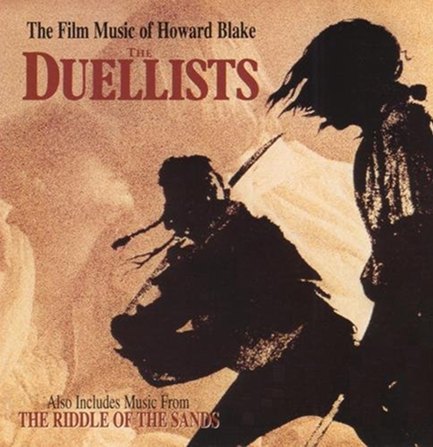
Blake’s work on The Avengers was accompanied by extensive television advertising work and frequent collaborations with film director Sir Ridley Scott. In 1977 Scott commissioned him to compose, orchestrate, and conduct the score for his debut feature film The Duellists. Blake’s elegant, period-appropriate score complemented Scott’s stunning adaptation of the Joseph Conrad story and the film won the Special Jury Prize at the Cannes Film Festival.
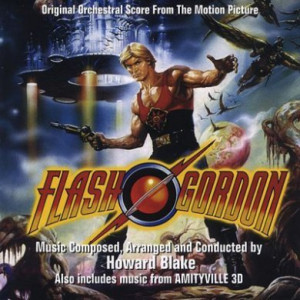
The success of The Duellists led to a prolific period of feature film commissions and between 1977 and 1982 Blake composed scores for The Riddle of the Sands, S.O.S. Titanic, and The Odd Job starring Graham Chapman and The Changeling, starring George C. Scott. In 1980, he was commissioned to write an orchestral score for Flash Gordon alongside rock band Queen. Given just ten days to complete the score, the soundtrack received a joint BAFTA nomination.
Blake served as musical director for Tony Scott’s stylish debut feature The Hunger in 1982, supervising, arranging, and conducting the score. His arrangement of Lakmé by Delibes for this production was later adopted again by Tony Scott for the rebranding of British Airways and this signature music, curated by Blake, remains in use today.
The defining moment of Blake’s screen career came in 1982 with The Snowman, the Channel 4 animated adaptation of Raymond Briggs’ beloved book for which he composed, orchestrated, conducted, and produced the original score. He composed the music and lyrics for Walking in the Air, with the solo performed by St Paul’s Cathedral chorister Peter Auty. The film received an Oscar nomination for Best Animated Short Film. Blake’s concert version with narrator, featuring Bernard Cribbins, went platinum, and in 1985 a new recording with Aled Jones reached number three in the UK singles chart, launching the young singer’s career. The Snowman and Walking in the Air have since become an iconic feature of the British festive tradition, with the full-length ballet running annually at London’s Peacock Theatre and the concert version performed worldwide.
Blake continued his screen work throughout the 1980s. He scored the animated film Granpa (1986) with narrator Peter Ustinov and soprano Sarah Brightman and composed music for A Month in the Country (1987) starring Kenneth Branagh and Colin Firth, which won him the British Film Institute Anthony Asquith Award for musical excellence. He created music for the Royal Shakespeare Company’s Henry V (1984), supervised the music for the film adaptation of A Midsummer Night’s Dream (1996), and worked with David Puttnam on Hugh Hudson’s My Life So Far (1999), both composing and serving as musical advisor. In 1998, Blake scored The Bear in a highly anticipated collaboration with original members of The Snowman creative team and featuring the song Somewhere a Star Shines for Everyone performed by Charlotte Church.
Blake’s commercial work has left an indelible influence on British popular culture. Beyond the Lakmé arrangement for British Airways, he has composed and conducted music for over 200 commercials in partnership with some of the most celebrated directors and producers in the British creative industries.