
The official website for the composer and
Highbridge Music, which publishes his works.
 Highbridge Music Ltd.
Studio 6, 18 Kensington Court Place, London W8 5BJ, UK
Email: howard@howardblake.com
Featured Recordings
*SPEECH AFTER LONG SILENCE op.610 (February 2010)
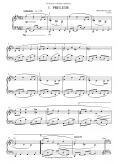
concert piece for solo piano
Published by: Highbridge Music LimitedCommissioned by: Vladimir Ashkenazy on behalf of The Third Hong Kong International Piano Competition 2011
Instrumentation: Solo piano
[Key to Abbreviations]
Duration: 8 mins
First Performance:
First public performances by contestants in The Third Hong Kong International Piano Competetition at Hong Kong City Hall on October 28th, 29th, 30th, 2011 by Elmar Gasanov, Min Hao Tsai, Keina Sato, Han Chen and Soo Jung Ann and Giuseppe Andaloro from Sicily who won the first prize.
Sheet Music Available
Instrumental / piano score for saleRecordings Available
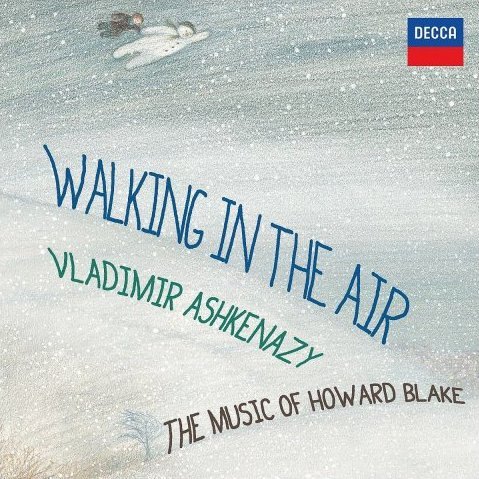
Released: 3rd March 2014
Recorded: June 2013
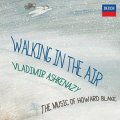
Artists: Vladimir Ashkenazy (piano) Vovka Ashkenazy (piano)
Available from: Amazon UK deccaclassics.com
1. Giuseppe Andaloro can be seen on You Tube giving his brilliant prize-winning performance of this piece in the Hong Kong Concert Hall
http://www.youtube.com/watch?v=0jtIn4r7VA4&feature=related
2. Recorded as one of the works on the album 'WALKING IN THE AIR - THE MUSIC OF HOWARD BLAKE' performed by VLADIMIR ASHKENAZY and released on March 3rd 2014 on Decca Classics 478 6300 www.deccaclassics.com www,vladimirashkenazy.com
Notes
Performances
| 13th July 2019 | Dong ill-Shin, Peter Auty, Julian Trevelyan, St.Albans Bach Choir directed by Andrew Sinclair with The Orchestra of St. Martin in the Fields, conducted by the composer,
30TH ORGAN FESTIVAL OPENING ST. ALBANS CATHEDRAL 13th JULY 2019 A concert of the music of Howard Blake obe fram, firstly celebrating his 80th year, secondly celebrating the opening of the 30th St Albans organ festival directed by David Titterington and thirdly recalling that Howard’s acclaimed oratorio 'Benedictus' was given its world premiere in St Albans Cathedral when conducted by Sir David Willcocks, sung by tenor Robert Tear, played by violist Frederick Riddle, withThe St Albans Bach and Cathedral Choirs and The English Chamber Orchestra with speaker, the very rev. the Dean of Saint Albans, (January 25th 1986). The programme planned for July 13th 2019 recalls this memorable concert but substantially adds to it: 1. THE RISE OF THE HOUSE OF USHER (2003) for solo organ (Dong ill-Shin,top prize-winning S.Korean organist) – A concert work originally commissioned by the Usher Hall Edinburgh to celebrate the restoration of their historic Father Willis organ and first performed there by Dame Gillian Weir on June 10th. 2003. 2.WALKING IN THE AIR (1982) sung by the internationally-acclaimed operatic tenor Peter Auty, who as a St. Paul’s chorister was selected by composer Howard Blake to record the definitive version of ‘Walking in the Air’ for his Oscar-nominated animation film and album of ‘The Snowman’. This concert astonishingly brings them back together for the very first time since that very memorable recording of 1982, . 3. 'SPEECH AFTER LONG SILENCE' (2009) a virtuoso piano work commissioned by Vladimir Ashkenazy for the world piano contest in Hong Kong 2009, here played by the brilliant young St. Albans piano prizewinner, Julian Trevelyan 4. SONGS OF TRUTH AND GLORY (2005) - Five poems of George Herbert, (opus 546) for chamber choir and ensemble, originally commissioned as The Elgar Commission for the Three Choirs Festival 2005, Here performed by a section of the St. Albans Bach Choir conducted by Andrew Lucas. INTERVAL 5. BENEDICTUS – A DRAMATIC ORATORIO (1986), was originally commissioned by Victor Farwell, Abbot of the Benedictine abbey of Worth in mid-Sussex, in order to celebrate the 1,500th birthday of St. Benedict in 1980, when it was performed by Richard Lewis (tenor), The Ditchling Choral Society and The National Philharmonic Orchestra conducted by Janet Canetty-Clarke, with Frederick Riddle solo viola. It was extensively revised by the composer over the following five years to be given its first complete performance and world premiere at St Albans Cathedral on January 25th 1986 when it was conducted by Sir David Willcocks with Robert Tear (tenor) , Frederick Riddle (solo viola), The English Chamber Orchestra and The Saint Albans Bach Choir. In this performance, which opens the 30th St Albans Organ Festival on July 13th 2019. The St. Albans Bach Choir (chorus-master Andrew Lucas) and The Orchestra of The Academy of St. Martin in the Fields will be conducted by the composer, with Peter Auty, solo tenor, Rosalind Ventris, solo viola and the role of Saint Benedict spoken by the Very Rev. Dr. Jeffrey John, Dean of St. Alban's.
|
| 9th September 2018 | Solo pianist for performance of 'Speech after long silence' Florian Koltun ; Players for duo
, piano trio and piano quartet - Wolfgang Schroeder (violin), Karolina Herrera(viola), Benedict Kloeckner (cello), Xin Wang(piano), Der Alten Kirche, Spay (nr. Coblenz) 17.00 pm
5th International Music Festival, Coblenz, September 9th 2018
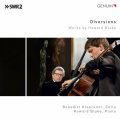
COBLENZ INTERNATIONAL MUSIC FESTIVAL PRESENT A PROGRAMME OF MUSIC BY HOWARD BLAKE TO CELEBRATE HIS 80th YEAR. Der Alten Kirche, Spay, Coblenz, September 9th., 2018 at 17.00 pm 1. SPEECH AFTER LONG SILENCE for solo piano, a piece commissioned by Vladimir Ashkenazy for the Hong Kong International Piano Competition 2011 (Opus 610) solo piano: Florian Koltun 'Unlike most new works, whose fate is to be played on multiple occasions ad nauseam at a competition and then shelved for eternity thereafter, this one promises to be heard rather often. Blake’s partiality for tonality and emotional connection (unsurprising for the composer of the children’s favourite The Snowman) makes this a most accessible work. At about 8 minutes, its Romantic gestures replete with lush harmonies and crashing chords resemble an updated and extended version of one of Rachmaninov’s Etudes-tableaux' Chang Tou Lang, 2. ‘DIVERSIONS FOR CELLO AND PIANO’, the work that in 2010 won Benedict Kloeckner the European Broadcasting Union first prize (Opus 337A) Piano Howard Blake, Cello Benedict Kloeckner 1: Prelude (moderato) 2: Scherzo (vivace) 3: March (tempo di marcia) 4: Waltz (vivo) 5: Aria (andante espressivo) 6: Serenade (allegretto) 7: Sarabande (lento non troppo) 8: Finale (vivo) minutes 27 seconds ‘Diversions’ was originally conceived as a suite for cello and piano as far back as 1973. In 1984 the great French cellist Maurice Gendron encouraged the composer to rework the piece for cello and orchestra, and he himself edited the cello part. The first performance of the work in this orchestral form was given by Steven Isserlis and The Royal Philharmonic Orchestra conducted by Sir Charles Groves at The Fairfield Halls Croydon on 29th March 1989. This transcription for cello and piano was made by the composer at about the same time The work pays mischievous homage to instrumental suites of the past. The Scherzo is not quite a scherzo, the March more than a march. The Waltz has a wrong-stepping jazz tinge to it, the Aria a sudden profundity. The Serenade bursts into arrogant display, the guitar-like Sarabande becomes an eloquent cadenza. We are led back to the theme of the Prelude via a Finale of such bristling virtuosic energy that its simple melodic line assumes a far more complex character – having been well and truly ‘diverted’.Diversions' is also the name of an album of music by Howard Blake for cello and piano played by Benedict Kloeckner and the composer, released in 2015 by the Leipzig label Genuin. ’Benedict Kloeckner plays the cello music of Howard Blake, with the composer himself accompanying - unfailingly attractive and often tremendous fun for both performers and lsiteners., THE STRAD, 2/2018
3. PIANO TRIO NO. 3 ‘ELEGIA STRAVAGANTE’ (Opus 654) a trio in 7 linked movements, first performed at the Coblenz International Music Festival 2013 Violin Wolfgang Schroeder, Cello Benedict Kloeckner, Piano Howard Blake Movements
Composer's notes: On the afternoon of my birthday I went to sleep for a short while and dreamed up a septuplet 'trill-flourish' motif in C major and an ensuing 'upward-sweeping' melodic fragment of a minor 2nd and major 7th, both of which I immediately wrote down. This was to be the material on which the trio was based.
I was searching for a 6/8 allegro idea and worked at several until I suddenly remembered the 'jazz fugue' from 'Movement for orchestra' which I'd written way back in about 1963. It seemed to fit perfectly and work most effectively for piano trio, forming a perfect link between the Andante (rapsodico) and the next section Tragico.
Tragico begins with the upward-sweeping motif, but now very slow and sad. This forms a bridge and modulation to E-minor where the cello enunciates the theme 'Parting', a fragment I had dreamt up whilst preparing the repertoire for Vladimir Ashkenazy's album of my piano works in June 2013. Here the 'Parting' theme develops greatly, leading quite rapidly and unexpectedly to a colossal climax, then falling down to a paused low chord of C major which begins section 4.
Grave molto espressivo is a deeply-felt cadenza for violin and cello which then starts to accelerate (piu mosso) towards section 5
Cello and violin play in unison at the 16th against a constantly turning piano phrase using the ever-present 'trill-flourish' motif. Martial and tragic hints and twists are now overcome by massive upward scalic movements seeking a major key and suddenly triumphantly asserting that of E major.
Giojoso, ecstatico transforms and inverts the minor 'upward-sweeping' theme into a major 'hymn of triumph' punctuated with huge piano chords. The energy of this is so great however that it must inevitably sink down to regain stability and a hardly-moving harmonic 'thirds duplet' grows gradually quieter and slower until it sinks away to nothing without resolution.
The music of the opening returns but this time in the key to which the piece has ascended - E major, the final bar picking up the 'trill-flourish' motif and giving the whole work a resolution with a very short coda on violin and cello sounding alone - yet perhaps finally together. The piano is wise enough not to interfere
4. PIANO QUARTET (Opus 179) Xin Wang (piano), Wolfgang Schroeder (violin), Karolina Herrera (viola), Benedict Kloeckner (cello)
A dramatic theme A (and in A minor) is presented by unison violin and viola over a pounding rhythm that would be equally at home in rock. A second theme B is equally rhythmic on contrapuntal strings over hammering piano semiquavers but subsides into a lyrical C minor piano version of A against legato strings. This subsides further again into a Theme C (and in C major) announced by the cello. It is spread across the three strings against piano chords gradually dying down to a held F sharp unison. This kicks off the development by taking us back to the first tempo but this time featuring theme B with running semiquavers which build and build until a pedal pulls us back into a full-bodied return of our home theme A on full strings and rocking piano chords.
A very fast tempo allows all instruments to fly through a Scherzo of heavily-syncopated rhythms and riotous escapades. It follows the scherzo form with a trio featuring predominantly piano against pizzicato cello, but they yield to questioning phrases on violin and viola before recapping to the scherzo and a noisy coda.
3. Lento espressivo
4.Allegro robusto Notes The opening of the first movement is used as a signature theme by KUSC, the audience-supported classical music radio station of the University of Southern California. Its composer is delighted and honoured by this
|
| 29th August 2015 | Alicia Smietana and Sasha Grynyuk, Dunblane Cathedral
A programme of music for violin and piano by Howard Blake |
| 2nd August 2015 | Sasha Grynyuk, Buccleuch and Queensberry Hotel, Thornhill, Scotland 3.30pm
Franz Schubert – Four Impromptus, D.899 (Op.90) |
| 15th June 2015 - 3rd July 2015 |
Sasha Grynyuk, International Tchaikovsky Ccmpetition
Pianist Sasha Grynyuk who stepped in so brilliantly to take Howard's place in concerts in London during April-May 2015 has chosen to play this virtuoso test-piece composed for the Hong Kong competition in 2011 at the behest of Vladimir Ashkenazy. We wish him the greatest good luck! |
| 10th May 2015 | Sasha Grynyuk, piano and Alicya Smietana violin, The Dysart, Petersham, Richmnond, Surrey |
| 10th May 2015 | Sasha Grynyuk and Alicya Smietana, The Dysart, Petersham
Tremendous performances ffrom both players in an informal atmosphere close to Richmond Park |
| 13th April 2014 - 14th April 2014 |
Vladimir Ashkenazy, Decca CD album of Howard Blake's piano music
'Walking in the Air', the music of Howard Blake performed by Vladimir Ashkenazy, joined by his son Vovka in the works for two pianos. Classic FM Album of the Weekend 13-14 April 2014 |
| 3rd March 2014 | Vladimir Ashkenazy and Vovka Ashkenazy, DECCA RELEASE MARCH 3RD 2014
In 2011 Howard wrote the test-piece for The Hong Kong International Piano Competition which he attended. The President of the jury was Vladimir Ashkenazy who liked the work (Speech after long silence) and expressed his desire to record an album of Howard's piano music. This took place between March and July 2013. The repertoire includes two works for two pianos in which he is joined by his son Vovka and concert performances of these works were given in Lugano for RSI on 9th March 2013 just prior to the recordings. The completed 80-minute album also presents a wide selection of Howard Blake's solo pieces for piano performed by Vladimir Ashkenazy himself. The completed album will be released by Decca on March 3rd 2014. The title track of the album is a solo piano version of 'Walking in the air' of which a single for download was issued as a pre-release for download on December 2nd 2013. |
| 12th March 2012 | Concert by piano pupils of the late Christine Pembridge, including Josie Ellis, Kamali & Tallulah Maidment, Roseanna Capon-Richards, Gaspar Hunt, Peter Copley, Margaret Grimsdell, Howard Blake, James Adutt, Sophia Cheung, Eugenia Cheng, Yuri Paterson-Olenich,
|
Reviews
Walking in the Air: VLADIMIR ASHKENAZY PLAYS THE PIANO MUSIC OF HOWARD BLAKE
Reviewed by: Robert Matthew-Walker Howard Blake The Snowman – Walking in the Air, Op.489u The Changeling – Music Box, Op.489 The Duellists – Laura, Op.604 Prelude for Vova, Op.540 Speech After Long Silence, Op.610 Eight Character Pieces, Op.338 Dances for Two Pianos, Op.217a* Sonata for Two Pianos, Op.130* Piano Fantasy, Op.1 Three Easy Pieces, Op.1b Romanza, Op.489o Haiku for Yu-Che, Op.567 Parting, Op.650a Vladimir Ashkenazy & *Vovka Ashkenazy (pianos) Recorded March & June 2013 in Potton Hall, Dunwich, Suffolk, England CD Number DECCA CLASSICS 478 6300 Duration 81 minutes Review Date June 2014 Whence inspiration? The extraordinary, vital spark of artistic creativity – that which sets the artist off on a new journey of creation – from where does it come? Clearly, from within the mind (or so the interested observer will believe), but some aspect or combination of circumstances must surely exist at the moment an idea pops into the head as the composer might say. On walking down the road, we all might hum a tune to ourselves, and with little else to engage us perhaps our brain’s musical area might bring to mind a melody matching our mood and the tempo of our walking-pace: eighty years ago, Constant Lambert wrote of “the appalling popularity of music”, citing the sounds coming from the open windows of adjoining houses with their radios on, accompanying the town-dweller out for a stroll, each step on the paving stone coinciding with a bar of music. It’s probably as true today as it was then, although it’s more the mobile phone that carries the music to us (and others!), but without that outside stimulus Lambert’s notion of music accompanying our daily walk still holds good, even if we might wonder what tunes came unbidden into Karlheinz Stockhausen’s mind as he negotiated the winding Bergstrasse in Kürten, such a concept perhaps needing a greater leap of the imagination than most people possess. It’s probably truer to say that musical people from any cultural background (and we don’t have to define ‘musical’ people, do we? – for Hans Keller, such people are those who need to experience music frequently, as an important part of their lives, not those who take it or leave it) are those who probably are more prone to hum tunes to themselves, but if the comfort zones of today’s commuters, as exemplified through their personal earpieces, replace such spontaneous creative experiences with the reassurance of music they know already, then that creative area of the brain might wither and die through atrophy. Howard Blake. Photograph: Tim Motion After all, you cannot think of one tune if another is being fed into your brain. It may be possible, but it’s surely more difficult. So if you’re walking your dog in the park and, suddenly, unbidden, a tune comes into your conscious mind – one that you’ve never heard before and which catches your imagination – such an experience, surely, is a moment of inspiration. Tchaikovsky would enter his study each morning at 9 o’clock to begin writing music – composing, copying or revising an existing work, or orchestrating another, or whatever: keeping the brain’s channels of communication open for when his inspiration called. As he said: “My muse knows to contact me at that hour” (or something similar), but not every composer is as regular in those habits as was Tchaikovsky – although Britten, it seems, possessed a similar work ethic. Inspiration can strike at any time: Elgar asked his driver Dick for the Ordnance Survey map in the car to scribble down the opening of the Fifth Pomp and Circumstance March which had suddenly come to him when they were out for a drive, and Stravinsky is known to have used a restaurant menu for a similar purpose. The important thing, surely, is to capture that inspiration on paper, or at least in some permanent form, before it disappears; Turner carried a sketchpad for the same reason, and there must be very many instances of artists, in whichever medium, being desperately keen to capture that moment. Not all composers have permanent memories for such ideas, but Howard Blake has – and we may imagine he thanked his lucky stars one sunny day when, out walking his dog, a tune arrived in his mind. This was in the early 1970s, soon after Blake (born 1938) had resolved to abandon the constant pressures of composing commercial music to order, often at a few days’ notice, which had consumed his working life for a good many years. At first, he was not quite sure what to do with the tune, although he knew it was a good one. Years later, in 1982 in fact, he realised it ideally fitted a Channel 4 animated film of Raymond Briggs’s picture-book story, The Snowman. It soon became a hit, not only in countries where the film was shown; it has been televised every Christmas since; the CBS Masterworks album went platinum; the EMI single, sung by the young Aled Jones, reached the top of the singles chart, and the two-act ballet version has been staged by Sadler’s Wells in London for fifteen years running, becoming as much a part of Christmas as Tchaikovsky’s The Nutcracker. Seeing The Snowman at London’s Peacock Theatre over a dozen years ago, I described the ballet in Musical Opinion as a “masterpiece” – as a stage show, it certainly is, and remains so: the following year, I took my three-year-old granddaughter to see it, and she sat entranced. Vladimir Ashkenazy. Photograph: Keith Saunders ‘Walking in the air’ may have brought Howard Blake fame, and financial stability, but such is the nature of today’s compartmentalisation of what an artist can or cannot do, or what they ought or ought not to be doing, that society nowadays appears to have taken the view that, once tagged with a particular label (rightly or wrongly), a composer cannot be perceived to be just as good in another area, and if they venture to do so, a part of the critical fraternity has to put them in their place. Quite why this should be so may tell us more about the critics than about the artists involved. In recent decades we have seen a type of ‘cross-over’ from pop and rock to what might be broadly termed ‘classical’, yet perhaps it was always thus: ‘popularity’ does not – indeed, cannot – always equate with artistic inferiority, and ‘ivory-tower’ modern composers are not ‘better’ than popular ones simply because their music does not conform to the familiar or customary. It may take a while to remove such blinkered attitudes, for as Schoenberg said: “A Chinese philosopher speaks Chinese: the question is, ‘what is he saying?’”, and whilst we don’t necessarily have to agree with Leonard Bernstein’s statement that “I prefer great rock ‘n’ roll to bad Beethoven” (pity no-one asked him for chapter and verse), the fact that Sir William Glock gave Soft Machine the first-ever late-night BBC Prom in 1970, indicated a breadth of – at least – musical curiosity, if not acceptance, that we would do well to emulate. For Howard Blake, composition has been pretty much a compulsion for most of his life: “I had a local piano teacher, and I’d make up tunes for my family at Christmas and birthdays. Nobody told me to do it, I just wrote tunes, and when I was about eleven, I wrote a march and took it to my teacher who asked, ‘Where did this come from?’. “I wrote it”. At first he didn’t believe me. But he realised I was serious, and took me through all of Kitson’s harmony and counterpoint books. I loved it.” From then on, Blake knew he liked writing music more than anything, although his father “would not have entertained the idea that I could become a musician”. His mother was musical and played the piano and violin very well. “She encouraged me, and through her I started the piano. I worked hard ... getting Grade VIII with distinction. The Hastings Festival – the only Southern England festival offering a Royal Academy of Music scholarship – was the first time I entered any competition. I went in for the Bach Prize, the Beethoven Prize, the Chopin Prize and the Academy Scholarship Prize – and I won all four. Although I thought I might make a concert pianist, I still wrote music, but nobody encouraged me much. At the Academy I chose organ as a second subject, but during the interview the subject got round to harmony, and I was told to bring in some original work. I brought a four-movement orchestral suite, and they said, ‘Shouldn’t you be studying composition?’. It had never occurred to me!” And so Blake became a composition student of Howard Ferguson. There are few living composers who possess the combination of fluency, technical ability and melodic inspiration as Howard Blake does, so when such a greatly distinguished artist as Vladimir Ashkenazy makes a recording of his piano music, on which he has his son Vovka partner him in works for two pianos, we would do well to abandon any prejudices we might harbour and listen. The recital opens with ‘Walking in the air’; that simple tune, as a piano piece, continues to exert its haunting influence, and Ashkenazy’s phrasing raises it to the level of a minor masterpiece. This is followed by two other pieces, originally used as part of film scores: ‘Music Box’ from The Changeling (the 1980 horror movie, starring George C. Scott as a bereaved concert pianist), and ‘Laura’ from The Duellists (Harvey Keitel and Keith Carradine), a score which won the Special Jury Prize at the 1981 Cannes Film Festival. These two short concert studies (for, divorced from the screen, that is what they are) are given with much refinement by Ashkenazy, as does the succeeding item, Prelude for Vova (Vladimir Ashkenazy himself). The unusually entitled Speech After a Long Silence was also requested by Ashkenazy, an eight-minute test piece written for the 2011 Hong Kong International Piano Competition, played by each competitor in round four of the competition. Blake has said that Ashkenazy’s performance is “finer than I could have dreamed of”. In structural terms, the one composer it brings to mind is Sibelius. The Eight Character Pieces were also suggested by Ashkenazy, in 1975, following what Blake describes as “an extraordinarily brilliant Scriabin recital at the Queen Elizabeth Hall”. The work overall (22 minutes) is a late-20th-century Carnaval (the third – and longest – piece, ‘Impromptu’, is a truly fine example of Blake’s idiomatic writing, as well as being superbly expressive). The Character Pieces were eventually incorporated into Blake’s Lifecycle of 1995 (24 pieces, each in a different key), but the work in its original form makes a perfectly satisfying and coherent composition. Two very different pieces for two pianos follow: nine comparatively brief Dances, almost forming a collection of ‘encores’ in lighter style, succeeded by a major work by any standards, Sonata for Two Pianos (1971) in four movements, which in the finale demands (and gets here) considerable virtuosity from both players. Then comes a group of very early solo pieces: Fantasy, composed in 1955 at the age of sixteen (“rediscovered for this album”), a simple broad ABA structure, declares his natural compositional gifts in no uncertain manner, and Four Easy Pieces from the following year (written as a birthday present for a girlfriend, who apparently turned both composer and his music down), but delightful miniatures. Vladimir Ashkenazy reveals all there is to be found in these early pieces, and this excellently recorded recital continues with Romanza, inscribed to the pianist (and his wife), another extremely beautiful piece, based upon early material – a succinct morceau de fantasie, perhaps. The programme ends with two items, just 70 and 80 seconds in duration respectively, and perhaps the most personal of Blake’s piano pieces to appear in recent years. They form a fitting addendum to a recital of eminently worthwhile music by a composer whose more-serious works – in particular his concertos – manifestly deserve to be heard more frequently. It is a pity, though, that Decca’s presentation is poorly packaged, for nowhere on the front cover is the word “piano” given – Ashkenazy might be conducting Blake’s orchestral music; the layout is childishly feeble, and omitting Vovka’s name from the cover is a deplorable oversight. The opus number of the Eight Character Pieces is also omitted. It is worth mentioning that Sir Neville Marriner and the Academy of St Martin-in-the-Fields are to give a concert devoted to Howard Blake’s music on November 25 at the eponymous London church, including the world premiere of a work for double string orchestra, the melodic inspiration of which will not be hard to seek. Decca Classics
ROBERT MATTHEW-WALKER, 6/2014
For the first time, the Hong Kong Philharmonic graciously agreed to participate and Howard Blake — of flying snowman fame — was expressly commissioned to provide a competition piece...his “Speech after Long Silence” is certainly a pleasing and technically challenging Nocturne, infused with colourful tints from Chopin, Debussy and Scriabin.
George Predota, Interlude, 2012
Oh, how I love Hong Kong! But I would not want to stay here. Take the traffic, for instance. It took me an hour and a half to get from the Airport to the hotel, and another hour from the hotel in East Tsim Sha Tsui to the City Hall Concert Hall on Hong Kong island itself. If not for the Chopin Society of Hong Kong’s President Dr Andrew Freris, whose elaborate pre-concert preambles kept an audience captive, we would have missed the music itself
For this year’s finals, the Mozart piano concerto has been dropped. Word has it that the jury had been disappointing with performances in previous editions of the competition and felt it a chore to differentiate between six middling to mediocre readings. So it has been replaced by a newly commissioned work written for this concours, British composer Howard Blake’s Speech After Long Silence (below).
HOWARD BLAKE'S Newly commissoned Work
The World Premiere of Blake’s Speech was given by the first finalist, Russia’s Elmar Gasanov. Unlike most new works, whose fate is to be played on multiple occasions ad nauseam at a competition and then shelved for eternity thereafter, this one promises to be heard rather often. Blake’s partiality for tonality and emotional connection (unsurprising for the composer of the children’s favourite The Snowman) makes this a most accessible work. At about 8 minutes, its Romantic gestures replete with lush harmonies and crashing chords resemble an updated and extended version of one of Rachmaninov’s Etudes-tableaux. The key of E flat minor is also telling. Gasanov performed it with a score, but no matter, the performance brought out its colours, and for a Russian who might already be familiar with this idiom, the bell-like sonorities came out trenchantly. Giuseppe Andaloro, winner of multiple first prizes, would have performed at the First Hong Kong Competition in 2005, but had pulled out last minute having won First Prize at the Busoni Competition in Bolzano the week before. Under the HK competition’s new rules which forbid participation in other competitions three months before or after, he would have been disqualified and barred instead. Anyway, at 29 this would be a last hurrah. I had heard him perform in 2002, when he made a big impression winning 1st prize in the London International Piano Competition. In Hong Kong, he did not disappoint. First he performed the Blake work from memory, which immediately gave positive vibes. His was a more nuanced performance, perhaps a little slower than Gasanov’s but far more ruminative. Displaying more shades of colour, it opened more possibilities for imagination. This was not a merely memorised Speech, but one imbued with much thought, probing and ultimately revealing a slew of emotions. Even the tintinnabulation dazzled, and with a more volatile finish, had a sense of improvisation. I am beginning to love this work even more. What can I say about Andaloro’s view of Rachmaninov’s Second Piano Concerto? For starters, it was a more polished outing for both piano and orchestra than Gasanov’s Tchaik One. And he does not merely play the notes, but personalises them. The opening chords were taken with a broad and expansive view (but never protracted, such as in Lang Lang’s case), and this was the tenor of his interpretation. Melancholia seemed paramount in his reading, rather unusual coming from an Italian (brooding being a Slavic preoccupation by birth right), which came out from slow boil to an ecstatic climax of crashing chords. Andaloro seems completely at ease with himself, and that greatly steadied the ship. The slow movement was simply beautiful with pianist happy to play the accompanying role for the splendid flute and clarinet solos to shine. Here much of the piano’s melodic line is simple, two hands playing the exactly the same notes an octave apart. Andaloro does not gild the lily but lets the music speak for itself. And one could have been lulled to terminal stupor if not for his slow but steadfast build-up and eventual release, the cadenza coming as a spontaneous outburst of raw emotion. Lovely strings concluded this most wondrous of reveries. In the finale, Andaloro showed he knew the true meaning of scherzando, with a playful romp which belied the thoughtfulness that coloured the big melody. Again, he was restrained in displaying heart-on-sleeve emotion, which could have gone overboard in less poised individuals. That coyness was merely a ploy, as the central tumultuous interlude was unleashed with great vehemence, one in which both pianist and orchestra were as one through every split second. All this made for totally enthralling ride, and when the big melody returned, it was to magnificent effect. Andaloro’s playing was close to faultless, which made this performance ever so memorable Rachamaninov was a master of the musical orgasm, which is why no one (except perhaps the Germans and Austrians) can get enough of this music. And Italians certainly know the meaning of amore. My verdict: Magnificent performances of Blake and Rachmaninov from Andaloro. Have we seen the winner of this competition? But wait, there are still four more competitors to be heard! Posted by Chang Tou Liang
Chang Tou Lang, Pianomania Hong Kong 3RD HONG KONG INTERNATIONAL PIANO COMPETITION, 28/10/2011